

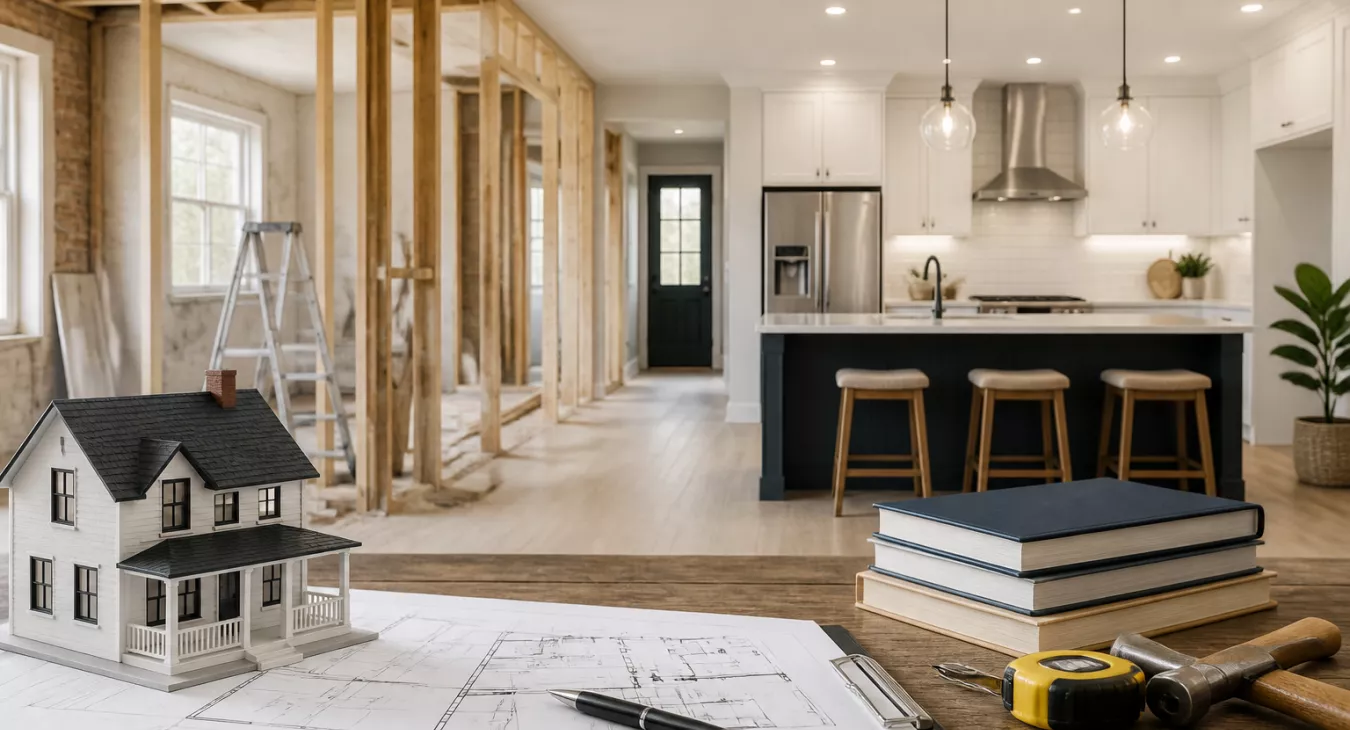
Compare top house flipping courses to find the perfect program for your experience level. Expert reviews & side-by-side comparisons inside.
Products and Tools Mentioned in this Post

FortuneBuilders
FortuneBuilders provides real estate investing education, training programs, and coaching led by Than Merrill. Learn fix and flip, wholesaling, and rental strategies.
Table of Contents
- What's House Flipping and Why Take a Course?
- Key Components Every House Flipping Course Should Cover
- Top House Flipping Courses Compared
- Average House Flipping Costs by Property Type
- Key Financial Metrics Every Course Should Teach
- How to Choose the Right House Flipping Course
- Common Mistakes Beginners Make — and How Courses Help
- Getting Started: First Steps After Enrolling
- Conclusion
- Frequently Asked Questions
A solid house flipping course can be the difference between landing a 25% profit margin on your first deal and torching $50k on rookie mistakes. You've got options everywhere — free YouTube content, $2,500 online programs, $10,000 mentorship packages. But how do you know which one actually delivers? This guide walks you through the top players, stacks them against each other, and hands you a framework for choosing before you write any checks.

What's House Flipping and Why Take a Course?
The Buy-Fix-Sell Model
You buy a distressed or undervalued property. You improve it through strategic renovations. You sell it at a profit — typically within 3 to 12 months. Sounds simple, right? The reality is messier. You've got to juggle real estate, construction, finance, and sales all at once. For a deeper look at the foundational mechanics, Unlocking the Secrets to Successfully Flipping Houses is a strong starting point.
Why Beginners Need Structured Learning
ATTOM Data shows the average gross flipping profit in the U.S. hit roughly $66,000 per flip in recent years. But that number's misleading — there's a massive spread between winners and losers. Investors with formal training and systems consistently outperform those flying by the seat of their pants. A structured course compresses years of trial-and-error into a repeatable framework. You'll learn how to underwrite deals, manage contractors, and exit profitably. No more improvising every decision.
Common Misconceptions
Reality TV makes flipping look fast and glamorous. In practice, the average flip takes 4–6 months. Renovation costs routinely run 10–20% over initial estimates. And carrying costs — interest, taxes, insurance — they erode your margins quick. A quality course sets realistic expectations from day one and teaches you to price that risk into your offers.
Back to topKey Components Every House Flipping Course Should Cover

Most programs leave money on the table. Before you drop cash on a course, make sure it hits these six pillars — if it's missing one, that's a deal-breaker. Here's what separates the legit stuff from the fluff.
- Market Analysis and Property Selection: You need to know how to spot high-demand zip codes before everyone else does, pull comps that actually matter, and find distressed inventory when it's still under the radar. Check the Best Markets for House Flipping in 2026 to see where deals are actually happening right now.
- Financial Modeling and Budgeting: This is where most flippers crash. You've got to nail your ARV, apply the 70% rule correctly, project realistic ROI, and stress-test your assumptions when things go sideways.
- Renovation and Construction Management: Scoping work that doesn't balloon mid-project. Finding licensed contractors you can trust. Building timelines that don't kill your hold costs. Managing change orders so they don't tank your profit margin.
- Financing and Funding Strategies: Hard money loans, private lenders, HELOCs, partnerships — you need to understand how each one works, what the real costs are, and how to structure deals that actually pencil out.
- Team Building: You can't flip alone. And you don't want to. You need a solid network — agents, contractors, inspectors, title companies, lenders — people who actually show up and deliver.
- Exit Strategies and Selling: Your exit is where you make or lose money. Staging that converts. Pricing that sells fast. MLS positioning. And the negotiating chops to lock in your target net profit at closing.
Top House Flipping Courses Compared

Below you'll find what's actually out there in the market right now across different budget levels. Keep in mind—these prices and module counts move around. Always hit up the provider directly before you pull the trigger.
| Course Name | Price | Format | Duration | Modules | Best For |
|---|---|---|---|---|---|
| FortuneBuilders Mastery | $25,000–$50,000+ | Live + Online Hybrid | 12–24 months | 20+ | Committed beginners with capital |
| Flipping Junkie Academy | $997–$1,997 | Self-paced online | 8–12 weeks | 10 | Beginners on a budget |
| Jerry Norton's Flipping Mastery | $997–$4,997 | Video + Coaching | Self-paced | 12 | Beginners to intermediates |
| BiggerPockets Pro + Bootcamp | $390/year + $799 | Community + Live Webinars | Ongoing | 8 (bootcamp) | Networkers and self-directed learners |
| Udemy House Flipping Courses | $15–$200 | Self-paced video | 4–10 hours | Varies | Budget learners, concept overview |
Here's the thing: if you're already running flips, pairing one of these courses with solid software transforms how you actually execute deals. Check out the FlipperForce Review 2026 and Best House Flipping Software 2026 to round out your operational toolkit. Most courses won't give you that.
Back to topAverage House Flipping Costs by Property Type
You need to know these numbers cold. Before you pick a course—or worse, a property—you've got to understand what you're actually spending on each deal type. Does the financial modeling cover your specific market? That's what matters. Check if the course teaches you to analyze the ranges below and where you fit in.
| Property Type | Average Purchase Price | Avg Renovation Cost | Timeline (months) | Typical Profit Margin |
|---|---|---|---|---|
| Single-Family (entry-level) | $120,000–$200,000 | $25,000–$50,000 | 3–5 | 12–18% |
| Single-Family (mid-range) | $200,000–$400,000 | $40,000–$90,000 | 4–7 | 10–15% |
| Condo/Townhouse | $150,000–$300,000 | $15,000–$35,000 | 2–4 | 8–14% |
| Multi-Family (2–4 units) | $250,000–$600,000 | $60,000–$150,000 | 5–10 | 10–20% |
| Luxury/High-End SFR | $500,000–$1,200,000 | $100,000–$300,000 | 6–12 | 8–12% |
Key Financial Metrics Every Course Should Teach
| Metric | What It Measures | Target Range | How Courses Teach It |
|---|---|---|---|
| After Repair Value (ARV) | Projected post-renovation sale price | N/A (must be accurate) | Comp analysis exercises |
| 70% Rule | Maximum acquisition price | ≤70% of ARV minus repairs | Deal underwriting templates |
| Gross Profit Margin | Profit before taxes/fees | 15–25% | Pro forma modeling |
| Holding Cost Rate | Monthly carrying cost | <2% of purchase price/month | Budget simulation modules |
| Return on Investment (ROI) | Net profit vs. capital deployed | 20–40% annualized | Case study walkthroughs |
How to Choose the Right House Flipping Course

Match Your Experience Level
You're probably in one of three buckets. Beginners thrive with structured programs that include deal analysis templates and real mentorship access — the kind where someone actually reviews your numbers. If you've already closed one or two flips, you don't need another walkthrough of the basics. What'll move the needle? Niche courses on scaling — systemizing your contractor relationships, accessing institutional-grade financing, that kind of thing. And advanced flippers? Honestly, full courses are a waste of your time. Targeted masterminds or workshops on specific topics like tax strategy or portfolio structuring will serve you better.
Evaluate Curriculum Depth — Not Just Marketing
Request the full module list before you pull the trigger. A real course doesn't just teach the sexy stuff — it covers legal and compliance (permits, disclosure laws, entity structuring). Tax implications matter too. Capital gains vs. dealer status. Cost segregation. Risk mitigation across the board. Skip these and you're setting yourself up for surprises at closing. Many programs gloss right past these topics entirely, which is a meaningful gap. For broader context on investing education, see the Best Real Estate Investing Courses 2026.
Verify Instructor Credentials
The instructors worth paying are active investors. Not just educators. Look for verifiable transaction history, documented deal results, and current market involvement. Someone who stopped flipping in 2015? Their playbook doesn't translate to today's rate environment and inventory constraints. You need someone in the trenches right now.
Calculate Total Cost of Ownership
Here's where it gets real. That $997 course price tag is meaningless if there's a $5,000 coaching upsell hiding the core content. Add in software subscriptions. Travel for live events. All of it. Your actual cost is probably double or triple what they advertise. Compare net-of-upsell pricing before you commit to anything. And if you're wondering whether flipping even fits your strategy? Check out the comparison between BRRRR and house hacking — it might shift your whole approach.
Back to topCommon Mistakes Beginners Make — and How Courses Help

- Underestimating renovation costs: This kills more deals than anything else. Scope-of-work templates and contractor bidding processes from quality courses catch those hidden line items before you close — the ones that tank your margin.
- Poor market selection: You pick the wrong zip code. Low appreciation areas + high days-on-market = extended holding costs that crush your timeline and eat profits. That's why market analysis training isn't optional.
- Inadequate financing planning: Running out of cash mid-renovation? It happens constantly. And it's preventable. Courses teach you to build contingency reserves (10–15% of your reno budget, minimum) and understand bridge financing options. Those two things alone cut your risk dramatically.
- Insufficient team resources: One bad contractor derails everything. Your timeline slips. Your budget blows. Courses with solid team-building modules show you exactly how to vet, contract, and manage subcontractors. That's the difference between a smooth flip and a money pit.
Getting Started: First Steps After Enrolling

Enrollment is just the beginning. The real work starts now — and it's where most people drop off.
- Join the course community immediately. Most platforms have forums or Slack groups, and they're gold. You'll get deal flow, contractor referrals, and market intelligence straight from experienced members who've already made the mistakes you're about to avoid.
- Complete a deal analysis on a real listing within your first week. Don't wait. Even if you're not ready to buy, analyzing actual deals builds your instinct faster than sitting through lectures. Pick a property on the MLS today.
- Set a 90-day network goal. You need three contacts before your first purchase: a lender, a contractor, and an experienced investor. That's it. Non-negotiable.
- Write down your investment criteria. Target market, maximum ARV, minimum profit threshold, maximum renovation budget — get it on paper. Why? Because when a deal hits your inbox at 11 PM and your emotions are running high, written criteria will save you from a $50K mistake.
Conclusion
Your best fit depends on four things: where you're starting from, how you learn, what cash you've got, and which markets you're targeting. Under $400? BiggerPockets and Udemy will give you the fundamentals you need. For under $2,000, mid-tier programs like Flipping Junkie and Jerry Norton's Mastery offer real frameworks backed by instructors with actual deal experience. Premium options like FortuneBuilders come with mentorship and a full community — but honestly, they only make sense if you're truly committed and have the capital to execute.
Here's the thing: no course matters without the right tools. You need solid deal analysis software. You need a financial model that actually works. And you need to pull the trigger on deals.
Education speeds things up. It won't do the work for you.
Back to top
Frequently Asked Questions
How much does a house flipping course typically cost?
You'll see everything from free YouTube content to $50,000+ premium coaching programs. The sweet spot? Most legit courses land between $997 and $5,000. But here's the thing—always dig into what else they're selling you. Upsells and hidden fees can blow up your actual investment.
Can I flip houses with no prior real estate experience?
Absolutely. But structured education becomes even more critical when you're starting from zero. A solid beginner course compresses years of trial-and-error into months and saves you from the catastrophic first-timer mistakes—bad renovation budgets, blown deal analysis, underwater holds. That's worth paying for.
Is a free house flipping course worth it?
Free content teaches you the vocabulary and helps you figure out if flipping's actually for you. And that matters. Just don't expect deal analysis spreadsheets, contractor vetting frameworks, or real financing strategy. They're not there. Use free resources to build the foundation. Then move to paid structured courses when you're ready to buy.
What financial metrics should I understand before your first flip?
ARV. The 70% rule. Gross profit margin. Holding costs. ROI. Know these cold before you make an offer. If a course doesn't cover these in the first few modules, skip it. Period. You're protecting your capital here—there's no room for vague instruction.
How long does it take to complete a house flipping course?
Self-paced online courses? Four to twelve weeks if you're disciplined. Full mentorship programs run 12–24 months with live coaching, deal reviews, and community support built in. Pick the timeline that fits your speed and how deep you need to go.
Back to top