


Compare top real estate CRM and website builders. Find the best all-in-one platform for lead capture, client management, and professional branding.
Products and Tools Mentioned in this Post


Follow Up Boss
Follow Up Boss is a real estate CRM that helps agents manage leads, automate follow-up, and increase conversions. Streamline your sales process today.

Real Geeks
Real Geeks offers real estate agents an all-in-one platform with lead generation, IDX websites, and CRM tools. Grow your business with proven technology.

Sierra Interactive
Sierra Interactive provides real estate agents with cutting-edge IDX websites, CRM, and lead generation tools. Discover how this platform can transform your business.

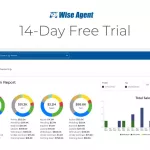

Wise Agent
Wise Agent is a comprehensive real estate CRM offering contact management, transaction tracking, email marketing, and automation tools for agents and brokers.
Table of Contents
- what's a Real Estate CRM and Website Solution?
- Core Features to Look for in Real Estate CRM and Website Platforms
- Best Real Estate CRM and Website Solutions by Use Case
- Comparison of Top Real Estate CRM and Website Solutions
- How to Choose the Right Real Estate CRM and Website Platform
- Implementation and Best Practices
- Pricing Tiers and ROI Context
- What Competitors Get Wrong (And What You Should Know)
- Alternative Platforms Worth Considering
Managing leads, nurturing client relationships, and maintaining a professional online presence are three full-time jobs. Most real estate agents are juggling all three simultaneously while actually closing deals. That's why integrated real estate CRM and website solutions have exploded. They promise to unify your lead capture, follow-up, and branding into one smooth system. But here's the thing — not every platform delivers equally. Some excel at CRM functionality but hand you cookie-cutter websites. Others build stunning IDX-powered sites but fumble pipeline management. And you deserve better than that. This guide cuts through the noise with an honest, data-driven comparison of the best all-in-one platforms available today. We're covering pricing, features, real user feedback, and the implementation details most reviews skip entirely. The ones that actually matter.
New to finding deals? Start with our Guide to Finding Motivated Sellers.

what's a Real Estate CRM and Website Solution?

Definition and Core Functionality
A real estate CRM and website platform merges contact relationship management with a client-facing web presence into one integrated suite. Your CRM handles lead intake, contact organization, pipeline tracking, and automated follow-up sequences. The website piece? It's a branded, IDX-enabled property search portal that captures visitor data and funnels it straight into the CRM. No more manual copy-paste workflows between disconnected tools.
It's like choosing a Swiss Army knife over carrying six separate tools in your pocket. Your website lead form, email automation, task reminders, and deal pipeline all live in the same system. Data flows freely between them. A prospect searches for three-bedroom homes on your site at 11 PM? They're automatically tagged, added to a relevant drip campaign, and flagged for a follow-up call the next morning. You don't have to do a thing.
Why Real Estate Agents Need Integrated Tools
The average agent's leads come from 6–8 different sources: Zillow, Realtor.com, social media, open houses, referrals, and their own website. Without a centralized system, leads get lost. Follow-ups become inconsistent. Conversion rates tank.
Here's the brutal stat: The National Association of Realtors research is clear — agents who follow up within five minutes of a lead inquiry are 100x more likely to convert than those who wait 30 minutes. Integrated platforms make that speed actually possible operationally.
And there's more. Integration kills data silos. When your CRM doesn't talk to your website, you're living a nightmare: contact records scattered across three spreadsheets, leads buried in your email inbox, zero visibility into which marketing channels drive revenue. A unified platform gives you one source of truth. That visibility? It's what separates reactive agents from strategic ones. If you're still weighing standalone tools, check out our guide to the best real estate lead generation platforms for 2026 — it'll help you understand what's actually out there.
Key Differences From General Business CRMs
General-purpose CRMs like Salesforce or HubSpot are powerful. They also require serious customization to work for real estate. A purpose-built real estate CRM and website solution comes ready to go with what you actually need: IDX/MLS integration for live property search, transaction management pipelines, listing alert automation, and compliance-ready contact management. The learning curve is shorter. Templates make sense for your business. And you're not bleeding money paying a developer to build custom modules for workflows that real estate platforms already handle straight out of the box.
Back to topCore Features to Look for in Real Estate CRM and Website Platforms

Lead Management and Tracking
Storing names and phone numbers isn't enough anymore. You need contact segmentation and tagging — think "first-time buyer," "investor," "hot lead" — paired with lead scoring that actually tracks engagement behavior. A visual pipeline board changes everything. You'll spot stalled deals instantly and know exactly which prospects are moving toward closing without digging through spreadsheets.
Automated Email Marketing and Follow-Up
Drip campaigns and automated workflows? Non-negotiable in 2025. The platforms worth your money come loaded with pre-built real estate nurture sequences — market updates, anniversary messages, holiday touchpoints — ready to deploy with zero copywriting on your end. But here's where it gets smart: behavioral triggers. A lead clicks the same listing three times, and boom — they get a personalized email about that exact property. Conversion rates jump 20–35% when you implement this kind of intelligent automation. Want the full toolkit? Check out our roundup of the best real estate marketing tools for 2026.
Website Builder and IDX Integration
Your website works for you around the clock. Mobile-responsive templates and customizable design elements matter, sure. But the real game-changer is IDX integration — live MLS listings pulling directly into your site. IDX means your visitors can search active inventory without leaving your domain. You're capturing data on what they actually want. Without it? You're just funneling traffic to Zillow and competitors.
Mobile CRM Functionality
Real estate happens on your phone. At an open house, you need full contact access, note-taking, and lead response — not some crippled view-only app. Can you actually complete tasks from the field? Some platforms even offer offline functionality, which saves your bacon in areas with terrible cell coverage.
AI-Powered Features and Automation
AI isn't the future anymore — it's here. Leading CRM platforms now predict which contacts close in the next 90 days using AI lead scoring. Smart email personalization adapts messaging on the fly. Chatbots handle website inquiries. Predictive analytics flag which neighborhoods are seeing buyer interest spike. These aren't buzzwords. Agents actually using AI-driven insights consistently hit 20–35% higher conversion rates from existing leads.
Integration and API Capabilities
No single tool does everything perfectly. Integration flexibility matters. Look for native connections with what you already use — Google Calendar, DocuSign, Zillow, Realtor.com. And Zapier's your safety net for closing gaps. An open API becomes invaluable when your team needs custom connections to accounting software or dialing systems. Speaking of dialers, our guide to the best real estate dialers for cold calling details which top tools actually integrate with leading CRMs.
Back to topBest Real Estate CRM and Website Solutions by Use Case

Best All-in-One: Real Geeks
Want everything in one place? Real Geeks is your answer. It's the top all-in-one platform for agents who need a powerful IDX website, serious CRM functionality, and built-in paid lead generation without juggling three different vendors. Their website builder cranks out fast-loading, SEO-optimized sites with full MLS integration. The CRM side handles behavioral lead tracking, automated SMS and email follow-up, plus a mobile app that actually works. At $299/month for solo agents and $399+ for teams, the math is simple: one closed deal covers your subscription for 6–12 months. That's a no-brainer ROI.
Best for Budget-Conscious Agents: Wise Agent
Wise Agent punches above its weight. You're getting full CRM functionality — contact management, drip campaigns, transaction management, landing pages — all for approximately $49/month. That's genuinely hard to beat. Sure, the website builder isn't as slick as Real Geeks or Sierra Interactive, but it integrates with third-party IDX providers just fine. Does it cover everything a solo agent needs? Roughly 90% of it, yes. And their customer support actually deserves mention here: live chat seven days a week.
Best for AI-Powered Marketing: Follow Up Boss
Follow Up Boss has morphed from a basic CRM into an AI-enhanced lead routing and conversion machine. Here's what makes it different: smart lead distribution, behavioral tracking, and AI that tells you which leads are actually heating up. Integration options? They connect to virtually every real estate lead source and website platform you can name. High-volume teams live for this stuff. Pricing runs $69/month per user, with team plans starting at $499/month. One caveat: there's no built-in website builder. But honestly? Their integration ecosystem is so robust that pairing it with an IDX platform rarely feels like a limitation.
Best for Lead Generation: Sierra Interactive
You want the most sophisticated lead generation website on the market? Sierra Interactive is it. Premium tier, premium price — approximately $499.95/month — but their IDX sites are SEO machines. Agents regularly report first-page Google rankings within 3–6 months of launch. The CRM includes advanced automation, lead routing, and AI-powered behavioral alerts. And that investment? For teams generating 100+ leads per month, the conversion lift pays for itself.
Best for Commercial Real Estate
Commercial guys operate differently. You need deal tracking by property type, LOI and lease management, contact hierarchies that actually reflect how corporate clients work. ClientLook and REthink CRM are built specifically for that world — but they don't include consumer-facing website builders. Most commercial agents solve this by pairing a commercial CRM with a custom WordPress site or a platform like Buildout.
Best for Teams and Brokerages: IXACT Contact
IXACT Contact combines CRM, email marketing, and website tools with team-friendly pricing and a real focus on relationship nurturing. Their "Done-for-You" email newsletter is a standout — professionally written monthly market updates hit your entire database automatically. Multiple agents can work within the same system, share contact records, and pull from shared reporting dashboards. For investors digging deeper into investor-specific tools, check out our dedicated guide to the best real estate investor CRMs in 2026.
Back to topComparison of Top Real Estate CRM and Website Solutions

Here's what you're looking at: a side-by-side breakdown of the platforms that matter most, scored on the criteria that actually move the needle for your business. Think of this as your starting point. Pricing and features shift constantly in this space, so always double-check the current numbers directly with each vendor before you commit.
| Platform | Starting Price | All-in-One | IDX/Website | Lead Gen | Best For | Mobile App | Free Trial |
|---|---|---|---|---|---|---|---|
| Real Geeks | $299/mo | Yes | Yes | Built-in | Solo agents & small teams | Yes | Demo only |
| Sierra Interactive | $499.95/mo | Yes | Yes | Built-in | Teams & brokerages | Yes | Demo only |
| Follow Up Boss | $69/user/mo | CRM only | No (integrates) | Via integrations | High-volume teams | Yes | 14-day free trial |
| Wise Agent | $49/mo | Partial | Landing pages | Limited | Budget-conscious agents | Yes | 14-day free trial |
| IXACT Contact | $46/mo | Yes | Yes | Limited | Relationship-focused agents | Yes | 5-week free trial |
| kvCORE | ~$499/mo (team) | Yes | Yes | Built-in | Large teams & brokerages | Yes | Demo only |
| BoomTown | $1,000+/mo | Yes | Yes | Built-in | Enterprise teams | Yes | Demo only |
Feature Matrix by Platform
| Feature | IXACT Contact | Real Geeks | Wise Agent | Follow Up Boss | Sierra Interactive |
|---|---|---|---|---|---|
| IDX MLS Integration | Yes | Yes | Via third-party | Via third-party | Yes |
| Drip Email Campaigns | Yes | Yes | Yes | Yes | Yes |
| SMS Automation | No | Yes | Yes | Yes | Yes |
| AI Lead Scoring | No | Yes | No | Yes | Yes |
| Transaction Management | Basic | Basic | Yes | Via integrations | Yes |
| Team Lead Routing | No | Yes | No | Yes | Yes |
| Zapier Integration | Yes | Yes | Yes | Yes | Yes |
| Social Media Lead Capture | No | Yes | Limited | Yes | Yes |
| Open API | No | No | Yes | Yes | Yes |
| Offline Mobile Access | Limited | No | Limited | Yes | Limited |
Integration Capabilities at a Glance
| Platform | Zapier | DocuSign/e-Sign | Email (Gmail/Outlook) | Calendar Sync | SMS | Social Media |
|---|---|---|---|---|---|---|
| Real Geeks | Yes | Via Zapier | Yes | Yes | Facebook Ads | |
| Sierra Interactive | Yes | Yes | Yes | Google/Outlook | Yes | Facebook/Instagram |
| Follow Up Boss | Yes | Yes | Yes | Google/Outlook | Yes | Facebook Ads |
| Wise Agent | Yes | Yes | Yes | Yes | Limited | |
| IXACT Contact | Yes | Via Zapier | Yes | No | Limited |
How to Choose the Right Real Estate CRM and Website Platform

Assess Your Current Workflow and Pain Points
Spend 30 minutes auditing your current workflow before you look at a single platform. Where do your leads actually come from? Where do they disappear? How many days pass before you follow up on a new inquiry? And here's the painful one: how many contacts are sitting dormant in your database right now with zero nurture activity? These answers point directly to the features you actually need versus the ones you'll never touch.
An agent hemorrhaging leads into their email inbox needs automated intake and routing first. That's non-negotiable. But if your database is solid and referrals are your weak spot, you're looking for different tools entirely — relationship marketing automation, not lead capture.
Be brutal about must-haves versus nice-to-haves. The platform with 50 features looks impressive until you realize you'll use maybe three of them. A tool with 15 features you actually master beats 50 you don't.
Determine Your Budget and ROI Expectations
These platforms run anywhere from $49/month to $1,500+/month depending on team size and features. But that monthly number is meaningless. Think in cost per closed deal instead.
A $499/month platform that nets you one extra deal per quarter? At $8,000 average commission, you're looking at $32,000 in additional revenue against $1,497 in annual spend. That's a 21x return. Calculate your current lead-to-close conversion rate, estimate a realistic 10–20% improvement from better systems, and work backward to see what you can justify spending.
Don't get blindsided by hidden costs either. Setup fees ($250–$1,500), IDX activation, per-user seat pricing, and premium support packages add up fast. Always request a complete cost breakdown before you sign anything. For perspective on how CRM investments stack up against your other real estate tech spend, check out our breakdown of the best real estate investor websites for 2026.
Evaluate Ease of Use and Training Requirements
The best CRM on the market doesn't matter if your team abandons it after two weeks. Request a guided demo and dig into onboarding specifics. How long does initial setup actually take? Is there a dedicated specialist walking you through it? What does training look like — videos, live webinars, documentation, or all three? And when you're stuck at 2 PM on a Friday, how fast will support actually respond?
Wise Agent and IXACT Contact consistently nail this. Both are intuitive and their support teams actually know what they're talking about. Sierra Interactive and kvCORE? More powerful, definitely. But they come with steeper learning curves and need real onboarding structure. Know your team's technical comfort level before you decide.
Test With a Free Trial or Demo
Never lock into an annual contract sight unseen. Follow Up Boss and Wise Agent give you 14 days to kick the tires. IXACT Contact is even more generous at 5 weeks.
Some platforms (Real Geeks, Sierra Interactive, BoomTown) only do live demos instead of self-serve trials. That's fine, but be specific when you request that demo. Have the sales rep walk through your actual workflows — not the polished feature tour they give everyone.
And test mobile first. This is a mobile profession. Log a lead on your phone, complete a task, send an email, check your pipeline. If any of that feels clunky or forces you back to a desktop, that's a real problem you'll encounter constantly.
Review Data Security and Compliance Standards
Most CRM reviews skip this entirely. Don't be that investor. This matters — especially if you're operating in California (CCPA restrictions) or working with international clients (GDPR requirements).
Ask vendors directly: Where does data physically sit? Who can access it? What happens to your contacts if you cancel tomorrow? Can you export your entire database? Is the platform SOC 2 compliant? Your contact database is one of your most valuable business assets, period. You need a clear exit strategy and guaranteed data portability. Being locked in is a business risk you shouldn't accept.
Back to topImplementation and Best Practices

Setting Up Your CRM Properly
Your first 30 days with a new CRM? That's make-or-break. Either it becomes your business's nervous system, or it becomes an expensive subscription you ignore. Start by exporting your contacts — from your email, your old CRM, wherever they live — and clean them up before you touch the import button. Remove duplicates. Standardize those phone numbers. Tag contacts by type (buyer, seller, investor, partner). Most platforms accept CSV imports, but garbage in equals garbage out, and messy records kill team trust in the system from day one.
And here's what most people skip: set up your custom fields first. Before you import a single contact. For real estate, you're looking at fields like lead source, buyer budget range, preferred neighborhoods, estimated transaction timeline, and last contact date. These fields are what make your automated campaigns actually sharp instead of generic spray-and-pray nonsense.
Migrating From a Previous System
This is where migrations blow up. If you're switching platforms, call your new vendor and ask for a migration support session — they'll offer it as part of onboarding. Export everything from your old system: contacts, notes, email history, tasks, the whole thing. Map your old fields to your new system's fields before you import. Run a test with 50 records first to catch formatting issues.
Then do the full migration. Plan for a 1–2 week overlap where both systems are live. You'll catch gaps that way.
Here's the unpopular take: don't migrate contacts you haven't talked to in five years with zero notes. That contact isn't worth the effort. Focus on active leads, clients from the last three years, and your sphere. Your database should be high-quality, not comprehensive.
Establishing Workflows and Automation
Before you start capturing leads, before you go live, build your automations. You need three core sequences. First: new lead welcome (text + email immediately, then 3–5 touches over 14 days). Second: long-term nurture for leads who aren't ready yet. Third: past client appreciation with quarterly touchpoints and an annual market update.
That's it. Those three automations put most of your follow-up on autopilot.
And the payoff? Agents who set up these foundational sequences recover 5–10 dead leads per month just by being consistent and relevant again after they've gone quiet.
Measuring Success and ROI
Before launch, nail down your KPIs. You need a baseline or you're flying blind. Track these: lead response time (target under 5 minutes), lead-to-appointment conversion (industry average 3–5%), appointment-to-close conversion (industry average 25–35%), average days in pipeline, and your email open and click rates. Monthly reviews for the first six months. Response time slow? Check your mobile app setup. Email opens below 20%? Test new subject lines or dial back send frequency.
Running multiple acquisition pipelines as an investor? The best CRM for real estate investors in 2026 guide breaks down deal-flow-specific metrics you should be tracking across your investment portfolio.
Back to topPricing Tiers and ROI Context
Here's the reality: you're looking at two different worlds of pricing. On one end, you've got lean CRM solutions that pay for themselves in weeks. On the other, enterprise platforms that demand real capital upfront but deliver serious firepower if you're running a team.
The sweet spot for solo investors? Follow Up Boss and Wise Agent will get you moving fast. Neither charges a setup fee, and you'll recoup your investment inside a single closed deal—sometimes in a fraction of one. Real Geeks sits in the middle, and it's a solid middle: $299 to start, $250 setup, payback in 1–2 deals.
But here's where scale changes the equation.
| Platform | Entry Price | Mid-Tier Price | Team/Enterprise | Setup Fee | Typical ROI Timeline |
|---|---|---|---|---|---|
| Real Geeks | $299/mo | $399/mo | Custom | $250 | 1–2 closed deals |
| Sierra Interactive | $499.95/mo | $999/mo | Custom | $500 | 2–3 closed deals |
| Follow Up Boss | $69/user/mo | $499/mo (team) | $1,000+/mo | None | 1 closed deal |
| Wise Agent | $49/mo | N/A | $99+/mo | None | Fraction of 1 deal |
| IXACT Contact | $46/mo | $79/mo | $199+/mo | None | Fraction of 1 deal |
| BoomTown | $1,000/mo | $1,500/mo | $2,500+/mo | $1,500 | 3–5 closed deals |
BoomTown's a different beast altogether. At $1,000 a month base—plus that $1,500 setup—you're looking at 3–5 closed deals before you break even. That's not cheap. But if you're running a high-volume operation or managing multiple agents, the lead management and marketing automation features justify the burn rate. You're paying premium prices for premium infrastructure.
Sierra Interactive falls between the budget players and the enterprise tier. Mid-range pricing, mid-range timeline. Worth considering if Real Geeks doesn't have the integrations you need.
The real question: how many deals per month are you closing, and do you have a team? That answer tells you everything.
Back to topWhat Competitors Get Wrong (And What You Should Know)
Most real estate CRM reviews just list features and screenshots. They miss the stuff that actually matters when you're running a business and trying to hit your numbers.
IDX integration quality varies dramatically. Not all IDX is created equal. Some platforms use slow, iframe-based setups that tank your SEO and user experience. Sierra Interactive and Real Geeks? They run fast, native IDX that Google actually crawls — meaning your listings and neighborhood pages show up in search rankings where they should. Before you sign anything, ask vendors point-blank: is your IDX indexable by search engines?
Built-in ad management rarely delivers. Sure, platforms offer Google Ads and Facebook Ads integrations built right in. Convenient? Yes. Sophisticated? Not even close. If you're dropping $1,000+/month on paid leads, you're usually better off hiring a real estate marketing agency that knows what they're doing and keeping your CRM separate. Check out our deep dive on the best places to buy real estate leads in 2025 — it covers every lead acquisition option in the market.
Support quality doesn't stay the same. Platforms that had stellar support ratings three years ago? Many have scaled too fast and let service slip. The real truth lives in recent reviews — hit G2, Capterra, and Facebook groups for each platform and focus on the last six months. Agent communities talk. Service failures show up in the data pretty fast.
Annual contracts lock you down. Most platforms dangle 10–20% discounts for annual billing. Don't take the bait yet. Real estate cycles in and out. If you're new to a platform or still testing, stick with month-to-month for at least three months first. That discount savings isn't worth being locked into something that doesn't match your workflow.
Back to topAlternative Platforms Worth Considering
If the big five don't fit your operation, these deserve a closer look:
- kvCORE — This is the play for brokerages rolling out a white-label platform across 50+ agents. You get a built-in marketplace, AI behavioral marketing that actually works, and team management features that matter. Most agents never pay for it—their brokerage eats the cost.
- LionDesk — Mid-tier CRM with video email that converts. The website builder won't win awards, but it plugs into every major IDX without headaches. The price? Won't break your budget.
- Chime — AI-native design and a mobile app that doesn't suck. Growing fast with teams that actually use their tech. You've probably never heard of them, but feature-for-feature they're competing with names you have.
- Firepoint — Built for teams. And if you're scaling across multiple agents, the reporting and accountability dashboards are exactly what you need. Want to see which rep's drowning leads in the pipeline? It's right there.
Here's the thing: if you're running wholesales or BRRRR deals, a general CRM might be wasting your time. Look for platforms built specifically around investor workflows. Our analysis of the deeper comparison shows which tools actually handle assignment tracking and off-market deal flow the way you need.
Back to top