

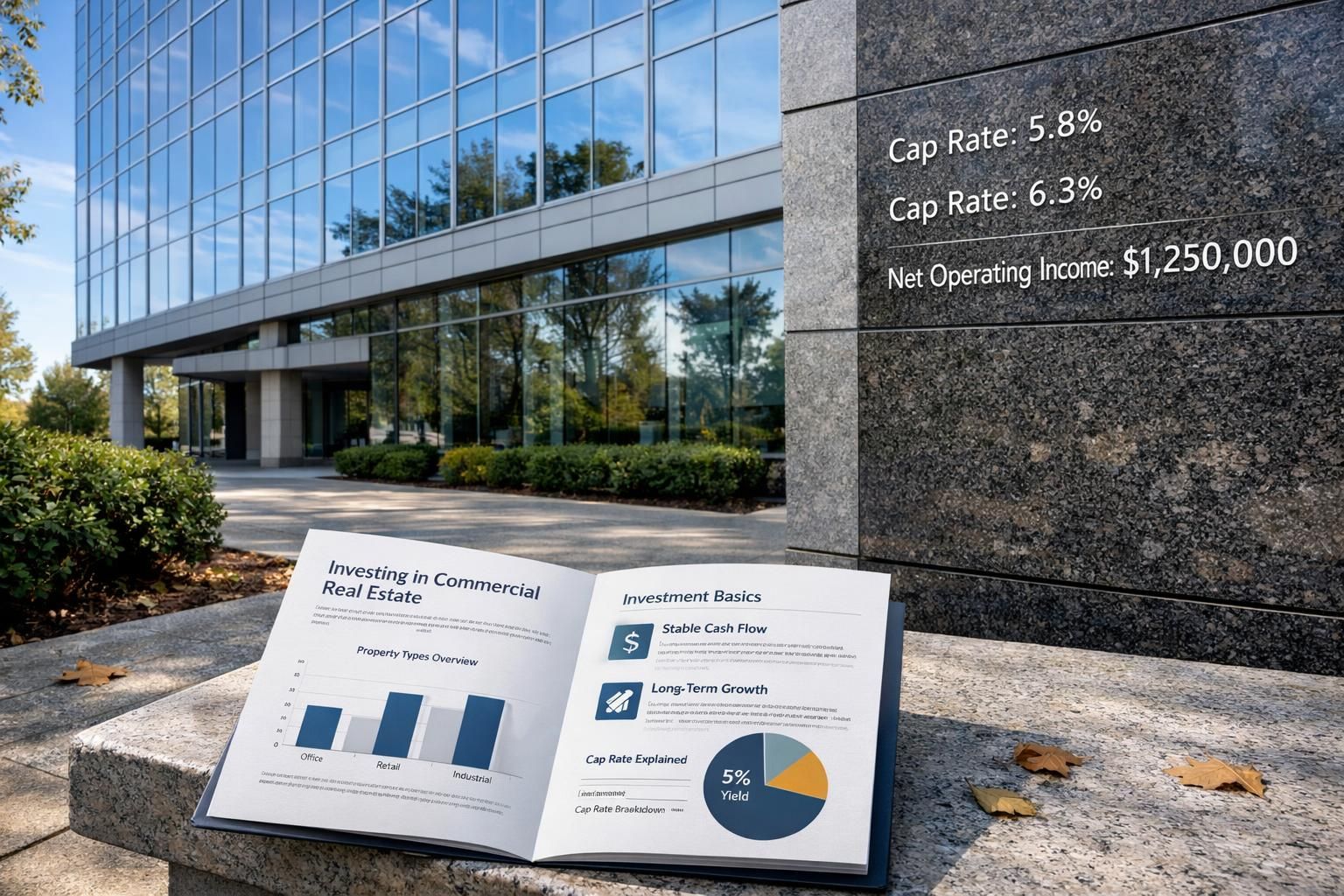
Commercial real estate investing for beginners offers insights into property types, metrics, and strategies to build wealth confidently. Start your journey today!
Table of Contents
- Types of Commercial Real Estate Investments
- Property Classes Explained
- Steps to Get Started in Commercial Real Estate Investing
- Key Considerations When Evaluating Investment Opportunities
- Benefits of Commercial Real Estate Investing
- Risks to Be Aware Of
- Strategies for Commercial Real Estate Investment
- Learn More about Commercial Real Estate Investing
- Conclusion
- FAQs
Commercial Real Estate Investing for Beginners

Many new investors think that commercial real estate investing is only for large companies or wealthy individuals. In reality, you can start building wealth through real estate investments with the right knowledge and strategy.
Commercial real estate investing for beginners may sound complex, but learning about different property types, financial metrics like cap rate and net operating income (NOI), and modern tools such as REITs or crowdfunding platforms makes the process easier to understand.
Understanding these fundamentals helps prevent costly mistakes while opening doors to higher passive income, portfolio diversification, and valuable tax advantages.
With years of hands-on experience in direct investments, syndications with private equity firms, and guidance on property management across office spaces and multifamily properties, I know what new investors need to succeed.
You will find clear steps, practical advice, and actionable insights here. Start your journey with confidence and learn how smart decisions create lasting value.
Key Takeaways
- You can invest in commercial real estate with options like office buildings, retail centers, industrial sites, and multifamily properties. Each asset type offers different income potential and risks. For example, long-term leases in office and industrial properties provide steady cash flow.
- Learn key metrics such as Net Operating Income (NOI), cap rate, loan-to-value ratio (LTV), and Gross Rent Multiplier (GRM). Strong financial analysis helps you avoid costly mistakes. Use market reports from CoStar or sources like First National Realty Partners for reliable data.
- Entry costs are high; most commercial loans require 20% to 30% down payments. Lenders often set LTV ratios between 65% to 80%. Compare financing options from banks, credit unions, SBA programs, or private equity funds before investing.
- Direct ownership gives more control but requires hands-on management and higher risk tolerance. Indirect investments—like Real Estate Investment Trusts (REITs) or syndications—let you join deals for as little as a few hundred dollars while professionals manage the property.
- Commercial real estate can yield annual returns of about 9–12%. Tax benefits include depreciation deductions and using a 1031 exchange to defer capital gains taxes. Diversifying across multiple property types shields your portfolio during economic downturns or market volatility.
Types of Commercial Real Estate Investments

You can build wealth through commercial property by choosing the right investment type for your goals. Each asset class—such as office buildings or retail properties—offers unique risks, rental income streams, and market opportunities for real estate investors.
Office Spaces
Office spaces serve as a core asset class in commercial real estate investing. Businesses lease these properties, from small buildings to large corporate headquarters, often locking in long-term agreements of up to 25 years or more.
These leases bring cash flow stability and lower tenant turnover for you as a real estate investor. High-quality tenants like established companies add another layer of security because their stable operations reduce the risk of vacancy.
You will find office buildings divided into Class A, B, or C categories based on age, location, and quality. Class A offices stand out with newer construction and prime addresses; Class B features older but well-maintained properties; Class C requires major repairs or renovations before reaching their full market value potential.
Many office investments require significant initial capital due to building size and customization needs for tenants. Expect detailed lease negotiations that favor both parties while reflecting the unique demands of business renters.
Strong property management is crucial since these investment properties demand regular maintenance and upgrades tailored to tenant needs. Improving amenities or updating facilities can boost rental income over time and increase overall property appreciation within your portfolio.
Long leasing periods also mean higher net operating income (NOI) stability compared to other commercial assets such as retail properties or industrial sites.
Retail Properties
Retail properties include grocery stores, electronics outlets, and clothing shops. Shopping centers and malls often anchor neighborhoods as commercial real estate hubs. You will find these investment properties in high-traffic, highly visible locations that attract steady foot traffic.
Anchor tenants such as large supermarkets or department stores can draw consistent customer flow, which benefits smaller retailers in the same shopping center.
Long-term leases are common in retail properties. Many of these lease agreements feature escalation clauses to protect you against inflation by increasing rents over time. Tenants such as chain restaurants or big box stores may sign 5- to 20-year triple net leases where they pay not just rent but also property taxes, maintenance costs, and insurance premiums.
This structure helps stabilize your cash flow while lowering operating expenses for landlords.
Income from retail properties relies heavily on consumer demand and overall economic trends within the market area. If you target strong demographic areas with steady population growth and rising disposable income levels, you position yourself for stable returns and property appreciation over time.
However, shifting retail trends or economic downturns can lead to increased vacancies especially among specialty retailers who rely on discretionary spending patterns. Careful analysis of local real estate trends using key metrics like capitalization rate and net operating income (NOI) ensures smarter investment decisions within your portfolio diversification strategy.
Industrial Properties
Industrial properties support manufacturing, warehousing, and distribution for top companies like UPS, FedEx, and Amazon. These commercial real estate assets often feature loading docks, large storage areas, and easy transportation access.
You can expect simpler build-outs compared to office spaces or multifamily properties. This means lower capital expenditures over time.
E-commerce growth has fueled steady demand in this sector. Industrial leases usually offer long-term agreements that create stable cash flow and income certainty for your portfolio investments.
In my experience managing these properties, you will find they remain more resilient during market volatility than retail or special-purpose sites. Consider industrial CRE if you want reliable tenants and strong rate of return with less risk during economic shifts.
Multifamily Properties
Multifamily properties include buildings with 5 or more units, such as apartment communities and assisted living facilities. You gain the benefit of a steady income stream from multiple tenants.
Consistent cash flow improves your return on investment and helps protect against tenant turnover. During my own investing experience, I found multifamily commercial real estate less risky compared to single-family rentals since longer-term leases kept occupancy rates high even in uncertain markets.
You can evaluate these property investments using value per door, gross rent multiplier (GRM), and net operating income (NOI). Multifamily assets require hands-on management due to several different lease agreements.
Selecting well-located properties positions you for portfolio diversification and stable rental yields year after year. Commercial loans backed by Freddie Mac or Fannie Mae offer attractive financing options for eligible buyers seeking long-term wealth growth through capital gains, tax benefits, and reliable cash flow.
Special Purpose Properties
Special purpose properties include assets like schools, churches, theaters, data centers, cold storage facilities, and government buildings. These commercial properties serve very specific uses and often have limited alternative functions.
You will find that such investment property types demand a deep understanding of market needs and tenant requirements. Leasing these spaces can prove more difficult due to their unique design and limited pool of potential tenants.
Vacancies in special purpose CRE may last for extended periods because not many businesses or organizations seek out this kind of space. Management approaches need to be flexible; customized leases are common with these assets.
For example, leasing a data center involves addressing power supply security and cooling requirements while agricultural sites might require attention to access routes or irrigation systems.
Investors who build expertise in niche commercial real estate markets can sometimes achieve higher returns despite the challenges.
Working with special use properties requires you to closely monitor real estate trends within that niche segment. Pay close attention to financial metrics like net operating income (NOI) or debt-service coverage ratio (DSCR).
A sharp focus on these details will help maximize cash flow while managing the risks associated with longer vacancy periods or tenant turnover in specialized environments.
Back to topProperty Classes Explained

Understanding property classes helps you spot risk and reward across commercial real estate. Each class describes a building's quality, location, age, and tenant profile—key factors for shaping your investment strategy and portfolio diversification.
Class A, B, C, and D Properties
Class A properties set the standard for commercial real estate investments. You see them in prime locations, often as high-rise office buildings or top-tier multifamily properties with luxury finishes.
Investors favor these assets for stable cash flow and lower risk but must pay a higher price and accept a lower yield. Reliable tenants help keep vacancy rates low, which protects your net operating income.
Class B properties offer strong investment opportunities if you want both income and value-add potential. These assets sit in decent neighborhoods but may need some maintenance or lease improvements.
Many investors target Class B office spaces or retail properties for renovations that boost property value and market appeal.
Older buildings and secondary locations make up most Class C inventory in commercial real estate (CRE). Significant vacancy, outdated infrastructure, or capital needs drive down purchase prices yet allow room to increase returns through repositioning projects.
Class D properties require specialized business plans; they usually face major issues like obsolescence or high tenant turnover. Only pursue these assets if you have experience handling distressed investments and higher risk tolerance.
Using strong property management strategies with class-specific goals improves cash flow stability across all classes of rental property investments while supporting portfolio diversification over time.
Back to topSteps to Get Started in Commercial Real Estate Investing

Begin your journey in commercial real estate by learning about market trends, understanding property valuation tools, and setting clear goals for cash flow with investment vehicles like multifamily buildings or private equity funds—discover the next steps to grow your portfolio.
Educate Yourself on the Market
Study different types of commercial real estate, including office buildings, retail properties, industrial sites, and multifamily properties. Track market trends by reviewing data from CoStar and local market reports.
Learn the basics of property classes such as Class A, Class B, or even older stock like Class C assets. Explore how rental rates, vacancy rates, and construction costs can shape your target markets.
Understand lease structures in detail before making decisions about a potential investment strategy or property valuation. Gain expertise on underwriting processes and analyzing sponsor projections for real estate investment trusts (REITs) or syndications.
Research due diligence practices by checking location factors, zoning laws that impact property use, and current industry trends affecting CRE markets.
Dig into key financial metrics like net operating income (NOI), cash-on-cash return figures, debt service coverage ratios (DSCRs), loan-to-value ratios (LTVs), principal amounts on commercial mortgages versus residential mortgages; all these numbers help you assess risk tolerance.
Use tools you trust to identify shifts in demand for office space or industrial properties during inflationary periods. This hands-on approach helps protect your portfolio diversification goals while boosting confidence to pursue higher returns through smart investing choices.
Define Your Investment Goals
Set clear return objectives for your commercial real estate investing. Choose between income, property appreciation, or a blend of both. For example, target an annual ROI between 8 and 12 percent based on your market research and chosen asset class like office buildings or multifamily properties.
Assess your risk tolerance before making any commitments. Some investors prefer fully leased centers for steady cash flow while others pursue higher yields from ground-up land development projects despite greater risks.
Decide if you want direct ownership of retail properties or if passive income through REITs suits your strategy better.
Outline specific investment strategies that match both your experience level and financial goals. Options include long-term hold periods (typically three to ten years), fix-and-flip methods, BRRRR (Buy, Rehab, Rent, Refinance, Repeat), syndications with private equity real estate groups, or ETF investments for broader portfolio diversification.
Define whether your main focus is a secure retirement plan, expanding net operating income each year, achieving a set internal rate of return by the end of the holding period—or creating generational wealth through disciplined real estate management.
Secure Financing
Compare multiple lenders for commercial real estate loans to find the best interest rate, terms, fees, and prepayment penalties. Assess the loan-to-value ratio (LTV) since this determines how much of the property value a lender will finance.
Many banks set LTV requirements between 65% and 80%. Understanding recourse versus nonrecourse options is key; recourse loans put your personal assets at risk if you default, while nonrecourse restricts repayment to the property.
Explore funding from banks, credit unions, or consider government-backed SBA and FHA programs as viable choices for multifamily properties or retail properties. Bridge loans help with short-term needs when buying office buildings or industrial properties in transition.
Pooling capital through partnerships or investment groups can allow you to pursue larger deals that might otherwise be out of reach. Study amortization schedules and interest structures before committing to any real estate financing package since these affect both cash flow and long-term profitability in commercial real estate investing.
Rocket Mortgage does not offer financing for commercial properties; work with specialized CRE lenders instead for tailored solutions.
Identify and Evaluate Properties
Study current economic trends and zoning requirements in your target market before making offers on commercial real estate. Use sources like local government records, industry reports, and real estate data services to track factors such as rental rates, tenant turnover, vacancy levels, and development costs near office buildings or retail properties.
Look at net operating income (NOI), cash-on-cash return, loan to value ratio, and compare these metrics for multifamily properties and industrial properties.
Walk through each property with a qualified inspector to evaluate its condition. Check maintenance needs and renovation costs that may impact cash flow or property appreciation. Review comparable sales nearby using the market approach; apply the cost approach for land development or special purpose assets like data centers.
Apply formulas like GRM or value per door if you review apartment buildings or Class A properties versus Class C properties. Submit a Letter of Intent (LOI) once you identify a strong match for your investment strategy; involve attorneys and accountants during contract reviews to minimize financial risks tied to illiquidity, mortgage debt, or lease structure issues.
Back to topKey Considerations When Evaluating Investment Opportunities

You must review commercial real estate valuation tools like the income approach and net operating income (NOI). Analyze cash-on-cash return and annualized rate of return to match your investment strategy.
Location and Market Trends
Location plays a critical role in commercial real estate investing. Prime sites command higher rents and experience lower vacancy rates. Properties like high-visibility retail spaces or industrial buildings near transport hubs attract quality tenants quickly.
You can often achieve better cash flow and property appreciation by targeting areas with strong economic growth and solid employment rates.
Real estate trends drive future returns, especially as demand for flexible office space grows. Over the next five years, evolving workspace needs are set to boost market growth in key urban regions.
Local supply and demand dynamics shift rental rates and occupancy; cities with limited new construction may offer stronger net operating income (NOI). Zoning laws also affect your investment strategy, restricting or enhancing what you can do with industrial properties or multifamily assets.
Understanding regional competition helps you retain long-term tenants more effectively. Anticipate shifts in the market to secure higher annualized rate of return on class A or class B properties.
Stay informed about current data center expansions, land development plans, and changes to local regulations that could impact both value and usage rights across your portfolio diversification efforts.
Property Valuation and Financial Metrics
Understand how accurate real estate valuation drives your investment success. Use methods like the income capitalization approach, cost approach, and market approach to determine fair values for office buildings, retail properties, and industrial assets.
For multifamily properties, analyze value per door alongside broader financial metrics.
Focus on Net Operating Income (NOI). Calculate NOI by subtracting operating expenses from gross rental income. Apply the cap rate formula—NOI divided by purchase price—to gauge returns in commercial real estate.
Measure cash-on-cash return to see annual pre-tax cash flow as a percent of your invested equity. Check Gross Rent Multiplier (GRM) for quick rent-based comparisons between apartment complexes or special purpose properties.
Set goals around these key numbers to spot strong opportunities in property appreciation and passive income generation while building portfolio diversification.
Tenant Potential and Lease Structures
Tenant quality drives your long-term returns in commercial real estate. Stable businesses with proven track records and good credit help you avoid vacancy and default risk. You should seek anchor tenants for retail properties, like national grocery chains or large pharmacy brands, to boost traffic and attract other renters.
In my experience analyzing multifamily properties, tenant mix can make or break cash flow predictability.
Lease structures impact both risk and reward. Commercial leases usually run three to five years but can reach 25 years for office buildings or industrial properties. Triple net (NNN) leases shift property taxes, insurance, and maintenance costs to the tenant; this lifts management burdens from you as the owner.
Many lease agreements include annual rent escalations that protect against inflation while increasing your net operating income (NOI). Always review lease terms closely since these contracts are more detailed than residential ones, giving you room to negotiate terms that align with your investment strategy and portfolio diversification goals.
Back to topBenefits of Commercial Real Estate Investing

Commercial real estate investing can boost your passive income, support portfolio diversification with assets like office buildings or retail properties, and offer attractive tax advantages—learn how to put these tools to work for you.
Higher Income Potential
Office buildings, industrial properties, and multifamily properties often deliver higher returns than single-family homes. Typical annual yields for commercial real estate investments range from 9 to 12 percent.
As an investor, you can benefit from multiple tenants in office space or retail properties which increases your total rental income.
Larger property sizes lead to greater revenue generation and allow you to scale up faster. Longer lease terms also help ensure consistent cash flow. This makes it easier for you to forecast net operating income (NOI) over time.
Industrial assets and multifamily housing usually top the list for profitability because of their tenant stability and sustained demand.
You can force appreciation by improving a property's features or management strategy. Value-add projects attract higher-paying tenants and boost property valuation more quickly than waiting for normal market growth alone.
Commercial real estate loans help you leverage capital so every dollar works harder as the asset appreciates with loan amortization building equity even further into your portfolio.
In my own experience managing class A office space, these factors strengthened both monthly cash flow and long-term asset value within my investment strategy.
Long-Term Leases and Cash Flow Stability
Long-term leases, ranging from 3 to over 25 years, lock in tenants for extended periods and cut down on tenant turnover. You save money by avoiding frequent vacancy costs and loss of net operating income (NOI).
Built-in rent escalations shield your rental cash flow from inflation year after year. Businesses seeking stable locations often sign multi-year agreements for retail properties, industrial buildings, or multifamily communities.
Triple net (NNN) lease structures push most property expenses—like taxes, insurance, and repairs—to the tenant. This increases your cash flow consistency with fewer surprises. Lower turnover rates mean you see more reliable passive income even during market volatility or economic downturns.
Commercial real estate loans become less risky when lenders see proof of steady lease income streams supporting your investment strategy.
Tax Advantages and Diversification
Depreciation rules and interest deductions allow you to shield a portion of your commercial real estate income from taxes each year. A 1031 exchange lets you defer capital gains taxes when swapping properties, keeping more money working in your portfolio.
Many investors use these strategies with office buildings, retail properties, or industrial assets for steady passive income and greater tax savings.
Commercial real estate investing builds strong portfolio diversification because property values often move independently from stocks or bonds. Investing across multifamily properties, special purpose assets like data centers, and land development projects reduces market volatility risk.
Real estate investment trusts (REITs), funds, and ETFs offer further options to broaden exposure by mixing direct ownership with indirect investments. This mix helps protect returns during unpredictable economic cycles while letting you control tax planning on specific holdings.
Back to topRisks to Be Aware Of
Understanding market volatility and tenant turnover helps you prepare for property management challenges in commercial real estate. Strong investment strategy and risk tolerance support better outcomes when using commercial real estate loans or working with a certified development company.
Market Volatility
Market volatility affects commercial real estate in many ways. Office buildings and retail properties can lose value fast during economic downturns. Vacancy rates may jump as businesses close or downsize, which lowers your cash flow and asset value.
If a recession hits, demand for office space or industrial properties could drop, leaving more empty units across the market.
Shifts in regional economies also cause uncertainty. Job losses from large employers can lead to higher vacancies in multifamily properties and reduced rent growth. Rising interest rates make commercial real estate loans more expensive, often pushing property values lower and squeezing net operating income (NOI).
Developers launching new projects increase competition; this can drive rental prices down even further if supply outpaces demand.
Your ability to sell quickly drops during volatile markets since CRE assets are less liquid than homes. This makes exit strategies harder to execute without taking a loss on the investment.
Watch real estate trends closely; study local conditions before buying or refinancing any asset class—whether it’s data centers, land development sites, or Class B properties—to help reduce risk exposure.
Active monitoring will allow you to stay ahead of sudden changes in tenant turnover or shifts in cash-on-cash return expectations across different types of investments.
Tenant-Related Challenges
Tenant turnover in commercial real estate can cause gaps in cash flow and push up both marketing and leasing expenses. Defaults by tenants also create financial instability, disrupt net operating income (NOI), and may lead to costly legal battles that eat into returns.
You need to screen for tenant creditworthiness, especially with multifamily properties, office space, or retail properties. High concentration from a single tenant raises risk; their departure could trigger prolonged vacancies.
Leasing special-purpose assets like data centers or medical offices often takes longer if tenants move out. Lease renegotiations during downturns might result in lower rents and shrinking property appreciation.
Investing time in strong property management helps reduce defaults, minimizes cost-intensive customizations, and supports portfolio diversification across classes such as class A or class B properties.
Financial and Management Risks
Commercial real estate investing requires significant upfront capital, often 20 to 30 percent down. Unexpected expenses and negative cash flow can quickly add up if you do not plan for repairs, compliance costs, or rising operating costs.
Illiquidity remains a major concern because selling office buildings or multifamily properties may take months or even years. Make sure your investment strategy accounts for these risks.
As property size and tenant numbers increase, so does management intensity. Tasks like rent collection, maintenance coordination, and tenant relations can overwhelm inexperienced investors.
Poor due diligence leads to unanticipated repair bills or legal penalties. Loan terms such as recourse versus nonrecourse loans influence your personal liability in default scenarios, especially with commercial real estate loans used in land development projects or class B properties.
Many investors hire professional property managers, attorneys, or accountants to help handle complex financial reporting and day-to-day operations efficiently while protecting long-term passive income and portfolio diversification goals.
Back to topStrategies for Commercial Real Estate Investment
You can shape your real estate portfolio using both active and passive strategies. Tools like Real Estate Investment Trusts (REITs), commercial property funds, and syndications can help you reach your investment goals faster.
Direct Investments
Direct investments in commercial real estate require hands-on involvement. You must manage all aspects of the property, including leasing, maintenance, and compliance with local laws.
Expect to handle tenant turnover and coordinate repairs or upgrades yourself or through hired property management professionals. Most direct deals need a down payment of 20% to 30%.
If you target a $2 million office building or multifamily property, plan for at least $500,000 in equity.
Full control over investment decisions lets you choose value-add strategies that increase net operating income (NOI) and boost property appreciation. Engage skilled REALTORS, attorneys, accountants, and contractors on your team to achieve better financial results and maintain regulatory compliance.
Direct ownership offers higher cash flow potential than passive options like REITs but comes with larger capital requirements and increased risk exposure due to market volatility or tenant-related challenges.
Popular approaches include land banking for future development gains; fix & flip projects that refresh older retail properties or industrial buildings; wholesaling for quick returns; or applying BRRRR (Buy, Rehab, Rent, Refinance, Repeat) tactics for portfolio diversification across asset classes such as class A properties and class C properties.
Investors who adopt this strategy often enjoy more tax advantages while actively shaping their own investment strategy within the broader commercial real estate market.
Indirect Investments: REITs and Syndications
Real estate investment trusts (REITs) and syndications give you access to commercial real estate without owning properties directly. REITs, which can be public or non-traded, let you purchase shares in a portfolio of office buildings, retail properties, multifamily developments, or industrial assets.
You receive dividends while the trust handles property management and leasing. Public REITs and exchange-traded funds trade on major stock exchanges with entry points as low as a few hundred dollars.
These passive investment vehicles offer both liquidity and easy diversification for your portfolio.
Syndications pool money from accredited investors into larger deals managed by an experienced sponsor. Minimum commitments often range from $25,000 up to $100,000 or more per deal.
You earn passive income while institution-grade professionals oversee every phase—from acquisition due diligence to property management—across strategies like value-add or core assets.
Non-traded REITs and private equity funds may target specialized sectors such as data centers or land development but usually come with limited liquidity compared to public options.
Indirect strategies help boost cash flow potential, support long-term appreciation goals, encourage risk tolerance matching, and expand tax advantages across multiple property types.
Back to topLearn More about Commercial Real Estate Investing
Expand your expertise in commercial real estate by exploring the unique investment strategies used in today’s markets. Study property types like office buildings, multifamily properties, and data centers to understand how each impacts portfolio diversification and income potential.
Focus on mastering key metrics such as net operating income (NOI), cash-on-cash return, and real estate valuation methods to boost your decision-making skills. Look at case studies from groups like First National Realty Partners, which targets multi-tenanted assets below intrinsic value for accredited investors seeking favorable returns.
Commit yourself to ongoing education due to the complexity of commercial real estate investing. Track new trends in sectors such as industrial properties or land development to capitalize on emerging opportunities.
Review resources from experienced contributors like Ashley Kilroy, a University of Cincinnati finance graduate who writes for Rocket Homes and has insights from Fortune 500 companies.
Use these sources alongside fact-checked educational materials that explain market volatility, risk tolerance assessments, tax advantages, lease structures, tenant turnover challenges, and commercial real estate loans.
If you are not ready for CRE investments yet but want exposure to property appreciation or passive income streams, consult a Home Loan Expert for residential investment guidance first before entering the sector fully.
This step can help prepare you with foundational knowledge while protecting against early mistakes common in complex asset classes like class A properties compared with class C properties or special-use structures versus mixed-use sites.
Strive to build your confidence through continuous learning so you can design an investment strategy that aligns with your financial objectives now and into the future.
Back to topConclusion
Starting your journey in commercial real estate can help you build wealth and expand your investment portfolio. You gain access to steady cash flow, tax advantages, and the potential for strong property appreciation.
Stay focused on your goals and use market knowledge to guide every deal. With the right approach, commercial properties like multifamily buildings or office space can help you achieve lasting passive income and financial growth.
Back to topFAQs
1. What types of commercial real estate can beginners invest in?
Beginners can invest in multifamily properties, office buildings, retail properties, industrial properties, and data centers. Land development is also an option for those seeking to diversify their portfolio.
2. How do tax advantages impact commercial real estate investing?
Tax advantages often include deductions on mortgage interest and property depreciation. These benefits help investors increase net operating income (NOI) and improve cash flow over time.
3. Why is portfolio diversification important in real estate investing?
Portfolio diversification spreads risk across different asset classes such as class A properties, class B properties, and class C properties. This approach helps manage market volatility while building a stable investment strategy.
4. What should new investors know about cash-on-cash return and NOI?
Cash-on-cash return measures the annual income earned compared to the money invested out-of-pocket. Net operating income shows the total revenue after subtracting property expenses; both metrics guide smart investment decisions.
5. How does tenant turnover affect passive income from commercial real estate?
Tenant turnover leads to vacant office space or retail units which reduces rental income temporarily. Effective property management limits turnover rates ensuring steady passive income for owners.
6. What role do loans play in financing commercial real estate investments?
Commercial real estate loans provide capital needed to acquire assets like office buildings or industrial sites. Understanding loan terms supports better risk tolerance assessment and long-term success as a real estate entrepreneur following current trends in valuation and financing options.
Back to top