

Contractor payment schedules are vital for managing cash flow. Explore milestone-based templates to streamline payments and prevent disputes effectively.
Table of Contents
- Why Milestone-Based Payment Schedules Are Effective
- Key Components of a Milestone-Based Payment Schedule
- Types of Contractor Payment Schedules
- Common Challenges with Milestone-Based Payment Schedules
- Best Practices for Creating Milestone-Based Templates
- Benefits of Using Milestone-Based Payment Schedules
- Overview of Contractor Payment Schedules
- Conclusion
- FAQs
Contractor Payment Schedules: Milestone-Based Templates

Many real estate professionals and investors struggle to get paid on time during construction projects. Clear contractor payment schedules are crucial, but too often, vague terms cause expensive delays and disputes.
With the right milestone-based templates, you can protect your cash flow, reduce misunderstandings, and create predictable progress for every job. 1
For years, I have worked closely with general contractors and project owners on hundreds of residential construction contracts. That experience taught me that strong payment structure using specific milestones limits risk while supporting trust between all parties involved.
Discover how practical tools like digital construction management software or mobile apps make managing expenses and documentation simple and reliable throughout your project life cycle.
Read more to learn what steps you can take today to keep payments smooth from start to finish. 2
Key Takeaways
- Milestone-based payment schedules tie payments to clear project stages, such as “demolition” or “HVAC completion,” which improves cash flow predictability and cuts payment disputes.
- Only 12% of construction companies receive on-time payments; using digital tools like Procore automates tracking, invoicing, and documentation to fix this issue.
- Retainage usually holds back 1%–10% of each invoice until substantial or final completion, protecting owners from defects or unfinished work; for example, California law requires retainage be released within 45 days.
- Poorly defined milestones and missing documents often cause costly delays, mechanics liens, or even legal battles—standardized templates and construction management software help prevent these problems.
- Set three to five objective milestones per contract (applying the Goldilocks principle) with measurable deliverables supported by photos or reports; clear communication using Gantt charts helps all stakeholders avoid misunderstandings.
Why Milestone-Based Payment Schedules Are Effective

Milestone-based payments help you manage cash flow and provide clear checkpoints for your construction projects. Project management software and mobile applications make tracking payment milestones easy, increasing control over completion and invoicing requirements.
Maintain cash flow
Draw schedules and milestone-based payments help you keep cash flow steady throughout construction projects. Linking payment terms to measurable deliverables means accounts receivable stay predictable, letting you plan purchases for materials or schedule payroll with confidence.
Large projects carry financial pressure as crews grow, equipment moves in, and invoices pile up fast. A clear contractor payment schedule ensures money enters your business at key project stages.
Construction management software can automate invoicing aligned with project milestones, cutting the administrative burden for both contractors and real estate investors. You gain insights into upcoming costs using progress payments or time-based payments set on monthly intervals.
With retainage held back at each stage—typically 1 to 10 percent—you protect quality while also monitoring impacts on profitability and working capital needs.
Digital tools ease tracking of every invoice and receipt so you spot financing gaps early and avoid work stoppages from missed payments. Using enterprise resource planning systems strengthens budgets by forecasting outflows against incoming funds for each phase of a construction contract.
These methods make cash flow forecasts easier for every stakeholder involved in the payment structure of complex buildings or residential developments.
Reduce disputes
Clear payment milestones help you prevent payment disputes before they start. As a real estate professional or investor, you rely on fast and reliable payments to keep your projects moving.
Milestone-based payments tie each payout to specific deliverables or work stages. This setup gives both parties proof that the job is progressing as agreed. You can use construction management software or an ERP system for digital tracking and documentation at every milestone.
These tools store all receipts, invoices, project photos, and approvals in one place.
Only 12 percent of construction companies consistently receive their payments on time—disputes slow down your project and put cash flow at risk. Missed payments let contractors file a mechanics lien against your property, which could lead to legal headaches or even a stop-work situation.
Strong payment terms in the contractor payment schedule specify how and when progress payments are made while listing the dispute resolution steps if issues arise. Mediation and arbitration clauses bring faster solutions compared with court battles.
Standardized templates further cut miscommunication; everyone works from the same structure for accounts payable, retainage release conditions, and required documentation for completion-based payments.
From my experience managing multiple commercial builds using these best practices, reducing confusion around deliverables saved weeks of back-and-forth—and thousands in potential costs due to delays or breach of contract claims—while boosting trust among all stakeholders involved in construction projects.
Improve project predictability
Tying payment terms to clear project milestones lets you track progress and forecast cash flow more accurately. 1 Using a detailed contractor payment schedule, including key dates such as the project start date and expected completion, helps you spot issues early and make informed decisions.
Your accounting system or construction management software can automate these updates, giving real-time visibility into finances.
Using milestone-based payments with measurable deliverables can boost reliability in your projects. Adopting frameworks like RealCONs enables data-driven analysis for better risk management. 2 Retainage serves as an incentive for contractors to finish work to your standards. Progress payments provide transparency on how funds are allocated at each stage while reducing the risk of payment disputes or delays.
Reliable predictability means fewer surprises—helping you safeguard budgets across your portfolio.
Protect budgets
Clear contractor payment schedules help you control project costs from start to finish. Payment structures with milestones set specific points for progress payments, so funding matches actual work completed.
This approach prevents overpayments and protects your cash flow, making it easier to stick to your budget on every real estate development. 1
Including retainage in your construction contracts strengthens financial protection by holding back a portion of the payment until substantial completion. Delayed or disputed payments threaten budgets and can lead to mechanics liens or lost revenue.
Using construction management software helps track every transaction, while consulting a construction attorney shields you against risk and supports efficient dispute resolution if needed.
Back to topKey Components of a Milestone-Based Payment Schedule

A strong milestone-based payment schedule gives you confidence in every phase of your construction project by using clear criteria, accurate invoices, and digital tools like project management software—keep reading to unlock smarter payment solutions.
Clearly defined milestones
Clear milestones give structure to your contractor payment schedule. Tie each milestone to specific project stages, such as site clearing, mechanical systems installation, or interior finishing.
Use the Critical Path Method (CPM) to identify key goals that act as trigger points for progress payments and maintain cash flow throughout construction projects. 3
Apply the Goldilocks principle when choosing how many payment milestones you need; avoid setting too many or too few. For example, in a $100,000 renovation, use milestone-based payments at demolition and structural work completion first.
Move next to substantial completion of all HVAC or ventilation work before reaching final steps like countertop installation and painting. Link each milestone not just to technical achievements but also measurable financial goals within your payment terms. 3
Use digital tools such as construction management software or ERP systems for tracking milestones and documentation requirements efficiently. These platforms help both project owners and independent contractors review progress with confidence using mobile devices including tablets and smartphones right on-site.
Well-defined deliverables tied directly to timing in your construction contracts reduce disputes over scope changes, delays due to missing documents, and increase traceability from invoicing through payment processing.
Measurable deliverables
Link each payment milestone to clear, objective deliverables. For example, use detailed completion stages like "installing countertops in all kitchen units" or "finishing electrical wiring on the second floor." Tie progress payments and retainage directly to these results.
This method reduces payment disputes and keeps your contractor payment schedule transparent. 4
Track every deliverable using construction management software or mobile apps. Require documentation, such as photos or inspection reports, for proof of completion before releasing funds.
You improve cash flow reliability for everyone involved by insisting on evidence-backed milestones. Real estate professionals protect their project budgets while fostering trust between contractors and owners with measurable deliverables at every step.
Payment amounts tied to milestones
Payment amounts in a milestone-based schedule keep your construction project on track and protect your investment. Each payment is tied to a specific stage of work, such as demolition, mechanical systems, or interior finishing.
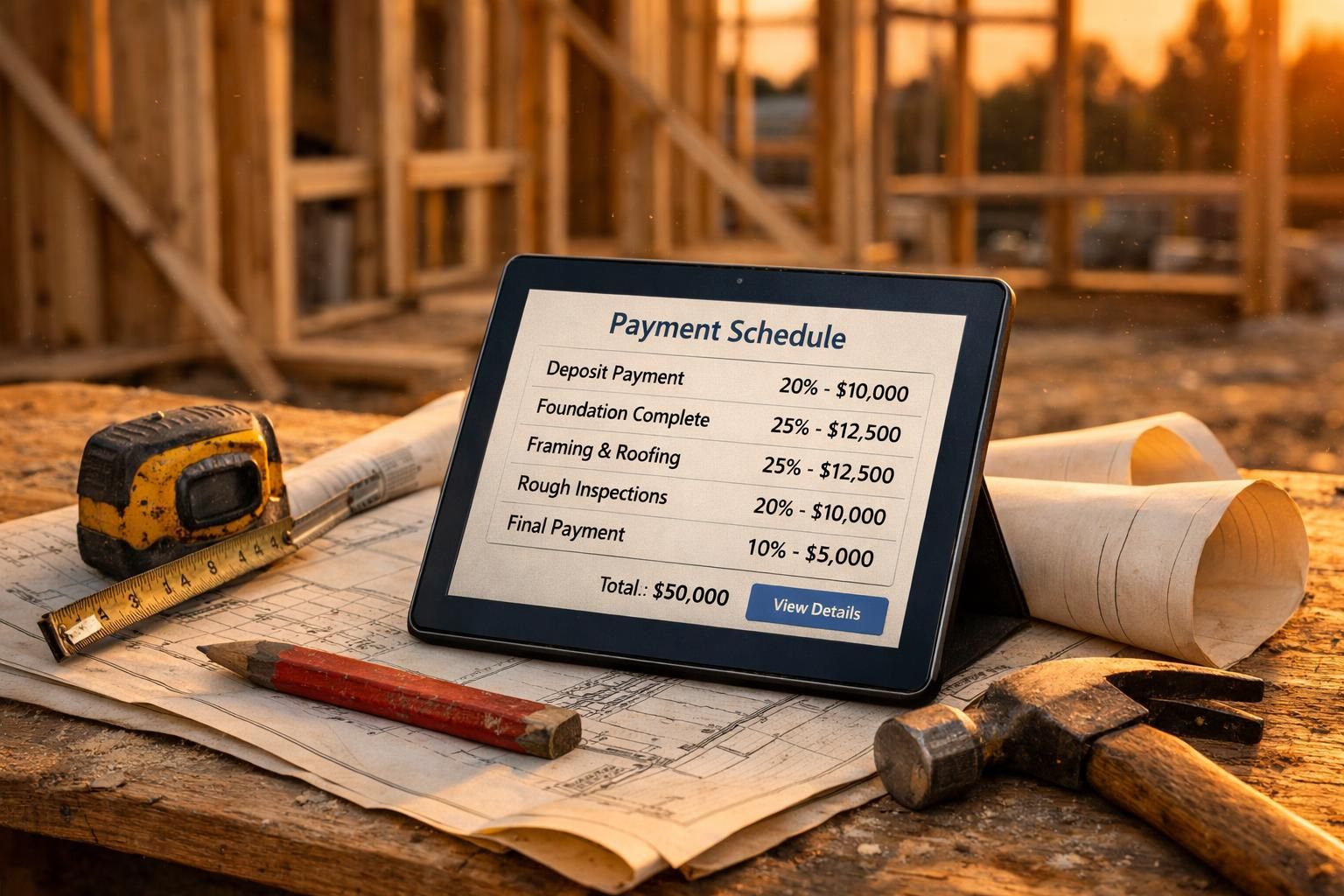
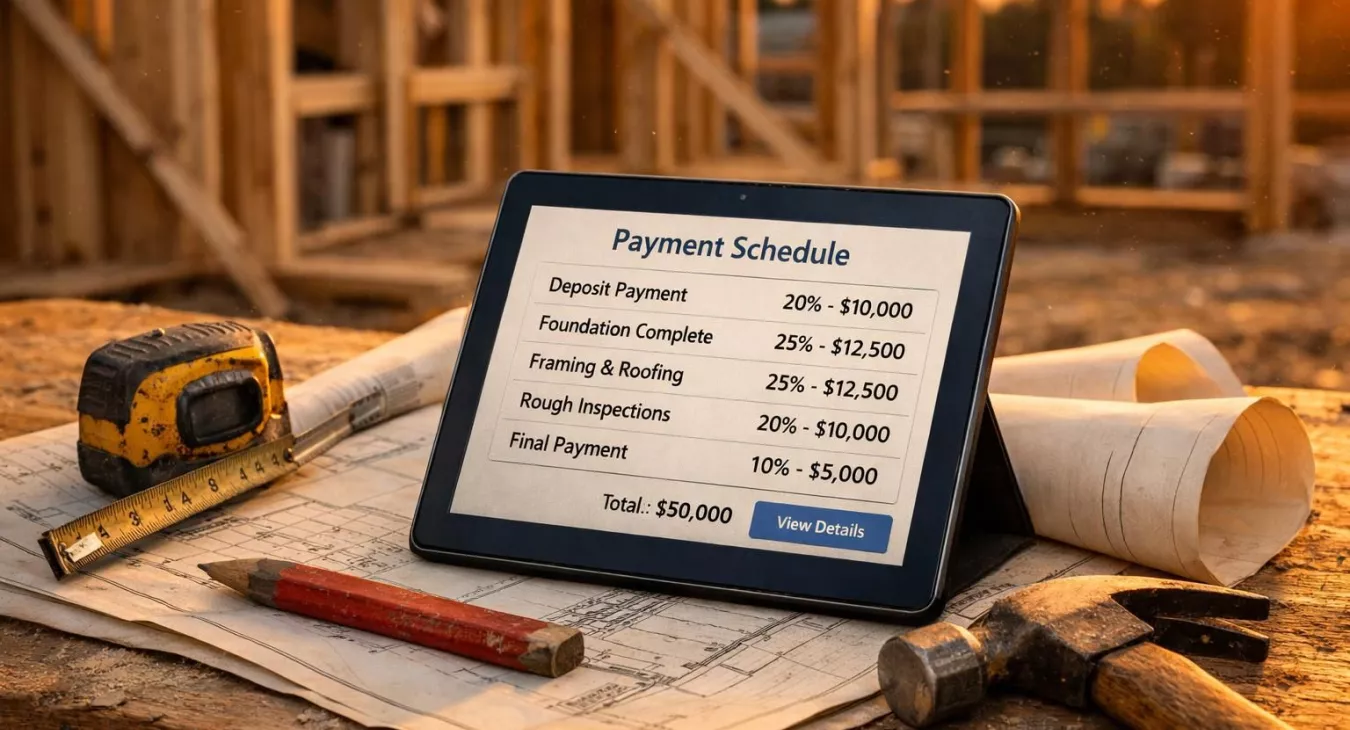
For example, in a $100,000 renovation contract, you might set $10,000 for the deposit, $25,000 after structural tasks are complete, $20,000 after the mechanical phase wraps up, another $25,000 upon finishing interiors and then hold the final $20,000 until substantial completion.
This clear structure supports budget control and avoids cash flow surprises. Retainage—commonly 2 percent or about $2,000—is held back from each progress payment and released only after final approval by the project owner or their employer of record.
Using project management software automates calculation of milestone payments and generates invoices with proper documentation. As an experienced contractor manager working with real estate investors daily on construction projects across Texas and Florida since 2014 I have seen this method sharply reduce payment disputes and delays while keeping all parties aligned throughout every step.
Documentation requirements
Accurate documentation is the backbone of a strong contractor payment schedule. You need to align your invoices, lien waivers, inspection reports, and compliance documents directly with project milestones before releasing progress payments.
For example, many construction projects demand retainage paperwork that details the withheld amounts until substantial completion. 4 Your contracts might state that certain deliverables trigger milestone-based payments; ensure you support each one with measurable proof.
Digital construction management software simplifies tracking these essential files and reduces invoicing mistakes. Using mobile software or accounting systems allows you to upload photos of completed work, organize labor logs, back up receipts, and keep change orders in one place.
Consistent updates help prevent disputes over payment delays and make dispute resolution swift if conflicts arise. Centralized recordkeeping supports clarity for every stakeholder—from investors to employees—and speeds up approvals since all necessary files are ready at hand.
Your first-hand experience using cloud tools can transform how quickly you move from meeting requirements to receiving final deposits on a construction contract. Some schedules only ask for basic invoices while others require detailed insurance certificates or labor documentation at each stage; tailoring your checklist by project type ensures compliance without overspending resources on unnecessary paperwork.
Back to topTypes of Contractor Payment Schedules

You can choose a payment structure that best supports your project’s needs, whether you prefer fixed dates or performance-based options. Leading construction management software and modern credit card systems help you set up clear schedules, safeguard interests, and boost efficiency throughout your contracting process.
Deposit and final payment
Deposit and final payment schedules work best for small or short-term construction projects. Most contractors in residential or small commercial jobs request an upfront deposit to cover materials, permits, and initial labor.
For example, if you hire someone to build a $3,000 deck, expect to pay $1,500 as a deposit before work begins. The remaining $1,500 is due after you confirm the project meets all agreed requirements.
This simple payment structure keeps cash flow steady while keeping invoicing and approval straightforward for both parties. You will only need basic documentation like an invoice during the process.
These terms reduce administrative tasks compared to detailed progress payments or milestone-based systems using construction management software like Procore or Buildertrend. Deposit and final payment arrangements help minimize risk of disputes since funds release once substantial completion is verified by the project owner or investor.
Progress payments
Progress payments give you strong control over large or medium construction projects. Payments are made at set points as work progresses, often every month, based on a verified percentage of completion.
For example, after reaching 30% completion, your contractor submits an invoice reflecting that exact amount. Independent inspectors verify each phase to confirm progress aligns with the approved Schedule of Values.
This approach protects cash flow and matches payouts to real project milestones instead of estimates or guesses. Using progress payments lowers financial risk by linking payment terms directly to achieved deliverables.
You track each stage through detailed documentation in your construction payment schedule and manage invoicing requirements using trusted construction management software like Procore or Buildertrend.
Regular invoices keep budgets accurate, support multi-phase jobs with evolving scopes, and help avoid payment disputes that could cause delays for both owners and contractors.
Time-based payments
Time-based payments divide the contract price into equal amounts at set intervals, such as every month. You benefit from a predictable contractor payment schedule that keeps cash flow steady during construction projects. 1 This method does not require contractors or subcontractors to reach specific project milestones before you release payments. In my own real estate investments, this structure helped keep skilled laborers on-site even when project scopes shifted.
You may find time-based payments ideal for time and materials contracts or evolving project scopes in commercial builds and residential rehabs. Construction management software can automate invoicing requirements, reducing manual errors and supporting user-friendly payment processes for both owners and service providers.
Oversight remains critical; regular site visits let you track actual work against billed hours to avoid overpaying for incomplete tasks.
This approach supports fair compensation but lacks incentive for contractors to finish faster or hit key progress milestones early. If weather delays push schedules back or scope changes arise mid-project, make sure your payment terms reflect those shifts promptly.
Many project owners adjust the contractor payment schedule with each change order so that distributions stay aligned with actual job progress rather than just calendar dates alone.
Milestone-based payments
Milestone-based payments release funds as each stage of your construction project reaches completion. For example, in a $100,000 renovation job, you might set milestones like $25,000 after demolition and structural work or $20,000 upon finishing mechanical systems.
These payment terms improve cash flow for contractors and protect your budget as a project owner. You tie exact dollar amounts to specific deliverables; this action anchors financial risk to real progress.
Project owners and investors benefit from clear documentation at every step. Construction management software tracks each milestone’s due date and verifies quality before approving payments. 1 Applications of blockchain provide an extra layer of security by offering immutable records for substantiation during dispute resolution processes with mediators or arbitrators if disagreements arise.
You gain more transparency using milestone-based schedules since they detail the required scope before any money changes hands. Retainage can link directly to each phase so that withheld funds only get released once final signoff occurs.
Consulting a construction attorney ensures compliance with state regulatory requirements embedded within contractor payment schedules, keeping both parties secure throughout all stages of your investment property improvements. 1
Retainage
Retainage often holds back 1 to 10 percent of each progress payment until you reach substantial or final completion. This amount acts as a financial safeguard, giving project owners and managers leverage in case you need to address punchlists or defects.
California law requires the release of retainage within 45 days of completion and further mandates that general contractors must pay subcontractors their share within ten days.
Your cash flow and profitability may suffer if retainage terms extend too long, especially on large construction projects. Always detail withheld amounts and release conditions in your contractor payment schedule documentation.
Review contract terms carefully, since some projects rarely use this method based on local regulations or project type. Leverage construction management software to track all retainage details; this keeps records clear for subscribers and stakeholders throughout every phase.
Back to topCommon Challenges with Milestone-Based Payment Schedules

You may face unexpected payment delays if your contractor payment schedule lacks clear project milestones and organized documentation. Construction management software and project tracking tools help you avoid setbacks, protect cash flow, and keep progress on track.
Disputes over milestone completion
Disputes over milestone completion often arise in construction projects due to vague or poorly defined criteria. If your contractor payment schedule lacks clear, measurable deliverables for each payment milestone, you risk disagreements over what “completion” means.
For example, if a project owner and general contractor do not agree on progress payments for substantial completion versus final touches, payment delays can occur. Cash flow suffers when parties dispute whether work meets the requirements set in the construction contract.
Frequent disputes erode trust between you and your contractors or freelancers. They may even halt progress until both sides resolve the dispute. Many real estate investors have seen mechanics liens filed because of unpaid invoices tied to disputed milestones.
Formal dispute resolution methods like mediation or arbitration are sometimes necessary to break an impasse; these processes should be outlined in your payment terms from the start.
Construction management software and digital tools make it easier to document achievements with photos or reports as backup support during disputes.
Clear communication helps prevent misunderstandings about project milestones and invoicing requirements. Regular updates create transparency so all stakeholders know which deliverables count toward each stage of completion-based payments.
Setting objective criteria upfront protects your budget and keeps projects on track by reducing costly setbacks tied to unresolved payment disputes.
Poorly defined deliverables
Poorly defined deliverables often create confusion in your contractor payment schedules. Vague or ambiguous deliverables make it hard to verify if a milestone is truly complete, which complicates progress payments and slows payment approval.
As a result, you may find more payment disputes arise between project owners and contractors, costing both time and money.
You need clear, measurable criteria for each project milestone in your construction contracts. Unclear expectations can lead to miscommunication among all parties involved. These gaps sometimes force extra inspections or documentation reviews before releasing funds, further delaying your cash flow and affecting overall project predictability.
In my experience managing commercial developments with multiple subcontractors, projects suffered major delays due to undefined deliverables on the construction payment schedule. Lacking a standardized template caused inconsistencies across invoices and milestones for each phase of work.
You protect your budget best by aligning every pay structure—such as deposit and final payment—with objective requirements that everyone understands up front. Using robust construction management software helps ensure each contract uses precise language so nothing gets overlooked at substantial completion.
Delays caused by missing documentation
Missing documentation disrupts construction payment schedules and project timelines. Incomplete claims submissions slow down certification processes, leading to payment delays for contractors and impacting cash flow.
As a real estate investor or project owner, you risk administrative inefficiencies if required forms or approvals are not submitted on time. 5
From first-hand experience, missing documents often stall progress payments and trigger disputes between parties. Project management software like Procore can help streamline invoicing requirements by tracking paperwork in real-time.
Always tie payment milestones to clear documentation standards within your construction contracts; this keeps approvals transparent while reducing excuses for delayed funds. Missing backups or certifications may even be used as deliberate stalling tactics, undermining trust and escalating costs across the entire contractor payment schedule.
Scope creep impacting timing and costs
Scope creep often drives up costs and delays construction projects. 6 Changes outside the original project scope can disrupt established contractor payment schedules and push back payment milestones.
Poor contract management or lack of clear communication leaves your project open to budget overruns and missed deadlines. Unmanaged changes, like last-minute requests for extra finishes or upgrades, force crews to redo work, delay inspections, and impact substantial completion dates.
Project owners see cost overruns spike because each additional request needs new estimates, documentation, and approval before you release further progress payments. Experts in construction management stress that defining deliverables early helps prevent these setbacks. 6 Using a well-structured milestone-based payment schedule adds clarity around invoicing requirements and reduces misunderstandings over what triggers each payment term. Successful real estate investors use digital platforms such as project portfolio management software to track scope changes in real time so you maintain control over cash flow and keep projects on schedule.
Back to topBest Practices for Creating Milestone-Based Templates

Use project and portfolio management software to keep track of payment milestones and required documentation. Clear construction contracts will help you set up a strong payment structure that supports steady progress on your projects.
Use objective, measurable criteria for milestones
Set each project milestone using clear, measurable deliverables tied to the payment structure. For example, specify “installing 100% of HVAC systems” or “completing foundation to building code standards.” This approach ensures that everyone sees what counts as substantial completion before releasing progress payments.
You reduce the risk of payment disputes and payment delays because both parties agree on exact criteria from the start.
Apply concepts like the critical path method (CPM) to map out key construction milestones with concrete outputs. The Goldilocks principle guides you to choose milestones that are not too broad but also not too minor; aim for three to five major checkpoints in a typical contractor payment schedule for most construction projects.
Objective criteria limit subjective judgment, so approvals move faster and your cash flow stays predictable.
Digital tools such as construction management software make it easier to document these achievements with photos, inspection reports, or timestamped logs. These platforms support dispute resolution by providing evidence if issues arise over project milestones or invoicing requirements.
Standardized templates reinforce this process further and help align all stakeholders around agreed-upon goals throughout your contracts.
Standardize templates for consistency
Standardized contractor payment schedule templates keep your construction projects organized and compliant. Templates help reduce administrative errors by making sure you include all key details, such as project milestones, payment terms, invoicing requirements, and deposit or final payment rules.
Consistency in documentation supports compliance with audit standards and meets legal needs for construction contracts. Use of these templates also speeds up setup, saving time during each project launch.
Reusable digital templates can be tailored for specific needs using tools like construction management software. They make it easier to onboard new team members on complex milestone-based payments or retainage processes.
You maintain a uniform approval process across multiple projects while reducing the risk of missing critical elements that could cause payment delays or disputes later on.
Leverage digital tools for tracking and documentation
Construction management software customizes your contractor payment schedules, tracks progress payments, and connects with accounting systems. Use mobile apps to schedule milestone-based payments from project sites and capture photos or videos as completion proof.
Cloud-based document management lets your team update files in real-time and keeps secure backups for all project records.
ERP solutions automate reminders for upcoming payment milestones, manage retainage across multiple construction contracts, and give you instant access to financial data. Payment automation platforms generate digital receipts based on invoicing requirements, streamline workflows that match your contract terms, and check every transaction for compliance issues.
Blockchain tools offer tamper-proof records of each payment milestone; smart contracts lock in agreed conditions between you and the contractor. Digital tracking cuts disputes over milestone completion while supporting clearer budgets through better documentation.
Maintain transparent communication with stakeholders
Share milestone-based payment updates with all stakeholders using clear formats like Gantt charts. 7 Send concise reports that highlight project goals, current progress, upcoming challenges, and any risks to the payment structure.
Use SMART communication: keep messages specific, measurable, achievable, relevant, and time-bound.
Invite stakeholders to participate in milestone reviews throughout each stage of your contractor payment schedule. This approach fosters trust and ensures everyone stays aligned with deliverables like progress payments or completion-based payments.
Regular updates on documentation requirements reduce misunderstandings about invoicing requirements or cash flow delays. 8
Use construction management software to track and share real-time updates about deposit and final payments or substantial completion status. Encourage feedback during these communications; engagement improves project outcomes for both clients and subcontractors while supporting dispute resolution if disagreements arise over payment milestones or schedules.
Back to topBenefits of Using Milestone-Based Payment Schedules
Milestone-based payment schedules help you achieve steady cash flow and project stability, making tools like construction management software your allies for success—explore more to strengthen your next contract.
More predictable cash flow
Setting up milestone-based payments ensures your cash flow stays steady throughout the project. You receive progress payments as each phase ends, making it easier to plan and allocate resources without risking financial strain.
Construction payment schedules help you forecast cash needs, spot financing gaps, and keep projects moving forward.
Digital tools like construction management software offer real-time visibility into every payment milestone. This approach helps both contractors and project owners identify funding needs at each stage so no one faces surprise shortfalls.
Retainage planning also guarantees funds remain available for critical closeout work, protecting budgets through substantial completion and final stages. Use clear invoicing requirements in your construction contracts to support this level of predictability in your payment structure.
Fewer disputes and delays
Clear and objective payment milestones keep everyone on the same page. You avoid payment disputes because your construction contracts spell out exactly what counts as a completed milestone.
With measurable deliverables, your project team and subcontractors know when progress payments are due, leaving little room for confusion.
Automated workflows from digital tools like Procore or Buildertrend help you centralize documentation and speed up approvals. Regular milestone reviews uncover potential issues early.
Standardized templates also minimize miscommunication about invoice requirements and construction payment schedules. These steps collectively reduce administrative delays, keeping cash flow steady and projects moving forward to substantial completion.
Improved trust with clients and subcontractors
Transparent payment terms foster trust with both clients and subcontractors. Sticking to clear, milestone-based payments shows you act with professionalism and reliability in every construction contract.
Clients see their progress matched by prompt rewards, while subcontractors appreciate regular payment schedules that support their own cash flow needs.
Defined deliverables and shared milestones set fair expectations across all parties. All stakeholders know exactly what triggers a progress payment or a deposit and final payment event.
Digital tools such as Procore, Buildertrend, or CoConstruct keep everyone connected on completion status or invoicing requirements. Involving your team in verifying completed work at each stage helps prevent disputes over payment delays.
Using these systems lays the groundwork for strong long-term partnerships and protects future business opportunities. You reduce misunderstandings or conflict when using measurable criteria within contractor payment schedules.
The result is less friction over retainage, scope creep, or documentation issues—each party knows where the project stands both financially and operationally at every step.
Better financial stability for the project
Linking payment milestones to clear deliverables keeps your financial outflows in sync with project progress. This phased approach prevents overpayment before work is complete and helps control costs, which protects your budget from surprises.
A well-structured construction payment schedule reduces the risk of funding shortfalls during critical phases by supporting active cash flow management.
Using milestone-based payments also shields you from cost overruns caused by scope creep or unexpected delays. Retainage practices further protect your investment if the contractor’s work fails inspection or falls short at substantial completion.
Digital tools such as automated financial reporting platforms give you real-time visibility into how much you have spent and what obligations remain, making it easier to track compliance with payment terms and support audits or regulatory reviews.
Standardizing templates for contractor payment schedules streamlines approvals and strengthens oversight throughout each stage of a construction contract. Leveraging these strategies ensures that your projects maintain reliable financial health while building trust across teams and stakeholders.
Back to topOverview of Contractor Payment Schedules
Contractor payment schedules serve as the financial backbone of your construction contracts. They outline when and how payments will move from investors or owners to contractors. These schedules come in clear formats, such as milestone-based payments, deposit and final payment, progress payments, completion-based payments, retainage systems, and time-based structures.
Each approach addresses unique project needs while maintaining cash flow and reducing payment disputes.
A well-structured construction payment schedule specifies essential details like structure, approval workflows, and acceptable methods (such as ACH transfers or checks). Real estate professionals benefit by using templates that highlight defined milestones with measurable deliverables before releasing funds.
For example, a typical agreement might hold back 5% to 10% of total costs as retainage until substantial completion has been documented. You see fewer delays when invoices include required documentation like lien waivers or inspection reports tied directly to each phase’s timeline.
Setting up these clear guidelines gives you more control over cash flow management and helps protect both budget performance and timelines throughout every stage of development.
Back to topConclusion
Choosing milestone-based payment schedules can transform how you manage construction projects. You gain more control over cash flow and reduce the risk of costly payment disputes. Clear milestones in your payment structure promote project transparency and build stronger partnerships with clients and subcontractors.
By using digital tools, you simplify progress tracking and documentation for every phase of your construction contracts. Move forward confidently with a proven approach that protects your budget and drives successful project completion.
Back to topFAQs
1. What are milestone-based payments in contractor payment schedules?
Milestone-based payments use clear progress points as triggers for payment. Each payment milestone links to a specific stage of work, such as substantial completion or final delivery.
2. How do construction contracts benefit from a structured payment schedule?
A well-defined construction payment schedule supports cash flow and reduces the risk of payment delays. It also helps both parties track progress payments and manage expectations throughout the project.
3. What is the difference between time-based payments and completion-based payments?
Time-based payments follow set dates on the calendar, while completion-based payments depend on finishing certain tasks or reaching milestones outlined in the contract.
4. How can dispute resolution be included in contractor payment terms?
Strong contracts include dispute resolution steps for handling disagreements over progress, missed deadlines, or quality issues; this limits costly legal battles over payment disputes and penalties.
5. Why should contractors use templates for their payment structure?
Templates offer clarity by showing deposit and final payment amounts alongside each scheduled milestone; this structure makes it easier to avoid confusion about when money is due during each phase of work.
References
- ^ https://www.procore.com/library/contractor-payment-schedule (2025-05-30)
- ^ https://www.sciencedirect.com/science/article/pii/S1474034625004045
- ^ https://strategicinstitute.org/other-transactions/milestone-payments/
- ^ https://www.autodesk.com/blogs/construction/contractor-payment-schedule-types/ (2026-02-18)
- ^ https://www.mdpi.com/2075-5309/14/6/1792
- ^ https://www.mdpi.com/2075-5309/14/2/487
- ^ https://www.handle.com/communicating-project-milestones/
- ^ https://www.researchgate.net/publication/385319028_EFFECTIVE_COMMUNICATION_STRATEGIES_FOR_STAKEHOLDER_ENGAGEMENT (2024-10-29)