

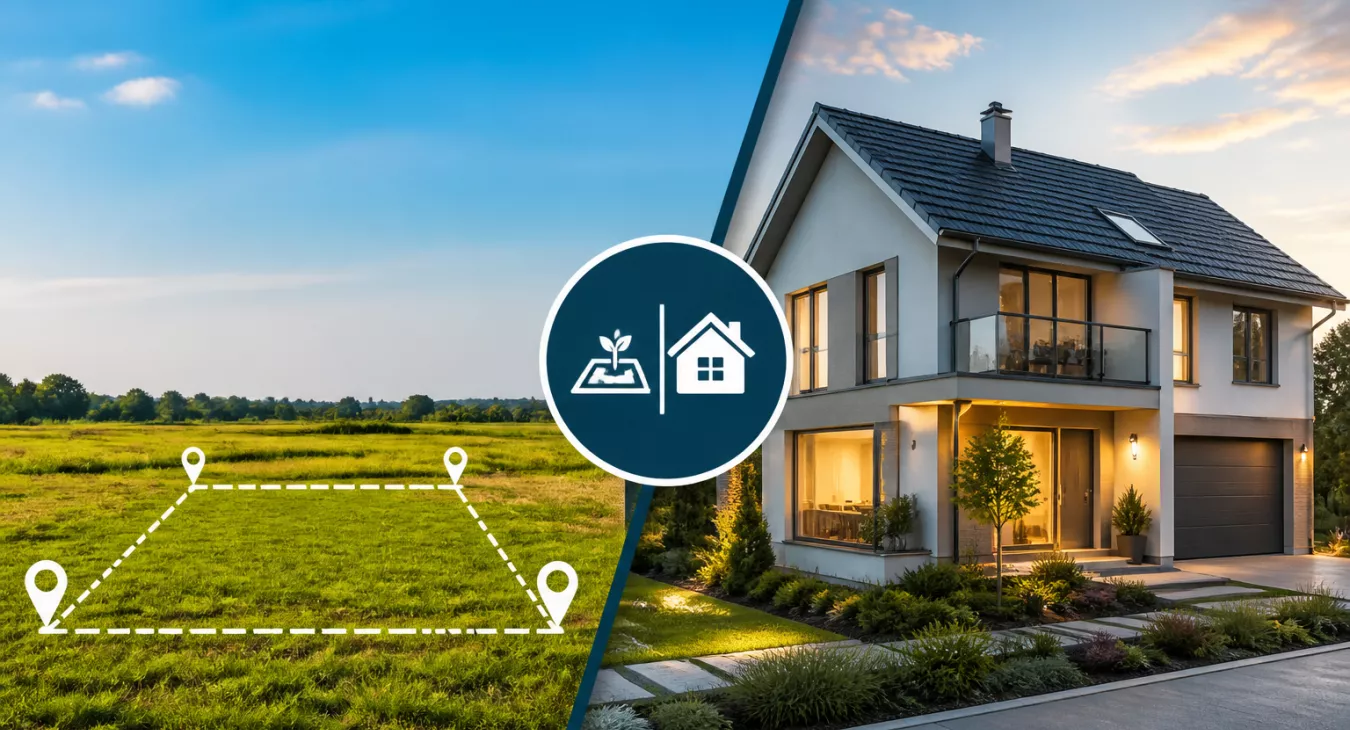
Compare land vs residential real estate investing to find the best strategy for your portfolio. Discover returns, risks, and which fits your goals.
Products and Tools Mentioned in this Post


Table of Contents
- Understanding Land vs Residential Real Estate Investing
- Quick Comparison: Land vs Residential Real Estate at a Glance
- Financial Returns Comparison
- Risk Analysis: Land vs Residential Properties
- Financing and Capital Requirements
- Time Commitment and Active Management
- Tax Implications and Legal Considerations
- Investment Strategies and Exit Options
- Market Trends and Future Outlook
- Portfolio Diversification: Why Not Both?
- Which Investment is Right for You?
- Conclusion: Land vs Residential Real Estate Investing
- Frequently Asked Questions
Choosing between land and residential real estate investing is one of the most consequential decisions you'll make as an investor. And it's rarely as simple as picking the higher return. Both asset classes offer genuine paths to wealth, but they operate on completely different mechanics.
Land investing rewards patience and strategic positioning. Residential real estate generates income from day one but demands active management and ongoing capital. Want to know which aligns with your goals? You need to understand the core differences in land vs residential real estate investing — from cash flow and financing to tax treatment and exit strategies. That's what separates a scattered portfolio from one that actually fits your financial goals, timeline, and risk tolerance.

Understanding Land vs Residential Real Estate Investing
what's Land Investing?
You're buying raw dirt. Undeveloped parcels. Maybe a vacant lot in the suburbs, rural acreage, infill opportunities in urban cores, agricultural land, or something with serious development potential. Smart land investors hunt for deals on tax delinquency lists, run direct mail campaigns, or target distressed sellers — grabbing property below market value is the whole point. Then you either flip it, hold for appreciation, or develop it yourself.
Here's what's beautiful about land: no tenants knocking on your door at midnight. No burst pipes. No roof repairs eating into your profits. But that simplicity comes with a trade-off. Land doesn't throw off monthly rent checks — not unless you're leasing it for agriculture, installing solar panels, or getting creative with glamping and billboard placements. We'll dig into those revenue streams later, but understand this: land is a pure appreciation play unless you engineer income into it.
what's Residential Real Estate Investing?
Residential means single-family homes, duplexes, triplexes, fourplexes, and small multifamily buildings. These are cash-flowing assets. You pocket monthly rental income, watch the property appreciate, and build equity as your tenant pays down your mortgage.
The strategies vary widely. Buy-and-hold is the classic. The BRRRR method (Buy, Rehab, Rent, Refinance, Repeat) lets you scale faster. Short-term rentals on Airbnb work in hot markets. And residential is by far the most liquid asset class in real estate — everybody understands it, banks will finance it, and you've got exit options. Population growth and housing shortages support demand across most U.S. markets. If you want to explore the best markets for the BRRRR strategy specifically, check out the 10 Best BRRRR Markets for Real Estate Investment for a data-driven breakdown.
Back to topQuick Comparison: Land vs Residential Real Estate at a Glance
| Metric | Land Investing | Residential Real Estate |
|---|---|---|
| Average ROI | 50–300%+ on flips; variable on holds | 8–12% annualized (cash flow + appreciation) |
| Typical Hold Period | 3 months – 10+ years | 5–30 years (buy-and-hold) |
| Monthly Cash Flow Potential | None (or minimal lease income) | $200–$800+ per unit after expenses |
| Financing Difficulty | High — limited lender options | Low — conventional, FHA, VA widely available |
| Initial Capital Required | $500 – $50,000+ (wide range) | $20,000 – $100,000+ (down payment + reserves) |
| Time to Profit | 3 months – several years | Month 1 (rental income begins immediately) |
| Active Management Required | Very low | Moderate to high |
| Liquidity Rating | Low | Moderate to High |
| Tax Benefits | Capital gains treatment; limited deductions | Depreciation, mortgage interest, operating deductions |
| Appreciation Potential | High in growth areas; unpredictable elsewhere | Steady historical appreciation (3–5% annually) |
Financial Returns Comparison

Income Generation Potential
Here's where these two diverge. Residential properties start throwing off monthly rental income the moment a tenant moves in. Buy a solid single-family rental in a mid-tier market and you're looking at $300–$600/month in net cash flow after you've covered the mortgage, taxes, insurance, and set aside money for maintenance. Four-unit properties? They'll pencil at $1,200–$2,400 monthly under the right conditions.
Land produces nothing. Most of the time, anyway. The exceptions exist — and they're worth knowing. Agricultural leases run $5–$200 per acre annually depending on what's growing and where. Solar farms hit $400–$2,000 per acre annually on larger holdings. Hunting leases might bring in $5–$15 per acre. Then there's the trendy stuff: glamping sites on the right rural parcel can generate $20,000–$80,000 annually. But here's the catch — these alternatives need specific conditions and they demand active management.
Appreciation and Long-Term Value Growth
Residential real estate has historically appreciated 3–5% annually at the national level, though many markets crush that number when supply tightens. The 2020–2022 run saw median home prices jump 30–40% in a lot of markets — crazy years, but they show what's possible in the right environment.
Land appreciation? That's a different beast entirely. Location matters obsessively, and timing matters even more. A parcel sitting in the path of development can 5–10x inside a decade. Land near expanding metros, parcels rezoning from agricultural to residential or commercial use, property in regions getting infrastructure investment — these can go vertical. But rural acreage with no development tailwind can sleep for 20 years straight. The real difference: land appreciation isn't structural. You're not buying reliable demand. You're placing a bet that a specific thing happens to a specific piece of ground.
Cash Flow Analysis
Let's use real numbers. You buy a $150,000 rental with 25% down — that's $37,500 out of pocket. It generates $500/month in net cash flow. Your cash-on-cash return is 16%. That's solid. Now take a land parcel you buy for $10,000 and flip two years later for $35,000. That's a 250% total return. But your cash flow during those two years? Zero.
Need your portfolio generating income to cover your lifestyle or service debt? Residential wins hands down. Got patient capital, no immediate cash needs, and you want to deploy small amounts for exponential percentage gains? Land flipping gets interesting. Understanding the 70 Percent Rule for real estate investing helps when you're evaluating residential purchase prices — but land deal math is a whole different animal.
Back to topRisk Analysis: Land vs Residential Properties

| Risk Type | Land Risk Level | Residential Risk Level | Mitigation Strategies |
|---|---|---|---|
| Market Demand Risk | High | Moderate | Research growth corridors; buy in proven rental markets |
| Liquidity Risk | High | Low–Moderate | Seller financing on land; price competitively |
| Vacancy/Tenant Risk | None | Moderate–High | Screen tenants rigorously; maintain reserves |
| Environmental/Zoning Risk | High | Low | Conduct due diligence; verify zoning pre-purchase |
| Capital Loss Risk | Moderate (low basis) | Moderate (higher basis) | Buy below market; maintain equity buffer |
| Regulatory Risk | High | Moderate | Engage local planning departments early |
| Climate/Environmental Risk | High | Moderate | Check flood maps, wildfire zones, soil reports |
Market Risk Factors
Here's the fundamental advantage of residential real estate: people need housing. Always. Even when the economy tanks, you're looking at vacancy rates of 5–10% on a solid single-family rental portfolio — that's workable. Land? It doesn't have that built-in demand floor. Your development thesis fails — the road doesn't materialize, the employer doesn't move, zoning stays residential-only — and suddenly you're holding an asset nobody wants. Years pass. Property taxes eat your returns alive.
Liquidity Concerns
Residential properties move. List it, get it under contract, close in 30–90 days across most markets. Your buyer pool is massive: owner-occupants, mom-and-pop investors, institutional capital all chasing the same deals. Land is a different animal. The buyer pool shrinks dramatically — developers, neighboring owners, and maybe a handful of specialized land investors. You're looking at 6–24 months on market if you're realistic. And that's why smart land investors use seller financing. It expands your buyer universe and gets deals done faster.
Environmental and Zoning Risks for Land
This is where land gets dangerous. Residential investors mostly avoid these pitfalls.
A wetlands designation? Your parcel becomes unbuildable overnight. Environmental contamination from prior industrial use or buried storage tanks creates liability that'll haunt you—cleanup costs can obliterate your margin. Flood plains destroy development potential and make insurance prohibitively expensive. Zoning might lock you into agricultural use even though the area looks primed for development.
Before you close on any land—especially larger parcels—you need a Phase I environmental assessment. Check FEMA flood maps. Verify current zoning and what's actually allowed. Call the local planning department yourself. Due diligence isn't optional here. It's the difference between a deal and a disaster.
Back to topFinancing and Capital Requirements

| Factor | Land Financing | Residential Financing |
|---|---|---|
| Down Payment Required | 20–50% | 3.5–25% (varies by loan type) |
| Interest Rate Range | 7–14% (often higher) | 6–8% (current market, 2024–2025) |
| Loan Term Options | 2–15 years (shorter terms common) | 15–30 years conventional |
| Lender Availability | Limited — community banks, credit unions, seller financing | Wide — banks, credit unions, mortgage brokers, online lenders |
| Loan-to-Value Ratio | 50–65% LTV typical | 75–96.5% LTV possible |
| Approval Timeline | Varies widely; often longer | 21–45 days typical |
Mortgage Options and Interest Rates
If you're buying residential, you've got options. Conventional loans, FHA loans at 3.5% down for owner-occupants, VA loans, portfolio loans, and DSCR loans all tap into the most developed financing market in real estate. DSCR deals are especially useful because they qualify you based on actual rental income rather than your personal W-2s. Right now in 2024–2025, investment property rates are sitting in that 7–8.5% range depending on loan type and your profile. Yeah, that's higher than the 2020–2021 free-money days. But it's historically normal.
Land loans? Completely different animal. National lenders largely won't touch raw land at all. You're looking at community banks, credit unions, or seller financing—period. Down payments run 30–50%, terms often come as balloons due in 5–10 years, and rates sit 1–3 percentage points above what you'd pay on residential. And honestly, plenty of experienced land investors just pay cash because many deals are cheap enough to make that work.
Entry-Level Capital and Accessibility
Here's what doesn't get talked about enough: land investing is genuinely accessible on a shoestring budget. Rural parcels move for $1,000–$10,000 through tax lien lists or direct outreach to motivated sellers. This makes land flipping one of the few real estate plays that actual beginners can do with minimal capital.
Residential's a different story. You need $20,000–$100,000 just sitting in your account to close one deal once you factor in down payment, closing costs, and reserves. That's a real barrier for most people starting out.
But you do have alternatives. Fractional real estate investing platforms like Arrived Homes and real estate crowdfunding platforms let you participate in deals with smaller capital chunks. Worth exploring if you're capital-constrained but want exposure.
Back to topTime Commitment and Active Management

Land Investment Time Requirements
Buy a land parcel and you're done with the heavy lifting. Yes, you've got property taxes (usually just $50–$500 annually on rural acreage), title maintenance, and eventual resale marketing. But here's what you don't have: emergency roof leaks, tenants calling at 2 AM, or inspection schedules to juggle. The real work happens upfront—sourcing deals, running comps, negotiating the purchase price. Then you do it again on the backend when you're marketing for exit and hammering out the sale price. Everything in the middle? It's pretty quiet.
Residential Property Management Demands
Residential rentals are the opposite of passive. Unless you've got a property manager handling things, you're the one screening tenants, drafting leases, chasing rent, coordinating repairs, inspecting turnover, and staying compliant with local regs. Self-manage a single-family rental and you're looking at 5–10 hours per month when everything's running smoothly. But tenants turn over? Buckle up for a 30–50 hour spike.
Hire a PM and that problem goes away—for a price. Most charge 8–12% of gross monthly rents, then hit you with 50–100% of one month's rent as a leasing fee every time there's turnover. That bleeds your cash flow numbers fast.
You need the right systems to manage this. Real estate accounting software keeps your income and expenses straight across multiple doors. A CRM built for real estate investors lets you actually track leads and tenant relationships without drowning in spreadsheets.
Annual Operating Costs Comparison
| Cost Category | Land (per year, ~10 acres rural) | Residential (per year, SFR rental) |
|---|---|---|
| Property Taxes | $100 – $500 | $1,500 – $6,000 |
| Insurance | $200 – $500 (vacant land policy) | $800 – $2,500 (landlord policy) |
| Maintenance | $0 – $500 (clearing, fencing) | $1,500 – $5,000 (1–2% of value) |
| Management | $0 (typically self-managed) | $1,200 – $3,600 (if using PM) |
| Utilities | $0 (typically none) | $0 – $2,400 (if landlord-paid) |
| Vacancy/Loss Allowance | N/A | $600 – $2,400 (5–10% of gross rents) |
| Total Annual Operating Costs | $300 – $1,500 | $5,600 – $21,900 |
Look at that table. This is where land investing shines for cash-strapped investors. Sit on a land parcel for 2–3 years? You're out maybe $1,000–$4,000 total carrying costs. Hold a vacant residential property for the same period? You're bleeding $15,000–$60,000 or more. The math isn't close.
Back to topTax Implications and Legal Considerations
Tax Advantages of Residential Real Estate
Residential rental properties get one of the best tax treatments in the investment world. Here's what makes them so powerful:
- Depreciation: You can depreciate the building (not the land) over 27.5 years — that's $7,273 annually on a $200,000 structure. Those are paper losses. They offset your rental income, and if you're an active real estate professional or under the $25,000 passive loss allowance, they'll reduce your ordinary income too.
- Operating expense deductions: Mortgage interest, property taxes, insurance, repairs, management fees, travel for property management — it's all deductible.
- 1031 exchanges: Sell one investment property and roll the proceeds into another "like-kind" property? You defer capital gains taxes indefinitely. It's a game-changer for portfolio building.
- Opportunity Zone investments: Reinvest gains into designated Opportunity Zone properties and you get deferred and potentially reduced tax treatment.
Tax Benefits for Land Investors
Land's a different animal. You've got fewer tax advantages, but they're still meaningful. Property taxes are deductible. Hold the land for more than a year and you're taxed at long-term capital gains rates (0%, 15%, or 20% depending on your bracket) instead of ordinary income rates. And yes, land qualifies for 1031 exchanges — you can sell a parcel and roll it into a residential rental property. That's how you bridge between the two asset classes.
But here's the catch: you can't depreciate land. There's no structure to depreciate. That's the real disadvantage against residential rentals. Land investors who hold for agricultural or leasing purposes can deduct related expenses, sure. The overall tax shield though? It's considerably thinner than what residential investors access.
Back to topInvestment Strategies and Exit Options
Land Flipping vs Long-Term Land Banking
Land investors pick a lane. Land flipping is simple in concept: buy deeply discounted parcels from motivated sellers (tax delinquency, probate, divorce situations) and flip them within 90–180 days closer to market value. The returns? Extraordinary—100–500%+ on capital isn't uncommon. But here's the catch: you need systems in place. Direct mail campaigns, online lead generation, relentless follow-up. Effective lead generation platforms and a professional investor website aren't optional anymore if you're serious about this.
Land banking flips the script entirely. You're acquiring parcels in the path of development, then sitting on them for 5–15+ years while the area grows around you. A developer eventually comes calling and pays premium prices for what's now in their master plan. This requires something most flippers don't have: deep local market knowledge, genuine patience, and the cash flow to carry costs indefinitely without any rental income. Institutional players in Phoenix's suburbs or Nashville's exurbs have built generational wealth this way. But timing? Never guaranteed.
Residential Buy-and-Hold Strategy
The residential buy-and-hold is still the most reliable path to wealth for individual investors. It's straightforward. You buy, tenants pay your mortgage, the property appreciates, you refinance and repeat. Build a 10–20 property portfolio in a decade using this method alone if you're disciplined about it.
And then there's the short-term rental wrinkle. Airbnb and VRBO properties in tourist markets can throw off 2–3x the gross income of traditional rentals. But that income comes at a cost: you're managing turnovers constantly, facing stricter regulations by the month, and burning through your sanity. If residential portfolio scaling is your goal, don't skip the education piece. The best real estate investing courses will compress your learning curve and save you six figures in rookie mistakes.
Development and Rezoning Opportunities
Want the highest-upside play in land? Buy parcels with development potential. Rezone them. Sell to a builder. Or develop yourself.
Here's a real scenario: a 5-acre parcel in agricultural zoning hits the market for $50,000. Rezone it residential for subdivision and suddenly it's worth $500,000–$1,000,000. Sound too good to be true? It almost is. The rezoning process eats 1–5 years, costs serious money in legal and engineering fees, and lives or dies based on local politics—factors completely outside your control. For the right investor with expertise and patience, it's genuinely transformative. For most retail investors? It's an expensive education.
Back to topMarket Trends and Future Outlook

Current Land Market Conditions (2024–2026)
The post-pandemic building boom changed everything. Residential lot demand exploded between 2020 and 2022 as homebuilders chased entitled land, sending prices to historic highs in growth markets. Then interest rates climbed, and builder activity cooled down—which opened doors for savvy land buyers. Motivated sellers started appearing in 2024, and that trend's likely to continue through 2025–2026.
Here's what makes sense for smart investors: the fundamentals stay bullish for well-positioned land near growing metros. Millennials are hitting peak family formation years. The Sun Belt's still pulling migration. And housing supply remains constrained in established markets—so land demand in the right geographies isn't going anywhere.
But don't sleep on what's actually happening in rural land right now. Utility-scale solar farms are leasing acres at rates that would've seemed crazy ten years ago. States with aggressive renewable mandates? They're converting low-productivity agricultural parcels into premium assets. Glamping operations are another one—luxury camping on rural acreage is generating six-figure annual revenues for owners willing to think differently.
Residential Real Estate Market Dynamics
2024–2025 is a tale of competing forces. You've got 30-year mortgage rates above 6.5–7%. Inventory is tight. But demand's still there, especially in markets with strong job growth and people moving in. That tension actually works for investors. Owner-occupant buyers dropped out. Motivated sellers showed up. Rents stayed elevated in most markets.
And here's the bigger picture: the U.S. is short 4–7 million housing units. Not might be. Is. Construction hasn't caught up, and it won't anytime soon. That supply-demand imbalance fuels rental demand and appreciation, regardless of whatever interest rate cycle we're in.
Economic Factors Affecting Both Markets
Interest rates drive everything right now. They're the single most impactful variable for both asset classes.
If the Federal Reserve cuts rates in 2025–2026 (and that easing cycle continues), affordability improves for residential buyers. Appreciation accelerates. Exit opportunities open up for investors holding assets. Land investors win too—lower rates mean builders start moving again, acquisition demand climbs, and that's a tailwind for sellers.
Inflation benefits both markets. Real estate holds or increases in real value over time while everything else erodes. Want to hedge inflation? For individual investors, real estate's one of the most effective tools available.
Back to topPortfolio Diversification: Why Not Both?
Here's the thing: land versus residential is a false choice. Smart investors stop picking sides and do both. Residential pays you monthly—steady cash flow, depreciation benefits, the whole nine yards. Land? That's where you get asymmetric upside with minimal carrying costs eating into your returns. A 70–80% residential allocation (your income engine) paired with 20–30% land holdings (your growth multiplier) gives you real diversification across different risk profiles, time horizons, and return mechanics.
But geography matters just as much as asset class selection. You could be crushing it with land in Texas growth corridors while residential rentals in secondary Midwest markets demolish coastal performance. The national average? Meaningless if you're not in the right pockets. And managing this across state lines gets complicated fast—unless you've got solid systems in place. Purpose-built real estate investor CRMs become non-negotiable when your portfolio scales. Same goes for dedicated LLC services that actually understand multi-state structures.
Back to topWhich Investment is Right for You?

Choosing Based on Financial Goals
Here's the fundamental split: do you need income now? Residential rentals are your answer if you're counting on monthly cash flow to fund your lifestyle, service debt, or systematically reinvest profits. But if your W2 covers living expenses and you're hunting for outsized gains with capital you can park for years, land investing makes sense. The difference between $2,000/month in rental income and a 300% IRR play shapes everything else.
Considering Your Risk Tolerance
Land deals are binary. You either hit a 300% return or watch your capital sit for three years while the market shifts. That's the reality. Residential investing comes with volatility too — vacancy, maintenance surprises, tenant drama — but structural demand smooths the edges. You've predictable cash flow. Exit markets are liquid. Conservative investors with a small portfolio should stick with residential. If you've already diversified beyond real estate and you can handle uncertainty, land deserves a meaningful allocation.
Evaluating Time and Expertise Available
The land game is front-loaded. Sourcing, due diligence, marketing to end buyers — it demands specific skills and proven systems. Residential property management eats time differently. It's ongoing, but help exists everywhere. Property managers run $100–150/unit in most markets. Contractors are accessible. Your CPA knows the playbook. New investors find residential easier because the knowledge ecosystem is mature — mentors are everywhere, the service market is developed, and you're not inventing the wheel.
Run through these questions honestly:
- Do I need monthly cash flow from my investment, or can I wait for a lump-sum exit?
- How much capital do I've available, and can I tolerate locking it up for 2–5 years without return?
- Am I comfortable managing tenants, or does the idea exhaust me?
- Do I've access to a specific market where I can find land deals below intrinsic value?
- What's my 5–10 year investment horizon, and how does it align with each asset class's typical cycle?
- Do I've legal, accounting, and operational infrastructure in place for either strategy?
Conclusion: Land vs Residential Real Estate Investing
Here's the truth: neither one wins. Your choice comes down to your cash position, what you're actually trying to build, how much volatility you can stomach, and whether you've got bandwidth to manage deals actively. Residential real estate? It prints cash flow. You get conventional financing at reasonable rates, serious tax write-offs, and you can exit fast when you need to. That's why it anchors most solid portfolios.
Land's a different beast entirely. Your carrying costs stay low. You're not dealing with tenants, maintenance calls, or capital expenditures eating into returns. And the upside can be brutal — we're talking 300%+ returns on the right acquisition in a path-of-progress market. But you need patience. You need deep local market knowledge. Liquidity? Don't count on finding a buyer in 30 days.
The sharpest investors don't choose one. They run both.
Start with whichever fits your current situation better — your available capital, your market expertise, your timeline. Get sharp at it. Build your first three deals in that asset class and really understand the mechanics. Then expand. The core principles never change: buy below market value, know your market inside out, run tight due diligence on every deal, and keep enough liquidity to survive downturns. Master those fundamentals and you'll win with either residential, land, or both.
Back to topFrequently Asked Questions
Is land or residential real estate better for beginners?
Residential real estate wins for most first-time investors. Why? Better financing access, established playbooks everywhere you look, and cash flow starts flowing immediately through rent. But here's the thing — land flipping at the low end can work too. Entry costs are dirt cheap, you're not managing tenants, and the complexity is all about sourcing deals and running comps. Pick your poison based on whether you want monthly income or a faster learning curve.
Can you get a mortgage on land?
Yes. It's just way harder than buying a house. Big banks won't touch raw land loans — period. Your real options? Community banks, credit unions, or seller financing. Expect to put 20–50% down. Interest rates run higher. Loan terms are shorter. And here's what most beginners don't realize: seller financing often beats traditional bank terms for land deals. Negotiate it aggressively.
Does raw land appreciate faster than residential real estate?
It can. In the right development corridor at the right time, raw land hits 200–500%+ appreciation. That's the upside. But land appreciation isn't predictable — it's event-dependent. You're betting on zoning changes, infrastructure, or a developer showing up. Residential real estate? More boring but reliable — expect 3–5% annually on average. Land offers higher ceilings and way more risk. Residential offers steadier returns with monthly cashflow backing your investment.
Back to top