

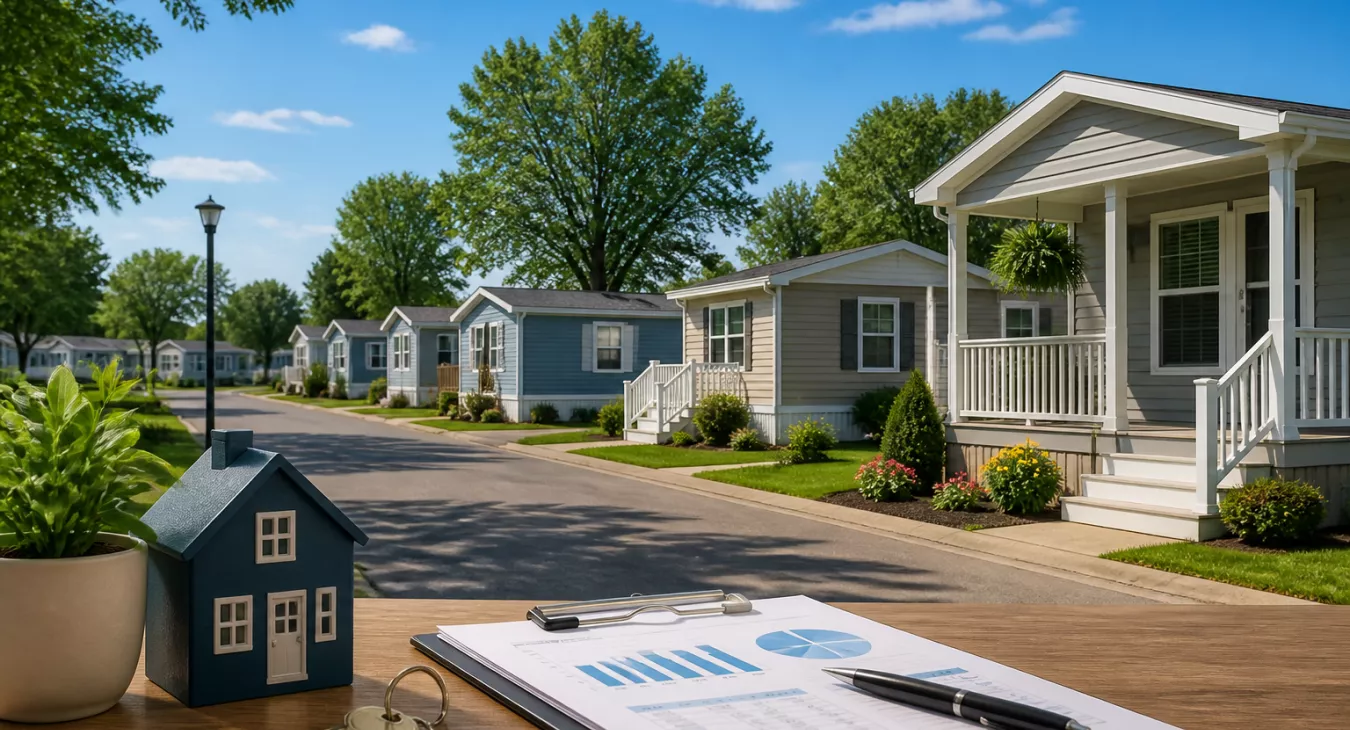
Learn mobile home park investing with our complete beginner's guide. Discover recession-resistant cash flow, strong returns, and how to close your first de
Products and Tools Mentioned in this Post


Rent Manager
Rent Manager is a powerful property management software platform for real estate investors. Manage tenants, maintenance, accounting, and reporting all in one place.
Table of Contents
- what's Mobile Home Park Investing?
- Why Invest in Mobile Home Parks?
- Key Metrics and Financial Analysis
- Due Diligence: What to Investigate Before Buying
- Financing Options for Mobile Home Park Investments
- Step-by-Step Process to Buy a Mobile Home Park
- Common Risks and How to Mitigate Them
- Best Practices for Successful Operations
- State-by-State Considerations
- Mobile Home Parks vs. Other Real Estate Investments
- Exit Strategies and Long-Term Considerations
- Conclusion
- Frequently Asked Questions
Mobile home parks have quietly become one of the most compelling niches in commercial real estate. You get recession-resistant cash flow, strong cap rates, and built-in demand that other asset classes just can't match — affordability. Blackstone and Sun Communities have been quietly gobbling up parks for years. But individual investors? They're now waking up to the fact that this overlooked sector generates returns rivaling — and often beating — apartments, single-family rentals, and self-storage. This mobile home park investing guide covers everything you need to know. From understanding the business model to closing your first deal, it's all here.

what's Mobile Home Park Investing?
Definition and Overview
A mobile home park (MHP)—also called a manufactured housing community (MHC)—is basically a tract of land carved into individual lots where residents park their manufactured or mobile homes. Here's the key difference: you own the land and infrastructure. The homes? Those belong to the residents. They pay you monthly lot rent, which runs about $300–$600 nationally right now. But if you're looking at coastal California or Florida, you're pushing past $900/month.
How Mobile Home Parks Operate
The land-lease model is what makes this business model so profitable. Think about it—moving a manufactured home costs $3,000–$10,000 and tanks resale value. Your residents know this. That's why they stick around. You get a sticky tenant base with historically low turnover, which is gold in real estate. Your job stays manageable too. You maintain the common areas, handle the utilities infrastructure (water, sewer, roads), and manage lot leases. That's it. You're not fixing roofs or replacing HVAC units in individual homes.
Types of Mobile Home Park Ownership
Not all parks are structured the same way, and you've got options here. The pure lot-rent model is simplest—you own the land; residents own their homes. Then there's the park-owned homes (POH) model, where you own some or all units and collect both lot rent and home rent. Some investors blend both approaches. Starting out? Go pure lot-rent. Lower maintenance costs, better scalability, and easier financing approval. If you're brand new to the space, mobile home investing strategies with low entry points can get you in the door before you scale into full park ownership.
Back to topWhy Invest in Mobile Home Parks?

Income Potential and Cash Flow
You're looking at 6% to 10% cap rates on mobile home parks. That's what makes them attractive. Compare that to multifamily in major metros — you're stuck at 4–5%. A 100-lot park pulling in $500/month per lot? That's $600,000 in gross revenue annually. And here's where it gets interesting: expense ratios for well-run parks sit around 35–40%, which leaves you $360,000–$390,000 in NOI. Cash-on-cash returns of 8–15% aren't just theoretical — they're achievable and competitive with pretty much any commercial real estate play you're considering.
Recession-Resistant Investment
The 2008–2009 recession proved something. Manufactured housing communities held occupancy rates far better than apartment complexes tanked. Why? When money gets tight, people downsize — and manufactured housing is the lowest-cost unsubsidized housing option in America. It's a genuine hedge. The counter-cyclical nature of this asset class is a real advantage, especially if you're diversifying your portfolio across commercial real estate investments. That resilience matters when the economy turns.
Demographic Trends Favoring Mobile Home Living
Two demand drivers are converging right now. You've got aging baby boomers on fixed incomes hunting for affordable retirement housing, plus younger households completely priced out of traditional homeownership. The median U.S. home now costs over $420,000. A new double-wide? You're looking at around $130,000 — it's the most accessible homeownership path left for millions of Americans. But here's the kicker: new park development is nearly impossible in most jurisdictions thanks to zoning restrictions. That scarcity protects existing park values and creates a supply constraint that works in your favor.
Back to topKey Metrics and Financial Analysis

You can't make an offer without understanding the numbers. Full stop. Here's what every MHP investor needs to master:
| Metric | Formula | Industry Benchmark | Red Flag |
|---|---|---|---|
| Cap Rate | NOI ÷ Purchase Price | 6%–10% | Below 5% |
| Cash-on-Cash Return | Annual Cash Flow ÷ Total Cash Invested | 8%–15% | Below 6% |
| DSCR | NOI ÷ Annual Debt Service | 1.25x–1.40x | Below 1.20x |
| Expense Ratio | Total Expenses ÷ Gross Revenue | 35%–45% | Above 55% |
| Occupancy Rate | Occupied Lots ÷ Total Lots | 85%–95%+ | Below 75% |
| Price Per Lot | Purchase Price ÷ Total Lots | $20,000–$60,000 | Varies by market |
MHP valuation works differently than residential deals. You're using NOI capitalization, not comps. Comparable sales? They're helpful background noise, but NOI is your real north star. A park throwing off $200,000 in annual NOI at a 7% cap rate? That's worth roughly $2.86 million.
And here's where it gets interesting.
Value-add plays happen when you bump up that NOI. Fill empty lots. Push rents higher. Cut operating expenses. Do any of that, and you're forcing appreciation at the same cap rate—which is exactly how you build wealth in MHPs.
Back to topDue Diligence: What to Investigate Before Buying

Mobile home park due diligence isn't like buying a single-family rental. You're looking at 30–60 days of heavy lifting. Most beginners who lose money on parks? They cut corners here.
Physical Property Inspection
- Infrastructure audit: Water/sewer systems (city hookup vs. well/septic), electrical pedestals, roads, and stormwater management
- Environmental assessment: A Phase I environmental site assessment runs $2,000–$4,000 and it's non-negotiable. Phase II kicks in if contamination shows up on Phase I
- Home conditions: Walk every park-owned home and map out deferred maintenance across the entire community
Tenant Profile and Lease Analysis
Pull every lease. Look at the term, the rent amount, whether it's month-to-month. Then dig into 12 months of rent rolls and identify your delinquency patterns.
Here's what separates real operators from dreamers: a park showing 20% of tenants 60+ days late tells you something completely different than what the occupancy rate claims. You need to verify that every single tenant has legal right-to-occupy documentation in place.
Financial Records Review
Ask for 2–3 years of P&L statements, tax returns, and bank statements. Sellers love their "pro forma" projections. Don't bite. Underwrite to actual collections—not projected rents.
And don't overlook utility expenses. Master-metered parks especially hide costs that'll crater your NOI if you're not careful.
Environmental and Legal Considerations
Zoning needs to be locked in for manufactured housing. Any rezoning threats on the horizon? Check. Deed restrictions, easements, code violations—pull the municipality records yourself.
Title insurance isn't optional. Get it.
Back to topFinancing Options for Mobile Home Park Investments

| Financing Type | Typical LTV | Rate Range | Best For | Key Drawback |
|---|---|---|---|---|
| Agency/CMBS | 70%–80% | 6.5%–8.5% | Stabilized parks 50+ lots | Strict qualification criteria |
| Community Bank | 65%–75% | 7%–9% | Small to mid-size parks | Shorter amortization (15–20 yrs) |
| SBA 504/7(a) | Up to 90% | 6.5%–8% | Owner-operators, smaller deals | Owner-occupancy requirements |
| Seller Financing | 60%–80% | 5%–8% | Value-add, transitional deals | Shorter terms (3–7 years) |
| Private/Hard Money | 50%–65% | 9%–13% | Quick close, distressed assets | High cost, short duration |
| Syndication | N/A (equity) | Preferred return 6%–8% | Larger parks, passive investors | Complex structure, fees |
Here's the reality: if you're starting out with thin capital reserves, seller financing is your most realistic way in. Why? Plenty of long-time park owners are sitting on properties they've held for 20+ years and they're motivated—really motivated—to defer taxes by carrying the paper themselves. And if you want to dig deeper into alternative structures that work for MHP deals, assumable mortgage strategies can absolutely apply in certain situations.
Back to topStep-by-Step Process to Buy a Mobile Home Park

Finding Investment Opportunities
Here's the truth: most quality MHP deals never hit the MLS. You need to work direct mail campaigns to park owners, build relationships with brokers like Marcus & Millichap, CBRE, and Colliers (they all have dedicated MHP teams), and monitor the MHP Store, Crexi, and LoopNet constantly. And don't sleep on driving for dollars — it's criminally underrated for finding off-market parks in secondary markets. Look for aging signage, deferred maintenance, and signs of long-term single ownership. Those flags usually mean a tired seller.
Making and Evaluating Offers
Start with actual NOI—not what the seller claims. Verify the numbers yourself. Once you've got real revenue and expense data, apply a cap rate that matches both the market and the asset's actual condition. Then work backward to your offer price. Your earnest money deposit? Go with 1–2%, paired with a 30–45 day due diligence contingency. That gives you room to dig into the books without getting burned.
Your Letter of Intent needs to nail down purchase price, financing contingency, inspection period, and target close date. Be specific.
Negotiation Strategies
Estate sales, retirements, and management fatigue—these are your leverage points. Sellers dealing with any of these tend to be more flexible than you'd think. Focus your negotiation energy on the terms that matter: seller financing, delayed closing to let you lease up vacant units, seller carryback for deferred maintenance credits, and solid representation and warranty language. Price gets a lot of attention. Terms are where you actually win deals.
Closing and Transition Planning
60–90 days. That's your window from accepted LOI to closing. Residents will be nervous about who owns the park now—plan your day-one tenant communication strategy before you close. Keep existing management in place for at least 30–60 days while you complete your operational deep dive. This isn't the time to cut costs.
Back to topCommon Risks and How to Mitigate Them
- Regulatory risk: California, Oregon, and New Jersey? They've got brutal tenant protections and rent control laws that'll cap your upside hard. Don't even think about acquiring in a new state without talking to a local real estate attorney first.
- Occupancy risk: Vacant lots destroy value faster than anything else. Budget for a home fill program and partner with manufactured home dealers on lot-lease arrangements. That's how you fix it.
- Infrastructure failure: Water and sewer systems age. When they fail, you're looking at $50,000–$200,000 in repairs that'll wipe out years of cash flow in a single hit. Get a professional infrastructure inspection before you close. Period.
- Management risk: Self-managing a 30+ lot park from across the country without systems? That's the classic beginner mistake. Use property management software—Rent Manager, Yardi Breeze, or MHVillage's platform—from day one. Your sanity depends on it.
And here's the thing: understanding your risk profile matters when you're stacking this against other strategies in your portfolio. New to real estate altogether? Check out this complete beginner's guide to real estate investing—it covers the foundational stuff that applies across all asset types.
Back to topBest Practices for Successful Operations

Tenant Selection and Retention
Here's what separates solid operators from those who hemorrhage money on delinquencies and evictions: your screening process. You need a 580+ credit score minimum, income verification at 3x monthly lot rent, a background check, and prior landlord references — that's your baseline. Strong tenant selection at move-in doesn't just feel good. It dramatically reduces delinquency and eviction costs downstream. And retention? That's where smart operators win. Community events, responsive maintenance, clear communication — these cut turnover and protect occupancy when it matters most.
Rent Increases and Rate Optimization
This is it. The primary value-add lever in most acquisitions — parks that are significantly below market rent. Don't go aggressive and blow up your occupancy. Instead, increase rents gradually (5–10% annually with 60–90 days notice). Document your market comparables. Support every increase with real data. In markets without rent control? You're looking at potentially doubling NOI over 5–7 years just from this strategy alone.
Technology and Management Systems
You don't need to reinvent the wheel here. Rent Manager is the industry standard for larger parks. Yardi Breeze works. MHVillage handles your marketing for vacant lots. But the real efficiency gain? Online rent payment portals. They reduce delinquency dramatically. And when it's time to analyze a deal or run comps, AI tools for real estate investors are becoming essential — especially for market analysis, rent comparables, and financial modeling.
Back to topState-by-State Considerations
| State | Rent Control | Eviction Timeline | Tenant Protections | Market Outlook |
|---|---|---|---|---|
| Texas | None | 21–30 days | Low | Excellent — high growth, no state income tax |
| Florida | None statewide | 30–45 days | Moderate | Strong — retiree demand, no income tax |
| Indiana | None | 20–30 days | Low | Strong — affordable markets, stable economy |
| Ohio | None | 28–35 days | Low | Good — affordable entry points |
| North Carolina | None | 30–40 days | Low-Moderate | Strong — high population growth |
| California | Yes — strict | 60–90+ days | Very High | Challenging — high prices, restrictive regulations |
| Oregon | Yes | 60–90 days | High | Difficult for value-add strategies |
| Michigan | None | 30–45 days | Moderate | Good — high MHP density, affordable lots |
Here's the reality: Texas, Indiana, Ohio, and North Carolina are your sweet spot if you're just starting out. Affordable acquisition prices. Strong demand fundamentals. And the regulatory environment won't fight you at every turn. But here's what kills deals — rent control and slow eviction timelines. Want to execute a value-add strategy? California's 60–90+ day eviction windows and Oregon's rent caps will drain your cash flow faster than you can refinance. State law doesn't just matter for rental property investments — it fundamentally shapes your cap rate and exit timeline.
Back to topMobile Home Parks vs. Other Real Estate Investments
| Asset Class | Typical Cap Rate | Min. Capital (Entry) | Management Intensity | Recession Resistance | Supply Constraints |
|---|---|---|---|---|---|
| Mobile Home Parks | 6%–10% | $50,000–$200,000 | Moderate | High | Very High |
| Multifamily (Apartments) | 4%–6% | $100,000–$500,000 | High | Moderate | Moderate |
| Single-Family Rentals | 4%–7% | $20,000–$100,000 | Low–Moderate | Moderate | Low |
| Self-Storage | 5%–8% | $100,000–$500,000 | Low | Moderate–High | Low–Moderate |
| Short-Term Rentals | 8%–15% | $30,000–$150,000 | Very High | Low | Low |
Here's what makes MHPs interesting: you're looking at 6–10% cap rates with moderate management overhead using the lot-rent model. Supply is genuinely constrained—zoning restrictions and environmental regs make new parks almost impossible to build. And your entry point? $50,000 to $200,000 gets you in the game.
Yes, the acquisition process is messier than a single-family deal. You'll need specialized due diligence. But that friction is exactly why cap rates stay fat and competition stays manageable.
Compare this to short-term rental investing, which promises 8–15% returns but demands constant hands-on management and evaporates the moment the economy hiccups. Mobile home parks? They're recession-resistant. Tenants need affordable housing in good times and bad. Your income stream is predictable, not volatile. That's the real wealth-building play right there.
Back to topExit Strategies and Long-Term Considerations
You've got options when it's time to exit. Traditional sale to another investor or institution is straightforward. A 1031 exchange into a larger park or portfolio lets you defer taxes and scale up. Sale-leaseback arrangements work if you want passive income. Then there's the REIT portfolio sale route—it's become increasingly popular.
Here's what matters: institutional buyers are hungry. UDR, Sun Communities, and Equity LifeStyle Properties are actively acquiring parks in the 100+ lot range, and that's created a real, defined exit market. You're not guessing whether someone will buy—these players need inventory.
The math on hold periods? A 5–10 year hold typically gives you the best returns. Why? Rent optimization and occupancy gains compound. You're not just sitting idle—you're systematically repositioning the asset, squeezing higher rents out of existing residents, and filling vacant pads before you hand it off.
Back to topConclusion
Mobile home park investing isn't just another asset class. It's one of the best risk-adjusted return plays in commercial real estate right now. You get recession resilience, strong cash flows, supply constraints that actually work in your favor, and demographic tailwinds that aren't going anywhere. The catch? The learning curve is brutal. Due diligence gets complicated fast. You'll need specialized lenders who actually understand MHP financing. And state regulations? They vary wildly from one jurisdiction to the next.
But here's the truth: if you're willing to put in the work, this asset class rewards diligence in ways most traditional real estate simply can't touch.
So what's your first move? Start by underwriting 10–15 deals before you write a single offer. Build real broker relationships in your target markets—these connections matter more than you'd think. Then study your state's regulatory environment like you're preparing for an exam, because you basically are.
Whether you're brand new to MHP or you're bolstering an existing portfolio, you've got the framework now. Move forward with clarity. Move forward with confidence. And as you dig deeper, check out this beginner's guide to commercial real estate investing to layer in some broader CRE context alongside your MHP research.
Back to topFrequently Asked Questions
What returns can I realistically expect from mobile home park investing?
You're looking at 8–15% cash-on-cash returns from well-run parks, with total returns hitting 12–20% annually over a 5–10 year hold. And here's the real opportunity: value-add parks where rents lag market can deliver outsized returns in years 1–3 just by normalizing rents. But don't treat these numbers as gospel. They swing hard depending on your purchase price, how you financed it, and whether you actually execute operationally.
How much capital do I need to buy my first mobile home park?
Entry-level parks in secondary markets—think 20–40 lots—run $300,000–$800,000. You'll need $75,000–$200,000 down with conventional financing. Seller financing? Sometimes you can get in with just $30,000–$60,000. Syndication drops the barrier to $25,000–$50,000 if you want passive exposure. Don't forget the back-end costs either—budget another 10–15% of purchase price for due diligence, closing, and whatever repairs or upgrades the park actually needs out of the gate.
Is mobile home park investing better than buying rental properties?
If scalability and cash flow matter to you, MHPs crush single-family rentals on a per-dollar-invested basis. You're collecting lot lease checks instead of fixing toilets and replacing roofs. That maintenance advantage alone is worth serious money. That said, rental property investing has a gentler learning curve and lenders actually like beginners buying duplexes. Smart move? Start with single-family rentals. Then graduate to MHPs once you understand the game.
What are the most common mistakes first-time MHP investors make?
First-timers kill themselves by underwriting to pro forma numbers instead of what tenants actually pay. They skip the professional infrastructure inspection—septic, water, roads—then get crushed by surprise $50K repairs. Overestimating occupancy gains on vacant lots is another killer. Add in state regulatory traps, self-management timesinks, and the tendency to buy parks stuffed with park-owned homes without budgeting for the maintenance nightmare that follows.
Can I invest in mobile home parks through a self-directed IRA?
Yes. Mobile home parks qualify as eligible investments in a self-directed IRA, meaning you can grow commercial real estate returns tax-free. There's a catch though—IRS prohibited transaction rules mean you can't personally use or manage the property. You'll need a qualified custodian handling the transaction. For long-term wealth building, this setup is genuinely powerful. Dig deeper in this guide to self-directed IRA real estate investing.
Back to top