


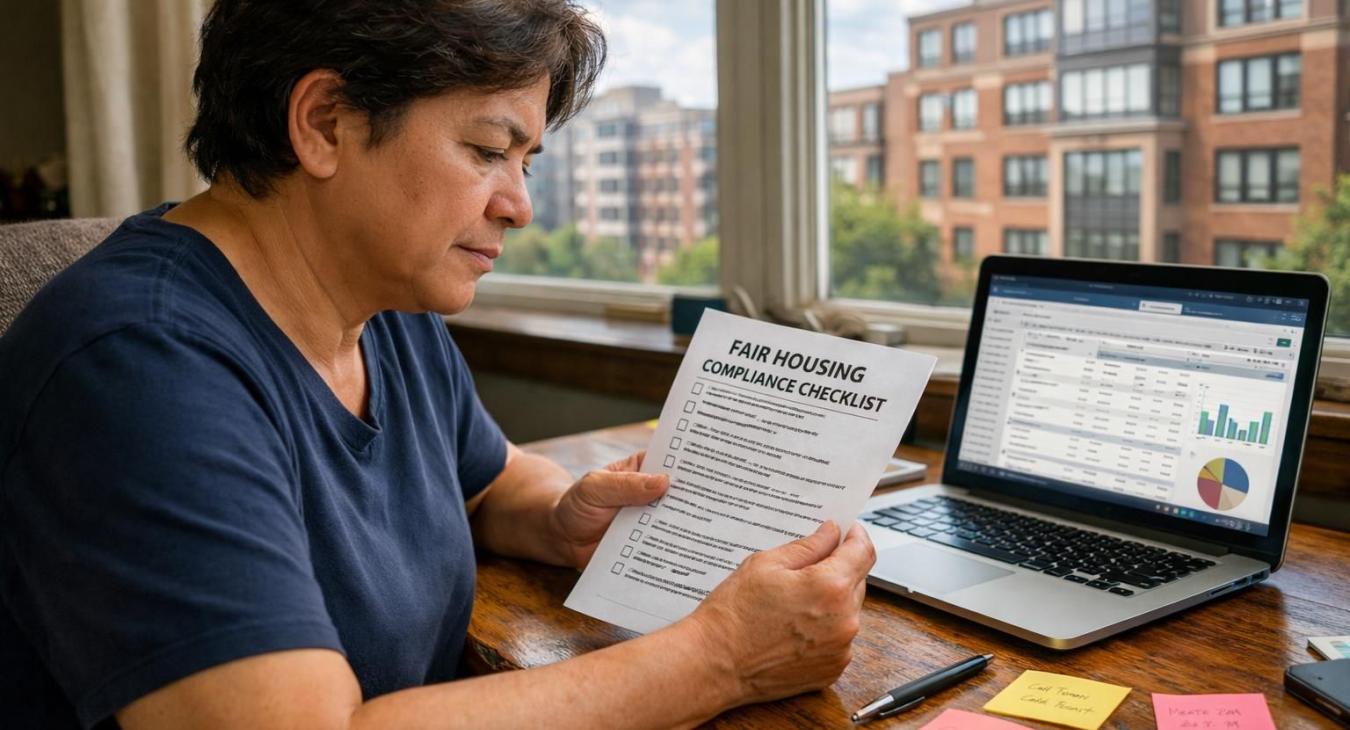
Ensure your rentals are safe and profitable with our fair housing compliance checklist for landlords. Protect tenant rights while avoiding costly fines.
Table of Contents
- Key Fair Housing Principles
- Advertising Compliance
- Tenant Screening Practices
- Lease Agreement Compliance
- Record-Keeping and Documentation
- Complaint Handling Procedures
- Eviction Process and Fair Housing Compliance
- Fair Housing Training for Landlords
- Leveraging Technology for Compliance
- Conclusion
- FAQs
Fair Housing Compliance Checklist for Landlords

Many landlords assume that following the Fair Housing Act is enough to avoid trouble, but that’s a risky myth. 3 Failing to keep up with federal, state, and local laws can lead to costly fines and even lawsuits for housing discrimination. 1 This fair housing compliance checklist for landlords will guide you through each step of property management. You will learn how to protect tenant rights while keeping your rentals profitable.
As an experienced property manager who helps investors stay compliant with fair housing laws, I know what works in practice. Tools like Rentastic make it easier to track applications and document interactions so you always have clear records if questions arise about your process. 2 Explore these proven steps now to build safer habits and better results as a landlord.
Key Takeaways
- The Fair Housing Act protects tenants from discrimination based on race, color, religion, sex (including gender identity and sexual orientation), national origin, familial status, or disability. State and local laws may add protections for income source, age, military status, or marital status.
- Violating fair housing rules can lead to fines starting at $16,000 for a first offense. Lawsuits often settle for over $20,000 per case. Courts require you to keep organized documentation of screenings and lease agreements as evidence.
- Never use language like “no kids” in ads or leases—this violates federal law. Automated tools such as Rentastic help remove risky phrases and track compliance with both state and federal fair housing regulations.
- Use the same screening criteria for every tenant. Do not deny applicants because they request reasonable accommodations or have service animals; this is required by the Americans with Disabilities Act (ADA).
- Stay updated with yearly fair housing training sessions. New HUD enforcement policies began December 2, 2025 [6]. California now lists sexual orientation and gender identity in its protected classes. States also demand safety features like smoke detectors by law [7].
Key Fair Housing Principles

Fair housing laws set clear rules for property managers and landlords. The Federal Fair Housing Act protects tenant rights and prevents housing discrimination based on protected classes.
Understanding Protected Classes
The federal Fair Housing Act, passed in 1968 as part of the Civil Rights Act, gives protection to seven main groups called "protected classes." 1 You must not discriminate based on race, color, religion, sex (including gender identity and sexual orientation), national origin, familial status, or disability.
These anti-discrimination protections apply during every part of the rental process. For example, you cannot deny an applicant because they have children under 18 or refuse reasonable accommodations for someone with a disability.
State and local laws may protect even more groups. Many areas add categories such as income source, marital status, age, military status, or sexual orientation to their housing discrimination statutes. 1 As a property manager or real estate investor, check all relevant landlord-tenant laws that apply to your rental property before advertising vacancies or screening tenants. Staying updated helps avoid fair housing violations and keeps your compliance checklist current.
Following these standards does more than prevent lawsuits; it creates equal tenant rights across your properties. Consistent practices also build trust with applicants from diverse backgrounds and support long-term profit by reducing risks tied to non-compliance expenses and legal actions related to lease agreements or security deposits.
Prohibited Discrimination Practices
Prohibited discrimination covers race, national origin, religion, sex, familial status, and disability under the Fair Housing Act. 2 Landlords must avoid statements like “No kids allowed,” as this targets families with children and violates federal fair housing laws.
Denying applicants because they have service animals goes against compliance requirements for reasonable accommodations.
Do not engage in steering by guiding families or certain groups to specific units within your property. Such actions count as housing discrimination and can trigger costly investigations. 3 Self-help evictions such as changing locks or cutting utilities without court orders are illegal; always follow legal eviction procedures to comply with local laws on tenancy.
Penalties for violating fair housing regulations can reach $16,000 for a first offense and increase for repeat violations. Average settlements in lawsuits surpass $20,000 per case.
Protect yourself from liability by recognizing how disparate treatment may impact protected classes during tenant screening or lease agreements. Use automated tools like Rentec to track compliance and support regulatory obligations in property management practices.
Back to topAdvertising Compliance

Careful advertising protects your business and upholds fair housing laws. Use automated tools like compliance tracking software to ensure each listing meets both federal fair housing act standards and local regulations.
Inclusive and Non-Discriminatory Language
Use inclusive and non-discriminatory language in all property advertisements to show compliance with the Fair Housing Act. Avoid any reference to tenant demographics, familial status, national origin, sexual orientation, or gender identity.
For example, phrases like “no kids allowed” directly violate federal fair housing laws and can lead to costly legal consequences.
Rely on automated compliance tools such as real-time listing scanners to check advertising for possible violations of fair housing regulations. This technology helps you quickly remove inappropriate terms from property descriptions.
Make sure your marketing strategy attracts diverse applicants and follows both state and local laws protecting tenants’ rights against housing discrimination. Inclusive advertising not only protects your business but also supports a broader pool of qualified renters for your rental homes or multifamily properties.
Avoiding Misleading Listings
Describe the property using facts, not preferences. Mention features like “three bedrooms,” “fitness center,” or “pet-friendly community.” Do not say things such as “great for young couples” or “ideal for professionals.” These phrases can steer prospects away and violate fair housing laws protecting classes like familial status, national origin, gender identity, and sexual orientation.
Automated screening tools can help spot risky language before you publish a listing. Many services highlight flagged words and suggest compliant options to protect you from possible HUD investigations.
Staying compliant prevents costly legal penalties and keeps your rental business safe.
Base every description on real details about amenities or recent updates. For example, say the apartment has new flooring or an in-unit washer instead of implying who would enjoy living there.
Property managers must stay alert so listings never exclude anyone based on race, disability, religion, criminal history, or other protected categories under the federal Fair Housing Act and state/local laws.
Accurate advertising boosts tenant trust and supports sustained occupancy rates across all properties in your portfolio.
Back to topTenant Screening Practices

Use clear and fair evaluation standards to review each applicant’s rental history, criminal background checks, and credit scores. Automated screening tools help property managers stay compliant with federal fair housing act guidelines and local laws.
Developing Fair Screening Criteria
Develop objective screening criteria that align with fair housing laws and do not single out protected classes. Avoid blanket policies based on criminal records, criminal background checks, or eviction records.
Minneapolis adopted an ordinance to limit such practices because they often lead to housing discrimination without improving tenancy success rates. 4 Evaluate each applicant’s rental history and credit score individually instead of using automatic rejections.
Prioritize factors like verifiable income, references from prior landlords, and timely payment habits in your evaluation process. The Family Housing Fund supports more equitable tenant screening practices for property managers so you can reduce barriers while staying in compliance with the Fair Housing Act, Civil Rights Act of 1968, and state or local laws. 4 Automated screening tools help standardize assessments but ensure every decision gets based on fair housing criteria rather than profit and loss statements alone.
Consistency in Application Processes
Use the same tenant screening criteria for every applicant to comply with fair housing laws. Apply standards such as credit history, rental history, and income requirements equally without exception.
Property managers should never allow bias based on prior neighborhoods or national origin to affect their decisions. Consistent documentation of each step helps protect you from housing discrimination complaints under the federal Fair Housing Act.
Maintain detailed records of all applications and screening outcomes for compliance audits or reviews by regulatory agencies like the National Credit Union Administration. Log interactions and decisions in your property management files to provide a clear audit trail if questions ever arise about your leasing choices.
Adopting this approach keeps your process fair, protects against potential lawsuits, and supports strong regulatory compliance across state and local laws.
Back to topLease Agreement Compliance

Clear lease agreements help you follow fair housing laws and lower your risk of violations. Use property management software to track changes and store your rental contracts for easy access.
Non-Discriminatory Terms and Conditions
Lease agreements must avoid any language that excludes or restricts protected classes covered under fair housing laws. You cannot include terms like “adults only” or “no children.” The Fair Housing Act prohibits these statements and considers them clear violations.
Ensure every term in your lease applies equally to all tenants, regardless of race, color, national origin, sex (including sexual orientation and gender identity), religion, disability, or familial status.
Apply rental criteria such as credit checks or rental history screenings consistently to all applicants. Property managers who add extra requirements for one group risk facing fair housing violations and possible legal action from the Department of Housing and Urban Development (HUD).
Using automated screening tools can help you enforce standards fairly across every applicant while also maintaining a detailed compliance checklist.
State and local laws may provide further protections beyond federal regulations. Regularly review your lease terms using compliance tracking software to verify they match current state and local requirements regarding protected classes.
Staying proactive not only reduces liability but visibly supports tenant rights within your property management practices.
Accessibility and Reasonable Accommodations
Federal fair housing laws and the Americans with Disabilities Act (ADA) require you to provide reasonable accommodations for tenants with disabilities. Allow service animals, even if your property usually bans pets.
Approve requests for unit modifications such as grab bars in bathrooms or ramps at entryways to help tenants access their homes safely.
Set clear policies that welcome open discussions about disability needs without penalty or retaliation. Adjust lease terms, like changing rent due dates, if a tenant has specific health conditions that make it necessary.
Do not include language in rental agreements that blocks accessibility changes since this violates tenant rights and could lead to fair housing violations. Use compliance checklist tools and property management automations to help track accommodation requests efficiently while staying within federal, state, and local laws.
Following these rules builds trust with tenants, protects you from liability, and helps create equitable communities for all protected classes under the Fair Housing Act.
Back to topRecord-Keeping and Documentation

Keep detailed files on each applicant and tenant using digital platforms like property management software. Use compliance checklists to track fair housing requests and ensure your records stay organized for every rental transaction.
Maintaining Tenant Application Records
Store every tenant application, including clear reasons for approval or denial, in an organized system. Follow both federal fair housing laws and your specific state or local laws regarding the required retention period.
This typically ranges from one to three years. Proper documentation protects you as a landlord if someone alleges housing discrimination based on protected classes such as race, national origin, familial status, sexual orientation, gender identity, or disability.
Create accurate records that detail each step of your screening criteria. Use digital tools like Rentastic to automatically sync bank account data and track all income and expenses tied to rental history.
These records serve as vital proof during any investigation into fair housing violations or complaints about unfair treatment under the Fair Housing Act. Consistent recordkeeping also helps property managers demonstrate their commitment to compliance with fair housing regulations while supporting transparent decision-making throughout the tenant screening process.
Documenting Interactions and Requests
Keep a detailed record of all tenant interactions, especially requests for reasonable accommodations under the Fair Housing Act. Log dates, times, and summaries of each conversation involving complaints or special needs related to protected classes such as national origin, familial status, sexual orientation, or gender identity.
Accurate documentation helps protect your rental business from fair housing violations and strengthens your defense if HUD investigates a complaint.
Use automated compliance tools and property management software to generate reports that capture these details efficiently. Many systems offer templates for tracking accommodation requests and application reviews in line with federal fair housing act guidelines.
These records also support you during tax preparation by keeping profit and loss statements organized alongside your compliance checklist. Consistent documentation demonstrates respect for tenant rights while ensuring you follow both state and local laws at every step.
Back to topComplaint Handling Procedures
Handle fair housing complaints with prompt attention and clear documentation. Use property management software to organize communications and ensure you meet all legal requirements.
Responding to Fair Housing Complaints
Respond quickly and professionally to any fair housing complaints. Your response can protect your business and ensure compliance with the Fair Housing Act.
- Acknowledge every complaint in writing within 24 to 48 hours. This shows respect for tenant rights and confirms your commitment to fair housing laws.
- Log each complaint with dates, times, individuals involved, a summary of the issue, and any relevant documentation. Proper records help property managers stay compliant during audits or investigations by HUD or state agencies.
- Inform all parties about the steps you will take next. Clear communication reassures tenants that you take their concerns seriously.
- Investigate allegations without delay using established screening criteria and documented facts. Interview involved parties and review rental history, lease agreements, and previous interactions.
- Uphold confidentiality at all stages as required by federal fair housing law and most local laws. Never share details of the claim outside need-to-know property management staff.
- Consult with legal counsel or a fair housing specialist if complaints involve protected classes such as familial status, national origin, sexual orientation, gender identity, or disability requiring reasonable accommodations. 5
- Cooperate fully if HUD investigates the complaint or DOJ becomes involved in case of alleged serious fair housing violations.
- Attempt early resolution through clear communication or conciliation agreements whenever possible; these agreements are enforceable by federal or local agencies if breached. 5
- Maintain transparency with tenants throughout the process using direct updates on actions taken and timelines for resolution.
- Understand that compensatory damages, injunctions, attorneys' fees, and court costs may result from proven discrimination cases under the federal Fair Housing Act or similar state regulations.
Taking these actions helps real estate professionals reduce risk while ensuring full compliance with both state and federal fair housing requirements.
Concepts: Fair Housing Act compliance, tenant rights, protected classes
Tools: Complaint tracking software, legal counsel specializing in real estate law
Resolution and Communication Strategies
Keep communication clear and timely with tenants who voice fair housing complaints. Use plain, direct language to avoid misunderstandings. Make phone calls or send written responses within 24 hours after receiving a complaint from a tenant about possible housing discrimination, lease violations, or requests for reasonable accommodations.
Inform tenants about their rights under the federal Fair Housing Act and local laws throughout the process.
Leverage property management software like Rentastic to track all communications and document each step in your resolution efforts. Documentation protects you as a landlord if issues escalate to formal fair housing violations or legal action later on.
Avoid using confidentiality agreements that may block tenants from future liability claims; such clauses have raised concerns for agencies monitoring compliance with state and local regulations since 2020.
Educate staff and property managers through regular fair housing training sessions focused on effective complaint handling strategies. Educated teams lower the risk of missteps regarding familial status, national origin, sexual orientation, gender identity, or disability-related requests.
Proactive education builds trust while supporting your compliance checklist goals for both renters’ rights protection and business success.
Back to topEviction Process and Fair Housing Compliance
Self-help evictions, such as changing locks or turning off utilities, are illegal under both the federal Fair Housing Act and most state and local laws. You must use the court system for all eviction processes and give tenants a proper 24-hour notice before entering any rental unit.
Courts require you to prove lease violations with documented records like rent ledgers and written communications.
Apply your eviction criteria consistently to every tenant, regardless of race, familial status, national origin, gender identity, or sexual orientation. This protects you from fair housing violations that can lead to fines reaching thousands of dollars, lawsuits from tenants’ attorneys, or negative press coverage in your area.
Digital property management tools help maintain organized documentation so you have clear evidence if legal questions arise during the eviction process. Adhering strictly to these federal fair housing compliance steps will safeguard your investments while promoting tenant rights and trust in your business practices.
Back to topFair Housing Training for Landlords
Set clear training goals for your property management team. Use online compliance courses and fair housing webinars to keep your staff updated on state and local laws.
Regular Compliance Education
Ongoing fair housing training keeps you current with updates to fair housing laws, state and local regulations, and new compliance requirements. Training sessions should happen at least once a year or whenever a law changes.
This practice helps property managers and real estate investors avoid costly legal mistakes and reduce the risk of fair housing violations. Tools such as Rentastic and Rentrovio offer resources to make staying compliant easier.
Fair housing education strengthens your ability to recognize issues like discriminatory rental ads, screening criteria based on protected classes, or problems with reasonable accommodations.
Regular instruction supports better tenant relationships while shielding you from expensive lawsuits over lease violations or other forms of housing discrimination under the federal Fair Housing Act.
Updates on State and Local Regulations
State and local laws can offer more protection than the federal fair housing act. Many states now guard against discrimination based on sexual orientation, gender identity, marital status, income source, age, or military status.
For example, California includes protections for both sexual orientation and gender identity under its fair housing laws. Some regions recognize military service as a protected category.
This type of legal update helps you limit risk and comply with all applicable requirements.
HUD released updates to fair housing enforcement policies on December 2, 2025. 6 These changes stress action against intentional discrimination cases that target protected classes like national origin or familial status.
In my own property management work in Illinois last year, I updated our tenant screening criteria to match new state-level guidance about criminal history and rental history reviews.
Local rules may also require disclosures not needed at the federal level. Several states demand notices about mold or bed bug infestations during lease signings alongside standard lead paint disclosures.
Every state requires landlords to install smoke detectors and carbon monoxide alarms in residential units; failing to do so can result in stiff penalties or even lease violations under current law. 7 Staying alert to rule changes builds trust with tenants while helping you avoid costly fair housing violations.
Back to topLeveraging Technology for Compliance
Digital lease management platforms help you track fair housing compliance across all properties. Property management software makes it easier to organize tenant files and monitor application processes for rental units.
Automated Screening Tools
Automated screening tools help you follow fair housing laws and the federal fair housing act by flagging discriminatory words in rental listings. These tools recommend compliant terms, reducing your risk of fair housing violations or claims of discrimination based on national origin, sexual orientation, familial status, gender identity, and other protected classes.
Integration with property management systems streamlines the application process while increasing operational efficiency for property managers.
You benefit from built-in record-keeping that logs every tenant screening action. If an audit happens or someone files a complaint, you have detailed records ready to show regulators how you met state and local laws.
Free online resources include rent agreement generators, stamp duty calculators, and rent estimators. These features make it easier to stay organized while keeping compliance at the center of your business practices.
I have seen many landlords improve their compliance checklist by using these automated solutions daily.
Compliance Tracking Software
Tools like Rentastic and Rentrovio help you manage fair housing compliance with ease. You can use these platforms to automate tracking of lease violations, rent history, and tenant screening processes.
The software generates up-to-date reports for financial disclosure and tax preparation. This helps you meet the legal requirements set by local laws and the Fair Housing Act. 8
Ongoing monitoring through these programs ensures your policies match new regulations on reasonable accommodations or protected classes such as familial status or national origin. Each update keeps your property management process aligned with state and federal fair housing laws. 9 You will also benefit from features that reconcile bank statements with property management records, making it easier to catch errors early in the reporting cycle. In my experience using Rentastic, I found its automated compliance alerts reduced manual record checks each month, giving me more time to focus on growing my portfolio while reducing risks around fair housing violations.
Back to topConclusion
Meeting fair housing compliance helps you build trust with tenants and protects your rental business. Consistent documentation, regular training, and clear communication all reduce the risk of legal problems.
Use tools like Rentastic to stay organized with records and screening steps. Stay informed on local and state laws to support fair treatment for everyone in your community. You set the foundation for equal access and strong tenant relationships by following this checklist.
Back to topFAQs
1. What is the Fair Housing Act and how does it affect landlords?
The federal fair housing act bans housing discrimination based on race, national origin, religion, sex, familial status, disability, sexual orientation, or gender identity. Landlords must follow these rules to ensure fair housing compliance.
2. How do state and local laws impact fair housing for property managers?
State and local laws may add protections beyond the federal rules. Property managers must know both federal and local laws to avoid fair housing violations during tenant screening or property management.
3. Why should landlords use a compliance checklist?
A compliance checklist helps track key steps like setting clear screening criteria and making reasonable accommodations for tenants with disabilities. This tool reduces risk of lease violations related to fair housing laws.
4. What are some examples of prohibited actions under fair housing regulations?
Landlords cannot deny rental applications due to national origin or refuse reasonable accommodations for someone’s disability. Screening based only on rental history or felony without clear policy can also be seen as discrimination.
5. How can landlords prevent common mistakes in tenant rights enforcement?
Fair housing training teaches best practices in property management such as following proper procedures when handling rents or addressing complaints about familial status; this protects both landlord interests and tenant rights under current law.
References
- ^ https://fairsentry.com/blog/fair-housing-protected-classes-guide (2024-09-30)
- ^ https://offit.gjassets.com/content/uploads/2024/01/The-FHA-Prohibited-Practices-Types-of-Claims-and-Compliance-Strategies_V2.pdf
- ^ http://www.hud.gov/helping-americans/fair-housing-act-overview
- ^ https://www.fhfund.org/tenant-screening-oct-webinar-summary/
- ^ https://www.fairhousingjustice.org/wp-content/uploads/2021/01/Remedies-Checklist.pdf
- ^ https://naahq.org/news/hud-announces-key-fair-housing-updates
- ^ https://hcr.ny.gov/system/files/documents/2023/05/2023-fair-housing-matters-ny-public-cmt-draft-june-16-deadline.pdf (2023-06-16)
- ^ https://fairsentry.com/blog/automated-fair-housing-compliance-solutions (2024-06-15)
- ^ https://rentalhousingjournal.com/fair-housing-month-compliance-consequences-and-transitionr-success/