

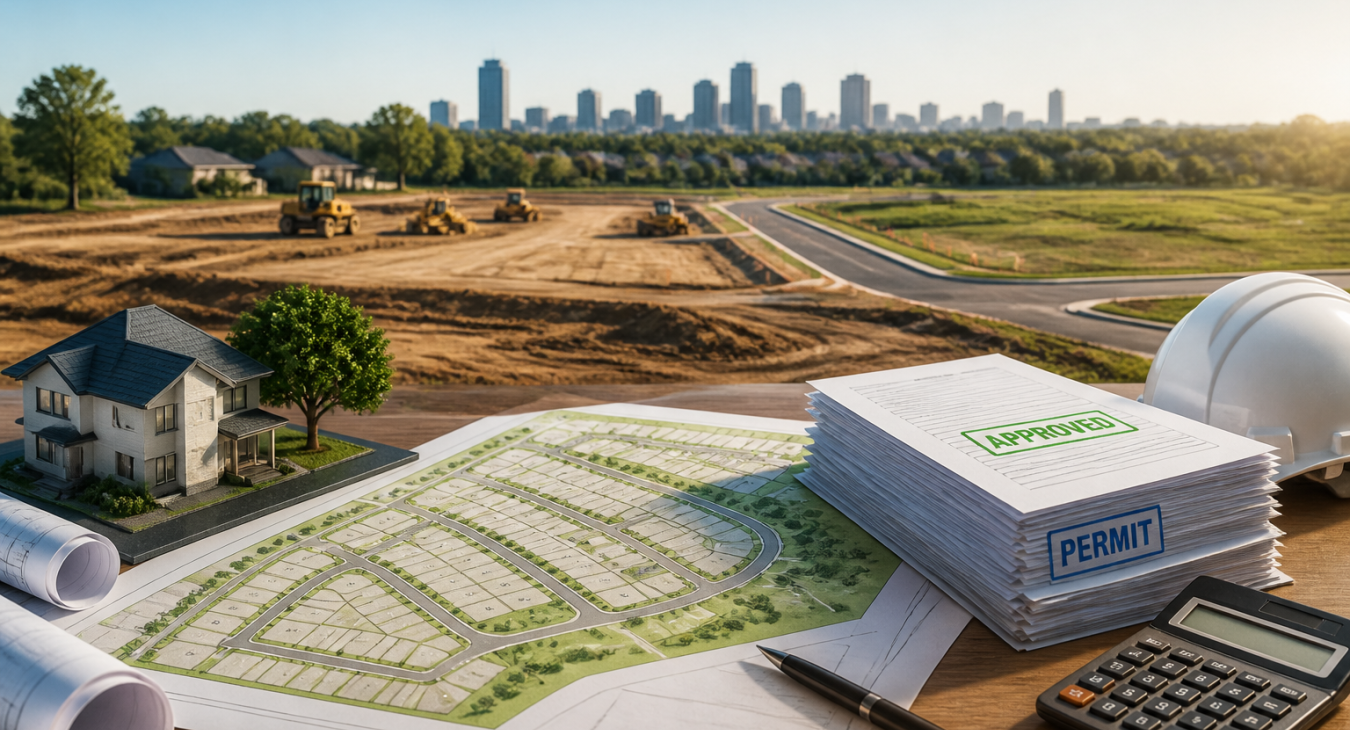
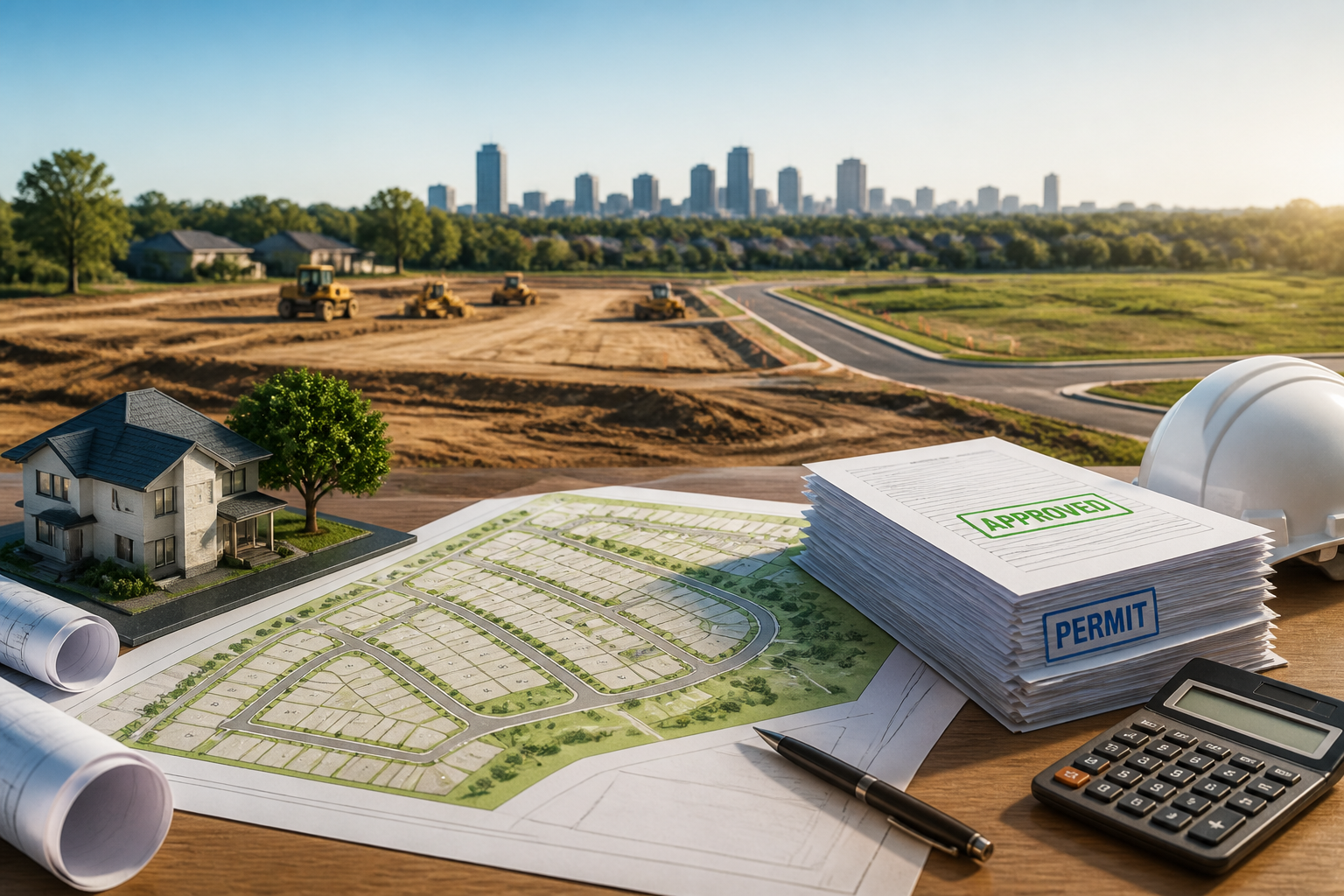
Master land development investing with our complete guide to zoning, permits, and profitable strategies. Learn expert tactics today.
Products and Tools Mentioned in this Post

Propstream
Detailed information on Propstream. Get How-To's, reviews, Comparisons, and much more.
Table of Contents
- Understanding Land Investment Strategies
- Step-by-Step Guide to Buying Land for Investment
- Key Phases of Land Development
- Financing Land Acquisition and Development
- Your Land Investment Due Diligence Checklist
- Risks and Mitigation Strategies
- Tax Considerations and Strategies
- Common Land Investment Mistakes to Avoid
- Conclusion and Action Steps
- Frequently Asked Questions
Land development investing hits different. You get capital appreciation potential and strategic flexibility rolled into one — but yeah, it's harder than flipping rentals or buying stabilized assets. It demands serious expertise, patience, and due diligence. This land development investment guide covers the full playbook: zoning regulations, financing strategies, development phases, profitability optimization. Everything. Whether you're buying a simple hold parcel or executing a full-scale ground-up development, you'll find what you need here. And here's the kicker — raw land doesn't come with tenant drama or maintenance bleeding your cash flow. When the market aligns with your thesis, the upside is significant.

Understanding Land Investment Strategies

Land investing isn't one-size-fits-all. You're choosing between passive positions that sit quietly in your portfolio and active development plays that demand sweat equity and constant management. Before you put down a dime, you need to know exactly how much capital you're willing to lock up, how long you can wait for a return, and what risks you'll actually sleep through at night.
| Strategy | Capital Required | Timeline | Risk Level | Potential ROI | Best For |
|---|---|---|---|---|---|
| Buy and Hold | $25K–$500K+ | 3–10 years | Low–Medium | 50%–300% | Patient investors, inflation hedgers |
| Subdivide and Sell | $50K–$1M+ | 1–4 years | Medium | 40%–150% per project | Active investors with local knowledge |
| Ground-Up Development | $500K–$10M+ | 2–7 years | High | 20%–50% IRR | Experienced developers and syndicators |
| Buy Improved Lots | $75K–$2M+ | 6 months–3 years | Low–Medium | 25%–80% | Builders, spec home investors |
Buy and Hold Strategy
You buy raw or rural land in a path-of-growth corridor and let time do the work. Minimal cash flow headaches. No tenant calls at midnight. And it's a legitimate inflation hedge — land near expanding metros or tied to major infrastructure projects has consistently doubled in value within five to seven years. This is the play if you've got patient capital.
Subdivide and Sell Strategy
Here's where things get active. You acquire a larger parcel, navigate the platting and subdivision approval maze, then split it into individual lots for resale at a significant markup. Take a real example: a 50-acre rural parcel you picked up for $500,000 becomes 20 subdivided lots priced at $75,000–$150,000 each. That's gross revenue hitting $1.5M–$3M before you subtract your costs and permitting headaches.
But you need permitting expertise and relationships with local planners. Without those, you're dead in the water.
Ground-Up Development Strategy
The highest returns come with the highest complexity. You're acquiring raw land, grinding through entitlements, installing infrastructure, and either building out improvements yourself or selling titled lots to builders. The best operators pair this approach with commercial real estate investing frameworks and tap syndication capital to fund the heavy lifting.
Back to topStep-by-Step Guide to Buying Land for Investment

Step 1: Define Your Investment Strategy
Before you even look at a single parcel, lock in your budget, timeline, and target return. Are you a land banker holding for appreciation? A spec developer? An entity buyer? Each path demands totally different skill sets and networks.
Step 2: Evaluate Location and Market Conditions
Population growth rates matter. Employment expansion matters. Infrastructure investment matters. So does school district quality. You're looking for markets hitting 2%+ annual population growth with active commercial development near your target parcel. That's where the money moves. AI tools for real estate investors can cut your market analysis and screening time dramatically.
Step 3: Understand Zoning and Land Use Regulations
Zoning is everything. It controls what you can build, how dense it gets, and what hoops you'll jump through. Pull the municipal zoning map, review the full plan, and check overlay districts carefully.
Residential classifications (R-1 through R-4+) each allow different density levels. Commercial and mixed-use designations? They unlock additional revenue streams entirely. But here's the key: before you pay a premium for speculative zoning upside, verify whether a rezoning application is actually feasible.
Step 4: Assess Physical Land Characteristics
Topography. Soil type. Drainage patterns. Flood zone status (check FEMA maps). Wetland delineations. Utility availability. These aren't nice-to-knows — they're deal killers or deal makers.
Sloped lots, expansive soils, or land in FEMA Zone A? You're looking at $50,000–$200,000+ in extra infrastructure costs. Sometimes more.
Step 5: Conduct Due Diligence
Commission a Phase I Environmental Site Assessment (ESA), boundary survey, title search, and preliminary geotechnical report before you close. Yeah, you're spending $5,000–$20,000 on these. That's pocket change compared to what you'll avoid.
And don't skip ownership verification. Use PropStream lists to track down motivated sellers and dig through ownership history.
Step 6–8: Negotiate, Finance, and Plan Exit
Price based on raw land comparables. Not developer-grade assumptions. Not what you *think* it'll be worth someday.
On financing, know going in that raw land typically requires 25–50% down. It's not like residential mortgages. Then lock your exit strategy before closing — are you holding for appreciation, selling entitled, or building yourself?
Back to topKey Phases of Land Development
| Phase | Typical Duration | Cost Range | Key Activities | Funding Source |
|---|---|---|---|---|
| Acquisition | 30–90 days | Market-dependent | Due diligence, negotiation, closing | Equity, land loans |
| Entitlements & Approvals | 6 months–3 years | $50K–$500K+ | Rezoning, platting, environmental permits | Equity, bridge loans |
| Infrastructure Development | 6–18 months | $500K–$5M+ | Roads, utilities, grading, drainage | Construction loans |
| Monetization / Build-Out | 12–36 months | Variable | Lot sales, vertical construction, leasing | Construction loans, equity |
Here's the thing: entitlement timelines will make or break your deal. A six to twelve month approval window? That's what you're looking at for urban infill in established metros. But greenfield plays in the suburbs? Those typically drag on for two or three years minimum—municipal processing, public hearings, environmental reviews, the whole circus. And if you don't build serious buffer time into your financial model, you're going to hemorrhage carrying costs. Don't say we didn't warn you.
Back to topFinancing Land Acquisition and Development
Here's the reality: land financing is way more restrictive than conventional real estate lending. Banks see raw land as speculative collateral. That means you're looking at higher rates, bigger down payments, and stricter qualification hoops to jump through.
| Loan Type | Down Payment % | Term Length | Interest Rate Range | Best Use Case |
|---|---|---|---|---|
| Raw Land Loan | 35–50% | 2–5 years | 7–12% | Undeveloped parcels, rural land |
| Lot/Improved Land Loan | 25–35% | 3–7 years | 6–10% | Subdivided lots with utilities |
| Construction Loan | 20–30% | 12–24 months | 7–11% | Active development projects |
| Bridge Financing | 30–40% | 6–24 months | 9–14% | Entitlement period funding |
| Private Money / JV | 0–20% | Flexible | 10–16% or equity split | Creative structures, speed |
Now, don't sleep on assumable mortgages. They show up occasionally on seller-financed land deals, and when they do, those below-market rates are absolutely worth the dig. And seller financing? It's hands down one of the most flexible tools you've got for land acquisition. Especially on rural parcels where traditional lenders won't touch the deal.


Your Land Investment Due Diligence Checklist

Legal and Title Review
Skip this and you're asking for trouble. Here's what you need to do.
- Commission a full title search and obtain title insurance
- Verify boundary survey matches deed descriptions
- Confirm no encumbrances, liens, or easements that restrict use
- Review access rights and confirm legal ingress/egress
A missing easement or hidden lien can tank your whole deal. Don't assume the seller disclosed everything.
Environmental and Physical Assessments
Environmental issues will kill your project faster than bad cap rates.
- Order a Phase I ESA to screen for contamination history
- Delineate wetlands and identify any conservation easements
- Verify FEMA flood zone status and floodplain boundaries
- Assess soil bearing capacity and drainage characteristics
And here's the reality: discovering a wetland after purchase means redesigning your entire site plan. Wetlands can reduce usable acreage by 20–40% or more. A Phase I ESA costs $1,500–$3,000 and could save you six figures.
Market and Financial Feasibility
This is where most investors get lazy. Don't be one of them.
- Pull comparable raw land and lot sales within 12 months
- Estimate infrastructure and development cost ranges
- Project absorption rate for completed lots or units
- Calculate minimum viable sale price per lot to achieve target ROI
You need comps to validate your ARV. If comparable lots are selling for $45,000 PPSF and your infrastructure costs eat $30,000 PPSF, you've got thin margins. Run the numbers backward from your target cap rate—not forward from your purchase price.
Back to topRisks and Mitigation Strategies
| Risk Type | Impact Severity | Probability | Mitigation Strategy |
|---|---|---|---|
| Entitlement delays | High | Medium–High | Build an 18-month buffer into your timeline and get planning attorneys involved from day one |
| Environmental contamination | Very High | Low–Medium | Run Phase I and Phase II ESAs before you close. Negotiate a remediation contingency into the deal |
| Zoning denial or reversal | High | Low–Medium | Read the political climate first. Buy under current zoning economics—don't count on favorable changes |
| Market downturn | Medium–High | Medium | Underwrite conservatively on hold period assumptions. Don't leverage yourself beyond what the current market supports |
| Cost overruns | Medium | High | Add 10–20% to your contingency budget. Lock in fixed-price contractor agreements where possible |
| Liquidity constraints | Medium | High | Keep 12 months of operating reserve on hand. Plan your exit strategy in phases, not all at once |
Tax Considerations and Strategies
Here's the thing: taxes will eat into your net returns on land deals if you don't plan strategically. Raw land won't throw off depreciation deductions while you're holding it — that's a real disadvantage compared to income-producing properties. But the right tax strategy? It can save you serious capital.
1031 Exchanges: You're sitting on appreciated land and the market's peaked. A properly structured 1031 exchange lets you defer capital gains by rolling your proceeds into like-kind property within 180 days. This is where you pivot from raw land into income-producing assets without triggering a tax event.
Long-Term Capital Gains: Hold that land past 12 months and you're looking at long-term rates: 0%, 15%, or 20% depending on your bracket. Compare that to short-term rates taxed as ordinary income, and on a $500,000 gain the difference is substantial. We're talking $75,000 to $100,000 in potential tax savings just by waiting.
Entity Structure: LLCs taxed as partnerships give you pass-through treatment and liability protection — both critical for developers. S-corps can cut your self-employment tax if you're actively developing. Before you lock in any structure, sit down with a CPA who actually knows real estate development.
Back to topCommon Land Investment Mistakes to Avoid
- Skipping environmental review: A $10,000 Phase I ESA? That's insurance against a $500,000 remediation liability. You can't afford to skip this.
- Overpaying based on speculative zoning: Always underwrite at existing zoning. Rezoning approval is never guaranteed — don't bet your deal on it.
- Underestimating infrastructure costs: First-time developers consistently lowball off-site improvement requirements by 40–60%. It happens every time.
- Ignoring carrying costs: Property taxes, loan interest, and insurance don't sleep. During multi-year entitlement periods, they accumulate fast.
- Poor partner selection: Joint ventures can accelerate timelines, but misaligned incentives will kill your project. Document everything in the operating agreement — don't handshake this.
If you're building or managing your first land syndication, you need to understand how to position investment opportunities across digital channels. Social media marketing for real estate professionals has become a legitimate capital-raising tool for development projects.
Back to topConclusion and Action Steps
Land development investing isn't for the impatient. You need rigorous due diligence paired with the patience to wait out municipal timelines and zoning battles. The jump from raw land to profitable exit demands you master zoning regulations, navigate municipal approvals, lock in financing, and manage complex timelines. But here's the thing — the upside absolutely justifies the headache if you're prepared. Your strategy matters most. Are you banking on passive appreciation through buy-and-hold, or are you pushing for active value creation via subdivision and development? Either way, three fundamentals separate winners from underwater investors: conservative underwriting, realistic budgets that account for delays, and a solid network of local professionals who know the game.
Here's what you need to do right now:
- Define your strategy and maximum capital commitment before searching for deals
- Select two to three target markets based on population growth and infrastructure investment indicators
- Build relationships with a local land use attorney, civil engineer, and municipal planner
- Evaluate your first five parcels using the due diligence checklist above — even as practice
- Establish your financing sources and pre-qualification before making offers
Frequently Asked Questions
How much money do I need to start investing in land?
It depends entirely on your strategy. You can grab a rural buy-and-hold parcel for $25,000–$100,000 in most markets. Ground-up development? That's a different beast—expect $500,000+ in equity just to get started. But here's the thing: syndication and joint venture structures let you play in bigger deals with smaller checks. As a limited partner, you might get in for just $50,000–$100,000.
How long does land development typically take from purchase to profit?
Three to five years. That's what you're looking at for simple buy-and-hold in a hot market. Subdivision projects stretch longer—usually two to four years from close to final lot sale. And if you're doing full ground-up development? You're talking four to seven years when you factor in entitlements, infrastructure, and build-out. Always stress-test your pro forma with extended timelines in the base case.
What's the most important due diligence item for land investment?
Zoning and environmental clearance. They're equally non-negotiable. A parcel that zoning won't allow you to develop—or one sitting on wetlands or contaminated soil—is a completely different investment than what you paid for it. Run a Phase I ESA. Confirm zoning. Test rezoning feasibility. Do all this before you remove contingencies.
Can I use a 1031 exchange on land I'm selling?
Yes. Land qualifies as like-kind property under IRS Section 1031 rules as long as you're holding it for investment or productive business use (not inventory if you're a dealer developer). Structured correctly, a 1031 exchange defers serious capital gains taxes when you sell appreciated land and reinvest in qualifying replacement property within the required window.
What are the best markets for land investment in 2025–2026?
Sun Belt metros are still the play. Texas, Florida, the Carolinas, Tennessee, Arizona—population is flowing in, jobs are being created, and infrastructure's getting built. But don't sleep on Tier 2 cities adjacent to major employment hubs. Nashville suburbs, Austin suburbs, Raleigh suburbs, Phoenix suburbs—they offer better value than primary urban cores where land prices already bake in aggressive development assumptions.
Back to top