


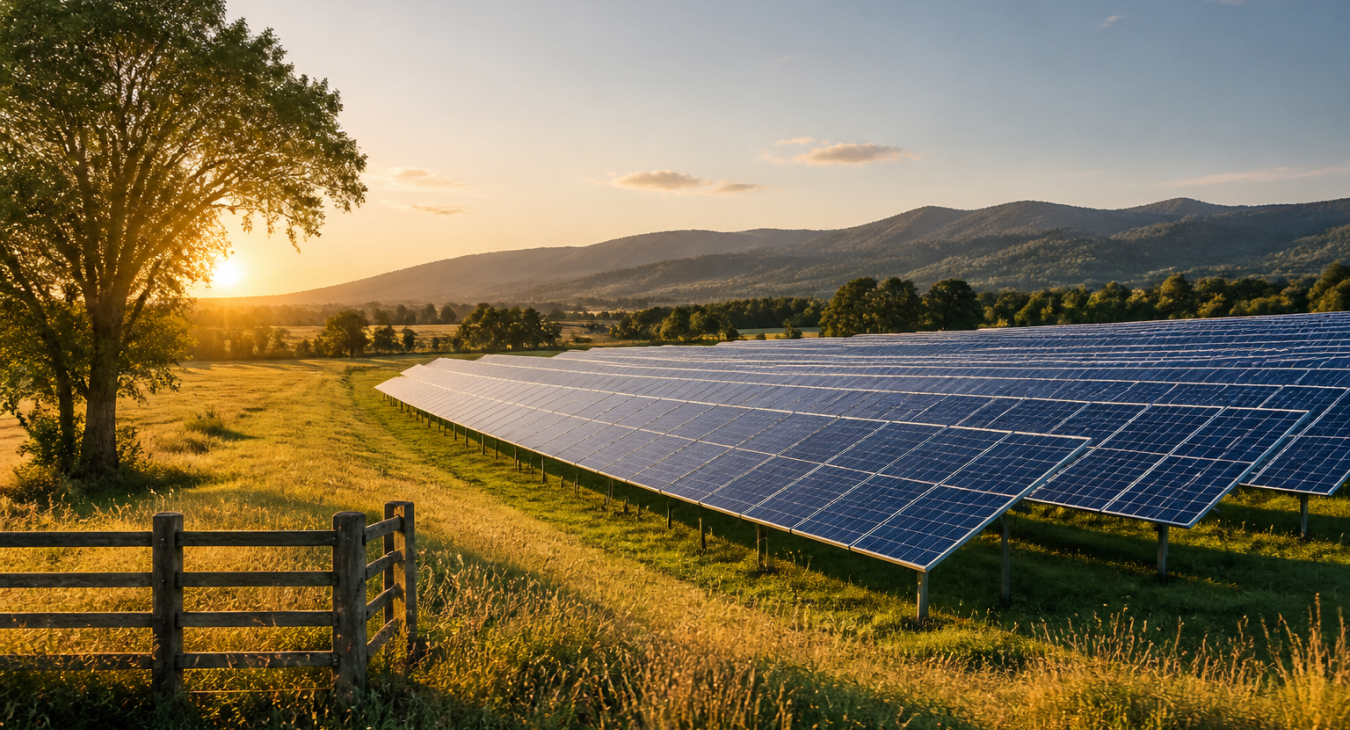
Discover 2026 solar farm land lease rates: earn $500–$2,500+ per acre annually. Learn negotiation strategies and maximize your passive income potential tod
Table of Contents
- What Are Solar Farm Land Lease Rates?
- Key Factors That Determine Solar Land Lease Rates
- Solar Lease Rate Comparison by Region
- Solar Farm Land Lease Benefits for Landowners
- Solar Lease vs. Traditional Farming: A Financial Comparison
- What Makes Land Suitable for Solar Leasing?
- Questions to Ask Solar Developers Before Signing
- How to Evaluate and Negotiate a Solar Lease Offer
- Conclusion: Is a Solar Land Lease Right for You?
- Frequently Asked Questions
Own rural or agricultural land? Solar farm land lease rates in 2026 are genuinely one of the best passive income plays available right now. Developers are competing hard for acreage across the country. And if you understand how this market actually works, you can negotiate like you've got leverage — because you do. We're breaking down the real rate ranges, what actually moves them, and the critical stuff you need to know before you sign anything.

What Are Solar Farm Land Lease Rates?
Here's the deal: a solar land lease is a long-term agreement where a solar developer pays you annual rent to build and operate a solar energy facility on your property. You keep the title. Once the lease expires, the land's yours again—no sale required.
According to Smart Energy USA, you're looking at a national floor of $500–$700 per acre per year for average locations in 2026. But the real range is wider. The national spread hits $250–$1,000+ per acre per year. And if you're in high-demand states like Texas, New York, or Virginia? Rates commonly jump to $1,200–$2,500 per acre per year. Got land near a substation with solid grid access? That's where it gets interesting. Exceptional locations can command up to $3,000+ per acre per year.
Most solar leases run 20–35 years. Some Texas deals stretch to 40 years. That's decades of stable cash flow—but it also means you need to nail the terms upfront.
Back to topKey Factors That Determine Solar Land Lease Rates

Every parcel is different. Learn what actually drives the number, and you'll spot whether that opening offer is legit or if there's cash left on the table.
Land Size and Configuration
Utility-scale developers won't touch anything under 50+ acres. Community solar? You can work with 10 acres. Here's the math: larger, contiguous tracts command higher per-acre rates because developers spend less on infrastructure per megawatt. According to the Solar Energy Industries Association (SEIA), you're looking at 5–7 acres per MW of capacity. That 100-acre parcel? It could support a serious utility-scale build.
Grid Proximity and Interconnection
This is the single biggest lever. Distance to transmission lines and substations directly affects your lease rate. Every mile of new power line the developer builds gets subtracted from project margin — which means it comes out of what they'll pay you. Land sitting next to high-voltage infrastructure? That's premium real estate and commands rates at the top end of the range.
Geographic Location, Climate, and Policy
Sunlight hours matter. A lot. States with aggressive Renewable Portfolio Standards (RPS) mandate utilities to buy a percentage of their power from renewables, which creates consistent developer appetite in those markets. And then there's corporate demand — data centers and large tech companies are actively hunting clean power in specific states, driving up competition and rates.
State-Level Rate Examples
Hawaii leads the pack at $1,116 per acre per year. Massachusetts follows at $1,005 per acre per year. But drop into Montana and you're looking at $546 per acre per year — with a range of $382–$764 depending on specifics. Texas is the wildcard. You could see anywhere from $300 to $2,000 per acre per year depending on which county you're in, grid access, and what kind of project it is. Want better context on where solar dollars are actually flowing? Check out our data-driven analysis of the best markets for land investing in 2026.
Back to topSolar Lease Rate Comparison by Region

| Region / State | Annual Rate (per acre/year) | Lease Term | Notes |
|---|---|---|---|
| U.S. National Average (floor) | $500–$700 | 20–35 years | Average locations, no special grid access |
| U.S. National Range | $250–$1,000+ | 20–35 years | Full market range |
| High-Demand States (TX, NY, VA) | $1,200–$2,500 | 20–35 years | Strong RPS, corporate buyer presence |
| Premium/Substation-Adjacent | $3,000+ | 20–35 years | Exceptional grid access required |
| Hawaii (state average) | $1,116 | 20–35 years | Highest state average nationally |
| Massachusetts (state average) | $1,005 | 20–35 years | Strong SREC market, dense population |
| Texas (range) | $300–$2,000 | Up to 40 years | Widest state range; county-level variation |
| Montana (state average) | $382–$764 (avg. $546) | 20–35 years | Lower irradiance, sparse grid |
Here's the thing—these are 2026 market rates pulled from the sources linked above. Your actual deal? It'll come down to site-specific factors like grid proximity, irradiance, and local demand. Always run the numbers yourself and get an independent appraisal before you commit.
Back to topSolar Farm Land Lease Benefits for Landowners
A solar lease isn't just about that headline rate. There's real money in the structural details—features that make these deals genuinely compelling versus other land income plays.
Predictable, Escalating Cash Flow
Your rent goes up every year. Most solar leases build in 1.5%–2.5% annual escalators (some hit 1%–3%), and that compounding hits hard over time. Start at $1,000 per acre with a 2% bump each year? You're looking at roughly $1,800 per acre by year 30. And here's the kicker—some deals tie escalators to CPI instead of a fixed percentage. In an inflationary environment, that's the better hedge.
Upfront Payments and Option Fees
Before dirt gets moved, developers pay you for waiting. During the permitting phase (usually 1–5 years), you pocket an option fee of $10–$50 per acre annually. Then, when you actually sign? Many agreements include a one-time signing bonus of $1,000–$5,000 per acre. That's real capital you can deploy elsewhere.
Low Operational Demands
The developer owns the operational headache. They handle construction, maintenance, insurance, and decommissioning—not you. Your land still produces income while they absorb the risk and the work. Some agreements even let you run compatible uses underneath, like grazing livestock between panel rows (agrivoltaics). Just make sure your specific lease spells out what's actually allowed.
Tax Considerations
Ordinary income. That's typically how the IRS treats solar lease payments. But it gets murky depending on how your deal is structured and where you're located. Property tax classifications can shift in some states, which means your tax bill might too. Talk to a qualified tax professional before you sign anything. This isn't the place for general guidance—you need jurisdiction-specific advice.
Looking at solar alongside other land investments? Check out our AcreTrader review and our breakdown of land loan down payment requirements. Both help you size up the broader opportunity.

Solar Lease vs. Traditional Farming: A Financial Comparison

Here's the thing: if you're sitting on land and wondering whether to lease it to solar or keep farming, the numbers tell a real story. But which choice wins depends entirely on your situation — existing debt load, tax brackets, and what you're actually trying to optimize for.
| Factor | Solar Lease | Traditional Farming (Corn, example) |
|---|---|---|
| Annual Income per Acre | $250–$1,000+ (national range) | $50–$200 net (highly variable) |
| Income Predictability | High — fixed or CPI-escalating contractual payments | Low — subject to commodity prices, weather, input costs |
| Annual Escalation | 1.5%–2.5% built into lease | Market-dependent; can decline year over year |
| Operational Effort | Minimal — developer manages all operations | High — planting, harvesting, equipment, labor |
| Lease/Commitment Term | 20–35 years (inflexible) | Annual or multi-year farm lease (flexible) |
| Land Use After Agreement Ends | Reverts to landowner; decommissioning required | Continuous — no interruption |
| Tax Complexity | Moderate to high — seek professional advice | Moderate — established farming tax rules apply |
Solar leases look really attractive on marginal or drought-prone land. You're locking in $250–$1,000 per acre annually with predictable escalation — and you're out of the farming game entirely.
But if you own prime, irrigated acreage?
That changes everything. Highly productive farmland can generate serious cash flow, and you maintain full flexibility on exit. And there's no 20–35 year commitment hanging over your head. Before you make the leap either direction, pull the 7 essential maps for finding U.S. farmland quality and score your land's actual agricultural potential. Don't decide based on national averages — your specific PPSF and productivity matter.
Back to topWhat Makes Land Suitable for Solar Leasing?

Developers aren't flexible on this. They've got strict criteria, and knowing what they're actually looking for means you won't waste time pitching unmarketable land.
- Size: Utility-scale projects need 50+ acres minimum. Community solar? That can pencil out on 10+ acres.
- Topography: You want flat or gently sloping ground with minimal tree cover. Steep terrain? Racking costs shoot up fast.
- Solar access: No shade year-round. That means no ridgelines or thick vegetation blocking sun exposure.
- Grid proximity: How close are you to transmission infrastructure? The nearer your parcel sits to the grid, the better your lease rate. Distance kills deals.
- Land required per MW: SEIA's standard planning metric: 5–7 acres per MW. Use that to size your project potential.
- Zoning: Agricultural, rural, or industrial zones usually work fine. But zoning codes aren't uniform—they're locally defined. Call your county planning department. Don't assume anything applies nationally.
- Environmental constraints: Wetlands, flood zones, protected habitat. These can kill a deal entirely. And here's what matters right now: wetland jurisdiction is unsettled post-Sackett v. EPA (2023), and states are writing their own rules. Check with your state's environmental agency before you negotiate.
Questions to Ask Solar Developers Before Signing

Pick your developer wisely. A developer's actual track record matters more than whatever rate they're dangling in front of you—a high lease offer from a startup with zero completed projects is basically worthless compared to a solid operator who's already got years of finished installations under their belt.
| Category | Key Questions to Ask | Red Flags |
|---|---|---|
| Track Record | How many projects have you completed? Can you provide landowner references? | No completed projects; evasiveness about references |
| Financial Backing | who's financing this project? Is equity or debt committed? | Vague answers; no lender or equity partner named |
| Option Period | How long is the option period? What do I receive during it? | Option period exceeds 6 years with no construction start; low or no option payments |
| Payment Structure | When do lease payments begin? what's the escalation formula? | Payments tied only to project revenue with no fixed floor |
| Project Failure | What happens if permitting fails or interconnection is denied? | No clear termination clause; landowner bears costs |
| Decommissioning | who's responsible for panel removal and land restoration after 25–30 years of operation? | No decommissioning bond required; liability unclear |
| Insurance & Liability | What coverage does the developer carry? Are you named as additional insured? | Developer can't provide certificates of insurance |
Don't sign without getting a lawyer involved. This contract locks you in—and potentially your kids—for decades. You need a real estate attorney with actual energy or agricultural land experience, not some general practitioner who's never seen a solar deal. And understanding lease guarantor structures matters too, because it shows you exactly how the developer's obligations actually get backed up in writing.
Back to topHow to Evaluate and Negotiate a Solar Lease Offer
That first offer? It's almost never the best one. Developers open low — it's just how the game works. But landowners who actually run a competitive process walk away with significantly better terms. It happens every time.
- Research comparable rates in your county and state using the ranges in this guide as a starting benchmark.
- Solicit multiple developers. Get at least three qualified developers competing for your land and request competing proposals. Honestly, this is the single most effective negotiating tactic you have available.
- Hire an independent appraiser familiar with solar leases in your region. Market rates for solar land aren't standardized — they can swing wildly from published averages.
- Negotiate escalators and structure. Don't accept anything less than a 2.5%–3% annual escalator. Confirm whether it's fixed or CPI-tied. And push hard on signing bonuses and option-period compensation.
- Review the alternative. Some developers pitch a revenue-share model of 3%–6% of farm revenue instead of a fixed per-acre rate. In high-revenue projects, this outperforms fixed leases. But you're taking on income variability. Model both scenarios before you commit.
- Understand the federal ITC context. Developers pocket the federal 30% Investment Tax Credit under Section 48/48E. Here's the critical part: under 2026 rules, projects larger than 1.5 MW must begin construction by July 4, 2026, or be placed in service by December 31, 2027 to qualify. That deadline pressure works in your favor for negotiating leverage. But don't let it rush you into signing a bad deal.
If you're managing multiple income-producing properties, check out our roundup of best landlord software for small portfolios and our comparison of the most landlord-friendly states. Both are worth reviewing when you're building a diversified land-income strategy.
Back to topConclusion: Is a Solar Land Lease Right for You?
Here's the reality: solar farm land leases in 2026 beat traditional ag income on marginal land, especially in high-irradiance zones where farming margins have cratered. You get predictable payments locked in for 25–30 years, annual escalation clauses (typically 1–2%), minimal work on your end, and an upfront signing bonus. Not many passive land plays stack up against that.
But this isn't a one-year flip. You're committing your parcel for decades, and that brings legal, tax, and succession issues that change completely depending on where you are. The 2026 market rates we've laid out here? They're real numbers. Your land's actual value, though, depends on specifics—soil composition, shade patterns, grid interconnection costs, local zoning—that only a licensed appraiser and energy attorney can pin down properly.
Do your homework. Run multiple developers against each other, get independent counsel, and don't let a developer's timeline pressure you into a bad deal. Your land's worth the extra weeks of diligence.
Back to topFrequently Asked Questions
What's a typical solar farm land lease rate in the U.S. in 2026?
You're looking at $250 to $1,000+ per acre per year nationally, but the sweet spot lands between $500–$700 per acre per year. That's the baseline. But if you're in hot markets like Texas, New York, or Virginia? You'll see $1,200–$2,500 per acre per year regularly. And if your land sits next to a substation — prime real estate for developers — you could push past $3,000 per acre per year.
How long do solar land leases typically last?
Most deals run 20–35 years. Texas pushes it to 40. But here's what matters: before your lease even kicks in, you'll sit through an option period of 1–5 years (sometimes up to 6) while the developer gets permits and interconnection studies done. That's dead time on your side.
How much land does a solar farm require?
The SEIA rule of thumb? 5–7 acres per megawatt. Most utility-scale projects won't touch anything under 50 contiguous acres. Community solar's different — they'll work smaller parcels down to 10 acres if the numbers work.
Will my solar lease income be taxed?
It's ordinary income at the federal level. That's the starting point. But here's where it gets murky: your state might reclassify your land for property tax purposes, and how you structure the lease matters too. Don't guess on this one. Get a qualified tax professional involved before you sign anything.
What happens to my land after the solar lease ends?
You get it back. Solar farms run for 25–30 years before decommissioning happens (or they get repowered). The critical part? Your lease agreement must explicitly state that the developer handles all decommissioning — panel removal, site restoration, the whole cleanup. And demand a decommissioning bond. This is non-negotiable. You need those funds locked in regardless of whether the developer stays solvent.
Back to top