

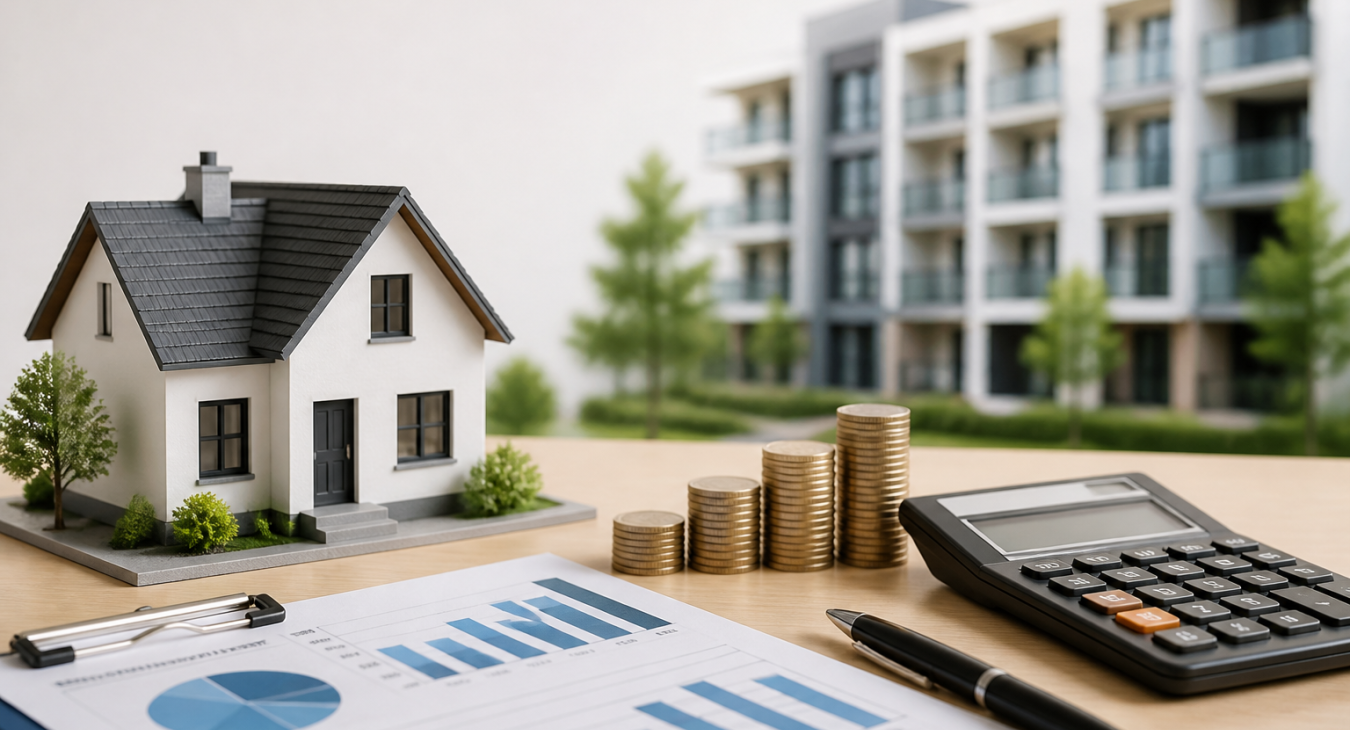
Learn what's a good ROI on rental property with industry benchmarks, calculation methods, and strategies to maximize your investment returns.
Products and Tools Mentioned in this Post



Table of Contents
- what's a Good ROI on a Rental Property?
- How to Calculate ROI on a Rental Property
- Factors That Influence Rental Property ROI
- Common Pitfalls in ROI Calculations
- Additional Financial Metrics Beyond ROI
- Strategies to Maximize Your Rental Property ROI
- Best Geographic Markets for High Rental ROI
- ROI for Different Rental Property Types
- Tools and Resources for Tracking ROI
- Conclusion: Setting Realistic ROI Expectations
- FAQ: Rental Property ROI
Here's the thing: every rental property investor eventually asks themselves what a "good" return actually looks like. But it's not some magic number you'll find in a spreadsheet. You might be juggling your first single-family rental, or maybe you're trying to decide between a vacation property and a multifamily building. The investors who consistently win? They know how to define ROI, calculate it accurately, and benchmark it against real market data. Everyone else tends to break even at best. This guide covers industry standards, the actual math that works, and the specific factors that'll either pump up your returns or kill them.

what's a Good ROI on a Rental Property?
Industry Benchmarks and Typical ROI Ranges
Most serious investors target 5% to 10% annually. But here's the thing: experienced players often push for 8–12% on deals with higher risk or that demand active management. The catch? Geography changes everything. That 6% ROI you're eyeing in San Francisco — where appreciation historically runs 4–6% yearly — plays by completely different rules than the same return in a Midwestern market with zero appreciation tailwinds.
National Association of Realtors data and real estate analytics show gross rental yields averaging 6–8% across the U.S. After you account for expenses, though? You're looking at 2–3 percentage points lower. Most buy-and-hold investors actually land between 4% and 8% net ROI, depending on market conditions and how tight you run operations.
Why "Good" ROI Varies by Investor Goals
Two investors. Same property. Completely different conclusions. A retiree chasing steady passive income with minimal risk sleeps fine at 5%. A growth investor running aggressive leverage? They'll walk away from anything below 10%. Your investment thesis drives the whole thing — whether you're banking on appreciation, maximizing cash flow, or mixing both. Are you just getting started? The Rental Property Investing for Beginners: Complete 2026 Guide walks you through setting realistic targets before you write that first check.
ROI Expectations for Different Property Types
Long-term rentals are steady, predictable, boring. Short-term rentals? They'll juice your gross income hard, but you're trading that stability for management headaches and higher vacancy swings. Commercial properties sit in a different universe — cap rates typically run 7–10% — though you're committing serious capital upfront and dealing with longer tenant turnover periods. Match your ROI expectations to the property type. This isn't optional.
Back to topHow to Calculate ROI on a Rental Property

Basic Annual ROI Formula
Want the simplest way to check if a rental's working? Divide your annual net profit by what you put in.
Annual ROI = (Annual Net Income ÷ Total Investment) × 100
Annual Net Income is your gross rental income minus every operating expense you'll face. Total Investment is your down payment plus closing costs plus whatever repairs you need to make before tenants move in.
Total Holding Period ROI
You've owned the property for years now. Maybe you're thinking about selling, or maybe you just want to see how it's really performed.
This metric captures the full picture—your cumulative cash flow, appreciation gains, and what you'll actually lose when you sell.
Total ROI = [(Total Net Income + Appreciation Gain − Transaction Costs) ÷ Initial Investment] × 100
Annualized ROI (CAGR Method)
Comparing two deals held for different lengths of time? The Compound Annual Growth Rate method levels the playing field.
CAGR = [(Ending Value ÷ Beginning Value)^(1/Years)] − 1
This matters when you're deciding whether your rental actually beat an S&P 500 index fund over the same holding period. Most investors skip this—and leave money on the table because of it.
Step-by-Step Calculation Example
Let's say you bought a single-family home for $250,000. You put down 20% ($50,000) and paid $5,000 in closing costs. Rent comes in at $2,000/month. Your mortgage is $950, taxes run $250, insurance $100, you've budgeted $150 for maintenance reserves, and property management takes $180. That leaves you with about $370 monthly in net cash flow—$4,440 a year. Your total skin in the game: $55,000.
Cash-on-Cash ROI = $4,440 ÷ $55,000 = 8.07%
That's solid if you financed it. But where do the key drivers really come from? Check out How to Analyze a Rental Property: The 5 Numbers That Matter.
| Metric | Formula | Best Used For | Includes Use? |
|---|---|---|---|
| Basic Annual ROI | Net Income ÷ Total Investment × 100 | Quick year-over-year comparison | Optional |
| Cash-on-Cash Return | Annual Cash Flow ÷ Cash Invested × 100 | Financed purchases, cash flow focus | Yes |
| Cap Rate | NOI ÷ Property Value × 100 | Property comparison, all-cash baseline | No |
| Total Holding Period ROI | (Net Income + Appreciation − Costs) ÷ Investment × 100 | Exit analysis, long-term strategy | Optional |
| Annualized ROI (CAGR) | (Ending Value ÷ Beginning Value)^(1/Years) − 1 | Multi-year comparison vs. alternatives | Optional |
Factors That Influence Rental Property ROI

Property Purchase Price and Financing Method
Your entry price makes or breaks the deal. Overpay by just 5–10% and you're looking at years of underperformance before you recover. The financing method is equally critical — sure, an all-cash purchase means lower cash-on-cash returns because you're tying up more capital, but you kill the interest expense entirely. And here's the thing: with mortgage rates hovering around 6–7.5%, leverage only works if your rental income crushes your total debt service. Before you lock in your funding strategy, explore every financing option available.
Rental Income and Vacancy Rates
Gross rental income isn't your floor—it's your ceiling. Vacancy kills deals quietly. One empty month per year? That's an 8.3% haircut to your income. Most underwriting models use 5–10% vacancy for stable, long-term rentals. But newly acquired properties, transitional neighborhoods, or seasonal markets? You need to be more conservative—10–15% is realistic.
Expenses and Maintenance Costs
The 50% Rule gets thrown around constantly as a quick sanity check. Operating expenses eat roughly half your gross rents, though reality swings wildly based on property age, condition, and location. New construction in stable climates runs 35–45%, while older stuff in extreme weather climates can blow past 55%. And don't skip the maintenance reserve—experienced investors set aside 1% of property value annually for repairs and CapEx.
Property Taxes and Insurance
These two items alone will swallow 15–25% of gross income in high-tax states like Illinois, New Jersey, or Texas. Jump to Alabama, West Virginia, or Wyoming? You're paying roughly one-third as much in property tax. Your landlord insurance policy—real landlord coverage, not your homeowner's policy—is non-negotiable. The Rental Property Insurance Guide shows you exactly what coverage protects your investment.
Property Management Fees
Hiring a professional property manager runs 8–12% of monthly collected rent, plus leasing fees of 50–100% of one month's rent per new tenant. Self-managing saves that expense but costs your time and carries real operational risk. Which one maximizes your net returns? Use the Self-Managing Rentals vs. Property Manager Decision Framework to find out.
| Expense Category | Typical % of Gross Rent | Impact on ROI | Controllability |
|---|---|---|---|
| Mortgage/Debt Service | 35–50% | High | Low (fixed at purchase) |
| Property Taxes | 8–15% | High | Low (market-dependent) |
| Insurance | 3–6% | Moderate | Moderate (shop policies) |
| Maintenance & Repairs | 5–12% | Moderate | Moderate (preventive care) |
| Vacancy Loss | 5–10% | High | High (tenant screening) |
| Property Management | 8–12% | Moderate | High (self-manage option) |
| CapEx Reserve | 3–8% | Moderate | Moderate (planning-based) |
Common Pitfalls in ROI Calculations

Overlooking Hidden Expenses
Most first-time investors get blindsided here. HOA fees, landscaping, pest control, utilities in common areas, accounting fees, eviction costs, and legal compliance expenses—especially in rent-controlled cities—can quietly eat 5–10% of your actual operating costs. That seller's financials? It's showing best-case scenarios, not reality. Before you close, build out a granular line-item budget that accounts for every possible expense category you'll actually face.
Unrealistic Income Projections
Here's where I see deals die on the spreadsheet. Using peak market rents as your baseline income is one of the biggest modeling mistakes you can make. Rental rates move with local economic conditions, new supply entering the market, and seasonal swings. Don't just look at the top listings. Pull at least six months of comparable rental data and build in a conservative 5–8% buffer below current market rates to account for softening.
Overly Optimistic Vacancy Rate Assumptions
100% occupancy doesn't exist. Even 95% is dangerous in most markets. You've got to factor in the actual empty-unit time, rent loss during tenant turnover, cleaning, and minor repairs between leases. Most long-term rentals should model an 8–10% vacancy and turnover allowance on gross potential rent. If you're in a highly competitive or seasonal market? Bump that to 15–20%.
Forgetting Capital Improvements
A roof replacement runs $8,000–$20,000. HVAC can hit $5,000–$12,000. Kitchen reno? That's a whole different number. And here's what kills investors—they track cash flow obsessively but completely ignore CapEx. Then a large expenditure hits and wipes out years of "profit." Set aside 1–1.5% of property value annually as a dedicated CapEx reserve. It smooths your ROI modeling and keeps you honest about what this property really returns.
Back to topAdditional Financial Metrics Beyond ROI
Cap Rate vs. ROI: Understanding the Difference
Cap rate strips out financing. It divides Net Operating Income by current market value, giving you the property's income potential regardless of how you fund it. This makes it the gold standard for comparing deals side-by-side.
ROI? That's different. It factors in your specific financing structure and actual cash investment. So here's how to use them: cap rate screens and compares deals. ROI and cash-on-cash return show you how you personally performed on the investment.
Want to dig deeper into calculating real returns? Check out Rental Property Cash Flow: Calculate Real Returns.
Cash-on-Cash Return
This is the metric that matters most for financed deals. It measures actual dollars you get back relative to actual dollars you put in during a given year. And because it reflects your real liquidity and reinvestment capacity, it's what you should be watching during the holding period.
A 7–10% cash-on-cash return? That's strong in most U.S. markets.
Net Operating Income (NOI)
NOI is everything in commercial real estate valuation. Gross rental income minus all operating expenses, excluding debt service—that's your NOI. It's lender-independent, so it shows what the property actually earns before your financing terms matter.
Want to increase property value in income-based markets? Growing NOI through rent increases and expense reduction is your primary lever.
Gross Yield
Gross yield (annual rent ÷ purchase price × 100) is a quick screening tool, not a thorough analysis. An 8%+ gross yield usually signals a market worth digging into. But be careful—high gross yields can hide high vacancy rates, elevated crime, or structural economic decline in that market.
Never invest based on gross yield alone.
Back to topStrategies to Maximize Your Rental Property ROI
Optimize Rental Rates Based on Market Data
You'd be shocked how many investors leave money on the table by under-renting their properties. Every 6–12 months, pull a thorough comparable rent analysis using Zillow Rental Manager, Rentometer, or RealPage. Here's what matters: bump a $1,800 rent by just $50/month and you've added $600 to annual gross income — that's a 2.8% revenue increase that drops almost entirely to your bottom line. If you're investing long-distance and don't have local market intel, the Long Distance Rental Property Investing: Complete System gives you proven ways to stay competitive.
Minimize Vacancy Through Tenant Screening
Rigorous tenant screening is the single highest-impact activity for improving long-term ROI. Credit checks, income verification, rental history, references — don't skip any of it. Quality tenants stay longer (lower vacancy), treat the property better (lower maintenance), and create fewer legal headaches (fewer disputes and evictions). Each month you avoid a vacancy? That's one-twelfth of your annual rent flowing straight to ROI.
Control Expenses and Negotiate Repairs
Most investors underestimate how much relationship-building with contractors moves the needle on returns. Investors with a solid network of trusted tradespeople spend 15–25% less on repairs than those making panic calls to emergency services. And preventive maintenance — annual HVAC servicing, gutter cleaning, roof inspections — costs pennies compared to emergency repairs. It also extends the life of your major systems by years.
Use Refinancing Opportunities
When rates drop, refinancing isn't optional — it's capital efficiency. Cut your rate from 7.5% to 6.0% on a $200,000 mortgage? You're looking at $185 less per month, or $2,220 annually added to net cash flow. The BRRRR strategy — Buy, Rehab, Rent, Refinance, Repeat — lets you recycle capital and amplify returns through strategic refinancing after value-add improvements.
Tax Optimization and Its Impact on Net ROI
Depreciation alone is a massive ROI multiplier. On residential property, you're deducting 1/27.5th of the value annually — no cash out of pocket. Take a $250,000 property with a $50,000 land value. That's roughly $7,272 in annual depreciation deductions. At a 22% marginal rate, you're saving over $1,600 in taxes every single year. Throw in mortgage interest, repairs, and professional fees on top of that. Your after-tax ROI often beats your pre-tax numbers by 1.5–3 percentage points. Want the full picture? Check out the Rental Property Tax Deductions: The Complete List.
Back to topBest Geographic Markets for High Rental ROI

High-ROI States in 2025–2026
What separates the winners from the losers? Markets crushing it on rental ROI share a few distinct traits: landlord-friendly legal frameworks, population growth that actually sticks, diversified job markets instead of single-industry towns, and pricing that lets you hit strong rent-to-price ratios. CoStar, ATTOM Data Solutions, and local MLS data all point to these markets as the real performers:
| State/City | Avg. Gross Yield | Avg. Net ROI | Key Driver | Risk Level |
|---|---|---|---|---|
| Detroit, MI | 12–16% | 7–10% | Low entry prices, high rent ratios | High |
| Memphis, TN | 10–13% | 6–9% | Affordable market, strong demand | Medium |
| Indianapolis, IN | 9–12% | 6–8% | Landlord-friendly, stable economy | Low-Medium |
| Birmingham, AL | 9–12% | 6–8% | Low property taxes, growing market | Low-Medium |
| Columbus, OH | 8–10% | 5–7% | University market, stable demand | Low |
| Kansas City, MO | 8–11% | 5–7% | Diversified economy, affordable housing | Low |
| Jacksonville, FL | 7–9% | 5–7% | Population growth, no state income tax | Low-Medium |
| San Antonio, TX | 7–9% | 4–6% | Military, healthcare job base | Low |
Here's the reality: Detroit's 12–16% gross yields are tempting. But you're trading that juice for higher management headaches, vacancy risk that'll keep you up at night, and property condition surprises. If you want turnkey deals in these markets without the renovation guesswork, Roofstock handles the vetting—pre-tenanted units with full inspection reports already in hand.
Back to topROI for Different Rental Property Types

Single-Family Rental Homes
Most investors start with SFRs. Why? They're simple, you can get conventional financing, and there's no shortage of tenants looking for a place to rent. You're looking at a typical net ROI of 5–9% in established markets, and appreciation can stack on top of that cash flow in supply-constrained cities like Denver or Austin. Management's straightforward too — it's just one tenant household, one lease, no shared systems to worry about.
Multifamily Properties
Duplexes, triplexes, and small apartment buildings (2–10 units) shift the math in your favor. One roof. One maintenance visit covers multiple units. Multiple income streams. That's where economies of scale start working for you.
Net ROI typically lands between 6–12%, and here's the real advantage: you can have the property professionally appraised based on actual income, not just comps. That gives you more control over asset value than you'd ever get with a single-family home. And because vacancy risk spreads across multiple units, one tenant moving out doesn't crater your monthly cash flow.
Vacation Rental and Short-Term Rental ROI
Airbnb, Vrbo, and similar platforms can generate 2–3× the gross revenue of a long-term rental if you've got the right property in the right location. But here's the catch: your operating expenses scale up just as fast. Cleaning, utilities, supplies, platform fees, seasonal vacancy — they all add up quick.
Well-positioned STRs net out to 8–15% ROI, but regulatory risk is real. Municipal bans happen. Permit restrictions tighten. That's a layer of uncertainty you won't face with traditional rentals. Don't have full property ownership yet? Airbnb Arbitrage: Short-Term Rentals Without Owning Property shows you how to enter the STR game with lower capital upfront.
Commercial Rental Property
Retail, office, industrial, mixed-use — commercial properties run 7–12% cap rates and ROI targets. Longer lease terms (3–10 years) lock in income stability. But vacancy in commercial deals? It drags on. Months. Sometimes over a year. And tenant improvement allowances demand serious upfront capital you can't recover immediately.
This space is for experienced investors with real capital behind them and solid legal and financial teams. It's not where you start if you're bootstrapping your first portfolio.
| Property Type | Typical Gross Yield | Typical Net ROI | Management Intensity | Appreciation Potential |
|---|---|---|---|---|
| Single-Family (SFR) | 6–10% | 4–8% | Low–Moderate | Moderate–High |
| Small Multifamily (2–4 units) | 7–12% | 5–9% | Moderate | Moderate |
| Large Multifamily (5+ units) | 6–10% | 5–10% | High (PM required) | Moderate |
| Short-Term/Vacation Rental | 12–20% | 7–14% | Very High | Moderate–High |
| Commercial | 7–12% | 6–11% | Low–Moderate | Low–Moderate |
Tools and Resources for Tracking ROI

Software Solutions for Rental Property Management
You need accurate ROI tracking from day one. No exceptions. Stessa is honestly the best move for independent investors holding 1–20 units. It's free, it automates your income and expense categorization, and it spits out tax-ready reports with performance dashboards built right in. Scale up to 30+ doors? Then AppFolio and Buildium make sense—but you're paying subscription fees for stronger tenant management features. And here's the thing: before you commit to AppFolio, dig into the recent antitrust dispute and the 2025 data breach investigation. Those details matter.
ROI Calculation Tools and Spreadsheets
A solid spreadsheet is still your most powerful weapon. It's flexible, transparent, and shows exactly where your money's going—something proprietary software can hide. Build separate tabs for income projections, expense tracking, mortgage amortization, and performance metrics. You'll find free templates all over: BiggerPockets has them, Roofstock has them, and KDS Development offers downloadable calculators too. But here's the critical part—your inputs have to be bulletproof. That's where solid rental property bookkeeping practices come in. They keep your ROI calculations grounded in reality, not wishful thinking.
Working With Real Estate Professionals
An investor-focused buyer's agent gives you something no database can: market-specific ROI benchmarks tied to your actual neighborhood. Vacancy rates, rental demand, trajectory shifts, off-market deals—they know it all. And honestly? You often get this intel free if you're transacting. For the heavy lifting—portfolio analysis, tax strategy, depreciation schedules, cost segregation, 1031 exchanges—a CPA with real estate investment experience is worth every penny of their fee. That's the one expense you don't cheap out on.
Back to topConclusion: Setting Realistic ROI Expectations
Here's the truth: there's no single "good" ROI number that works for every investor. Your market matters. Your financing structure matters. The property type and your actual goals matter even more. That 5–10% annual benchmark? It's a starting point, not a finish line.
Real investors don't obsess over one metric. You need to run the numbers on cash-on-cash return, cap rate, NOI growth, and after-tax returns all at once. That's how you see the full picture. And the portfolios that actually compound wealth? They're built on fundamentally sound assets in markets that are actually growing, not on chasing the flashiest yield you can find.
Tight expense management is non-negotiable.
But here's where most people stumble — they model aggressively and wonder why reality doesn't match. Model conservatively instead. Use hard data, not hope. Then, as you build experience and close more deals, keep refining your benchmarks. Your first flip teaches you something your tenth deal won't. Keep learning.
Back to topFAQ: Rental Property ROI
what's a realistic ROI expectation for a rental property?
Target a net annual ROI between 5% and 9% for long-term rentals in established U.S. markets. That's after you account for operating expenses, vacancy, and debt service. Want 10%+ returns? You'll need higher-risk markets, value-add strategies, or short-term rentals that demand serious management chops. Here's the honest take: beginners should model conservatively and treat anything above 7% net as a bonus rather than a baseline expectation.
Is a 5% ROI good for a rental property?
It depends entirely on context. In appreciating coastal markets where property values climb 4–6% annually, a 5% cash ROI stacks up to 9–11% total annual returns — that's competitive with most equity investments right there. But in a flat or declining market? 5% probably won't cut it given the illiquidity and management headaches of property ownership. Always evaluate cash return and appreciation potential together.
How long does it typically take to achieve strong ROI on a rental property?
Most rental properties take 3–7 years to hit optimal ROI performance. The first 1–2 years crush your returns. Upfront expenses, tenant turnover, repairs — it all compresses cash flow right when you need it most. As mortgages amortize, rents rise with inflation, and you improve the property, ROI climbs meaningfully. Here's what most investors miss: if you only model ROI at acquisition, you'll underestimate the strong returns that show up in years 5–10 of ownership.
How does rental property ROI compare to stock market returns?
The S&P 500 has historically returned roughly 10% annually before inflation (about 7% real return). And rental properties? When you factor in cash flow, appreciation, mortgage paydown, and tax benefits like depreciation, they frequently match or exceed stock market returns on a risk-adjusted basis — especially if you apply leverage prudently. The real difference is liquidity. Stocks sell in seconds. Rental properties take weeks or months to exit and carry transaction costs of 6–10% of value.
Can I calculate ROI before purchasing a rental property?
Absolutely — and you must. Pre-purchase ROI modeling using market rent estimates, conservative vacancy assumptions (8–10%), and fully loaded expense projections gives you a baseline before capital commits. The discipline that matters most? Use realistic, market-validated inputs instead of optimistic assumptions. Gather actual rent comps, get insurance quotes, verify property tax records, and run three scenarios (conservative, base, optimistic) so you understand the range of potential outcomes before you sign.
Back to top