

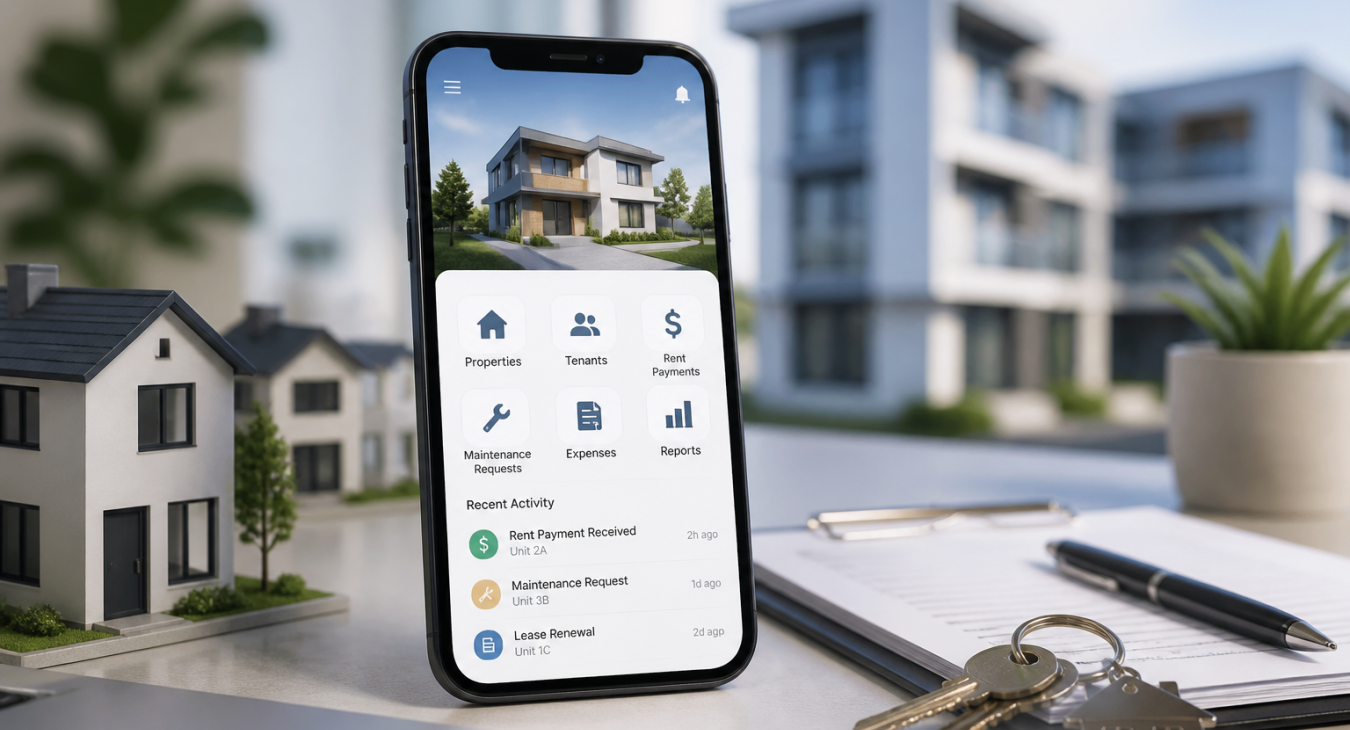
Discover the best rental property apps for 2026. Compare features, pricing, and find the perfect tool to automate management tasks and save hours weekly.
Products and Tools Mentioned in this Post

ShowingTime
ShowingTime is the leading showing management platform for real estate agents. Automate appointment scheduling, coordinate showings, and enhance client service.

TurboTenant
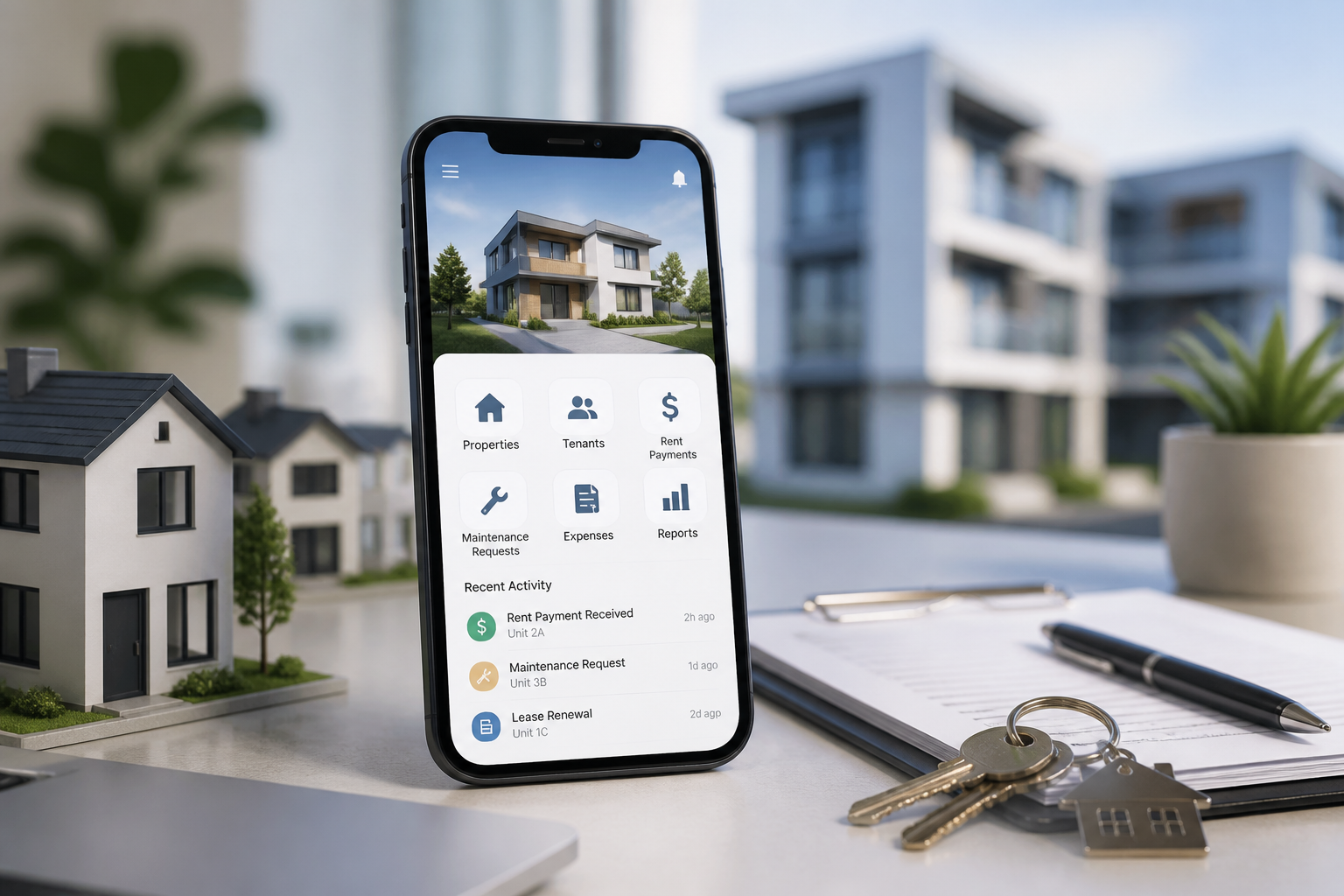
TurboTenant offers free landlord software for rental property management. Screen tenants, collect rent online, create leases, and manage maintenance efficiently.
Table of Contents
- What Are Rental Property Apps — and Why Do You Need One?
- Best Rental Property Apps for Landlords in 2026
- Rental Property Apps Comparison Table
- Free vs. Paid Rental Property Apps
- Rent Collection and Tenant Communication Tools
- Best Apartment Finder Apps for Renters
- Property Maintenance and Repair Tracking
- Financial Management and Accounting Features
- Security, Data Privacy, and Implementation Considerations
- Choosing the Right Rental Property App: Key Factors
Rental property management in 2026? It's a completely different beast than ten years ago. Automated rent collection. AI that schedules maintenance for you. Real-time dashboards showing exactly where your money is going. Modern landlords can compress what used to be a 40-hour management week into maybe five or six focused hours. But here's the real problem: there's no shortage of rental property apps out there. The hard part is finding one that actually fits your portfolio size, your budget, and how you actually work. That's what this guide does — we'll walk you through the legit contenders, break down pricing and features without the sales pitch, and cut through all the noise so you can make a decision you won't regret.

What Are Rental Property Apps — and Why Do You Need One?
Rental property apps are software platforms available on mobile, desktop, or both. They're designed to automate and centralize the operational tasks of managing residential or commercial rentals. You get rent collection, tenant screening, lease management, maintenance tracking, and financial reporting. The stronger platforms? They also offer accounting integrations, vacancy marketing, and portfolio analytics.
The numbers tell the story here. The property management software market hit approximately $4.5 billion in 2024 and is projected to exceed $7 billion by 2028. Independent landlords are adopting digital tools for the first time — and that's driving most of that growth. According to the National Association of Realtors, over 47% of landlords now use at least one dedicated property management app. That's a massive jump from just 22% back in 2019.
But there's an important distinction right out of the gate:
- Landlord-focused apps: Built around operational management — rent collection, tenant communication, maintenance, and bookkeeping. Examples include DoorLoop, Buildium, and Stessa.
- Renter-focused apps: Designed to help tenants find apartments, apply online, and pay rent. Examples include Zillow Rentals, Apartments.com, and Rent.com.
Most successful landlords use tools from both categories. You'll run a management platform for day-to-day operations and a listing platform to fill vacancies fast. So what gap are you actually trying to fill? That's the first question to answer before you commit to any software. If you're newer to the investment side, the Rental Property Investing for Beginners: Complete 2026 Guide is an excellent starting point before diving into software decisions.
Back to topBest Rental Property Apps for Landlords in 2026

Below you'll find the most widely adopted and highest-rated tools landlords are actually using right now. We've evaluated each one on features, pricing, mobile capability, customer support quality, and what real users are saying about them.
1. DoorLoop — Best Overall for Growing Portfolios
DoorLoop is getting serious traction in the landlord community. And for good reason. It nails that sweet spot between easy to use and powerful enough to scale — whether you're managing 5 units or 500. You get automated rent collection, full accounting with chart of accounts, tenant and owner portals, maintenance management, and one-click vacancy syndication to over 30 listing sites.
Pricing: $59/month for up to 20 units. First two months get a 50% discount, and you can grab a free demo. No free plan here, but the feature set justifies the cost.
Real user feedback: "We switched from spreadsheets to DoorLoop about 18 months ago. The onboarding took maybe a week, and we haven't looked back. Rent collection alone saves us about 6 hours a month." — Marcus T., landlord with 34 units in Atlanta.
Notable limitation: No free plan. If you're running just 1–3 units, the monthly fee might feel steep unless you're planning to scale.
2. Stessa — Best Free Option for Independent Landlords
Self-managing landlords swear by Stessa. It delivers serious financial tracking without bloating you with features you'll never touch. The free plan covers unlimited properties, automated income and expense tracking, bank account syncing, and basic reporting. Upgrade to Pro ($20/month or $199/year) and you unlock rent collection, premium reporting, and priority support.
If you're obsessed with tracking NOI, cap rate, and cash-on-cash return? Stessa's dashboard is genuinely best-in-class at this price point. Read our detailed Stessa Review 2026: Free Rental Property Tracking for a complete breakdown of what the free plan actually delivers versus the paid upgrade.
Notable limitation: Tenant communication and maintenance management are thin compared to full-suite platforms. Use Stessa as your financial hub, then pair it with a separate communication tool if you're actively managing tenants.
3. Buildium — Best for Professional Property Managers
Buildium's been crushing it since 2004. It's still the market leader for professional property management companies handling 50+ units. The full stack is here: leasing, tenant screening, rent collection, maintenance workflows, accounting, owner reporting, and a resident portal. The platform really shines in owner-tenant-manager communication and the depth of financial reporting you get.
Pricing: Essential plan kicks in at $58/month for up to 150 units. Growth and Premium tiers climb from there. Check out the full Buildium Pricing 2026: Property Management Costs breakdown for where costs can escalate. Our Buildium Review 2026: Property Management for Landlords digs into the platform's real strengths and weaknesses.
Real user feedback: "Buildium's owner portal is the real winner for us. Our clients log in and see their financials in real time. That transparency has cut our support calls by about 40%." — Jennifer K., property management company, Phoenix.
4. TurboTenant — Best Free Platform for Small Landlords
TurboTenant was built for independent landlords with smaller portfolios. You get a streamlined, low-cost entry point. The platform is free for landlords — they make money by charging tenants application fees. You're getting rental listings, online applications and screening, lease templates, rent collection, and basic maintenance tracking.
Pricing: Free for landlords (tenants pay $55 for screening). Premium plan is $149/year and adds unlimited lease signatures, auto-late fees, and priority support.
Notable limitation: Shifting costs to tenants can create pushback in competitive markets where applicants already have options. Plus, the financial reporting is bare-bones compared to Stessa or Buildium.
5. Landlord Studio — Best Mobile-First Experience
This one was built from the ground up as a mobile-first platform. If you're managing properties while you're out in the field, Landlord Studio is your answer. Rent collection, expense tracking with receipt photo capture, tenant management, maintenance logging, financial reports — all from your phone. Desktop dashboard is there too if you need it.
Pricing: Free plan covers up to 3 units with basic features. Pro plan starts at $12/month (annual billing) and opens up unlimited properties, bank feeds, and advanced reporting.
Real user feedback: "I do everything from my phone. Photographing receipts, logging expenses, messaging tenants — Landlord Studio fits how I actually work. Desktop-first apps feel clunky compared to this." — Derek M., 8-unit landlord, Denver.


6. AppFolio — Best for Large Portfolios and Enterprise Use
AppFolio is the enterprise-tier play in this lineup. You need at least 50 units and a budget to match its professional positioning. AI-assisted leasing tools, bulk communication, strong accounting, utility management, and an owner portal — it's all there. For property management companies running hundreds of units, AppFolio's automation delivers real ROI. Check out our full AppFolio Review 2026: Property Management Software for the detailed feature breakdown, or compare it directly in our AppFolio vs Buildium: Property Management Software analysis.
Pricing: Core plan starts at $1.40/unit/month (with a $280 minimum). Investment Manager tier adds substantial cost. Not the move if you're managing a small portfolio.
Back to topRental Property Apps Comparison Table
You're managing properties. You need software that doesn't slow you down. Here's what's actually out there—and which tools fit which situations.
| App Name | Best For | Starting Price | Mobile App | Key Features | Rating (2026) |
|---|---|---|---|---|---|
| DoorLoop | Growing portfolios | $59/month | iOS & Android | Full suite, accounting, portals | 4.8/5 |
| Stessa | Financial tracking | Free / $20/month | iOS & Android | Accounting, reporting, rent collection | 4.7/5 |
| Buildium | Professional PMs | $58/month | iOS & Android | Full suite, owner portal, maintenance | 4.5/5 |
| TurboTenant | Small landlords (free) | Free / $149/year | iOS & Android | Screening, leases, rent collection | 4.6/5 |
| Landlord Studio | Mobile-first users | Free / $12/month | iOS & Android | Expenses, receipts, tenant mgmt | 4.6/5 |
| AppFolio | Enterprise/large PMs | $280/month min | iOS & Android | AI leasing, bulk comms, accounting | 4.5/5 |
| Rentec Direct | Mid-size portfolios | $45/month | Web-based | Accounting, screening, portals | 4.4/5 |
| Avail | DIY landlords | Free / $9/month/unit | iOS & Android | Leases, screening, rent collection | 4.5/5 |
Free vs. Paid Rental Property Apps
Want to know which platform won't break the bank? Here's the breakdown.
| App Name | Free Plan Available | Free Plan Limitations | Starting Paid Price | Properties Included |
|---|---|---|---|---|
| Stessa | Yes | No rent collection, basic reports | $20/month | Unlimited |
| TurboTenant | Yes (landlord) | Limited leases, no auto-late fees | $149/year | Unlimited |
| Landlord Studio | Yes | 3 units max, no bank feeds | $12/month | Unlimited (paid) |
| Avail | Yes | Slower payouts, no custom leases | $9/unit/month | Unlimited (paid) |
| DoorLoop | No | N/A | $59/month | Up to 20 units |
| Buildium | Free trial only | 14-day trial | $58/month | Up to 150 units |
Rent Collection and Tenant Communication Tools
Here's what landlords actually care about: automated rent collection. It's the feature that delivers the fastest ROI, hands down. Late payments are your biggest operational headache — and they're preventable. Apps that handle payment reminders automatically, auto-charge late fees, and give tenants a mobile payment portal? They slash delinquency rates dramatically. The National Apartment Association's 2025 survey proves it: landlords using automated collection saw a 31% reduction in late payments versus those doing it manually.
Rent Collection Features to Look For
- ACH bank transfers: Lowest-cost option, typically free or $1–2 per transaction. Most apps support this.
- Credit/debit card payments: Convenient for tenants but typically carry 2.9–3.5% processing fees that may be passed to tenant or landlord.
- Automatic late fees: Apps like DoorLoop, Buildium, and TurboTenant Premium can auto-apply late fees based on lease terms.
- Payment reminders: Automated texts and emails sent 3–5 days before rent is due. Buildium and AppFolio offer customizable reminder sequences.
- Partial payment controls: The ability to accept or reject partial payments — important in jurisdictions where accepting partial rent can affect eviction proceedings.
Tenant Communication Capabilities
Now, tenant communication tools aren't all created equal. Buildium and AppFolio offer in-app messaging with complete audit trails — that matters if you ever end up in a dispute. You want that documentation. DoorLoop and TurboTenant have messaging features, but the logging isn't as bulletproof. Don't rely on Stessa for day-to-day tenant communication; pair it with something else if you're running an active portfolio.
And here's the thing: if you're juggling short-term rentals alongside long-term units, the operational demands shift entirely. Check out our guide to Airbnb Property Management: Self-Manage vs Hire Out for the communication and operational nuances specific to that model.
Back to topBest Apartment Finder Apps for Renters
Renter-facing platforms fill vacancies. They're the top of your funnel — where landlords connect with tenants actively looking for their next place. Here's what matters: vacancy periods kill your returns. Every month empty is cash out the window. That's why understanding how renters actually search is critical for your bottom line.
Zillow Rentals
Zillow dominates. Over 34 million monthly unique visitors make it the highest-traffic rental listing platform in the country. You can list properties for free, but if you want premium placement or screening tools, you'll pay for those. Renters on the app filter by price, beds, pets, and commute time — then apply directly through the platform. It's where your deals get found.
Apartments.com (CoStar)
Strong in urban and suburban markets, Apartments.com runs on CoStar's data backbone. Basic listings are free. Want virtual tours and priority placement? That'll cost you. And here's the efficiency play: it integrates with property management systems like DoorLoop and Buildium, so your listings syndicate automatically. You post once, you're live across the network.
Trulia and Rent.com
Both platforms do something smart — they layer neighborhood-level data alongside listings. Walkability scores, school ratings, crime statistics. Renters already know what they want before they contact you. Higher-quality applicants, fewer tire-kickers. Listing on multiple platforms at once? Easy. Use a management app with syndication features and you're done in minutes.
Renter vs. Landlord App Feature Comparison
| Feature | Landlord-Focused Apps | Renter-Focused Apps | Both |
|---|---|---|---|
| Rent collection | ✓ | ||
| Tenant screening | ✓ | ||
| Maintenance requests | ✓ | ✓ (some) | |
| Lease management | ✓ | ||
| Vacancy listings | ✓ (via syndication) | ✓ | ✓ |
| Apartment search/filtering | ✓ | ||
| Online applications | ✓ | ✓ | ✓ |
| Financial reporting | ✓ | ||
| Neighborhood data | ✓ | ||
| Saved searches/alerts | ✓ |
Property Maintenance and Repair Tracking

Here's where most landlords hemorrhage cash and hours: maintenance management. Get it wrong, and you're fielding emergency calls at midnight, paying rush fees to contractors, and scrambling for receipts come tax season. The right maintenance module changes that. Tenants submit requests through a portal with photos. Work orders route to vendors automatically. You track status in real time. And completion gets logged with costs — giving you the documented history you need for taxes and any future tenant dispute.
What to Look for in Maintenance Features
- Tenant-facing submission portal: 24/7 request submission with photo attachments. One feature. Massive impact on reducing those 2 a.m. emergency calls.
- Work order routing: Assign jobs directly to preferred vendors from inside the app, with automated notifications hitting their inbox instantly. DoorLoop, Buildium, and AppFolio all handle this well.
- Preventative maintenance scheduling: Schedule recurring tasks — HVAC filter changes, gutter cleaning, fire alarm testing — and actually track them. Buildium, AppFolio, and Rentec Direct let you do this.
- Cost tracking per property: Link maintenance expenses directly to each property for accurate financial reporting. Without this, your P&L is guesswork. Stessa and Landlord Studio nail it.
- Vendor management: Store contacts, insurance certificates, payment history all in one place. It streamlines vendor relationships and makes 1099 prep at year-end painless instead of painful.
Running renovation or rehab projects? Then maintenance and construction management start to blur together. Check out our Best Construction Project Management Software 2026 for tools purpose-built for rehab projects. And if you're working with contractors directly, our Best Contractor Software 2026: Project Management Tools shows you how they track and manage work orders from their side.
Back to topFinancial Management and Accounting Features

Here's what separates the real software from the garbage when it comes to accounting in 2026: depth. Some apps handle the basics — you log income and expenses, and that's it. Others give you full double-entry accounting, owner disbursements, trust accounting, and tax-ready reports that your CPA actually wants to see. The question isn't which features exist — it's whether you're managing your own three rentals or running a third-party PM business where tax accuracy can cost you a client.
Core Financial Features
- Income and expense tracking: Every app on the market claims to do this. But here's the reality: Stessa and Buildium actually categorize against IRS Schedule E the way your accountant expects. Others? Not so much.
- Bank account syncing: Plaid integration pulls transactions automatically into Stessa, DoorLoop, Buildium, and Landlord Studio Pro. You stop entering data by hand. You stop creating reconciliation nightmares in January.
- Financial reporting: You need Profit & Loss by property, Cash Flow statement, Net Operating Income, and a solid Rent Roll. AppFolio and Buildium have the deepest report libraries. Everyone else has the basics.
- Tax preparation support: Stessa, Buildium, and DoorLoop spit out year-end reports pre-formatted for Schedule E or 1099 filing. Come tax season, you'll thank yourself for this. It's a time-saver and an error-reducer rolled into one.
Accounting Software Integrations
| App Name | QuickBooks Sync | Stripe/Payments | Zillow/MLS | Bank Feeds | Other Notable Integrations |
|---|---|---|---|---|---|
| DoorLoop | Yes (2-way) | Stripe | Zillow, Trulia, HotPads | Yes | Zapier, DocuSign |
| Buildium | Yes (export) | PayLease, eCheck | Zillow, Apartments.com | Yes | HappyCo, Showingtime |
| Stessa | No (own system) | Stripe (rent) | Limited | Yes (Plaid) | RealPage, Roofstock |
| AppFolio | No (proprietary) | EFT, credit card | Multiple MLS | Yes | Yardi, RentRange, Showingtime |
| TurboTenant | Limited | ACH, card | Zillow, Trulia, HotPads | No | TransUnion (screening) |
| Landlord Studio | No | ACH | Limited | Yes (Pro) | Xero export |
Want to nail your bookkeeping setup from day one? Our Rental Property Bookkeeping: Setup and Best Practices guide digs into the fundamentals that no app alone can teach you. And if you're a real estate agent juggling transaction docs alongside properties, check out Best Transaction Management Software for Agents 2026 — it covers the deal-side tools that actually work.
Back to topSecurity, Data Privacy, and Implementation Considerations
Most rental app comparison articles completely ignore security — but you can't afford to. Not when you're storing tenant Social Security numbers, bank account details, lease agreements, and financial records in the cloud. What should you actually look for?
- Data encryption: Every reputable platform uses 256-bit SSL encryption in transit and AES-256 at rest. Verify this before you upload anything sensitive.
- SOC 2 Type II compliance: This means an independent auditor has verified the platform's security controls. AppFolio, Buildium, and DoorLoop all have it.
- Two-factor authentication (2FA): It's standard on every major platform. Turn it on mandatory for yourself and anyone else with account access.
- Tenant data rights: Your tenants have legal rights to their data under state laws like California's CCPA. Pick a platform with a transparent privacy policy and an actual data deletion process.
Implementation Timeline by Platform
Here's something you won't see in most comparisons: how long it actually takes to flip the switch and start using the thing. These timelines come straight from user experience data:
- TurboTenant and Stessa: 1–3 days to functional. Minimal setup, guided onboarding, no friction.
- DoorLoop and Landlord Studio: 3–7 days for full setup. More moving parts to configure, but they include dedicated onboarding support.
- Buildium: 1–3 weeks if you're doing it right, especially when migrating from legacy software. Their onboarding specialists walk you through it.
- AppFolio: 4–8 weeks for enterprise implementation. And that's not a trial platform — you're committing to a structured migration process.
Choosing the Right Rental Property App: Key Factors

There's no shortage of rental property apps out there, and most of them look pretty similar on paper. But here's the thing: choosing the right one means getting real about where you are now and where you want to be in 36 months. Let's walk through the core factors that actually matter.
Portfolio Size and Growth Plans
Forget your current unit count. What's your portfolio look like in three years? That's the question. You're sitting on 4 units today and planning to hit 30? Starting with TurboTenant's free plan and migrating later is a nightmare scenario operationally. DoorLoop or Buildium cost more upfront, sure, but you'll avoid that migration headache entirely. But if you're stable at 5 units with zero growth ambitions, paying $58/month for Buildium's feature depth is money straight down the drain.
Mobile vs. Desktop Usage Patterns
Are you managing from a phone? Landlord Studio and TurboTenant were built for that. They shine on mobile. Desktop-first managers have it easier — virtually everything works on both screens. AppFolio and Buildium though? Their full toolkit really opens up on a proper monitor.
Team Size and Multi-User Access
Solo operators don't need much. But the moment you've got leasing agents, maintenance coordinators, and accountants touching your data, everything changes. You need role-based access controls. Audit trails matter. Task assignment needs to work seamlessly. Buildium, AppFolio, and DoorLoop handle this well. TurboTenant and Stessa? They're built for you, not your team.
Property Type Specialization
Most apps here assume residential long-term rentals. Commercial properties? Yardi Breeze or MRI Software are your move. Short-term rentals demand something different entirely — Guesty and Hostaway were purpose-built for that grind. Check out our guide to Airbnb Arbitrage: Short-Term Rentals Without Owning Property for operational specifics. And if you're chasing deals across multiple markets? A dedicated Best CRM for Real Estate Investors 2026 might be exactly what you need alongside your property management tool.
Budget Honesty
That advertised starting price? It's bait. The features you actually need cost extra. Tenant screening fees. E-signature credits. Premium support. Additional user seats. Advanced reporting. Always run a pilot with your real workflow before committing.
Back to top