


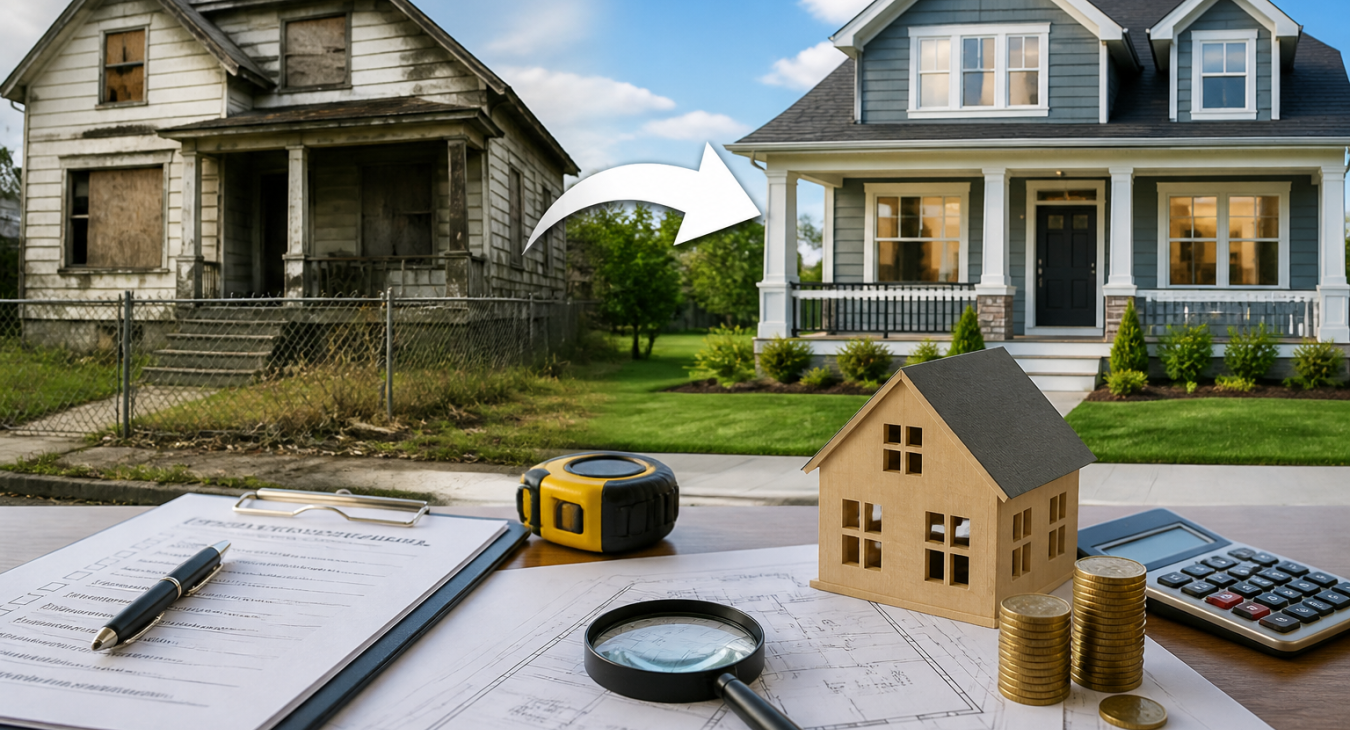
Turn code violations into investment gold. Learn to identify, underwrite & fix distressed properties for 20-40% discounts below market value.
Code violations scare off most buyers. That fear? It's your edge. When a property's got open violations, you're looking at financing headaches, seller desperation, and a purchase price that's nowhere near market value. Savvy investors know this is where the real money hides.
You can acquire assets at discounts that simply don't exist in clean, competitive deals. According to data from H1 2026, foreclosed and distressed properties are moving at a median discount of 27.2% below estimated market value. The broader distressed category? It can hit 20%–40% below comparable non-distressed homes.
Let's talk real dollars.
The NAR-reported June 2026 median existing-home sale price is $440,600. That 27% discount alone means tens of thousands in potential equity creation before you swing a hammer. And that's just the starting point—you haven't even factored in the value-add from remediation yet.
This guide walks you through a systematic, legally sound framework for turning code violations into cash. We'll cover sourcing, underwriting, remediation strategy, exit planning, and risk management. Everything you need to build profit from properties nobody else wants to touch.

Understanding Code Violations as Investment Opportunities
What Are Code Violations in Real Estate?
A property has a code violation when it fails to meet minimum standards set by federal, state, or local building, housing, fire, zoning, or health codes. These rules exist for a reason—they protect the people living there and keep neighborhoods safe. Violations happen in several ways: construction without permits, permitted work done wrong, properties that deteriorated over time, or codes that changed after the building was originally constructed but never got brought into compliance.
Here's where violations break down:
- Building and structural violations: Foundation cracks, unpermitted additions, inadequate load-bearing elements, roof failures, or deteriorated framing.
- Electrical violations: Outdated wiring (knob-and-tube or aluminum branch circuit wiring), missing ground-fault circuit interrupters (GFCIs), overloaded panels, or unpermitted electrical work.
- Plumbing violations: Lead supply lines, improper drainage slopes, non-permitted bathroom or kitchen additions, or cross-connections between potable and non-potable systems.
- Fire and life safety violations: Insufficient egress windows, missing or inoperable smoke and carbon monoxide detectors, improper fire separations in multi-unit buildings, or blocked exit routes.
- Mechanical and HVAC violations: Unvented gas appliances, improper flue configurations, or HVAC systems that don't meet current energy codes.
- Zoning and land-use violations: Non-conforming uses, illegal accessory dwelling units, or structures built within required setbacks.
- Environmental violations: Asbestos-containing materials in disrepair, lead-based paint hazards, underground storage tank leaks, or mold contamination exceeding acceptable thresholds.
- Habitability violations: Lack of heat, inadequate ventilation, pest infestations, or water intrusion that renders a unit legally uninhabitable.
But here's the thing—not all violations are created equal. A missing smoke detector? Fifty bucks and you're done. An unpermitted second-story addition? That's engineered drawings, permits, inspections, possibly partial demolition. You're looking at months and tens of thousands of dollars. Your edge as an investor depends on knowing exactly which category you're dealing with before you make an offer.
Why Investors Target Code Violation Properties
It comes down to market inefficiency. Most retail buyers need conventional financing, and lenders won't touch a property with open code violations—especially anything flagged as uninhabitable or with active municipal orders. That eliminates your largest buyer pool. You suddenly have leverage.
The sellers are getting squeezed from all angles. They can't list at full market value if those violations are going to be disclosed. Banks say no. Insurance companies either refuse coverage or cancel policies. Tenants can legally withhold rent in most states when habitability violations aren't fixed. Carrying costs climb. Legal exposure grows. Their exit options shrink. These are motivated sellers, and you don't need aggressive tactics to negotiate—the market's already done the heavy lifting.
And let's be straight about this: ethical investors give these sellers a fair offer with full transparency. Tell them what their alternatives are—listing after repairs, working with a HUD-approved housing counselor, exploring municipal rehab programs. Make it a deal that works for both sides, not an exploitation of information asymmetry. It's not just the right approach; it's also the legally smart one. Predatory practices in distressed transactions carry real legal risk in many states, particularly under pre-foreclosure, equity purchaser, or elder financial protection statutes.
Market Potential and ROI Analysis
Distressed sales—foreclosures and short sales combined—represented about 2% of all real estate transactions as of 2025. As of April 2026, foreclosure listings made up 1.3% of all homes for sale. Code-violation properties that haven't hit foreclosure yet? That's another layer entirely—owners struggling before the bank steps in.
Your ROI hinges on four things: how much discount you get on acquisition, what remediation actually costs, how long you're holding it, and what the property's worth when you exit. Take the June 2026 median existing-home price of $440,600. A 27.2% acquisition discount puts you in at roughly $320,600. If your remediation comes in as budgeted and your ARV reaches full market comps, the spread can be real—provided you account for carrying costs, financing, taxes, and the actual risk that makes distressed investing genuinely difficult.
Want to build a systematic pipeline of distressed deals? The BRRRR strategy guide at KDS Development shows you how to turn distressed acquisitions into long-term rental assets after you've got them fixed.
Back to topFinancial Analysis of Code Violation Investments

Cost-Benefit Analysis Framework
Before you commit to a code-violation deal, it has to pass the numbers test. You know the formula: MAO = (ARV × target margin) − estimated repair costs − carrying costs − closing costs. But code-violation properties? They're different. You need to budget for fines and lien resolution, permit fees, engineer or architect fees, and—this is critical—a real contingency reserve for when you inevitably find more violations hiding behind the walls.
Here's how to break down the investment into five distinct cost buckets:
- Acquisition costs: Purchase price, closing costs (typically 2%–5% of purchase price), and any assignment or finder's fees.
- Lien resolution costs: Outstanding code-enforcement fines, municipal liens, utility arrears, and HOA charges must be resolved at or before closing. These amounts are often negotiable with the municipality.
- Remediation costs: The direct cost of bringing the property into compliance. Per available 2026 data, typical repair costs for common code violations—structural, electrical, and plumbing—range from $500 to $20,000, though complex violations or environmental remediation can exceed this range significantly.
- Holding costs: Debt service (if financed), property taxes, insurance, utilities, and property management during the rehabilitation period.
- Exit costs: Agent commissions, transfer taxes, title insurance, and any capital gains tax obligations.
That contingency reserve? Don't skimp on it. Experienced investors add 15%–25% of estimated remediation costs to code-violation projects because scope expands the moment you open walls and inspectors show up. Tighten the budget too much and you'll either blow through cash reserves or get forced into a fire sale. Neither option ends well.
Repair and Remediation Expenses
Most sellers preparing a property for conventional sale spend around $21,024 in pre- and post-listing repairs and improvements as of 2025. That's what a responsible seller invests. Now look at the distressed seller with open code violations. They're not spending that money. That gap—that deferred maintenance and ignored violations—is the equity you're hunting for.
Instead of fixing things themselves, these sellers often try to offer repair credits at closing. And it doesn't work out well for them. As of 2026, seller repair credits for code violations typically range from $1,500 to $15,000—which rarely covers your actual remediation costs, and conventional lenders often restrict them anyway. This financing gap is where cash investors and hard-money borrowers win.
Check out the table below. It maps common violation categories, severity tiers, and illustrative cost ranges based on 2026 data. But here's the catch: actual costs swing wildly depending on geography, local labor rates, property age, and the specific scope of work. Always get contractor bids before you finalize underwriting.
| Violation Category | Common Examples | Severity Level | Illustrative Cost Range (2026) | Typical Permit Required? |
|---|---|---|---|---|
| Minor Life Safety | Missing smoke/CO detectors, broken handrails, peeling paint (pre-1978) | Low | $500–$2,500 | Usually not |
| Electrical | Missing GFCIs, outdated panel, unpermitted wiring | Moderate | $2,000–$15,000 | Yes |
| Plumbing | Lead lines, unpermitted fixtures, improper drainage | Moderate | $1,500–$12,000 | Yes |
| Structural / Foundation | Foundation cracks, unpermitted additions, roof failure | High | $5,000–$20,000+ | Yes |
| Environmental | Asbestos abatement, lead paint encapsulation/removal, mold remediation | High–Critical | Highly variable; beyond standard range | Varies by substance |
| Zoning / Unpermitted | Illegal ADU, encroachment, non-conforming use | Variable | Highly variable; may require demolition | Yes |
Note: Environmental and zoning violations are explicitly excluded from the $500–$20,000 typical range cited by sources and may cost multiples more. Always obtain specialized assessments for these categories.
Valuation Impact and Recovery Potential
Code-violation properties live between two different appraisals. The as-is value reflects the property today—with open violations, depressed market appeal, and limited buyer interest. Then there's the ARV, which assumes full code compliance and brings the property into line with clean comparables in the market. That spread? That's your gross profit pool.
And it can be substantial. With the June 2026 median new-home sale price at $398,300 and existing homes at $440,600, even modest condition improvements move valuations meaningfully—especially in tight inventory markets where buyers pay premiums for move-in-ready homes. Run conservative ARV estimates and stress-test them against a 5%–10% downside scenario. You need to know your deal survives a market correction.
Want a quick filtering tool? Use the price-to-rent ratio framework at KDS Development to assess whether your target market favors flipping, renting, or wholesale exits.
Back to topCommon Building Code Violations and Fixes

Structural and Safety Issues
Structural violations scare investors. But here's the reality—they're often overblown. Take minor foundation cracking. You don't automatically need full underpinning. Epoxy injection and drainage correction usually handle it. The smart move? Hire a licensed structural engineer before you underwrite, not after. A few hundred bucks on an engineer's assessment beats a multi-thousand-dollar miscalculation in your repair budget.
Here's what typically shows up:
- Foundation issues: Horizontal cracks indicating lateral pressure, settlement, or water infiltration. Severity ranges from cosmetic to structural, and only a professional can reliably distinguish them.
- Roof structure: Rotted rafters, insufficient ventilation, missing or deteriorated sheathing. Often discovered in combination with habitability violations from water intrusion.
- Unpermitted additions: Garages converted to living space, room additions, or raised rooflines built without permits and often without engineering. These require permit legalization (a retroactive permit application), which means inspections, possible rework, and potentially engineered drawings.
- Egress violations: Bedrooms without properly sized windows, basements converted to living space without adequate exit points. These are fire and life safety issues that directly affect unit count and marketable living area.
Structural work takes time. Four to twelve weeks for moderate issues is typical. Complex foundation repair? Plan on longer. Extended timelines kill your cash flow projections, so model carrying costs carefully.
Electrical and Plumbing Violations
You'll see electrical and plumbing violations constantly in older stock. And they're relatively predictable to price, which makes underwriting straightforward. The flip side? They're dangerous if ignored, and code enforcement knows it. That creates real urgency.
Common electrical headaches:
- Federal Pacific Electric (FPE) and Zinsco panels: These brands are associated with breaker failure and fire risk. Replacement is strongly recommended and often required by insurers regardless of whether a formal violation has been cited.
- Knob-and-tube (K&T) wiring: Common in pre-1950 homes, K&T isn't inherently unsafe if undamaged, but many insurers refuse to bind coverage and modern code requires replacement in renovation scenarios.
- Aluminum branch circuit wiring: Found in homes built between roughly 1965 and 1973, aluminum wiring requires either full replacement or CO/ALR device upgrades at every connection point.
- Missing GFCIs and AFCIs: Required in kitchens, bathrooms, garages, basements, and outdoor locations under current NEC standards. Relatively low cost to install but require a permit and inspection in most jurisdictions.
On the plumbing side, watch for these:
- Lead service lines and solder: A significant public health issue, particularly in pre-1986 construction. Some municipalities offer replacement programs; investors should investigate before pricing this into the deal independently.
- Galvanized steel supply piping: Corrodes internally, reducing flow and risking pipe failure. Replacement to copper or PEX is a standard renovation item in older properties.
- Improper venting and drainage: Plumbing added without proper trap venting produces sewer gas intrusion—a health hazard and a common violation in properties with DIY bathroom additions.
Both trades require licensed contractors, pulled permits, and inspections in virtually all jurisdictions. Budget for all three. And don't—seriously, don't—accept bids from contractors offering to skip permits. Unpermitted work doesn't cure the violation. It just creates new liability.


Environmental and Compliance Problems
This is where deals die. Environmental violations represent the highest-risk category—both financially and legally. Asbestos, lead-based paint, mold, and underground storage tanks (USTs) are the main culprits.
Asbestos-containing materials (ACM) show up everywhere in pre-1980 construction. Floor tiles, pipe insulation, popcorn ceilings, roofing materials, siding—you name it. Intact ACM can stay put with encapsulation. But damaged or friable ACM? That requires licensed abatement, which is regulated and expensive. Always conduct a Phase I environmental assessment on any pre-1980 property. Move to Phase II testing if the Phase I flags concerns.
Lead-based paint existed in the majority of homes built before 1978. Federal law—the Residential Lead-Based Paint Hazard Reduction Act—requires disclosure on every pre-1978 sale and rental. But here's what matters for investors: renovation work that disturbs LBP triggers EPA RRP (Renovation, Repair, and Painting) Rule requirements, including EPA-certified contractors. This isn't optional. Violations carry serious civil penalties.
Mold remediation costs swing wildly depending on affected area, moisture source, and material type. The critical rule is simple. You can't remediate mold without fixing the underlying moisture intrusion. If you don't address the water source, the mold comes back. Always pair mold scope with waterproofing, drainage correction, or roof repair as applicable.
Be conservative with environmental violations. Treat the property as a potential deal-killer until Phase II testing is complete and a licensed environmental professional has assessed remediation cost and feasibility. No acquisition discount justifies absorbing unlimited environmental liability.
Back to topLegal and Regulatory Considerations
Important: The following section describes general legal and regulatory frameworks. It doesn't constitute legal advice. Laws and enforcement practices vary significantly by state, county, and municipality. Before acquiring any property with open code violations, fines, or municipal liens—and before contacting any seller in pre-foreclosure or distressed circumstances—consult a licensed real estate attorney in the relevant jurisdiction.
Code Enforcement Processes
Code enforcement happens at the municipal level. And here's what matters: the process varies wildly across jurisdictions. But understanding the typical workflow lets you pinpoint exactly where a property sits in the enforcement chain—and what kind of timeline pressure the seller's really under.
Most jurisdictions follow this sequence:
- Complaint or inspection trigger: A violation gets flagged through a neighbor complaint, routine rental inspection cycle, unpermitted work discovered during a permit application review, or just an officer driving by and seeing exterior damage. Some jurisdictions run systematic inspections on rental portfolios.
- Notice of violation: The owner gets written notice. It specifies the exact code section, what needs fixing, and a compliance deadline—usually 30 to 90 days for non-emergency violations.
- Re-inspection: Inspector returns after the deadline. Property passes? Case closed. Doesn't pass? Move to citation.
- Citation and fines: Fines stack up daily or per violation. Residential violations typically run $50–$500 per day. They can balloon fast for repeat or serious violations. These fines record as municipal liens against the property.
- Administrative hearing or magistrate: Property owner can fight back here. This is where fine reductions and payment plans actually get negotiated.
- Lien recording and potential foreclosure: Unpaid fines become recorded liens. Some jurisdictions let code-enforcement liens trigger their own foreclosure action, separate from any mortgage default.
That enforcement timeline is what creates seller urgency. But here's the reality: urgency doesn't give you a green light to exploit a distressed owner. Properties tangled up in both code enforcement and mortgage default? That's where state foreclosure consultant and equity purchaser statutes kick in. They mandate specific contract terms, rescission rights, and criminal penalties in some states. Washington State's RCW 61.34, for instance, makes equity skimming a felony. Get a local attorney to review your contracts and strategy before you move forward.
Fines, Liens, and Legal Liability
Municipal code-enforcement liens confuse most investors. Unlike mortgage liens with their predictable priority and payoff structure, code liens are a jurisdictional wild card—different priority, different enforceability, different negotiability depending on where you're buying.
Run these checks before you touch a deal:
- Accumulated fine amounts: An old open violation can balloon into hundreds of thousands in fines if the jurisdiction runs aggressive daily-accrual policies. Get an official municipal lien search. Don't just rely on a title commitment—title insurance won't cover code-enforcement liens unless it's specifically endorsed.
- Lien negotiability: Most jurisdictions will negotiate fine reductions if you show an active remediation plan or proof that the new owner is committed to cure. This negotiation is standard acquisition practice and can slash your lien payoff substantially.
- Lien priority: In some jurisdictions, code liens are "super liens"—they jump ahead of first-mortgage positions. That affects whether the seller can even deliver clear title and what due diligence you actually need to do.
- Ongoing liability: You buy the property with open violations? You own the remediation obligation. No grace period in most places. The violation attached to the property, not the previous owner. Fines start accruing the day you close.
And don't overlook your licensing obligations. The KDS Development guide on real estate investment business code and license requirements by state walks through entity formation, licensing, and compliance across different states—solid reference material for your playbook.
Navigating Municipal Requirements
Bringing a violation property into compliance isn't just swinging hammers. You have to work through the municipal permitting and inspection gauntlet from start to finish. Investors who try to cut corners here usually end up with worse problems than they started with.
Here's the remediation sequence:
- Grab copies of all open violation notices and code enforcement files from the municipal department.
- Pull permits before work starts. Permit applications need owner signature (or contractor signature with authorization), scope of work, and sometimes engineering drawings.
- Verify every contractor has current licenses and active general liability plus workers' comp insurance. Check the coverage independently—don't take their word for it.
- Schedule inspections at each stage. Rough-in before drywall goes up. Final inspection at completion.
- Collect signed permits and certificates of completion. Request formal case closure from code enforcement after final inspection passes.
- Confirm all code-enforcement cases are closed administratively. Make sure fines aren't still accruing post-compliance.
Some municipalities demand a Certificate of Occupancy (CO) or Certificate of Compliance before legal occupancy or resale. Know your specific jurisdiction's requirements before you underwrite the deal. A CO process can add weeks to your timeline and real money to your costs.
Back to topDue Diligence: Finding and Evaluating Opportunities

Identifying Code Violation Properties
You've got options here. Smart investors don't rely on just one source—they work multiple channels at once to surface code-violation deals. Municipal code-enforcement data is your most direct avenue.
Municipal violation databases and public records: Most jurisdictions keep searchable online databases of open code-enforcement cases. You'll find them through the building department, code compliance office, or a public data portal. What you get: property address, violation type, notice date, and compliance status. Start here and systematically dig through cases with violations that have been open for years. Those long-standing cases? That's your motivated seller signal—they've either can't or won't fix it.
And here's the legal reality: public records are public, but there are strings attached. Before you download anything, check the bulk data license. Using those records to identify properties is generally fine; contacting the owners introduces regulatory complications that depend heavily on your method. Know your state's rules before you pick up the phone.
Drive-for-dollars prospecting: There's still nothing better than eyeballs on the ground. Deteriorated exteriors, boarded windows, overgrown lots, tarped roofs, stacked notices—this stuff jumps out at you. Want a solid framework? Read the KDS Development guide to drive-for-dollars books and resources.
Network referrals: Build relationships with code enforcement officers, housing court staff, property managers, and real estate attorneys. These professionals see distressed properties and motivated sellers every single day. They'll send you deals.
Foreclosure and lis pendens filings: Foreclosed properties almost always carry code violations—owners check out and stops maintaining. The filing type varies by state. Judicial states like Florida and Indiana use lis pendens in court clerk records. Non-judicial states like Washington use a Notice of Default or Notice of Trustee's Sale with the county recorder. Each state plays by different rules here, so don't assume what works in one state transfers.
Here's what matters: if you're contacting a seller in foreclosure, talk to a local real estate attorney first. Multiple states have foreclosure consultant and equity purchaser statutes with mandatory contract terms, rescission rights, and serious criminal penalties. Washington RCW 61.34 makes equity skimming a felony. These laws exist because distressed owners have been abused in foreclosure situations historically. Ethical investors handle this with full transparency and legal compliance.
Inspections and Professional Assessment
You need a professional inspection team on site before you finalize an offer. A general home inspection is just the start.
Here's your recommended assessment team for code-violation deals:
- Licensed general home inspector: Full condition assessment to catch visible deficiencies. Keep this in mind: home inspectors aren't code inspectors. They find conditions—some may violate code, some might not.
- Licensed structural engineer: Required for any foundation issues, unpermitted structural work, or differential settlement signs. On the right deals, this isn't optional spending.
- Licensed electrician: A walk-through catches code deficiencies a general inspector misses and gives you preliminary cost estimates.
- Licensed plumber: Same deal as the electrician—especially critical in older homes.
- Environmental consultant: Mandatory for pre-1980 properties with suspected ACM or LBP. Also needed if you see underground tanks, soil contamination, or significant mold.
- Municipal records review: Get the complete permit history, open violations, and code enforcement case files from every relevant municipal department. It's desktop research, not fieldwork, but it's mandatory.
A full inspection team runs $1,500–$3,000. Think of it as insurance against catastrophic underwriting mistakes. Cheap protection against overpaying for something that can't actually pencil.
Red Flags and Deal Killers
Not all code-violation properties are opportunities. Some are landmines. Watch for these.
- Significant environmental contamination: Underground storage tank leaks, friable asbestos, soil contamination, elevated lead-in-water. Remediation costs and regulatory burden kill deal economics fast.
- Structural violations requiring demolition: An unpermitted addition that can't be legalized? You lose that square footage and whatever ARV you thought you'd capture.
- Clouded title: Heirs' property with no clear owner, fraudulent conveyances in the chain, multiple competing liens. These properties are legally untransactionable in the near term.
- Accumulated code fines exceeding practicality: Jurisdictions sometimes assess fines that compound faster than remediation costs.