

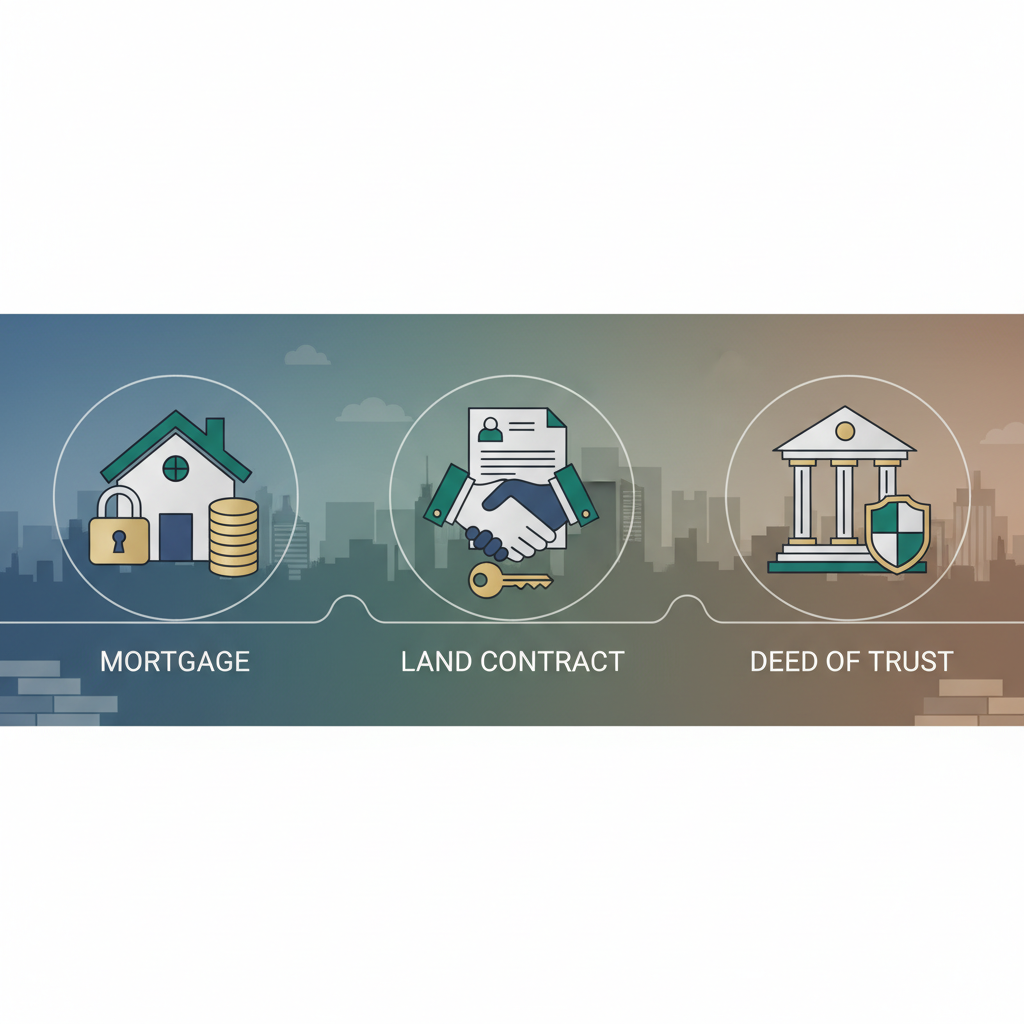
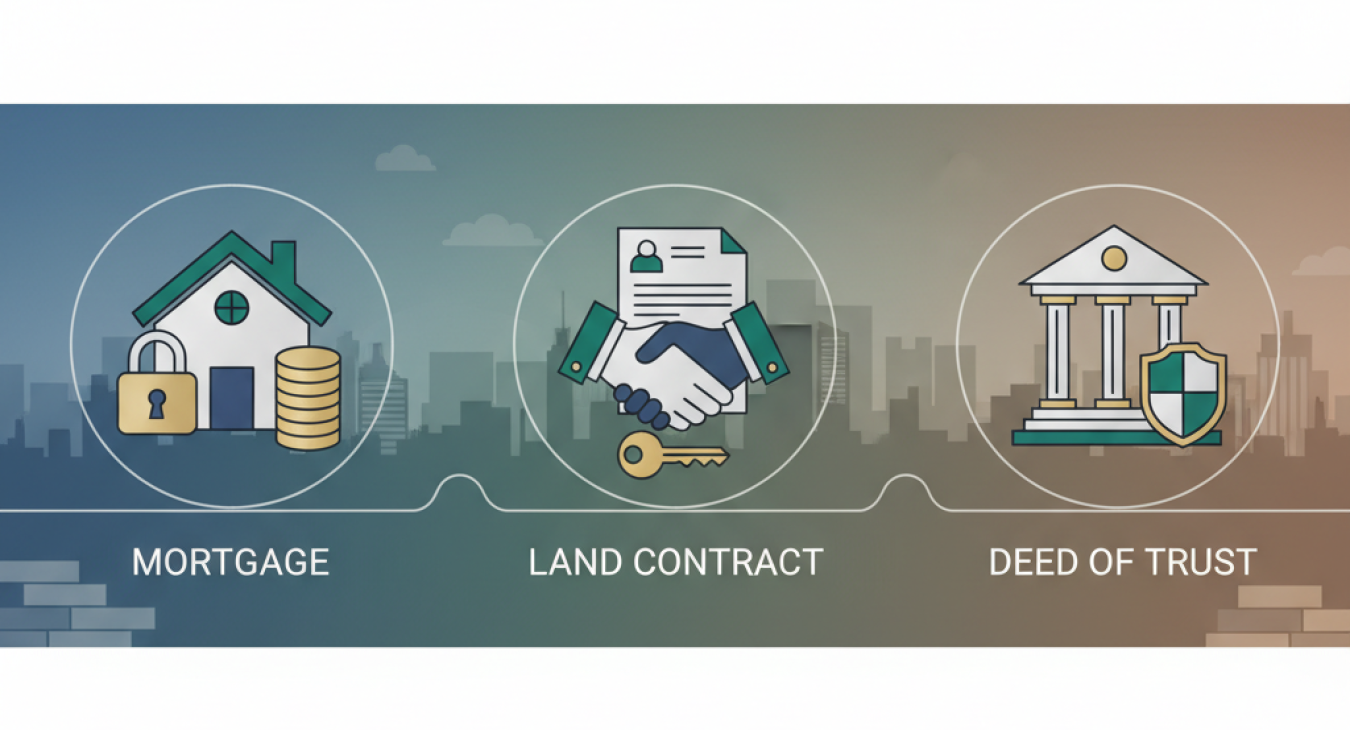
Compare mortgage vs land contract vs deed of trust. Learn key differences in ownership, default remedies, and foreclosure to make informed real estate deci
Table of Contents
- Overview: Why the Choice of Instrument Matters
- What's a Mortgage?
- what's a Deed of Trust?
- What's a Land Contract?
- Key Differences: Mortgage vs. Deed of Trust vs. Land Contract
- Foreclosure Processes: A Detailed Comparison
- State Laws and Geographic Variations
- Choosing the Right Instrument for Seller-Financed Deals
- Borrower and Lender Protection Comparison
- Assignment and Transfer of Documents
- Special Considerations and Edge Cases
- Practical Action Steps: How to Verify Your Document Type
- Conclusion
- Frequently Asked Questions
You're structuring a real estate transaction. Maybe you're buying rentals to scale your portfolio. Maybe you're selling and considering owner financing as a competitive edge. Or you're an agent advising clients on terms. Here's what matters: the legal instrument you choose — mortgage, deed of trust, or land contract — isn't just paperwork. It controls title ownership, determines how fast a lender moves in default, and shapes what rights you actually keep. Pick wrong and you're looking at expensive litigation, months of foreclosure delays, or vanished equity. This guide cuts through the noise with the specifics investors and professionals need to decide with confidence.

Overview: Why the Choice of Instrument Matters
All three instruments do the same thing at a high level: they lock down a financial obligation using real property as collateral. But here's where it gets interesting. The mechanics diverge dramatically—title ownership, party count, default remedies, and state law all shift depending on which tool you pick. In a mortgage, the borrower keeps the title while owing money. A deed of trust? That brings in a neutral third-party trustee who actually holds legal title. And a land contract leaves the seller sitting on legal title until you've made that final payment. Your risk profile changes with each structure, and so does the lender's and seller's.
This stuff matters most in seller-financed deals. Why? Because traditional lending's gotten stingy, and these creative structures have filled that gap. The Federal Reserve puts seller-financed transactions at somewhere between 1–8% of all home sales depending on where you are and what the credit market's doing, with those numbers spiking hard during credit crunches. If you're an investor or agent working these deals, you need to know all three instruments inside out. Period.
Back to topWhat's a Mortgage?
How Mortgages Work
You've got two parties here: a borrower and a lender. The borrower (called the mortgagor) puts up the property as collateral. Meanwhile, the lender (mortgagee) gets a lien on that property as security. Here's the key distinction—the borrower keeps legal title the entire time the loan's outstanding. The lender doesn't own anything; they just hold the lien. If things go south and the borrower stops paying, the lender can't just take the property. They've got to file a lawsuit and go through judicial foreclosure, which means a court process before possession transfers.
Parties Involved in a Mortgage
It's straightforward. Two parties. That's it—no middle man holding title like you'd see in some other states. The borrower and lender, that's the entire cast. Now here's where investors often miss the details: the promissory note and the mortgage are two separate documents. The note spells out your personal obligation to repay the debt. The mortgage? That just ties that obligation to the real property as collateral. And this matters big time. If these documents get separated through improper assignment, you're looking at enforceability issues down the road.
Mortgage Assignment and Transfer
Lenders trade mortgages constantly in the secondary mortgage market. When that happens, the assignment gets recorded in the county where the property sits. You'll typically get a RESPA notice of transfer from the new servicer. But here's the constraint: most modern mortgages include a due-on-sale clause. This prevents you from passing your mortgage to another borrower without the lender's approval. You can't just assume someone else into your deal.
Foreclosure Process for Mortgages
Judicial foreclosure defines mortgage states. The lender files a lawsuit, wins a judgment, and then follows strict statutory timelines before any auction happens. Borrowers get real protections here—they can fight the suit and, in most states, redeem the property after the sale if they pay off the full debt within a statutory window. But those protections come with a price tag. Plan on 12 to 36 months for judicial foreclosures to close out. Legal fees? $10,000–$50,000 easily, sometimes more depending on the state and how messy the case gets. That's why lenders hate mortgage states.
Back to topwhat's a Deed of Trust?

How Deeds of Trust Work
Here's the core setup: a deed of trust (or trust deed) brings three parties into play — and it changes everything about how foreclosure works. The borrower transfers legal title to a neutral trustee, who holds it on behalf of the lender (called the beneficiary). Once you pay off the loan? The trustee hands title back to you. But if you default, the trustee doesn't need to go to court. They've got the power to sell your property through non-judicial foreclosure — also called a trustee's sale — and that's a game-changer for lenders.
The Three-Party Structure
You've got three players here. The trustor is you — the borrower and property owner. The beneficiary is the lender. And the trustee? A neutral third party, typically a title company or attorney, handling the administrative side.
At closing, you convey legal title to the trustee. They hold that title in trust, armed with the power of sale, for as long as the loan exists. Meanwhile, the lender keeps the promissory note and the beneficial interest in your property. If things go south, they're the ones getting the proceeds from any sale.
Non-Judicial Foreclosure Advantage
This is why lenders prefer deeds of trust.
Non-judicial foreclosure is faster and cheaper. The trustee follows statutory notice requirements — usually 90–120 days depending on state law — and moves forward without filing a single lawsuit. Compare that to judicial foreclosure and you'll see the difference immediately. California non-judicial foreclosures typically close in 4–6 months. New York or Florida? You're looking at 12–18 months or longer just sitting in court. Time is money, and this structure saves both.
Title and Property Rights
The trustee holds legal title, but don't get confused. You keep equitable title — meaning you can use the property, occupy it, and benefit from it. That's your right as the borrower.
And the trustee? They're mostly hands-off until default happens. The lender manages the day-to-day loan relationship. Once you've paid everything off, the trustee issues a deed of reconveyance, which returns full legal title back to you where it belongs.
Back to topWhat's a Land Contract?

How Land Contracts Work
A land contract (also called a contract for deed, installment sale contract, or agreement for deed) is basically seller financing. Here's the core mechanic: the seller keeps legal title to the property until you've made all your payments. You get equitable title right away—meaning you can possess and use the property immediately after signing. But you don't get the actual deed until you've paid in full or hit another condition, like refinancing into a traditional loan.
Seller Financing Model
When does this structure make sense? Typically when banks won't touch the deal. Maybe you've got credit challenges, or the property's something lenders avoid altogether—raw land, aging mobile homes, or properties needing serious work. The seller becomes your lender instead, collecting monthly payments that cover principal, interest, taxes, and insurance (PITI). And they're charging for that risk. Expect rates running 1–4% above what you'd get on a conventional mortgage. That premium reflects the seller's exposure.
Parties and Their Rights
The setup's straightforward: vendor (seller) and vendee (buyer). The vendor holds legal title as collateral against your unpaid balance. You, the vendee, have equitable interest and you're on the hook for maintenance, property taxes, and insurance—that's how most contracts read. But here's the catch: without a deed in your name, refinancing becomes a headache. Collateralizing your interest is nearly impossible until the contract's paid off or you finally get that deed transferred.
Default and Remedies
This is where things get dangerous. Default rules vary wildly by state—and that variation is one of the biggest risks you face as a buyer. Some states let the seller invoke forfeiture. That's brutal: after just 30–90 days of missed payments, the seller can cancel the entire contract, take back the property, and keep every dollar you've paid. Other states force the seller into full foreclosure proceedings, which gives you substantially more breathing room and legal protection. The difference between "30 days and you're done" and "we have to go through court" is massive. Get a lawyer in your state before you sign anything.
Back to topKey Differences: Mortgage vs. Deed of Trust vs. Land Contract

Here's the breakdown you need. The table below compares all three instruments side-by-side—structural differences, procedural timelines, the whole picture. Every investor should reference this when deciding which tool fits their deal.
| Feature | Mortgage | Deed of Trust | Land Contract |
|---|---|---|---|
| Title Holder | Borrower | Trustee (on behalf of lender) | Seller (until paid in full) |
| Parties Involved | 2 (borrower, lender) | 3 (trustor, trustee, beneficiary) | 2 (vendor, vendee) |
| Foreclosure Type | Judicial | Non-judicial (typically) | Forfeiture or foreclosure (state-dependent) |
| Foreclosure Speed | Slow (12–36 months) | Fast (3–6 months) | Variable (30 days to 18+ months) |
| Default Notice Period | Varies by state (30–90 days) | Statutory (typically 90–120 days) | Varies widely by state contract terms |
| Redemption Rights | Yes, statutory redemption in many states | Limited to equitable redemption | Limited; varies by state |
| Lender/Seller Recourse | Deficiency judgment available in most states | Deficiency judgment (varies; limited in some states) | Forfeiture of all payments made |
| Buyer Protection Level | High (court process) | Moderate (statutory process) | Low to moderate (state-dependent) |
| Recording Requirements | Must be recorded to establish priority | Must be recorded; deed of reconveyance on payoff | Recording recommended but not always required |
Foreclosure Processes: A Detailed Comparison

Mortgage Foreclosure: Judicial Route
The lender files a lawsuit in the county where the property sits. That's the first move in mortgage states. The borrower gets served with a summons and can respond with defenses if they've got them. If the court rules for the lender, you get a judgment of foreclosure, and the property heads to a sheriff's sale or judicial auction. Here's the catch: many states give borrowers a statutory redemption period — typically 6–12 months — to reclaim the property by paying the full judgment amount. In contested cases, expect 18–36 months total. That's a long hold period if you're waiting to take title.
Deed of Trust Foreclosure: Non-Judicial Route
This is where deed of trust states save you time and money. After a defined default period, the lender (called the beneficiary) tells the trustee to start the process. The trustee records a Notice of Default and serves statutory notice to the borrower. Then you wait. Notice periods vary by state — 90 days in California, just 20 days in Texas. Once that clock runs out, the property sells at a trustee's sale to the highest bidder. Want the real advantage? The whole thing takes 4–8 months, and your legal costs run $3,000–$10,000. Compare that to judicial foreclosure, and you're looking at serious savings.
Land Contract Default and Remedies
Two paths here: forfeiture or foreclosure. Forfeiture is the seller-friendly option — you reclaim the property and keep all prior payments as liquidated damages. States like Michigan and Indiana let you do this, and it's fast. But not everywhere. Ohio courts have shifted toward requiring full mortgage-style foreclosure, especially when the buyer's built up substantial equity. And Illinois? The seller must file a formal forfeiture action and respect statutory cure periods.
This matters for your exit strategy.
Timeline and Cost Implications
| Process Stage | Mortgage (Judicial) | Deed of Trust (Non-Judicial) | Land Contract |
|---|---|---|---|
| Initial Notice Period | 30–90 days | 90–120 days | 30–90 days (contract/statute) |
| Court Involvement | Required | Not required | Required in most states |
| Typical Total Duration | 12–36 months | 3–8 months | 1–18 months |
| Estimated Legal Costs | $10,000–$50,000+ | $3,000–$10,000 | $2,000–$20,000 |
| Redemption Rights | Yes (statutory in many states) | Limited equitable redemption only | Typically none after forfeiture |
State Laws and Geographic Variations

Here's the thing: your state decides this for you, not your lender and not you. Where the property sits determines whether you're using a mortgage or a deed of trust, period. State law controls which instruments work and what happens when things go wrong. Operating across state lines? You need to know these differences cold, or you'll miss critical advantages (or expose yourself to real risk).
| Mortgage States (Judicial Foreclosure) | Deed of Trust States (Non-Judicial Foreclosure) | Mixed/Permit Both |
|---|---|---|
| Florida, New York, New Jersey, Illinois, Ohio, Connecticut, Delaware, Kansas, Louisiana, Maine, Nebraska, New Mexico, North Dakota, Pennsylvania, South Carolina, South Dakota, Wisconsin | California, Texas, Virginia, North Carolina, Georgia, Tennessee, Colorado, Arizona, Idaho, Mississippi, Missouri, Nevada, Oregon, Washington, West Virginia | Alabama, Alaska, Arkansas, Hawaii, Maryland, Massachusetts, Michigan, Minnesota, Montana, Rhode Island, Utah, Wyoming |
| Longer foreclosure timelines; stronger borrower protections | Faster non-judicial process; lender-favorable environment | Parties may choose instrument; local practice often determines default choice |
Land contracts work everywhere. All 50 states recognize them. But they're actually common in the Midwest — Michigan, Ohio, Indiana, and Illinois especially — because those states have decades of case law backing them up. Some states have added teeth to the process. You'll find consumer protection statutes requiring sellers to disclose existing liens, give proper notice before declaring default, and sometimes even transfer title once you've hit a certain percentage of payments. Know your state's rules before you structure a deal this way.
Back to topChoosing the Right Instrument for Seller-Financed Deals
Considerations for Sellers
Want maximum control? Land contracts are your answer. You keep legal title during the financing period, which means you can reclaim the property faster if the buyer defaults—especially in forfeiture states. But here's the catch: courts are getting tougher on forfeiture remedies, particularly when buyers have built substantial equity. The more skin they have in the game, the higher your litigation risk.
The tax angle is where seller financing really shines. When you report the deal on IRS Form 6252, you can spread your capital gains recognition over the entire payment period under installment sale rules. That's a huge win if you've got low basis in the property. Both land contracts and seller-held mortgages/deeds of trust qualify for this treatment. Just remember: you'll need to report interest income annually on Schedule B.
Considerations for Buyers
Record that land contract in your county deed records. Seriously. It protects your equitable interest against third-party claims and locks in your priority position. Skip recording and you're exposed—a subsequent buyer or judgment creditor of the seller could cloud or wipe out your interest entirely.
Before you sign anything, pull a title search. You need confirmation that the seller actually holds clear title free of undisclosed liens or encumbrances. Traditional mortgages formalize this risk through title insurance. Land contracts? That responsibility falls on you.
Legal and Tax Implications
Sellers financing deals need to understand Form 1098 requirements. If the property is the buyer's primary or secondary residence and you received $600+ in interest during the year, you're issuing a Form 1098 to report that mortgage interest. Buyers can deduct it on Schedule A if they qualify.
And don't overlook IRC Section 453. You've got to track and report your gain on every installment payment you receive. Get a CPA in the room before you structure this deal. One tax mistake can cost you thousands.
Back to topBorrower and Lender Protection Comparison

Risk and protection split differently depending on your financing instrument. Want to structure a deal that actually makes sense for both sides? You've got to understand what each party's really protected against and what they're exposed to.
- Mortgage (borrower-protective): Judicial foreclosure's your safety valve here. Borrowers get due process — they can challenge the action, fix the default, or work out a deal with the lender before the gavel comes down. Many states also throw in statutory redemption rights that give you a shot at reclaiming the property even after the sale closes. Deficiency judgments exist in most mortgage states, but that's where anti-deficiency laws in Arizona and California flip the script and block the lender's recourse in certain situations.
- Deed of Trust (lender-protective): This is the lender's hammer. Non-judicial foreclosure means no courtroom, no delays, no BS — just a fast, affordable path to liquidation. The catch? Some states cap or eliminate deficiency judgments after the trustee's sale, which basically forces the lender into non-recourse financing whether they like it or not. California's one-action rule is the poster child for this lender-limiting approach.
- Land Contract (seller-protective): You keep the deed. That's huge in default situations, especially in forfeiture states where you can move fast. But here's the reality check — courts often step in and impose equitable remedies that look a lot like full foreclosure if the buyer's already paid down 20–25% or more of the contract price. That cushion shrinks fast.
Assignment and Transfer of Documents
Here's what matters: if you're flipping loan portfolios or trying to monetize installment receivables, you need to know exactly what you can and can't transfer. The financing instrument you're holding determines your exit strategy.
- Mortgages are the easiest play—they're freely assignable. But you've got to follow the rules. Record that assignment of mortgage, notify the borrower under RESPA, and properly endorse and deliver the promissory note to the new lender. Skip any of these steps? The assignment isn't legally complete. The 2008–2012 robo-signing crisis taught us this lesson the hard way, when missing endorsements tanked entire portfolios.
- Deeds of Trust give you more flexibility than mortgages. You can assign the beneficial interest to a new lender or substitute out the trustee entirely. Both moves get recorded, but substituting the trustee requires specific statutory formalities—don't wing it. One catch: due-on-sale clauses in deeds of trust will kill an assumption unless the lender agrees.
- Land Contracts are where it gets messy. As the seller, you can typically assign your right to future payments. But letting the buyer assign their interest? That usually needs your approval, depending on what the contract says. Some states require explicit seller consent; others allow free assignment unless you blocked it in writing. And wraparound land contracts—where you finance the buyer while you're still holding the bag on an underlying mortgage—these demand careful due-on-sale clause analysis before you move forward.
Special Considerations and Edge Cases
Promissory Notes and Their Relationship to Each Instrument
You're looking at a promissory note in pretty much every deal — that's the borrower's personal promise to repay. The security instrument (mortgage, deed of trust, or land contract) just pledges the property as collateral. Here's where it gets tricky: mortgages and deeds of trust keep the note and security instrument as separate documents. Land contracts? The payment obligation is baked right into the contract itself. And this matters big-time in the secondary market. Separating the note from the security instrument without proper assignment procedures can render the security interest completely unenforceable.
Wraparound Mortgages and Hybrid Structures
A wraparound mortgage (or "wrap") is seller financing at its most creative. The seller creates a new mortgage that wraps around the existing underlying mortgage balance plus their equity. Your buyer pays the seller on the wrap. The seller keeps paying the underlying lender. You can structure these as mortgages, deeds of trust, or land contracts — flexibility's the appeal. But here's the catch: due-on-sale clauses. If the underlying lender gets triggered and demands full repayment, the buyer loses their shelter and the seller defaults. That's the risk you're taking on.
Fraud Prevention and Buyer Due Diligence
Land contracts have a dirty reputation in certain markets — and for good reason. Predatory sellers target buyers with limited financing options, and the schemes are predictable: undisclosed liens hiding on the property, collecting payments while the underlying mortgage goes unpaid, or structuring the contract so the buyer forfeits before building any real equity. Don't let your buyers walk into this. They need to: (1) conduct a title search and obtain title insurance, (2) record the land contract immediately, (3) verify there's no underlying mortgage or confirm it's being serviced, and (4) use an independent escrow agent to collect and disburse payments. Non-negotiable.
Back to topPractical Action Steps: How to Verify Your Document Type
You're reviewing an existing loan or seller-financed deal and need to know which instrument actually governs it. Here's how to cut through the confusion:
- Review closing documents: The security instrument should be labeled right at the top — "Mortgage," "Deed of Trust," or "Contract for Deed/Land Contract." Count the parties. Two parties? You're looking at a mortgage or land contract. Three parties with a trustee involved? That's a deed of trust.
- Search public records: Head to your county recorder's office (most have online portals now) and search by property address or grantor/grantee name. Mortgages and deeds of trust will show up in the index. Land contracts are hit-or-miss on the recording side — depends on your state's requirements and whether the parties actually recorded it.
- Check the title company records: Whoever handled closing kept copies of everything. And here's the thing: title plants maintained by title insurers often have way more complete records than your county index, especially for older deals.
- Consult a real estate attorney: Documents unclear or contradictory? An attorney who knows your state's real estate law can nail down the instrument type and tell you exactly where you stand. Ask them this: what's my foreclosure process if I default? Do I hold legal title or equitable title? What notice am I actually entitled to before anything happens?
- Understand your promissory note: Find that separate promissory note (if one exists) and verify it references the right security instrument. Same parties? Same property? Any mismatch here is a red flag and needs investigation immediately.
Conclusion
Three things matter here: who actually holds title, how fast a lender can foreclose when borrowers default, and who's really protected in a dispute. Mortgages? They're the safest play for borrowers thanks to judicial oversight, but they'll drain your wallet and eat up months in the process. Deeds of trust flip the script — lenders get speed and efficiency without the court, which is why they dominate roughly half the country. Land contracts hand sellers the keys to control, but they're brutally one-sided against buyers, especially in states that'll wipe out every payment you've made if you miss one.
And here's the thing: if you're flipping deals or managing investor clients, this isn't theoretical. It directly impacts your deal structure, how you price risk, and what happens when things go sideways. Before you sign anything seller-financed — whether you're the buyer or the seller — get a real estate attorney in your state to review the paperwork. That one conversation will save you more than it costs, guaranteed. Want to dig deeper? The KDS Development resource library has frameworks for structuring deals and running proper due diligence.
Back to topFrequently Asked Questions
Can a seller use a deed of trust in a seller-financed transaction, or is that only for institutional lenders?
Sellers absolutely can use a deed of trust in seller-financed deals — but only in states that recognize them. Here's the structure: you'd be the beneficiary, a title company or attorney serves as trustee, and the buyer becomes the trustor. And that's where it gets smart. You get non-judicial foreclosure rights while your buyer gets clearer legal title than they'd have with a land contract. Most scenarios? A deed of trust wins for protecting both sides.
What happens to a land contract buyer's equity if the seller dies or goes bankrupt?
This is where land contracts get dangerous. The buyer's equitable interest should survive if the seller dies — assuming the contract is properly recorded. But here's the problem: if the seller declares bankruptcy, an unrecorded land contract buyer is in real trouble. An unrecorded interest? Barely any protection at all. Recorded interests are protected under bankruptcy law as actual property interests, but even then, the trustee can try to reject the contract as executory. Buyers with recorded interests have better odds forcing a deed transfer, but it's still not guaranteed.
Is one instrument better for real estate investors buying distressed properties?
That depends entirely on which side of the deal you're on. You buying the property? A mortgage or deed of trust gives you ironclad title protections and clear financing terms. You're the seller carrying the note? In deed-of-trust states, that's your play — fastest default remedies with the lowest costs. Land contracts have their place. They work when you're selling to a high-risk buyer and want maximum control over the asset. But they demand bulletproof legal structuring and state-specific analysis. One mistake and you could get dragged into a full foreclosure anyway, defeating the entire purpose.
Do all states recognize all three instruments?
Mortgages work everywhere. Land contracts work everywhere. Deeds of trust? Not quite. Vermont, Connecticut, and a handful of other states don't recognize deeds of trust at all for real property security. You're forced into a mortgage instead. In states that permit both, institutional lenders have basically abandoned mortgages in favor of deeds of trust because the foreclosure process is faster and cleaner. But in private lending and seller-financed deals, mortgages are still common ground.
Can a land contract be converted to a traditional mortgage or deed of trust?
Yes, and it happens constantly. Many land contracts already include conversion language — the seller conveys the deed once the buyer hits a payment threshold or timeline, then refinances into institutional financing. That's the buyer's path too. Get a conventional or portfolio loan, refinance out, and the institutional lender requires a deed, title search, and title insurance before they fund. Land contract terminated. Standard mortgage or deed of trust in place. Clean conversion.
Back to top