

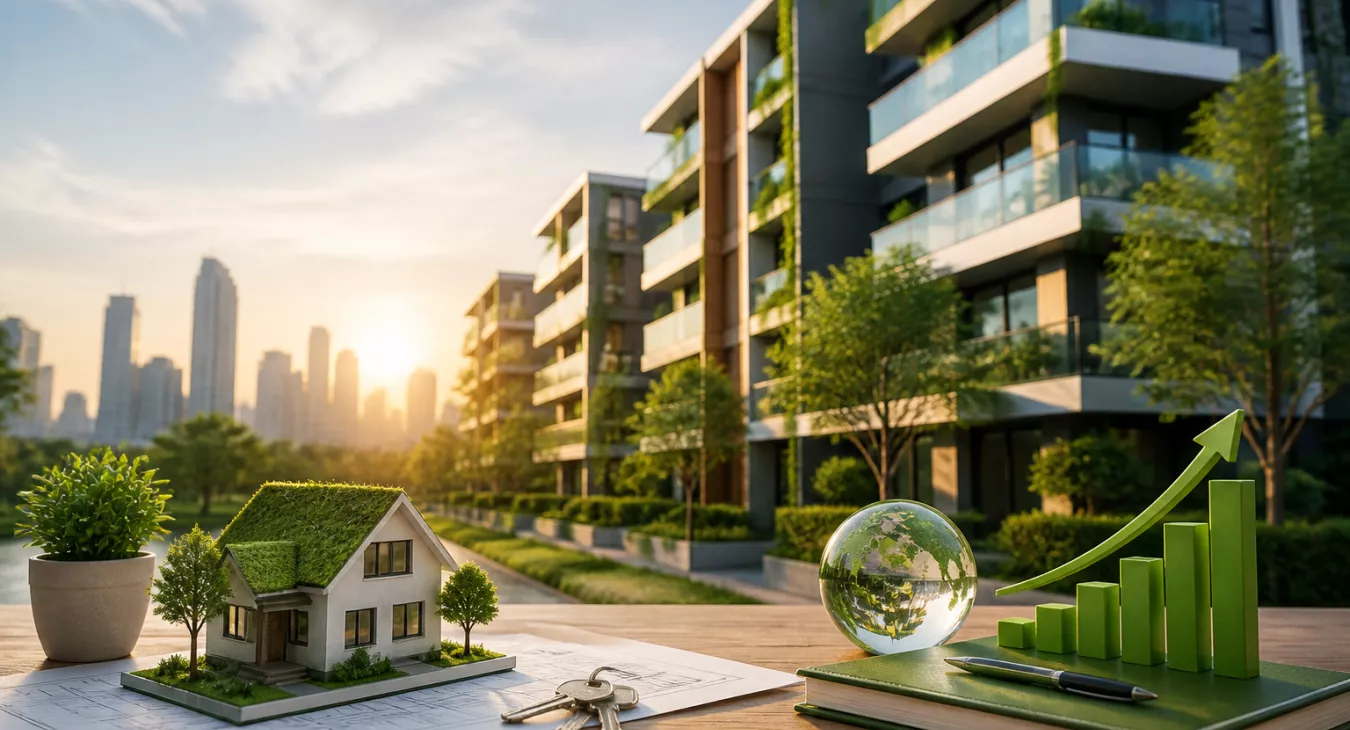
Learn greenhabbing real estate strategies to boost property value while reducing environmental impact. A complete investor's guide to sustainable renovatio
Products and Tools Mentioned in this Post
Table of Contents
- what's Greenhabbing in Real Estate?
- Key Green Home Upgrades That Boost Property Value
- Financial Benefits of Green Real Estate Investing
- ESG and Property Value: What Professionals Need to Know
- Challenges and Considerations for Greenhabbing Projects
- Building a Sustainable Real Estate Investment Portfolio
- Getting Started with Greenhabbing: The Investor's Playbook
- Greenhabbing Trends and Future Outlook
- Conclusion: Why Greenhabbing Belongs in Your Investment Strategy
- Frequently Asked Questions About Greenhabbing
Environmental responsibility and profitable real estate investing used to seem like opposing forces. Not anymore. Greenhabbing — rehabilitating properties with sustainable, eco-friendly upgrades — has moved from a niche play into the mainstream. Energy costs keep climbing. Buyer expectations shift almost monthly. Government incentives? They're expanding fast. And investors who greenhabbing seriously are lapping the competition. The market's only moving one direction. This guide covers what actually matters: core principles, upgrade ROI broken down by project type, ESG frameworks that move the needle, contractor vetting (because bad contractors kill deals), and how to scale across your portfolio without losing your mind.

what's Greenhabbing in Real Estate?

Definition and Core Principles
Greenhabbing is the process of renovating or rehabilitating a property with a primary focus on sustainability, energy efficiency, and reduced environmental impact. But here's what separates it from your standard house flip: greenhabbing integrates eco-conscious materials, energy systems, and design choices into the entire renovation process, creating properties that hit on both fronts — they're financially attractive and environmentally responsible.
Three core principles drive greenhabbing: reduce energy consumption, minimize waste and environmental impact, and maximize long-term property value. And they're not working against each other. A property with solar panels, high-efficiency HVAC, and water-conserving fixtures operates cheaper, commands higher rents, and appeals to the demographic that's now dominating buyer pools. That's the real play.
How Greenhabbing Differs from Traditional Home Renovation
Traditional renovation? New countertops. Updated bathrooms. Fresh paint. That's where the thinking stops. Greenhabbing takes all of that and layers in systems-level strategy. Instead of just swapping out a water heater, a greenhabber installs a tankless or heat-pump model. Instead of standard insulation, they're using recycled cellulose or spray foam with a higher R-value. Your decision-making framework shifts completely — from "what looks good?" to "what actually performs sustainably over the next 20 years?"
And this ripples through everything. Project planning gets more complex. Contractor selection matters more. Permitting requirements shift. Financing options expand. We dig into all of it later in this guide.
The Rise of Eco-Conscious Real Estate Investment
Here's the demographic picture: compelling. Millennials and Gen Z now represent the largest share of home buyers. Over 73% of millennials consider energy efficiency "very important" in a home purchase decision, according to the National Association of Realtors. Meanwhile, big institutional investors are baking ESG criteria into their acquisition decisions across the board. And the numbers back it up — green-certified buildings command an average sale price premium of 5–10% over comparable non-certified properties, per a 2023 CBRE report. This isn't about saving the planet. It's about returns.
Back to topKey Green Home Upgrades That Boost Property Value


Energy-Efficient HVAC and Insulation Systems
Modern heat pump systems crush traditional furnace-and-AC setups. You're looking at 30–50% reductions in heating and cooling costs — that's real money your tenants (or buyers) will notice on day one. Pair that with proper air sealing and beefed-up insulation (R-38 in attics, R-15 in walls), and the operational savings become immediately marketable. Here's the kicker: these upgrades qualify for federal tax credits under the Inflation Reduction Act, up to 30% of installation costs. That's free money sitting on the table.
Renewable Energy Installations (Solar Panels)
Solar panels are the heavyweight champion of green upgrades. Residential installations run $15,000 to $25,000 before incentives. But with the federal Investment Tax Credit at 30%, your actual cost drops significantly. And here's what moves the needle on resale: homes with owned solar systems (not leased) sell for roughly $15,000 more than comparable non-solar properties, according to Zillow Research. For rentals? Solar cuts tenant utility costs, making your units competitive in competitive markets where every dollar counts.
Water Conservation and Sustainable Plumbing
Drought-prone markets like California, Arizona, and Texas? Water efficiency matters here. Low-flow toilets, WaterSense-certified faucets, drip irrigation, and greywater recycling setups typically cost $2,000–$8,000. You'll trim water bills by 20–30%. In regions with water scarcity premiums, these features punch way above their weight on both rental desirability and resale value.
Smart Home Technology for Eco-Efficiency
Ecobee. Nest. Automated lighting. Smart irrigation controllers. Energy monitoring dashboards. These tools run $1,500–$5,000 to install and shave 10–15% off energy consumption. But the real play? They signal modernity to buyers and renters who expect connected living environments. Want to get serious about this? If you're using AI tools for real estate investing, you can model energy performance projections before you commit cash to any specific upgrade.
Sustainable Building Materials and Finishes
Reclaimed hardwood flooring. Recycled glass countertops. VOC-free paints. Bamboo cabinetry. These choices run 5–15% higher than conventional alternatives, but they resonate with eco-conscious buyers and rack up green certification points. They also cut off-gassing, improving indoor air quality — a selling feature that exploded post-pandemic.
| Green Upgrade | Avg. Installation Cost | Annual Savings | ROI Timeline | Value Added at Resale |
|---|---|---|---|---|
| Solar Panel System | $15,000–$25,000 | $1,200–$1,800 | 8–12 years | $10,000–$20,000 |
| Heat Pump HVAC | $5,000–$12,000 | $600–$1,200 | 5–10 years | $3,000–$8,000 |
| Spray Foam Insulation | $3,000–$6,000 | $400–$800 | 5–8 years | $2,000–$5,000 |
| Smart Thermostat + Controls | $500–$1,500 | $150–$300 | 2–4 years | $500–$2,000 |
| Water Conservation Package | $2,000–$8,000 | $300–$600 | 5–10 years | $2,000–$4,000 |
| LED Lighting Overhaul | $500–$2,000 | $200–$400 | 2–4 years | $500–$1,500 |
Financial Benefits of Green Real Estate Investing

Long-Term Cost Savings on Utilities and Maintenance
Green properties hit different on the P&L. A solid heat pump paired with solar panels can slash annual energy costs by $2,000–$4,000 compared to a standard property—and that's conservative. Over a 10-year hold, you're looking at $20,000–$40,000 in pure operational savings. For rental portfolios, that money flows directly to NOI. During repositioning, it cuts your carrying costs. You need to track these numbers precisely, though. QuickBooks for real estate investors keeps your utility savings and project-level profitability in focus.
Increased Property Valuation and Resale Potential
The data's clear: green properties appraise higher. ENERGY STAR-certified homes command a 9% price premium, according to the Appraisal Journal. LEED-certified commercial spaces? They're pulling 5–10% higher rents than comparable non-certified competitors. And here's what's shifting the market: appraisers are adopting green valuation methodologies faster now, including the Appraisal Institute's Green and Energy Efficient Addendum. These premiums aren't flukes anymore. They're being captured consistently at closing.
Tax Incentives and Government Rebates
The Inflation Reduction Act changed the game in 2022. You can now claim 30% federal credits on solar, geothermal heat pumps, battery storage, and energy-efficient windows and doors. State and utility rebates stack on top—typically $50 to $500 per upgrade. The incentive stack is real money if you underwrite it correctly. Want to maximize tax strategy? Check out our guide on real estate depreciation and tax benefits for investors.
Attracting Premium Tenants and Higher Rental Income
Quality tenants rent green properties. They stay longer. They treat the space better. BOMA International's 2022 study proves it: green-certified office and multifamily buildings had occupancy rates 3–8% higher than unceified competitors. In markets like Seattle, Denver, Austin, and Boston, green residential rentals command 5–15% rent premiums. And that translates to better cap rates and improved cash-on-cash returns—the metrics that actually matter.
Reduced Insurance and Financing Costs
Insurance companies are starting to notice. Some now offer premium discounts on green-certified or energy-efficient homes, recognizing that newer systems and better-built envelopes mean lower risk. On the lending side, green mortgages exist—Fannie Mae's Green Rewards program for multifamily properties offers reduced rates for properties hitting energy efficiency thresholds. And the FHA's Energy Efficient Mortgage program lets you finance green upgrades directly into your primary mortgage. Less capital required at closing.
| Upgrade Type | Federal Tax Credit | Typical State/Utility Rebate | Eligibility Notes |
|---|---|---|---|
| Solar Panels (owned) | 30% ITC (no cap) | $500–$5,000+ | Applies to residential and commercial |
| Heat Pump HVAC | Up to $2,000/year | $200–$1,000 | Must meet efficiency thresholds |
| Insulation & Air Sealing | Up to $1,200/year | $100–$500 | Primary residence typically required |
| Energy-Efficient Windows | Up to $600/year | $50–$300 | ENERGY STAR certified products only |
| Battery Storage Systems | 30% ITC | Varies by state | Paired with solar or standalone |
| Geothermal Heat Pump | 30% ITC (through 2032) | $500–$3,000 | Higher upfront cost; long payback |
ESG and Property Value: What Professionals Need to Know

Understanding ESG Frameworks in Real Estate
ESG's gone mainstream. What started in institutional investing boardrooms is now standard operating procedure for property professionals. Here's what each pillar actually means on the ground. "Environmental" covers energy efficiency, carbon footprint, water consumption, and climate risk exposure. "Social" is about tenant health and wellbeing, community impact, and housing affordability. "Governance" means transparency, reporting standards, and regulatory compliance — basically, can people trust you?
This matters because sophisticated investors who know these frameworks attract capital faster, meet lender requirements without friction, and close deals with buyers who've done their homework. Want to dig deeper? Check out how data-driven real estate analytics support ESG tracking and reporting.
Energy Performance Ratings and Certifications
Green certifications give you a third-party stamp of approval. They're standardized benchmarks that buyers, lenders, and tenants actually understand and trust.
Each program targets different deal types and carries different weight in the market — so pick strategically.
| Certification | Administered By | Typical Cost | Best For | Market Recognition |
|---|---|---|---|---|
| LEED | U.S. Green Building Council | $5,000–$50,000+ | Commercial, multifamily, new construction | Very High (global standard) |
| ENERGY STAR | U.S. EPA | $300–$1,500 | Residential, small commercial | High (consumer-facing) |
| Net Zero Energy | ILFI / PHIUS | $2,000–$15,000 | High-performance residential/commercial | Growing rapidly |
| Green Globes | Green Building Initiative | $3,000–$20,000 | Commercial buildings | Moderate |
| WELL Building Standard | IWBI | $10,000–$50,000+ | Commercial, tenant health focus | High (corporate tenants) |
Impact on Property Appraisals and Valuations
The Appraisal Institute now offers a Green and Energy Efficient Addendum that captures green feature value in standard appraisals. Appraisers are hunting for green-to-green comparables whenever they can find them. And here's the thing — in markets where green properties cluster (Pacific Northwest, Mid-Atlantic, Colorado), these adjustments are already well-documented and predictable. Emerging markets show narrower gaps right now, but they're closing fast. If you're buying in a secondary market, this is your window to build in green features before the premium tightens.
ESG Reporting Requirements and Compliance
Institutional capital and large-scale portfolios now face ESG reporting as a hard requirement, not a nice-to-have. The SEC's climate disclosure rules and state-level mandates — California and New York leading the charge — demand standardized reporting on energy use, carbon emissions, and climate risk. It's not optional anymore. Start implementing green upgrades and establish baseline energy metrics now. You'll lock in a defensible compliance position before these rules tighten the noose on everyone else.
Back to topChallenges and Considerations for Greenhabbing Projects
Initial Capital Investment and Upfront Costs
Here's the hard truth: greenhabbing costs 10–25% more than conventional rehab. That's the primary barrier for most investors. If you're working thin margins on flips or fighting to hit your target acquisition price, you need to be surgical about which upgrades you're actually tackling. The move? Prioritize features with the shortest payback periods and real market demand in your specific area. Solar and smart home systems? Almost every market will pay for those. Geothermal heat pumps? Not necessarily. Do your homework before committing capital to upgrades without clear local ROI.
Finding Qualified Green Contractors and Consultants
Not every contractor who says they do green work actually understands it. Look for LEED AP, BPI (Building Performance Institute) certification, or RESNET HERS rating credentials. And here's the critical part: ask for references from completed green projects. Specifically ask about their track record with tax credit documentation and utility rebate programs. A botched spray foam installation or a solar array that's commissioned wrong? You're looking at voided warranties and lost tax credits. This isn't a performance issue — it's a financial one.
Market Readiness and Buyer Demand Variability
Coastal urban markets like San Francisco, Seattle, Boston, and D.C. will consistently pay green premiums. But secondary markets? You'll see huge variance. Before you sink serious capital into green upgrades, pull comps and verify that buyers in your target market are actually willing to pay for these features. Data-driven analytics tools make this easy — they'll show you which green features are actually moving the needle locally.
Permitting and Regulatory Requirements
Solar, HVAC replacements, structural insulation work — all require permits. And here's where it gets tricky: some jurisdictions will trigger a whole-home energy code compliance review, meaning surprise work you never budgeted for. Pull permits anyway (unpermitted green work disqualifies you from tax credits and certification). Factor in 2–6 weeks for permitting timelines. Don't get caught short on your project schedule.
Back to topBuilding a Sustainable Real Estate Investment Portfolio
Selecting the Right Properties for Green Upgrades
Greenhabbing works best on older properties. We're talking pre-1980 construction with poor insulation, outdated HVAC systems, and single-pane windows — the kind of buildings where energy waste bleeds your bottom line. These are your goldmines because they have massive room for improvement and the largest energy cost reduction potential. But here's what actually matters: you need a structurally sound property in a neighborhood where tenants will pay a premium for eco-friendly housing. South-facing roof planes? Perfect for solar. Water-scarce regions? Those properties see the fastest ROI on conservation upgrades.
Conducting Environmental Assessments
Don't skip the energy audit before you make an offer. A Home Energy Rating System (HERS) assessment or BPI energy audit runs $300–$600 and it's worth every penny. You'll get a detailed breakdown of where the building's losing money — envelope inefficiencies, HVAC problems, dead-weight appliances. More importantly, you get the baseline data you need for certification applications and tax credit documentation. And if you're dealing with asbestos, lead paint, or underground storage tanks? Phase I and Phase II Environmental Site Assessments become mandatory pre-acquisition steps.
Working with Sustainable Consultants
New to greenhabbing? Bring in a green building consultant or LEED-accredited professional early. They'll model energy performance scenarios, build out upgrade combinations that actually work together, and hunt down every incentive you qualify for. The cost hits $2,000–$10,000 on residential projects. But here's the thing — most investors recoup that fee through incentive optimization alone. Scale your portfolio and these consultants stop being an expense. They become your competitive advantage.
Monitoring and Maintaining Green Investments
Green systems aren't set-it-and-forget-it. Solar inverters need annual inspection. Heat pump filters need quarterly replacement. Smart home systems need software updates. You have to build these costs into your property management budget or your systems will drift below their rated efficiency. Property management software and CRM tools for real estate investors let you tie maintenance schedules directly to specific green system requirements. That structure keeps everything performing the way it should throughout the asset's operational life.
Back to topGetting Started with Greenhabbing: The Investor's Playbook
Your Greenhabbing Launch Checklist
A structured process reduces risk. It also maximizes returns. Whether you're tackling your first greenhabbing deal or folding sustainability into your existing strategy, here's what works:
- Phase 1 — Assessment (Week 1–2): Order a HERS energy audit or BPI assessment right away. Pull 12 months of utility bills and dig into what they're telling you. Map out structural issues and systems that need work. Don't skip researching local green incentive programs—that's free money on the table.
- Phase 2 — Planning (Week 2–4): Rank upgrades by ROI first, then by what your local market actually rewards. Build your detailed scope of work with exact materials specs. Decide on your target: ENERGY STAR, LEED, or neither. Budget it out with a 15% contingency reserve. This is where you prove to yourself the math actually works.
- Phase 3 — Contractor Selection (Week 3–5): Get 3+ bids from certified green contractors. Check their credentials, call their references, verify insurance. Ask specifically about their experience documenting work for tax credits—it matters. Lock down contracts with clear, measurable green performance specs built in.
- Phase 4 — Implementation (Month 2–5, varies by project scope): Execute upgrades in order: envelope work first, then systems, then finishes. Photograph everything. Keep every invoice. You'll need this documentation when filing for tax credits. Commission all systems before you list or rent the property.
- Phase 5 — Certification and Marketing (Month 5–6): Submit certification applications with complete supporting docs. Create marketing materials that highlight specific performance data—not just "green." List or lease it with green features front and center across all channels.
Budgeting for Sustainable Upgrades
Here's where most investors get it wrong. They treat green upgrades as a separate budget line instead of integrating them into the overall renovation pro forma. Calculate the net cost after incentives for each upgrade. Then compare that against the value add at sale or the rental premium over your projected hold period. That's the real number that matters.
Flipping a property? Focus on upgrades with payback periods under 5 years or those with proven local resale premiums. You need the money back fast. For rentals, longer payback periods make sense because utility savings and rental premiums compound over time. And that's where the real wealth builds.
Track everything through QuickBooks for real estate investors so you capture every green-related expense. Accurate tracking isn't optional—it's how you get the tax credits you've earned.
Back to topGreenhabbing Trends and Future Outlook
Emerging Green Technologies and Innovations
The green building tech market moves fast. Really fast. What should you be watching? Building-integrated photovoltaics (BIPV) — solar cells baked into roofing shingles and glass facades — are becoming standard. Heat pump water heaters are hitting 300–400% efficiency ratings. Phase Change Materials (PCM) handle passive thermal storage without moving parts. And EV charging infrastructure isn't optional anymore; it's the baseline amenity tenants expect in multifamily and commercial deals. Install it now during renovations. Wait 3–5 years? You're looking at expensive retrofits that eat into your returns.
Millennial and Gen Z Investment and Buying Patterns
By 2030, these two cohorts will own over 60% of home sales and dominate rentership in every major metro. They'll actually pay more for green features — and they want proof. Energy performance data. Smart home tech. Certified sustainability credentials. This matters because these buyers and renters search online first, and green features drive engagement like nothing else. Digital marketing campaigns built around verified performance data and certifications crush generic renovation content every single time. If you're not using green specs as your marketing hook, you're leaving money on the table.
Regulatory Trends Affecting Green Real Estate
The writing's on the wall. Energy standards tighten. Disclosure rules multiply. Carbon pricing moves into residential. New York City's Local Law 97 already caps emissions on large buildings — blow past those limits and you're paying serious penalties. California mandates solar on all new construction now. This spreads nationally. Period.
Greenhabbing today isn't just about rental premiums and resale bumps. You're hedging against regulatory risk. When codes change — and they will — your portfolio won't be caught holding underperforming assets. Structure matters too. Optimizing your LLC structure for green investment tax advantages protects your returns and locks in every deduction available.
Back to topConclusion: Why Greenhabbing Belongs in Your Investment Strategy
Greenhabbing isn't some idealistic side project anymore. It's a financially disciplined, forward-looking investment strategy with documented ROI, expanding tax incentives, and growing buyer demand. You're looking at real property value premiums, premium tenants who'll actually pay more, lower operating costs, and a competitive edge before regulations tighten—and they will. The investors building green portfolios right now are already ahead of the curve. Whether you're a seasoned operator expanding into this space or evaluating your first eco-renovation, this greenhabbing real estate guide gives you the execution framework you need. Financial returns plus environmental impact—that's the kind of durable, differentiated strategy that actually builds lasting portfolio value.
Ready to scale your green investment activities? Pair your greenhabbing strategy with complementary investor tools. We're talking asset protection strategies that safeguard your growing portfolio. And digital marketing approaches that get your green properties in front of the right buyers and tenants at exactly the right time.
Back to topFrequently Asked Questions About Greenhabbing
What's the minimum budget needed to start a greenhabbing project?
There's no magic number here — it depends entirely on your scope. Want to dip your toe in? LED lighting, smart thermostats, low-flow fixtures, and better insulation will run you $5,000–$15,000 on a standard residential property. Going all-in with solar, HVAC replacement, and pursuing certification? That's $25,000–$75,000+. The smart move is starting with high-ROI, quick-payback upgrades first. Layer in the capital-intensive systems as your experience grows and your cash reserves allow.
Do green upgrades always increase resale value?
Not always. Market context is everything. Hit the right market—Seattle, Portland, Denver, Boston, Austin—and green upgrades command resale premiums that blow past installation costs. But in rural or secondary markets? The premium shrinks, sometimes considerably. You might wait longer to see the return, too. Before you commit capital to premium green features, run comparable sales analysis. And make sure local appraisers actually know how to value green work.
Can I apply the federal 30% tax credit as a real estate investor, not just a homeowner?
Yes. The 30% Investment Tax Credit (ITC) for solar and certain renewable energy systems covers residential and commercial properties alike. Here's the catch: the rules aren't identical. Residential rental properties fall under the commercial ITC (Section 48), not the residential credit (Section 25D). You need a tax professional who understands real estate investing structures to nail this and capture every credit available. Combine this with standard depreciation strategies for real estate investors, and you're looking at serious tax efficiency.
How do I find qualified green contractors?
Start with the U.S. Green Building Council's directory for LEED-accredited professionals near you. The Building Performance Institute (BPI) and RESNET both maintain contractor directories. When you're vetting, demand portfolio examples of certified green projects. Get references from other investors—not just homeowners. And ask for documentation proving they understand incentive program requirements. Membership in local green building councils is a solid indicator too. That's where you'll find contractors who actually live and breathe this stuff.
Is greenhabbing viable for commercial real estate investments?
Absolutely—and frankly, it makes even more financial sense than residential. Commercial properties benefit from higher absolute energy cost savings. ESG-driven institutional tenants actively seek these buildings. Financing programs like Fannie Mae Green Rewards are more accessible. Certification premiums hit harder. LEED-certified commercial buildings routinely pull 5–10% rental premiums and run 3–4% lower vacancy rates than comparable non-certified properties. If you're exploring commercial opportunities, our complete guide to commercial real estate investing shows how to integrate greenhabbing into a commercial strategy.
Back to top