

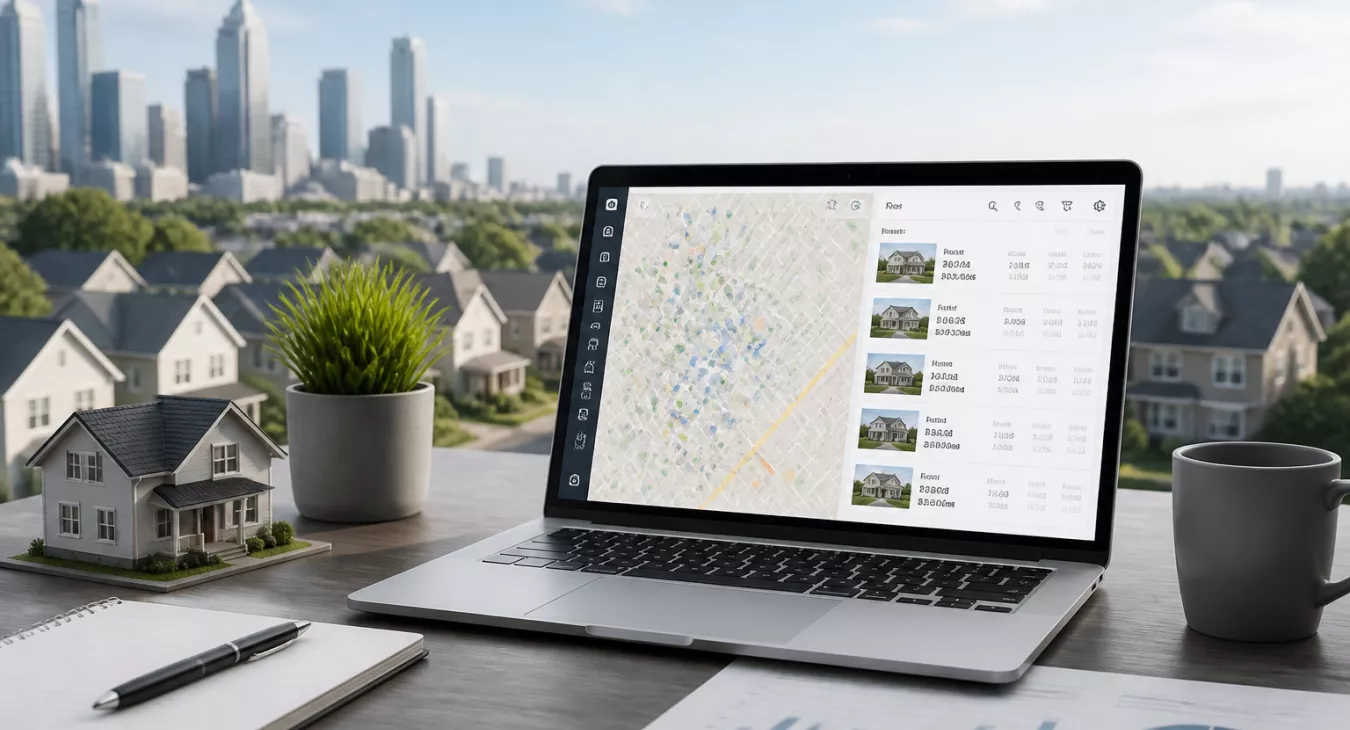
Discover the best land scraping tools & software 2026 to automate deal finding. Save hours on prospecting and stay ahead in the competitive land market.
Products and Tools Mentioned in this Post

Propstream
Detailed information on Propstream. Get How-To's, reviews, Comparisons, and much more.

Table of Contents
- Land Scraping Software — What It Does and How It's Different
- How to Choose the Right Land Scraping Tool
- Top Land Scraping Tools Reviewed
- Land Scraping Tools Comparison Matrix
- Where Land Scraping Fits in the Real Estate Investor Toolkit
- Real Estate Data Extraction: Use Cases and Applications
- Challenges in Land and Property Data Scraping
You've probably lost hours copying property listings, owner addresses, and asking prices from county websites or real estate portals. Sound familiar? That's the exact problem land scraping tools were built to solve. The land market moves fast — vacant land now averages roughly $19,500 per acre nationally as of 2026. Inventory's contracted by 23.6% since 2019. And here's the reality: investors who find deals first are the ones who've automated their prospecting pipelines. Land scraping software—platforms and frameworks that automatically extract, parse, and organize property data from websites—used to be a developer's side project. Not anymore. It's now mainstream in serious real estate investing operations. This guide cuts through the marketing noise, compares the real tools available in 2026, and gives you a framework for choosing what actually fits your workflow.

Land Scraping Software — What It Does and How It's Different
Web scraping, at its core, is just automated data extraction from websites. Land scraping narrows that down: it pulls structured property data. Parcel numbers, owner names, mailing addresses, acreage, zoning, assessed values, listing prices, days on market, contact info. The difference matters because property data throws unique curveballs that generic scrapers choke on.
General web scraping tools grab text and images. Easy enough for most sites. But real estate and land data? That's a different animal. County assessor portals run on ancient government software with field labels that change from county to county. Zillow, Lands of America, and LandWatch all have aggressive anti-bot defenses. Property descriptions are messy natural language that needs parsing. And here's the kicker — the same parcel shows up with different identifiers across different data sources. A scraper built for e-commerce product prices will crash and burn on a county GIS portal.
Why Land Scraping Tools Matter in 2026
Here's what's changed: competition for land deals has gotten brutal. National land prices jumped 77% since 2019. Inventory's shrinking, which means off-market and early-stage opportunities are worth more than they've ever been. And it's not just retail hype. The USDA published data on July 31, 2026 showing U.S. cropland averaging $6,020 per acre and pastureland at $2,000 per acre — both posting year-over-year gains. That's institutional money and investor capital showing up at the auctions, and you're bidding against them.
You can't do this manually. Not anymore. Say you're monitoring five counties for motivated sellers — high equity absentee owners, tax delinquency red flags, probate filings. You'd need to hit dozens of portals, assessor databases, and listing sites every single week. Automated scraping runs overnight, continuously, and dumps the results straight into your CRM or your deal analysis sheet. As we break down in our guide to driving for dollars vs. digital deal finding in 2026, the investors closing deals right now are merging old-school market knowledge with digital automation. And scraping tools? They're the backbone of that digital layer.
Legal and Ethical Baseline
One thing first: scraping property data lives in a legal gray zone. And it's gotten messier, not cleaner, over the past few years. The conflict is simple — government records are public, scrape-friendly, and legitimate. But proprietary listing platforms own their data and ban bots in their Terms of Service. The hiQ Labs v. LinkedIn case confirmed that scraping publicly accessible data isn't automatically a Computer Fraud and Abuse Act violation. But that doesn't mean platform ToS doesn't matter. Break it and you lose your account. You might face civil claims too. County assessor data and court records? Those are public record, fair game. MLS data is licensed and protected. Zillow explicitly bans scrapers in their ToS. We'll dig into this in the challenges section, but the baseline is straightforward: know your source, read the ToS, and if you're doing this at scale, talk to a lawyer first.
Back to topHow to Choose the Right Land Scraping Tool
Key Features to Evaluate
Here's the thing: not every scraping tool works the same way. Your needs as a land investor are completely different from what a general e-commerce scraper was built for. Before you sign up, run each platform against these criteria.
- JavaScript rendering capability: Most listing sites and county portals load data dynamically via JavaScript. If a tool only parses static HTML, you're missing out on the majority of property data on those pages. You need headless browser support (Chromium-based) baked directly into the platform.
- Proxy integration: Zillow and Realtor.com don't mess around. They aggressively fingerprint and block scrapers. Without rotating residential or datacenter proxies, your scraper dies in minutes. Some platforms bundle proxy networks; others make you bring your own.
- Data parsing accuracy: Raw text extraction is simple. The hard part? Understanding that "3.47 ac" means acreage while "3.47%" means a tax rate. That requires real parsing logic. Test your tool on actual target sites before committing real capital.
- No-code vs. code-based: Non-technical? Stick with no-code platforms like Octoparse or Browse.ai — you build scrapers visually. Have developers on staff? Code-based frameworks (Scrapy, Playwright) give you way more control and flexibility to handle edge cases.
- Scheduling and monitoring: One-time extractions are useless for deal finding. You need scheduled runs that alert you when new listings or records hit the market — automatically, while you sleep.
- Output formats and integrations: CSV and Excel exports are the baseline. But direct CRM integrations (Salesforce, HubSpot, REI-specific tools) or webhook support? That saves you hours of manual data entry every month.
- Maintenance burden: County assessor portals get redesigned. CSS selectors break. AI-powered extraction tools handle this better because they read page structure semantically instead of relying on fragile selectors that snap the moment HTML changes.
No-Code vs. Code-Based Solutions
Three factors matter here: your team's technical depth, how complex your target sites are, and how often you'll need to rebuild. No-code tools like Octoparse and Browse.ai work genuinely well for non-developers and handle most real estate scenarios — pulling listings from land portals, monitoring assessor pages, tracking price shifts. They struggle with complex authentication, weird pagination patterns, or heavily obfuscated JavaScript.
Code-based frameworks like Scrapy and Playwright give you complete control. But you're paying in developer hours. For a wholesaler building daily feeds from 20 county assessor sites? Custom development pays for itself in 12-18 months. For a one-off project? No-code is faster and cheaper to validate. Need a broader view on tech stacks? Check out our full breakdown of the best real estate software for investors in 2026.
Pricing Models Explained
Different tools charge different ways. Understanding this upfront keeps you from budget overruns.
- Subscription (flat monthly fee): No-code platforms use this a lot. You get X pages, Y exports, or Z API calls per month. Costs are predictable, but high-volume, irregular projects become expensive fast.
- Pay-as-you-go: You pay per page scraped, per GB of data, or per API request. Better for sporadic work that needs heavy volume. ScraperAPI runs this model with credits.
- Usage-based enterprise: Bright Data and competitors quote custom pricing based on your volume, proxy bandwidth, and support tier. You're talking to sales before you see a number.
- Open source (free, but not really): Scrapy, Beautiful Soup, Playwright, and Puppeteer don't cost money. You pay with developer time, hosting bills, proxy costs, and ongoing maintenance headaches.
Top Land Scraping Tools Reviewed
Octoparse — Best No-Code Platform for Real Estate
Real estate investors without dev resources gravitate toward Octoparse. Here's why: you click on the fields you want — address, acreage, price, owner — and it generates extraction logic automatically. No coding required. The visual point-and-click interface trains a scraper on any listing page you throw at it.
Built-in cloud scheduling runs scrapers automatically on your intervals. Your laptop doesn't need to be on.
Strengths for land investors: Pre-built templates for common real estate sites mean faster setup. It handles JavaScript-rendered pages through built-in browser automation. IP rotation is available on paid plans, which matters when you're pulling data at scale.
Limitations: County portals change their layout constantly, and when they do, templates break. You'll be rebuilding manually. Complex sites with multi-step auth or CAPTCHAs? They require workarounds. The free plan is genuinely limited — treat it as a trial, not a working tool. Pricing tiers sit mid-range for no-code solutions, though rates change, so verify directly with Octoparse.
Best for: Solo investors and small teams monitoring specific land listing sites and county portals without writing code. Works well for recurring extractions from stable sites.
Apify — Best All-Around Platform
Apify sits between no-code tools and full custom development. It's a cloud-based scraping and automation platform, but here's the real value: the Apify Store.
This marketplace of pre-built "Actors" (scraping bots) can save you weeks. Real estate-focused Actors exist for Zillow, Realtor.com, Apartments.com. You might deploy a working scraper without building one from scratch.
Strengths: The Actor marketplace genuinely saves time for common targets. Run Actors in the cloud immediately and export to JSON, CSV, or Excel. Need something custom? Build Actors in Node.js or Python. Zapier and Make integrations feed scraped data straight into your CRM. Storage, scheduling, and proxy management are all built in.
Limitations: Pre-built Actors live or die by community maintenance — when a target site changes, you're dependent on the author updating it. Some real estate Actors are outdated. High-volume projects escalate costs quickly if you're not watching compute units carefully.
Best for: Investors and agents balancing ready-made solutions with customization options. Particularly useful when you're integrating scraping into broader automation workflows through Zapier or CRM webhooks.
ScraperAPI — Best API-First Solution for Developers
ScraperAPI flips the model entirely. Instead of providing a scraping platform, it provides a proxy and rendering layer. Your existing code routes through it.
Send requests in Python, Node.js, or any language. ScraperAPI handles proxy rotation, browser rendering, and CAPTCHA solving. You get back rendered HTML as if you'd made a successful browser request.
Strengths: Dramatically simplifies the proxy and anti-bot problem for developers who already parse HTML. Pay-as-you-go pricing scales cleanly. JavaScript-heavy listing sites render straightforwardly. For real estate teams with in-house dev, this is one of the cleanest architectures for high-volume property data extraction.
Limitations: You need coding knowledge. Not for non-developers. Success rates vary by target site — aggressive real estate platforms with heavy bot detection may still slip through. Test on your specific targets before committing to a volume plan.
Best for: Development teams building proprietary property data pipelines who'd rather outsource the proxy and anti-bot layer.
Firecrawl — Best for AI-Powered Extraction
Firecrawl represents the newer generation. It uses large language models for data extraction instead of traditional CSS selector parsing.
Instead of mapping "the third <span> inside a .listing-card div is the price," you describe what you want in plain English. The AI interprets the page to pull it out.
Strengths for real estate: Maintenance burden drops dramatically. Selector-based scrapers break when sites change layouts. AI extractors? They're far more resilient because they understand semantic meaning, not just structure. For land investors dealing with inconsistent county portal formats across dozens of jurisdictions, that's a huge operational win. And it handles unstructured property descriptions well — valuable for spotting motivated seller signals in listing text.
Limitations: AI extraction adds latency and cost per page versus traditional scraping. Not for extremely high-volume, cost-sensitive operations. Still newer technology — test accuracy carefully on your specific use cases before building production pipelines.
Best for: Investors targeting many different county sites with inconsistent formats, or anyone needing to extract meaning from property description text alongside structured fields.
Bright Data — Best Enterprise Solution
Bright Data (formerly Luminati) is the enterprise standard. Large-scale real estate data operations — data providers, PropTech companies, institutional land funds pulling from hundreds of sources simultaneously — rely on it.
Think you need the strongest anti-bot bypass available commercially? They've got it. Their residential proxy network is massive, making requests originate from real user devices across geographies.
Strengths: Industry-leading proxy network scale and quality. Managed datasets for specific real estate verticals mean you can sometimes buy pre-scraped, structured property data instead of building your own pipeline. Web Unlocker and Scraping Browser products specifically target heavily protected sites.
Limitations: Enterprise-tier pricing requires custom quotes — not suitable for solo investors or small teams on tight budgets. The platform's complexity has a learning curve even for experienced developers.
Best for: PropTech companies, institutional investors, and data aggregators running high-volume property data operations at scale.


Scrapy — Best Open-Source Framework for Custom Development
Scrapy is Python-based web crawling and scraping. It's not a product you buy — it's a tool you build with. You handle the parsing logic while Scrapy manages request queues, data pipelines, and output formatting.
Strengths: Complete control over every aspect of your scraper. Active community and extensive documentation mean you're not figuring this out alone. Highly scalable and production-grade when deployed with Scrapy Cloud or Scrapyd. Integrates cleanly with Playwright or Splash for JavaScript rendering.
Limitations: You need solid Python knowledge. Significant upfront development time for each target site. No GUI — entirely code-based. Proxy management and anti-bot handling require additional setup and a proxy subscription.
Best for: Investors and companies with in-house Python development who need maximum control and are building long-term, proprietary data infrastructure.
Browse.ai — Best for Monitoring and Alerts
Browse.ai occupies a specific niche. It monitors websites for changes and alerts you when something happens.
For land investors, this is valuable. Track new listings on land portals. Watch for price reductions on specific properties. Get notified when new entries appear in county tax delinquency lists. Rather than pulling bulk data, Browse.ai watches pages over time and surfaces what changed.
Strengths: Genuinely no-code — setup takes minutes. Change detection and alerts are well-implemented. Works well monitoring a defined list of pages over time. Can export captured data to Google Sheets automatically.
Limitations: Not designed for large-scale initial data extraction — it's monitoring, not bulk scraping. Works best when you already know which pages to watch. Free plan limitations are significant for serious use.
Best for: Investors wanting passive monitoring of specific land listing pages, county portals, or competitor pricing without building a full scraping operation.
Playwright and Puppeteer — Best for Browser Automation
Playwright (Microsoft, supports Chromium/Firefox/WebKit) and Puppeteer (Google, Chromium only) are open-source browser automation libraries. Code that controls a real browser. Click tabs. Fill search filters. Scroll to load content. Handle login flows.
For real estate scraping, that's huge. You interact with pages exactly as a human would. Compared to HTTP-based scrapers, browser automation crushes sites with advanced bot detection.
Strengths: Handles virtually any JavaScript-rendered site. You can interact with complex search interfaces. Playwright's multi-browser support is useful when sites respond differently to different browser fingerprints.
Limitations: Browser automation is slow and resource-intensive versus HTTP-based scraping. Not suitable for very high-volume extraction without serious infrastructure. Requires JavaScript (Node.js) or Python knowledge.
Best for: Developers needing to scrape complex, heavily protected real estate sites where simpler HTTP-based scrapers fail.
Back to topLand Scraping Tools Comparison Matrix
| Tool | Type | Best For | Pricing Model | Free Plan | Learning Curve | Proxy Support | JS Rendering |
|---|---|---|---|---|---|---|---|
| Octoparse | No-code SaaS | Non-developers, land portals | Monthly subscription | Yes (limited) | Low | Built-in (paid) | Yes |
| Apify | Cloud platform | All-around, CRM integration | Subscription + usage | Yes (free tier) | Medium | Built-in | Yes |
| ScraperAPI | API service | Developers, high volume | Pay-as-you-go / subscription | Yes (trial credits) | Medium | Core service | Yes |
| Firecrawl | AI-powered SaaS | Inconsistent formats, text analysis | Usage-based | Limited trial | Low–Medium | Built-in | Yes |
| Bright Data | Enterprise platform | High-volume, anti-bot bypass | Enterprise custom quote | Trial only | High | Core service (largest network) | Yes |
| Scrapy | Open-source framework | Custom dev, long-term pipelines | Free (infra costs only) | Yes (open source) | High | Plugin/manual setup | Via Playwright/Splash |
| Browse.ai | No-code SaaS | Monitoring, change alerts | Monthly subscription | Yes (limited) | Very Low | Built-in | Yes |
| Playwright/Puppeteer | Open-source library | Complex, heavily protected sites | Free (infra costs only) | Yes (open source) | High | Manual setup | Yes (native) |
| Beautiful Soup | Open-source library | Simple static pages, prototyping | Free | Yes (open source) | Medium | Manual setup | No (static only) |
Heads up: Vendors update pricing and features constantly. Check directly with them before committing. This breakdown's current as of mid-2026.
Back to topWhere Land Scraping Fits in the Real Estate Investor Toolkit
Scraping tools don't exist in isolation. They're one layer of a broader data and deal-finding stack. Many investors already use platforms like wholesale-specific software that includes some built-in data sourcing. Understanding where scraping fits helps you make smarter purchasing and implementation decisions. So here's the real question: does a standalone scraper actually add meaningful deal flow on top of what those platforms already provide?
How PropStream Compares to Raw Scraping Tools
Let's start with the obvious: why build a scraper when PropStream exists at $99/month as of June 2026? You're getting access to over 160 million U.S. property records with 10,000 property exports per month as of March 2026. Filter by equity, ownership type, tax delinquency, and dozens of other motivated-seller signals. That's turnkey. Most scraping projects take months and thousands of dollars to replicate.
But raw scraping tools have one massive advantage: flexibility. PropStream covers broad national data well, but what if you need to monitor a specific county's new probate filings in real time? What if you're tracking price changes on a niche land portal that PropStream doesn't touch? Or pulling listing descriptions for NLP analysis? Custom scrapers unlock data sources that no off-the-shelf platform covers.
Skip tracing costs tell you something useful here. Per-record costs across providers in 2026 range from $0.02 to $0.15, with premium services hitting 75%–85%+ phone number accuracy. And PropStream's skip tracing runs $0.12 per contact — that's the higher end. Some investors use scrapers to collect owner data, then route only the best leads through premium skip tracing. You save money that way.
Most successful investors run both. PropStream for broad list building. A targeted scraper for those specific data gaps or monitoring use cases you can't get anywhere else.
Back to topReal Estate Data Extraction: Use Cases and Applications
MLS Data Collection
Here's the thing: MLS data scraping is the legal minefield of real estate. MLS data belongs to member associations — it's licensed content, not public record. When you scrape it directly from Zillow, Realtor.com, or Redfin at scale, you're violating their Terms of Service and potentially breaking the licensing agreements that protect the entire MLS network. Don't do it. The guidance is straightforward and non-negotiable.
Need MLS-level data? Pursue legitimate API access through IDX providers or buy licensed data products. It'll save you legal headaches and keep your operation clean.
What you can actually target without legal risk: county assessor records (public), tax rolls (public), court records including probate filings and lis pendens (all public), FSBO listing sites that permit scraping in their ToS, and government land databases. Serious land scraping pipelines build around these sources. That's where the money is.
Competitor Price Monitoring
You're a land developer, subdivider, or dealer listing your own properties? Competitive price monitoring is your edge. When comparable properties price-reduce, when new competing listings hit your market, when a competitor's inventory moves faster than yours — that data directly impacts your pricing decisions and strategy.
Browse.ai handles this beautifully — monitor competitor listing pages and get alerts on price changes instantly. Want more sophistication? Apify or custom scrapers pull structured data into spreadsheets or dashboards for real trend analysis.
Investment Property Analysis
Land deal evaluation requires pulling from multiple sources. County assessor for assessed value and ownership. GIS systems for zoning and acreage. State and county flood mapping for wetland and flood zone data. Listing sites for comps. Manually, that's 45 minutes per parcel. A scraping pipeline that auto-aggregates this data assembles a complete preliminary package in seconds instead.
And here's where AI-powered tools like Firecrawl make a real difference. They pull unstructured data from GIS portals and assessor sites with inconsistent layouts, then use AI to correctly map fields to a standardized schema. Your QA burden drops dramatically.
Lead Generation for Real Estate Agents and Wholesalers
Wholesalers and land agents scrape county assessor records to build targeted owner lists, then run skip tracing to get contact info. The pipeline: scrape assessor for absentee owners of vacant parcels matching your size and equity criteria → export names and mailing addresses → skip trace for phone numbers → load into CRM for outreach.
Skip tracing costs run $0.02–$0.15 per record. Conversion sits at roughly 1-3 deals per several hundred contacts. The economics work if you're doing volume and your upstream data quality is solid — because bad data from a lazy scraper wastes money on records that don't fit your criteria. Check out our comparison of DealMachine alternatives for land investors to see how scraping fits into your broader lead funnel.
Market Research and Trend Analysis
Individual deals matter. Macro market trends matter more.
Track listing volumes, days-on-market, and price movements across specific counties or land types. You'll build systematic timing advantages that most investors never develop. Look at the numbers: national vacant land averages roughly $19,500 per acre in 2026, but the variance is enormous. New Mexico sits at $2,200 per acre while Massachusetts hits $65,000 per acre as of February 2026. National averages are useless. Local intelligence built from scraped data? That's actionable. And with approximately 272,773 active vacant land listings nationally as of September 2026, the data pool is deep enough to build real strategic advantage.
Back to topChallenges in Land and Property Data Scraping

Here's the thing: most scraping tutorials are full of it. They gloss over how brutally hard real estate targets actually are. But if you understand the real obstacles? You'll build systems that don't break the moment conditions change.
Anti-Bot Detection and Bypass
Listing platforms spend serious money on bot detection. We're not talking basic filters anymore. These systems run IP reputation checks, browser fingerprinting (they'll detect headless browsers through dozens of JavaScript signals), behavioral analysis (tracking mouse movement, scroll velocity, timing between actions), and CAPTCHA walls. Rate limiting and a few rotating IPs? That won't cut it against hardened targets.
Your strategy needs to match your target. County assessor portals and government databases? Minimal anti-bot protection. A quick proxy rotation and you're in. But the big listing platforms? Those are a different animal. You've got two real options: go enterprise with something like Bright Data's residential proxy network and Scraping Browser, or have an honest conversation about whether your use case actually complies with their ToS.
Dynamic Content and JavaScript Rendering
Every modern real estate site does the same thing: loads listing data through JavaScript after the page hits your browser. Download raw HTML with a basic HTTP scraper and you'll get an empty skeleton. No property data. Nothing useful. You need headless browser rendering — either
Back to top