

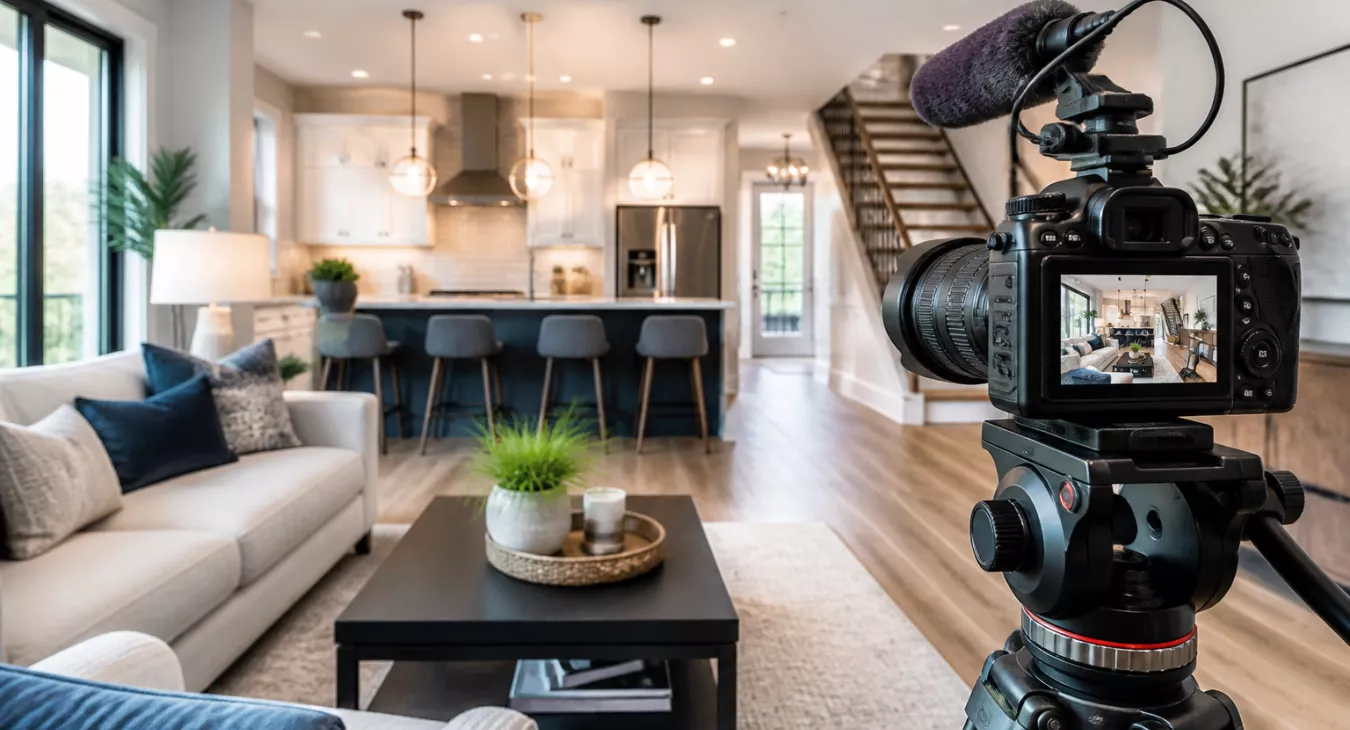
Learn how to create compelling property videos with our video marketing real estate step-by-step guide. Boost inquiries and sales today.
Products and Tools Mentioned in this Post

Follow Up Boss
Follow Up Boss is a real estate CRM that helps agents manage leads, automate follow-up, and increase conversions. Streamline your sales process today.


Matterport
Matterport creates immersive 3D virtual tours and digital twins for real estate. Capture properties with professional-grade technology and share interactive experiences.
Real estate is a visual business. Video's your most powerful marketing weapon—period. Listings with video pull in 403% more inquiries than those without. That's not a marginal gain. And 73% of homeowners prefer working with agents who use video to market properties. So why are most real estate pros still flying blind without a consistent video strategy? This guide fixes that problem. You'll get a clear, actionable roadmap whether you're picking up a camera for the first time or scaling an existing video operation. We're covering planning, filming, distribution, measurement, and optimization—everything you need to build a repeatable workflow.

Why Video Marketing Matters for Real Estate

Let's start with what actually moves the needle. The data here is too strong to ignore — and once you see the numbers, you'll understand why video should be a non-negotiable part of your marketing stack.
Key Statistics and ROI Data
According to the National Association of Realtors, 70% of homebuyers want virtual tours when they're searching online. That's not a nice-to-have. That's table stakes now. Homes with video sell 32% faster than those without — and if you're running numbers on hold time and carrying costs, you know what that means for your bottom line. But here's what really caught our attention: YouTube converts leads at 2x the rate of other channels when you optimize the content correctly. Most agents and investors sleep on YouTube entirely. These aren't incremental gains we're talking about. This is a complete shift in how buyers shop.
How Video Builds Trust and Credibility
Real estate runs on trust. Period. When a buyer watches you walk through a property in 90 seconds, they're not just seeing the space — they're forming a judgment about you. Video does something photos and text literally cannot do. It humanizes you. It shows professionalism. It proves you've got nothing to hide. Agent testimonials and profile videos hit especially hard, especially if you're new to the business and still building a reputation. Want to understand how video fits into your first-year strategy? Check out the New Agent Guide: First Year in Real Estate — it covers the bigger picture.
Video's Impact on Conversion Rates
Landing pages with embedded video convert 80% higher across industries. In real estate, the effect is just as dramatic — more showing requests, more inquiries, better lead quality. Add the word "video" to your email subject line and you're looking at 19% higher open rates and 65% higher click-through rates. For investors targeting motivated sellers? Video outreach campaigns compress your lead-to-conversation timeline significantly. If you're serious about reaching motivated sellers efficiently, the Motivated Seller Marketing Made Easy: Best Way to Find Real Estate guide shows how video plays into the whole strategy.
Back to topTypes of Real Estate Videos to Create

Here's the reality: not every video does the same job. You need multiple content types working for you, each hitting a different point in the buyer or seller journey. The best video marketing strategy isn't one video — it's a mix.
Property Listing and Tour Videos
This is your bread and butter. Keep it between 2–4 minutes. Show the curb appeal first, walk through the key interior spaces in a logical flow, and land on a strong call-to-action. That's the formula that moves inventory.
Virtual tours and 3D walkthroughs using tools like Matterport? They're worth the investment. Buyers spend more time on your listing pages when they can self-explore the space. Time-on-page signals matter to Google too.
Agent Profile and Branding Videos
60–90 seconds. That's all you get to answer the question every buyer and seller is asking: "Can I actually trust this person with my biggest financial decision?"
Put it everywhere — your About page, LinkedIn, pre-roll ads. Your experience and value proposition need to land in that window before viewers scroll away.
Neighborhood Guides and Community Videos
People don't buy houses. They buy neighborhoods, schools, restaurants, and access to parks and transit. Your job is proving you're the actual local expert who understands the lifestyle.
And here's the bonus: these videos crush it for SEO. Neighborhood guides generate long-term organic traffic on YouTube and Google. You're not just converting today's buyer — you're getting found for years.
Testimonial and Case Study Videos
Genuine buyer and seller success stories convert better than anything else you'll create. A real client talking for 60–120 seconds carries more weight than polished marketing copy. Period.
But make them specific. Include the data — days on market, sale price versus asking price, the multiple offer situation they were in. Numbers add credibility that emotion alone can't match.
Educational and How-To Content
Market updates. Buying process breakdowns. Investment strategy explainers. Financing guides. This establishes you as an authority and keeps your audience engaged between transactions.
For investors, educational content on hard money lending pairs perfectly with deep-dive resources like the Hard Money Loans for Real Estate: Complete Guide. YouTube rewards this kind of content — the search intent is already there.
Drone and Aerial Footage Videos
Instant production value. Essential for waterfront homes, acreage, large properties, and commercial real estate where scale matters.
One thing: you need FAA Part 107 certification for commercial drone work in the U.S. This isn't optional. We cover compliance details below.
Short-Form Property Previews for Social Media
15–60 second property teasers. Instagram Reels, TikTok, YouTube Shorts. Drive traffic to your full listing videos or property pages.
Many agents are getting outsized ROI from these quick-hit formats with almost zero production budget. This is where newer agents are actually winning against the big teams right now.
| Video Type | Ideal Length | Platform | Production Cost | Best For |
|---|---|---|---|---|
| Property Tour | 2–4 minutes | YouTube, MLS, Website | $300–$1,500 | Active listings, buyer engagement |
| Agent Profile | 60–90 seconds | Website, LinkedIn, Ads | $200–$800 | Brand building, trust |
| Neighborhood Guide | 3–6 minutes | YouTube, Facebook | $400–$1,200 | SEO, local authority |
| Client Testimonial | 60–120 seconds | Website, Social, Email | $100–$500 | Conversion, trust-building |
| Educational/Market Update | 3–8 minutes | YouTube, Podcast-style | $50–$300 (DIY) | Lead nurturing, authority |
| Drone/Aerial | 30–90 seconds | YouTube, Instagram, MLS | $300–$1,000 | Luxury/large properties |
| Short-Form Social Preview | 15–60 seconds | TikTok, Reels, Shorts | $0–$200 | Awareness, reach |
| Market Update | 2–5 minutes | YouTube, Email | $50–$400 | Retention, lead nurturing |
Step-by-Step Video Production Process

Video marketing works in three phases: pre-production, production, and post-production. Rush or skip any one of them, and you'll get lower-quality output that underperforms. Here's what precision execution looks like at each stage.
Phase 1: Pre-Production — Planning and Scripting
This is where your video either succeeds or fails—before you ever hit record. Answer three core questions first: Who's watching this? What do you want them to feel or do afterward? Where's it actually going to live?
Define your target audience: A first-time homebuyer video and a commercial investment property tour need completely different language, pacing, and visuals. When you nail audience specificity, your engagement and conversion rates jump noticeably.
Set clear video goals and KPIs: Are you chasing YouTube views, listing inquiries, email signups, or direct calls? Each goal demands different distribution tactics and CTAs. Lock in your KPIs before filming starts, not after you've wrapped.
Create your shot list and storyboard: Walk the property beforehand. Map out your exact sequence—exterior front, backyard, entry, kitchen, primary bedroom, key feature close-ups, and closing CTA. A solid shot list prevents missed angles and cuts re-shoot costs significantly.
Write your script or outline: Talking-head videos (market updates, agent profiles) need a full script. Property tours? A loose outline with key talking points works fine. But practice your delivery until it feels natural. Reading straight from a teleprompter without rehearsal always comes across as stiff.
Phase 2: Production — Filming and Capturing Footage
Execution day. A few things are non-negotiable if you want professional results:
- Lighting first: Natural light is your best friend. Film property tours during daylight hours. Open all blinds and curtains. Use portable LED panels in the darker rooms. Poor lighting? That's the biggest tell between amateur and pro video.
- Stabilize your camera: Handheld footage without stabilization screams "amateur" immediately. Grab a gimbal stabilizer for walkthrough shots and a tripod for stationary work.
- Capture more than you need: Shoot a 3:1 footage ratio—three times more than your final video will use. Your editor gets creative options, and you've got insurance against unusable clips.
- Record clean audio: Built-in camera mics don't cut it for professional real estate video. A Rode Wireless GO II or DJI Mic system runs under $300 and transforms your audio quality.
- Property preparation: Professional staging. Clutter gone. All lights on. Move parked cars from the driveway. These details hit your final video quality harder than you'd think.
Phase 3: Post-Production — Editing and Optimization
Raw footage becomes a marketing asset in post. For real estate video, the editing principles are simple: cut aggressively, lead with your most visually striking content, add licensed background music, drop in title cards and lower-thirds with property details, and finish with a strong CTA—phone number, website URL, or scheduling link.
Technical specifications: Export at 1080p minimum (4K is better for YouTube and staying future-proof). H.264 or H.265 codec keeps file sizes web-friendly. Instagram Reels and TikTok? Use 9:16 vertical. YouTube and listing pages run 16:9 horizontal. Add captions to everything. It's an accessibility best practice and bumps watch time up by 12% on average.
Branding consistency: Same intro/outro template across all your videos. Same fonts, colors, music vibe. Brand consistency builds recognition and tells prospective clients you're professional when they're watching multiple pieces of your content.
Back to topDistribution and Promotion Strategy

Your production budget means nothing if nobody's watching. That's the hard truth. Distribution strategy is what actually converts your video investment into deals and leads. Want the full picture? Check out the Real Estate Investor Marketing: Complete Multi-Channel Guide to see where video fits into your entire marketing engine.
YouTube Optimization for Real Estate
YouTube isn't just a video platform—it's the second-largest search engine in the world. Real estate investors who treat it that way win. Every upload needs keyword-rich titles like "3-Bedroom Home Tour in Austin Texas | $650K," detailed descriptions running at least 200 words, custom thumbnails, relevant tags, and organized playlists grouped by content type (Property Tours, Market Updates, Buyer Tips, etc.). Post consistently. Just one video per week compounds into serious reach over a year.
Facebook and Instagram Video Strategies
Facebook's algorithm still favors native uploads. Skip the YouTube links—upload property tours and neighborhood guides directly to Facebook and add property details in the caption. Instagram Reels are where the momentum is right now. Take your best 15–30 second property teasers, pair them with trending audio, and watch organic reach explode. Use Stories for behind-the-scenes clips, open house reminders, and quick market snapshots.
TikTok and Short-Form Video Opportunities
Don't sleep on TikTok for lead gen. Younger buyers—millennials and Gen Z—are there, and they're shopping. "What $X buys you in [City]" comparisons perform well. So do before/after renovation reveals and day-in-the-life agent content. And here's the kicker: you only need a smartphone with decent lighting to start winning on this platform.
Website and MLS Integration
Embed property tour videos directly on listing pages. Don't just link to YouTube. Embedded video keeps visitors on your site longer, which boosts SEO dwell time and creates a frictionless buyer experience. If your MLS supports video links, use them. Zillow and similar platforms let you upload videos directly—do it.
Email Marketing with Video Content
Add the word "video" to your subject line. Open rates jump by up to 19%. Use a clickable video thumbnail in campaigns (not autoplay—nobody likes that) and direct traffic to YouTube or your listing page. Video really shines in drip campaigns nurturing cold leads. Integrate with your CRM. Platforms like Follow Up Boss, HubSpot, and BoomTown support video-linked email sequences triggered by lead behavior.
Paid Promotion and Video Advertising
Organic reach only gets you so far. YouTube, Facebook, and Instagram paid video ads let you target by zip code, buyer intent, income, and life event triggers (recently married, new job, etc.). For individual listings? A $5–$15 per day Facebook campaign hitting your local market delivers real additional exposure. Need deeper strategies? The Google Ads for Real Estate Investors: Campaign Setup Guide breaks down campaign structure step-by-step.
| Platform | Best Content Type | Ideal Duration | Audience Size | Engagement Rate |
|---|---|---|---|---|
| YouTube | Property tours, educational | 2–8 minutes | 2.7 billion users | Medium-High (search-driven) |
| Instagram Reels | Property previews, lifestyle | 15–60 seconds | 2 billion users | High (discovery-based) |
| Full tours, market updates | 1–4 minutes | 3 billion users | Medium (paid amplification key) | |
| TikTok | Short-form, entertainment | 15–60 seconds | 1.5 billion users | Very High (algorithm-driven) |
| Agent profiles, investment content | 1–3 minutes | 930 million users | Medium (professional audience) | |
| Website/Landing Page | Full tours, testimonials | 2–5 minutes | Direct traffic | High (intent-based visitors) |
Measuring Video Marketing Success

Without measurement, you're just shooting videos into the void. Track the right metrics and you'll know exactly what's working, what to double down on, and where you're bleeding money. Here's your framework.
Key Metrics and KPIs to Track
Raw view counts are a trap. A video with 5,000 views but 10% completion rate and zero clicks? That's worse than a 500-view video that keeps people watching for 80% and generates 15 qualified leads. Vanity metrics lie. Focus on what actually moves the needle — inquiries, conversions, deals closed.
| Metric | How to Measure | Industry Benchmark | Improvement Action |
|---|---|---|---|
| View Count | YouTube/platform analytics | Varies widely by market | Improve SEO, share more widely |
| Watch Time / Completion Rate | YouTube Studio, Vimeo | 40–60% for real estate | Stronger hooks, tighter editing |
| Click-Through Rate (CTR) | YouTube Analytics, UTM tracking | 2–5% for thumbnails | A/B test thumbnails and titles |
| Lead Conversion Rate | CRM, UTM parameters | 1–3% of viewers | Stronger CTA, landing page optimization |
| Cost Per Lead (CPL) | Ad spend ÷ leads generated | $15–$75 (paid video) | Refine targeting, improve creative |
| Social Shares | Platform analytics | 1–3% of viewers | Create more shareable/emotional content |
| Email Open Rate (video) | Email platform analytics | 25–35% with "video" in subject | Segment list, optimize send times |
ROI Calculation for Video Campaigns
Here's the math: (Net revenue from video-attributed leads) ÷ (Total video production + distribution costs). Say you spend $2,000 producing a listing video. That property sells, you pocket a $9,000 commission, and video was the primary reason the buyer found it. The ROI isn't complicated. But here's what matters more — track which videos generate the most qualified leads over time. That's your roadmap for where the next production budget goes.
A/B Testing for Video Performance
Most real estate agents don't do this. They should.
Systematic A/B testing is where the real gains happen. Test different thumbnails, titles, opening hooks (nail those first 5 seconds), and CTAs side by side. A 1% improvement in click-through rate compounds fast across 50+ videos in your library. And YouTube's free A/B thumbnail testing tool? It's built right in and takes five minutes to set up.
Back to topTools and Resources for Video Creation

Here's the reality: you don't need $50,000 to shoot professional-grade real estate content anymore. A smartphone and some budget gear gets you started. Want the full breakdown on video platforms and other marketing tools? Check out the Best Real Estate Marketing Tools 2026 guide.
Equipment Budget Breakdown
| Equipment | Basic Setup | Intermediate | Professional | Key Features |
|---|---|---|---|---|
| Camera | Smartphone (free) | Sony ZV-E10 (~$650) | Sony A7 IV (~$2,500) | 4K, low-light performance |
| Stabilizer | DJI OM 6 (~$160) | Zhiyun Crane M3 (~$270) | DJI RS 3 Pro (~$550) | Smooth walkthrough shots |
| Microphone | Rode VideoMicro (~$80) | DJI Mic (~$250) | Rode Wireless GO II (~$300) | Clear dialogue, low noise |
| Lighting | Natural light only | Neewer LED panels (~$120) | Godox SL-60W (~$300/set) | Consistent interior illumination |
| Drone | N/A | DJI Mini 4 Pro (~$760) | DJI Air 3 (~$1,099) | Aerial footage, FAA compliant |
| Editing Software | CapCut (free) | DaVinci Resolve (free) | Adobe Premiere Pro (~$55/mo) | Color grading, multi-track |
| Total Estimate | $0–$300 | $1,500–$2,500 | $4,500–$8,000+ |
DIY vs. Professional Video Creation
Your budget and volume determine which approach makes sense. Luxury listings? Go professional. Doing 30+ deals a year? That's when a hybrid model crushes it—DIY for quick market updates and social clips, professional crews on your A-list properties.
The numbers tell the story.
| Criteria | DIY Approach | Professional Services | Time Investment | Cost Comparison |
|---|---|---|---|---|
| Production Quality | Good (with practice) | Excellent | DIY: 4–8 hrs/video | DIY: $0–$200/video |
| Scalability | Limited by your time | Highly scalable | Pro: 1–2 hrs on-site | Pro: $400–$1,500/video |
| Brand Consistency | Variable | High (with brief) | — | Annual DIY: ~$2,000–$5,000 |
| Learning Curve | Moderate to steep | Minimal (for you) | — | Annual Pro: ~$10,000–$30,000 |
| Best For | Social, educational, personal brand | Listings, ads, luxury properties | — | Hybrid recommended for most |
AI-Powered Video Tools
AI's reshaping how we make video. Synthesia puts AI avatars on camera. Runway ML handles the editing. HeyGen generates talking heads without you ever stepping in front of a camera. Scale matters—especially when you're pumping out 20+ videos a month. Want to dig deeper into AI's impact on real estate workflows? The AI Tools for Real Estate Investors: Complete Guide 2026 has you covered.
Back to topCommon Challenges and Solutions
You'll hit predictable obstacles even with a solid plan and the right toolkit. Here's what actually works to get past them.
Building Confidence on Camera
Camera anxiety kills more real estate video careers before they start than anything else. The fix is simple: volume beats perfection every single time. Record 10 practice videos before you publish a single frame. Watch them critically—not emotionally. Your job is delivering value, not performing for an audience. Most agents see dramatic improvements in their on-camera presence after 20–30 published videos. And if raw nerves are still eating you alive? Start with voiceover-style property tours where you're nowhere near the camera.
Budget Constraints
Here's your entry-level setup: a smartphone, a $160 gimbal stabilizer, an $80 microphone, and CapCut (it's free). Total investment—under $300. You're ready to go.
Start small and reinvest revenue from video-influenced deals into better gear as it comes in. Don't let budget be your excuse. The gap between "good enough to publish" and "Hollywood production" matters way less than the gap between "published" and "never started."
Legal and Compliance Considerations
Most competitors completely overlook this. Get it right and you've got a competitive edge. Key legal considerations for real estate video:
- Fair Housing compliance: Your video content can't accidentally signal protected class preferences. Don't use language like "ideal for families" or demographic cues that hint at who "belongs" in a neighborhood. Pull up the HUD guidelines for video marketing materials and follow them.
- Drone regulations: Commercial drone operations in the U.S. require FAA Part 107 certification. Flying without it? You're looking at serious fines. Most professional drone operators already have this locked down.
- Music licensing: Copyrighted music in YouTube and social media videos needs a license—no exceptions. Stick with royalty-free platforms: Epidemic Sound, Artlist, or YouTube's free audio library.
- Property and people releases: Get signed releases from property owners (if it's not your listing) and anyone who appears on camera.
- Privacy considerations: Don't capture neighbors' properties, license plates, or visible personal information of residents in your exterior and neighborhood shots.
Seasonal Video Marketing Strategies
Real estate has brutal seasonal swings, and your video calendar needs to move with them. Spring is peak listing season—that's when you produce high-production property tours and market updates. Summer? Neighborhood lifestyle content crushes it. Outdoor events, pool features, local activities. Fall pivots to buying-before-year-end angle, investment strategy, and trend analysis. Winter is when you batch-produce evergreen educational content and agent branding videos that'll work for the entire following year.
Creating Video Series and Playlists
Single videos get views. Series get subscribers and people coming back.
Structure your YouTube channel around content series. "Weekly Market Update." "Neighborhood Spotlight Series." "First-Time Buyer Bootcamp." Dump these into YouTube playlists. Series content crushes watch time metrics and tells YouTube's algorithm your channel deserves visibility. Works incredibly well for investor education too—imagine a series walking through Real Estate Investing for Beginners concepts in short video format.
Maintaining Consistency at Scale
Production quality isn't the biggest predictor of video success. Publishing consistency is. Build a realistic content calendar—one to two videos per week across platforms works for most agents. And here's the efficiency hack: batch film. Schedule one filming day per month and record multiple videos in a single session. Dramatically cuts your per-video time and keeps momentum alive. Use Hootsuite, Buffer, or Later to schedule social posts in advance.
Video Accessibility
Captions aren't just an accessibility best practice—
Back to top