

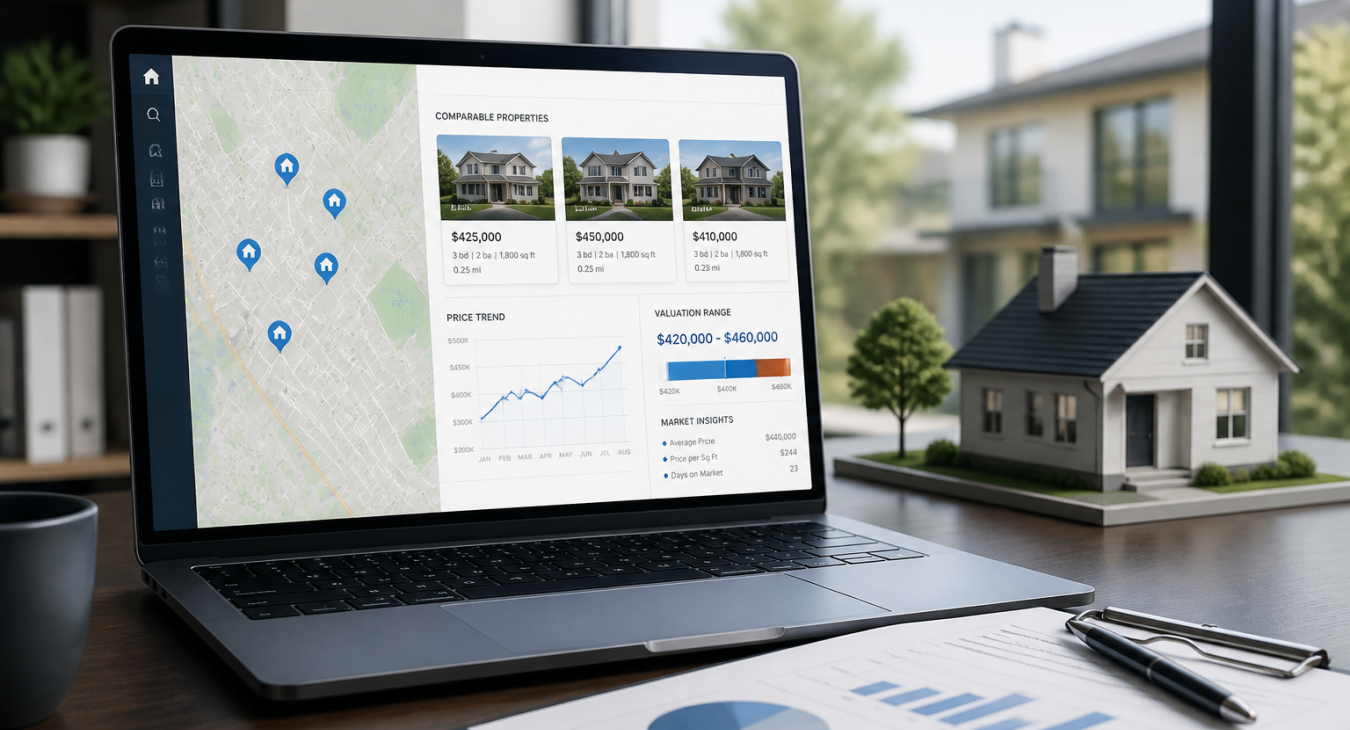
Find the best real estate comps websites to value properties accurately. Compare top tools for appraisers, agents, and investors today.
Products and Tools Mentioned in this Post

Propstream
Detailed information on Propstream. Get How-To's, reviews, Comparisons, and much more.



Table of Contents
- What Are Real Estate Comps and Why Do They Matter?
- Quick Comparison: Best Real Estate Comps Websites
- Best Websites and Tools for Finding Real Estate Comps
- Step-by-Step Guide to Finding Real Estate Comps
- Key Criteria for Selecting Strong Comparable Properties
- How to Compare and Analyze Real Estate Comps
- Who Uses Real Estate Comps and Why
- Common Mistakes When Using Real Estate Comps
- Real Estate Comps vs. Home Appraisals: Key Differences
- Conclusion
- Frequently Asked Questions About Real Estate Comps
You're pricing a listing, making an offer, or running the numbers on a rental deal. In every scenario, one thing matters most: solid comparable sales data. A real estate comps website can literally make or break your deal economics. The market's flooded with options now — free consumer tools, professional MLS platforms, niche investor software. But how do you actually know which one works for your business?
This guide cuts through the noise. We'll show you the best comps platforms out there, what separates strong comparable data from weak noise, and how to analyze it like an institutional investor.

What Are Real Estate Comps and Why Do They Matter?
Real estate comps—short for "comparables"—are recently sold properties that mirror your subject property in size, condition, location, and features. Appraisers, agents, buyers, and investors all lean on comps to nail down fair market value. That's the price a willing buyer would actually pay a willing seller in a real, open market.
Here's the thing: comps aren't optional. Lenders demand them before they'll approve your mortgage. Sellers use them to price competitively. Buyers check them against the asking price to spot overpriced listings. And if you're flipping or running a BRRRR strategy, you're calculating your after-repair value (ARV) from comps. That number drives everything.
A solid set of comps does more than show you today's value. It reveals how your local market's actually moving. And that intel? It's worth real money.
Back to topQuick Comparison: Best Real Estate Comps Websites
Want to know which comp platform actually works for your investing strategy? Here's the breakdown of the most popular tools side-by-side:
| Platform | Data Source | Free Tier | Paid Plans | Ease of Use | Data Accuracy | Best For |
|---|---|---|---|---|---|---|
| MLS (Local Access) | Direct MLS feed | No (agent/broker only) | Varies by board | Moderate | Highest | Agents, brokers |
| Zillow | MLS + public records | Yes | Zillow Premier ($300+/mo) | Very Easy | Moderate | Buyers, sellers |
| Realtor.com | MLS-sourced | Yes | Realtor.com Connections ($200+/mo) | Easy | High | Agents, buyers |
| Redfin | MLS + proprietary | Yes | Redfin Mortgage/Agent services | Very Easy | High | Buyers, data-focused users |
| PropStream | MLS + county records | No | $99/mo | Moderate | High | Investors, wholesalers |
| HomeCoin | MLS access for FSBO | No | From $95 one-time | Easy | High | FSBO sellers |
| Mashvisor | MLS + Airbnb data | Limited | $17.99–$49.99/mo | Easy | Moderate–High | Rental investors |
Best Websites and Tools for Finding Real Estate Comps

1. Local MLS Platforms
Want the most accurate comp data available? Hit your local Multiple Listing Service (MLS). This is where actual sold prices live — along with days on market, price reductions, and property details that consumer sites either miss or report weeks later. But here's the friction: you need a licensed agent or broker membership to access it. No license? Partner with an agent to pull your comps. That's still the most reliable play for serious investors. Agents themselves benefit from platforms like Flexmls, Matrix, or Paragon, which have filtering tools sharp enough to isolate your exact comparables in minutes.
2. Zillow
Zillow gets more traffic than any other real estate site in America. And it's free. The "Recently Sold" filter works well enough for basic comp analysis — you get sale prices, dates, square footage, and photos across a defined radius. The problem? Data lags by 30–60 days sometimes. Your recent close might not show up for two months. There's also the Zestimate — Zillow's automated valuation model runs a median error rate around 2.4% on homes that are actively listed, but that number gets ugly in rural markets or thin inventory areas where the algorithm has less data to chew on.
3. Realtor.com
NAR's data feeds power this platform directly from MLS boards. You get stronger accuracy on recent sales than most competitors, cleaner sold home searches, and solid listing history with price changes. Agents like the neighborhood context and professional tools that integrate with their CRMs. Speaking of workflow — check out our guide to the best CRM for real estate investors if you're tired of juggling spreadsheets and manual entry.
4. Redfin
Redfin's real advantage? Speed and transparency. Most markets show sold prices within hours of closing — that's light-years ahead of Zillow's refresh rate. The "Compete Score" metric tells you demand intensity neighborhood-by-neighborhood, which matters when you're sizing up market conditions. And the comp lookup tool is legitimately clean — filter by beds, baths, square footage, sale date. The CMA generator for agents is sharp enough that buyer's agents actually prefer it. You'll do serious comp work faster here than on most platforms.
5. PropStream
This is where wholesalers and fix-and-flip operators live. At $99/month, PropStream pulls county recorder data, MLS comps, owner equity estimates, and skip tracing into a single dashboard — something consumer sites won't touch. The ARV calculator alone pays for itself on a couple of deals. High-volume acquisitions? This integration saves hours. Want to dig deeper into platforms like this? Our roundup of the best real estate investor websites for 2026 breaks down even more options built specifically for your workflow.
6. Mashvisor
Rental investors should pay attention here. Mashvisor meshes traditional sold comps with short-term rental performance data from Airbnb and VRBO. That dual view is essential if you're evaluating properties in vacation markets or hybrid neighborhoods where STR upside matters. At $17.99/month, it's worth testing. Looking for something more automated? Check out our AI tools for real estate investors — some of those platforms can handle comp searches and market analysis on autopilot.
Back to topStep-by-Step Guide to Finding Real Estate Comps

Picking the right platform is just the start. What separates successful investors from the rest is how systematically they pull comps. Here's the process that works regardless of which tool you're using:
- Document your subject property's specs: Write down beds, baths, total square footage, lot size, year built, garage spaces, and anything you've updated recently. Don't skip this step—you need a clear baseline.
- Set your search radius: In urban areas, start within 0.5 miles. Suburban or rural markets? Expand to 1–3 miles as needed. And be honest about distance—location matters to buyers.
- Filter by sale date: The last 3–6 months is your sweet spot for most markets. But in hot appreciating or declining markets, tighten that window to 90 days. Stale data kills your ARV calculations.
- Match key specs: Hunt for properties within 10–15% of your subject's square footage, same bedroom count, and comparable baths. This isn't guesswork—it's the foundation of your analysis.
- Review condition and updates: A newly renovated comp and a dated property aren't the same deal, even if they sold for similar prices. Document these differences. You'll need them for adjustments.
- Calculate price per square foot: PPSF tells you everything. Divide sale price by gross living area, then compare across all your comps. Outliers pop immediately.
- Select 3–5 best comps: Quality beats quantity. Three rock-solid comps will give you better insight into market value than ten mediocre ones ever will.
Key Criteria for Selecting Strong Comparable Properties

Here's the truth: not every recently sold home works as a comp. You need to run each candidate through this checklist before you build your analysis on it.
| Criteria | Acceptable Range | Notes |
|---|---|---|
| Location | Same ZIP code or subdivision | Cross major highways or school district lines cautiously |
| Sale Date | Within 3–6 months | Tighten to 90 days in volatile markets |
| Square Footage | Within 10–15% | Use price/sqft to normalize |
| Bedrooms | Same count preferred | ±1 bedroom acceptable with adjustments |
| Bathrooms | Same or adjacent | Half baths affect value less than full baths |
| Year Built | Within 10–15 years | Construction era affects systems, insulation, style |
| Property Condition | Similar upgrade level | Document specific differences for adjustment |
| Lot Size | Within 20% for suburban | More critical in rural markets |
Here's where most investors stumble: confusing listed properties with sold properties. Active listings? That's just seller wishful thinking. Only closed sales matter — they're what actual buyers paid actual money for. Your whole analysis lives or dies on sold data.
Back to topHow to Compare and Analyze Real Estate Comps
Once you've nailed down your comps, the analysis is where real money gets made. Let me walk you through it.
Price Per Square Foot
Start simple: divide the sold price by gross living area. You'll eliminate the noise that square footage creates. Say your three comps hit $185, $191, and $189 per square foot. Your subject property at 1,800 sq ft? You're looking at roughly $338,400–$343,800. That's your normalized baseline, and it's way more reliable than staring at raw sale prices.
Adjusting for Differences
No two deals are the same. Appraisers know this — they make line-item adjustments for every difference between your comps and the subject property. Want to know what those adjustments actually look like?
| Difference Factor | Typical Adjustment | Direction |
|---|---|---|
| Updated kitchen (full remodel) | $10,000–$25,000 | Add to subject if comp lacks upgrade |
| Garage (per space) | $5,000–$15,000 | Add/subtract based on presence |
| Pool | $10,000–$40,000 | Varies significantly by market/climate |
| Condition (excellent vs. fair) | 3–8% of value | Adjust down for inferior condition |
| Extra bedroom | $5,000–$20,000 | Depends on market and size |
| Lot size premium (per 1,000 sq ft) | $1,000–$5,000 | Market-dependent |
| View (premium view lot) | 5–15% of value | Add for subject if comp lacks view |
Once you've made your adjustments, calculate a weighted average of those adjusted comp values. Weight the closest and most recent comparables heavier — they matter more. This gives you a solid, defensible estimate whether you're pricing a listing, throwing in an offer, or underwriting a BRRRR deal.
Back to topWho Uses Real Estate Comps and Why

Everyone in real estate uses comps. But they're using them for very different reasons.
- Home sellers: Want to hit the sweet spot—price high enough to maximize profit, but low enough that buyers actually bite. Comps tell you exactly where that line is.
- Home buyers: Check comps to catch overpriced listings and build a defensible offer. You can't negotiate if the numbers aren't on your side.
- Real estate agents: Build CMAs with comps, use them in listing presentations, and back up buyer recommendations with hard data. Honestly? Comp analysis skills separate agents who close deals from those who don't. Layer in the right real estate marketing tools and you'll win more listings.
- Appraisers: The sales comparison approach—one of three standard appraisal methods lenders require—lives and dies by comps. It's their primary tool.
- Investors and wholesalers: Need comps to calculate ARV. And ARV drives everything: what you pay, what you spend on rehab, what you actually pocket at the end. For BRRRR investors especially, this is make-or-break work when you're evaluating markets and individual deals.
- Lenders: They won't fund a deal without appraisal comps proving the property's worth justifies the loan amount. Period.
Common Mistakes When Using Real Estate Comps

Even seasoned investors and agents slip up here. And you probably have too.
- Using stale data: Pull comps from more than 12 months back and you're working with fiction in a shifting market. Your best window? Three to six months of closed sales. Go further back only if inventory's that tight.
- Crossing neighborhood boundaries: That sale three blocks over might as well be a different city if it's across a major highway or in another school district. Value profiles change fast.
- Cherry-picking comps: You know this one. Pick only the highest sales to justify your target price, and you'll end up with overpriced listings or worse — a bad acquisition. Don't do it.
- Ignoring condition differences: A fully gutted and renovated comp isn't the same as a dated property with identical square footage. Skip the condition adjustment and you've already blown your analysis. This mistake tanks more valuations than anything else.
- Relying on a single platform: One site never has the full picture. Cross-reference at least two sources—especially when the deal's large or the market's dry. It takes five minutes and saves you thousands.
- Confusing list price with sold price: List prices are wishes. Closed sales are data. Always use what actually sold.
Real Estate Comps vs. Home Appraisals: Key Differences

DIY comp research and a licensed appraisal aren't the same thing — not even close. Let's break down what separates them.
A DIY comp analysis is what it sounds like: you dig through publicly available or subscription data and build your own valuation estimate. It's fast. It's free or cheap. You get a working range for your ARV calculations. But here's the catch — it carries zero legal weight and it can totally miss the nuances that move the needle on value.
A licensed appraisal is a different animal entirely. A certified appraiser shows up, walks the property, follows USPAP (Uniform Standards of Professional Appraisal Practice) to the letter, hand-picks comparable sales with documented adjustments, and delivers a signed report that banks actually accept. You're looking at $300–$600 for residential work. And lenders won't fund without it.
Here's the real talk: for most purchase and sale decisions, a solid DIY comp analysis gets the job done. Investors run numbers on dozens of deals this way every week. But the moment financing enters the picture — or you're fighting a tax assessment, or the deal involves mixed-use space or rural acreage — you need that certified appraisal. Non-negotiable. If you're managing complex multi-property portfolios, pairing your valuation work with real estate accounting software keeps everything aligned and audit-ready.
Back to topConclusion
Finding accurate property values isn't guesswork — it's a disciplined process anchored in quality comparable sales data. Here's what matters: Redfin and Realtor.com are your best free options for fast comp research. PropStream and Mashvisor? They're built for serious investors who need real depth. And if you've got MLS access as a licensed pro, that's still the gold standard.
The checklist is simple. Pull your comps. Make honest adjustments. Cross-reference at least two platforms. Focus on sold data, not active listings.
But here's the real truth: disciplined comp research is what separates confident underwriting decisions from expensive mistakes. Whether you're underwriting your next flip, pricing a listing, or making a competitive offer, this process is non-negotiable.
Looking to build out your full real estate investing toolkit? Explore our guides to the best real estate investor CRMs and best lead generation platforms to round out your strategy.
Back to topFrequently Asked Questions About Real Estate Comps
What's the best source for real estate comps?
The MLS is your gold standard — but you need agent access. If you're flying solo, Redfin and Realtor.com pull straight from MLS data and won't cost you a dime. And here's the thing: if you're analyzing deals at scale, PropStream ($99/month) combines MLS with public records in one dashboard. That's what serious investors use.
How far back should you look at comparable sales?
Three to six months works in normal markets. But in fast-moving or declining markets? Tighten it to 60–90 days. You can't use a comp from Q2 when you're pricing in Q4 — the numbers just won't hold.
Rural areas are different. Low-turnover neighborhoods might force you back 12 months. When you do that, disclose it. Note whether the market's trending up or down.
How many comps do you need for an accurate analysis?
Three to five solid comps. That's the sweet spot.
Here's what kills analysis: ten mediocre comps with huge variance. You'll get worse results than three excellent ones that are truly comparable. Appraisers require a minimum of three for standard residential reports, and they're right. Quality beats quantity every time — recency and proximity matter way more than hitting some magic number.
Can comps be used across different neighborhoods?
Same neighborhood or subdivision. That's ideal. Cross a school district boundary or a major highway? You've introduced value distortion that's hard to quantify.
If you absolutely have to pull from adjacent areas, document it. Show that the housing stock, amenities, and market conditions actually match. And be conservative — don't squeeze the last dollar out of your estimate.
How do market conditions affect comp analysis?
This is where comp analysis gets real. Market conditions aren't background noise — they're everything.
In a rising market, older comps understate value. You're looking at a 0.5–1.5% monthly appreciation adjustment. Flip that in a cooling market: recent comps might actually overstate where value's headed. Inventory levels, average days on market, list-to-sale ratios — these tell you which direction the market's moving and how much weight to give each comp.
Back to top