


In today's competitive real estate market, single-family home investment strategies present a lucrative option for investors seeking to diversify their portfolios and maximize returns.
Table of Contents
- The five single-family strategies and how each makes money
- Single-family or small multifamily: the real trade-offs
- How to analyze a single-family house as a rental
- Financing options for single-family investments
- How to pick your first single-family strategy
- Common mistakes
- Where to go next
- All our single-family investing articles
- Frequently asked questions
Single-family rental investing means buying detached houses (and sometimes townhomes or condos) and making money from them through rent, resale, or both. This guide covers the five main ways investors do that: buy and hold, BRRRR, house hacking, flipping and wholetailing. It explains how each one makes money, what it demands from you, and how to run the numbers on a house as a rental before you make an offer.
By the end you should be able to compare the strategies side by side and analyze a listing with a realistic expense budget. You should also know which loan types fit which plan, and be able to pick a first strategy that matches your cash, time and tolerance for risk.
Single-family homes tend to fit people who want an asset they understand, a large pool of future buyers, and financing that is relatively easy to get. They fit less well if you need high cash flow right away or want to manage many units under one roof.
Back to topThe five single-family strategies and how each makes money
Every single-family strategy earns money in some mix of these ways:

- Monthly cash flow from rent.
- Loan paydown funded by the tenant.
- Appreciation, either from the market or forced through renovation.
- A one-time profit on resale.
The strategies differ in which of those they lean on, how much cash and work they need, and what can go wrong.
Buy and hold
You buy a house that is already rentable, or close to it, place a tenant on a lease of a year or more, and keep it for many years. Returns come from modest cash flow, principal paydown and long-run appreciation. Possible tax advantages such as depreciation can add to that; your CPA can confirm how they apply to you.
Buy and hold is the slowest strategy and the most forgiving. A mediocre purchase can still work out over a long holding period, as long as the property covers its costs and you keep reserves. The work is ongoing rather than intense: screening tenants, handling repairs, renewing leases, and occasionally dealing with a turnover or a nonpaying tenant. The long-term rental investing guide covers leases, screening and management in depth.
Fits: people with a stable income, enough cash for a down payment plus reserves, and a time horizon measured in years. It also suits people who prefer steady over fast.
BRRRR (buy, rehab, rent, refinance, repeat)
You buy a house that needs work, usually with cash or short-term financing. You renovate it, rent it out, then refinance into a long-term loan based on the new, higher appraised value. If the numbers work, the refinance returns much of the cash you put in, and you reuse it on the next house.
The strategy depends on three things going right:
- Buying well below after-repair value.
- Controlling the rehab budget.
- An appraisal that comes in where you projected.
Lenders typically cap a cash-out refinance on an investment property at a percentage of appraised value. Many also have seasoning rules about how long you must own the property before they use the new value. Both vary by lender and loan program, so confirm them before you buy, not after the rehab. Read the full BRRRR investing guide for the step-by-step process, and model each deal with the BRRRR calculator to see how much cash stays in the deal after the refinance.
Fits: people with access to rehab capital, reliable contractors or construction knowledge, and the patience to manage a project before the property earns anything.
House hacking
You buy a home to live in and rent out part of it. Usually that means extra bedrooms, a basement suite or an accessory dwelling unit (ADU). The rent offsets your housing cost. Because you occupy the property, you can often use owner-occupant financing, which typically allows smaller down payments than investment loans.
With a single-family house, the common versions are renting bedrooms to roommates or renting a finished basement or ADU. Some investors live in the house for a year or more, then move out and keep it as a full rental. Owner-occupant loans usually require you to intend to live there for a set period, often at least a year. Confirm the exact terms with your lender.
Whether you can legally rent a basement or ADU depends on local zoning, permits and safety codes, such as egress windows and smoke detectors. Check with your city or county planning office before counting on that income. For the basics, start with house hacking explained.
Fits: first-time buyers with limited cash who are willing to share their living space or live in a property they might not pick purely as a home.
Fix and flip
You buy a distressed house below market, renovate it, and sell it to an owner-occupant at full retail price. Profit is the sale price minus purchase price, rehab, holding costs (interest, taxes, insurance, utilities) and selling costs (commissions, closing costs, concessions).
Flipping produces no ongoing income. It is a job paid in lump sums. The risks are concentrated:
- Rehab overruns.
- Delays that pile up holding costs.
- A softening market that lowers the sale price after you have committed.
Many flippers screen deals with the 70% rule: maximum offer equals after-repair value times 70%, minus repair costs. You can run that with the 70 percent rule calculator and then do a full profit estimate in the fix and flip calculator. The fix-and-flip guide walks through scoping, budgeting and selling.
Flip profits may be taxed differently from long-term rental gains, sometimes as ordinary income. Ask a CPA how your activity would be treated.
Fits: people with construction or project-management skills, cash or credit for short-term loans, and the stomach for a deal that can lose money.
Wholetailing
Wholetailing sits between wholesaling and flipping. You buy a house below market, do light work such as cleaning, debris removal, paint, minor repairs or yard cleanup, and resell it quickly. Usually you list it on the open market so both owner-occupants and investors can bid.
The margin is usually smaller than a full flip, but so are the rehab risk and the holding time. It works best on houses whose sellers want speed and convenience more than top dollar, such as inherited properties or homes full of belongings. The wholetailing guide covers how to find and price these deals.
Fits: people who can find off-market sellers and want to learn deal analysis without taking on a full renovation.
Strategy comparison at a glance
| Strategy | Main way it earns | Cash needed | Time and skill | Biggest risk |
|---|---|---|---|---|
| Buy and hold | Cash flow, loan paydown, appreciation | Down payment, closing costs, reserves | Low to moderate, ongoing | Thin or negative cash flow, big repairs |
| BRRRR | Forced appreciation, then rental income | Purchase plus rehab (often temporarily) | High during rehab, then moderate | Rehab overruns, low appraisal at refinance |
| House hacking | Reduced personal housing cost | Often the lowest of the five | Moderate, and you live with it | Roommate or tenant problems, zoning limits |
| Fix and flip | One-time resale profit | Purchase plus rehab plus holding costs | High, project-based | Overruns, delays, falling sale prices |
| Wholetail | Smaller resale profit, quick turnaround | Purchase plus light work | Moderate, sourcing-heavy | Overpaying, slow sale |
Single-family or small multifamily: the real trade-offs
Many investors weigh a single-family house against a duplex, triplex or fourplex. Neither is better in general. They solve different problems.
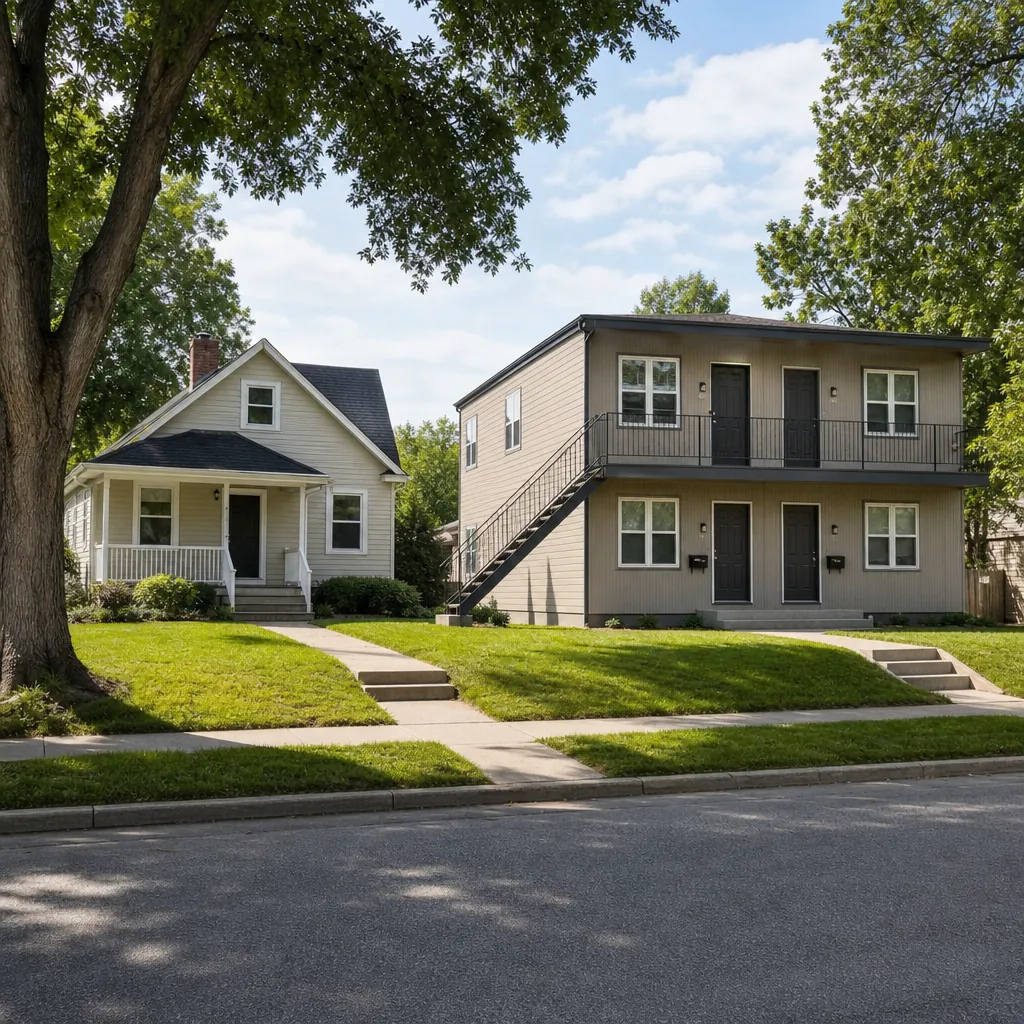
Where single-family has the edge
- Two buyer pools at exit. You can sell to owner-occupants as well as investors. Pricing is based on comparable home sales, which most buyers and appraisers understand easily.
- Simpler financing. Standard residential loans are widely available. Appraisals rely on recent comparable sales rather than income alone.
- Tenant profile. Families renting a house often stay for longer leases, and leases can assign lawn care or minor upkeep to them. Turnover is less frequent but still happens.
- Easier to understand. One roof, one system set, one tenant relationship. That makes a good training ground.
Where small multifamily has the edge
- Vacancy is spread out. A single-family rental is either 100% occupied or 0%. With four units, one vacancy still leaves three paying.
- Lower cost per unit. One roof and one lot serve several rent checks, which often helps cash flow.
- House hacking with residential financing. Owner-occupant loans generally allow up to four units, so you can live in one unit and rent the others. See house hacking with FHA loans for how that works.
The practical test: if a local single-family house cannot come close to covering its costs at your expected financing terms, look at small multifamily in the same area. The small multifamily investing guide explains how to analyze 2-4 unit properties.
Back to topHow to analyze a single-family house as a rental
The analysis is the same whether you plan buy and hold, BRRRR or a house hack you will later rent out. The goal is to estimate what the house will really earn after every expense, not what the listing says it earns.
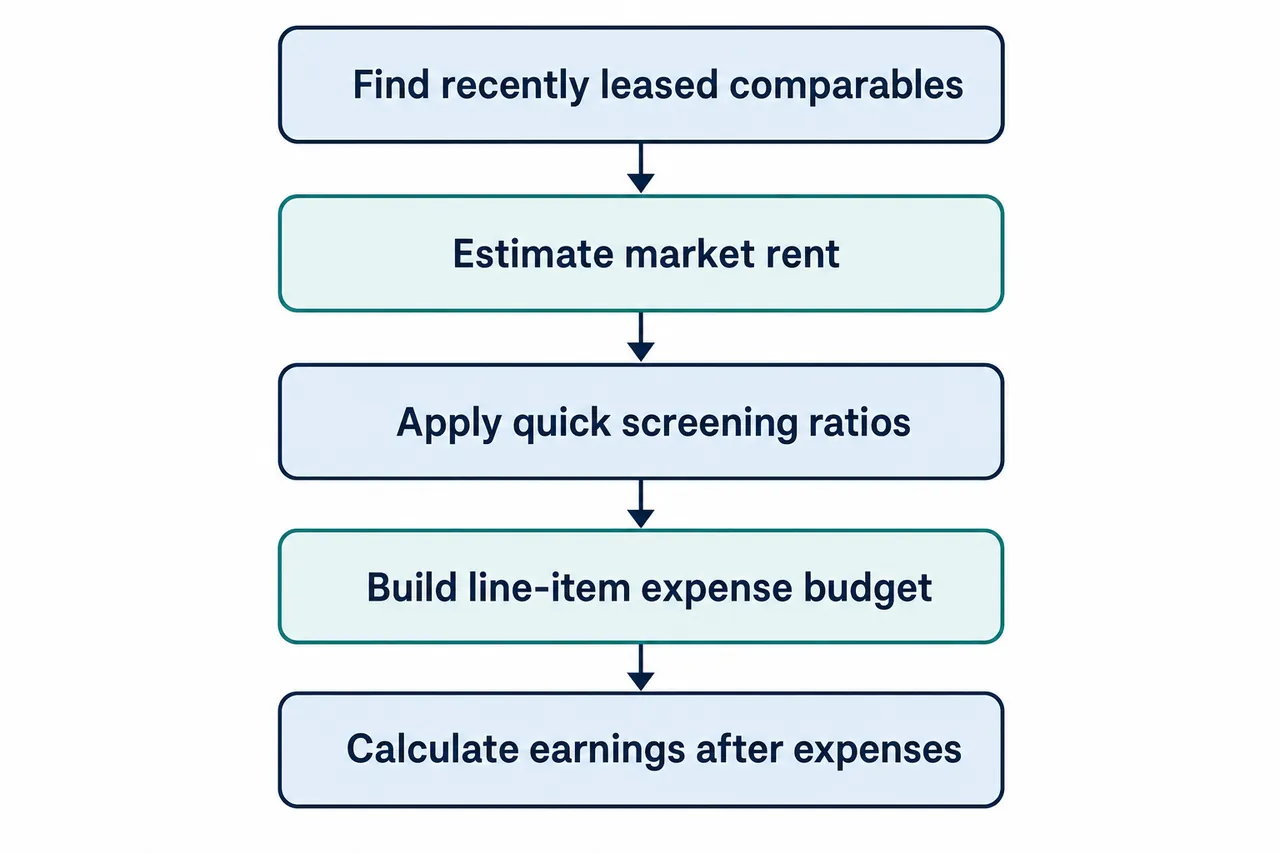
Step 1: Estimate market rent from real comparables
Find three to five rentals of similar size, bedroom count, condition and location that have actually leased recently. Asking rents on listings that have sat for weeks run high. Local property managers will often tell you what a house would rent for, and their estimates are grounded in what they lease. Never use the seller's projected rent without checking it.
Step 2: Use quick screens to filter, not to decide
Quick ratios help you decide which listings deserve a full analysis:
- Rent-to-price ratio: monthly rent divided by price. The "1% rule" (monthly rent at least 1% of price) is a rough filter. Many markets fall well below it, and passing it does not guarantee cash flow.
- Gross rent multiplier: price divided by annual gross rent. Lower is better, and it is most useful for comparing houses in the same area. Try the gross rent multiplier calculator.
- The 50% guideline: operating expenses, not counting the mortgage, often run somewhere near half of gross rent over time. Treat it as a sanity check against your own line-item budget.
Step 3: Build a line-item expense budget
This is where most new investors go wrong. Include every item below, even if you plan to self-manage or the house looks new:
- Vacancy: a percentage of rent for turnover gaps, often 5% to 8%, depending on local demand.
- Repairs and maintenance: routine fixes such as leaks, appliance service and pest control.
- Capital expenditures (CapEx): money set aside monthly for roof, HVAC, water heater, flooring and exterior paint. These big items do come due.
- Property management: even if you self-manage, budget for it, because your time has value and you may hire a manager later.
- Property taxes: get the actual figure from the county. Check whether it will be reassessed after sale and whether the current amount includes a homestead exemption you will lose.
- Insurance: get a landlord (dwelling) policy quote, not a homeowner's estimate.
- HOA dues, utilities you pay, lawn care, and leasing or legal costs where they apply.
Step 4: Calculate NOI, cap rate, cash flow, cash-on-cash and DSCR
- Net operating income (NOI) = gross rent minus operating expenses, before the mortgage.
- Cap rate = annual NOI divided by price. It measures the property's return as if you paid cash. Check it with the cap rate calculator.
- Cash flow = NOI minus debt service (principal and interest).
- Cash-on-cash return = annual cash flow divided by total cash you invested (down payment, closing costs, initial repairs). Use the cash-on-cash return calculator.
- Debt service coverage ratio (DSCR) = NOI divided by debt service. Many investment lenders look at this, and minimum requirements vary. Test it with the DSCR calculator.
The rental property calculator runs all of these at once, which is the fastest way to test several scenarios.
Example deal (illustrative numbers)
A three-bedroom, two-bath house in a typical US suburb is listed at $200,000. Recently leased comparables suggest $2,000 per month in rent. The buyer plans an investment loan with 25% down at an example rate of 7% on a 30-year term. That rate is chosen for illustration only; check current rates with a lender. Closing costs are estimated at $5,000 and make-ready work (paint, small repairs) at $3,000.
| Line item | Monthly | Annual | Basis |
|---|---|---|---|
| Gross rent | $2,000 | $24,000 | Leased comparables |
| Vacancy | $100 | $1,200 | 5% of rent |
| Repairs and maintenance | $160 | $1,920 | 8% of rent |
| CapEx reserve | $160 | $1,920 | 8% of rent |
| Property management | $180 | $2,160 | 9% of rent |
| Property taxes | $217 | $2,600 | County records |
| Landlord insurance | $120 | $1,440 | Quote |
| Miscellaneous (lawn, leasing) | $25 | $300 | Estimate |
| Total operating expenses | $962 | $11,540 | About 48% of rent |
| Net operating income | $1,038 | $12,460 | Rent minus expenses |
| Mortgage (P&I on $150,000) | $998 | $11,976 | 7%, 30 years |
| Cash flow | $40 | $484 | NOI minus debt |
Now the ratios:
- Cash invested: $50,000 down + $5,000 closing + $3,000 make-ready = $58,000.
- Cap rate: $12,460 ÷ $200,000 = about 6.2%.
- Cash-on-cash return: $484 ÷ $58,000 = about 0.8%.
- DSCR: $1,038 ÷ $998 = about 1.04.
- Gross rent multiplier: $200,000 ÷ $24,000 = about 8.3.
- Principal paydown in year one: roughly $1,500. This is real equity, but you cannot spend it.
This house passes the 1% screen, yet with a manager and full reserves it barely breaks even. That is a normal result, and it is why the quick screens are only filters. The investor has a few honest options:
- Self-manage. Removing the $180 management line raises NOI to $1,218 per month. Cash flow becomes $220 per month ($2,640 per year), cash-on-cash rises to about 4.6%, and DSCR to about 1.22. The trade-off is your time and your exposure to tenant issues.
- Negotiate the price. Every dollar off the price lowers both the loan and the cash needed.
- Accept thin cash flow on purpose. Some investors do this in a strong-demand area, betting on rent growth, appreciation and paydown. That only makes sense with healthy reserves and a stable income to cover surprises.
- Walk away. This is often the right answer.
Notice what is not on the list: trimming the vacancy or CapEx lines until the numbers look better. Those costs arrive whether or not you budget for them.
Step 5: Inspect and verify before you commit
Get a full inspection, and add specialist inspections where the house calls for them: sewer scope, roof, foundation, HVAC. Confirm taxes, insurability, any HOA rules on renting, and local rental registration or licensing requirements. Then rerun your numbers with what you learned. Landlord-tenant law varies widely by state and city, covering deposits, notice periods, evictions and rent limits. Read your local rules or ask a real estate attorney before you buy, not after your first problem tenant.
Back to topFinancing options for single-family investments
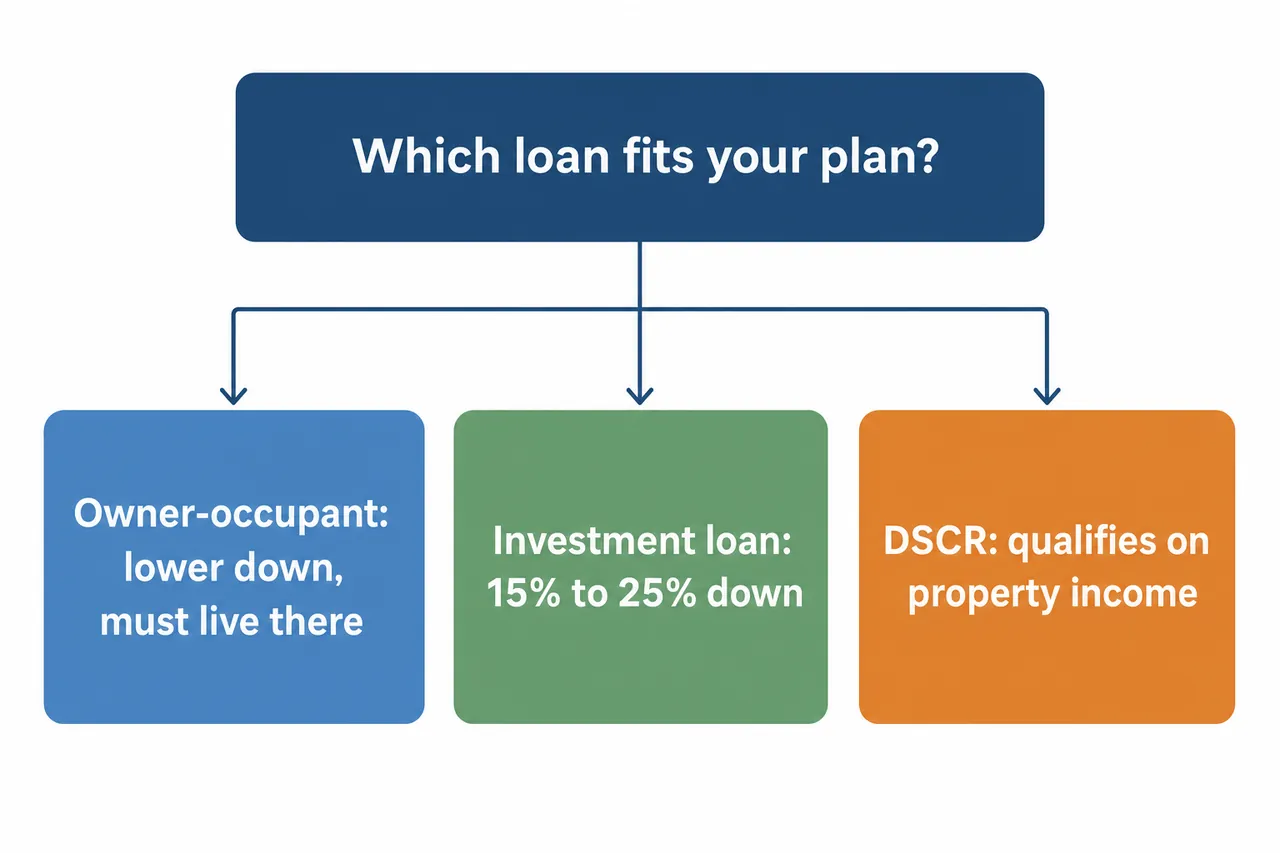
The loan you can get shapes which strategy is realistic. Terms, down payments and qualification rules vary by lender and change over time, so treat the descriptions below as general mechanics. Get current terms from at least two or three lenders.
Owner-occupant loans (FHA, VA, conventional)
These are for homes you will live in, which makes them the house-hacking tool. They generally offer lower down payments and better terms than investment loans in exchange for an occupancy commitment. VA loans are available to eligible service members and veterans. Misrepresenting occupancy is mortgage fraud, so only use these loans when you genuinely intend to live in the property.
Conventional investment loans
These are standard 15- or 30-year mortgages for non-owner-occupied property. They typically require a larger down payment than owner-occupant loans, often in the range of 15% to 25%, along with cash reserves, and the rates are usually somewhat higher. Lenders limit how many financed properties one borrower can hold under these programs, so ask about the cap early if you plan to grow.
DSCR loans
DSCR loans qualify mainly on the property's income relative to its debt rather than on your personal income. They are useful for self-employed investors or people who have hit conventional limits. Rates and fees tend to be higher than conventional loans, and each lender sets its own minimum DSCR, down payment and prepayment terms.
Hard money and private loans
These are short-term, asset-based loans used for flips, BRRRR purchases and properties that will not qualify for conventional financing in their current condition. They fund quickly but cost more in interest and points. Plan your exit, whether a sale or a refinance, before you borrow, and build in time for delays. Private loans from individuals can be flexible, but put every term in writing with an attorney involved.
Home equity (HELOC or home equity loan)
Borrowing against your own home can fund a down payment or a rehab. The risk is that your residence secures the debt, so a deal gone wrong can threaten your home. Use it only when the property's numbers stand on their own. Have a clear payoff plan, such as a BRRRR refinance or a sale.
Seller financing
Some owners, often those with paid-off houses, will carry the loan themselves. That can mean a lower down payment, flexible terms or a faster close. Watch for balloon payments that force a refinance at a bad time. Model the payment and balloon with the seller financing calculator, and have a real estate attorney draft or review the documents, since requirements vary by state.
Cash
Paying cash wins negotiations and removes payment risk, but it ties up capital and lowers your return on each dollar compared with sensible leverage. Many BRRRR investors buy with cash and refinance later.
Back to topHow to pick your first single-family strategy
Work through these questions in order. Be honest, because the wrong match is the most common reason a first deal goes badly.
- How much cash can you put in and still keep reserves? If the answer is "a few percent of a home price," house hacking with owner-occupant financing is usually the realistic entry. If you can cover a 20% to 25% down payment, closing costs and several months of expenses in reserve, buy and hold is open to you. Flipping and BRRRR typically need more, or access to short-term lenders.
- Are you willing to live in the property? If yes, house hacking can lower your housing cost while you learn landlording. If no, take it off the list.
- How many hours per week can you give, and do you understand construction? Flipping and BRRRR reward people who can scope a rehab and manage contractors. Without that skill, start with a rent-ready buy and hold or a light wholetail.
- Do you need income now or wealth later? Flips and wholetails produce lump sums, which are taxable and not recurring. Rentals build slowly. Do not expect a single rental to replace a paycheck.
- What can you afford to lose? A rental that runs slightly negative for a year is survivable with reserves. A flip that goes 30% over budget during a slow market can wipe out the capital you had saved.
- What does your local market reward? In areas where prices are high relative to rents, rentals struggle to cash flow, so house hacking and value-add strategies may fit better. In areas with more affordable prices relative to rents, plain buy and hold is often viable.
A common path is to house hack first, then buy and hold, then add BRRRR once you have reserves and a reliable contractor. That is not the only path. If you are torn between the first two, the comparison of BRRRR vs house hacking lays out the decision in more detail.
Set written buy criteria
Before you look at listings, write down your target area, price range, property type, minimum bedrooms, maximum rehab, and the minimum DSCR or cash flow you will accept after a full expense budget. Clear criteria let you say no quickly and make offers with confidence. When good listings are scarce, many investors turn to off-market sourcing. The guide to finding motivated sellers covers direct mail, driving for dollars and other channels.
Build your team early
Line up these people before your first offer, not during escrow:
- A lender who understands investors.
- An agent who can pull rental and sales comparables.
- An inspector.
- A general contractor or handyman.
- An insurance agent.
- A CPA.
- A real estate attorney.
Common mistakes
- Trusting the listing's rent or expense figures. Verify rent with leased comparables, and get real tax and insurance numbers.
- Leaving out CapEx and vacancy. A house that "cash flows" without these lines often loses money once a roof or furnace fails.
- Running out of reserves. One turnover, one major repair and one late-paying tenant can arrive in the same quarter. Keep a cash cushion for each property; how much depends on the age and condition of the house.
- Assuming the BRRRR appraisal. If the refinance comes in low, more of your cash stays stuck in the deal. Underwrite conservatively and confirm lender rules first.
- Over-renovating a rental. Durable, mid-grade finishes usually serve tenants and budgets better than high-end ones a rental buyer will not pay extra for.
- Flipping on thin margins. Small cushions disappear quickly with holding costs, selling costs and surprises behind the walls.
- Ignoring local rules. Rental licensing, ADU permits, HOA rental bans, short-term rental restrictions and tenant protections vary by location. Check them before closing.
- Weak tenant screening. Apply written criteria consistently and follow fair housing law. One bad placement can cost more than a year of cash flow.
- Treating taxes as an afterthought. Depreciation, depreciation recapture, capital gains and 1031 exchanges all affect your real return. Talk to a CPA before you buy and before you sell.
Where to go next
- Learn rental operations in the long-term rental investing guide, then compare a different rental model in the short-term rental investing guide. Check local regulations before buying for short-term use.
- If you are weighing a live-in start, read house hacking pros and cons.
- Planning to sell a rental later and buy another? Estimate deferred gain and deadlines with the 1031 exchange calculator, then confirm the details with a CPA or qualified intermediary.
Back to top
Back to top
All our single-family investing articles
Single-family investing articles on KDS Development, grouped so you can go deeper on any part of this guide. Newest first.
Guides and how-tos
- How to House Hack: Complete Strategy for Free/Cheap Housing + Income
- House Hacking Meaning: Definition, Strategies & How to Get Started
- House Hacking With Family: Strategy Guide and Pitfalls to Avoid
- Multifamily Investing: How to Analyze, Finance and Scale
- Small Multifamily Investing: Buying 2-4 Unit Properties
Explainers
- House Hacking Reddit: Real Stories, Strategies & Lessons Learned
- House Hacking With a VA Loan: Strategy, Eligibility & Execution
- House Hacking Calculator: Estimate Savings & ROI for Your Strategy
- House Hacking a Duplex: Complete Strategy & Financial Breakdown
- Best House Hacking Books: Top Reads for Strategic Property Living
- House Hacking Pros and Cons: Is This Strategy Right for You?
- House Hacking as a Business: Scale from One Property to a Portfolio
- House Hacking Explained: Live Free While Building Your Real Estate Portfolio
- House Hacking Tips: Maximize Returns on Your Primary Residence
- House Hacking with FHA Loans: Strategy to Buy & Live in Multifamily
- House Hacking: 14 Proven Strategies to Get Free or Cheap Housing
- House Hacking With Friends: Risks, Benefits & Legal Setup
Comparisons
News and courses
- Best House Hacking Courses: Learn the Strategy from Experts
- House Hacking 2025: Updated Strategies for Maximum Wealth Building
Calculators
Frequently asked questions
Is single-family rental investing still worth it with higher interest rates?
It can be, but the margin for error is smaller. Higher rates raise the mortgage payment, so many houses that once cash flowed now break even or lose money with a full expense budget. Run each deal at the rate you can actually get. Keep strong reserves, and consider house hacking, value-add purchases or seller financing to improve the numbers.
How much money do I need to buy my first single-family rental?
Plan for the down payment, closing costs, any repairs needed before renting, and a reserve fund. Investment loans often require a larger down payment than owner-occupant loans, while house hacking with owner-occupant financing can require much less. A lender can tell you the exact cash needed for your situation and loan type.
Should I manage the property myself or hire a property manager?
Self-managing saves the management fee and teaches you the business, but it takes time and requires knowing local landlord-tenant law. A manager makes sense if you live far away, have limited time, or own several properties. Either way, budget for management in your analysis so the deal still works if you hire help later.
What is a good cash-on-cash return for a single-family rental?
There is no universal target. It depends on your goals, your market and how much you count appreciation and loan paydown. Compare a deal's cash-on-cash return with what your money could earn elsewhere at similar risk. Never inflate it by leaving out vacancy, repairs or CapEx.
Can I turn my current home into a rental when I move?
Often yes. Check your mortgage terms for occupancy requirements, switch to a landlord insurance policy, confirm local rental licensing rules, and run the numbers as if you were buying the house today. Ask a CPA how converting a primary residence affects depreciation and any future capital gains exclusion.
Back to top