


Are you looking to diversify your investment portfolio and generate passive income?
Table of Contents
- What counts as multifamily, and the size tiers that matter
- Is multifamily the right fit for you?
- How to analyze a multifamily deal
- Example deal (illustrative numbers): a 12-unit building
- Financing: residential vs. commercial loans
- Due diligence before you close
- Operating and managing the property
- How to scale from one building to several
- Common mistakes
- Where to go next
- All our multifamily articles
- Frequently asked questions
Multifamily investing means owning residential buildings with more than one rental unit. That covers everything from a duplex to a 200-unit apartment community. This guide covers how to tell a good building from a weak one using NOI, cap rate, DSCR and cash-on-cash return, and it walks through one complete deal with the math shown. It also explains how financing changes once a building crosses from four units to five, how to run the property after closing, and the realistic ways investors grow from one building to several.
The strategy suits people who want income from rents more than quick profits, who are comfortable with leverage, and who are willing to treat a building as a small business. That business has a budget, staff or vendors, legal obligations and records. It suits patient investors better than people looking for a fast exit.
If you are focused on duplexes, triplexes and fourplexes, especially living in one unit, read the small multifamily investing guide alongside this one. Here the emphasis is on the jump to five units and up, where the analysis and the loans work differently.
Back to topWhat counts as multifamily, and the size tiers that matter
A multifamily property has two or more separate dwelling units, each with its own kitchen, bathroom and entrance. The unit count matters a lot, because it changes how the building is financed, valued and managed.
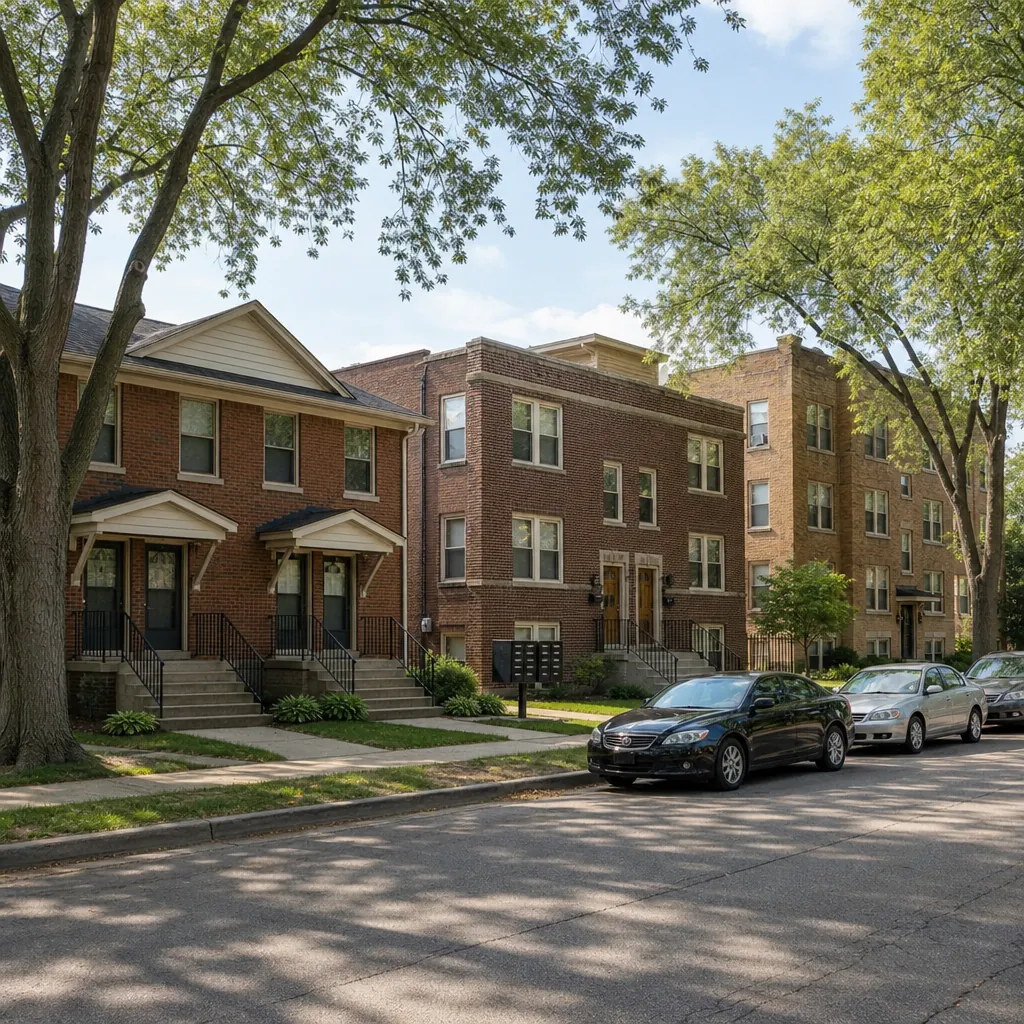
- 2-4 units (small multifamily): Duplexes, triplexes and fourplexes. Lenders treat them as residential property, so you can use residential mortgages, including owner-occupant programs. Value is still partly driven by comparable sales, like a house.
- 5-20 units (small apartment buildings): These are commercial loans and commercial valuation. Value is driven mainly by net operating income. Many owners still self-manage at the low end. Most use a manager or part-time staff by the high end.
- 20-100 units (mid-size): These buildings usually need professional management, on-site or visiting maintenance, and more formal budgeting. Agency and larger bank loans become options.
- 100+ units (large communities): These are usually bought by partnerships, syndications or funds. They often come with full-time staff, amenities and institutional-style reporting.
Some specialized formats also sit under the multifamily umbrella:
- Mixed-use buildings: Apartments over retail or office space. The commercial tenants bring different lease terms, vacancy risk and lending rules.
- Co-living and rent-by-the-room setups: These can produce more rent per square foot, but they bring more turnover and more management. Zoning and occupancy limits vary by city. See the co-living investment strategy guide for the details.
- Senior housing: Age-restricted independent living is close to ordinary apartments. Assisted living is closer to an operating healthcare business, with licensing that varies by state.
Is multifamily the right fit for you?
The case for multifamily is real, but the old "lower risk, passive income" pitch skips the trade-offs. Here is a more honest version.
What works in your favor
- Vacancy is spread out. One empty unit in a 12-unit building costs a fraction of the income. In a single-family rental, one vacancy means no rent at all.
- Some costs are shared. There is one roof, one insurance policy, one tax bill and one trip for the maintenance tech. Per-unit costs often drop as unit count rises, though not every expense scales down.
- You can raise the value yourself. Buildings of five or more units are valued mostly on income. Raising rents or cutting expenses raises the value, independent of what the house down the street sold for.
- Growth is more efficient. Buying 12 units in one transaction means one closing, one inspection process and one loan instead of twelve.
What works against you
- The checks are bigger. Down payments, reserves and repair budgets scale with the building.
- Commercial loans are stricter in some ways. They often have shorter terms, balloon payments, prepayment penalties and personal guarantees.
- It is never fully passive. Even with a property manager, you are the one approving budgets, capital projects and leasing decisions. Owning shares in a syndication is passive. Owning a building yourself is not.
- Rules can change your numbers. Rent control, rent stabilization, inspection programs, eviction procedures and tenant protections vary widely by state and city. Check them before you make an offer, not after.
If you have not owned any rentals yet, it is often easier to learn tenant management on a smaller property first. The long-term rental investing guide covers those basics.
Back to topHow to analyze a multifamily deal
The seller's marketing package is a sales document. It is not underwriting. Your job is to rebuild the numbers from the actual records and your own market research, then decide what the building is worth to you. The steps below follow the order a lender or experienced buyer would use. For a more detailed walkthrough, see how to underwrite a multifamily deal step by step.
Step 1: Rebuild the income
Ask for the rent roll (every unit, its tenant, rent, deposit, lease dates and balance owed). Also ask for the trailing 12-month operating statement (T12), the record of what the property actually collected and spent over the last year. Then check them against each other and against reality.
- Gross potential rent (GPR): The rent if every unit were leased at its current rent all year.
- Loss to lease: The gap between current rents and market rents. Confirm market rent with comparable listings, not the seller's estimate.
- Other income: Laundry, parking, storage, pet fees, utility reimbursements. Count only what the T12 shows was actually collected.
- Collections vs. billings: If the rent roll shows $15,000 a month but bank deposits show $13,500, the difference matters more than any projection.
Step 2: Subtract vacancy and credit loss
No building collects 100% of its potential rent over time. Deduct an allowance for empty units and unpaid rent. A common starting assumption is somewhere around 5-10% of GPR. Use the building's actual history and local conditions to choose. What remains, plus other income, is effective gross income (EGI).
Step 3: Build a realistic expense budget
Operating expenses are the costs of running the property, not of financing it. A typical budget includes:
- Property taxes (reassessment after a sale can raise them, so check how your county handles this)
- Insurance (get a real quote early)
- Owner-paid utilities: water, sewer, trash, common-area electric, sometimes gas or heat
- Repairs and maintenance
- Turnover costs: cleaning, paint and minor repairs between tenants
- Property management fees, even if you plan to self-manage, so the deal still works if you hire help
- Contract services: landscaping, snow removal, pest control, common-area cleaning
- Administrative, legal and accounting costs
- Replacement reserves for roofs, boilers, parking lots and other big items that wear out
Mortgage payments, income taxes and depreciation do not belong in operating expenses. Sellers often understate expenses by leaving out management, reserves or repairs they did themselves. Rebuild every line.
Step 4: Calculate NOI and cap rate
Net operating income (NOI) = EGI − operating expenses. NOI is the most important number in multifamily, because it drives both value and how much a lender will lend.
Cap rate = NOI ÷ purchase price. It shows the return the property would produce if bought with all cash. Flip the formula and you get a value: value = NOI ÷ cap rate. Cap rates for similar buildings in the same submarket tell you what buyers are paying for a dollar of income.
A lower cap rate means a higher price relative to income. That usually reflects a newer building, a stronger location or lower perceived risk. The cap rate calculator runs the formula in both directions.
Step 5: Test the debt with DSCR
Debt service coverage ratio (DSCR) = NOI ÷ annual debt service, where annual debt service is the total of your principal and interest payments for the year. A DSCR of 1.25 means the property earns $1.25 for every $1.00 of loan payment.
Commercial lenders commonly require a minimum somewhere around 1.20 to 1.30, depending on lender, loan type and property. In practice, that minimum often sets your loan amount more than the loan-to-value limit does. You can check this quickly with the DSCR calculator.
Step 6: Calculate cash flow and cash-on-cash return
Cash flow before taxes = NOI − annual debt service.
Cash-on-cash return = annual cash flow ÷ total cash invested. Total cash invested includes the down payment, closing costs, loan fees, upfront repairs and the reserves the lender requires you to fund. The cash-on-cash return calculator handles this step, and the rental property calculator puts income, expenses, cap rate and cash flow in one place.
Quick screens before full underwriting
These filters help you decide which listings deserve a full analysis. None of them should decide a purchase on its own.
- Gross rent multiplier (GRM): Price ÷ annual gross rent. This is useful for comparing similar buildings in the same area. Try the GRM calculator.
- 50% rule: Assume operating expenses take roughly half of gross income. Older buildings with owner-paid utilities can run higher. Newer buildings where tenants pay utilities can run lower.
- Price per unit: This helps you compare against recent sales and replacement cost. It means little without unit size and condition.
Example deal (illustrative numbers): a 12-unit building
These figures are made up for teaching. They are meant to be plausible for a mid-priced US market in 2026, not a forecast for any specific city.
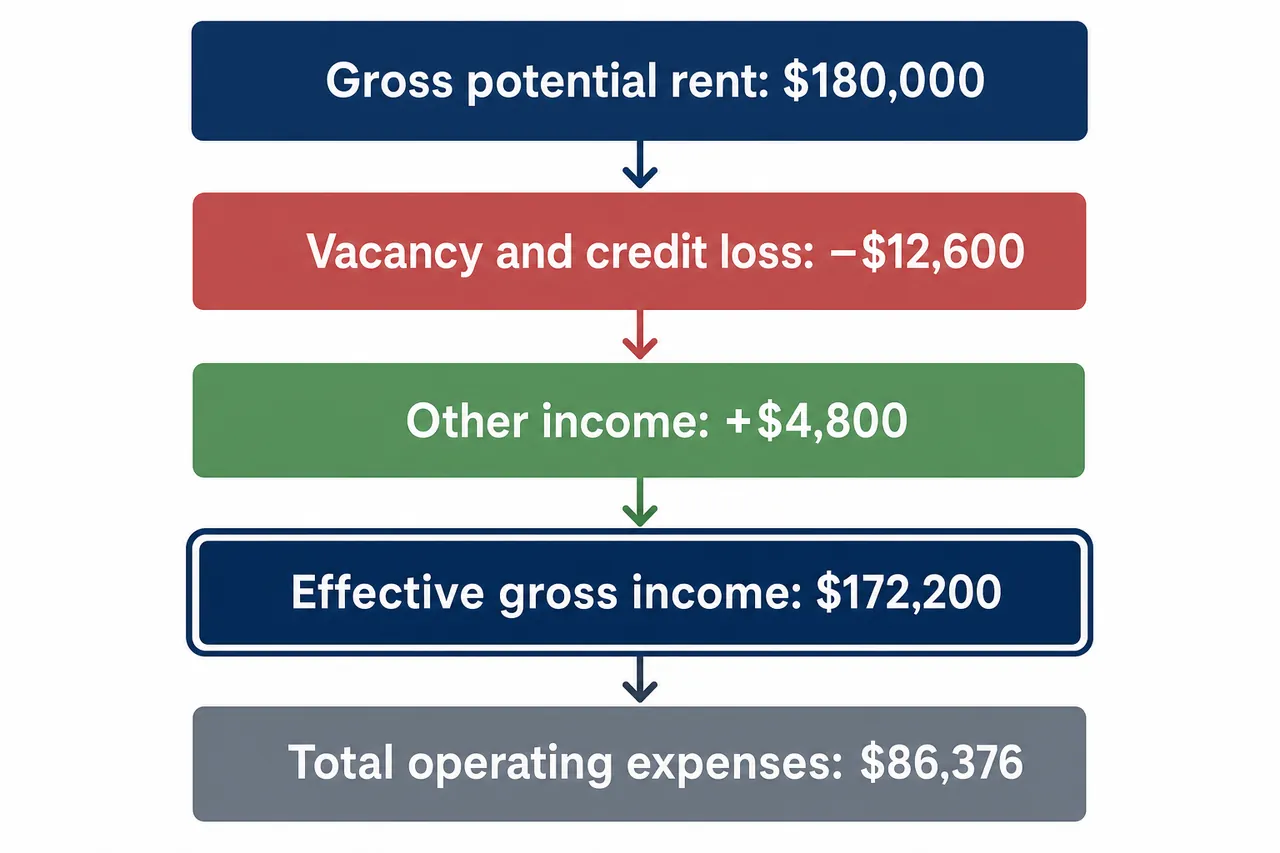
The building is a 12-unit, 1970s brick building of two-bedroom units. Average rent is $1,250 per month. The owner pays water, sewer, trash and common-area electric, and tenants pay their own electric and heat. The asking price is $1,350,000, and the buyer negotiates to $1,300,000 (about $108,300 per unit).
| Line item | Annual amount | How it was calculated |
|---|---|---|
| Gross potential rent | $180,000 | 12 units × $1,250 × 12 months |
| Vacancy and credit loss | −$12,600 | 7% of GPR |
| Other income (laundry, parking) | +$4,800 | From the T12, verified |
| Effective gross income | $172,200 | |
| Property taxes | $19,200 | Estimated after reassessment at sale price |
| Insurance | $9,600 | $800 per unit (quoted) |
| Water, sewer, trash, common electric | $14,400 | From utility bills |
| Repairs and maintenance | $12,000 | $1,000 per unit |
| Turnover / make-ready | $4,800 | About 4 turns a year at $1,200 |
| Property management | $13,776 | 8% of EGI |
| Contract services | $6,000 | Landscaping, snow, pest control, cleaning |
| Admin, legal, accounting | $3,000 | |
| Replacement reserves | $3,600 | $300 per unit |
| Total operating expenses | $86,376 | About 50% of EGI |
| Net operating income | $85,824 | $172,200 − $86,376 |
Cap rate and quick screens
- Cap rate: $85,824 ÷ $1,300,000 = 6.6%
- GRM: $1,300,000 ÷ $180,000 = 7.2
- Expense ratio: $86,376 ÷ $172,200 = about 50%, which matches the 50% rule check
Sizing the loan
Suppose a lender offers, for example, a 6.5% rate with 25-year amortization, up to 75% loan-to-value, with a 1.25 minimum DSCR. Each dollar borrowed on those terms costs about $0.0810 per year in principal and interest.
- At 75% LTV: The loan would be $975,000, with annual debt service of about $78,998. DSCR = $85,824 ÷ $78,998 = 1.09. That is below the lender's minimum, so the lender will not make this loan.
- DSCR-sized loan: The maximum debt service is $85,824 ÷ 1.25 = $68,659. Dividing by 0.0810 gives a loan of roughly $847,000, about 65% LTV. The actual annual debt service is about $68,627, or $5,719 per month.
Cash needed and return
- Down payment: $1,300,000 − $847,000 = $453,000
- Closing costs, loan fees and third-party reports (for example, about 2.5%): $32,500
- Upfront repairs and required reserves: $25,000
- Total cash invested: $510,500
- Annual cash flow: $85,824 − $68,627 = $17,197 (about $1,433 per month, or $119 per unit)
- Cash-on-cash return: $17,197 ÷ $510,500 = 3.4%
What the example teaches
A 6.6% cap rate looks reasonable, but the DSCR limit forced a much larger down payment than expected. The result is a thin cash return. A buyer has three honest options.
- Pay less. At $1,200,000 with the same DSCR-limited loan, total cash drops to about $408,000 and cash-on-cash rises to about 4.2%.
- Find a real value-add. Say $8,000 per unit of interior upgrades ($96,000 total) supports $100 more rent per unit. After vacancy and management, NOI rises by about $12,300, to roughly $98,100. At a 6.6% cap rate, that NOI implies a value near $1,487,000, against a total cost of about $1,396,000. This only works if comparable upgraded units actually rent for that much.
- Walk away. This is often the right answer.
To build this kind of model yourself, the multifamily underwriting spreadsheet guide lays out the tabs and formulas.
Back to topFinancing: residential vs. commercial loans
The four-to-five-unit line is the biggest structural shift in multifamily. The table shows typical differences. Every lender sets its own guidelines, so treat the ranges as examples and confirm current terms with a lender or mortgage broker.
| Feature | Residential loans (1-4 units) | Commercial loans (5+ units) |
|---|---|---|
| Main underwriting focus | Your personal income, debts and credit, plus a portion of the rents | The property's NOI and DSCR, plus your net worth, liquidity and experience |
| Owner-occupant options | Yes. Low-down-payment programs (such as FHA, or VA for eligible borrowers) if you live in a unit | Generally no |
| Typical down payment | Low for owner-occupants; for example 15-25% for investors | For example 20-35%, or more if DSCR limits the loan |
| Term and amortization | Often 30-year fixed, fully amortizing | Often 5-, 7- or 10-year terms with 20-30 year amortization, ending in a balloon payment |
| Prepayment penalties | Uncommon | Common (step-down, yield maintenance or defeasance) |
| Personal liability | Personally liable | Recourse (personally guaranteed) or non-recourse with "carve-outs" |
| Valuation method | Comparable sales, with some income input | Income approach (NOI ÷ cap rate) |
| Third-party reports | Appraisal and inspection | Appraisal, environmental report, property condition report, sometimes a survey |
Common loan sources for 5+ units
- Local and regional banks: These are often the most flexible lenders on small apartment buildings. They usually require recourse and favor borrowers who also bring deposits.
- Agency loans: Government-sponsored programs offered through approved lenders. They can offer longer fixed terms and non-recourse structures, but they typically have minimum loan sizes and stricter paperwork.
- Bridge loans: Short-term, usually interest-only loans for buildings that need renovation or lease-up before they qualify for permanent debt. They cost more, and the refinance at the end has to work.
- Seller financing: The seller carries a note for some or all of the price. Model payments and balloon dates with the seller financing calculator, and have a real estate attorney draft the documents.
- Partners and syndication: Partners can bring equity. A syndication pools money from passive investors under a sponsor. Raising money from passive investors usually involves securities laws, so work with a securities attorney. The apartment syndication guide explains the roles and fee structures.
How to prepare before you shop for a loan
- Put together a personal financial statement and a real estate schedule listing every property you own.
- Know your liquidity. Many commercial lenders want to see reserves left over after closing, often expressed as months of debt service.
- Show relevant experience. If you are short on it, bring in a partner who has it or hire a professional property manager.
- Ask each lender how it sizes loans: maximum LTV, minimum DSCR, rate assumptions, amortization, reserve requirements and prepayment terms.
Due diligence before you close
Your offer should give you time and the right to back out while you verify the numbers. Commercial contracts typically include a due diligence period and a financing contingency. Have a real estate attorney review the terms. During that period, work through this list:
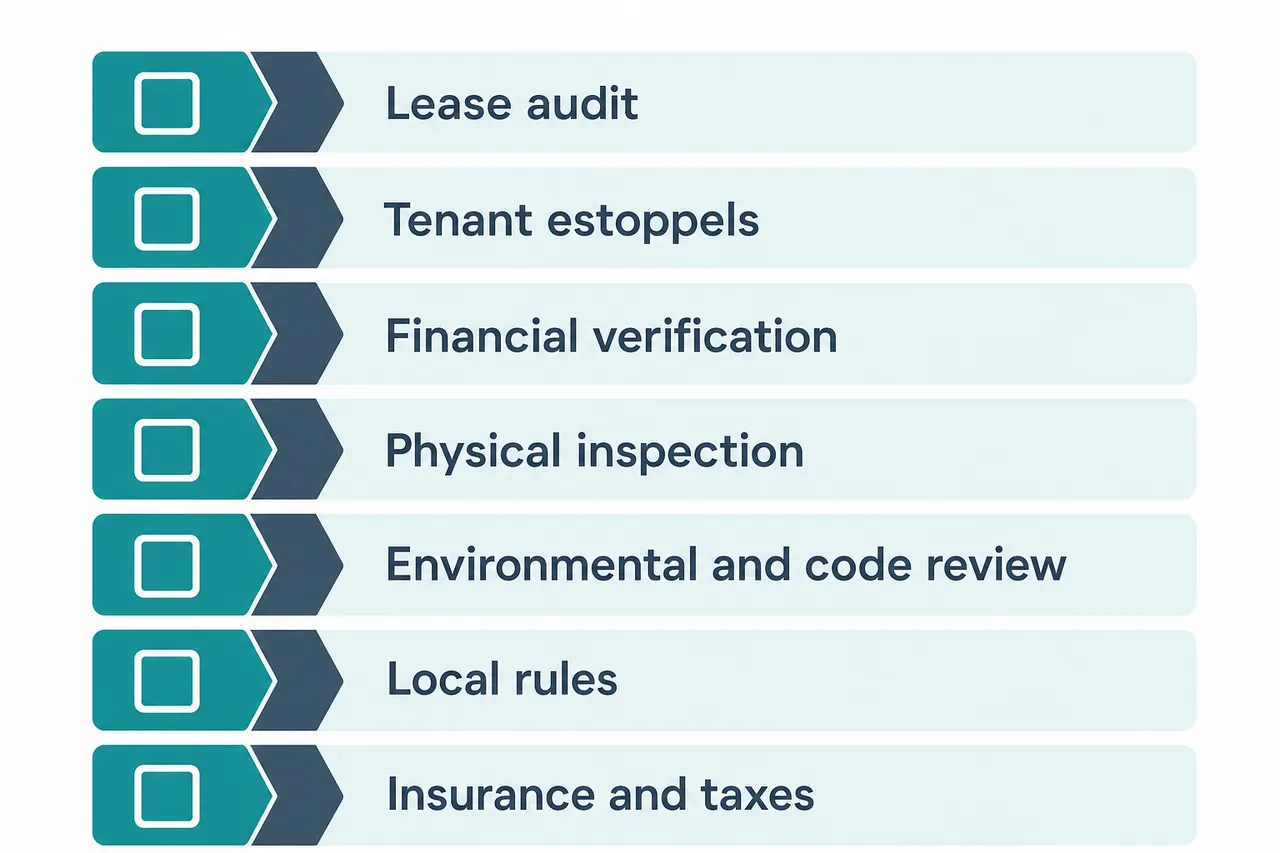
- Lease audit: Read every lease. Match rent amounts, deposits, concessions and end dates to the rent roll.
- Tenant estoppels: These are signed statements from tenants confirming their rent and deposit, where the contract allows them.
- Financial verification: Compare the T12 with bank statements, utility bills, tax bills and insurance invoices.
- Physical inspection: Walk every unit, not a sample. Check the roof, foundation, plumbing (including sewer lines), electrical panels, boilers or HVAC, windows and parking surfaces.
- Environmental and code review: Lenders usually order an environmental report. Check open permits, code violations and whether the unit count is legal under current zoning.
- Local rules: Confirm rent control or stabilization, rental registration, inspection programs and eviction procedures with the city and a local attorney.
- Insurance and taxes: Get a binding insurance quote. Ask your county or a tax advisor how reassessment works after a sale.
Brokers control much of the inventory of five-plus-unit buildings. Working well with them, by responding quickly, giving clear feedback and closing when you say you will, gets you earlier looks at listings. The guide to working with multifamily brokers covers this, and the guide to finding motivated sellers covers off-market outreach to tired owners and estates.
Back to topOperating and managing the property
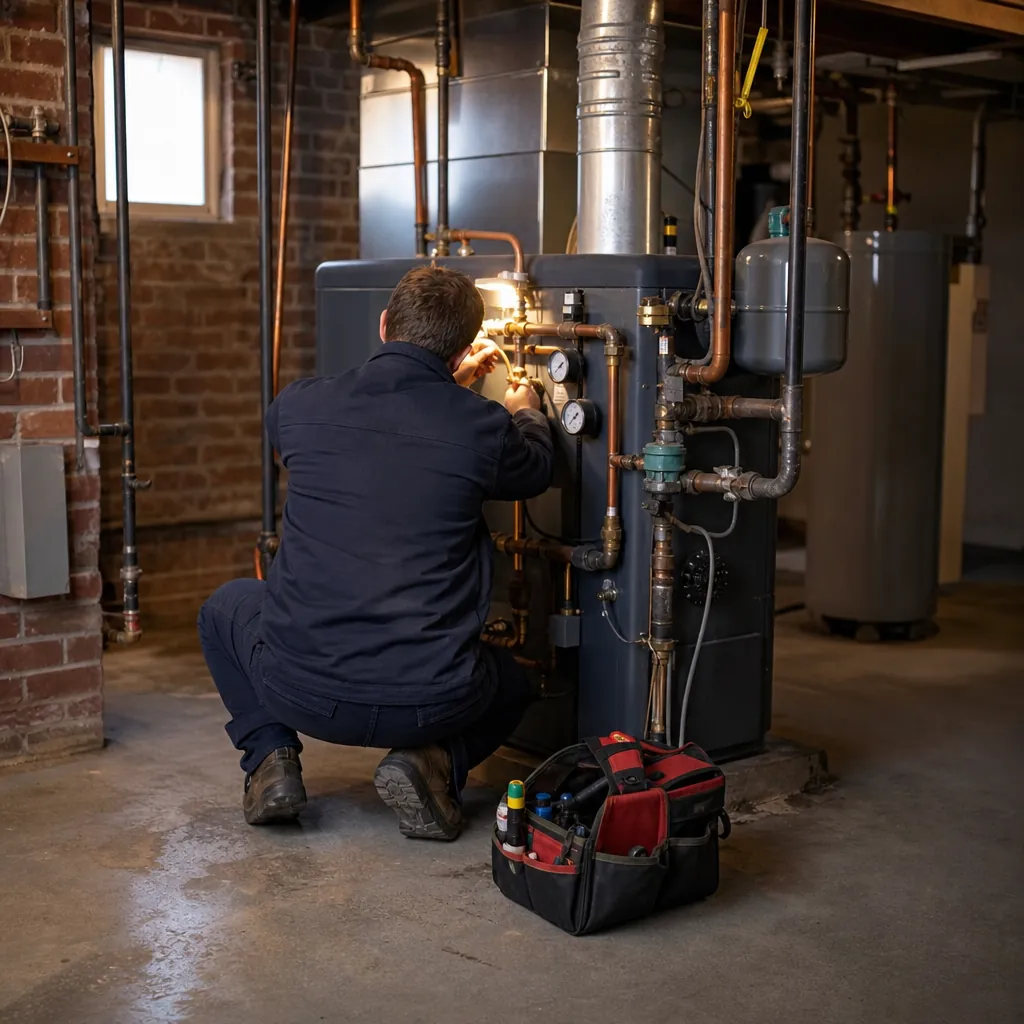
Projected returns turn into actual returns through day-to-day operations. Most of the value of a building is lost or protected in these areas.
Self-manage or hire a manager
Self-management can work on a nearby building of five to twenty units if you have time, systems and a solid grasp of local landlord-tenant law. Past that point, or if the building is far away, professional management is usually worth the fee.
Fees are often quoted as a percentage of collected income, plus leasing, renewal or maintenance markups. Read the management agreement closely. Before hiring, ask:
- How do you report each month? Ask to see a sample owner statement.
- What is your process for screening applicants, collecting rent and handling late payments?
- Do you mark up maintenance work, and what is your spending limit before you need my approval?
- How many units does each manager handle, and who answers emergency calls?
Leasing and screening
Write screening criteria covering income, credit, rental history and criminal history (where your local law allows it). Apply them the same way to every applicant. Fair housing laws are federal, state and sometimes local, and some areas add protected classes or limit how criminal records and income sources can be considered. Have a local attorney review your criteria and lease.
Maintenance and capital planning
Separate routine repairs from capital projects. Keep a simple schedule listing each major system, its age, its expected remaining life and its estimated replacement cost. Fund reserves monthly so a roof replacement does not become a cash call. Regular preventive work, such as boiler service, gutter cleaning and sealing exterior gaps, is cheaper than emergency calls and keeps tenants renewing.
Books and reporting
Keep a separate bank account for each property or entity, and handle security deposits the way your state requires. Reconcile the books monthly and produce a monthly operating statement in the same format as your underwriting, so you can compare actual results to the budget. Clean records make refinancing, selling and raising money much easier. Ask a CPA about depreciation (residential rental buildings are generally depreciated over 27.5 years in the US), cost segregation and how your ownership entity affects taxes.
Back to topHow to scale from one building to several
Growth comes from repeating a process that works. Bigger bets on their own do not get you there. Common paths look like this.
- Start small, then step up. Many investors begin with a 2-4 unit property, often living in one unit. They learn leasing and maintenance, then buy a 5-20 unit building with commercial debt. The experience on paper also helps with lenders.
- Buy below value, improve, refinance. Buy a building with fixable problems, renovate and stabilize it, then refinance based on the higher NOI to pull out some of your capital. The BRRRR method applied to multifamily explains the steps and the refinance risk.
- Run targeted value-add plans. Common examples are unit interior upgrades, billing tenants back for utilities where legal, adding laundry or storage income, and cutting waste. Each extra dollar of NOI adds value at the market cap rate. See value-add multifamily strategies.
- Partner up. Combine one partner's capital with another's operating experience. Put roles, decision rights, capital calls and exit terms in a written operating agreement drafted by an attorney.
- Trade up with a 1031 exchange. Selling one building and buying a larger one can defer capital gains tax if you follow strict identification and closing deadlines and use a qualified intermediary. Use the 1031 exchange calculator to estimate deferred gain and boot, then confirm with a CPA.
Decide how you would leave a deal before you buy it: sell, refinance and hold, or exchange. The multifamily exit strategy guide covers timing and how sale prices are set.
Two habits help at every size. First, keep enough cash reserves that one bad year does not force a sale. Second, check each new loan's balloon date against the others so several do not come due in the same year.
Back to topCommon mistakes
- Trusting the seller's pro forma. Projected rents and "expenses if you self-manage" are not real results. Underwrite from the T12, the leases and the bank deposits.
- Leaving out management and reserves. Even if you plan to do the work yourself, include them in the budget. Otherwise the deal only works as long as you work for free.
- Ignoring the tax reassessment. The current owner's tax bill may be based on a much older value. Estimate taxes at your purchase price.
- Assuming 75% LTV. As the example shows, DSCR often limits the loan and increases the cash you need. Size the loan before you commit to a price.
- Overlooking the balloon date. A 5-year commercial loan has to be refinanced or paid off. Ask yourself whether the deal still works if rates are higher or values are lower at that point.
- Counting rent increases before they happen. Base value-add rents on comparable renovated units, and budget for vacancy while units are being turned.
- Skipping local rule research. Rent regulation, registration programs and eviction timelines can change the numbers completely. They vary by state and city.
- Hiring the cheapest manager. A low fee with weak leasing, slow maintenance or poor collections costs more than a fair fee with good results.
- Running thin on reserves. One boiler, one roof or a few non-paying tenants can wipe out a year of cash flow on a lightly capitalized building.
Where to go next
- Compare valuation methods in apartment investing fundamentals: underwriting and valuation.
- Go deeper on the ratios with multifamily key metrics and analysis.
- Review the duplex-to-fourplex route in the small multifamily guide linked at the top of this guide.
- Run your own numbers with the rental property, cap rate, DSCR and cash-on-cash calculators linked in the analysis section.
Back to top
Back to top
All our multifamily articles
Multifamily articles on KDS Development, grouped so you can go deeper on any part of this guide. Newest first.

Guides and how-tos
- How to Hire a Multifamily Investment Advisor: Find the Right Partner
- Multifamily Investment Brokers: How to Work With One Successfully
- Multifamily Investing Exit Strategy: When & How to Sell
- The Beginner's Guide to Flipping Apartment Buildings
- Multifamily Investment Homes: How to Scale Without Large Capital
- How to Underwrite a Multifamily Deal: Step-by-Step
Explainers
- Multifamily Investing on Reddit: Strategies from Experienced Investors
- Multifamily Investing with Bob Biggins: Strategies & Insights
- Multifamily Underwriting Spreadsheet: Model & Analyze Apartment Buildings
- Multifamily Investment Analyst: Skills, Salary & Career Path
- Apartment Investing Fundamentals: Underwriting & Valuation Methods
- Multifamily Investing Workshops: Which Programs Deliver Results?
- Co-Living Investment Strategy: Modern Multifamily Alternative
- Multifamily Investing in Canada: Markets, Financing & Regulatory Considerations
- Apartment Application vs. House Rental Application: Key Differences for Tenants
- Best Multifamily Investing Books: Top Reads for Building Wealth
- Multifamily Investment Analysis: Key Metrics and Strategies
- Apartment Syndication for Beginners: How It Works
Comparisons
Tool reviews
Frequently asked questions
How many units should a first multifamily property have?
Many investors start with 2-4 units because residential financing is easier and the management load is lighter. Buying 5-20 units first can work if you have the capital, strong reserves and either experience or a capable property manager. Pick the size whose bad year you can absorb.
What is a good cap rate for an apartment building?
There is no universal good number. Cap rates depend on location, building age, condition and current interest rates. Compare against recent sales of similar buildings in the same submarket. Then confirm the deal also meets the lender's DSCR minimum and your target cash-on-cash return.
Why does a 5-unit building need a different loan than a 4-unit building?
Lenders and loan programs generally treat 1-4 unit properties as residential and 5+ unit properties as commercial. Commercial loans are underwritten mainly on the property's income. They often come with shorter terms, balloon payments and prepayment penalties. Ask a lender how its programs handle your specific property.
How much cash do I need to buy an apartment building?
Plan for the down payment, closing costs and loan fees, third-party reports, upfront repairs and post-closing reserves. In the illustrative 12-unit example, that added up to about 39% of the purchase price, because DSCR limited the loan. Get lender quotes early so you know your real number.
Can multifamily investing be passive?
Owning a building directly is not passive, even with a property manager, because you still make budget, leasing and capital decisions. Investing as a limited partner in a syndication is closer to passive. You then depend on the sponsor, so review their track record, fees and reporting, and have the documents reviewed by an attorney.
Do I need an LLC to own a multifamily property?
Many owners hold buildings in an LLC or other entity for liability and partnership reasons, and some lenders require it for commercial loans. Entity choice affects taxes, financing and insurance, and the rules vary by state. Decide with a real estate attorney and a CPA before you close.
Back to top