



In today's competitive real estate market, investing in small multifamily rentals offers an enticing opportunity for savvy investors seeking to generate reliable monthly income and diversify their portfolios.
Table of Contents
- What counts as small multifamily, and why the 2-4 unit line matters
- Why a 2-4 unit building is a common first investment
- House hacking with an owner-occupied loan
- Finding and screening candidate properties
- How to analyze a 2-4 unit property, step by step
- Example deal (illustrative numbers)
- Financing after the first building
- Due diligence before you close
- Running the building: tenants and day-to-day operations
- Taxes and record-keeping
- Moving up to larger buildings
- Common mistakes
- Where to go next
- All our small multifamily articles
- Frequently asked questions
A duplex, triplex or fourplex sits between a house and an apartment building. Lenders treat it as residential, so you can finance it much like a home. It still produces income from several units. That mix is why small multifamily investing is a common first step for people who want rental income without starting with a single-family house or a 20-unit building.
This guide covers how to judge whether a 2-4 unit property fits your goals and how house hacking works with owner-occupied loans. It walks through a full analysis with real math, explains what to verify before closing, and shows how to run the building once you own it. It also covers when and how to move up to larger properties.
The strategy suits buyers who are willing to live in one unit for at least a year and who are comfortable dealing with tenants up close. It also fits investors who want more income per purchase than a single-family rental gives. It is a poor fit if you need hands-off income from day one, or if you cannot keep a cash reserve for repairs.
Back to topWhat counts as small multifamily, and why the 2-4 unit line matters
In US lending, a property with two to four units is generally classified as residential. A property with five or more units is generally commercial. That one line changes most of the rules.
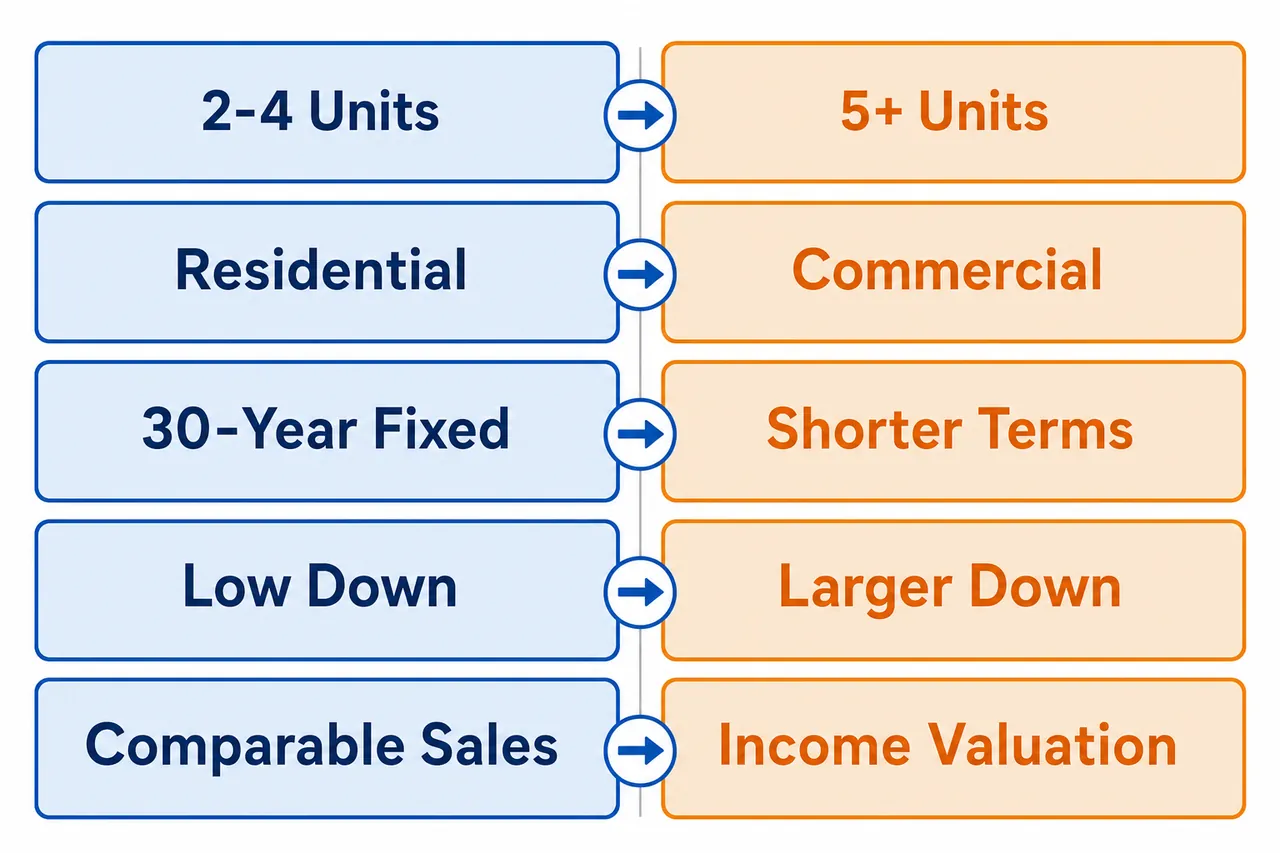
- Financing: 2-4 unit buildings can qualify for residential mortgages, including 30-year fixed loans and owner-occupied programs with low down payments. Buildings with five or more units usually need commercial loans. Those often have shorter terms, adjustable rates or balloon payments, and larger down payments.
- Valuation: Appraisers usually value 2-4 unit properties mainly on comparable sales. Income gets some weight, often through a gross rent multiplier. Larger buildings are valued mostly on net operating income and cap rates. So with a small building, you cannot always raise its appraised value just by raising rents.
- Buyers you compete with: Small multifamily draws first-time buyers who plan to live there, small local investors, and occasionally people who want a home with a rental unit attached. Owner-occupants often bid on the property as a home, not purely as an investment. That can push prices above what the rent alone justifies.
The physical layouts vary widely. You will see side-by-side duplexes, up-and-down units in converted houses, small purpose-built fourplexes, and single-family homes with a legal accessory unit. Each layout affects noise, privacy, utility metering and maintenance. For a broader look at how these compare with larger buildings, see this comparison of multifamily property types from duplexes to apartment complexes.
Back to topWhy a 2-4 unit building is a common first investment
The appeal is practical, not magical. Here is what a small multifamily property does well, and what it costs you in exchange.
What works in its favor
- Owner-occupied financing. You can buy a building with up to four units using a loan meant for a primary residence. These loans usually allow a far smaller down payment than an investment loan.
- Vacancy is spread out. When a single-family rental is empty, income drops to zero. When one unit of a fourplex is empty, three still pay.
- One roof, one lot, one insurance policy. Some costs per unit can be lower than owning the same number of scattered houses. Turnovers and repairs also happen at one address.
- A training ground. You learn screening, leases, maintenance, bookkeeping and rent collection at a scale where mistakes are survivable.
What you give up
- Tenant turnover is higher than with single-family homes. Smaller units often attract renters who move more often, so expect more turnovers per year than one house would bring.
- Shared systems. One old boiler, one roof, one sewer line. When a shared system fails, every unit is affected and the bill is large.
- Thinner resale market. Fewer buyers shop for duplexes than for houses in most areas. Selling may take longer.
- Living next to your tenants, if you house hack. That means less privacy and more boundary-setting.
For a side-by-side look at whether a small building or a single house makes more sense as a first purchase, see whether 2-4 units are the right first investment and the single-family investing guide.
Back to topHouse hacking with an owner-occupied loan
House hacking means you buy a 2-4 unit property, live in one unit, and rent the others. The rent from the other units covers part, or sometimes all, of the mortgage. After the required occupancy period, you can usually move out, keep the loan, and rent your former unit too.

Loan programs change, and so do the details of each one. Treat everything below as the general shape. Confirm current requirements with a loan officer who regularly closes 2-4 unit owner-occupied loans.
FHA loans
FHA loans can be used for 1-4 unit properties when the borrower lives in one unit as a primary residence. The minimum down payment is low (3.5% for borrowers who meet the credit thresholds). FHA loans carry mortgage insurance, and maximum loan amounts depend on the county and the number of units. For three- and four-unit properties, FHA applies a self-sufficiency test. The projected net rental income from all units must cover the full monthly housing payment. That income is usually calculated as a percentage of total rents, including an estimated rent for your own unit. Many triplexes and fourplexes in higher-priced areas fail this test. Run it before you make an offer.
Conventional loans
Conventional owner-occupied loans are also available for 2-4 unit properties. They have offered low down payment options for multi-unit primary residences. Minimums, credit requirements and reserve requirements depend on the program and the lender. Private mortgage insurance usually applies below 20% down, and it can be removed later under the loan's terms, unlike some FHA mortgage insurance. Ask lenders to quote both FHA and conventional so you can compare the total monthly cost.
VA loans
Eligible veterans and service members may be able to buy a 1-4 unit owner-occupied property with no down payment under the VA program. The usual occupancy and underwriting rules apply. Check your entitlement and the lender's rules for counting rental income.
How lenders count rent from the other units
Lenders often let projected rent from the units you will not occupy count toward your qualifying income. They usually count only a portion of it, commonly around 75%, to account for vacancy and expenses. They typically rely on current leases or an appraiser's rent schedule. Some lenders want landlord experience or extra cash reserves before they count rental income. This varies, so ask early. It can decide whether you qualify at all.
Occupancy rules are real
Owner-occupied loans generally require you to move in within a set period after closing and to intend to live there as your primary residence, typically for at least a year. Claiming you will occupy a property when you do not intend to is mortgage fraud. If your plans change, talk to your lender and a real estate attorney before you move out early.
For a deeper breakdown of the two-unit version, including floor plan choices and how the numbers shift over time, read house hacking a duplex: strategy and financial breakdown.
Back to topFinding and screening candidate properties
Most small multifamily properties are listed on the open market. Many good ones also come from owners who are tired of managing, estates, or landlords with deferred maintenance. Direct outreach to those owners is covered in the guide to finding motivated sellers.
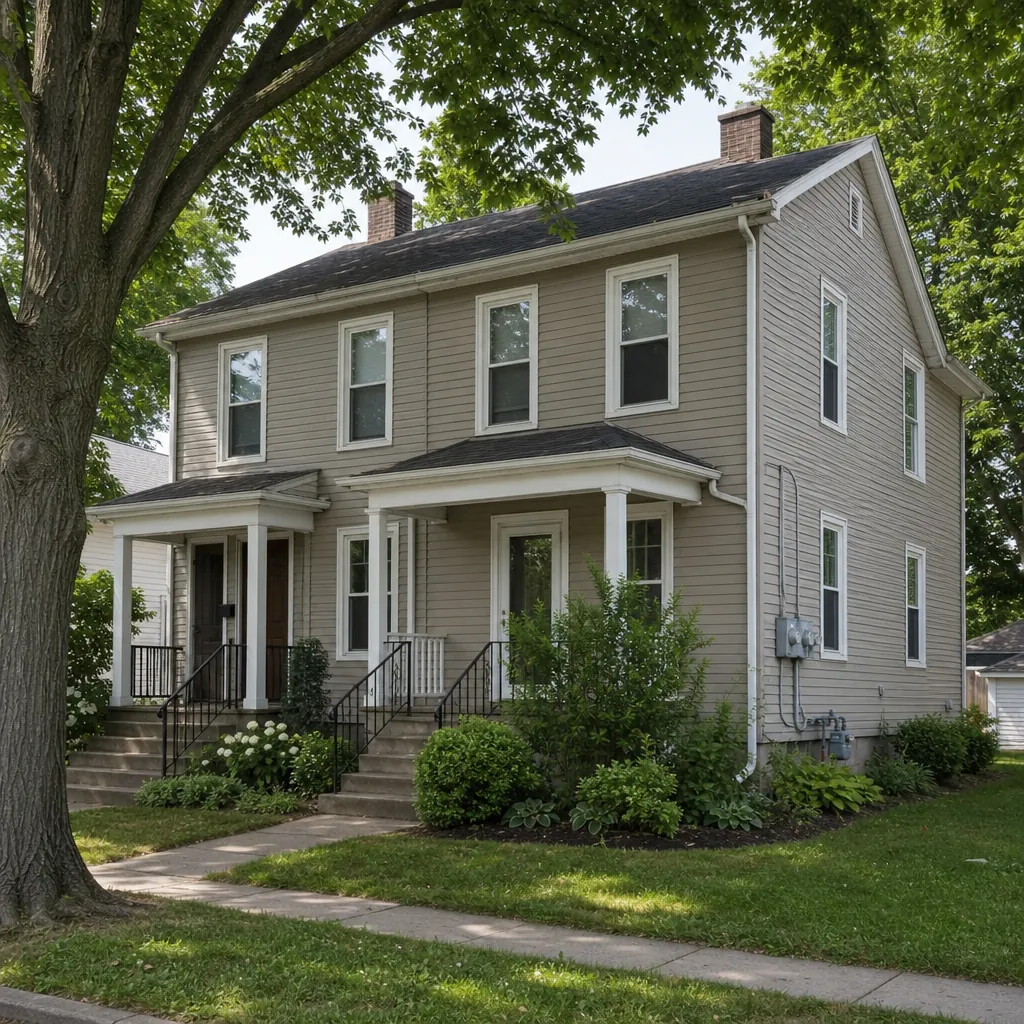
Before you run detailed numbers, screen each property on these points:
- Are all units legal? Basement and attic units are sometimes added without permits. Check zoning and the certificate of occupancy, or the equivalent record, with the local building or zoning department. An illegal unit may not count toward income, may not be insurable, and may have to be removed.
- Utility setup. Separate electric and gas meters let tenants pay their own bills. A shared boiler or a single water meter means you pay. Ask for 12 months of utility bills.
- Layout and privacy. Side-by-side units with separate entrances are usually easier to rent and to live in than stacked units with shared hallways. If you will live there, picture yourself in the unit for two years.
- Big-ticket age. Look at the age of the roof, heating systems, water heaters, electrical panels, sewer line and foundation. One replacement can erase several years of cash flow.
- Rent level versus price. As a quick filter, compare the price to the annual gross rent with the gross rent multiplier calculator. A high multiplier compared with other small multifamily sales nearby means the price is leaning on appreciation or owner-occupant demand, not income.
- Neighborhood rental demand. Check how many similar units are listed for rent nearby, how long they sit, and what they rent for. Local property managers can tell you what actually rents, not just what landlords ask.
How to analyze a 2-4 unit property, step by step
Use the same steps on every property so you can compare them fairly. The rental property calculator handles the arithmetic once you have good inputs.
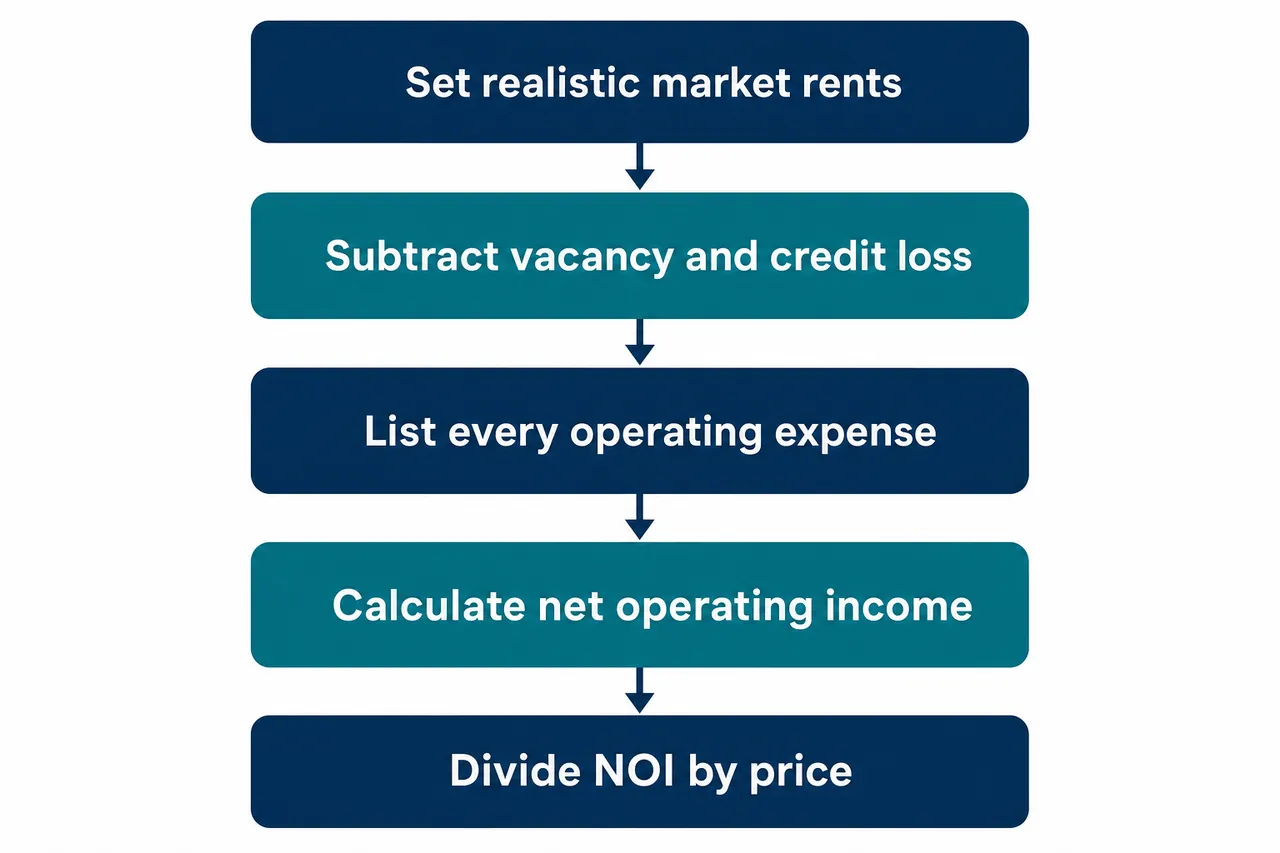
Step 1: Set realistic market rents
Use what similar units in the area actually rent for, not the seller's projection. If current tenants pay below market, record both numbers. Raising rent depends on lease terms and local law, and it may cause turnover.
Step 2: Subtract vacancy and credit loss
Pick a vacancy allowance that fits the local market and the unit type. Many investors start with something like 5-8% of gross rent and adjust from there. Use more for older buildings or areas with slow leasing.
Step 3: List every operating expense
- Property taxes. Check whether a sale will trigger reassessment, because the seller's tax bill may not be yours.
- Insurance. Get a quote for the actual policy type you need, whether owner-occupied multi-unit or landlord.
- Utilities you pay (water, sewer, trash, common-area electric, any shared heat).
- Repairs and maintenance.
- Capital expenditure reserve for roofs, systems, flooring and appliances.
- Property management, even if you self-manage. It shows whether the deal survives if you stop doing the work.
- Lawn, snow, pest control, licensing or rental registration fees where they apply.
Step 4: Calculate net operating income
Net operating income (NOI) is effective gross income minus operating expenses. It does not include mortgage payments. Divide NOI by price to get the cap rate. The cap rate calculator does this and lets you test what price a given NOI supports.
Step 5: Add the financing
Subtract annual debt service (principal, interest and mortgage insurance) from NOI to get cash flow before taxes. Compare it with the cash you actually invested to get cash-on-cash return. The cash-on-cash return calculator keeps this straight. Also check the debt service coverage ratio (NOI divided by annual debt service) with the DSCR calculator. Lenders on investment and DSCR loans look at this ratio closely.
Step 6: Run it twice for a house hack
A house hack has two phases. In phase one, you live there and the building offsets your housing cost. In phase two, you move out and every unit is rented. Analyze both. A building that only works while you live in it is still a reasonable home purchase, but it is not yet a strong rental.
Back to topExample deal (illustrative numbers)
The figures below are made up for teaching. They are meant to look like a moderately priced US market in 2026. Taxes, insurance, rents and loan terms in your area will differ. Replace every number with local quotes before relying on the result.
The property: a side-by-side duplex listed at $320,000. It has two 2-bedroom units, separate electric and gas meters, and one shared water meter. Comparable 2-bedroom units nearby rent for about $1,550 per month.
The buyer: a first-time buyer using an FHA loan with 3.5% down. The illustrative rate is 6.5% on a 30-year fixed loan.
Purchase and loan
- Down payment: $320,000 × 3.5% = $11,200
- Loan amount: $320,000 − $11,200 = $308,800
- Estimated closing costs (illustrative): $9,000
- Total cash to close: about $20,200
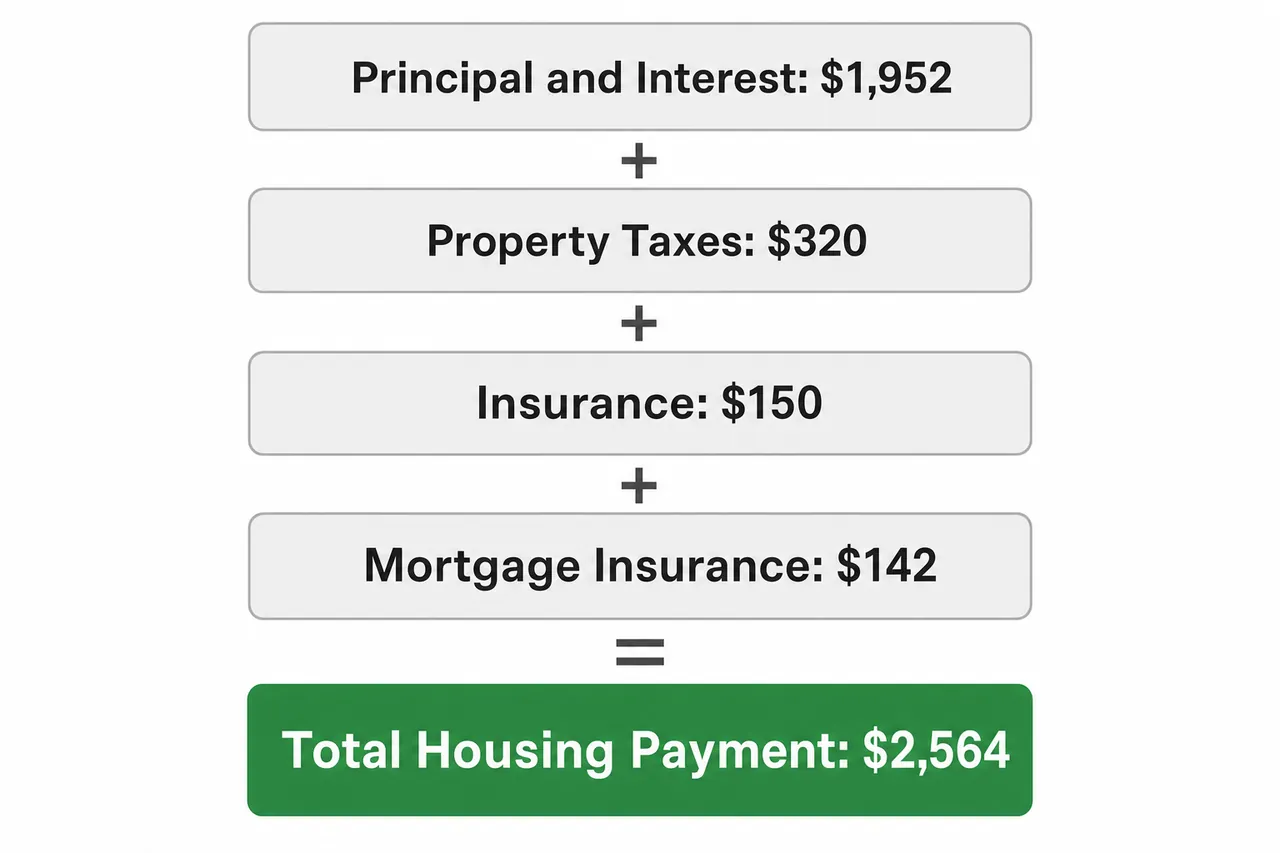
- Principal and interest at 6.5%, 30 years: about $1,952 per month
- Property taxes ($3,840 per year): $320 per month
- Insurance ($1,800 per year): $150 per month
- Mortgage insurance (illustrative estimate): $142 per month
- Total housing payment: 1,952 + 320 + 150 + 142 = $2,564 per month
Phase one: living in one unit
- Housing payment: $2,564
- Vacancy allowance on the rented unit (5% of $1,550): $78
- Repairs and maintenance reserve for the building: $140
- Capital expenditure reserve: $140
- Water, sewer and trash the owner pays for both units: $120
- Total monthly cost: $3,042
- Minus rent from the other unit: −$1,550
- Net housing cost to the owner: $1,492 per month
Renting a similar unit would cost about $1,550. The owner pays slightly less than that while building equity. In the first year, about $280 of each mortgage payment goes to principal. The owner also takes on repair risk and landlord duties, so this is a modest win, not free housing. In a market where the duplex costs more relative to rent, the net cost could easily be higher than renting. That is why phase one deserves its own math.
Phase two: moving out and renting both units
| Line item | Annual amount | How it was calculated |
|---|---|---|
| Gross scheduled rent | $37,200 | 2 units × $1,550 × 12 |
| Vacancy and credit loss | −$1,860 | 5% of gross rent |
| Effective gross income | $35,340 | 37,200 − 1,860 |
| Property taxes | −$3,840 | Illustrative, 1.2% of price |
| Insurance | −$1,800 | Landlord policy may cost more; get a quote |
| Repairs and maintenance | −$1,680 | $140 × 12 |
| Capital expenditure reserve | −$1,680 | $140 × 12 |
| Water, sewer, trash | −$1,440 | $120 × 12 |
| Property management | −$2,827 | 8% of effective gross income |
| Total operating expenses | −$13,267 | Sum of expenses |
| Net operating income | $22,073 | 35,340 − 13,267 |
| Debt service (FHA loan) | −$25,128 | ($1,952 + $142) × 12 |
| Cash flow before taxes | −$3,055 | About −$255 per month |
The cap rate is $22,073 ÷ $320,000 ≈ 6.9%. With a property manager, the house hacker loses about $255 a month after moving out. If the owner self-manages, the $2,827 management line goes away. Cash flow then comes to about −$228 for the year, which is roughly break-even. The DSCR is $22,073 ÷ $25,128 ≈ 0.88, below 1.0.
This is the honest trade-off of very low down payment financing. The buyer controls a $320,000 building with about $20,000 of cash. But the high loan balance means the building does not pay for itself as a fully managed rental right away. The plan works if the owner either self-manages until rents rise, refinances later, or accepts thin cash flow in exchange for equity growth.
The same building bought as a pure investment
For comparison, picture an investor buying the same duplex with 25% down on an investment loan. Investment loans are often priced somewhat higher, so this example uses an illustrative 7% rate.
| Measure | House hacker (FHA, 3.5% down) | Investor (25% down) |
|---|---|---|
| Cash invested (down + closing) | $20,200 | $88,000 ($80,000 + $8,000) |
| Loan amount | $308,800 | $240,000 |
| Annual debt service | $25,128 | $19,164 ($1,597 × 12) |
| NOI (fully rented, managed) | $22,073 | $22,073 |
| Annual cash flow | −$3,055 | $2,909 |
| Cash-on-cash return | Negative | About 3.3% |
| DSCR | 0.88 | 1.15 |
The investor has positive but modest cash flow and ties up four times as much cash. Neither version is "right." The house hack gets someone into ownership with little cash and below-market housing for a year or two. The investor version produces steadier income but needs far more capital. Run both scenarios on any building you are considering, using local numbers.
Back to topFinancing after the first building
Owner-occupied programs are designed for your primary residence. Lenders generally limit how many owner-occupied loans you can hold at once and look closely at a pattern of short occupancies. Some investors buy a new owner-occupied property every year or two and keep the old one as a rental. If you plan to do that, discuss the plan openly with your lender.
For non-owner-occupied 2-4 unit purchases, common options include:
- Conventional investment loans: larger down payments (often 20-25% or more for multi-unit), stricter reserve requirements, and pricing that is usually higher than owner-occupied loans.
- DSCR loans: these qualify mostly on the property's income rather than your personal income. They usually carry higher rates and fees and require a minimum DSCR set by the lender.
- Local bank and credit union portfolio loans: terms vary widely. These lenders can be flexible on older or unusual buildings.
- Seller financing: useful when an owner with little or no mortgage wants steady payments instead of a lump sum. Model the payment and any balloon with the seller financing calculator, and have a real estate attorney draft the note and any related documents.
Buildings that need significant work can also be bought with short-term financing, renovated, rented and refinanced. That approach is covered in the BRRRR investing guide. Keep in mind that 2-4 unit appraisals rely heavily on comparable sales, so a refinance appraisal may not reflect every dollar of renovation or rent increase.
Back to topDue diligence before you close
With an occupied building you are buying the tenants, the leases and the history, not just the structure. Build these checks into your purchase contract's contingency period:
- Get every lease and the rent roll. Compare them line by line. Look for unrecorded side deals, free months, or tenants paying well below market.
- Get tenant estoppel certificates where practical. These are signed statements from each tenant confirming rent, deposit amount, lease term and any agreements with the seller. Your attorney can tell you what is customary in your state.
- Verify security deposits and how they will be transferred at closing. Deposit handling rules vary by state and sometimes by city.
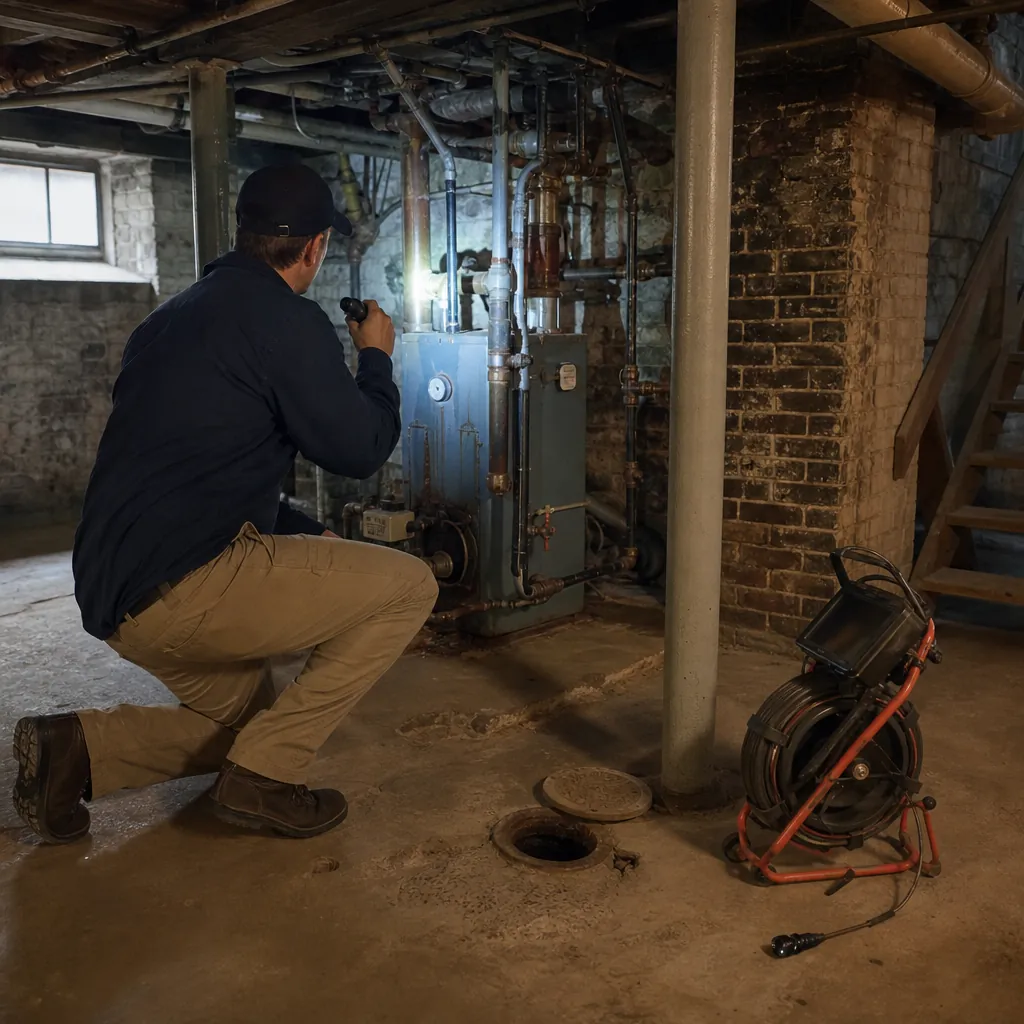
- Inspect every unit, not a sample. Add a sewer scope, and get roof or HVAC specialists if the general inspector flags concerns.
- Confirm legal unit count and open permits with the local building department.
- Review 12-24 months of income and expenses, bank deposits if the seller will share them, and utility bills.
- Check local rental rules. These can include rental registration or inspection programs, rent control or rent stabilization, eviction rules, and limits on raising rent for existing tenants. A local real estate attorney is the right person to ask.
- Lead paint. For housing built before 1978, federal rules require specific lead disclosures to buyers and tenants. Some states and cities add more requirements.
More on reading a seller's numbers and negotiating repairs is in the duplex investing strategy and analysis guide.
Back to topRunning the building: tenants and day-to-day operations
Screening tenants
Write down your screening criteria before you list a unit and apply them the same way to every applicant. Typical criteria include income relative to rent, rental history, credit and payment history, and a check for prior evictions where the law allows. Federal fair housing law prohibits discrimination based on protected classes. Many states and cities add more protected classes and limit how criminal history or source of income can be used. Check your local rules and use a written, consistent process.
Owner-occupants of small buildings sometimes have narrow exemptions from certain fair housing provisions. These exemptions are limited, they do not cover discriminatory advertising, and state law may remove them. Do not rely on one without legal advice.
Leases and house rules
Use a lease written for your state, ideally reviewed by a local attorney. In a small building, spell out the things that cause friction:
- Shared spaces: laundry, yard, parking, storage, trash areas
- Quiet hours and guest rules, within what local law permits
- Who pays which utilities, and how any shared meter is handled
- How to submit maintenance requests and what counts as an emergency
- Notice requirements for entry, which vary by state
Living next to your tenants
House hacking works best when the relationship is friendly but professional. Collect rent through an online system rather than by knocking on doors. Put requests and notices in writing. Avoid casual agreements such as "pay me next week" or "I'll fix it if you mow" that blur the landlord role. Some owners choose not to mention that they own the building. Others are open about it. Either way, keep your lease, communication and records as formal as you would for a building across town.
Maintenance and turnover
- Keep a maintenance log for each unit and each building system.
- Do a walk-through at move-in and move-out with dated photos.
- Line up a plumber, electrician, HVAC technician and handyman before you need them.
- Standardize finishes (paint colors, faucets, flooring) across units so turnovers are faster and cheaper.
- Fund the capital reserve every month, even when nothing is broken.
Self-manage or hire a manager?
Many owners self-manage their first small building to learn the work. Others hire a manager from the start. Self-managing saves the fee, but it costs time and requires you to learn landlord-tenant law. A good manager brings systems, vendor relationships and legal know-how. Interview several. Ask about fees for leasing, renewals and maintenance markups, how they screen, and how they handle evictions. Get the management agreement reviewed before you sign. Even if you self-manage, keep a management line in your analysis, as the example did. More on operating rentals over the long run is in the long-term rental investing guide.
Back to topTaxes and record-keeping
Rental income is generally taxable, and many operating expenses are generally deductible. Rental buildings (not land) can generally be depreciated over time. With a house hack, the tax treatment is split. The rented units are treated as a rental, and your own unit is treated as your home. That affects how expenses, depreciation and any future sale are handled.
When you eventually sell, depreciation recapture and capital gains can apply. The rules for property that was partly your residence are specific. You can get a rough estimate of the tax on a sale with the capital gains tax calculator for real estate. Investors moving into a larger building sometimes use a 1031 exchange to defer gain, and the 1031 exchange calculator shows how deadlines and boot work. Tax rules change and depend on your situation, so work with a CPA who handles rental property before you buy and before you sell.
Keep a separate bank account for the property, save every receipt, and track income and expenses by unit. Clean records make tax time, refinancing and an eventual sale much easier.
Back to topMoving up to larger buildings
After one or two small buildings, some investors want to scale. There are three common paths:
- More 2-4 unit properties. You keep residential financing and a familiar valuation method. You manage more addresses, but each building is simple.
- Trade up to 5+ units. You sell or exchange smaller buildings into one larger one. Management becomes more centralized, and value depends more directly on NOI. Raising income or cutting expenses can raise the building's value in a way it often cannot on a duplex.
- Partner on larger deals. You join with other investors to buy buildings no one could buy alone. This involves securities and partnership rules, which need an attorney.
The jump to five or more units brings real changes. Commercial loans have different terms and often require personal guarantees or reserves. Appraisals focus on income. Buyers and lenders expect professional-grade financial statements. Management, compliance and insurance get more involved. Before making the move, get comfortable reading a building's operating statement and judging its expenses. The multifamily investing guide covers larger buildings in depth. From duplex to 100+ units walks through how investors typically progress from one size to the next.
Back to topCommon mistakes
- Trusting the seller's pro forma. Projected rents and "estimated" expenses are marketing. Rebuild the numbers from leases, bills and local rent comparisons.
- Skipping the phase-two analysis on a house hack. A building that only works while you live in it can leave you unable to move out.
- Leaving out capital reserves. Roofs, boilers and sewer lines do not show up in monthly expenses until they fail all at once.
- Buying units that are not legal. An unpermitted third unit can cost you rent, insurance coverage and resale value.
- Ignoring the FHA self-sufficiency test on a triplex or fourplex until you are deep into underwriting.
- Underestimating tax reassessment or insurance increases after purchase.
- Informal landlording. Handshake deals with tenants and missing paperwork make disputes and evictions harder.
- Assuming you can raise rents on existing tenants freely. Lease terms and local rent rules may limit increases.
- Draining all your cash at closing. Keep a reserve for repairs and vacancies separate from your personal emergency fund.
Where to go next
- Plan your first owner-occupied purchase with house hacking a duplex: strategy and financial breakdown.
- Practice analyzing listings with the rental property calculator and compare the results across buildings.
- Learn how to source off-market small buildings in the guide to finding motivated sellers.
- When you are ready to grow, read the multifamily investing guide.
Back to top
Back to top
All our small multifamily articles
Small multifamily articles on KDS Development, grouped so you can go deeper on any part of this guide. Newest first.
Guides and how-tos
Explainers
Frequently asked questions
Is a duplex or a fourplex better for a first property?
A duplex is usually easier to finance, buy, and resell, and it means fewer tenants to manage while you learn. A fourplex spreads vacancy risk over more units and can produce more income. However, it costs more, and FHA buyers must pass the self-sufficiency test. Compare both using the same analysis and your local prices.
Can I house hack with no money down?
Eligible veterans may be able to use a VA loan with no down payment on a 1-4 unit owner-occupied property. Most other buyers need at least a small down payment plus closing costs and reserves. Some areas have down payment assistance programs. Ask a local lender what you qualify for.
How long do I have to live in the property?
Owner-occupied loans generally require you to move in within a set period after closing and to intend to live there as your primary residence. That is typically for at least one year. The exact terms are in your loan documents. Confirm them with your lender before you plan a move-out date.
Do 2-4 unit properties need a commercial loan?
Usually not. Properties with two to four units are generally financed with residential mortgages, both owner-occupied and investment. Commercial loans typically apply to five or more units, though some investors use commercial or portfolio loans on smaller buildings by choice.
What happens to my house hack when I move out?
You can usually keep the existing loan and rent your former unit. The property then operates as a full rental. Re-run the numbers as a fully rented building, update your insurance to a landlord policy, and talk to your CPA about how the change in use affects your taxes.
Back to top