

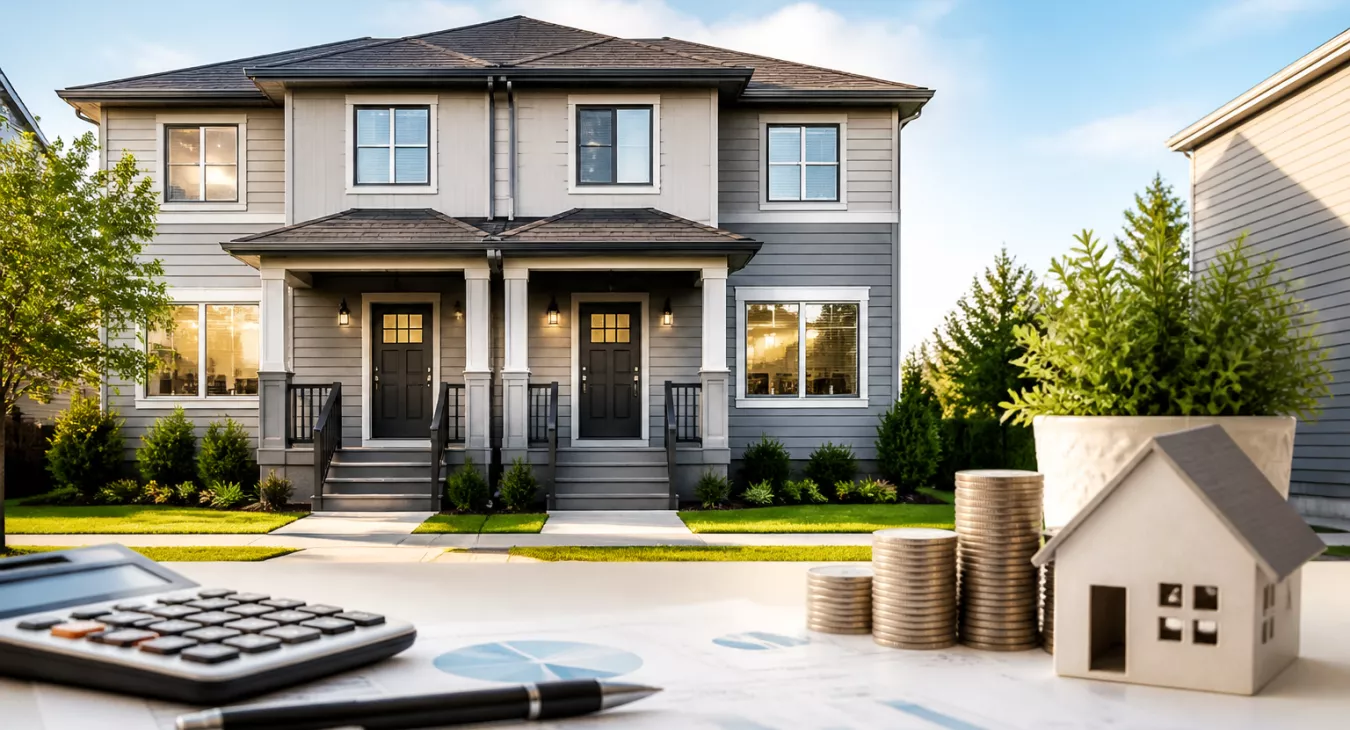
Learn how house hacking a duplex can reduce your housing costs to nearly zero. Complete strategy, financing guide, and real numbers inside.
Products and Tools Mentioned in this Post




TurboTenant
TurboTenant offers free landlord software for rental property management. Screen tenants, collect rent online, create leases, and manage maintenance efficiently.
Table of Contents
- what's House Hacking a Duplex?
- Financial Benefits of House Hacking a Duplex
- How to Buy a Duplex to House Hack
- Choosing the Right Duplex
- The Legal and Regulatory Market
- Preparing for Life as an On-Site Landlord
- Common Mistakes to Avoid When House Hacking a Duplex
- Scaling Your Investment After Your First Duplex
Imagine your home actually paying for itself. Or close enough that your housing costs practically vanish. That's what house hacking a duplex delivers — and it's genuinely one of the most accessible real estate investing strategies available to everyday buyers right now. Here's how it works: buy a two-unit property, live in one, rent out the other. The tenant's rent hits your mortgage payment. In the right market, it covers the whole thing. You're building equity, learning landlord skills, and stacking wealth simultaneously — all from your own front porch. This guide covers the full spectrum: financing tactics, how to pick the right property, tenant management, scaling to your next deal. Real numbers. Honest expectations. Whether you're brand new or an agent helping first-time investor clients, you'll find everything you need here to execute the duplex house hack.
New to small multifamily? Start with our Small Multifamily Investing Guide.

what's House Hacking a Duplex?
Definition and Core Concept
House hacking is simple: you live in your primary residence and rent out part of it to cover your housing costs. Sometimes you eliminate them entirely. Apply that to a duplex — two separate, self-contained units under one roof — and you've got a clean play. You occupy one unit. A paying tenant occupies the other. A shared wall or a flight of stairs separates your world from theirs. You're both a homeowner and a landlord at once.
Want the broader context? House Hacking: The Complete Beginner's Guide to Living for Free in 2026 covers the full strategy end-to-end. This one cuts straight to the duplex angle — and why it's got some real advantages you should know about before you look at other options.
How Duplex House Hacking Differs from Other Strategies
There are other ways to do this. You can rent spare bedrooms in a single-family home. Convert a garage into an ADU. Buy a triplex or fourplex and live in one unit while collecting three rents instead of one. All valid. But they all come with different trade-offs. The duplex hits a rare middle ground — completely separate units with separate entrances, which means real privacy for you and your tenant — while still qualifying for owner-occupied loans at 3.5% down. That matters.
| Strategy | Privacy | Min. Down Payment | Rental Income Potential | Complexity |
|---|---|---|---|---|
| Duplex (live in one unit) | High — separate units | 3.5% (FHA) | One full unit's rent | Low–Moderate |
| Single-family with roommates | Low — shared spaces | 3.5% (FHA) | Room-by-room rent | Low |
| Triplex/Fourplex (live in one unit) | Moderate | 3.5% (FHA) | Two or three units' rent | High |
| ADU development | High | Varies (construction) | One accessory unit's rent | Very High |
| Short-term rental (STR) | Variable | Varies | Potentially high, volatile | High |
Why Duplexes Are Ideal for House Hackers
The duplex is the entry-level investor's secret weapon. Here's why: you get a fully separate rental unit. You qualify for owner-occupied financing with minimal money down. And you're not drowning in tenant management because you've got one lease, not three or four. The rental income actually moves the needle without crushing you operationally. First-time landlords can handle this.
But there's more. Lenders see a duplex as owner-occupied residential property, not commercial real estate. That distinction opens doors. Financing is dramatically cheaper and easier to access than it would be for a five-unit or larger building. You get residential rates. Residential terms. Residential accessibility.
Back to topFinancial Benefits of House Hacking a Duplex

Calculating Your House Hacking Numbers
Your numbers either work or they don't. There's no middle ground here. Start with your total monthly housing cost: mortgage payment (principal + interest) + property taxes + insurance + average maintenance. Then subtract what you're collecting from your tenant: monthly rent from the rental unit. That difference is your actual out-of-pocket housing expense. If rent covers your PITI and maintenance? You're living free. Maybe even pocketing a few hundred bucks monthly.
Right now, Freddie Mac's Primary Mortgage Market Survey as of September 24, 2026 shows the 30-year fixed at 7.03% and the 15-year at 6.42%. These rates move the needle on your whole analysis. Let's build a real scenario using the Q2 2026 U.S. median new home sale price of $410,700 (per U.S. Census Bureau data).
Duplexes don't have a reliable national median — the market's too fragmented. But take a hypothetical $420,000 duplex as your working example. That's in the ballpark.
- Purchase price: $420,000
- FHA down payment (3.5%): $14,700
- Base loan amount: $405,300
- FHA Upfront MIP (1.75%, financed into loan): $7,093 → total loan: ~$412,393
- Monthly P&I at 7.03% (30-year): approximately $2,745
- Annual MIP at 0.55%: ~$2,268/year → ~$189/month
- Estimated taxes + insurance: ~$500/month (varies by location)
- Total PITI + MIP: ~$3,434/month
Say your rental unit pulls in $1,800/month. Your net housing cost drops to $1,634/month — roughly half what a solo homeowner pays. In stronger markets where you're collecting $2,200 or more? You're looking at sub-$1,300/month. That's house hacking working.
Understanding Mortgage Offset Potential
Lenders will let you count 75% of projected rental income from your non-occupied unit against your debt-to-income ratio when they're qualifying you for the loan. According to 2026 FHA and lender guidelines, if that rental unit would rent for $1,800/month, the bank gets to count $1,350 toward offsetting your debt. That's a game-changer when you're right on the edge of DTI limits — especially in hot markets.
The 25% discount isn't the lender being conservative. It's real life. Vacancy happens. Maintenance surprises happen. Account for it the same way in your own projections and you'll sleep better.
Tax Implications and Deductions
Owning a rental unit in your duplex unlocks real tax leverage. You can deduct rental-side expenses proportionally — which is typically 50% on a two-unit split. Think mortgage interest (rental portion), property taxes (rental portion), insurance, repairs specific to that unit, and property management fees if you've outsourced it.
And then there's depreciation. The IRS lets you depreciate residential rentals over 27.5 years. That's roughly 1/27.5th of your rental unit's purchase price every year as a non-cash deduction. No actual money leaves your pocket, but it reduces your taxable rental income. Get a CPA who knows rental properties inside out — the passive activity rules and cost-segregation opportunities can be nuanced, and you don't want to leave tax dollars on the table.
Comparing Approaches: Renting vs. House Hacking
| Factor | Traditional Renting | Traditional Home Purchase | House Hacking a Duplex |
|---|---|---|---|
| Monthly housing cost | Full rent payment | Full mortgage + taxes + insurance | Mortgage offset by rental income |
| Equity building | None | Yes, through principal paydown | Yes, plus tenant pays down your mortgage |
| Down payment needed | Security deposit only | 5–20%+ | 3.5% (FHA) or 5% (conventional) |
| Tax advantages | None | Mortgage interest deduction | Rental deductions + depreciation |
| Landlord responsibilities | None | None | Yes — on-site management required |
| Flexibility to move | High | Low | Moderate (after occupancy requirement) |
| Wealth building speed | Slow (no asset) | Moderate | Faster — two income streams, one asset |
Want the full story? House Hacking Pros and Cons: Is This Strategy Right for You? breaks down the real trade-offs before you decide.
Back to topHow to Buy a Duplex to House Hack

Understanding Your Financing Options
You've got two main paths when you're financing an owner-occupied duplex: FHA loans and conventional loans. Both let you buy a two-unit property with minimal cash down, as long as you're living in one unit as your primary residence. Your credit score, available savings, income, and holding timeline all factor into which one makes sense for your situation.
Want a detailed walkthrough of using FHA financing for house hacking? House Hacking with FHA Loans: Strategy to Buy & Live in Multifamily covers the mechanics comprehensively.
| Feature | FHA Loan | Conventional Loan (Owner-Occupied) |
|---|---|---|
| Minimum down payment | 3.5% | 5% |
| Minimum credit score | 580 for 3.5% down | Typically 620–680+ |
| Mortgage insurance | Required (life of loan if <10% down) | PMI required; drops off at 80% LTV |
| MIP / PMI rate | 0.55%/year (annual MIP) | 0.2%–1.5%/year (varies) |
| Upfront cost | 1.75% UFMIP (financed) | No upfront MIP |
| Loan limit (2-unit, standard area) | $693,050 | $832,750 (1-unit conforming baseline) |
| Loan limit (2-unit, high-cost area) | Up to $1,599,375 | Higher limits in designated areas |
| Occupancy requirement | 12 months; move in within 60 days | Typically 12 months |
| Self-sufficiency test | Exempt for duplexes | Not applicable |
FHA Loan Requirements for Duplexes
The FHA loan is your best bet for first-time duplex house hackers, and it's not even close. You can put down just 3.5% on a 2-unit property with a credit score as low as 580. That combination removes two massive barriers to entry that stop most investors before they even start.
The 2026 loan limits tell you what markets you can play in. $693,050 in standard areas and up to $1,599,375 in high-cost metros — that covers real ground even in expensive housing markets.
Here's the hard requirement: you must move in within 60 days and stay for 12 months minimum as your primary residence. Non-negotiable. After that year's up, you can move out and flip both units to rentals or keep house hacking. Your call.
And here's the duplex-specific advantage most investors miss. Duplexes are exempt from the self-sufficiency test that kills triplex and fourplex deals in weaker markets. That test requires projected rents to cover 100% of PITI — a dealbreaker for many 3 and 4-unit properties. Duplex buyers dodge that bullet entirely. This is why FHA financing works so much better for two-unit properties.
Now let's talk money. The insurance costs add up. You'll pay an upfront mortgage insurance premium (UFMIP) of 1.75% financed into your loan, plus an annual MIP of 0.55% on most 30-year loans with minimum down. Go below 10% down and that annual MIP stays forever. Put 10% or more down and it drops after 11 years. Conventional PMI is different — it falls off automatically at 80% LTV. For buyers with solid credit and bigger down payments, that conventional advantage might pencil out better when you do the full math.
Finding the Right Property and Making an Offer
Get pre-approved before you look at anything. Knowing your loan limit and what your lender counts toward DTI — including that 75% of projected rental income — shapes your entire search strategy.
Run the numbers before you ever step foot in a property. Seriously. Your offer should rest on three pillars: what you can actually finance, what the units will realistically rent for in that market, and what your net monthly cost looks like after rental income offsets it. Don't fall in love with a duplex until you've done those calculations. Due diligence means professional inspections (both units), existing lease reviews if there are tenants, a hard look at deferred maintenance, and local rental comps to pressure-test your income assumptions.
Back to topChoosing the Right Duplex

Location and Market Considerations
Your location choice makes or breaks the deal. A duplex sitting near a university, hospital, job center, or major transit corridor will lease faster, pull higher rents, and stay occupied longer than one in a weak market. Meanwhile, a property in a soft rental market? You'll be bleeding vacancy and money.
Start by researching neighborhood vacancy rates, average days on market for rentals, and what percentage of the area is renters versus owner-occupants. High renter concentration usually means strong rental demand. But here's the trade-off: those same neighborhoods often appreciate slower than transitional areas where ownership is climbing. You need to know what you're optimizing for — cash flow now or equity growth later.
Unit Size, Condition, and Rental Demand
Tenants vote with their feet. A 2-bedroom will rent faster and command more money than a studio in the same building nearly every time. The rent gap is usually smaller than the square footage gap, which is why this matters.
When you're evaluating duplexes, ask yourself: what unit layout maximizes your rental income against your personal space needs? If you only need a 1-bedroom, don't buy a 3-bedroom duplex for yourself. The real play is an asymmetrical setup — you take the smaller unit, tenants get the bigger one, and your cap rate goes up.
Now talk about the bones. Condition affects more than just how you feel living there. A roof, plumbing, or HVAC replacement is serious money sitting on top of your purchase price. Get itemized estimates for any deferred maintenance before closing. Factor those costs into your offer or your projections. A cheap duplex with a $25K roof problem isn't a bargain — it's a value trap.
Analyzing Rental Rates in Your Area
Zillow, Apartments.com, Rentometer, and local property management websites are your playbook. Before you make an offer, you need to know what comparable units actually lease for in that specific neighborhood.
"Comparable" means same bedroom count, similar condition, similar amenities, within a half-mile radius. That's it. Don't fall for the seller's claimed rent or some city-wide average — those are fiction. Use active listings and recently leased comps to build your income model, then apply a 5–10% vacancy factor depending on how hot the market is. That gives you your effective gross income. Everything else flows from that number.
Back to topThe Legal and Regulatory Market
Zoning Laws and Local Restrictions
That two-unit building you're eyeing? It might not actually be zoned as a legal duplex. You'll run into plenty of properties with unpermitted second units or informal "in-law suites" that aren't cleared for rental income. Call the local planning department before you make an offer. Get it in writing that the property's legally classified as two-unit residential and that renting the second unit is permitted by right. Running an unpermitted rental creates serious liability exposure and tanks refinancing or sale options down the road.
Homeowners Association Rules
HOAs on duplexes are less common, but they do exist. And when they do, they can kill your whole strategy. Pull the CC&Rs and check whether rentals are even allowed. Some HOAs restrict tenant terms or demand HOA approval before you lease a unit. You want to know this before closing, not after. If the HOA prohibits rentals, you've eliminated the entire financial rationale for house hacking the deal.
Landlord-Tenant Laws and Fair Housing
Every state—and many cities—have their own landlord-tenant rules covering deposits, entry notice, habitability, and eviction. Some states favor tenants heavily. Others lean landlord. You need to know your jurisdiction's rules before you sign that first lease.
Federal fair housing law prohibits discrimination based on race, color, national origin, religion, sex, familial status, and disability. Most states add more protected classes on top of that. Yes, there's a narrow "Mrs. Murphy" exemption for owner-occupied buildings with four or fewer units—but it doesn't cover advertising, and many states have eliminated it anyway. When in doubt, treat every prospect identically and document your screening criteria.
Insurance for Owner-Occupied Rentals
Your standard homeowner's policy won't cut it. A standard homeowner's insurance policy isn't designed for a property where one unit is rented out. You'll need a landlord policy or dwelling fire policy that covers liability and property damage on the rental unit. The owner-occupied unit may sit under a separate homeowner's or tenant's policy structure. Talk to an independent agent who knows multi-family residential before you close. The premium difference might be small, but the protection gap? It's massive.
Back to topPreparing for Life as an On-Site Landlord

Tenant Screening and Selection
Sharing a building with your tenant? That changes everything. You're not just hunting for someone who pays rent on time — you need someone you can actually live next to without losing your mind. This isn't being picky; it's protecting your sanity and your asset.
Run a thorough screening that includes credit check, background check, income verification (aim for 2.5–3x monthly rent in gross income), rental history, and those critical reference calls to previous landlords. Document your screening criteria before you list the unit. Apply them consistently to every applicant. And if you reject someone, write down why — this protects you legally and keeps your decisions tied to financials, not feelings.
Setting Up Rental Agreements
You need a state-compliant lease agreement. Those generic templates floating around online? They're often outdated or don't fit your jurisdiction. Your state's apartment association or a local real estate attorney can hook you up with forms that actually hold up in court.
Your lease should cover: rent amount, due date and grace period, late fees, security deposit terms, lease term (12 months is standard for stability), maintenance responsibilities, pet policy, noise and nuisance rules, and entry notice requirements. Don't skip the written lease because your tenant seems nice. The lease protects both of you.
Managing the Landlord-Neighbor Dynamic
Living next door creates a unique dynamic. Set boundaries deliberately from day one.
Respond to maintenance requests fast and professionally. Document everything in writing — text, email, whatever — so you've got a record. Don't blur the lines into friendship if it means you'll hesitate to enforce the lease. And don't ghost them either. The sweet spot? Cordial, professional, and consistent. Start with a thorough move-in walkthrough, a documented condition report, and a clear explanation of how maintenance requests work.
Thinking about bringing in a family member as a tenant? House Hacking With Family: Strategy Guide and Pitfalls to Avoid digs into those specific dynamics.
Property Management Tools
Even one rental unit benefits from property management software. Avail, TurboTenant, and Buildium (if you're scaling) let you collect rent online, handle maintenance requests, store documents digitally, and track income and expenses come tax season. Most are free or dirt cheap for small-scale landlords. Start using them now. The systems you build with one unit scale perfectly when you've got five or ten.
Back to topCommon Mistakes to Avoid When House Hacking a Duplex

Underestimating Operating Costs
Most new house hackers get blindsided here. They budget for rent and mortgage, then act shocked when the roof needs replacing or a tenant bails. Here's what actually costs money: vacancy (your good tenants will leave), repairs running about 1% of property value annually (that's $4,200/year on a $420,000 duplex, or $350/month), capital expenditures like HVAC and water heaters with finite lifespans, and landlord insurance. And if you're not setting aside reserves for this stuff? You're heading straight toward a cash flow crisis.
Poor Tenant Selection
This is the number-one killer. A bad tenant costs you in lost rent, eviction legal fees, property damage, and repair bills — way more than waiting an extra month for someone who actually qualifies. But there's something else: you're living in the building. A problem tenant isn't just a spreadsheet problem. They're your neighbor, your daily reality, maybe your sleep deprivation.
Hold your screening standards. Period. No exceptions because you're desperate to fill the unit.
Inadequate Due Diligence
Skipping the property inspection? That's how you end up owning someone else's problems. In a duplex it hits even harder — deferred maintenance tanks both your living space and your rental income.
Pay for a licensed inspector. If they flag structural, electrical, or major system issues, get contractor bids before you waive contingencies. Verify the legal rental status, check existing lease terms if occupied, and confirm utility configurations (separate meters for each unit?). These details change everything about your actual operating costs and rental potential.
Overestimating Rental Income
You want the deal to work. I get it. But inflating your rent assumptions creates a fantasy scenario that'll expose you financially. Use actual comparable listings and recently rented units in your specific neighborhood — not the landlord's asking price or some city-wide average.
Then apply real vacancy assumptions. Your numbers need to work at 90–95% occupancy, not some mythical 100% scenario.
Not Understanding Local Laws
Landlord-tenant law is hyperlocal, and even unintentional violations cost you serious money. Mishandle security deposits, skip required disclosures, or use a non-compliant lease — now you're exposed to liability and fines.
Spend a couple hours before closing reading your state's landlord-tenant statute. Or hire a local real estate attorney for a one-time review. Cheap insurance. For more guidance on transaction due diligence, How to Make Offers on Bank REO Properties: Complete Strategy walks through the purchase side of things.
Back to topScaling Your Investment After Your First Duplex

Refinancing Opportunities
Once you've hit the required occupancy period on your duplex, you've got real options. Rate drops matter — and they matter a lot. Right now the 30-year rate sits at 7.03% as of September 24, 2026. If you originally financed at 8%+, a refi could shave hundreds off your monthly payment and meaningfully improve cash flow. But that's only half the picture. If your property's appreciated since you bought it, a cash-out refinance lets you pull that equity and use it for a down payment on your next deal. Don't do this blind. Talk to a lender who actually understands investor financing — they'll help you work through the timing and make sure the numbers pencil out.
And there's another play here. A HELOC gives you access to equity without refinancing the entire loan. HELOC for Rental Property: Calculator and Complete Strategy
Back to top