

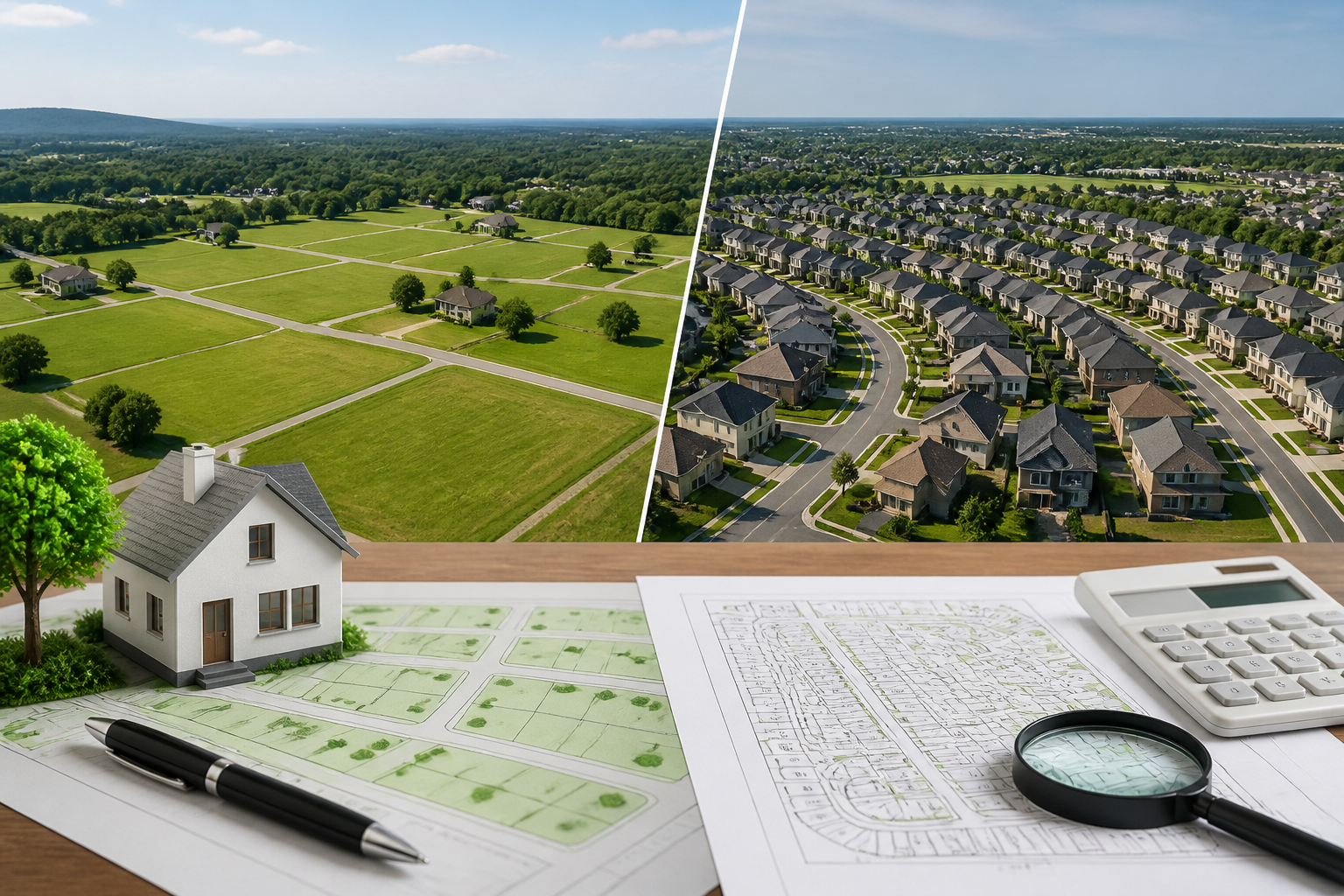
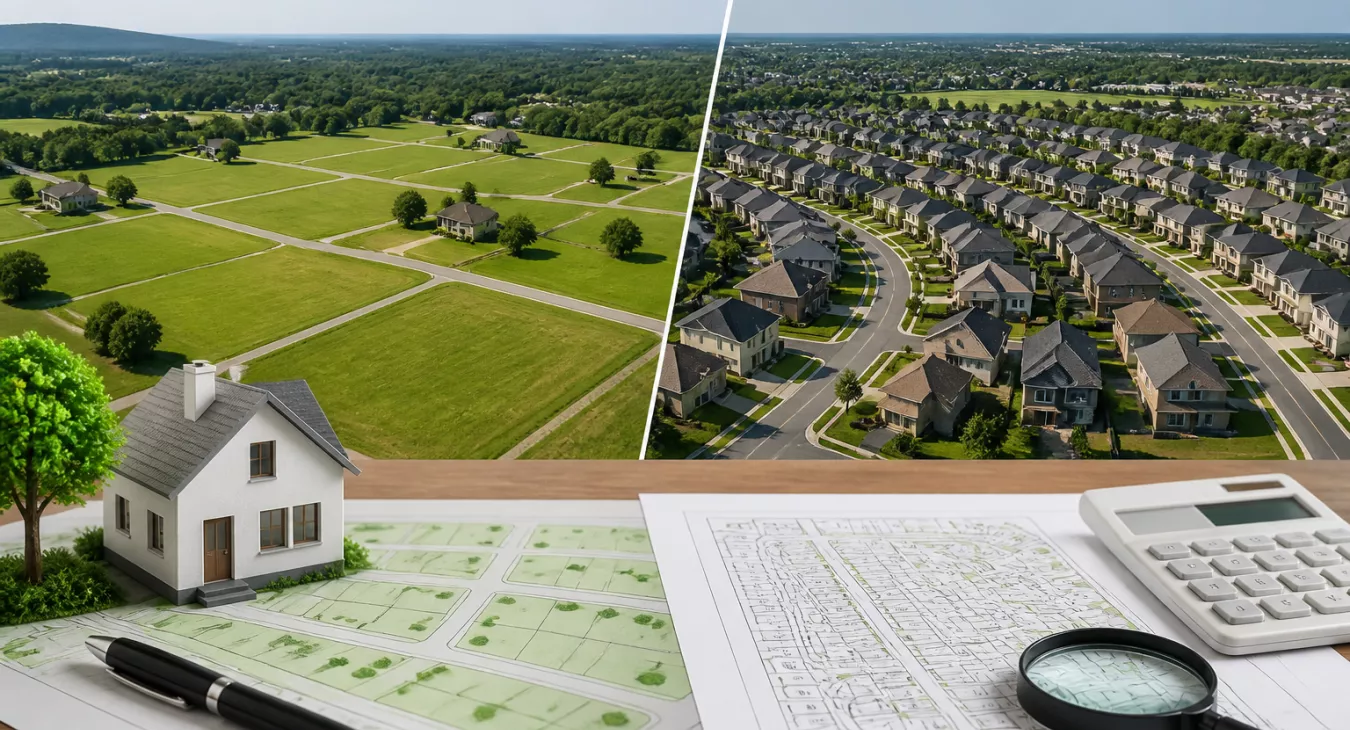
Learn the critical differences between major and minor subdivisions in real estate. Master approval processes, timelines, and costs to maximize investment
Land subdivision is one of the most powerful—and complex—strategies available to real estate investors. Split a single parcel into two lots, or develop a 50-lot residential community, and you'll quickly discover that understanding major vs. minor subdivisions isn't academic. It's the difference between closing in six weeks and fighting regulators for two years. Many investors jump into land deals without fully grasping how local governments classify subdivision projects—or how dramatically those classifications affect timelines, costs, and profit margins. This guide breaks down everything you need to know about major vs. minor subdivisions in real estate, from threshold definitions to approval processes, cost projections, and common pitfalls to avoid.

What Are Major vs. Minor Subdivisions?
Definition of Subdivisions
A subdivision is when you take one parcel and split it into two or more lots, tracts, or parcels—typically to sell, lease, or develop. Most states and municipalities have subdivision ordinances and platting requirements on the books. Their goal? Ensure you've got adequate infrastructure, protect public health and safety, and keep community development orderly.
But here's where it gets jurisdictional. The rules vary wildly from state to state and town to town. Almost everywhere, though, they split subdivisions into two buckets: major subdivisions (the big, complicated ones that need serious review) and minor subdivisions (smaller divisions that move faster).
Key Differences at a Glance
How many lots are you creating? Do you need new streets or public infrastructure? Will the project trigger environmental review? These are the real differentiators. Minor subdivisions tend to be administrative—you file some paperwork, you wait, you get approved. Major subdivisions? They demand full planning commission hearings, detailed engineering submittals, and a lot more scrutiny.
Why the Distinction Matters
Get this wrong and you're looking at blown timelines, surprise costs, and dead deals. A minor subdivision might run you $5,000–$15,000 in fees and close in 30–60 days. That same acreage as a major subdivision could cost $50,000–$500,000 in infrastructure alone and take 12–24 months to push through. The difference is massive. Knowing which bucket your project falls into isn't optional—it's foundational to your underwriting.
And if you're juggling multiple land deals? A CRM built for real estate investors keeps your timelines, documents, and approval milestones organized across the whole portfolio.
Back to topMajor Subdivisions Explained

Characteristics of Major Subdivisions
Here's where things get serious. A major subdivision kicks in when you're creating more than a threshold number of lots—usually 4 or 5, though it varies wildly by jurisdiction. But it's not just about lot count. You're also hitting major subdivision status if you're building new streets or public rights-of-way, extending public utilities, or creating lots that don't meet existing road frontage standards. Some jurisdictions? They classify it as major the second environmental review gets triggered, no matter how many lots you're actually carving out.
Both a preliminary plat and a final plat are almost universally required. A planning commission or governing board will review them. Don't expect this to happen quietly—you're looking at public hearings and advance notice to neighbors who may or may not be thrilled about your project.
Typical Lot Count and Size Thresholds
Most jurisdictions peg the trigger at five or more lots. Some go with four. Others won't classify it as major until you hit six or even ten lots—though in rural counties, you've usually got more breathing room if no new streets are involved. Here's the thing: these rules are all over the map. Verify your specific threshold with the local planning department before you even run numbers on a deal. A missed threshold can blow up your timeline and budget.
Infrastructure Requirements
The developer foots the bill. You're designing, constructing, and often dedicating public infrastructure—complete streets with curb, gutter, and sidewalk, stormwater systems, water and sewer extensions, street lighting. The whole package. Many jurisdictions won't sign off on the final plat until you've posted a performance bond or letter of credit. And infrastructure costs? They're your biggest pro forma variable in major subdivisions. Model them carefully, or you'll kill your deal economics fast.
Environmental and Planning Considerations
Environmental review often comes with the territory. You might need traffic impact analyses, wetland delineations, stormwater studies, habitat assessments, or archaeological surveys—depending on what you're doing and where. The tab? $10,000 to $75,000+, plus several months tacked onto your approval timeline. That's real money and real time. Data-driven analysis tools let you spot environmental constraints before you close on a parcel. That's how you avoid getting blindsided.
Back to topMinor Subdivisions Explained

Characteristics of Minor Subdivisions
Two to four lots from a single parcel. No new streets. No utility extensions beyond what's already there. That's the essence of a minor subdivision—a land division that stays below your jurisdiction's threshold for major review. Most places define it exactly this way, though some localities have an even tighter category called "secondary minor subdivision" for just two-lot splits. These hit approval faster than anything else.
Why does this matter for your business? Because minor subdivisions get approved administratively. A planning director can rubber-stamp it without scheduling a full commission hearing, which means fewer delays and less risk of neighborhood opposition killing your deal.
Lot Count and Size Thresholds
Your local subdivision ordinance sets the magic number—usually between two and four lots. But that's not the whole story. Many jurisdictions layer on acreage minimums (say, one acre per lot minimum) to keep the minor classification from being abused. And here's the kicker: some places restrict how many times you can subdivide a single parcel using the minor process. They're trying to stop investors from nibbling away at large tracts to dodge major subdivision requirements.
Simplified Approval Process
You'll need a final plat, a boundary survey, and documentation showing you've hit lot size and frontage requirements. That's it. No preliminary plat stage like you'd see with major subdivisions.
Timeline matters, and this is where minor subdivisions shine. Most jurisdictions close these in 30–60 days. Major subdivisions? You're looking at 6–24 months. That speed is exactly why quick-turn land splits are so attractive for investors who know what they're doing.
Administrative vs. Commission Approval
Staff-level sign-off. No public hearing. No commission vote. That's administrative approval, and it's the whole reason minor subdivisions work so well for your timeline and your peace of mind. You avoid hearing delays, neighbor opposition becomes irrelevant, and your approval window becomes predictable.
But don't assume every minor subdivision gets automatic approval. Some jurisdictions require a commission hearing anyway if your parcel sits in a special overlay zone, has unusual characteristics, or if a planner decides it needs more scrutiny. Call your planning department before you commit to a deal. That one phone call saves months of headaches.
Back to topMajor vs. Minor Subdivisions Comparison


Here's what separates these two paths—and why it matters for your deal timeline and cash flow projections. The table below breaks down the critical differences between major and minor subdivisions. Keep in mind that local codes vary wildly by jurisdiction. Use this as your baseline, but you've got to dig into your specific city or county requirements before you commit capital to any deal.
| Criteria | Major Subdivision | Minor Subdivision |
|---|---|---|
| Typical Lot Count Threshold | 5+ lots (varies: 4–10+) | 2–4 lots |
| Approval Timeline | 6–24+ months | 30–90 days |
| Public Hearing Required | Yes (typically required) | Often not required |
| Engineering Plans Required | Yes (detailed) | Minimal or none |
| New Streets Required | Often yes | Rarely required |
| Estimated Approval Cost | $25,000–$500,000+ | $3,000–$20,000 |
| Preliminary Plat Needed | Yes | Usually not |
| Administrative Approval Option | No | Often available |
| Environmental Review Required | Likely (project-dependent) | Rarely required |
The Subdivision Approval Process

Major or minor—the path forward looks similar on paper. But the actual timeline and review depth? They're worlds apart.
| Process Step | Major Subdivision | Minor Subdivision | Typical Duration |
|---|---|---|---|
| Pre-Application Meeting | Required or strongly recommended | Optional but useful | 1–2 weeks to schedule |
| Application Submittal | Full package with preliminary plat | Simplified package | Day 1 |
| Completeness Review | 10–30 days | 5–15 days | 1–4 weeks |
| Agency Review | Multiple agencies (30–90 days) | Limited (14–30 days) | 2–12 weeks |
| Preliminary Approval | Required | Not typically required | 3–6 months |
| Public Notice (if required) | Required (10–30 days notice) | Not typically required | 2–6 weeks |
| Commission Hearing | Required | Often waived | 1–3 months scheduling |
| Final Approval | After improvements or bonding | Administrative sign-off | 1–6 months |
| Recordation | County recorder/clerk | County recorder/clerk | 1–2 weeks |
Pre-Application and Planning
Don't skip the pre-application meeting if you're doing a major subdivision. This is where you catch the deal-killers before you've dropped $15,000 on surveys and engineering work. Zoning issues. Utilities that don't reach your site. Environmental red flags. Planning staff will flag these in one conversation—if you ask the right questions.
Most jurisdictions run these meetings for free. Bring a conceptual site plan and be crystal clear about what you're actually proposing. And if your project is complex? Bring your civil engineer and land use attorney. They'll push back on assumptions you didn't even know you were making.
Application Submittal and Review
You've got your documents ready. Now you submit to planning along with your check. The agency does a completeness review—basically a checklist to confirm you haven't forgotten anything required. Here's the critical part: if something's missing, the clock stops. You don't move forward until you submit what they're asking for. That's why getting this right saves you 30, 60, maybe 90 days.
Once completeness is confirmed, your application gets routed around. Public works. Utilities. Fire department. State agencies depending on what you're doing. Each one gets 14–90 days to comment. This is why major subdivisions can take 3–6 months before you even hear "preliminary approved."
Final Plat Approval and Recordation
Here's where things get real for major subdivisions. Final plat approval doesn't happen until all required public improvements are built—or until you post a bond or letter of credit guaranteeing they will be. Once the planning department signs off, the plat goes to the county recorder. This is the moment those individual lots legally exist.
And this matters for your bottom line: you can't sell a single lot until that final plat is recorded. Not a one. That's why working with a title company experienced in investor transactions is non-negotiable at this stage. You need clean title on every lot you're moving.
Back to topImportant Considerations Before Subdividing

Zoning and Land Use Regulations
Confirm the parcel's zoning allows your intended use and density. If you need rezoning, that runs in parallel with—or even before—your subdivision application. This adds months to your timeline. You'll also need to verify the resulting lots hit minimum size, width, depth, and frontage requirements for that zoning district. Agricultural zones, floodplains, and overlay districts? They often carry restrictions that'll make your subdivision more complicated.
Local Jurisdiction Variations
Here's what surprises most investors: there's no universal subdivision playbook. Montana lets you split a parcel into up to five lots under simplified review before the full subdivision act kicks in. Louisiana has its own major/minor system based on lot count and street creation. California's Subdivision Map Act sets a baseline, but local jurisdictions customize it heavily. Your parcel's location determines everything—so pull that specific ordinance and read it. Don't assume the county next door uses the same rules. If you're juggling deals across multiple markets, AI tools for real estate investors can accelerate local regulatory research at scale.
Professional Team Requirements
You can't do this alone. At minimum, hire a licensed land surveyor to prepare the plat. Major subdivisions demand a licensed civil engineer for infrastructure design. And if you're rezoning, facing pushback, or navigating complex entitlements, get a land use attorney on your team. They earn their fee. For liability protection around the subdivision itself, explore LLC formation services and review asset protection strategies for real estate investors.
Cost Analysis and ROI
| Expense Category | Major Subdivision | Minor Subdivision |
|---|---|---|
| Surveying Fees | $5,000–$25,000+ | $1,500–$5,000 |
| Engineering Design | $15,000–$100,000+ | Minimal or none |
| Legal/Attorney Fees | $5,000–$30,000+ | $1,000–$5,000 |
| Environmental Assessments | $5,000–$75,000+ | Rarely required |
| Application Fees | $1,000–$10,000+ | $200–$2,000 |
| Public Improvements | $50,000–$500,000+ | Not typically required |
| Infrastructure Dedication | Often required | Rarely required |
Don't run your numbers without accounting for every line item in that table. Minor subdivisions crush it on ROI because the cost-to-value uplift ratio works. Split one lot into two or three, and your total property value can jump dramatically without massive capital outlay. Major subdivisions promise bigger absolute dollars but bring execution risk, higher capital needs, and serious timeline uncertainty.
Common Pitfalls to Avoid
Most investors blow these calls: underestimating infrastructure costs on major projects, skipping utility availability checks before closing, forgetting to add review cycles into the timeline, trying to subdivide incrementally when the ordinance doesn't allow it, and ignoring prior subdivision history (which affects your eligibility). Get your tech stack right—document management, deal tracking, the works—and you'll sidestep most disasters. Many experienced operators also delegate permit research, filing, and agency follow-up to virtual assistants during the entitlement grind.
Back to topConclusion
Know the difference between major and minor subdivisions. It's foundational. Any investor serious about land development or lot-splitting needs to understand this cold before you write a check.
Minor subdivisions are your speed play. Lower costs. Faster approvals. Less bureaucratic headache. If you're looking to add value with minimal regulatory friction, this is your lane.
But major subdivisions? They unlock bigger money—and bigger complexity. You'll need serious project management chops, real capital, and a team of specialists who know what they're doing. The upside is worth it if you're built for it.
Here's what separates winners from tire-kickers: knowing exactly which classification applies to your deal before you commit a dime. Build your underwriting around realistic timelines and actual costs for that specific classification, not some fantasy number.
Three non-negotiables. Verify your local thresholds and requirements—they vary wildly by jurisdiction. Assemble your professional team early, not mid-project when you're already bleeding money. Treat the entitlement process as a core competency. Don't bury it in your spreadsheet as an afterthought.
And here's the real edge: investors who combine subdivision expertise with strong marketing systems—like targeted direct mail campaigns—consistently identify and convert undervalued land before everyone else sees it. That's how you scale your pipeline.
Back to topFrequently Asked Questions
How many lots make a major subdivision?
Five or more lots. That's the most common threshold, but here's where it gets tricky—jurisdiction matters. Some municipalities drop it to four lots, while rural counties might let you go up to ten under simplified review. And if you're creating any new public street? You're automatically triggering major subdivision classification, period, regardless of lot count. Before you make an acquisition decision, pull the local subdivision ordinance and verify the exact threshold.
What documents do I need to apply for subdivision approval?
It depends on whether you're doing minor or major work. Minor subdivision? You need a boundary survey/plat from a licensed surveyor, the completed application, proof of ownership, and the application fee. That's it.
Major subdivision is where the paperwork pile grows. You'll be submitting a preliminary plat with topographic data, civil engineering plans for all proposed infrastructure, drainage studies, environmental assessments (if they're triggered), traffic impact analysis for larger projects, utility availability letters, and legal descriptions of every single proposed lot. Every jurisdiction has different requirements though—call your planning department and ask for their submittal checklist. Don't guess.
How long does subdivision approval take?
Minor subdivisions typically close in 30–90 days from the time you submit a complete application. No surprises.
Major subdivisions? You're looking at 6–18 months just for preliminary plat approval, then another 3–12 months for final plat approval after infrastructure gets built or bonded. Throw in rezoning, environmental review, or community pushback, and you're easily hitting 2–3 years. This is why holding costs matter. Build realistic timelines into your pro forma from day one.
When can I sell individual lots after subdividing?
You can't. Not legally. Individual lots can't be sold or transferred until the final plat is recorded with the county recorder or register of deeds. Recording happens after every condition of approval is satisfied and all required signatures are collected. For major subdivisions, that means infrastructure has to be complete or bonded before you move a single lot. Some states do allow lot reservations or pre-sales contracts contingent on final plat recordation, but actual conveyance? That can't happen until the plat is officially recorded.
Do all jurisdictions use major and minor subdivision classifications?
No—and that's something a lot of investors don't realize until they're already deep in a deal. The major/minor distinction is common across most of the U.S., but it's not universal. Some jurisdictions call them "standard" and "simplified" subdivisions instead. Others use numerical classifications like Class 1 or Class 2. A few just have one approval track for everything. Regulation also varies wildly—some states control most of it at the state level with local overlay rules, while others hand virtually all authority to local governments. The underlying principle stays consistent across the board: smaller, simpler divisions get expedited treatment. But the specific rules, thresholds, and language? You've got to verify them for every single jurisdiction where you're investing.
Back to top