

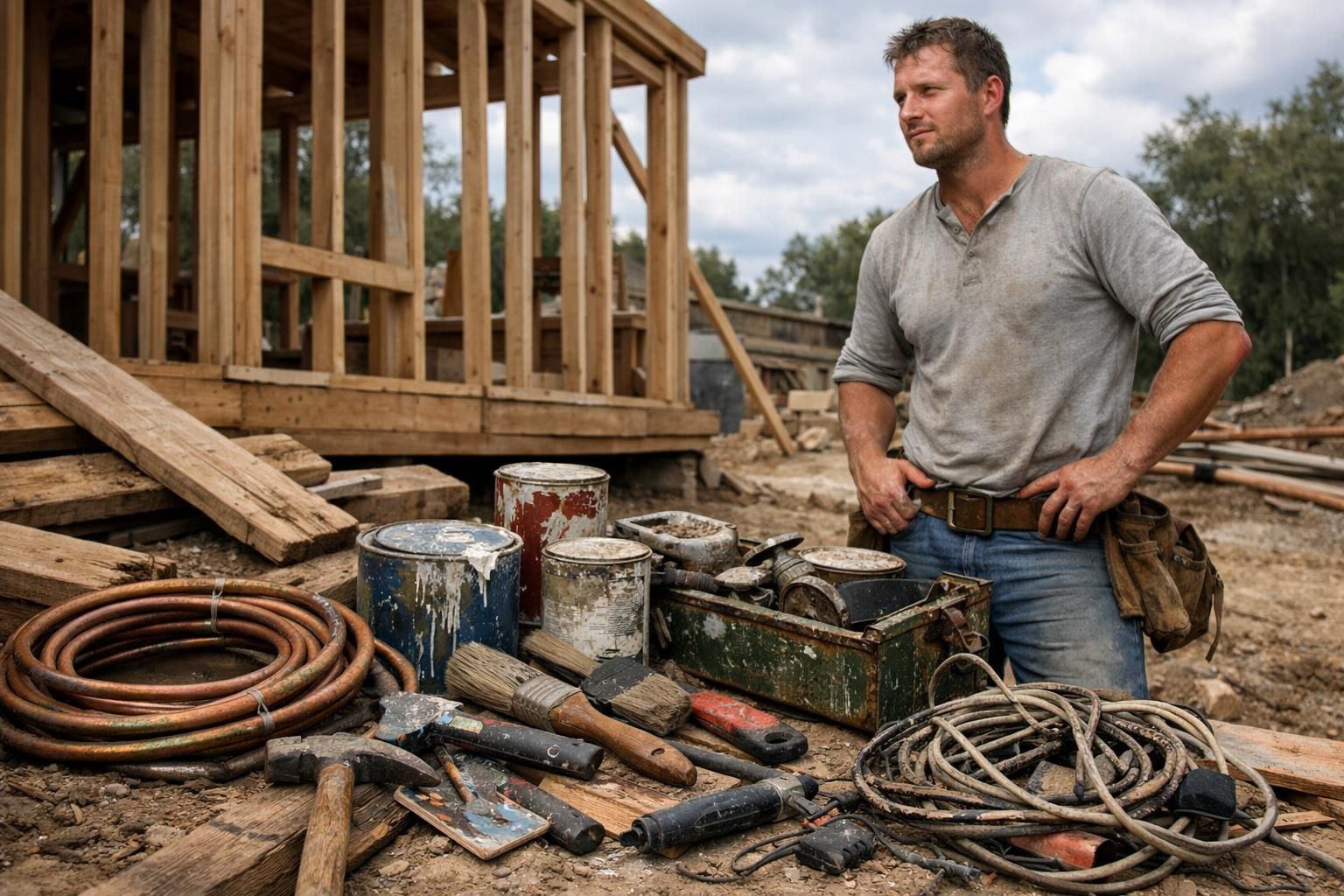
Managing rehab crews can be challenging for real estate investors. Learn essential tips to balance cost, time, and quality in your renovation projects.
Table of Contents
Managing Rehab Crews: Investor Guide to Contractors

New to fix-and-flip? Start with our Fix-and-Flip Guide.
Managing rehab crews stands as one of the toughest parts of real estate investing. Many investors struggle to balance cost, time, and quality when hiring a general contractor or managing workers themselves.
If you choose the wrong path, you risk project delays or losing money due to poor oversight. This guide offers actionable tips for real estate investors who want more control over their renovation process while keeping projects on track in busy markets like Washington, DC.
After years of flipping homes and building teams, I learned firsthand how critical it is to have clear scopes of work and strong leadership skills during every phase. 2 My early experience showed me that working with a general contractor increases costs through management fees but does not always guarantee better results.
Using proven project management methods like draw schedules and regular check-ins helps keep carpenters, HVAC specialists, plumbers, and painters accountable throughout each stage. 1 Read on for expert advice that takes your property investment skills up a notch.
Key Takeaways
- Clear project goals, written scopes of work, and structured contracts help real estate investors avoid costly mistakes when managing rehab crews. Experts recommend using checklists and tools like BiggerPockets Pro or the Landlord Command Center to improve quality and track every stage.
- Careful vetting is critical. Always interview general contractors (GCs), ask for references, inspect at least two past projects in person, and check all licenses—especially in Washington, DC’s competitive market.
- Budget control comes from tying payments to progress with draw schedules. Direct hiring gives more oversight but adds payroll tax costs (around 15%) and raises management responsibility. Project managers often earn a $40,000 salary plus up to a 15% commission on profits.
- Weekly meetings, regular updates, and digital project management apps help spot issues early. Real estate investors found that clear timelines reduce change orders and keep teams accountable through documented agreements.
- Trustworthy relationships develop over time; it may take up to 2.5 years for strong crew loyalty according to Washington, DC case studies shared by BiggerPockets Pro members like J Scott. Final walkthroughs before payment ensure tasks meet agreed standards on every renovation job.
Defining Your Rehab Strategy

Set a clear plan for your renovation process to guide every project step. Use property analysis calculators and strategic planning tools to help you target the best returns on your real estate investing efforts.
Establish clear project goals
Clear project goals drive every successful renovation process. You must define what you want to achieve, whether it is boosting rental income in Washington, DC or flipping a property for quick profit.
Use a structured goal-setting tool with your general contractor (GC) and crews. Clients and contractors who used this method found that clear goals improved motivation and communication. 1 In recent qualitative studies, both clients and clinicians reported greater clarity when using structured tools during real estate investing projects.
Spell out specific objectives for each task such as HVAC system upgrades, sheet rock installation, or improving the quality of work in rental housing units. Address results you want on walls, air conditioning systems, or other major areas needing attention in your scope of work documents. 2 Tie each goal directly to your budget management plan and timeline tracking with project management tools. Real estate investors posting at BiggerPockets Pro have confirmed that clear targets led to fewer disputes over contracts and smoother progress toward final walkthrough inspections.
Focus your draw schedule around these goals so independent contractors know what standards they must meet before moving forward or receiving payments. Visualize the benefits: Picture newly finished rooms with flawless paint, robust heating systems working efficiently throughout winter months in Washington DC properties; imagine credit growth through sound payroll tax handling thanks to careful strategic planning at every stage of general contracting partnerships.
Prioritize budget and timeline management
Keep project goals focused on budget and timeline from the start. Use detailed property analysis calculators to estimate costs for labor, materials, and services like HVAC systems or handymen work.
Set a draw schedule with your general contractor. This keeps payments tied to progress milestones and limits risk of overruns.
Align motivation for both you and the project manager by linking compensation not just to base salary but also to profits per house. For example, a monthly salary plus 15 percent of profits gives incentive for on-time, on-budget performance.
Remember that every dollar spent affects investor income; paying a $40,000 annual project manager salary means $40,000 less profit on your real estate flipping projects in Washington DC or other markets.
Factor extra expenses into planning as well—project managers add about 15 percent in payroll taxes along with tool costs. Choose whether you want more control using direct hires or prefer oversight through a general contractor instead, even though GC management fees will raise total spend and reduce direct influence over schedule details.
Use landlord command center tools or popular platforms like BiggerPockets Pro to monitor timelines closely; keep all parties accountable at each step of the renovation process for maximum return as a real estate investor.
Back to topSelecting the Right Contractors

Choosing the right general contractor (GC) can make or break your real estate flipping project. Use BiggerPockets Pro tools to compare experience and quality of work before moving forward.
Vetting and interviewing contractors
Hiring the right general contractor (GC) sets the foundation for successful real estate investing. Your process should focus on skill, reliability, and track record in Washington, DC.
- Start with a comprehensive interview. Ask about experience with rehab projects similar to yours and request details about their work with basic carpentry, painting, sheetrock installation, heating and air conditioning.
- Require references from recent clients. Contact these clients and ask direct questions about quality of work, reliability, budget management, and how well the GC communicated throughout the renovation process.
- Inspect at least two past projects in person if possible. Bring a home inspector or use property analysis calculators to compare actual results against contract scope of work.
- Confirm licensing and insurance credentials for your state or city. Verify that all paperwork is current and meets legal standards required for general contractors in Washington, DC.
- Use BiggerPockets Pro tools or landlord command center features to check contractor backgrounds against public records for lawsuits or liens.
- Evaluate pricing by comparing multiple bids. Project managers (PMs) should negotiate costs to align with your draw schedule without sacrificing quality or project timeline.
- Assess trustworthiness during interviews by asking situational questions. J Scott recommends only working with contractors who answer honestly about challenges they faced on past jobs and how they solved problems.
- Document all findings within your project management system. Maintain clear records of interviews, reference checks, background verification steps, and price negotiations for each candidate.
Working directly with vetted professionals gives you more control over project outcomes. A thorough vetting process protects your investment from costly errors down the line.
Checking references and past projects
Verifying contractor experience is one of the most powerful steps in real estate investing. References and past projects reveal both the quality of work and reliability you can expect.
- Ask each general contractor (GC) for a detailed list of previous renovation jobs completed within Washington, DC or your target market.
- Contact at least three former clients, asking direct questions about project timelines, budget performance, and overall satisfaction.
- Request before-and-after photos from completed properties to get a visual sense of workmanship standards.
- Analyze each contractor’s history on trusted platforms such as BiggerPockets Pro; look for endorsements from experienced real estate investors like J Scott, who documented and numbered 50 houses sold with full tracking for reference.
- Verify that contractors have managed similar rehab scopes or project sizes, especially if your strategy includes house flipping or multi-unit renovations.
- Check that each GC holds proper licenses relevant to project management in your area by reviewing public records or state boards.
- Review recommendations in professional forums or communities that focus on real estate investing; investor-to-investor referrals often highlight exclusive tools and strengths you won’t see on standard resumes.
- Look for evidence of effective use of property analysis calculators or landlord command center tools in their prior projects; this means they understand budgeting and draw schedule requirements critical to your success.
- Confirm consistent results across multiple projects instead of judging a GC based on one high-profile job; reliable contractors demonstrate performance over time, not just once.
Setting Expectations and Scope of Work

Clear project goals and a defined scope of work will keep your renovation process on track. Use property analysis calculators or a landlord command center to outline every task and support quality of work from your general contractor.
Developing a detailed scope of work
List every specific renovation task in your scope of work. Identify who will handle each step, whether it is the main crew or a specialized contractor for HVAC, windows, countertops, or cabinetry.
Note that your primary crew often completes 75% of tasks like carpentry, basic plumbing, painting, and drywall. Specialized crews should only take on complex work outside your team's skills.
Use clear job descriptions and timelines to prevent misunderstandings with your general contractor or subcontractors. Detailed scopes support strong project management and help track progress using tools such as the landlord command center or BiggerPockets Pro calculators.
In my experience managing projects in Washington DC, thorough planning speeds up renovations and increases trust between investors and contractors. A precise draw schedule also keeps payment tied closely to quality milestones—an essential safeguard for real estate investors aiming for reliable results.
Creating clear contracts and agreements
Clear contracts and agreements help you establish trust in contractors and set strong expectations for your rehab projects. Always state the scope of work in writing to avoid confusion. 3 Attach project goals, payment schedules, and timelines within each agreement. Include details about materials, deadlines, and penalties for delays or poor quality of work. In Washington, DC’s fast-paced real estate investing market, a thorough contract protects your interests and reduces risks.
Use tools like BiggerPockets Pro property analysis calculators or landlord command center features to draft comprehensive documents. Make sure every general contractor (GC) you hire reviews these agreements carefully; their attention to detail signals professionalism.
Effective contract management assigns responsibility for unexpected issues upfront while keeping disputes at bay throughout the renovation process. 3 This approach lets you keep your investment on track from start to finish while improving communication with everyone involved in the construction project.
Back to topCommunication and Accountability

Keep your general contractor and rehab crews on track by using project management software such as the Landlord Command Center. Regular communication ensures real estate investors catch issues early and maintain quality of work throughout the renovation process.
Scheduling regular updates and check-ins
Schedule weekly updates with your general contractor. Use project management platforms, like the Landlord Command Center or property analysis calculators, to track progress in real time.
This step helps you and your project manager stay informed about every phase of the renovation process. Regular meetings reduce surprises and let you address issues before they snowball into costly delays.
Set a fixed day and time for check-ins with your rehab crew. During these sessions, review both completed tasks and what lies ahead on the scope of work. This routine gives contractors enough autonomy to resolve minor onsite problems quickly while keeping your goals front and center.
In my own experience managing projects in Washington, DC, frequent communication sharply cut back on rework at closing stages because everyone stayed aligned throughout.
Prompt feedback during each check-in streamlines work quality control and keeps teams accountable without micro-managing daily activity. Real estate investors using tools from BiggerPockets Pro find that structured updates help them deliver smoother renovations faster while protecting profit margins.
Your clear schedule signals professionalism; it also builds trust in contractors who know exactly when to report progress or raise flags if needed.
Using project management tools for tracking progress
Use project management platforms like Asana, Trello, or the Landlord Command Center to monitor every stage of your real estate rehab projects in Washington, DC. These exclusive tools help you track progress in real time and flag potential risks before they grow into expensive setbacks.
Budget tracking features let you record costs and ensure budget allocation stays on target; timeline monitoring helps keep crews working toward your deadlines. 4
Collect key data through progress-tracking apps to make smart decisions faster. For example, BiggerPockets Pro offers property analysis calculators that support real estate investors with financial projections and action steps.
With systematic tracking, you can quickly confirm quality of work or spot schedule delays from your general contractor (GC). Effective use of these tools leads to higher construction efficiency and stronger results for each investment property. 4
Back to topBudget Management

Strong budget management protects your real estate investment from overspending. Use property analysis calculators and project management software to monitor costs in Washington, DC rehabs.
Monitoring expenses and avoiding unnecessary costs
Track every dollar spent on your rehab projects with project management tools like the Landlord Command Center or BiggerPockets Pro. These exclusive tools help you see real-time expenses, match costs to your scope of work, and flag overruns before they become problems.
Buy materials yourself using investor funds instead of paying general contractors (GCs) large upfront amounts. This keeps control in your hands and prevents markups by third-party crews.
Balance salaries such as a $40,000 project manager’s pay plus a 15% profit commission against potential profits per property. Payroll tax adds roughly 15% more cost for each employee you add to the team.
Split labor and material costs clearly between you and your contractors; this limits disputes about what has been paid for versus what is still owed. Use property analysis calculators often so estimates reflect true out-of-pocket spending in Washington, DC or any competitive market.
Set clear agreements from the start that minimize unnecessary changes while maintaining quality of work you expect from trusted contractors. Limit change orders unless truly needed; require written approval before committing extra funds or shifting responsibility between parties involved in real estate investing projects.
Managing change orders effectively
Clear documentation and prompt communication keep change orders under control. Always update your scope of work in writing when any changes arise. Use project management tools such as a landlord command center or property analysis calculators to log new requests and track approvals.
This helps real estate investors avoid confusion about budget impacts and supports you in prioritizing timeline management.
Pay the main crew for large fixes only once they finish all approved change orders. This method increases accountability from your general contractor. As trust with contractors builds, flexibility grows; crews may handle some extra tasks without needing upfront approval, which speeds up progress without losing quality of work.
Effective use of these contract strategies can help you avoid costly overruns on Washington DC rehab projects while keeping pace with top industry standards like those promoted by BiggerPockets Pro members.
Back to topProblem-Solving and Conflict Resolution
Effective problem-solving and conflict resolution build trust in contractors and protect your investment. Use the Landlord Command Center to track disputes, ensure accountability, and maintain quality of work throughout your projects in Washington, DC.
Addressing disputes with professionalism
Clear contracts and well-defined scopes of work act as your first line of defense against disputes with a general contractor or other rehab crews. For example, a BiggerPockets Pro member in Washington, DC worked through several complex projects by relying on detailed agreements that outlined tasks, deadlines, and payment structures.
Including dispute resolution mechanisms in every contract gives you legal protection if things go off track.
As a real estate investor or project manager, your involvement matters when conflict arises. Stay calm and direct during disagreements to preserve trust in contractors and protect the quality of work.
Step into issues early before they grow; for instance, reviewing change orders on time helps ensure no misunderstanding derails progress. Over years working with landlord command center tools and reliable property analysis calculators, professional handling of tough conversations has kept even large investment properties running smoothly in high-stakes rehab scenarios.
Ensuring quality control throughout the project
You can ensure quality of work on your project by having the main general contractor’s crew handle all finishing and touch-up tasks. Using the same team across different projects in Washington, DC or any major market helps maintain consistent standards.
This practice cuts down on costly follow-up repairs and boosts trust in contractors during real estate investing.
The project manager stays involved at every phase to make sure renovation meets your goals set out in the original scope of work. Use property analysis calculators and project management tools like those discussed on BiggerPockets Pro to track progress against benchmarks for budget, time, and outcomes.
Make final payment only after you inspect results and approve all completed items. These steps protect your investment while ensuring that quality control is never left to chance with rehab crews or subcontractors.
Back to topFinal Walkthrough and Project Handover
Meet your general contractor on-site to check every detail against the scope of work. Use project management tools like Buildertrend or CoConstruct to organize punch lists and confirm each task meets quality standards expected in Washington, DC real estate investing.
Inspecting the completed work
Conduct a thorough inspection of the completed work before releasing the final payment. Review each item on your scope of work to ensure every task meets your quality standards and matches what you agreed with your general contractor (GC).
Use project management tools like checklists or mobile apps to track details during this phase. Address any remaining issues by instructing your main crew to handle touch-ups immediately.
Inspections boost trust in contractors and protect your investment, especially in busy markets like Washington, DC where timelines matter. Consistent final walkthroughs help real estate investors spot problems early and prevent costly errors later.
This hands-on approach improves outcomes for real estate investing projects and raises the overall standard of quality of work delivered by rehab crews.
Closing out contracts and final payments
After the final walkthrough, review every aspect of the completed work. Only approve final payments once you confirm all deliverables meet your scope of work and quality standards.
In Washington, DC, many investors limit upfront payments by using clear payment terms in contracts with general contractors. This approach builds trust in contractors while protecting your real estate investing goals.
Document each step of contract closeout for legal compliance and future reference. Store signed agreements, change orders, proof of inspections, and receipts together using project management tools like BiggerPockets Pro.
These records help resolve any disputes that might arise after the rehab project wraps up and support accountability across all parties involved.
Back to topManaging Rehab Crews: A Comprehensive Guide
Building strong relationships with your rehab crew takes time and intention. Most successful real estate investors in Washington, DC report that it can take as much as 2.5 years to establish true trust in contractors and consistent quality of work.
Start by deciding if you want full control or prefer less day-to-day involvement. Hiring a general contractor (GC) usually means paying a premium but requires fewer decisions on your end; self-managing or hiring a project manager gives you tighter oversight over the scope of work and expenses.
Focus on developing clear expectations for both the main crew, who typically handle around 75% of renovation tasks, and specialized subcontractors brought in for specific needs like plumbing or electrical updates.
Use detailed contracts and defined payment schedules to drive accountability from every team member. Lean into tools such as Buildertrend or Procore for scheduling, budget tracking, and communication management.
Always follow state laws regarding Workers’ Comp Insurance coverage and keep IRS regulations front of mind when hiring laborers or subcontracted help within your real estate investing projects.
Fair compensation not only ensures loyalty but also inspires pride in craftsmanship throughout each stage of the job site transformation.
Back to topConclusion
Managing rehab crews for real estate investing takes planning and patience. You must vet your general contractor or team, set a clear scope of work, and stick to strong project management tools.
Staying involved helps control costs and keeps quality high. Your commitment to the process will build trust in contractors and lead to better results on every project. Consistent teamwork drives successful renovations from start to finish.
Back to topFAQs
1. What is the role of a general contractor in real estate investing projects?
A general contractor, often called a GC, manages all parts of the rehab crew. The GC oversees workers and ensures each job matches the scope of work set by investors. This helps keep projects on track and within budget.
2. How does defining a clear scope of work help manage rehab crews?
Defining the scope of work gives every team member clear tasks and goals to meet. It sets expectations for quality, cost, and timeline in real estate investing projects. Clear instructions reduce mistakes and delays.
3. Why should investors check on contractors during a project?
Regular checks help ensure contractors follow the agreed plan for each phase of work. Investors catch problems early before costs rise or timelines slip out of control on their real estate deals.
4. What are practical tips for hiring reliable contractors for your investment property?
Choose licensed contractors with strong references from other investors in real estate investing circles. Review past jobs that match your planned scope of work to see their skill level firsthand; this boosts confidence in getting results you want from your rehab crew.
References
- ^ https://pmc.ncbi.nlm.nih.gov/articles/PMC8850761/
- ^ https://thanmerrill.com/scope-of-work/
- ^ https://www.researchgate.net/publication/390280363_Contract_Management_in_Construction_Law_Mitigating_Risks_Dispute_Resolution_and_Performance_Enforcement (2025-03-28)
- ^ https://cambridgeresearchpub.com/ijeres/article/view/290