

If you've spent any time trying to research commercial real estate deals, you already know the frustration: ownership records buried in county databases, ou
Products and Tools Mentioned in this Post
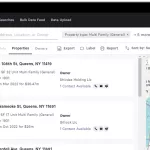
If you've spent any time trying to research commercial real estate deals, you already know the frustration: ownership records buried in county databases, outdated contact information, and no easy way to filter thousands of properties down to the ones that actually fit your criteria. Reonomy was built specifically to solve that problem. It's a commercial property intelligence platform that aggregates data on millions of properties across the United States, giving investors, brokers, and lenders a single place to find owners, analyze assets, and identify off-market opportunities. In this Reonomy review, we'll break down exactly what the platform does, who it's built for, what it costs, and whether it's worth the investment for your business.
What Is Reonomy?
Reonomy is a data and analytics platform focused exclusively on commercial real estate (CRE). Founded in 2013 and headquartered in New York, the company has built a massive database covering over 50 million commercial properties across the U.S. In 2021, Reonomy was acquired by CoStar Group, one of the largest commercial real estate data companies in the world — a move that significantly expanded its data infrastructure and credibility.
Unlike residential-focused tools such as the MLS or consumer-facing platforms like Zillow, Reonomy targets professionals who need to go deeper: off-market deal sourcing, owner identification, debt and lien research, and portfolio-level analysis. It's used by commercial brokers, private equity firms, lenders, insurance companies, and independent investors who want an edge in finding and underwriting deals before they hit the open market.
At its core, Reonomy aggregates public records — including ownership data, sales history, mortgage and debt information, tax records, and building characteristics — and layers on proprietary analytics and AI to help users identify the most actionable leads. The platform connects these data points to real contact information, so instead of hitting a dead end with an LLC owner, you can often find the actual decision-maker behind the entity.
Key Features of Reonomy
Property Search and Filtering
Reonomy's search engine is its most immediate value proposition. You can search across the entire U.S. commercial property landscape and filter by an enormous range of criteria, including:
• Property type — multifamily, office, retail, industrial, mixed-use, hospitality, and more
• Location — by state, county, city, zip code, or custom-drawn map area
• Building size and lot size
• Year built
• Assessed value and estimated market value
• Last sale date and sale price
• Debt and mortgage details — loan maturity dates, lender names, loan amounts
• Owner equity estimates
• Number of units (for multifamily)
• Zoning classification
The ability to filter by loan maturity date is particularly powerful. If you're looking for motivated sellers, properties with loans maturing in the next 6–18 months are often owned by landlords who may need to sell or refinance quickly, especially in a tight credit environment. Reonomy lets you target this exact scenario at scale.
Owner Identification and Contact Data
One of the biggest pain points in commercial real estate prospecting is that properties are frequently owned by LLCs, trusts, or holding companies — making it nearly impossible to find the actual human being you need to talk to. Reonomy's ownership unlock feature uses AI to pierce the corporate veil and identify the individuals behind these entities.
Once you've identified a property of interest, you can unlock the owner's name, phone number, email address, and mailing address. Reonomy also shows you whether the owner controls other properties in their portfolio, which is useful for brokers trying to build relationships with prolific owners or investors looking to make portfolio-level offers.
The accuracy of contact data varies, as it does with any data aggregation platform, but Reonomy's depth here is significantly better than trying to chase down this information manually through county records.
Sales and Debt History
Every property profile on Reonomy includes a detailed transaction history: prior sales dates, prices, and parties involved. More importantly, it also includes recorded mortgage data — including the lender, original loan amount, origination date, and maturity date. For investors focused on distressed or value-add deals, this level of debt transparency is invaluable.
You can identify properties that:
• Have been held for 10+ years with no refinance activity (potential equity-rich sellers)
• Have debt maturing soon (motivated sellers under financing pressure)
• Were purchased with high leverage during a peak market period (potential distress candidates)
• Have had multiple ownership changes in a short period (possible problem assets worth understanding)
Portfolio Analysis
Reonomy allows you to analyze ownership at the portfolio level, not just the individual property level. If you identify an owner who holds 15 multifamily properties in a metro area, you can see all 15 properties, their associated debt, and estimated values in one view. This is enormously useful for understanding your competitive landscape, identifying large-scale sellers, or targeting owners with specific portfolio characteristics.
Market and Neighborhood Data
Beyond individual properties, Reonomy provides market-level context including recent sale comps, price per square foot trends, and cap rate data for specific submarkets. While it's not a substitute for full-blown market research tools, having this data embedded in the same workflow where you're prospecting saves significant time.
Reonomy Insights (AI-Powered Lead Scoring)
Reonomy uses machine learning to score properties based on their likelihood to transact. These propensity-to-sell scores factor in ownership tenure, debt maturity, equity levels, and market conditions to surface the leads most likely to convert. For teams doing large-volume outreach, this prioritization can meaningfully improve conversion rates by focusing energy on the warmest opportunities.
Integrations and Data Export
Reonomy supports data export to CSV, allowing you to build targeted lists for direct mail campaigns, cold calling, or CRM import. The platform also integrates with some CRM systems, though the depth of integration varies. For users running high-volume outreach operations, the ability to cleanly export segmented lists is a core workflow feature.
Reonomy Pricing
Reonomy does not publish pricing publicly on its website — you need to contact their sales team for a quote. Based on publicly available information and user reports, pricing typically starts in the range of $1,000 to $5,000+ per year for individual users, with enterprise plans for teams and organizations priced significantly higher.
This positions Reonomy squarely as a professional-grade tool, not a casual investor platform. The pricing reflects its target market: commercial brokers, lenders, and institutional investors who can justify the spend based on deal volume. If you're closing two or three commercial deals a year at meaningful size, the cost is easy to rationalize. If you're exploring CRE investing as a side activity, you may find the price point harder to absorb.
It's worth noting that following the CoStar acquisition, Reonomy's pricing and packaging have evolved, and the sales process is more enterprise-focused than in its earlier years. Prospective users should request a demo and negotiate based on their specific use case and usage volume.
Pros of Reonomy
• Massive database coverage: 50+ million commercial properties across the entire U.S. is genuinely comprehensive, and the depth of data per property is hard to match.
• Owner identification is a game-changer: The ability to find the human behind an LLC solves one of the most persistent frustrations in CRE prospecting.
• Debt and maturity data: Filtering by loan maturity is a uniquely powerful feature for finding motivated sellers before a deal ever hits the market.
• Portfolio-level analysis: Understanding an owner's full portfolio opens up relationship and deal opportunities that property-by-property research would miss.
• AI lead scoring: Propensity-to-sell scoring genuinely helps prioritize outreach for teams handling large prospect lists.
• CoStar-backed data quality: The acquisition by CoStar Group has strengthened the underlying data infrastructure.
• Time savings: Aggregating data that would otherwise require hours of county record searches into a single interface is a real productivity multiplier.
Cons of Reonomy
• High price point: The cost puts it out of reach for newer investors or those with limited deal flow to justify the spend.
• Contact data accuracy varies: Like all data aggregation platforms, contact information can be outdated or incomplete, requiring verification before outreach.
• No transparent pricing: Having to go through a sales process just to get a quote adds friction for users trying to evaluate the tool independently.
• Residential properties not covered: If your strategy includes small multifamily (1–4 units) or single-family rentals, Reonomy isn't the right tool.
• Learning curve: The depth of filtering options and data layers means new users often need time to understand how to build the most effective searches.
• Enterprise focus post-CoStar: Some independent users have noted that the product increasingly feels oriented toward large teams and institutional users rather than individual investors.
Who Is Reonomy Best For?
Commercial Real Estate Brokers
Brokers prospecting for listings and buyer clients are arguably the primary beneficiaries of Reonomy. The combination of property search, owner identification, and contact data gives brokers a full prospecting workflow in a single tool. Being able to target owners in a specific submarket whose loans are maturing in the next 12 months and reach out with a timely pitch is exactly the kind of targeted activity that wins listings.
Commercial Real Estate Investors
Investors focused on off-market deal sourcing — whether in multifamily, industrial, retail, or office — will find Reonomy valuable for identifying properties that match their acquisition criteria and reaching out directly to owners. The platform is particularly suited to investors doing direct-to-seller outreach as part of their deal flow strategy.
Lenders and Debt Investors
Banks, credit unions, CMBS lenders, and debt fund managers use Reonomy to identify potential borrowers, monitor portfolio debt, and find refinancing opportunities. The debt maturity data and owner contact information make it useful for proactive origination outreach.
CRE Research and Analytics Teams
Institutional teams doing market research, site selection, or portfolio benchmarking use Reonomy for its breadth of data and export capabilities. When you need a clean dataset of all industrial properties over 50,000 square feet in a specific metro that sold in the last 24 months, Reonomy can generate that list in minutes.
Who Should Look Elsewhere
If you're primarily investing in residential real estate — including small multifamily properties — you'll be better served by a residential-focused data platform. For residential investor tools, check out our PropertyRadar review, which covers a strong alternative built for residential and small commercial investors. Similarly, if your primary need is property management rather than deal sourcing, platforms like AppFolio or Buildium are purpose-built for that workflow.
Reonomy vs. Alternatives
Platform
Focus
Best For
Price Range
Owner ID
Reonomy
Commercial properties
CRE brokers, investors, lenders
$1,000–$5,000+/yr
Yes (LLC pierce)
CoStar
Commercial listings + analytics
Institutional CRE professionals
$5,000–$20,000+/yr
Limited
PropertyRadar
Residential + small commercial
Residential investors, agents
~$49–$299/mo
Yes
CREXI
CRE listings marketplace
Buyers/sellers of listed deals
Free–$600+/mo
Limited
Buildout
CRE broker marketing
Brokers creating marketing materials
$300–$600+/mo
No
Reonomy vs. CoStar
The most obvious comparison is CoStar, which is now Reonomy's parent company. CoStar is the gold standard for commercial real estate data, listings, and analytics, but it's priced for institutional users with budgets to match. Reonomy has historically served as the more accessible, prospecting-focused layer of this ecosystem — particularly for owner identification and off-market sourcing. Post-acquisition, there's increasing integration between the two platforms, but they remain distinct products targeting slightly different workflows. CoStar is more about market intelligence and listed inventory; Reonomy is more about finding and reaching owners before a deal is listed.
Reonomy vs. PropertyRadar
PropertyRadar is a strong alternative for investors working in residential and small commercial real estate. It offers owner identification, property filtering, and direct mail campaign tools at a more accessible price point. If your strategy involves 1–4 unit residential properties, duplexes, or small strip malls, PropertyRadar is likely a better fit. You can read a detailed comparison in our PropertyRadar resource page.
Reonomy vs. CREXI
CREXI is primarily a commercial real estate listings marketplace — it's where deals are marketed and transacted, not where you find off-market opportunities. CREXI does have an analytics layer (CREXI Intelligence) that offers some data research capabilities, but it doesn't match Reonomy's depth for owner identification and prospecting. The two tools serve complementary purposes: CREXI for listed deal flow, Reonomy for off-market sourcing.
How to Get the Most Out of Reonomy
Build Highly Targeted Search Filters
The platform's value is proportional to how precisely you define your criteria. Before you log in, know exactly what you're looking for: property type, geography, size range, vintage, and the financial characteristics that signal motivation (equity, debt maturity, hold period). The more specific your filter stack, the more actionable your results.
Prioritize Debt Maturity Searches
If you're looking for motivated sellers, set up a saved search for properties with loans maturing in the next 6–18 months in your target markets. This is one of the highest-signal indicators of a property that may need to trade, and it's a filter most investors aren't using systematically.
Use Portfolio Views for Relationship Building
When you identify an interesting property, immediately pull the owner's full portfolio. If they own 8 properties in your market, approaching them as a buyer for multiple assets — or as a broker offering a full portfolio disposition strategy — is a far more compelling conversation than a one-off inquiry.
Pair With a Good CRM
Reonomy generates leads; your CRM converts them. Export your lists, import them into your CRM, and build follow-up sequences. Commercial real estate prospecting is a long game — most owners won't be ready to sell on your first contact. Consistent, systematic follow-up over 6–24 months is how deals happen.
Verify Contact Data Before Large-Scale Outreach
Before you blast a direct mail campaign or cold call list, spot-check a sample of the contact data. If accuracy is below your threshold, consider running it through a data verification tool before outreach. This improves deliverability for mail and reduces wasted effort on calls.
Reonomy and Your Overall Investment Stack
Reonomy covers the deal sourcing and research phase of the investment lifecycle, but a complete investor toolkit needs more. Once you've acquired assets, you'll want property management and financial tracking solutions. For investors managing a growing rental portfolio, Stessa offers excellent free financial tracking and reporting tools worth exploring. For landlords scaling into more units, our reviews of Hemlane and TenantCloud cover accessible property management platforms at different price points.
On the education side, if you're building a BRRRR strategy around commercial or residential acquisitions, we highly recommend the Buy, Rehab, Rent, Refinance, Repeat resource — David Greene's framework pairs well with the kind of value-add deal sourcing that Reonomy enables.
Final Verdict: Is Reonomy Worth It?
Reonomy is a genuinely powerful platform for commercial real estate professionals who do meaningful volume in deal sourcing, brokerage, or lending. The combination of comprehensive property data, LLC ownership identification, debt and maturity filtering, and portfolio-level analysis creates a prospecting workflow that would take an analyst days to replicate manually. For the right user, the ROI is not a question — a single deal sourced from Reonomy data more than covers years of subscription costs.
The key qualifier is "the right user." If you're a commercial broker doing 10+ transactions a year, a CRE investor actively pursuing off-market acquisitions, or a lender prospecting for refinance opportunities, Reonomy belongs in your stack. If you're a newer investor still building your first deals, or if your focus is primarily residential, the price point and product depth may not be justified yet.
Our overall assessment: Reonomy earns a strong recommendation for active CRE professionals, with the caveat that you should go in with a clear prospecting strategy to extract maximum value. Request a demo, test the data quality in your target markets, and model out how many leads you need to close one deal. For most commercial operators, the math works out convincingly in Reonomy's favor.
Ready to explore the broader landscape of real estate investor tools? Browse our full tool reviews and comparisons at KDS Development to find the right combination of platforms for your investing strategy.