

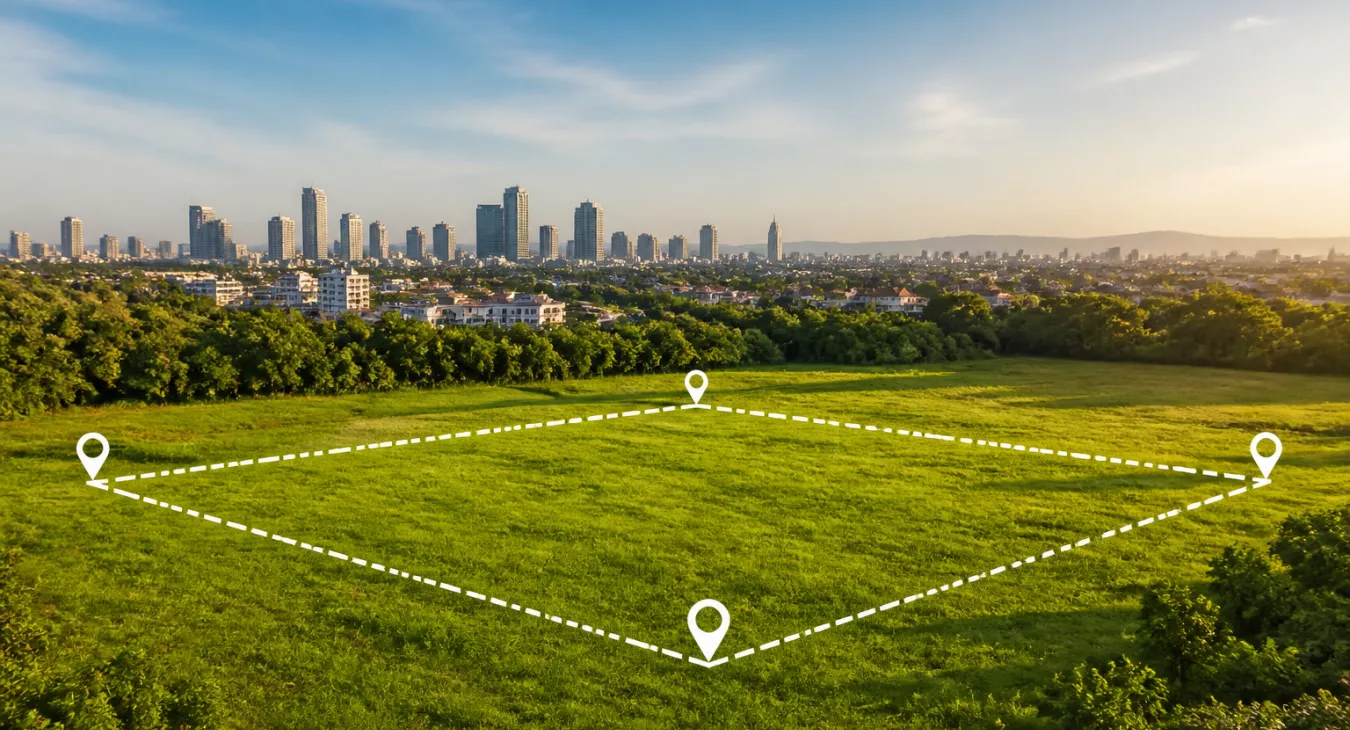
Discover if land is a good investment in 2026. Explore pros, cons, strategies & key risks to make an informed decision before investing.
Products and Tools Mentioned in this Post


Buildertrend
Buildertrend is construction management software for home builders and remodelers. Manage projects, schedules, budgets, and client communication in one platform.
Table of Contents
- Quick Answer: Is Land a Good Investment?
- Benefits of Investing in Land
- Risks and Challenges of Land Investment
- Land vs. Property Investment vs. Funds
- Types of Land to Consider
- Realistic Expectations: Land Investment Returns
- How to Invest in Land Successfully
- Land Investment Strategy for Experienced Investors Only
- When Land Investment Makes Sense
- Conclusion: Should You Invest in Land?
- Frequently Asked Questions
Land has captivated real estate investors for centuries — it's finite, tangible, and carries an almost instinctive appeal. But here's the real question: is land actually a good investment in 2026? The honest answer is it depends. For the right investor in the right location with the right strategy and professional support, absolutely. For everyone else? Land carries risks that are shockingly easy to underestimate and brutally hard to recover from. This guide breaks down the verified data, the genuine benefits, the serious hazards, and the due diligence steps you need before committing capital to land — whether agricultural, raw rural, or development-ready.

Quick Answer: Is Land a Good Investment?
Land works for experienced investors with deep pockets who can stomach illiquidity, zoning surprises, and holding periods stretching five, ten, even fifteen years. And it's not passive. You won't see monthly rental income from day one like you would with a rental property. Raw land sits there generating zero cash flow while you wait. Your money's tied up betting on appreciation, development potential, or maybe a crop lease bringing in some agricultural cash rent.
Here's what the data actually shows. The NCREIF Farmland Index — the institutional standard for measuring U.S. farmland returns — posted just +0.20% total return for all of 2025 (that's –2.80% in capital loss, saved by +3.05% income return). 2024? Even worse at –1.03%. First negative year since 1991. But zoom out to the full 34-year run from 1992 through 2025, and you're looking at 9.84% annualized. That's compelling. The catch? Those two rough years remind you land isn't a straight shot up — investors who bought at the peak absolutely do lose money.
Back to topBenefits of Investing in Land

Finite Resource with Growing Demand
You can't make more land. Population growth, urban expansion, and infrastructure development are all fighting over the same finite acreage, which naturally pushes scarcity-driven appreciation in high-demand corridors. But here's the catch: "limited supply" as a national talking point means almost nothing to your bottom line. What actually matters is whether your specific parcel sits in a location where demand is genuinely growing. That means doing the granular, local homework — no shortcuts.
Potential for Long-Term Appreciation
The numbers back this up. NCREIF data shows farmland returning roughly 9.84% annually from 1992 through 2025, which proves patient capital gets rewarded. Development land can do even better when you lock in planning or zoning changes — but let's be real: those scenarios are speculative and shouldn't be your base case. Current USDA figures (2025) tell a more nuanced story. U.S. cropland is averaging $5,830 per acre, up 4.7% year-over-year, while pastureland sits at $1,920 per acre (up 4.9%). State-by-state variation? Enormous. You're looking at anything from $1,320/acre in Montana to $32,900/acre in Rhode Island. Geography is everything.
Portfolio Diversification
Land historically moves independently of stocks and bonds. Adding a solid land position to your diversified portfolio cuts overall volatility — assuming you size it right and actually understand what you're holding. This principle underlies BRRRR strategies and other alternative real estate plays. If you're weighing strategies, our breakdown of BRRRR vs. flip investing gives you the framework to compare.
Low Ongoing Maintenance Costs
No tenants. No toilets breaking at 11 p.m. No emergency repairs bleeding your cash flow. Compared to a rental property loaded with management headaches and carrying costs, vacant land is brutally simple. You've got minimal day-to-day expenses — though you still can't ignore property taxes, and you're obviously not collecting rent either. It's a trade-off worth understanding.
Agricultural Cash Rent and Lease Income
Farmland doesn't have to sit dormant. The USDA reports average cash rent for cropland at $161 per acre as of 2025. Run the math: on a $5,830/acre asset, that's a gross cash yield of roughly 2.8%. Not spectacular, but it's real money offsetting your carrying costs while you wait for appreciation to do the heavy lifting.
Tax Advantages
Hold land longer than 12 months and you're in long-term capital gains territory federally — which is where you want to be. For tax year 2026, your LTCG rate sits at 0%, 15%, or 20% depending on taxable income. Single filers earning up to $49,450 pay zero; the 15% bracket extends to $545,500. Married filing jointly? You get the 0% rate up to $98,900 (2026 per IRS Rev. Proc. 2025-32). Flip that script — sell within 12 months — and you're taxed as ordinary income at marginal rates hitting 10% to 37%. That's your incentive to hold. And don't sleep on the 3.8% Net Investment Income Tax surtax, which stacks on top of LTCG rates above certain MAGI thresholds. Agricultural-specific breaks — greenbelt programs, Williamson Act contracts, rollback taxes — vary wildly by state. Always bring in a tax pro licensed in your jurisdiction before assuming any exemption applies.
Back to topRisks and Challenges of Land Investment
The benefits are real. But so are the risks — and experienced investors dig deep here, not skim it as an afterthought.
Planning Permission and Zoning Risk
Here's the paradox: the biggest value driver for development land is also the biggest risk. You need planning permission or a favorable rezoning to unlock real gains. Applications get denied all the time. Appeals drag on for years. Local politics shift. And here's the kicker — zoning classifications aren't standardized nationally. A multi-family designation in one county might prohibit any structure in the next. Never assume a label means the same thing across jurisdictions. Before you write a check, get a written zoning opinion from a local land-use attorney. Not optional.
Illiquidity
Raw land sits at the bottom of the liquidity ladder for individual investors. There's no stock exchange for raw acreage. When you need out — whether it's planned or forced — you're hunting for a motivated buyer willing to meet your price. That hunt can stretch months or years, especially in a down market.
Financing Difficulties
Banks see raw land and see risk. As of 2026, typical land loan rates hit 6.5%–10% (per Mossy Oak Properties), and you're looking at down payments of 20%–30% of purchase price (per AmeriSave). Compare that to a conventional residential mortgage — the gap is brutal. Agricultural land is different. If you qualify under USDA criteria, the USDA FSA Direct Farm Ownership Loan runs around 5.50% (updated May 2026) up to $600,000, and the FSA Guaranteed Loan program pushes to $2,236,000 with commercial lender participation.
Hidden Costs and Legal Issues
Surveys. Title insurance. Environmental assessments. Soil testing. Utility connection fees. Road access easements. Legal fees. These stack up fast and hit your acquisition cost hard. Water rights deserve their own paragraph. In western states under prior-appropriation doctrine, water doesn't automatically come with the land in most jurisdictions, and groundwater rules vary wildly by state. Well-drilling? Prohibited in closed basin areas across Colorado, Arizona, New Mexico, Washington, Oregon, and Idaho. These aren't theoretical problems — they're documented deal-killers that happen regularly. Skip the Phase I environmental assessment on a parcel with prior commercial or industrial use and you're asking for trouble.
Market Volatility
The NCREIF data tells the story. Even farmland — the most institutionally tracked land category — posted back-to-back negative or near-zero total returns in 2024 and 2025. Raw land in speculative markets drops even harder. Land isn't a universal hedge against economic cycles.
Land Banking Scams
The Financial Conduct Authority (FCA) in the UK and the SEC in the U.S. have both flagged land banking schemes. These are promotions promising that a parcel will inevitably get planning permission and deliver outsized returns. Red flag time: if a promoter guarantees planning permission or projects specific returns on undeveloped land, walk away. Verify independently that development potential is genuine before you commit anything, and don't rely on the seller's word alone.
Back to topLand vs. Property Investment vs. Funds

You need to understand where land stacks up against other real estate plays. It's the only way to build a portfolio that actually works for your goals. The table below pulls from verified data and real-world analysis — and here's the thing: ROI numbers for property and funds swing wildly depending on market, timing, and asset quality. We're not reducing them to a single number because that'd be irresponsible.
| Metric | Raw / Agricultural Land | Buy-to-Let Property | REITs / Regulated Funds |
|---|---|---|---|
| Long-run return benchmark | ~9.84%/yr (NCREIF farmland, 1992–2025); raw land varies widely | Varies by market; includes rental yield + appreciation | Varies by sector; publicly available track records |
| Income during hold | Low to none (cash rent ~$161/acre avg for cropland, 2025) | Monthly rental income from day one | Dividend distributions (quarterly/monthly) |
| Liquidity | Very low — months to years to sell | Low to moderate — weeks to months | High (publicly traded REITs) to moderate (non-traded) |
| Typical financing (2026) | 6.5%–10% rate; 20%–30% down | Conventional mortgage; typically lower rates | No use required from investor |
| Ongoing management burden | Low (no tenants), but requires monitoring and tax compliance | High — maintenance, tenants, compliance | Very low — professional management |
| Expertise required | Very high — zoning, planning, water rights, environmental | High — property management, local market | Low to moderate — fund selection |
| Risk level | High to very high | Moderate to high | Low to moderate (diversified) |
| Minimum viable capital | Highly variable; raw rural land from ~$1,500–$2,500/acre nationally; 20–30% down required for loans | Down payment + reserves; market-dependent | Can start with small amounts (ETFs/public REITs) |
Looking for real estate exposure without the headache? A house hacking strategy or a managed REIT might be your lane. And frankly, they often match investor risk tolerance better when your time is limited. Land demands serious expertise. Don't touch it unless you genuinely know what you're doing.
Back to topTypes of Land to Consider
Agricultural Land
You've got the most reliable data here. The USDA and NCREIF track this stuff religiously. U.S. farm real estate averaged $4,350 per acre as of 2025 — cropland runs $5,830/acre while pastureland sits at $1,920/acre. And here's the cash flow upside: you can pull rent income while holding. State-level agricultural exemptions exist too, but don't assume yours qualifies. Tax treatment varies wildly by state. Get a local tax professional and agricultural attorney on speed dial before you close.
Raw Rural Land
According to Landmodo's 2026 data, raw rural land gets dirt cheap in low-demand markets. New Mexico, Wyoming, Nevada? You're looking at under $300 per acre. Even rural New Jersey pushes $15,000 per acre. Nationally, expect roughly $1,500–$2,500 per acre for undeveloped rural parcels. The entry cost is seductive. But cheap land in remote areas comes with a brutal catch — access problems, utility nightmares, and resale that moves like molasses.
Brownfield Land
These are formerly industrial or developed sites sitting on environmental liability. The upside? Serious. If it's positioned in an urban or peri-urban market with real development demand, brownfields can deliver outsized returns. But don't skip Phase I and Phase II environmental assessments — they're mandatory. Remediation costs? Unpredictable and often substantial. Once you acquire and start planning ground-up development, you'll want solid construction project management software tracking every detail from day one.
Land with Development Potential
Rezoning candidates and subdivision plays hit different. You're betting on approvals that nobody can guarantee. Win the entitlement game and your land multiplies in value. Lose it and you're stuck with ag value or recreational pricing. This category demands the toughest due diligence — environmental studies, traffic impact analysis, infrastructure capacity reports. The risk is real. The payoff, though, is why people chase it.
Back to topRealistic Expectations: Land Investment Returns

Here's what the data actually shows. The NCREIF Farmland Index — your most reliable institutional benchmark — delivered 9.84% annualized total returns from 1992 through 2025. But flip to recent years? +0.20% in 2025 and –1.03% in 2024. That's the reality of cyclical markets. Raw land's trickier because there's no published index tracking non-agricultural vacant land like there is for farmland. Any raw land ROI claim you hear should raise red flags unless it's tied to a specific transaction you can verify or pulls from peer-reviewed research.
Development land is binary. You either have entitlements or you don't. Without planning permission or a successful rezoning, your parcel sits there appreciating at maybe 2–3% annually — if you're lucky. Get entitlements? The numbers can jump dramatically. But here's the trap: approval is expensive, it takes forever, and there's no guarantee you'll get it. Run your underwriting assuming full rejection before you write a check.
And then there's taxes — this changes everything. Hold land less than 12 months and you're paying ordinary income rates, which means 10%–37% depending on your bracket. Flip to long-term holding and your capital gains tax drops significantly. Best move? If you're selling one parcel and buying another, execute a 1031 like-kind exchange. You'll defer capital gains taxes completely — just identify your replacement property within 45 calendar days of closing and finish the exchange within 180 calendar days. Raw investment land qualifies as like-kind property under IRS rules, so this applies to your deals.
Back to topHow to Invest in Land Successfully

Step 1: Define Your Strategy Before You Search
Are you buying to hold and lease for agricultural income? To speculate on rezoning? To develop and sell? Maybe you're thinking long-term estate planning. Each one demands a different parcel type, location, holding period, financing structure, and exit strategy.
Investors without a clear strategy are the ones who overpay or end up landlocked with an illiquid asset they can't move at any reasonable price. Don't be that person.
Step 2: Conduct Rigorous Location Analysis
Population growth trends, infrastructure investment pipelines, employment base, and proximity to urban centers — these drive land demand. But generic national statistics won't cut it. You need county-level and parcel-level data to actually understand what's happening in your specific market.
Bring in a local broker who specializes in land transactions. Not a residential generalist. There's a massive difference.
Step 3: Understand the Planning and Zoning Reality
Don't take a seller's word on development potential. Pull the actual zoning designation from the county or municipal planning department yourself. Then get a written opinion from a local land-use attorney on what's permitted, what's prohibited, and what the realistic odds are for any rezoning you're banking on.
Zoning codes are entirely local. A designation that allows high-density residential in one city might not permit a single structure in the next county over.
Step 4: Assess Utilities, Access, and Water
Confirm road access — is it a public road, a deeded easement, or are you landlocked? Check proximity to electric, water, and sewer. And in western states, this is non-negotiable: verify water rights status before you commit a dime.
In the 17 prior-appropriation states west of the 100th meridian, water rights don't automatically transfer with the land deed. Texas groundwater operates under its own doctrine entirely. Domestic well drilling is restricted or outright prohibited in parts of Colorado, Arizona, New Mexico, Washington, Oregon, and Idaho because of exempt-well rules and closed basin designations.
Run every utility and water assumption by state and local agencies before purchase. Not after.
Step 5: Evaluate Financing Options Realistically
Land loan rates are running 6.5%–10% in 2026 with 20%–30% down payments typically required. Your carrying costs on financed land can eat you alive — especially with zero offsetting income.
If you're buying agricultural land, dig into FSA programs. The USDA FSA Direct Farm Ownership Loan is running around 5.50% (May 2026) on amounts up to $600,000, with a guaranteed program extending to $2,236,000. But there are strict eligibility requirements. Not every buyer or parcel qualifies.
Step 6: Due Diligence Checklist
| Due Diligence Item | Why It Matters | Key Questions to Ask |
|---|---|---|
| Title search and title insurance | Reveals liens, easements, boundary disputes, and ownership gaps | Are there any encumbrances? Is the chain of title clean? |
| Survey (current, boundary survey) | Confirms actual boundaries and reveals encroachments | When was the last survey? Does it match the legal description? |
| Zoning and land use verification | Defines what you can legally do with the parcel | What uses are permitted by right? What requires a variance or special permit? |
| Environmental assessment (Phase I) | Identifies recognized environmental conditions and potential liability | Is there any history of industrial, commercial, or agricultural chemical use? |
| Water and mineral rights | Rights may be severed from surface ownership and not convey with sale | Are water rights appurtenant to this parcel? Have mineral rights been severed? |
| Access and road rights | Landlocked parcels may be nearly worthless or require costly easement acquisition | Is access via public road, recorded easement, or informal use? |
| Flood zone and wetlands status | FEMA flood zone and potential wetlands restrictions can severely limit use | Is the parcel in a FEMA Special Flood Hazard Area? Any jurisdictional wetlands present? |
| Planning history | Prior applications may reveal why development hasn't occurred | Have any planning applications been submitted and refused on this parcel? |
| Property tax status and exemptions | Delinquent taxes and potential rollback tax liability can be hidden costs | Are taxes current? Is there an agricultural exemption that could trigger rollback if use changes? |
| Exit strategy viability | Who will buy this parcel from you, and under what conditions? | What comparable land sales exist in this submarket in the last 12–24 months? |
Land Investment Strategy for Experienced Investors Only
If that due diligence checklist above feels overwhelming, you've got a signal worth hearing. Land isn't for investors still figuring out real estate fundamentals. Here's the hard truth: don't touch land until you've got direct experience with more liquid, income-producing assets and a proper team in place — think land-specialist broker, local land-use attorney, licensed surveyor, and a CPA who actually knows real estate tax strategy.
Portfolio Allocation
Keep land to maybe 10-15% of your total deployed capital, not the other way around. And here's why that matters: illiquidity kills optionality. Over-allocate to land, and you won't have dry powder when a better opportunity shows up or when the market hiccups. You've probably run the numbers on BRRRR deals or fix-and-flip plays. Land? It's a capital efficiency nightmare during the hold period.
Exit Strategy Is Non-Negotiable
Before you sign the purchase agreement, know how you're getting out. Sell to a developer? Sell to an end user? Develop it yourself? Swap it via 1031 into something income-producing? Hold it for the estate? Each path has different holding periods, risk profiles, and tax hits. Too many investors buy first and ask later — then they're stuck holding an asset nobody wants at the price they're asking.
Development Execution
Moving into ground-up development after acquisition? Budget, schedule, and contractor management become everything. You'll want professional-grade construction management software and platforms like Buildertrend. They keep you connected to what your subs are doing, when draws are happening, and whether you're tracking to timeline.
Back to topWhen Land Investment Makes Sense

Land investing isn't for everyone. You need substantial capital first — that's 20–30% down payment plus enough reserves to cover carrying costs without breaking a sweat. Then there's the time commitment: you're looking at a five-year minimum horizon, ideally longer. And you can't just hope the land appreciates. You need a specific, realistic use case. A strong professional team (real estate attorney, surveyor, environmental consultant) isn't optional. Plus, you should already have experience with simpler real estate deals before you tackle raw land.
Where's the real opportunity? Growing metro fringe areas work. So do established agricultural regions with proven cash rent income streams. Parcels with genuine, near-term development demand — not pipe dreams, but actual credible demand backed by zoning approvals or economic data — can deliver solid returns. But here's the thing: "credible" means nothing without real expertise to verify it. Don't guess.
Are you just getting into real estate? Consider starting elsewhere. Our guides on fix-and-flip vs. wholesale and fix-and-flip financing walk you through strategies that are more forgiving for beginners. They'll build your foundation without the complexity of raw land.
Back to topConclusion: Should You Invest in Land?
Land can deliver solid returns. The NCREIF farmland data proves it—~9.84% annualized over the long run. But here's what keeps most investors up at night: that same data shows negative total returns in 2024 and basically nothing in 2025. Raw and development land? The risks are brutal and hard to pin down. Illiquidity. Planning uncertainty. Hidden environmental costs. Water rights complexity. And the kicker—you can lose it all on a speculative parcel.
Here's our take: Land isn't a path to easy money. It's an asset class built for investors with deep local knowledge, serious patience, professional support, and the capital to back it up. If you've got those boxes checked and you know exactly what you're doing, land belongs in a diversified portfolio. Everyone else? Start with liquid, income-producing real estate instead. The risk-adjusted math is way cleaner.
Don't lean on this article alone. Get a licensed real estate attorney involved. Talk to a CPA who eats and sleeps real estate. Connect with a land-experienced broker in your market. Then commit capital.
Back to topFrequently Asked Questions
Is raw land a better investment than rental property?
Not for most investors. Here's why: rental property puts cash in your pocket from day one, gets financed at better rates, and sells way faster when you need liquidity. Raw land? It's got serious upside—especially if zoning or planning changes hit—but you're bleeding carrying costs while you hold it and finding a buyer becomes a nightmare. The real answer depends on three things: how much capital you've got, what you actually know how to execute, and your timeline. If you want to explore income-producing strategies, check out our deep dive on house hacking as an investment strategy.
What are typical land loan interest rates in 2026?
Most commercial lenders are sitting at 6.5%–10% right now, with 20%–30% down expected. But here's the move if you're farming: USDA programs get you better terms. The FSA Direct Farm Ownership Loan comes in around 5.50% (as of May 2026). Obviously, rates swing based on your lender, the type of land, and your profile. Always pull multiple quotes before you commit.
How are land sale profits taxed in 2026?
Hold land longer than a year and you'll pay federal long-term capital gains rates: 0%, 15%, or 20% depending on income. The sweet spot? The 0% bracket goes up to $49,450 for single filers and $98,900 for married filing jointly. But watch out—a 3.8% NIIT surtax kicks in above certain thresholds. Sell within 12 months and you're paying ordinary income rates, which tops out at 37%. And don't forget state taxes pile on top. Get a CPA involved before you close—your specific situation matters.
Can a 1031 exchange be used when selling land?
Absolutely. Investment land qualifies as like-kind property under 1031 exchange rules, so you can defer your capital gains by reinvesting into another qualifying property. The clock starts the day you close: you've got 45 calendar days to identify replacement property and 180 days to close.
Back to top