


Learn what landlocked property is, why it's risky, and proven investment strategies to unlock value. Essential guide for real estate investors.
Table of Contents
- what's Landlocked Property? Definition and Basics
- How Properties Become Landlocked
- The Impact of Landlocked Property on Value and Usability
- Legal Solutions: Easements and Right of Way
- Practical Steps Before Buying Landlocked Property
- Landlocked Property and Eminent Domain
- Geographic Variations: State and Local Considerations
- Opportunities and Strategic Solutions for Landlocked Properties
- Conclusion: Navigating Landlocked Property with Confidence
- Frequently Asked Questions About Landlocked Property
Landlocked properties show up more often than you'd think. And when they do, they're way more complicated than that bargain-basement price tag suggests. Ever see a listing that's suspiciously cheap with something vague like "access subject to negotiation" buried in the notes? That's your red flag. You're looking at a landlocked parcel — a piece of land with zero legal access to a public road. For any investor or agent serious about this business, you need to know three things: what these properties actually are, why they exist, and what legal tools can fix them. This guide walks through all of it — definitions, how they happen, what they're actually worth, the legal fixes available, and the due diligence you'd better do before you drop money on what could be a stranded asset.

what's Landlocked Property? Definition and Basics
Legal Definition in Real Estate
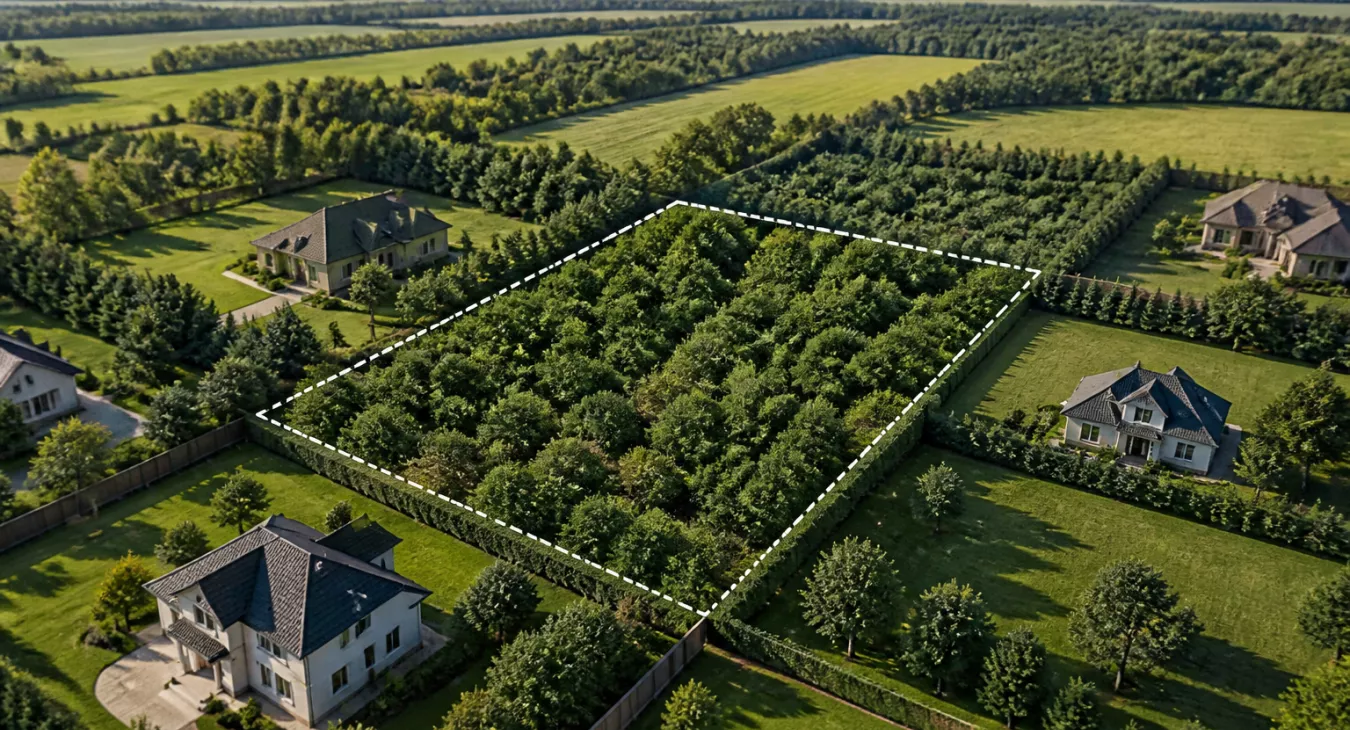
A landlocked property has zero legal access to a public road or highway. You can't enter or exit via any legally recognized route. And here's the catch — it's not always about a physical barrier. Instead, it's the absence of an easement, deed right-of-way, or statutory access right that connects the parcel to public thoroughfare. In practical terms? It's an island of private ownership surrounded by other people's land.
This matters enormously: landlocked property is purely a state law issue. There's no federal statute controlling access rights. Every rule, remedy, and timeline depends on your jurisdiction. That's why you can't apply what worked in one state to a deal in another.
Physical vs. Legal Access Distinction
Most buyers miss this. You might be able to physically drive across your neighbor's field to reach the property. That doesn't make it legal access — it makes it trespassing. Meanwhile, a recorded easement gives you real legal rights even if a fence, weeds, or a washed-out road blocks the actual path.
And here's what actually counts: legal access. That's the only thing lenders, title companies, and future buyers will care about. They check the recorded instruments. A handshake deal with the neighbor? That's worthless once they move, sell, or decide they don't like you anymore.
Common Examples and Scenarios
- Rural wooded parcels: A back lot sold separately from a larger farm, with no easement reserved across the front parcel that now faces the road.
- Suburban subdivision remnants: An odd-shaped lot left over after a subdivision plat that was never given formal access to the new street grid.
- Urban infill parcels: A rear lot in a city block that once shared access through a now-demolished alley or building.
- Agricultural land: A crop field surrounded by other farms after a road was relocated or vacated by the county.
How Properties Become Landlocked

Know what causes landlocked deals, and you'll spot the red flags during due diligence before they blow up your pro forma. Understanding these scenarios also helps you gauge how complex — and expensive — the fix will actually be.
Historical Land Divisions and Subdivisions
The biggest culprit? Sloppy land splits. An owner sells off the front parcel with road access but forgets to reserve an easement across it for the back lot. Boom. Instant landlocked property. Subdivision plats get recorded without access formally dedicated to every lot, and you've got the same problem at scale. Fast forward 30, 40, or 50 years. The title chain's a mess, and now you need either legal action or serious negotiation to untangle it.
Eminent Domain and Government Takings
Government infrastructure projects kill access all the time. Highway realignments, utility corridors, new roads — they sever properties from public street frontage. Once the access road is vacated or a route changes, your parcel's left high and dry. Here's where the uneconomic remnant concept kicks in: after the government takes its strip of land, what's left over is so diminished in utility — usually because it's now landlocked — that it's worth almost nothing. You might have a claim for additional just compensation beyond the straightforward taking itself.
Abandoned or Lost Easements
Easements don't last forever. They can vanish through abandonment, prescription, or merger. Stop using a right-of-way for several years and actively demonstrate you've abandoned it? Courts in many jurisdictions will kill that easement. But here's the catch: prescriptive periods vary wildly by state. Some states say 5 years. Others demand 21. And that's set entirely by state statute or common law. Always pull the exact rule for your jurisdiction before you assume anything.
Natural Boundaries and Geographic Isolation
Rivers, lakes, wetlands, cliffs — geography itself can trap a property. Combined with private ownership all around it, a parcel becomes practically inaccessible and legally unsellable. These deals are tougher than subdivisions or easement issues. Engineering an access route through environmental restrictions or impossible terrain? That's often a non-starter.
Back to topThe Impact of Landlocked Property on Value and Usability

Property Value Depreciation
Landlocked parcels get hit hard. They're severely discounted compared to otherwise identical properties with legal road access — and the discount is real money, not some abstract percentage. Appraisers pull paired-sales comps, matching landlocked deals against accessible properties in the same market to nail down the damage. There's no magic national number because every market penalizes landlocked land differently based on local conditions and how hard it is to cure the defect. But here's what's consistent: the discount is substantial, and it collapses the moment legal access gets locked in and recorded.
The USDA pegged U.S. average farm real estate at $4,350 per acre in 2025, with cropland running $5,830 per acre. Even a 10% discount on those numbers is four or five figures gone. And landlocked rural land? The discount is rarely modest.
Financing and Mortgage Challenges
Conventional lenders won't touch landlocked property. Period. With 30-year fixed rates sitting at 6.66% as of July 30, 2026, financing's already expensive for any land buy — but landlocked parcels can't access conventional financing at any rate. Lenders require clear legal access because without it, the collateral value becomes a question mark and the land's essentially unmarketable if they need to foreclose. That leaves you paying cash or chasing hard-money lenders at rates that'll make your eyes water. Either way, effective demand tanks and so does your sale price.
Construction and Development Restrictions
Want to build on landlocked land? Good luck getting a permit. Permit offices across the country require documented legal access to a public road before they'll sign off on anything — residential, commercial, doesn't matter. And if you're thinking agricultural use instead? You can't farm land you can't legally access with equipment and labor, no matter how fertile it is. The 2025 USDA data showing pastureland averaging $1,920 per acre nationally shows you exactly how much productive value can be locked up by one access problem.
Utility Installation Complications
Getting water, power, sewer, or broadband to a landlocked parcel means crossing someone else's land. And here's the thing: you need a specific easement for utility work — not just a general access easement. Utility companies won't legally trench across private property without explicit authorization on record. So even if you solve the access problem, you're probably still negotiating separate utility easements. That's two separate deals to get the property actually usable.
Back to topLegal Solutions: Easements and Right of Way

Understanding Easements
An easement is a legal right to use someone else's land for a specific purpose. Here's what matters for your landlocked deal: you need an easement appurtenant. This type runs with the land, meaning it benefits future owners, not just you. A properly drafted, executed, and recorded access easement does one thing — it transforms an unmarketable landlocked parcel into something you can actually sell or develop. It's the most durable solution you'll find.
Easement by Necessity
No recorded easement exists and the neighbor won't play ball? Many states recognize easement by necessity — a court-ordered access right implied by law when a parcel got landlocked because of a prior conveyance from a common owner. But here's the catch: every state has different rules. Florida's relatively investor-friendly. Under Florida Statutes § 704.01(2), you don't even need to prove common ownership — the statute alone gets you there. Vermont? Completely different. You've got to show the land was divided from commonly owned property and that there's no reasonably practical access. Inconvenience won't cut it, as Berge v. State, 2006 VT 116 made clear. The takeaway: talk to a local real estate attorney before you count on easement by necessity. Your state's standards could make or break the deal.
Negotiating with Neighbors
Negotiating a voluntary easement beats litigation every time. Faster. Cheaper. Less uncertainty. What actually works? Start with fair compensation — either a one-time payment or annual fee. Propose a route that minimizes impact on the neighbor's property. And get a title company or real estate attorney involved early. A sloppy easement agreement that doesn't specify permitted uses, maintenance obligations, or the exact route location? That's how you end up with new disputes in five years.
Court-Ordered Access Solutions
Neighbors dig in and refuse to negotiate. You're looking at a lawsuit for easement by necessity or implied easement. Courts can order access and set compensation for the neighboring owner. But litigation carries real costs — money, time (typically one to three years), and risk. Title history evidence quality and applicable state law control the outcome. Before you file, explore mediation and alternative dispute resolution. Most jurisdictions now expect these steps, and they're worth your time.
Back to topPractical Steps Before Buying Landlocked Property


Title Search and Deed Review
A thorough title search is non-negotiable. You need to hunt for recorded easements, rights-of-way, or access licenses buried in the chain of title. Historical deed language matters more than most investors realize — old conveyances often contain access reservations or grants that get missed in subsequent transfers. A title insurance commitment will tell you if access issues exist. But it won't fix them. The commitment just confirms they're there.
If you're structuring investment-grade due diligence for the first time, the 10 Essential Steps for Buying Your First Investment Property provides a solid framework for getting it right.
Land Surveys and Access Verification
Commission an ALTA/NSPS land title survey. Skip the basic boundary survey. An ALTA survey shows you what actually exists on the ground — recorded easements, encroachments, access conditions, and whether that easement is physically passable. This is your only reliable way to confirm legal access actually translates to something you can use.
Assessing Legal vs. Physical Access
Here's where deals die: confirming that access is both legally valid and physically usable. You might find a 10-foot recorded easement through a ravine that's legally bulletproof. But good luck driving a truck through it. The gap between what title shows and what actually works is where experienced investors and rookies diverge.
Cost Estimation and Due Diligence
Get written estimates for fixing the access problem before you close. Costs swing wildly depending on what you're dealing with. Will a neighbor negotiate? Do you need litigation? How long is the access route and what's the terrain like? Market conditions matter too.
Real estate attorney fees. Survey costs. Easement purchase prices. Road construction — all of it gets modeled before you set your max acquisition price. This is critical if you're running a fix-and-flip financing strategy. Cost overruns kill your margins fast.
Back to topLandlocked Property and Eminent Domain
Government takings that sever access? They create some of the messiest landlocked property scenarios out there. A road gets realigned, widened, or vacated—and suddenly your adjacent parcel loses its lifeline. You're stuck landlocked through no fault of your own.
Here's where it gets interesting. The concept of an uneconomic remnant is your leverage. That's a parcel the taking has reduced to minimal utility—basically worthless. In formal eminent domain proceedings, you can argue the government should buy the whole remainder, not just the strip they took. Don't settle for that initial offer. Most property owners who do? They leave serious money on the table.
And this is critical: you need independent legal and appraisal review before accepting anything. Initial government offers frequently undervalue access-related damages by 20-40%, sometimes more. State eminent domain laws differ substantially from one jurisdiction to the next. The calculation of just compensation when access is severed requires jurisdiction-specific expertise you probably don't have in-house. Get it.
Back to topGeographic Variations: State and Local Considerations
Here's the reality: landlocked property access is exclusively a matter of state law. No uniform national framework exists. That means you need to know your state's specific rules before making any offers.
- Texas: The state recognizes easement by necessity under common law, but you'll need to prove prior common ownership. And there's more—Texas has unique groundwater ownership rules (the rule of capture) that complicate how mineral and water rights interact with surface access issues.
- Florida: This one's investor-friendly. § 704.01(2) provides a statutory easement by necessity that doesn't require common ownership. You get broader relief than most states offer.
- Vermont: They apply a strict common-law standard. You'll need to prove common ownership and that the landlocked condition came from the division itself—confirmed in Berge v. State (2006).
- California: They use the common-law easement by necessity doctrine, but add CEQA environmental review requirements whenever you construct a new access road through undeveloped land. It's a California-specific complexity you need to budget for.
Prescriptive easement periods matter too. The time an easement must be used openly, continuously, and adversely before it becomes a legal right? It varies from state to state. Don't use any general number you hear without verifying the specific state statute and case law with a local attorney first. For how landlocked status affects your tax situation, check out our guide on Real Estate Tax vs. Property Tax: What Investors Need to Know.
Back to topOpportunities and Strategic Solutions for Landlocked Properties

Here's the thing: landlocked properties aren't deal-killers. They're a genuine niche opportunity — but only if you're the kind of investor who understands the legal landscape and can actually price the cost to cure.
Acquisition Strategies and Negotiations
Buy the blocking parcel. It's the most direct play. Combine the two properties and you've eliminated the landlocked problem entirely without complications. This works especially well when the adjacent parcel is also undervalued, or when combining them creates a development opportunity that neither property alone could justify.
Why prefer this over easements? Parcel combination gives you clean title and avoids the ongoing legal gray areas that come with easement relationships.
Not sure where to start with unconventional acquisitions? Our overview of how to find BRRRR property deals walks through the due diligence mindset that translates perfectly to landlocked and other off-market land purchases.
Long-term Investment Potential
Landlocked parcels sitting in the path of development — places where urban expansion or infrastructure is already underway — can spike in value once access is resolved. The play is simple: buy at a steep discount, secure an easement or negotiate access, then sell or develop.
But here's where discipline matters. Your discount at acquisition has to compensate for legal risk, carrying costs, and the time you'll spend fixing the access problem. Underprice that adjustment and you'll eat into your returns fast.
Setting realistic ROI targets on unconventional properties? Our benchmarks guide on what constitutes good ROI on rental property gives you the framework to work backward from your required return.
Creative Access Solutions
Easements aren't your only option. Shared access agreements with multiple neighbors can work. Conservation easements sometimes include access provisions. And if a public road vacation created the landlocked condition in the first place, you might be able to petition the municipality to re-establish public access.
Each route demands careful legal structuring. The access right has to be durable and transferable to whoever buys from you down the road.
Insurance Considerations
Standard landlord policies don't always play nicely with landlocked parcels, especially if they can't be developed or occupied. You need to talk to an insurance professional who's handled vacant land before you close.
Our Rental Property Insurance Guide covers the investment property insurance market broadly. Use it as your starting point for knowing what questions to ask.
Back to topConclusion: Navigating Landlocked Property with Confidence
Landlocked property is tricky. You're dealing with real estate law, appraisal standards, and investment math all at once. No legal access to a public road—that's the core problem. Simple to say. Nightmare to fix. Here's what actually matters: legal access and physical access aren't the same thing. How you solve it depends entirely on your state. You've got to nail down the cost to cure before you even think about offer price. And here's the big one—a properly recorded easement can take a heavily discounted parcel and turn it into something a lender will actually finance.
Building a land investment practice? Think hard about how landlocked deals fit your overall strategy and risk tolerance. Our guides on single-family home investment strategies and best real estate investments for beginners will help you figure out what you're actually comfortable taking on before you jump into something this complex. Don't skip this step: get a local real estate attorney and an appraiser who knows vacant land inside and out. Talk to them before you commit a dime to any landlocked acquisition.
Back to topFrequently Asked Questions About Landlocked Property
Can I force my neighbor to give me access to my landlocked property?
Most states allow it. You can petition a court for an easement by necessity or implied easement, and the judge can order your neighbor to grant access—usually with compensation attached. But here's the catch: the rules differ dramatically state to state. Some require proof that both parcels were once under the same ownership; Florida under § 704.01(2) skips that requirement entirely and offers a statutory path. Before you assume forced access is your ticket out, talk to a real estate attorney who knows your state's specific laws.
What happens if my property becomes landlocked after a public road is relocated or vacated?
You might have a real claim here. When government action—a road relocation, vacation, whatever—cuts off your legal access, you can potentially sue for compensation through an eminent domain or inverse condemnation proceeding. If your parcel gets reduced to an uneconomic remnant, the government may be required to buy it at fair market value. Don't take the government's first offer. These initial compensation calculations routinely undervalue access-related damages, and you'll want independent appraisal and legal review before signing anything.
How much does it cost to obtain an easement for a landlocked property?
The numbers swing wildly depending on your situation. Voluntary negotiation with a friendly neighbor? Cheap. Litigation? Expensive. And then you layer in the length and terrain of the access route, the land value you're encumbering, survey costs, and attorney fees. There's no reliable national average—most published figures are either outdated or locked to specific markets. Get written estimates from a local real estate attorney and a licensed surveyor. Do this before you commit to an acquisition price on that landlocked parcel.
Can I get a mortgage on a landlocked property?
Conventional financing is essentially off the table. Lenders require documented legal access—it's non-negotiable for underwriting. With 30-year fixed rates sitting at 6.66% as of July 30, 2026, land financing is already brutal, and no traditional lender will touch a landlocked deal without a recorded easement or other proof of legal access. Hard-money and private lenders will look at it, but expect higher rates and lower LTV ratios. Once you nail down legal access and get it recorded, conventional financing becomes an option.
Does a landlocked property still have to pay property taxes?
Yes. Landlocked status doesn't shield you from taxes. The upside is that a proper assessment should account for the access limitation in its market value estimate. If your assessment doesn't reflect that defect, you've got grounds to appeal. And that varies by jurisdiction. Check out our guide on Real Estate Tax vs. Property Tax for the full breakdown on how investment land gets valued and taxed.
Back to top