

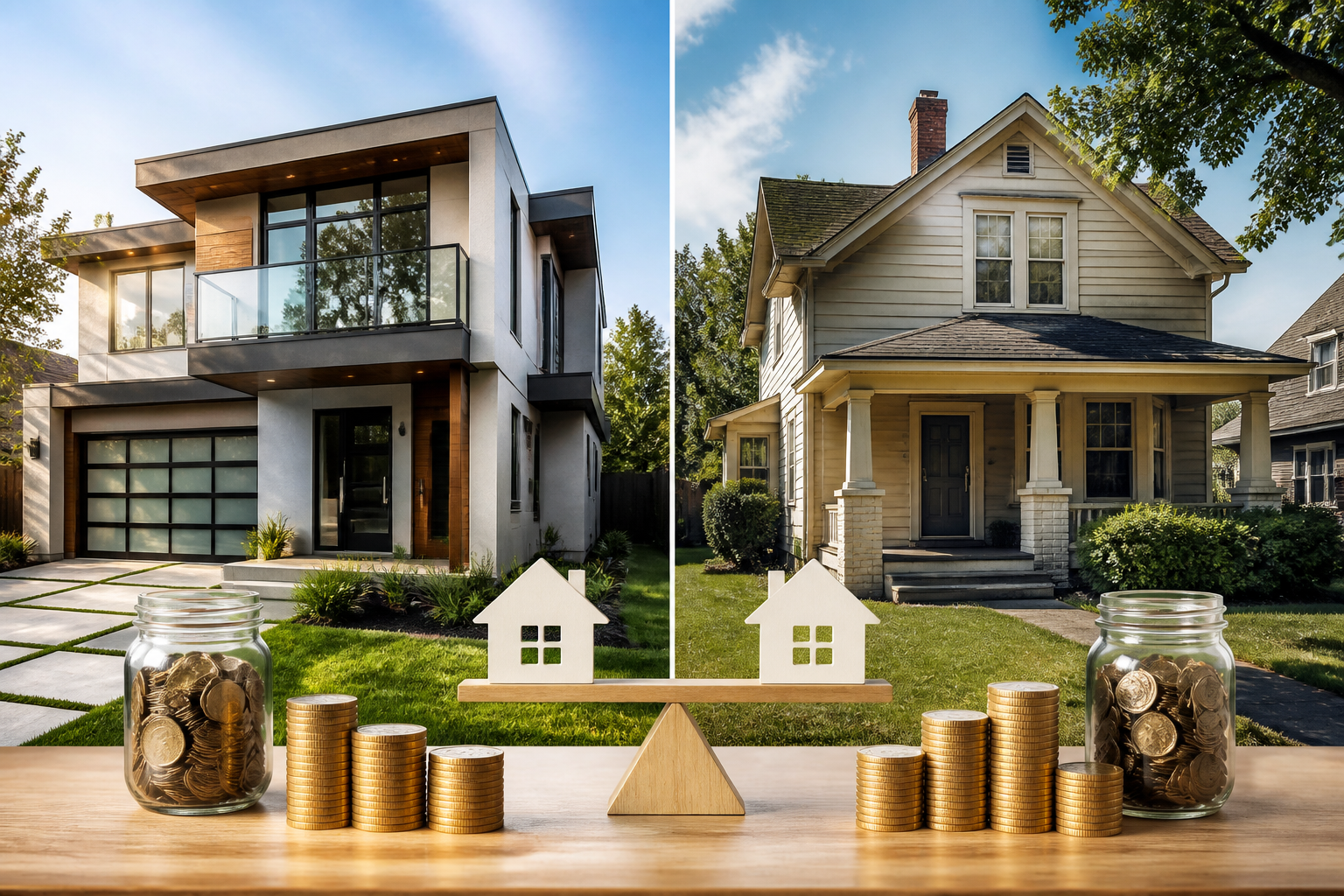
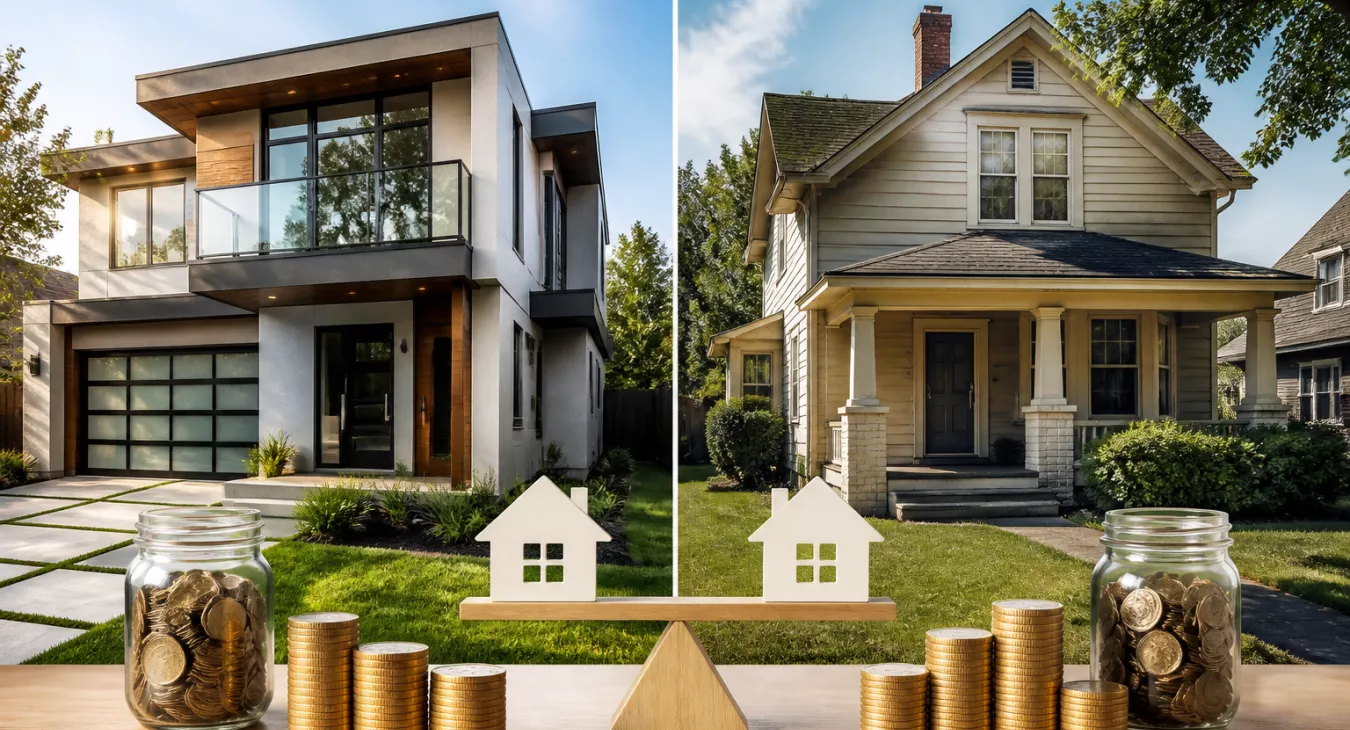
Compare new construction vs older homes investment: analyze costs, ROI, and long-term returns. Make smarter property decisions with our detailed analysis.
Table of Contents
- Quick Comparison: New Construction vs. Older Homes at a Glance
- Defining the Property Types
- Financial Comparison: Purchase Price, Hidden Costs, and 10-Year ROI
- Energy Efficiency and Operating Costs
- Maintenance, Repairs, and Warranty Coverage
- Resale Value and Long-Term Appreciation
- Who Benefits Most: Investor Profile Recommendations
- Risks and Due Diligence
- Making Your Decision: A Practical Framework
- Conclusion
- Frequently Asked Questions
New construction or older homes? It's one of the biggest calls you'll make as an investor — and the listing price won't tell you much. What actually matters is total cost of ownership, ROI, and whether the deal builds long-term wealth. That's where the real numbers live. You're looking at dozens of variables that never make it onto a property sheet. And depending on your strategy — rental income, appreciation plays, fix-and-flips — your answer changes. Getting the full financial picture on new construction vs older homes investment is what separates investors who win from those who break even.

Quick Comparison: New Construction vs. Older Homes at a Glance
Here's what matters most side by side. Skip the fluff—this matrix shows the real investment drivers you need to evaluate.
| Category | New Construction | Older Home |
|---|---|---|
| Energy Efficiency Rating | High (meets current energy codes) | Variable (often low without upgrades) |
| Warranty Coverage | 1-10 year builder warranty | Home warranty optional (1 year typical) |
| Average Annual Maintenance Cost | $1,000–$3,000 | $4,000–$10,000+ |
| Typical Renovation Needs | Minimal for 5–10 years | Moderate to significant |
| Timeline to Move-In | 3–18 months (if pre-construction) | 30–60 days (standard close) |
| Customization Options | High (during build phase) | Low (renovation-dependent) |
| Purchase Price Premium | 10–20% above comparable older homes | Below-market potential with negotiation |
| Appreciation Potential | Steady in growing markets | High in gentrifying neighborhoods |
Defining the Property Types
What Qualifies as New Construction
When you're looking at new construction, you're talking about homes built in the last one to five years. But here's what really matters: most investors specifically hunt for properties purchased straight from the builder—either before construction starts or while it's underway. You're getting homes that meet current International Building Code (IBC) standards, plus modern energy efficiency requirements, fire safety codes, and electrical standards that older properties can't touch. The category also covers spec homes (already done and ready to move into) and to-be-built homes where you customize the finishes, floor plans, and systems to your exact specs.
Characteristics of Older Homes
Older homes throw curveballs. Most analysts call anything built before 2000 "older," though you'll hear some use 1990 as the cutoff. Here's the truth: condition, systems age, and structural integrity vary wildly from property to property. A 1970s ranch in a suburban growth corridor? That could be an absolute steal. A Victorian in a declining neighborhood? Total cash drain waiting to happen. What actually moves the needle—roof age, HVAC condition, plumbing, electrical panel—these directly hit your operating costs. And lenders notice. They'll either fund the deal or walk away based on what they find in those systems.
Back to topFinancial Comparison: Purchase Price, Hidden Costs, and 10-Year ROI
The sticker price is just the beginning. Investors who compare properties solely on purchase price routinely underestimate the real cost gap between new and older inventory.
| Cost Factor | New Construction | Older Home | 5-Year Total | 10-Year Total |
|---|---|---|---|---|
| Median Purchase Price (U.S.) | $430,000 | $375,000 | — | — |
| Annual Utility Costs | $1,800–$2,400 | $2,800–$4,200 | ~$7,500 savings | ~$15,000 savings |
| Annual Maintenance | $1,200–$3,000 | $4,500–$10,000 | ~$18,000 savings | ~$36,000 savings |
| Major Repairs/Upgrades (cumulative) | $0–$5,000 | $15,000–$60,000 | Varies widely | Varies widely |
| Property Taxes | Higher (based on assessed value) | Lower base (potential for increases) | Market-dependent | Market-dependent |
| Homeowner's Insurance | $1,200–$1,800/yr | $1,500–$2,500/yr | ~$2,500 savings | ~$5,000 savings |
When you account for lower utility costs, reduced maintenance spending, and builder warranty coverage eliminating most repair bills in the first decade, a new construction home priced $55,000 higher than an older comparable can reach breakeven — or even pull ahead — by year seven or eight. This calculus shifts significantly based on local market appreciation rates, which we cover in the resale value section below.
Financing Options and Incentives
New construction buyers often gain access to builder-preferred lender incentives, including rate buydowns, closing cost assistance, and design center credits that can collectively add $10,000–$20,000 in value. Older homes may qualify for FHA 203(k) renovation loans, which allow buyers to roll repair costs into the mortgage — a powerful tool for value-add investors. However, older properties with deferred maintenance may face lender restrictions, particularly for conventional or FHA financing, if the home fails appraisal standards. For a deeper look at structuring real estate financing, explore our real estate investment strategy resources.
Back to topEnergy Efficiency and Operating Costs

Here's what most investors miss: energy performance is a serious line-item driver for NOI, not some secondary concern. Modern builds come standard with spray foam insulation, low-E windows, high-efficiency HVAC systems, and smart thermostats—all required to meet or exceed IECC standards that've gotten tougher every year since 2012. These aren't upgrades you're paying extra for. They're built in.
Pre-1990 homes? They're running on fumes. Single-pane windows, fiberglass batt insulation full of gaps, HVAC systems limping along at 60–70% efficiency when today's units hit 95%+. The math is brutal. According to the Department of Energy, new construction homes consume 30–40% less energy than older stock with zero retrofits.
And this matters to your bottom line. A lot.
If you're structuring leases where tenants pay utilities, or worse—where you're covering them—that efficiency gap eats directly into your cap rate. You're staring at $200–400+ monthly savings per unit on a new build versus a 1985 rental property. Over a decade, that's real money that compounds your returns.
Back to topMaintenance, Repairs, and Warranty Coverage
Here's what most investors won't tell you: the warranty structure on new construction is genuinely one of the biggest edges in this asset class. And yet builders gloss right over it.
| Protection Type | New Construction Coverage | Older Home Coverage |
|---|---|---|
| Structural Warranty | 10 years (major structural defects) | None standard; inspection-dependent |
| Systems Warranty (HVAC, plumbing, electrical) | 2 years (builder warranty) | Optional home warranty (~$500–$800/yr) |
| Workmanship/Materials | 1 year (standard builder coverage) | Not applicable |
| Appliance Coverage | Manufacturer warranties (1–5 years) | Age-dependent; often no coverage |
| Home Inspection Protection | Pre-drywall and final inspections | Buyer-commissioned inspection required |
Older homes? They come with a completely different risk matrix. That roof hitting 15–20 years old? You're looking at $10,000–$25,000 sitting in your cap rate waiting to explode. Pre-1990 inventory shows up with galvanized steel plumbing, polybutylene lines, aluminum wiring, and 60–100 amp electrical panels all the time. Lenders hate these. Insurance companies hate them more.
And foundation work — especially in clay-heavy soils or flood zones — can run you $30,000 or more to fix properly.
Don't skip the full inspection on older properties. You need roof, foundation, sewer line, and radon specialists looking at that deal before you commit capital.
Back to topResale Value and Long-Term Appreciation
Here's the reality: older homes can genuinely outperform new construction on appreciation — but only under the right conditions. Established neighborhoods going through gentrification have historically crushed it on returns. Take a $300,000 older home in an urban neighborhood transitioning toward higher-income residents. You're looking at 8–12% annual appreciation. Compare that to new construction in a suburban development pushing 4–6%, and the math gets interesting fast.


But don't sleep on new construction in the high-growth sunbelt markets. Phoenix, Dallas, Nashville, Tampa — investors who grabbed properties during that 2018–2021 window saw strong appreciation. The real differentiator? Supply pipeline. Markets flooding with new development will suppress appreciation across the entire new construction corridor. Older homes work differently. Supply's fixed. That's historically been a tailwind for price stability in desirable locations, and it matters.
Back to topWho Benefits Most: Investor Profile Recommendations
| Investor Type | Better Option | Why | Key Considerations |
|---|---|---|---|
| First-Time Investor | New Construction | You get predictable costs and warranty protection. Maintenance headaches? They're on the builder for years. That's a massive edge when you're learning the game. | Entry price will sting. And you absolutely need to vet your builder—don't skip this. |
| Fix-and-Flip Investor | Older Home | This is where you find deals. Below-market acquisition prices mean bigger spreads on your ARV. Faster closes matter too when you're managing carrying costs and wanting to recycle capital. | Deep inspection work is non-negotiable. Your ARV accuracy directly hits your profit margin. Watch those carrying costs like a hawk. |
| Long-Term Buy-and-Hold | Market-Dependent | Honestly? Both work here. Your location and cap rate matter far more than whether the unit is new or old. | Focus on NOI, vacancy rates, and where rents are actually heading. That's what moves the needle long-term. |
| Passive/Remote Investor | New Construction | You're hands-off by design. New construction means minimal repair surprises and way fewer management calls. But here's the catch— | HOA fees pile up fast. And you need solid property management in that market. Don't assume it's easier just because the building is new. |
Risks and Due Diligence
New Construction Risks
Builder reputation matters most. And construction defect litigation? It's far more common than you'd think — improperly installed windows, substandard framing, drainage problems. These show up years after you've closed and moved on.
Here's what you actually do: research warranty claim history with your state's contractor licensing board. Hire an independent inspector for pre-drywall and final walkthroughs. Don't trust the builder's municipal inspections — that's lazy underwriting, and it costs money.
Older Home Risks
Hidden structural problems will wreck your numbers. Most investors focus on the obvious — roof, HVAC, electrical — and miss the real killers.
You need a sewer scope inspection. Period. For anything built before 1980, test for mold and asbestos. Pull the permit history and flag any unpermitted additions, because those kill insurability and resale value faster than you can refinance.
And here's the kicker: order a pre-offer inspection in hot markets, not just your under-contract walkthrough. When everyone's waiving inspection contingencies, you can't afford to discover foundation issues after you've already committed.
Back to topMaking Your Decision: A Practical Framework
Four things matter most: your cash position, how much risk you can stomach, your exit timeline, and whether you've got the bandwidth to actually manage deals. Here's what you need to ask yourself:
- Can you absorb a major unexpected repair? If you can't, new construction's warranty protection becomes real money in your pocket.
- Do you have time to manage renovations? Fix-and-flip or value-add plays demand either boots-on-the-ground work or a solid contractor network you can trust.
- What's your hold period? Under five years? New construction's lower operating costs probably won't offset what you paid upfront.
- What's the rental market actually paying for in your target area? Some markets eat up premiums for new units. Others? Location beats everything.
Get an experienced investment advisor in your corner. And find a licensed inspector who knows your property type inside and out. Non-negotiable. The framework gives you the structure, but local market intel and transaction-specific due diligence? That's what separates winners from money losers. Ready to stress-test this against your actual deal? Connect with the KDS Development team.
Back to topConclusion
There's no universal winner here. New construction vs. older homes — it all depends on your goals, your market, and what capital you're working with. New construction gives you predictability, energy efficiency, warranty protection, and way less maintenance headaches. Older homes? They'll often have better acquisition prices, serious value-add potential, and locations that new developments simply can't touch.
And here's what separates the pros from the amateurs: the best investors don't pick a lane and stick to it. They've built a framework — a disciplined process for evaluating each deal on its actual financial merits. Run your numbers over your real hold period. What's the cap rate? What's your projected BRRRR return? Let the ROI analysis make the call, not the kitchen finishes or the granite countertops.
Use the data.
Back to topFrequently Asked Questions
Is new construction always more expensive than buying an older home?
Not necessarily. The sticker price? Usually higher on new builds. But here's where it gets interesting—factor in lower maintenance costs, energy savings, and warranty protection over a decade, and that gap shrinks fast. In some markets, new construction actually hits breakeven or lower total cost of ownership by year eight to ten.
What's the average ROI difference between new construction and older homes?
It depends. Market conditions, hold period, management quality—they all matter. Older homes in gentrifying urban neighborhoods have crushed it with 8–12% annual appreciation during strong cycles. New construction in suburban growth corridors? You're looking at 4–6%. But here's the thing: new construction's lower operating costs can bump cash-on-cash returns up 1–2% annually for rental investors, which partially makes up for that appreciation gap.
Can I negotiate price on new construction the way I can with older homes?
Builders don't negotiate base price—they can't, because it'll tank comps across the whole development. What they *will* do is get creative. Closing cost assistance. Rate buydowns through their preferred lenders. Free design center upgrades. In slower markets or at quarter-end? Those incentives can add up to $15,000–$30,000 in real value.
What inspections are most critical for older home purchases?
Standard home inspection is just the baseline. You actually need more. Get a sewer scope—line camera inspection, non-negotiable. Have an independent roofing contractor certify the roof. Electrical panel assessment. Foundation evaluation, especially in regions with expansive soils. And if it's pre-1980, test for mold and asbestos. For investment properties, go deeper: full systems assessment with remaining useful life estimates so you can project capital expenditure reserves accurately.
How does depreciation affect the investment math for new vs. older construction?
Both property types give you depreciation, which is huge tax-wise. New construction gets a real advantage though: cost segregation studies accelerate depreciation on components like appliances, flooring, and fixtures. You can generate substantial paper losses in the first five years alone. Older homes with recent renovations? They can benefit from cost segregation on improvement costs too. Talk to a CPA who specializes in real estate—they'll model your specific depreciation impact and make sure you're not leaving money on the table.
Back to top