

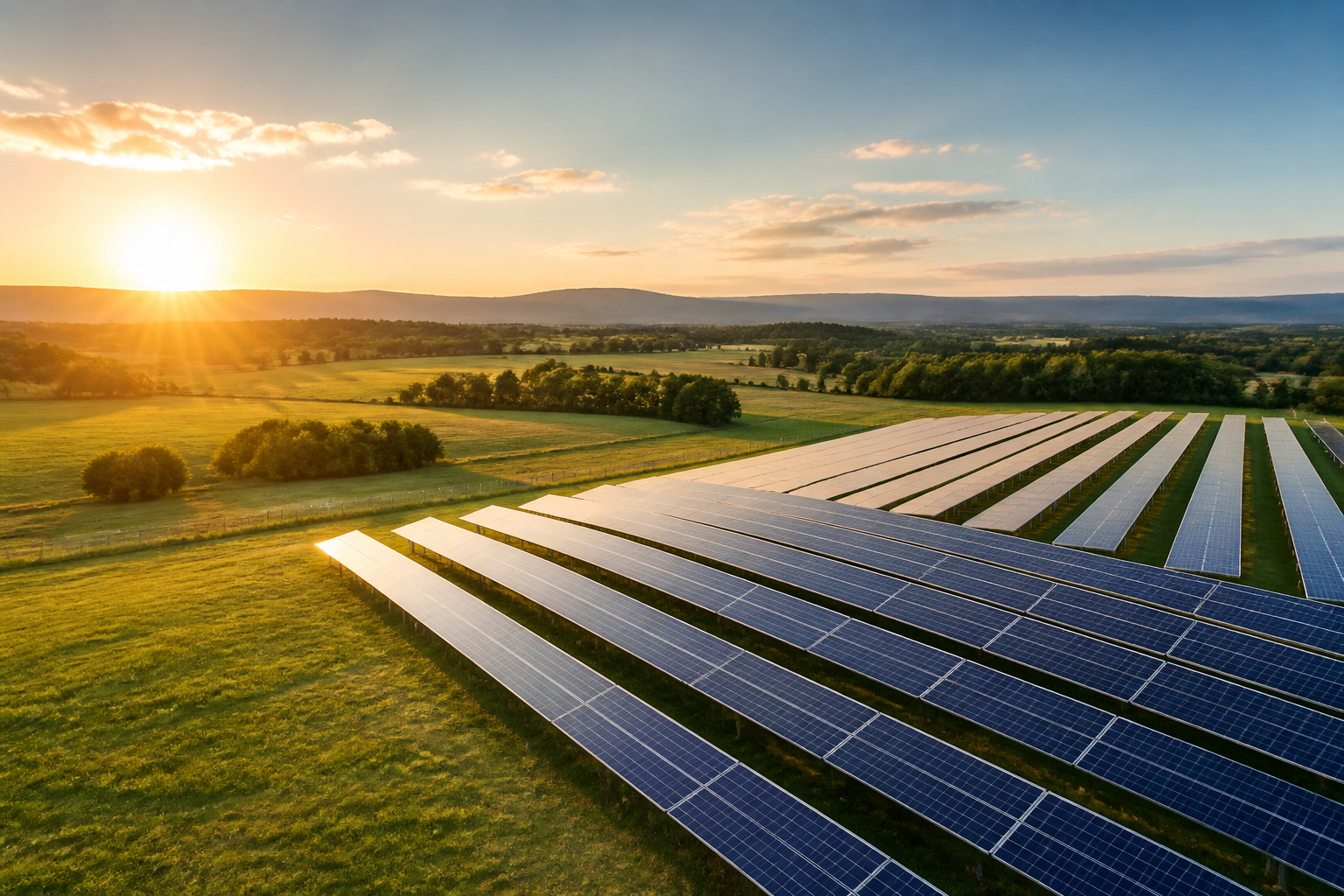
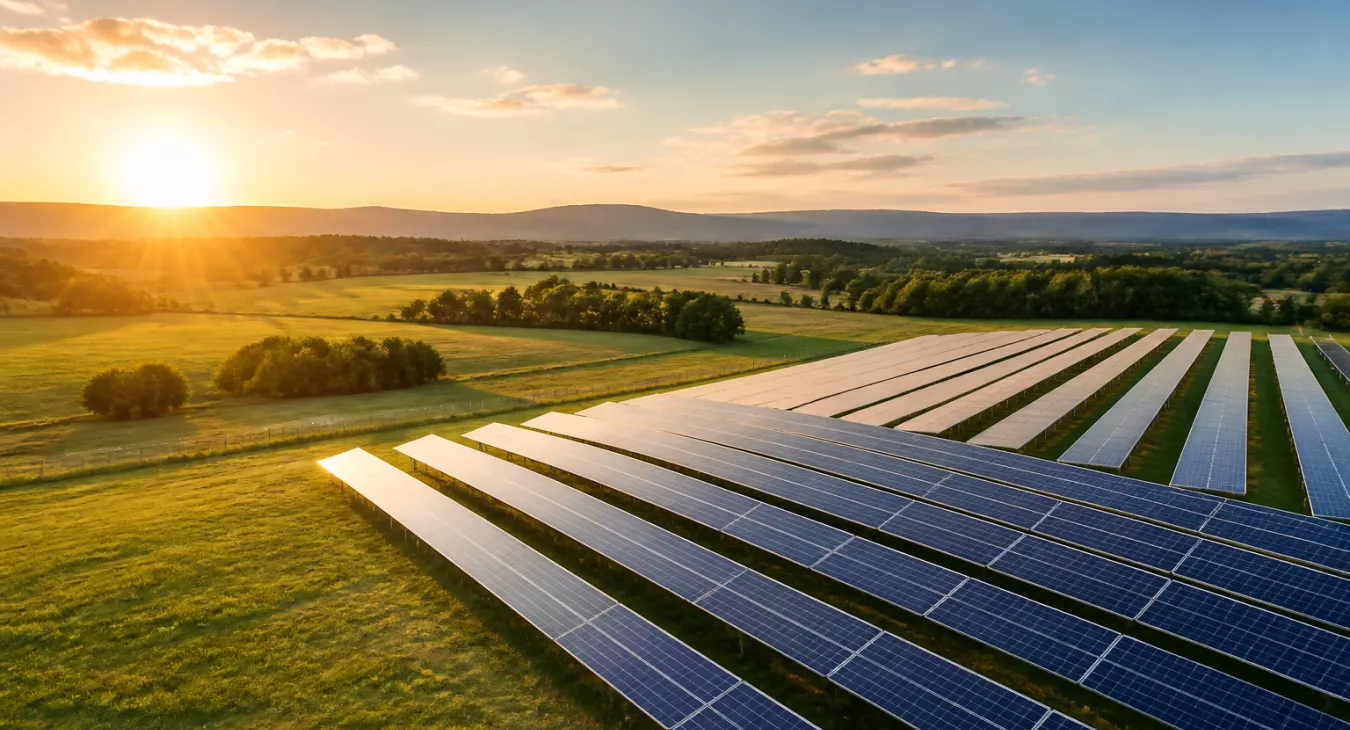
Discover how much do solar farms pay to lease land. Earn $500–$3,000+ per acre yearly. Learn rates by state and maximize your rural land income.
Table of Contents
- How Much Do Solar Companies Pay to Lease Land?
- Factors That Affect Solar Lease Rates
- Types of Solar Lease Payments
- Government Incentives and Tax Implications
- Benefits of Solar Land Leasing
- Key Questions to Ask Before Leasing
- Estimating Your Land's Solar Lease Value
- Conclusion: Is Solar Land Leasing Right for You?
- Frequently Asked Questions
Rural land + solar developer lease = passive income. But here's the thing: when landowners ask how much do solar farms pay to lease land, there's no single answer. The numbers move. As of 2026, you're looking at $500–$700 per acre per year in lower-demand markets. That jumps to $1,200–$2,500 per acre per year in high-demand states, with exceptional locations exceeding $3,000 per acre. Your location, local demand, and grid access determine where you land on that spectrum. What actually drives those numbers? How are payments structured? And what should you actually verify before you sign? This guide covers all of it.

How Much Do Solar Companies Pay to Lease Land?
Average Solar Lease Rates Per Acre
Here's what most people get wrong about solar lease rates: they quote the national average like it means something. It doesn't. Your money depends entirely on where your land sits. Looking at 2026 data, Hawaii leads at $1,116/acre/year, followed by Massachusetts at $1,005/acre/year, Connecticut at $980/acre/year, Rhode Island at $956/acre/year, and California at $935/acre/year. That's a spread worth paying attention to. Now flip to the bottom tier — North Dakota ($379/acre/year), Ohio ($394/acre/year), Nebraska ($395/acre/year), Indiana ($396/acre/year), and Missouri ($398/acre/year) — and you'll see the real constraint. Weaker electricity demand plus lower power prices equals thinner margins for solar developers. And that hits your wallet directly.
| State | Avg. Annual Rate (Per Acre) | Market Position |
|---|---|---|
| Hawaii | $1,116 | Top 5 highest |
| Massachusetts | $1,005 | Top 5 highest |
| Connecticut | $980 | Top 5 highest |
| Rhode Island | $956 | Top 5 highest |
| California | $935 | Top 5 highest |
| Missouri | $398 | Bottom 5 lowest |
| Indiana | $396 | Bottom 5 lowest |
| Nebraska | $395 | Bottom 5 lowest |
| Ohio | $394 | Bottom 5 lowest |
| North Dakota | $379 | Bottom 5 lowest |
Source: Smart Energy USA, 2026
Option Period vs. Active Lease Payments
The developer doesn't hand you money day one. First comes the option agreement — basically a land lock while they're grinding through permits, environmental reviews, and grid interconnection paperwork. During this pre-lease phase, you're looking at $10–$50 per acre per year (2026 rates). That's pocket change compared to what's coming. Most option periods stretch one to five years. Then something changes. The lease gets signed. Payments jump dramatically. Better yet? Many developers sweeten the deal with a signing bonus of $1,000–$5,000 per acre when you ink the actual lease. Ignore that bonus and you're leaving real money on the table when you're comparing offers.
Payment Structure Over Time
Solar leases aren't short-term plays. They run 20–35 years by design — developers need that certainty for their financiers. And here's the protection built in: most deals include an annual rent escalator of 1.5%–2.5%. That shields you from inflation eating away at your income over three decades.
Do the math on a 100-acre parcel over 25 years. You're looking at $1.5 million to $3 million or more in total income. That's serious wealth-building, especially if you're patient and plan to pass it to heirs.
Want specifics for your situation? Check out our full breakdown on Solar Farm Land Lease Rates: Income Potential for 2026.
Back to topFactors That Affect Solar Lease Rates

Know what moves solar lease rates, and you've got leverage at the negotiation table. It's not one thing — it's the combination that matters. Understanding these drivers gives you real power when a developer comes knocking.
Grid Connection and Infrastructure
Here's the biggest technical factor: grid connection. Land within 2 miles of a high-voltage substation or 3-phase power lines gets the best rates. Every mile further out costs the developer more in interconnection expenses. And those costs? They come straight out of your lease payment.
If your parcel sits miles away from existing transmission, the offers drop significantly. That's why understanding interconnection costs matters so much to the deal. Check out our guide on how much it costs to run electricity to land — it shows exactly why developers price this way.
Land Size and Site Characteristics
Developers think in megawatts. Most commercial projects need at least 10 acres minimum, but here's where it gets interesting: parcels of 50–500+ acres typically fetch better per-acre rates because the per-unit overhead drops. A rough rule of thumb? Count 5–7 acres per megawatt of capacity. So a 100-acre parcel can host a real utility-scale operation.
And don't overlook site quality. Flat, cleared land with strong sun exposure and zero shading wins higher offers. Trees, structures, uneven terrain — these all reduce what you'll get paid.
Market Demand, RPS Requirements, and Alternative Land Use
Renewable Portfolio Standards (RPS) drive everything at the state level. When a state mandates that utilities source specific percentages from renewables, developers flood in competing for land. That competition pushes your rates up. Simple as that.
But there's another angle: what else could that land do? In strong agricultural counties, you're competing against farming income. Corn brings $50–$200/acre/year. Soybeans run $30–$150/acre/year. Wheat? $20–$100/acre/year. Developers know these numbers. They'll offer above them or walk. Your job is knowing what competing uses are worth and holding the line.
Back to topTypes of Solar Lease Payments

Fixed Per-Acre Annual Payments
A flat annual payment per acre — adjusted periodically by the rent escalator — is how most solar leases work. Here's why this matters: you get paid the same amount every year, regardless of whether the farm crushes its energy targets or underperforms. That's huge for long-term financial planning, estate planning, or succession work. You're protected from project underperformance. The developer carries that risk, not you.
Revenue-Share Alternatives
Some developers push a percentage-of-revenue model instead. As of 2026, revenue-share leases typically range from 3%–6% of the solar farm's gross revenue. Sounds great if electricity prices spike, right? But here's the catch — you're also exposed to downside risk if the market tanks. You're essentially betting on energy prices. In most cases, established landowners with any negotiating leverage should understand both structures before accepting the first offer a developer puts on the table.
Signing Bonuses and RECs
And then there's the upfront money. One-time signing bonuses of $1,000–$5,000 per acre are increasingly common in competitive markets. You might also negotiate Renewable Energy Certificates (RECs) — tradable instruments that represent proof one megawatt-hour of electricity was generated from a renewable source — as supplemental income. But here's the reality: REC deals are less standard and vary by developer and jurisdiction. Always clarify who retains REC ownership before signing.
Comparing land income strategies? Our breakdowns of cell tower lease income and hunting lease valuations give you useful context for benchmarking solar returns against other passive land income streams.
Back to topGovernment Incentives and Tax Implications
Investment Tax Credit (ITC) and Its Effect on Your Lease Rate
Here's what you need to know: the federal Investment Tax Credit (ITC) under Sections 48/48E delivers a 30% base tax credit on system costs, plus another 10–20% in bonus credits if location and prevailing wage requirements align. The developer claims these credits, not you as the landowner. But don't skip past this—it directly shapes what developers can actually afford to pay you in annual rent. When a developer gets a 30% haircut on their capital costs, project economics shift dramatically. That's why solar pencils out for them even at lease rates that might initially seem modest to you.
And there's a clock ticking. The One Big Beautiful Bill Act changed everything: projects must begin construction by July 4, 2026, or reach service by December 31, 2027, to lock in the 30% ITC. This deadline creates real pressure in the developer market. You might notice lease negotiations accelerating or terms shifting as we approach 2026.
Tax Considerations for Landowners
Lease income hits your return as ordinary income at the federal level. Simple enough. But your state and local situation? That's where it gets messy. If you've been using agricultural exemptions or special-use tax designations—and these vary wildly by jurisdiction—converting to solar could reclassify your land entirely. You might lose exemptions. Property taxes could spike. Don't guess on this one. Talk to a tax professional in your state before you sign anything.
Estate planning gets equally complicated. Family farms shifting from ag to solar income need careful structuring. The implications cascade through your overall plan in ways generic advice can't address. Wondering where to start if you're new to all this? Check out our land investing terms and strategy guide—it'll get you fluent in the vocabulary before you sit down with counsel.
Back to topBenefits of Solar Land Leasing


Long-Term Predictable Income Stream
Here's what separates solar leases from most ag or recreational deals: 20–35 year terms with annual escalators built right in. You're looking at genuine income predictability—the kind that actually matters when you're planning a retirement or moving wealth to the next generation. A creditworthy solar developer backing a multi-decade income stream? That's a real financial asset you can count on.
Minimal Land Disruption and Dual-Use Potential
Ground-mounted racking keeps most of your land accessible and usable. And here's where it gets interesting: solar farms are increasingly embracing agrivoltaic designs. Sheep graze underneath and between panel rows. Pollinator habitats thrive on the site. You're not sacrificing land stewardship—you're actually maintaining some agricultural character while generating lease revenue.
At lease end, panels come out. Restoration's contractually required.
Environmental and Community Benefits
Property tax revenue from solar projects flows directly into schools, roads, and emergency services in rural counties. That matters. Beyond your personal ROI, solar farms supply clean electricity that strengthens local grid reliability and helps states hit renewable mandates. Want your land to keep contributing to your community even after farming operations wrap up? This is how you do it.
Back to topKey Questions to Ask Before Leasing

Here's the reality: developers don't all operate at the same level, and their opening offer rarely represents your best deal. You'll want solid answers to these questions before you sign anything:
- Developer track record: How many solar projects has this developer actually built and turned on? Get references from other landowners—call them directly.
- Financial backing: Who's putting money into this deal? Can the developer actually stay solvent for 25–35 years and honor the lease?
- Lease term and renewal options: When the initial term runs out, what's your position? Are renewals locked in, or does the developer get to walk away?
- Restoration obligations: After they leave, who's responsible for bringing your land back? Is there a performance bond backing it up?
- Property tax treatment: Solar installations often shift your tax liability. Verify with your county assessor—this varies wildly by jurisdiction.
- Assignment and sale rights: Can you sell those lease payments down the road? What if you want to sell the land itself—does the developer get a say? Can they flip the lease to another operator without your approval?
- Land use restrictions: What's off-limits during the lease term, and what stays open to you?
Hire a real estate attorney who knows energy leases inside and out. Not the general practice guy. This document controls your income stream for decades. You need to understand earnest money, due diligence periods, and what contingencies actually protect you—our article on earnest money in real estate walks through the contractual fundamentals every land deal depends on. And if the developer's bringing guarantors or co-signers to the table, you should know the difference between them. Our piece on lease guarantors vs. cosigners explains which one actually gives you recourse when something breaks.
Back to topEstimating Your Land's Solar Lease Value

There's no magic formula here. But you can develop a solid estimate by systematically working through the key variables that actually move the needle.
Start with Location and Grid Access
Your first move? Check if your parcel sits within 2 miles of a high-voltage substation or 3-phase power line. Yes means you're in the top tier for grid access. Use a mapping tool or call your county GIS office to spot nearby infrastructure. And if you want to dig deeper into site analysis, our guide on 7 essential maps for farmland analysis breaks down the tools that'll help you evaluate land characteristics relevant to solar development.
Evaluate Size and Site Conditions
Here's the reality: bigger parcels win. 50 acres or more is the sweet spot for utility-scale developers, and they'll pay better per-acre rates because of it. Now look at what's actually on the ground—slope, tree cover, shading. Flat, open land with minimal clearing requirements? That's significantly more valuable than wooded terrain or steep grades. And if your region's got competitive solar development plus strong RPS requirements driving demand, you're looking at a further premium on top of your base valuation.
Get Professional Appraisals and Competitive Quotes
The smartest move is soliciting multiple offers from different developers. That first offer? Don't treat it as gospel—it rarely is. An independent appraisal from someone who actually knows energy lease valuations in your market can anchor your negotiating position and keep you honest. Want context on how farmland income stacks up across other asset classes? Our AcreTrader review shows you how comparable income strategies get evaluated in the broader farmland space.
Back to topConclusion: Is Solar Land Leasing Right for You?
Solar land leasing works. It's a legitimate, long-term income play for landowners with the right property in the right location. What's "right"? That depends on four critical factors: grid proximity, acreage size, land quality, and your state's policy environment. Miss any of those, and your deal falls apart.
Rates vary dramatically by market. You're looking at $500–$700/acre/year in lower-demand markets, but that jumps to $1,200–$2,500+/acre/year in high-demand states as of 2026. Your state matters. Your county matters even more. Do the local research first — don't assume national averages apply to your parcel.
And here's the hard truth: vet the developer. Compare multiple offers. Negotiate like you'd negotiate any commercial real estate deal. Most landowners don't.
A 25–35-year lease is a binding commitment. It outlasts marriages, business partnerships, even some careers. You can't undo it halfway through if the developer underperforms or market conditions shift. Get a real estate attorney and a tax advisor involved before you sign anything. Treat this with the same rigor you'd bring to an acquisition — because it is one.
Back to topFrequently Asked Questions
How much land do I need to lease to a solar developer?
You'll need at least 10 acres for most developers to even look at your deal. But here's the real play: parcels between 50–500+ acres attract serious interest and command better per-acre rates. Each megawatt requires roughly 5–7 acres. So your acreage directly controls what size project walks through the door.
Are solar lease payments better than farming income?
Not even close in most markets. Solar crushes row crops. As of 2026, farming looks like this: corn at $50–$200/acre/year, soybeans at $30–$150/acre/year, wheat at $20–$100/acre/year. Meanwhile, even mediocre solar lease markets pay $379–$500/acre/year. Top-tier locations hit $1,000+/acre/year. And you don't touch a tractor, buy seed, or pray for rain.
How long does a solar land lease typically last?
Standard term is 20–35 years (as of 2026), plus renewal options. That long runway exists because utility-scale solar needs massive financing and lenders demand certainty. Most deals sweetener with annual rent escalators of 1.5%–2.5% to keep pace with inflation.
Do I owe taxes on solar lease income?
The IRS treats solar lease payments as ordinary income at the federal level. But that's not the whole story. Your state and county may have different rules around agricultural tax exemptions, property tax reassessment, or estate planning implications. These rules vary wildly by jurisdiction — there's no national standard. Get a tax professional who actually understands energy leases in your state before you sign anything.
What should I watch out for in a solar lease contract?
Red flags? Vague restoration language at lease end. No performance bond. Developer can assign to anyone without your say-so. Option periods with minimal payments and no guaranteed lease execution. Missing annual escalators. Don't skip this step: hire a real estate attorney who knows energy transactions inside and out — general property lawyers won't catch the traps. And remember, that first draft isn't gospel. The option period, lease structure, and payment terms are all negotiable.
Back to top