


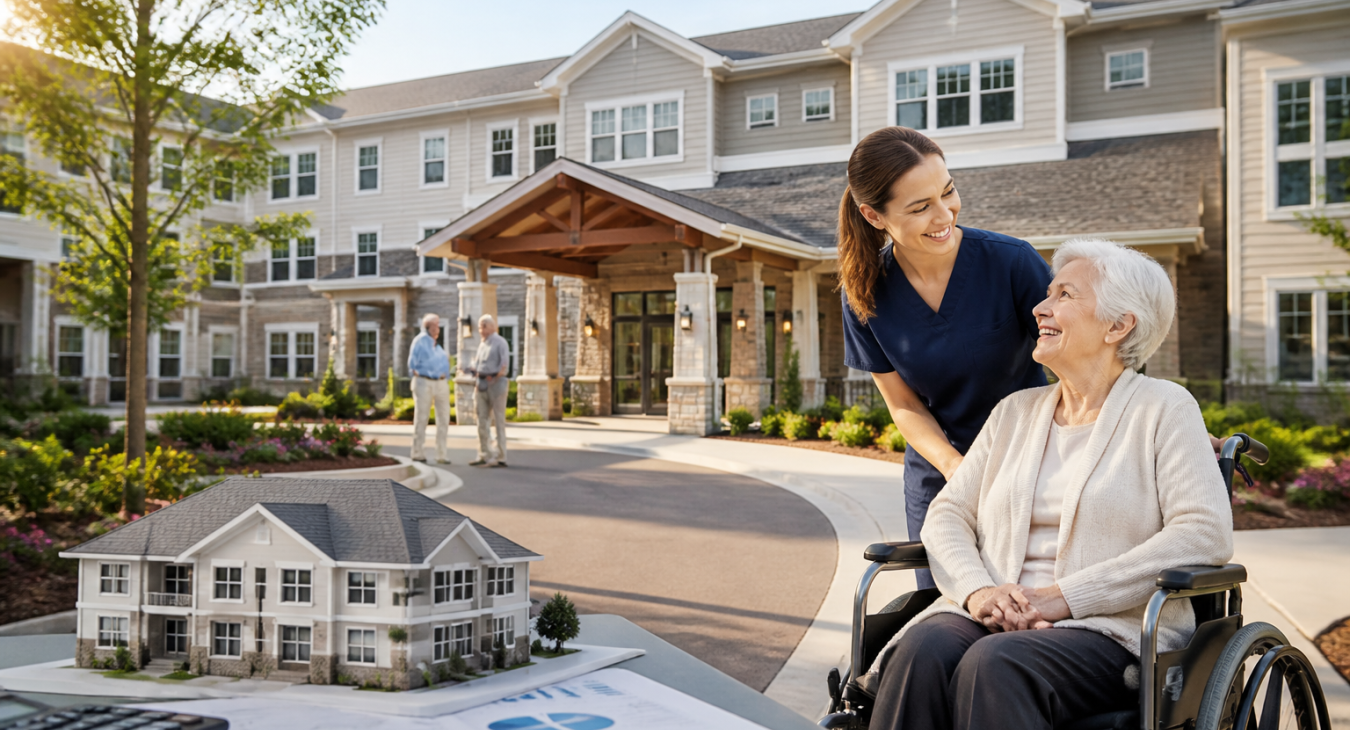
Discover assisted living rental property investing: tap into senior housing demand, achieve higher returns, and navigate regulations. Expert guide inside.
Table of Contents
- What's Assisted Living Property Investment?
- Market Drivers and Why Assisted Living Is Thriving
- Financial Returns and Investment Models
- Pros and Benefits of Assisted Living Investment
- Cons and Risks to Consider
- How to Get Started with Assisted Living Investment
- Alternative Investment Approaches
- Investment Strategy and Maximizing Returns
- Conclusion
- Frequently Asked Questions
10,000 Baby Boomers turn 65 every single day in the US. Senior housing can't keep up with demand. This is one of the most predictable growth curves in real estate — and it's happening right now.
Assisted living rental properties sit right in the middle of this demographic shift. The numbers are undeniable. But here's what most investors miss: understanding this niche means positioning yourself ahead of a wave that'll last decades. We're not talking about a cyclical play. This is structural.
This guide walks you through everything. Asset class fundamentals. How to actually model returns on these deals. The regulatory minefield — because it exists, and you need to navigate it. And most importantly, how to execute an entry strategy that actually works and generates real cash flow.

What's Assisted Living Property Investment?

Owning or financing residential properties that house seniors needing daily support—without the heavy medical overhead of a nursing home—that's assisted living rental property investing. The format that actually works for individual investors is the Residential Assisted Living (RAL) model. You take a single-family home or small residential property, get it licensed, and convert it into a 6 to 16-bed facility staffed with professional caregivers around the clock.
The whole vibe is different from skilled nursing facilities. These properties feel like homes, not medical institutions. Residents get help with Activities of Daily Living (ADLs)—bathing, dressing, medication management, meal prep—while keeping their independence and privacy intact.
| Feature | Assisted Living (RAL) | Care Homes | Nursing Homes |
|---|---|---|---|
| Resident Type | Semi-independent seniors needing ADL support | Seniors needing general residential care | Medically complex or post-acute patients |
| Medical Staff Required | Caregivers, part-time RN oversight | Carers, limited nursing staff | Full nursing staff, physicians on call |
| Typical Facility Size | 6–16 residents (RAL) or larger campuses | 10–40 residents | 50–200+ beds |
| Capital to Enter | $150K–$500K (RAL conversion) | $500K–$2M+ | $5M–$50M+ |
| Licensing Complexity | Moderate (state-level residential care license) | Moderate to high | Very high (CMS, Medicare/Medicaid certified) |
| Investor Accessibility | High — individual investors can participate | Medium | Low — institutional capital required |
Here's why RAL matters for your portfolio. You're looking at entry costs in the $150K–$500K range—same ballpark as small multifamily rentals. But the revenue? It blows away a standard residential lease. And you don't need institutional backing to make it happen.
Back to topMarket Drivers and Why Assisted Living Is Thriving

This isn't speculation. The demographic tailwind behind assisted living is actuarial fact. All 73 million Baby Boomers will cross the 65-year threshold by 2030. And here's what really matters: the U.S. Census Bureau projects that by 2034, adults over 65 will outnumber children under 18 for the first time in American history. Globally, the 80+ population is projected to triple by 2050.
But demand is crushing supply. The American Seniors Housing Association estimates we need approximately 775,000 new senior housing units by 2030 just to maintain current occupancy ratios. That's not pie-in-the-sky projection — that's the baseline to keep things status quo. Construction hasn't even come close, especially in the small-format RAL segment. Want to know who benefits? Property owners and operators already in market.
Government policy backs this play. Medicaid waiver programs in most states fund assisted living placements for qualifying low-income seniors. You get a third-party payer base that stabilizes revenue. The Older Americans Act keeps getting reauthorized with fresh federal funding for community-based senior care — which is exactly what RAL facilities deliver.
Geography matters. Look for high concentrations of aging residents, favorable state licensing environments, and tight supply. Sun Belt states like Florida, Arizona, Texas, and Georgia dominate volume. But don't sleep on the Midwest and mid-Atlantic — better acquisition economics and less competition for residential properties suitable for conversion.
Back to topFinancial Returns and Investment Models

Here's what separates assisted living from your typical single-family rental: revenue density. A 10-bedroom RAL home pulls in $15,000–$25,000 monthly, while that same property rented conventionally nets $2,000–$4,000. And that's just gross revenue. After operating expenses on a solid operation, you're looking at $5,000 to $12,000 monthly in net cash flow — which translates to 15%–30% cash-on-cash returns if you're running the place yourself.
What if you'd rather not deal with staffing headaches? Even passive landlords leasing to a licensed operator under triple-net or modified gross arrangements are hitting 8%–15% yields. Compare that to the 4%–6% your typical long-term rental produces. For a deeper dive on how to calculate what your numbers actually look like, check out our guide to calculating real rental property cash flow.
| Investment Model | Capital Required | Time Commitment | Typical ROI | Passive Income? |
|---|---|---|---|---|
| Direct Owner-Operator | $200K–$600K | High (semi-active) | 20%–35% cash-on-cash | No — active management required |
| Property Owner / NNN Lease to Operator | $150K–$500K | Low | 8%–15% yield | Yes — passive landlord role |
| Syndication / Partnership | $25K–$100K | Very Low | 10%–18% IRR (projected) | Yes — equity partner |
| Senior Housing REITs | Any (publicly traded) | Minimal | 5%–10% total return | Yes — fully passive |
| Property Conversion (existing asset) | $50K–$200K renovation | Medium (setup phase) | 15%–25% on equity | Partial — depends on operator agreement |
If you're already running long-term rental portfolios, the NNN lease model is your natural entry point. You leverage the acquisition skills you've already got while handing off the operational complexity to someone with a license and experience.
Back to topPros and Benefits of Assisted Living Investment

Here's what separates assisted living from your typical rental grind. The structural advantages go way deeper than yield alone:
- Recession resilience: Demand doesn't swing with the economy. People need senior care because they're aging—not because they feel like spending money. During 2008–2009, occupancy stayed rock solid. After COVID cratered commercial real estate, assisted living bounced back faster than most sectors. That's the kind of stability your portfolio needs.
- Lower tenant turnover: Your conventional rental turns over every 12 months. Assisted living residents? They stick around 18–36 months on average. And here's the kicker: multiple residents share one property, so a single vacancy won't tank your cash flow the way it tanks a single-family landlord.
- Triple-net lease structures: When you lease to an operator via NNN, they eat the operating expenses, maintenance, and taxes. Your bookkeeping gets simpler. Want specifics on how to structure this right? Check our rental property bookkeeping guide.
- Tax advantages: And the tax side is where things get interesting. You've got depreciation on the building, qualified improvements you can cost-segregate to accelerate write-offs, plus potential QBI deductions that meaningfully cut your taxable income. Our complete list of rental property tax deductions breaks all of this down in detail.
- Social impact: You're solving an actual problem. Assisted living addresses a documented social need, which appeals to ESG investors and family offices that want returns with purpose built in.
Cons and Risks to Consider
Every investment comes with risk. Assisted living is no exception—and it's got its own particular minefield you need to walk through before writing the check.
| Category | Advantages | Disadvantages |
|---|---|---|
| Financial | High yields, recession-resistant demand, multiple revenue streams | Higher startup costs, renovation expenses, potential for operator default on lease |
| Operational | NNN leases offload operations; established operators available | Staffing shortages endemic to caregiving sector; 24/7 operational requirements |
| Regulatory | Licensing creates competitive moat; government-backed demand streams | Complex licensing requirements; inspections; potential fines for non-compliance |
| Market | Demographic tailwind is long-term and structural | Oversaturation possible in major metros; location highly affects occupancy |
| Legal/Insurance | Established insurance products available for the asset class | Liability exposure higher than residential; specialized insurance required |
Regulatory requirements are the real killer here. Every state writes its own playbook for residential care licensing—fire codes, bedroom minimums, staff-to-resident ratios, background checks. The list goes on. As a landlord leasing to a licensed operator, you're off the hook for most compliance. But you're not off the hook entirely. Your building still needs sprinkler systems, ADA accessibility, proper egress. And that costs money. Real money. Expect $30,000 to $100,000 in cap-ex just to hit code before anyone gets licensed.
Then there's insurance. Don't make the mistake of thinking your standard landlord policy covers this.
It doesn't. You'll need specialized commercial general liability, professional liability coverage if you're hands-on with operations, and property insurance that reflects the higher occupancy and higher risk profile of assisted living. Start with our rental property insurance guide for the baseline. But after that? Find a specialist broker who knows assisted living endorsements inside and out.
Back to topHow to Get Started with Assisted Living Investment

This niche demands way more due diligence than flipping a standard rental. Think of it as the difference between a standard house flip and a commercial conversion—you're working with state regulators, occupancy codes, and healthcare compliance from day one. Here's what you actually need to investigate before writing a check:
| Checklist Item | Why It Matters | Key Metrics |
|---|---|---|
| State licensing requirements | Determines renovation scope, compliance costs, and timeline | License type, bedroom min. sq ft, staff ratio requirements |
| Demographic analysis of target zip code | Confirms demand density before purchase | 65+ population %, median income, competing facility count |
| Property physical assessment | Identifies renovation requirements for licensure | Bedroom count, bathroom ratios, ADA compliance gaps, fire safety |
| Operator vetting (if leasing) | Operator track record directly affects your NOI | Years operating, existing license status, occupancy history, references |
| Financing structure | Determines cash-on-cash return and use risk | LTV, interest rate, DSCR, amortization period |
| Insurance cost modeling | Often underestimated and impacts NOI significantly | Annual premium as % of gross revenue (typically 3%–6%) |
| Exit strategy clarity | Assisted living properties have a specific buyer pool | CAP rate expectations for buyers, operator as potential purchaser |
Financing gets tricky. Conventional residential mortgages might work if you're keeping the structure under 5 units in most lender frameworks—but larger conversions and purpose-built facilities? You're looking at commercial loans. And that's actually where SBA 7(a) and SBA 504 loans shine. Owner-operators tap these all the time for licensed healthcare real estate, and the terms beat what you'll find on the residential side. Our guide on financing your first rental property walks through the basics. Regional banks and CDFIs that specialize in senior housing will give you product-specific terms based on your deal profile.
Running a property from a distance? Don't reinvent the wheel. The operational framework in our long-distance rental property investing guide transfers directly to assisted living—especially if you're staying in the passive landlord model and letting an operator run the day-to-day.
Back to topAlternative Investment Approaches

Not everyone wants to go all-in on property acquisition and conversion. The good news? You've got options that don't require your time or capital to be locked up for years.
Senior Housing REITs
Ventas (VTR), Welltower (WELL), and Sabra Health Care REIT (SBRA) are the big names here. You get exposure to senior housing at any investment size — $500 or $500,000. The tradeoff is real though. Returns sit lower than direct ownership, but you're completely passive and liquid. You can sell tomorrow if you need to. Think of it like the assisted living equivalent of buying a REIT instead of a property. It's the right call if diversification matters more to you than squeezing out maximum yield. And if you're weighing passive income, compare this against asset-light strategies to see which actually fits your goals.
Syndication and Fractional Ownership
Private real estate syndicates focused on senior housing open doors for accredited investors. You're looking at $25,000–$100,000 minimums to get in. Projected returns? 10%–18% IRR is the ballpark, though results swing hard depending on who's running it and which market you're in. Here's the critical part: vet your sponsors like you're checking their tax returns. Look for operators with at least 3 completed projects and successful exits under their belt before you hand over a check.
Property Conversion
If you're already sitting on residential inventory — especially larger single-family homes in the right neighborhoods — this could be your biggest play. Conversion to assisted living often returns more than any other repositioning strategy available. Take a real example. A 5-bedroom home pulling $2,200/month as a standard rental gets repositioned as a licensed RAL. Now it's doing $12,000–$18,000/month. Your conversion costs $75,000–$150,000. Do the math. Before you buy another asset, run this analysis on what you already own.
Back to topInvestment Strategy and Maximizing Returns
The best operators in assisted living all share something in common: they're disciplined, data-driven, and they think like investors, not operators.
Geographic Discipline
Skip the hunches. Find your markets with hard demographic data — look for zip codes where seniors aged 65+ make up at least 18% of the population. Then verify that the nearest competing facility's running above 85% occupancy. Don't overlook state Medicaid waiver programs either; they're actively funding private-pay AL placements in specific regions. Here's what most investors miss: secondary cities in high-aging states often beat primary markets on a per-bed acquisition cost basis.
Long-Term Wealth Accumulation
Assisted living compounds wealth the same way multifamily does — appreciation, debt paydown, cash flow. But here's the real edge: you start with higher initial yields. Let's run actual numbers. A $300,000 RAL property pulling $8,000/month net cash flow, appreciating at just 3% annually over a decade, builds wealth in a completely different league than a conventional rental at the same purchase price. And that's conservative appreciation. The multifamily comparison makes this crystal clear.
Tax-Advantaged Structures
Self-directed IRAs and Solo 401(k)s let you hold real estate — including assisted living properties — inside tax-deferred or tax-free accounts. Your rental income compounds without the annual tax hit. For active investors, there's more. Cost segregation studies on AL properties are absolute money-makers. You can segregate specialized fixtures, accessibility features, and mechanical systems from the building shell. Most conversion properties accelerate $40,000–$120,000 in first-year depreciation deductions. Combine that approach with the full playbook in our complete rental property tax deductions guide, and you've built a serious tax reduction strategy.
Exit Planning
Know your exit before you buy. Assisted living properties don't appeal to every buyer — you're selling to a smaller pool. That means other operators, healthcare-focused family offices, REIT buyers. Cap rates on stabilized, licensed RAL properties historically run 7%–11%. A facility generating $100,000 in annual NOI? Expect $900,000–$1,400,000 at sale. Properties with operator leases already locked in command premiums from passive buyers. That's why the landlord-operator structure works. It's not just operationally clean — it's strategically brilliant when you're ready to exit.
Back to topConclusion
Assisted living rental property investing hits different. You get yield, demand certainty, and genuine social impact — a combo that most real estate niches can't touch. And here's what matters: the structural tailwinds aren't hype. Aging demographics, chronic supply shortage, government payment programs like Medicaid — they're documented, measurable, and they'll still be there when you're collecting rent in 2030.
But let's be honest about the friction. Regulatory complexity. Specialized insurance. Operator dependency. Higher conversion costs eating into your initial ROI. This isn't a beginner move. If you're still mastering the fundamentals, hit pause. Work through our complete beginner's guide to rental property investing first. Then lock down our framework for analyzing a rental property's five key numbers. Once you've got those locked, assisted living becomes an option worth serious consideration.
Ready to operate at this level? Assisted living is one of the most defensible, high-yield positions in today's market. The best part — making money and making a difference aren't competing interests here.
Back to topFrequently Asked Questions
How much money do I need to start investing in assisted living real estate?
It depends on your model. Converting a residential property to assisted living? You're looking at $150,000–$500,000 when you factor in acquisition, renovation, and licensing. That's the direct ownership path, and yeah, it requires serious capital — but the returns justify it. Passive investors can get in through syndication for $25,000–$50,000 if you're accredited. And senior housing REITs? No minimum at all. The direct route demands the most upfront cash, but it also delivers the best potential returns if you execute properly.
Do I need to be a licensed care operator to own an assisted living property?
Nope. You don't.
As the property owner, you lease to a licensed operator under a commercial lease agreement. You're functioning as a landlord — the operator handles compliance, staffing, and care delivery. Your job is property maintenance, the mortgage, insurance. That clear separation of roles is exactly why the passive landlord model works so well. Most of the regulatory burden stays with the operator, not you.
How do assisted living investment returns compare to conventional rental properties?
Assisted living crushes conventional rentals on yield. As a passive landlord, you're looking at 8%–15%. Active owner-operators see 20%–35% cash-on-cash returns. Compare that to single-family and small multifamily rentals in the same markets — they're pulling 4%–8%. That premium exists for a reason: higher operational complexity, specialized tenant demand, and a narrower buyer pool. But when you manage the risk correctly, that yield premium is real money.
What are the biggest risks in assisted living property investing?
Three risks stand out. First, operator risk — if your licensed tenant goes under financially or loses their license, your revenue stops. Re-tenanting isn't quick. Second, regulatory risk. State licensing rules change, and sometimes those changes require expensive property modifications. Third, location risk. Occupancy depends heavily on local demographics and how much competing supply exists in your market. The good news? Strong due diligence, tight lease terms, and careful operator vetting handle all three.
Can I convert an existing property I already own into an assisted living facility?
Yes — and it might be one of the highest-ROI repositioning plays you can make. But success hinges on three things. Your property needs to meet (or be convertible to) your state's residential care standards — bedroom sizes, bathroom ratios, egress, accessibility, fire suppression. The local demographic profile has to support the occupancy you need. And zoning has to permit the use. Before you spend a dime on conversion costs, hire a licensed contractor and a state licensing specialist to assess the property. That due diligence saves you from expensive mistakes.
Back to top