


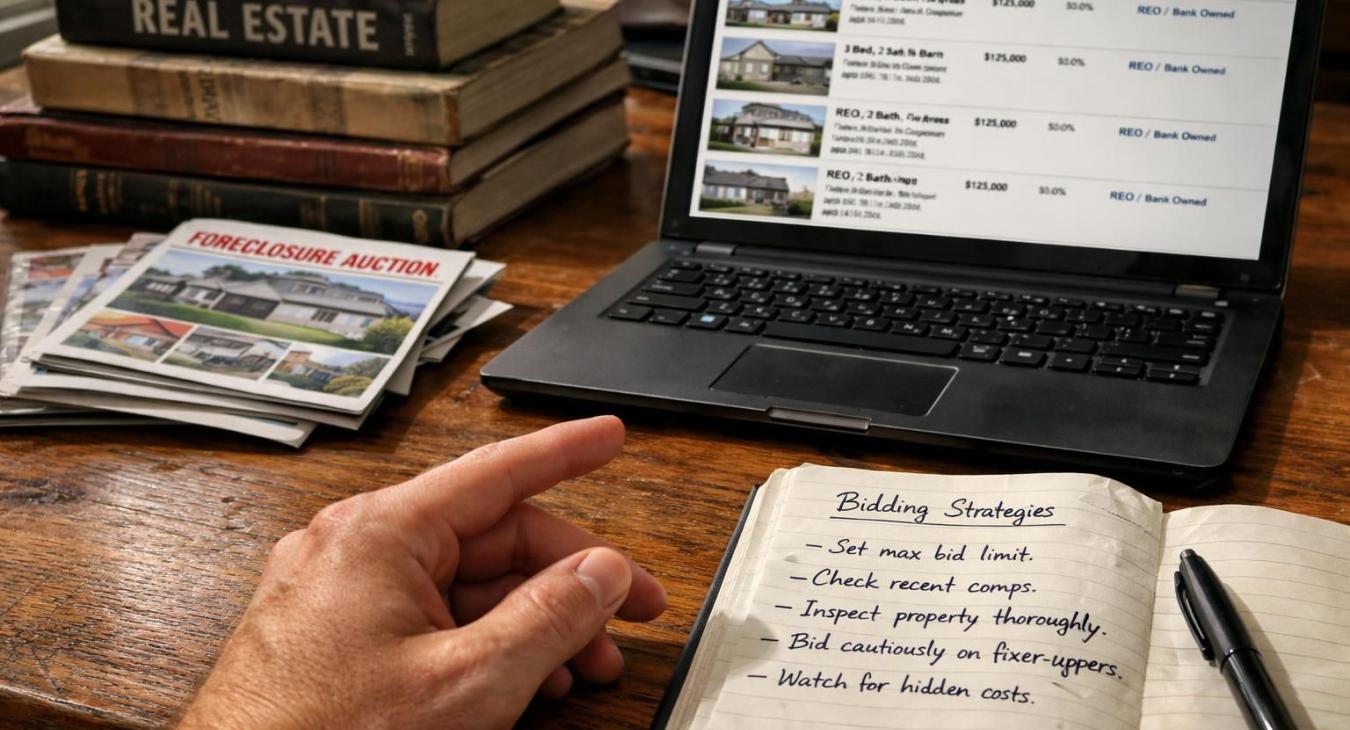
Learn how to buy foreclosed homes with expert tips on REO listings, auctions, and smart bidding strategies. Your real estate journey starts here!
Table of Contents
How to Buy Foreclosed Homes: REO and Auction Guide

Buying a foreclosed home can seem risky, especially if you do not know the steps or what to expect. Many buyers think only experts or investors can handle foreclosure auctions or REO properties, but that is simply not true.
You can learn how to buy foreclosed homes with practical advice and clear steps. This guide will give you expert tips for finding REO listings, working with real estate agents, checking title issues, and making smart bids at public auction events.
With over ten years of mortgage and real estate experience as a Senior Section Editor at Rocket Companies, Miranda Crace shares proven strategies in this guide. Her background includes deep knowledge of home loans, property inspections, and the full process of buying bank-owned property.
Get ready to unlock new opportunities in real estate investment as you read on.
Key Takeaways
- You can buy foreclosed homes through REO (Real Estate Owned) listings from banks like Bank of America or at public auctions. These houses often sell “as-is,” so plan for repairs and renovation loans like the FHA 203(k).
- Get preapproved for a mortgage before making offers. Lenders such as Rocket Mortgage offer Verified Approval, which helps you compete with cash buyers in fast-moving markets.
- Always do your due diligence: order home inspections, check property appraisals, and run a title search to catch liens or unpaid taxes. Most REOs do not provide Seller’s Disclosures.
- Cash buyers move quickly at auctions and sometimes outbid others because they skip bank approvals. Prepare all documents early to stay competitive if you’re using financing instead of cash.
- Use expert help from real estate agents familiar with foreclosure sales and local laws. Sites like Fannie Mae HomePath, Freddie Mac HomeSteps, HUD Homes, and county records also list available properties before they hit mainstream sites like Zillow or Redfin.
Understanding Types of Foreclosed Properties

Understanding foreclosed homes means knowing how the process works with banks, government agencies like Fannie Mae and Freddie Mac, and public auctions. You gain an edge by learning how investors use REO properties and seized houses as core tools in real estate investment strategies.
REO (Real Estate Owned) Properties
Banks and mortgage lenders take ownership of real estate owned (REO) or bank-owned properties after a borrower defaults on the home loan. These foreclosed homes often fail to sell at public auction, so banks list them with real estate agents.
You will usually see these listings priced near the current market value because lenders want a quick sale rather than holding onto repossessed assets.
Most REO properties are sold "as-is," making it your responsibility to handle repairs and renovations. Banks rarely provide Seller’s Disclosures since they lack first-hand knowledge about the condition of these homes.
Set clear investment goals before making an offer, and expect to submit a minimum earnest money deposit as proof of your commitment. Explore FHA 203(k) renovation loans if you need funds for both purchasing and fixing up REO houses; this powerful financing option can help cover both costs in one mortgage.
Major lenders like Bank of America specialize in products for REOs, offering online prequalification tools that streamline your lending process. Secure preapproval early so you can act fast when valuable opportunities appear on platforms like Fannie Mae’s HomePath or Freddie Mac’s HomeSteps sites.
Real estate investors who seek out bank-owned properties gain access to off-market deals that can translate into strong returns if managed correctly within today’s housing market conditions.
Auction Properties
Public foreclosure auctions move quickly. Auction properties usually sell “as-is” with very limited inspections, if you get to see them at all. You may bid using photos and short descriptions posted by auction companies or on bank websites like Bank of America Home Loans or Wells Fargo.
To compete, keep your financing lined up in advance; many auctions require full cash payment right after the winning bid.
Set a strict budget before bidding to protect yourself from overpaying for a foreclosed home in a fast-moving public auction setting. Title issues and unknown repair costs can threaten your investment returns, since you often cannot complete a property inspection or title search until after purchase.
Most auctioned homes need repairs, so plan for renovation loan options such as an FHA 203(k) renovation loan if you do not have enough cash reserves.
Foreclosure auctions may offer properties at prices below market value yet carry higher risk compared to buying an REO or bank-owned property through traditional real estate channels.
As a bidder, act decisively but stay mindful of hidden costs like property taxes, liens, and insurance requirements tied to each transaction. Fast action and thorough research help you spot profitable real estate investments while minimizing potential losses from unexpected debts or repairs that come with these housing market opportunities.
Back to topHow to Find Foreclosed Homes

Identify foreclosed homes through online real estate platforms and bank websites. Partner with experienced agents who use public records and auction data to uncover hidden opportunities in the housing market.
Online Listings and Bank Websites
Explore REO and foreclosed home inventories through bank websites like Bank of America Real Estate Center. Lenders host their own listings for public viewing, offering properties you may not find on mainstream sites like Zillow or Redfin.
Government platforms such as HUD, Fannie Mae HomePath, and Freddie Mac HomeSteps list federally owned houses and give access to extensive foreclosure databases.
Use search terms such as “REO properties” or “foreclosures” for quick results. Online listings often feature payment calculators, mortgage rate tools, and detailed property data to help you analyze each investment opportunity.
Banks and government agencies frequently post exclusive foreclosures before these homes appear in newspapers or local publications. Access these digital resources to streamline your real estate investment process.
Working with Real Estate Agents
You gain a strong advantage with real estate agents who handle REO transactions. Agents streamline communication between buyers and banks, which often require several layers of approval for foreclosed homes.
You save time and avoid costly mistakes since experienced professionals know how to manage complex paperwork and strict timelines in foreclosure sales.
Agents provide access to specialized foreclosure databases that are not available on public online listings or bank websites. These tools give you early leads on properties before most see them hit the market.
Your agent will also help you draft offers that meet bank requirements including earnest money deposits, proof of funds, and detailed terms for possession dates.
Professionals knowledgeable in local laws guide you through property inspections, title searches, escrow accounts, and closing steps. You get support negotiating with lenders about price adjustments based on repairs found during the home inspection or securing renovation loans such as FHA 203(k) options.
With an expert managing logistics after purchase, like change of ownership documents or coordinating transfer with insurers and utility companies, your investment process becomes safer and more efficient.
Public Records and Auctions
Public records help real estate professionals spot foreclosed houses before they hit the market. County and city offices keep detailed foreclosure proceedings, including eviction notices and tax liens.
Reviewing these records can alert you to properties facing public auction or with unpaid property taxes. Use this information to research title issues, mortgage defaults, or other red flags before making an offer.
Foreclosure auctions are open events where properties sell to the highest bidder. Some auction companies host online sales; others require in-person bidding at courthouses or municipal buildings.
Not all bank-owned homes appear on regular housing market sites, so check local government websites for current schedules and inventory lists. Auctions usually move fast, and many properties are sold as-is with no room for home inspection or appraisal beforehand.
Leverage data from public documents to weigh risks like liens or outstanding debts that may affect your investment’s value. Stay organized by tracking upcoming auctions through county portals and setting alerts for new filings related to short sales, REO listings, FHA loans, VA loans, renovation loan opportunities like the 203(k), home equity line of credit options, and conventional mortgages.
This approach maximizes access to deals others might miss while providing insight into competitive pricing trends within your target area.
Back to topSteps to Purchase a Foreclosed Home

You need to prepare your finances before you buy a bank-owned property. A strong plan can help you handle home inspections, mortgage insurance, and loan approval with confidence.
Determine Your Budget and Financing Options
Estimate your maximum budget by using housing costs like mortgage payments, property taxes, and home insurance. Keep the total monthly expense at or below 36% of your gross income as top lenders such as Bank of America recommend.
Include other out-of-pocket costs such as property appraisal fees, lender-required home inspections, earnest money deposits between 1% and 3%, repairs, and possible renovation expenses in your calculations.
Explore financing options that align with both short-term goals and overall investment strategy. Compare offers from banks like Rocket Mortgage or credit unions for traditional bank loans.
Consider an FHA 203(k) renovation loan if you plan to buy a foreclosed home needing updates since this product combines purchase price with repair funding into one mortgage. Hard money loans can offer quick access for public auctions but may involve higher interest rates than standard mortgages.
Use online tools such as affordability calculators or payment estimators on bank-owned property websites to make informed decisions based on current housing prices and market trends.
Get Preapproved for a Mortgage
Secure preapproval for a mortgage before you start bidding on any foreclosed home. Lenders like Rocket Mortgage offer Verified Approval programs, which include full underwriting reviews instead of simple estimates.
This process requires you to submit your financial records so that the lender can check your credit score, income, assets, and debts in detail. Bank of America also makes it easy to get online prequalification specifically for REO purchase loans.
Prequalification sends a strong signal to banks and sellers that you are a serious buyer.
A preapproved mortgage lets you act fast in hot housing markets with lots of competition from cash buyers. You can shop multiple lenders for better loan terms, lower interest rates, or reduced closing costs on your real estate investment.
As an investor myself, I have found that submitting all documents up front speeds up underwriting and strengthens my offers at public auction or with bank-owned property deals. If your Rocket Mortgage loan does not close due to reasons outside their control, they even pay $1,000 as compensation.
Loan preapproval locks in your maximum loan amount based on facts from your finances and property appraisals completed by professionals such as home inspectors or appraisal specialists.
Sellers want proof of funds or financing readiness—especially with distressed properties requiring renovation loans such as FHA 203(k). With preapproval done right away, you avoid delays during tight timelines and secure favorable terms while other buyers wait for approval letters from insurance companies or lenders handling lines of credit applications.
Research the Property and Conduct Due Diligence
Banks rarely provide maintenance records or a Seller’s Disclosure for REO properties. You need to order a thorough home inspection from a licensed inspector. Schedule the property to be de-winterized, if needed, so heating and cooling systems can be checked.
Identify any required repairs early; this helps you estimate renovation loan amounts, like an FHA 203(k) renovation loan or other financing options.
Work with experienced real estate agents and title companies during your due diligence process. They will help conduct a detailed title search to check for liens or unpaid property taxes that could stall closing.
Review public auction results and comparable sales in the neighborhood to understand true market value before committing your down payment.
Out-of-pocket costs can add up quickly on foreclosed homes. Expect expenses such as bank-required property appraisals and extra professional inspections upfront. Gather funding details, including available home equity lines of credit (HELOCs), refinance options, or collateral requirements for major rehab projects.
Aim to complete all due diligence ahead of time; you do not want surprises after making an offer on any bank-owned property in today’s housing market.
Attend Foreclosure Auctions (If Applicable)
Foreclosure auctions move fast and often require full cash payment on the spot. Properties sold at auction are “as-is” with limited or no opportunity for a home inspection. You may only get to review property photos, descriptions, or public records before bidding.
Set your budget ahead of time to avoid overbidding in the moment.
Public foreclosure auctions usually occur after lenders reclaim properties but before listing them as bank-owned (REO) assets with real estate agents. Title issues, unpaid property taxes, and possible renovation needs can remain hidden until after you win the bid.
If a property fails to sell at auction, it might appear later through REO listings or with an auction company partner like Auction.com. My experience shows that disciplined preparation leads to better investment outcomes even when competing against cash buyers in these high-stakes settings.
Make an Offer on an REO Property
Submit a formal offer through the real estate agent who listed the bank-owned property. Include your personal details, offered price, and an earnest money deposit of at least 1 to 3 percent of the sale price.
Banks like Bank of America often expect fair offers that align with current housing market values. Send proof of funds or your preapproval letter, especially if you plan to use FHA 203(k) renovation loan financing for both purchase and repairs.
Prepare for slower negotiations since banks may require multiple levels of approval before accepting your bid on an REO property. Discuss possession dates and logistics with your agent prior to closing; this helps ensure a smooth transition into ownership without delays.
Factor in enough time after closing so movers and contractors can begin any needed home inspection, property appraisal, or renovations right away. This approach increases your chance of securing a valuable real estate investment while minimizing costly surprises from title issues or unexpected repairs.
Back to topEvaluating Foreclosed Properties

You need to assess every bank-owned property with a thorough home inspection and appraisal. Check for title concerns and outstanding property taxes before moving forward with your real estate investment plan.
Home Inspections and Appraisals
A thorough home inspection evaluates the property’s condition and highlights repairs you must address before investing. Inspect foundation for uneven floors, misaligned doors, or cracks.
Examine frame elements such as walls, ceilings, and stairs for damage. Assess HVAC systems for leaks and confirm they run smoothly. Check electrical panels for breaker faults or wire hazards that can impact safety and value.
Review the roof closely to spot damaged shingles or leaks that could drive up renovation loan needs later. Test plumbing fixtures and pipes; hidden problems may require costly fixes.
An independent appraisal determines fair market value of any foreclosed home or bank-owned property you target. Lenders use this process so they do not overextend credit on your deal or FHA 203(k) renovation loan application.
Appraisal outcomes sometimes affect down payments, homeowner’s insurance rates, or deductions tied to real estate investment plans in today's housing market. Expect lender-required inspections on REO properties, which might increase out-of-pocket expenses but protect your interests long term.
Most REO homes sell “as-is,” making it your job to understand repair costs before a public auction bid or final offer. De-winterizing is often required so inspectors can evaluate all systems properly after months of vacancy in colder climates like Chicago or Detroit during early spring sales cycles from large banks such as Wells Fargo in 2022-2023 foreclosure upticks across America’s key markets.
Checking for Title Issues
Start your due diligence by ordering a title search through a trusted title company. This step helps uncover existing liens, unpaid property taxes, or HOA fees that could block the transfer of a clean deed.
Review public records for any liens or unresolved debts tied to the bank-owned property or auction home.
Work with experienced real estate agents and legal professionals. They can guide you in spotting issues early in the process so you avoid costly delays at closing. Title insurance protects your investment against future disputes over ownership rights on foreclosed homes.
Always resolve all outstanding title problems before finalizing purchases in today’s housing market to ensure smooth homebuying and transfer of clear property titles.
Back to topRisks and Challenges of Buying Foreclosed Homes

You may face higher costs for home inspection, property appraisal, and fixing damage when you buy a bank-owned property. Prepare yourself to review financing options like renovation loans or credit lines as the housing market often favors swift cash offers from other investors.
Potential Repairs and Renovations
Most bank-owned property sales happen “as-is.” This puts all repair and renovation costs on your shoulders. Conduct a detailed home inspection to check key systems like the foundation, frame, HVAC, electrical wires, roof shingles, and plumbing lines.
Sometimes you will need to de-winterize a property just to complete this process fully.
Factor every possible cost into your bid before purchasing any foreclosed home. List out repairs from paint and drywall patches to bigger fixes such as roof replacement or rewiring.
Use the results of your property appraisal and inspection reports as leverage with banks or lenders in negotiations.
Many investors use tools like FHA 203(k) renovation loans for these projects. These special financing options allow you to roll both purchase price and repair expenses into one mortgage if it fits local lending rules set by the Federal Housing Administration.
Keep total housing payments below 36 percent of gross income for safe cash flow management. Out-of-pocket costs may pop up at several stages including before an offer is made; plan funding sources ahead—credit lines or cards can cover emergencies but be wary of credit card interest rates cutting into profit margins.
Visualize the finished project in today’s housing market: strong systems add value while poor repairs drive away buyers or tenants fast. Set clear goals for each repair so you maximize return on investment and boost real estate portfolio performance long-term.
Competing with Cash Buyers
Cash buyers move quickly in the housing market, especially during a public auction for a foreclosed home. You may find that their all-cash offers are more attractive to banks and sellers than financed bids.
Cash transactions close faster, often skipping many of the lender-required steps like appraisals or mortgage approvals. This allows cash investors to win properties with fewer contingencies and less risk for the seller.
To stand out against these buyers, line up your financing options ahead of time. Get preapproved by multiple lenders if possible so you can act fast when bidding on REO or auction properties.
A strong preapproval letter signals to sellers that your bid is reliable even if you need a loan. In tight auctions, expect higher winning bids because cash competitors often drive up prices.
Prepare by knowing your maximum budget including funds for repairs or renovation loans such as an FHA 203(k) renovation loan.
Some real estate professionals advise working with agents who understand foreclosure sales and can help speed up paperwork and negotiations with banks or lending institutions. Focus on properties where timing works in favor of non-cash buyers; some bank-owned property listings give equal weight to all offers received within an initial window before choosing the best one.
Quick action makes your offer more competitive against those bringing cash to close right away.
Back to topTips for Success in Foreclosure Purchases
Strengthen your strategy with clear financing options and thorough home inspection tools. Use local real estate laws to gain an edge in the housing market for your next bank-owned property purchase.
Negotiating with Banks or Lenders
Banks typically price bank-owned property at current market value to encourage a quick sale. Present fair offers close to the asking price for a higher chance of success. Most lenders require you to provide prequalification or preapproval before starting negotiations, which shows you are prepared and serious about buying the foreclosed home.
Include an earnest money deposit that is usually 1% to 3% of your offer, as this signals commitment.
Direct access to property details may be limited because banks often have little information and do not provide Seller’s Disclosures. Out-of-pocket expenses such as lender-mandated property appraisals or home inspections can arise during talks.
Real estate agents experienced with REO sales can streamline paperwork and assist in securing favorable terms on financing options, possession dates, or other post-closing logistics.
Working closely with these specialists increases your chances of closing smoothly despite approval delays from banks or investors involved in the housing market transaction.
Understanding Local Laws and Regulations
Local foreclosure laws shape each step of buying a bank-owned property or foreclosed home. Eviction notices and the entire foreclosure timeline are defined at the county or city level, which can impact how quickly you gain possession.
Some regions require specific disclosures during foreclosure sales, so make sure to check what paperwork is needed before making an offer. Your real estate agent should have experience with local court systems and public auction rules, as these differ across markets.
Title companies help resolve unpaid property taxes, homeowner association dues, and other title issues according to local codes before closing on a property. You might encounter squatters or tenants; their eviction follows strict legal processes set by city regulations.
Public records provide key information about both REO properties and auction homes but vary in format from one jurisdiction to another. Seek guidance from professionals who know your area’s unique housing market so you stay compliant with every requirement while pursuing your next real estate investment opportunity.
Back to topAdditional Resources on Buying Foreclosed Homes
Bank of America gives you practical digital tools to evaluate your financing options before investing in a foreclosed home. Use their monthly payment calculator, affordability estimator, and closing costs tool to set clear budget goals.
These features help you understand what fits with your investment strategy in the current housing market. Bank of America also provides access to dedicated loan officers who support buyers through complex transactions on bank-owned properties.
Rocket Mortgage offers its Verified Approval program. This helps real estate investors compete with cash buyers at public auction by proving solid financing up front. Their Better Money Habits platform covers insights about purchasing distressed homes and provides tips for managing renovation loans like the FHA 203(k) renovation loan.
Miranda Crace from Rocket Companies contributes expert knowledge that breaks down steps needed when buying an REO or foreclosure property.
Federal resources add another layer of opportunity for serious buyers. Search Fannie Mae HomePath and Freddie Mac HomeSteps for government-owned inventory updated regularly with new listings across many states.
HUD lists thousands of government-foreclosed homes nationwide each month, letting you filter deals based on price point or location criteria important for your portfolio growth targets.
Guides exist on performing title searches or bidding at a public auction, giving step-by-step practical advice tailored toward real estate professionals and investors alike. Title companies and local agents streamline purchase logistics while helping check property taxes or confirm legal standing during due diligence periods before closing on any bank-owned property.
Back to topConclusion
Buying a foreclosed home can help you build your real estate portfolio and boost your investment returns. Use tools like online REO property listings, public auction sites, and local housing records to find properties that fit your goals.
Rely on expert advice from experienced agents, especially for tasks like title searches or choosing a renovation loan such as an FHA 203(k). Careful research and clear objectives will put you in the best position to succeed in this competitive market.
Take action today; the right bank-owned property could become your next valuable asset.
Back to topFAQs
1. What is a bank-owned property, and how does it differ from a foreclosed home sold at public auction?
A bank-owned property is real estate the lender has taken back after an unsuccessful foreclosure sale. The bank then sells this home directly to buyers. In contrast, homes sold at public auction are offered to bidders right after foreclosure, often without much chance for inspection.
2. How can a home inspection help when buying a foreclosed home?
A thorough home inspection allows you to find hidden problems before purchase. This step protects your investment and helps you plan repairs or renovations if needed.
3. Why should I consider using a renovation loan when purchasing in today’s housing market?
Renovation loans offer funds for both buying and fixing up the property in one package. These loans help buyers restore value to distressed homes while keeping costs manageable as they enter the competitive housing market.
4. What steps should I follow to buy a foreclosed house at public auction?
First, research available properties and review all terms of sale carefully. Next, secure financing early since auctions often require full payment fast; cash or pre-approved loans work best here. Finally, attend the public auction ready with your maximum bid set based on fair market value and possible repair needs identified during your preparation phase.
Back to top