

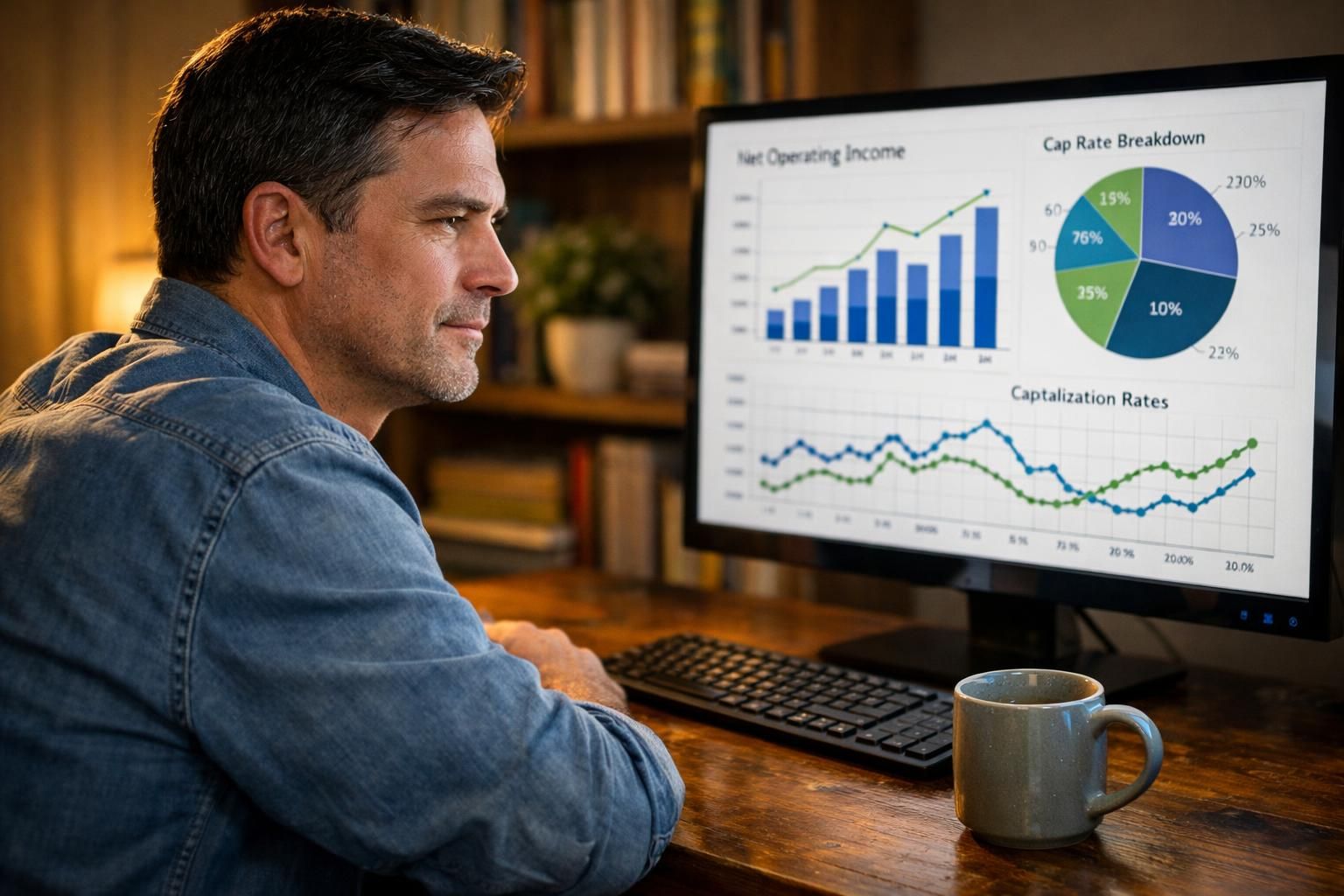

Master real estate KPIs to maximize your investment returns. Learn crucial metrics every investor should track for smarter decision-making!
Table of Contents
- What Are Real Estate KPIs?
- Importance of Tracking Real Estate KPIs
- Key Financial Performance KPIs
- Operational Efficiency KPIs
- Asset and Portfolio Management KPIs
- Marketing and Sales KPIs
- How to Effectively Track and Use Real Estate KPIs
- Essential Real Estate Investor KPIs to Track for Success
- Conclusion
- FAQs
Real Estate KPIs: Metrics Every Investor Should Track

Many real estate investors struggle to understand which key numbers really drive their returns. Real estate KPIs are vital for turning property data into clear actions that boost performance and profit.
If you rely only on gut feeling or general trends, you may miss hidden opportunities or early warning signs of risk. This article explains the most important real estate KPIs every investor should track, from net operating income and capitalization rate to tenant turnover, vacancy rates, and rental income.
I have spent years working with top-performing commercial real estate firms using cloud-based tools such as NetSuite ERP and AI-powered analytics to improve portfolio management. My experience will help you use these key performance indicators (KPIs) in your own business strategy.
Keep reading to discover the metrics that separate successful investors from the rest.
Key Takeaways
- Track key financial KPIs like Net Operating Income (NOI), Capitalization Rate, Cash-on-Cash Return, Internal Rate of Return (IRR), and Cash Flow to measure your property’s performance and guide better investment decisions.
- Use operational efficiency KPIs such as Time on Market, Vacancy Rate, and Operating Expense Ratio to identify areas for cost savings and improve tenant retention rates. Aim for an OER below 80% to stay efficient.
- Leverage modern tools like NetSuite ERP, AI-powered dashboards, or Insightsoftware to automate KPI tracking and quickly spot trends in rental income, expenses, occupancy rate, or sales volume across your portfolio.
- Compare properties using benchmarks like the Appointment-to-Listing Conversion Rate formula: Listings Acquired ÷ Vendor Meetings; this helps evaluate agent effectiveness and boost commission rate per sale.
- Regularly review year-over-year changes in essential metrics—such as a 10% increase in occupancy rate through weekly KPI reviews—to catch market shifts early and support long-term revenue growth.
What Are Real Estate KPIs?

Real estate KPIs are key performance indicators that measure your progress toward specific goals in property management, commercial real estate, or investing. You select these metrics based on your strategies and business objectives.
For example, tracking net operating income (NOI), cap rate, occupancy rate, or return on investment (ROI) helps you see if a property meets financial expectations. A well-chosen KPI can help you find wasted space or flag inefficiencies before they become costly problems.
You should use 4 to 5 core KPIs for effective monitoring across properties and portfolios. Consistent definitions year-over-year ensure accurate measurement and better forecasting with tools like financial software.
Smart investors align their KPIs using the SMART method: Specific, Measurable, Achievable, Relevant, Time-Phased. Early-warning indicators such as vacancy rates or operating expense ratios give you actionable intelligence for risk assessment and operational efficiency.
Stakeholder buy-in grows when KPIs reflect organizational values and drive revenue growth and returns while managing risks related to tenant turnover and capital expenditures (CapEx).
Back to topImportance of Tracking Real Estate KPIs

Tracking real estate KPIs puts you in control of your investments. Key performance indicators help you compare properties, spot early warning signs, and optimize decisions fast. For example, monitoring the net operating income or occupancy rate can help you detect issues before they affect your bottom line.
Systematic tracking requires good systems and software tools. Many investors now use artificial intelligence software to automate data collection from financial statements, property management records, and market analyses.
These tech solutions pull information on rental income, tenant turnover rates, and property value straight into dashboards.
Dashboards provide easy-to-read visuals that highlight year-over-year variance and other trends for revenue growth and operational efficiency metrics like operating expense ratio or vacancy rate.
Automated alerts signal when a key metric strays from set benchmarks or goals so you can act quickly to reduce risk or seize an opportunity in market conditions. Dedicated platforms let you review sales volume statistics or track EBIDT numbers across commercial real estate holdings without juggling multiple spreadsheets.
Specialized KPIs measure space utilization such as square footage per employee, cost per move during lease turnovers, maintenance wrench time ratios, and even customer satisfaction scores tied to work completion rates.
In my own experience managing a diverse portfolio of assets under management over several years using AI-powered scorecards transformed how I handle risk management tasks while boosting occupancy rate stability across residential units by up to 10%.
Using these metrics every week helps maximize return on investment (ROI) while supporting sustainability initiatives that cut costs by as much as 20%. This measurable approach empowers confident decisions for every seller or investor aiming at steady portfolio optimization in any market cycle.
Back to topKey Financial Performance KPIs

Master key financial performance KPIs like net operating income and capitalization rate to sharpen your real estate investment decisions for stronger returns—explore more to boost your growth.
Net Operating Income (NOI)
Net Operating Income, or NOI, gives you a clear picture of your property’s profitability before financing and taxes. Calculate NOI using the formula: Revenue minus operating expenses.
Exclude debt service and capital expenditures, focusing only on costs like property management fees, maintenance, utilities, insurance, and property taxes.
Use NOI to benchmark rental income performance year-over-year (YOY) for both residential and commercial real estate. A higher NOI signals stronger operational efficiency and improved bottom lines.
Investors rely on this figure to assess property valuation and forecast revenue growth under changing market conditions. Lenders use NOI when they measure a building’s ability to cover its debt service coverage ratio (DSCR), influencing loan approvals or refinancing terms within your real estate investment portfolio.
Capitalization Rate (Cap Rate)
Capitalization Rate (Cap Rate) gives you a clear way to compare the value of real estate investments. To find this metric, use the formula: Cap Rate = (NOI ÷ Property Value) x 100.
Real estate investors and appraisers rely on cap rates to estimate your potential annual return based on net operating income and current property valuation.
A higher cap rate often signals greater risk but also promises higher returns for your commercial real estate portfolio. Use cap rate analysis when making acquisition or disposition decisions across different markets and asset types.
Shifts in capitalization rates may indicate changes in market conditions or perceived financial risk, helping you spot new opportunities or emerging challenges quickly. This performance metric is essential if you aim to maximize revenue growth while managing risk and capital structure effectively.
Cash-on-Cash Return
You measure Cash-on-Cash Return using a simple formula. Divide your annual cash flow by the total cash you invested, then multiply by 100. For example, if you invest $80,000 into a rental property and receive $8,000 in annual net cash flow from rent after all operating expenses and interest payments, your Cash-on-Cash Return stands at 10%.
This percentage helps you see how well your actual out-of-pocket capital is performing.
Many real estate investors use leverage to buy income-producing properties with loans or mortgages. In these cases, focus on Cash-on-Cash Return rather than just overall returns like Net Operating Income or Internal Rate of Return (IRR).
You want to quickly compare different investment opportunities based on their real-time rate of return for every dollar of cash invested. A higher percentage signals stronger performance and better financial stability for your portfolio.
Banks and underwriting teams also pay attention to this metric during loan approval processes.
Track this key performance indicator each year to monitor ongoing investment results versus other assets like commercial real estate or shares in Real Estate Investment Trusts (REITs).
Keep in mind that Cash-on-Cash does not include gains from property value appreciation or the paydown of principal on debt financing; it focuses strictly on current-year liquidity generated from rental income after covering operating expenses and interest payments.
Use it as part of your toolkit alongside NOI, Cap Rate, occupancy rate trends, and more when evaluating revenue growth potential across market conditions.
Internal Rate of Return (IRR)
Internal Rate of Return (IRR) ranks as a key performance indicator in real estate investing. IRR calculates the average annual return you can expect from an investment property, factoring in all projected cash flows over the entire holding period and including the final sale.
Higher IRR values signal stronger returns for investors, making it easier to compare rental income projects or commercial real estate deals.
This metric helps you decide if a project meets your required return. If your IRR is greater than your desired minimum rate, then the investment is viable. Most developers and syndicators use IRR alongside Net Operating Income (NOI), capitalization rate, and cash-on-cash return when evaluating new opportunities or buy-and-sell decisions.
IRR also accounts for time value of money; early positive cash flow improves this metric more than later returns.
Professional investors often rely on specialized software to calculate accurate IRRs due to its complex formula, especially with multiple leases or variable operating expenses involved.
Real estate agents and asset managers use this percentage-based figure during portfolio analysis, benchmarking each property’s performance against market trends or other investments under their management.
Use IRR to guide strategic decisions about hold periods and sales timing so you can boost shareholder value across your assets.
Cash Flow
Track cash flow each month, quarter, and year to gauge your rental property’s performance. Use the formula: Cash Flow = Total Income minus Total Expenses. This real estate KPI measures how much profit remains after expenses like mortgage payments, property management fees, maintenance costs, and taxes.
A positive cash flow shows your income exceeds all operating expenses; this supports sustainability and can fund distributions to investors or fuel future acquisitions.
Negative cash flow signals risk; it means you are losing money on the investment. Real estate agents often use this metric before purchase decisions, while experienced investors analyze trends for revenue growth and working capital needs.
Strong positive figures provide flexibility for reinvestment or handling tenant turnover. Cash flow remains a core metric in evaluating long-term rental income success across commercial real estate portfolios.
Back to topOperational Efficiency KPIs

Operational efficiency KPIs help you measure how well your property management processes perform, giving you the power to unlock higher occupancy rates and control operating expenses—explore these metrics to maximize your real estate profits.
Time on Market
Time on market, also known as Days on Market (DOM), tracks the number of days a property stays active before going under contract. For example, if you list a commercial real estate asset on January 1 and accept an offer by January 30, the DOM is 30 days.
Monitoring this key performance indicator gives you clear insight into how your pricing strategies and marketing efforts perform within current market conditions.
High DOM often signals weak demand or overpricing for your property. You can use longer time frames to negotiate better deals, especially in markets with more inventory than buyers.
Shorter time periods suggest strong demand growth and effective listing tactics. Real estate agents rely on DOM trends to adjust seller expectations and improve future campaigns. Analyzing these patterns helps you uncover seasonal changes and benchmark your results against competitors using sold homes per available inventory.
Tracking time on market boosts goal-setting for both property management teams and serious investors focused on revenue growth or lowering vacancy rate. Paying attention to year-over-year variance in DOM reveals shifts driven by tenant turnover or broader economic forces that impact rental income and return on investment (ROI).
The National Association of Realtors® recommends integrating tools like artificial intelligence to forecast optimal listing windows based on past data related to average commission per sale or occupancy rate across similar properties.
Operating Expense Ratio
Operating Expense Ratio (OER) measures how efficiently you manage property costs. Calculate OER using this formula: ((Total Operating Expenses + Depreciation) / Gross Revenue) x 100 percent.
Keep a close watch on your OER, since it directly impacts net operating income and overall investment returns. Lower ratios mean you run the building more efficiently and keep more profit from rental income.
Use industry benchmarks to compare your ratio against similar commercial real estate assets. Spotting a high OER shows where operational improvements or renegotiating service contracts may help cut costs.
Investors and property managers often review these key performance indicators to find savings opportunities and increase cash flow. Tracking your operating expense ratio gives early signs of rising expenses that could impact return on investment (ROI).
This measurement can become even more effective when combined with other KPIs like occupancy rate, tenant turnover, and revenue growth.
Regularly reviewing the OER supports smart decisions in both asset management and property valuation. Strive for an OER below 80 percent as a baseline; higher figures usually demand attention from both owners and managers committed to achieving better efficiency in their portfolios.
Using artificial intelligence tools can also streamline data collection for this performance metric, allowing faster response to market trends or year-over-year variance in operating expenses.
Vacancy Rate
Track your vacancy rate using the formula: (Number of Occupied Units / Total Number of Units) x 100. This real estate KPI shows occupancy trends and rental demand for each property you manage.
Experience with rental income properties has shown that a lower vacancy rate signals strong tenant demand and successful property management strategies. High vacancy rates often result in lost revenue growth, increased marketing costs, and decreased net operating income.
Use this key performance indicator to compare similar assets across markets or portfolios. Regular monitoring boosts your ability to adjust leasing tactics or renewal incentives quickly.
A low vacancy rate can improve both property valuation and long-term return on investment (ROI). Rely on accurate tracking tools like property management software or AI-based analytics platforms to support effective decision-making around leasing and retention plans.
Back to topAsset and Portfolio Management KPIs

Effective asset and portfolio management hinges on your ability to use key performance indicators like return on investment (ROI) and loan-to-value ratios. Track these real estate metrics using property management systems or artificial intelligence tools to ensure steady revenue growth and smart acquisition decisions.
Number of Properties Acquired
Tracking the number of properties acquired gives you a clear view of portfolio growth and capital deployment efficiency. Each new purchase marks your progress toward market expansion, higher revenue growth, and broader asset diversification.
You can review this key performance indicator (KPI) quarterly or annually to measure how well your acquisition strategy aligns with organizational goals.
Comparing property acquisitions across different types or geographic locations helps identify strong markets and areas for improvement. For example, segment residential rental income from commercial real estate assets to target future investments more effectively.
Using tools like property management software or AI-powered dashboards streamlines data collection and analysis for this metric.
A growing count of newly bought properties signals improved market presence and strengthens benchmarking against competitors in real estate demand. In my own investment experience, closely monitoring the number of deals closed each quarter allowed me to catch shifts in market trends quickly while maintaining healthy occupancy rates throughout my portfolio’s build-out phase.
Setting targets based on year-over-year variance will keep you focused on both short-term momentum and long-term return on investment (ROI).
Return on Investment (ROI)
You use ROI to measure the overall profitability of your real estate investment. The formula is simple: ROI equals net profit divided by total investment, then multiplied by 100 percent.
For example, if you invest $200,000 in a rental property and gain a net profit of $30,000 after deducting operating expenses and loan payments, your ROI is 15 percent. A higher ROI shows that you manage your properties more efficiently.
Compare multiple deals quickly with this key performance indicator. Investors often review ROI both before and after renovations to measure successful value-add strategies such as upgrading kitchens or improving curb appeal.
I have compared commercial real estate assets using ROI data from various portfolios several times over the past year. Regularly analyze return on investment for each asset; this approach lets you report clear results to stakeholders and supports smart reinvestment or divestment decisions based on actual market conditions.
Maximize revenue growth by keeping costs low while focusing on increasing rental income. Use technology like property management software or artificial intelligence tools to track payback period trends, monitor average commission per sale for brokers, and anticipate changes in construction cost per square foot.
This discipline creates strong habits for anyone working in real estate investing at any scale—individual property owners or institutional investors alike benefit when they consistently evaluate their holdings with practical metrics like ROI alongside other financial KPIs such as internal rate of return (IRR) or capitalization rate (cap rate).
Cost of Acquisition
Cost of acquisition includes the total amount spent to secure a property. This figure covers the purchase price, closing expenses, and all due diligence outlays such as inspections and legal fees.
Tracking these details helps you accurately measure your return on investment (ROI) and payback period for each asset in your portfolio. High costs at this stage can lower cash flow or delay profitability, especially if market trends shift after purchase.
Benchmark your cost of acquisition against industry standards or previous transactions to spot inefficiencies in your process. Compare data year-over-year to reveal areas where savings are possible on future real estate acquisitions.
Reducing upfront costs improves initial equity positions and enhances operating expense ratio outcomes over time. Smart tracking gives you an edge when evaluating commercial real estate deals, strengthening long-term revenue growth across properties under management.
Back to topMarketing and Sales KPIs
You will increase your property sales by monitoring real estate metrics in marketing. Use artificial intelligence (AI) tools to analyze market trends and improve your investment strategy.
Sales Volume
Sales volume tracks the total number of properties sold within a set period. Use this key performance indicator to measure market activity and compare your real estate business against competitors.
High sales volume signals strong demand, healthy market trends, and successful marketing campaigns. Regularly track your sales volume each month, quarter, or year to spot positive and negative trend lines.
Break down sales volume by property type or location for deeper insights into revenue growth and commercial real estate shifts. Analyze which neighborhoods drive the most transactions or determine which agents close more deals.
Sales forecasting becomes easier with these numbers, allowing you to plan commission income and business goals with confidence.
Benchmarking your results helps motivate teams while planning for future expansion. Monitor year-over-year variance in sold homes per available inventory to understand seasonal changes and adjust strategies quickly.
Strong tracking supports accurate revenue forecasts for both single-family rentals and larger portfolios managed under a property management system using artificial intelligence tools like predictive analytics platforms.
Appointment-to-Listing Conversion Rate
Calculate the Appointment-to-Listing Conversion Rate using this formula: Total Number of Listings Acquired divided by Total Number of Vendor Meetings. Use this performance metric to measure real estate agent efficiency and sales process effectiveness.
High conversion rates signal strong client engagement and effective sales presentations during property valuation appointments.
Track this key performance indicator across agents, offices, or time periods to spot trends in your commercial real estate business. Compare benchmarks within your team to identify best practices or training needs.
Agents who convert more vendor meetings into listings show mastery in lead follow-up and understanding market conditions.
Set realistic targets for both appointments and listings based on conversion data for revenue growth goals. Leverage insights from the conversion rate to guide marketing strategies, resource allocation, and quality of leads generated per campaign.
Use these findings to maximize commission rate per sale while improving operational efficiency with lower operating expenses over time.
Commission Rate per Sale
Use the commission rate per sale to assess agent productivity and shape fair compensation structures. Divide the total commission value by the number of sales to find this key performance indicator.
Average commission per sale often reflects your market segment, property type, or service level. Higher rates may show expertise in luxury real estate or complex commercial transactions.
Track commission data closely for profit analysis across different agents or brokerages. Segment results by property class, such as residential homes versus commercial real estate, to benchmark against industry averages or adjust your incentive plans.
Frequent review helps position you competitively in fast-changing market conditions while supporting revenue growth targets and optimizing operating expenses.
Back to topHow to Effectively Track and Use Real Estate KPIs
Top real estate investors rely on accurate data to strengthen property management and maximize revenue growth. Staying ahead means using reporting tools that simplify tracking of key performance indicators (KPIs) across your portfolio.
- Select KPI dashboard templates for Excel or advanced platforms to centralize rental income, occupancy rate, tenant turnover, and operating expense ratio in one place.
- Leverage prebuilt KPI templates to monitor net operating income (NOI), internal rate of return (IRR), loan-to-value ratio, and cash flow with instant visual reports.
- Adopt reporting software like insightsoftware to automate data collection from financial statements, operational records, and commercial real estate holdings.
- Integrate reporting solutions with your existing enterprise resource planning (ERP) systems so you do not face costly overhauls or manual spreadsheets.
- Consolidate asset data into a single user interface, allowing quick comparison against market trends and real estate demand growth.
- Set benchmarks for key metrics such as cost of acquisition, sales volume per agent, average commission per sale, and payback period to drive clear investment goals.
- Schedule regular reviews of year-over-year variance for critical KPIs such as capitalization rate and vacancy rate to adapt quickly to changing market conditions.
- Visualize performance metrics through interactive dashboards that present property valuation shifts, construction cost per square foot changes, and percentage change in rental income.
- Request a personalized demo of advanced reporting platforms before making a purchase decision; ensure the tool fits your specific needs as a property investor or manager.
- Align team objectives around centralized reports so every member tracks operational efficiency KPIs such as sold homes per available inventory or appointment-to-listing conversion rate.
Tables provided by automation tools deliver clarity at a glance; they help you spot underperforming assets swiftly and enable fast action toward improved ROI in any real estate market cycle.
Back to topEssential Real Estate Investor KPIs to Track for Success
Real estate investing requires a clear focus on key performance indicators to monitor progress and maximize returns. Tracking the right real estate KPIs gives you the edge to make smart decisions in both commercial real estate and residential markets.
- Monitor Net Operating Income (NOI) to understand your property's profitability. Calculate NOI by subtracting total operating expenses from your rental income.
- Measure your Capitalization Rate (Cap Rate) for a snapshot of property value versus its income. A higher Cap Rate can signal better investment efficiency, especially in changing market conditions.
- Track Cash-on-Cash Return to see how much cash flow your initial investment generates each year. This metric is crucial for evaluating short-term return on investment (ROI).
- Follow Internal Rate of Return (IRR) for insight into the long-term growth of your capital in property management and asset acquisition.
- Keep an eye on Cash Flow as it directly affects sustainability; positive cash flow means you are generating more revenue than expenses every month.
- Analyze the Operating Expense Ratio (OER). Use the formula: ((Total Operating Expenses + Depreciation) / Gross Revenue) x 100%. Ensure your OER stays below 80% to keep costs efficient.
- Review Tenant Turnover Rate because high turnover increases operating expenses and impacts rental income stability. The formula is (# Tenants Moved Out / Total # Tenants) x 100%.
- Check Loan to Value (LTV) Ratio often as lenders prefer LTV ratios at or below 80%. Compute with Mortgage Amount divided by Appraised Property Value.
- Evaluate Vacancy Rate frequently since lower vacancy rates show strong demand and boost occupancy rate, which increases revenue growth.
My experience using these metrics has helped me optimize portfolio performance, reduce risk, and adapt quickly to market trends. These KPIs drive informed decisions that protect equity, support year-over-year variance goals, and help forecast future returns with confidence.
Back to topConclusion
Tracking key performance indicators puts you in control of your real estate business. You can use platforms like NetSuite ERP and Insightsoftware to watch each metric in real time.
These tools turn complex data on rental income, cash flow, and operating expenses into clear facts that drive better decisions. Stay alert to trends, set goals for occupancy rate or ROI, and improve with every move you make.
Your future success depends on mastering these essential KPIs now.
Back to topFAQs
1. What are the most important real estate KPIs every investor should track?
Every investor should monitor key performance indicators such as occupancy rate, rental income, tenant turnover, net operating income, and return on investment. These metrics reveal property management efficiency and signal areas for improvement.
2. How does tracking operating expenses impact revenue growth in commercial real estate?
Monitoring operating expenses helps control costs and improve profit margins. Lowering these expenses increases net operating income which directly supports stronger revenue growth over time.
3. Why is understanding the internal rate of return (IRR) essential for property valuation?
The internal rate of return measures how well an investment performs over time compared to other opportunities. A higher IRR means better potential returns; this metric guides decisions about buying or selling properties based on market conditions.
4. How can average commission per sale help real estate agents assess their performance?
Average commission per sale shows how much money agents earn from each transaction. Tracking this KPI motivates agents to close more deals and maximize earnings while staying aware of market trends and demand growth.
5. What role does payback period play in evaluating construction cost per square foot for new developments?
Payback period tells investors how long it will take to recover initial investments like construction cost per square foot through rental income or sales proceeds. Shorter payback periods mean faster capital recovery which makes projects more attractive under current market trends.
6. Why should investors measure year-over-year variance in sold homes per available inventory?
Year-over-year variance compares changes across different periods so investors spot shifts in demand or supply quickly. This KPI highlights whether properties are moving faster or slower than before helping guide pricing strategies amid changing real estate demand growth patterns.
Back to top