

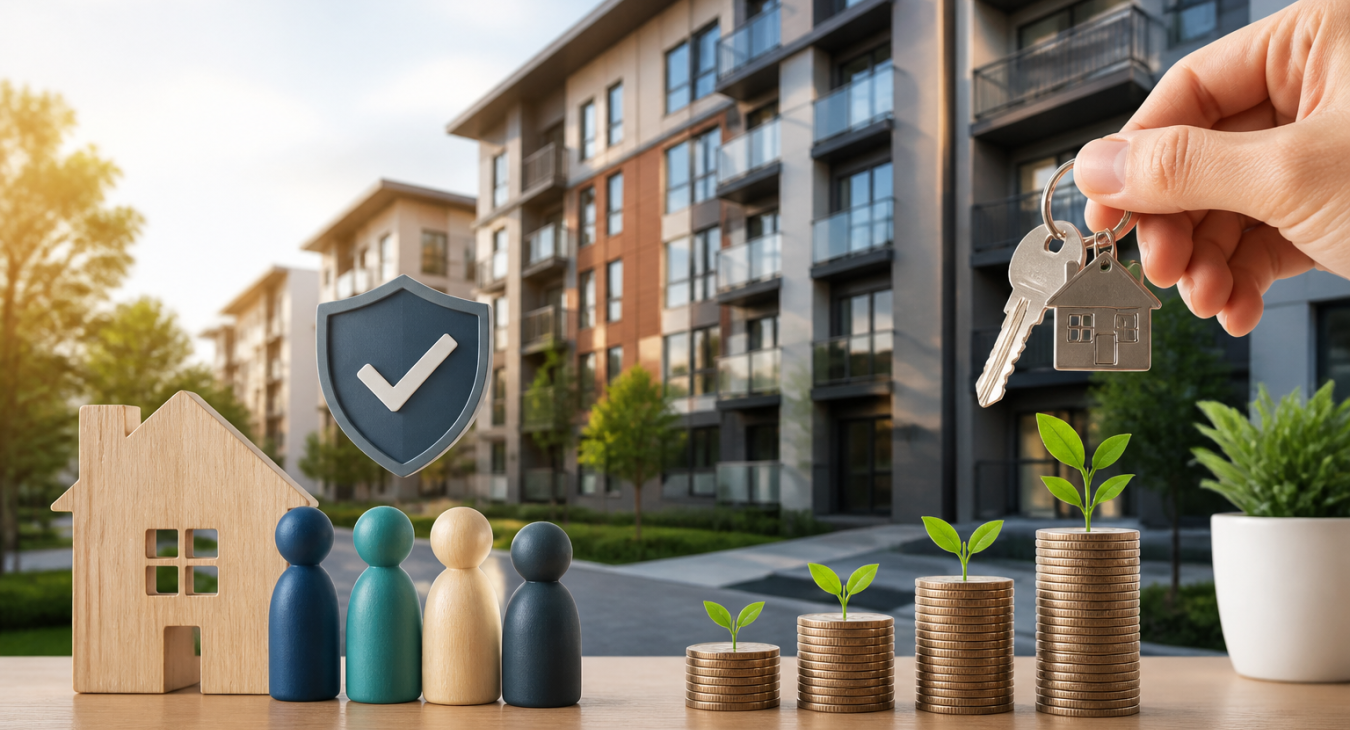
Learn proven tenant retention strategies to reduce turnover, cut costs, and boost your rental property ROI. Actionable guide inside.
Products and Tools Mentioned in this Post

Rent Manager
Rent Manager is a powerful property management software platform for real estate investors. Manage tenants, maintenance, accounting, and reporting all in one place.


TenantCloud
TenantCloud offers landlords and property managers a complete solution for rent collection, tenant screening, lease management, and maintenance tracking.
Table of Contents
- The Real Cost of Tenant Turnover
- Foundation: Understanding Tenant Expectations and Relationships
- Maintenance and Property Quality
- Financial Flexibility and Incentives
- Strategic Renewal Management
- Communication and Engagement
- Measurement and Optimization
- Implementation Roadmap
- Conclusion: Retention Is Your Highest-Return Investment
- Frequently Asked Questions
Every time a tenant walks out the door, you lose money. Sometimes thousands of dollars in lost rent, repair costs, and leasing fees before a replacement even signs a lease. For real estate investors managing anywhere from a single-family home to a multi-property portfolio, tenant retention strategies aren't soft HR nonsense—they're a core financial lever that hits your bottom line directly. Research consistently shows that retaining an existing tenant costs a fraction of what it takes to acquire a new one. Yet most property managers still spend more energy on marketing vacant units than on keeping the tenants they already have. This guide changes that. You'll find a complete, data-driven framework covering communication systems, maintenance standards, renewal workflows, loyalty incentives, and the metrics you actually need to know whether it's all working.

The Real Cost of Tenant Turnover
Here's what most landlords get wrong: they only count the obvious stuff — cleaning, re-leasing — and completely miss the hidden costs that actually kill your returns. Lost rent during vacancy. Carrying costs bleeding money every month. Productivity losses while you're scrambling to fill the unit. Let me show you the real numbers:
| Cost Category | Low Estimate | High Estimate | Notes |
|---|---|---|---|
| Lost rent (30–60 vacant days) | $1,200 | $3,600 | Based on $1,200–$1,800/month average unit |
| Cleaning and make-ready | $300 | $900 | Higher for longer tenancies |
| Repairs and improvements | $500 | $3,000 | Paint, flooring, appliances, fixtures |
| Marketing and advertising | $150 | $600 | Listing fees, photography, signage |
| Tenant screening costs | $50 | $200 | Background/credit checks, time investment |
| Leasing commissions | $0 | $1,800 | One month's rent if using an agent |
| Administrative time | $200 | $500 | Lease prep, coordination, communication |
| Total Range | $2,400 | $10,600 | Per unit, per turnover event |
That's $2,400 to $10,600 per turnover. And suddenly spending $500 a year on tenant loyalty or preventive maintenance doesn't look like an expense — it looks like a bargain. Run the math on your own portfolio. Say you've got 20 units with a 30% annual turnover. Drop it to 15% and you've eliminated six turnovers. You're looking at $15,000 to $60,000 staying in your pocket instead of going to contractors and marketing costs. This is why retention ROI crushes acquisition ROI every single time.
Market Conditions and Retention Correlation
But here's the thing: retention strategy has to adapt to your market. In a tight market with low vacancy, tenants put up with more friction before they jump ship. Loose markets are different. When vacancy is high and units are everywhere, tenants bolt over small stuff. That's where proactive retention programs become your competitive advantage. Tenants who actually feel valued don't shop around as much, even when the market's flooded with alternatives. Effective property management keeps retention front and center — not just when you're desperate to fill a vacancy.
Back to topFoundation: Understanding Tenant Expectations and Relationships

No automation platform—no matter how sophisticated—fixes a broken landlord-tenant relationship. That's the hard truth. Retention doesn't start at renewal. It starts during leasing. The first 30 to 90 days? That's your window. Miss it, and you've already lost the tenant.
What Tenants Actually Want
The data's consistent across residential and commercial. Tenants want the same things. Once you know what they actually value, you can stop wasting money on retention tactics that don't move the needle:
- Maintenance responsiveness: Slow or non-existent maintenance is the #1 reason tenants don't renew. And here's the thing—it's entirely under your control.
- Fair and transparent pricing: Tenants don't mind rent increases if they understand why. Surprise them with a hike and no context? They're gone.
- Feeling heard and respected: Tenants who feel ignored will non-renew. Regular touch-ins cut that risk dramatically.
- Property quality and amenities: Working systems, clean common areas, updated finishes, and modern features directly impact renewal rates.
- Community and belonging: In multi-unit buildings, tenants who know their neighbors and feel connected stay longer. This matters more than you think.
Generational Differences in Tenant Preferences
Managing a mixed-age tenant base? You need to adjust your approach. A cookie-cutter retention strategy leaves serious value on the table. Different generations literally want different things—and they want to hear about them differently:
| Demographic | Top Priorities | Communication Preference | Key Retention Levers |
|---|---|---|---|
| Gen Z (born 1997–2012) | High-speed internet, sustainability, flexibility, modern design | Text, app, social media | Tech-enabled experience, green upgrades, flexible lease terms |
| Millennials (born 1981–1996) | Pet-friendly policies, home office space, walkability, community | Email, tenant portal, app | Pet perks, co-working amenities, community events |
| Gen X (born 1965–1980) | Space, storage, school districts, reliability | Email, phone | Long-term stability, lease renewal incentives, property quality |
| Baby Boomers (born 1946–1964) | Accessibility, safety, quiet environment, personal service | Phone, in-person, email | Responsive personal service, property maintenance, community |
Building a Proactive Communication Framework
Waiting for tenants to call you? That's how you lose them. You need a structured outreach calendar. This is non-negotiable for serious investors.
Start with a welcome call within 48 hours of move-in. Then hit them with a 30-day check-in. By day 90, send a satisfaction survey. Schedule semi-annual maintenance check-ins. And here's the critical one: start your pre-renewal conversation 120 days before the lease expires—not 30 days before when they've already made up their minds. This cadence tells tenants you're invested in them, not just their monthly check.
Back to topMaintenance and Property Quality

Want to know the single biggest lever for tenant retention? It's maintenance. Nothing tanks your renewal rate faster than a broken AC in July or a "we'll get to it eventually" attitude. And nothing builds loyalty quite like a landlord who actually shows up. This isn't just an operational expense — it's a strategic asset.
Creating Maintenance SLAs That Actually Work
Your tenants need to know what to expect. A Service Level Agreement (SLA) tells them exactly how fast you'll respond and holds your team accountable to it. Most portfolios run well on a three-tier structure:
- Emergency (4-hour response): No heat in winter, flooding, gas leaks, security breaches, complete appliance failure
- Urgent (24-hour response): Hot water failure, HVAC issues in extreme weather, major plumbing problems
- Standard (72-hour response): Minor repairs, cosmetic issues, non-critical appliance problems
Post these SLAs at move-in. When a tenant submits a request and gets instant confirmation with an expected window, their anxiety drops before you've even touched a wrench. The real money move? Track your actual response and completion times against these commitments. That data reveals operational gaps before they become turnover problems.
Preventive Maintenance as a Retention Tool
Seasonal HVAC servicing, annual inspections, plumbing checks before the freeze — this stuff does two things at once. It kills emergency calls that frustrate tenants. And it signals you're actively caring for the property, not sitting around waiting for something to fail. Properties don't leak tenants when they're well-maintained. Share a documented preventive schedule with your residents. They'll notice the professionalism. They'll trust you more. And they'll stay.
Sustainability Upgrades and Tenant Appeal
Energy efficiency is a genuine retention driver now, especially with younger renters. Smart thermostats, LED lighting, low-flow fixtures, better insulation — tenants see lower utility bills and feel more comfortable. These upgrades pay for themselves through reduced turnover, higher achievable rents, and lower utility costs where you cover them. In tight markets? Sustainability certifications and green amenities become a real differentiator that keeps conscious tenants locked in.
Back to topFinancial Flexibility and Incentives
Here's what drives renewal decisions: money. But it's not just about the number on the lease. How you let tenants pay and what flexibility you build into the financial relationship? That's what actually moves the needle on retention.
Flexible Payment Options and Technology Integration
Your tenants swipe, tap, and autopay for everything else in their lives. So why are you still asking for checks? That's friction you don't need. It doesn't help retention — it just creates headaches.
Set up an online payment platform. Buildium, AppFolio, or Rent Manager all work. Get ACH, credit cards, and automatic payment into a tenant portal that actually works. Here's the kicker: tenants on autopay don't leave as easily. There's friction. They've already connected the account. Moving means undoing all that. Late payments drop. Conflict disappears. Your renewal rate quietly ticks up.
Renewal Incentives and Loyalty Programs
Commercial property managers figured this out years ago. Residential? Still sleeping on it. A structured loyalty program for your long-term tenants costs almost nothing compared to what you'll save on turnover.
Build it in tiers:
- Year 1 renewal: One-time cleaning service, modest rent increase cap (e.g., 2–3%), or a small gift card
- Year 2–3 renewal: Appliance upgrade or cosmetic improvement of tenant's choice within a defined budget
- Year 4+ renewal: Locked-in rate with below-market increase, priority maintenance scheduling, or parking upgrade
A $300 appliance upgrade retains a tenant for another year. That prevents $3,000–$10,000 in turnover costs. You're looking at a 10x return, easy. And that's conservative.
Retention Strategy ROI Comparison
| Strategy | Estimated Annual Cost (per unit) | Time to Value | Expected Renewal Rate Lift | Net ROI Estimate |
|---|---|---|---|---|
| Proactive maintenance program | $200–$500 | 6–12 months | 8–12% | High (5–10x) |
| Renewal incentive (Year 1) | $100–$300 | At renewal | 5–8% | High (8–15x) |
| Tenant portal / app adoption | $50–$150 | 3–6 months | 3–6% | Medium-High (6–12x) |
| Sustainability upgrades | $300–$800 | 12–24 months | 4–7% | Medium (3–6x, plus rent premium) |
| Community events / engagement | $50–$200 | 3–9 months | 3–5% | Medium (5–10x) |
| On-time payment discounts | $120–$240 | Immediate | 2–4% | Medium (4–8x) |
Strategic Renewal Management

Here's what happens with most landlords: they wait. Thirty days before lease expiration rolls around, and suddenly they realize the tenant's already mentally out the door or shopping for a new place. That's backward. Strategic renewal management starts 90 to 120 days before expiration. Follow the right process, and you'll have maximum control over timing, terms, and who stays in your units.

The Renewal Timeline: A Month-by-Month Playbook
| Timeframe | Action | Responsible Party | Goal |
|---|---|---|---|
| 120 days out | Run market rate analysis; review tenant history and satisfaction data | Property manager / owner | Establish renewal pricing parameters |
| 105 days out | Send personalized early renewal offer with incentive for early commitment | Property manager | Identify tenants likely to renew vs. leave |
| 90 days out | Follow-up call or meeting to discuss renewal terms; address concerns | Property manager | Convert fence-sitters; build relationship |
| 75 days out | Second offer or counter-proposal if initial was declined; negotiate | Property manager / owner | Finalize retention decision |
| 60 days out | Begin marketing preparation for non-renewing units; execute renewal agreements | Leasing team | Eliminate vacancy gap |
| 30 days out | Confirm move-out/move-in logistics; schedule inspections and make-ready | Maintenance / admin | Minimize days vacant |
| Move-out day | Professional inspection, security deposit reconciliation within legal timeframe | Property manager | Clean exit, protect relationship |
Fair Pricing Strategies for Renewals
This is where good landlords shoot themselves in the foot. You nail a 95% occupancy rate, then jack up rent 8–12% at renewal and wonder why your best tenants bolt. Even in a hot market, aggressive pricing signals you care about squeezing yield more than keeping people who pay on time and don't trash the place.
Here's what actually works:
- Benchmark against actual comps, not aspirational pricing. Pull current listings in your submarket—not peak-market data from two years ago—to set your renewal rate.
- Reward tenure. A tenant paying on time for three years saves you thousands in turnover costs alone. Cap their increase below market as recognition of that reliability.
- Be transparent about your rationale. Don't just hand them a number. Explain it. Property taxes went up 6%. Insurance jumped. You're putting in new HVAC. Tenants who understand why accept increases they'd fight otherwise.
- Offer choice. Present options at renewal—same rent for a 6-month term versus a 2–3% bump for 12 months. People accept what they choose. It gives them agency.
Legal and Compliance Considerations
Your local jurisdiction sets the rules here, and they vary dramatically. Rent control caps exist in New York, San Francisco, and Los Angeles. Some markets require 30 days' notice; others demand 90. Lease length matters too. You've got to check current regulations before you issue a single renewal offer—especially if you're operating in a market with aggressive tenant protection laws. Screw this up and you could void the whole agreement and face real liability. Working with experienced real estate professionals who know your market's rules cuts that risk significantly.
Back to topCommunication and Engagement

Communication is what actually keeps tenants around. When tenants feel heard, valued, and part of something bigger than a lease agreement, they renew at dramatically higher rates. Most landlords miss this. As your portfolio grows, a systematic communication playbook prevents critical touchpoints from slipping through the cracks.
Multi-Channel Communication Strategy
Not all messages are created equal. Emergency maintenance? That needs SMS and email hitting at the same time. A monthly update about building happenings? Email handles that fine. Community announcements work better through a tenant portal where people can reference them later.
Here's what actually works: Let tenants pick their preferred channels during onboarding, but default to blast everything time-sensitive across all channels simultaneously. And be careful about low-priority noise. Message fatigue is real—tenants tune out when they're getting pinged for every minor thing, which means they'll miss the important stuff when it arrives.
Technology Tools for Tenant Experience
The right property management platform cuts friction out of nearly every tenant interaction. Want to see how the major players stack up on features that actually impact retention?
| Platform | Tenant Portal | Maintenance Tracking | Renewal Automation | Communication Tools | Best For |
|---|---|---|---|---|---|
| AppFolio | Yes (mobile app) | Full SLA tracking | Yes (automated workflows) | SMS, email, in-app | Mid-to-large portfolios (50+ units) |
| Buildium | Yes | Request tracking | Partial automation | Email, announcements | Small-to-mid portfolios (1–500 units) |
| Rent Manager | Yes | Advanced work orders | Yes | SMS, email, portal | Mid-to-large, complex portfolios |
| TenantCloud | Yes | Basic tracking | Limited | Email, in-app | Independent landlords (1–25 units) |
| Propertyware | Yes | Full SLA + reporting | Yes | SMS, email, portal | Single-family home portfolios |
Community Building and Engagement Initiatives
Most landlords overlook this completely: community is one of your strongest retention levers. When tenants actually know their neighbors, moving costs them more than just a lease break. They're leaving friendships, familiar faces, a place where they belong. That friction alone drives renewal rates up significantly.
You don't need a massive budget here. Seasonal building events run $100–$300 per event. A shared digital space like a private Facebook group, Nextdoor, or a dedicated app (Beekin or Hello Alfred work well) costs next to nothing. Welcome new tenants with introductions to neighbors and a tour of amenities. And consider a resident referral program—pay tenants when they bring in qualified applicants.
Systematic Feedback Collection and Action
Here's the thing: asking for feedback then ignoring it destroys trust faster than never asking at all.
Run a simple annual satisfaction survey—SurveyMonkey or Google Forms will do for smaller portfolios; if you're running 50+ units, use the built-in survey tools in AppFolio or similar platforms. Then actually report back. Tell tenants what you heard and what you're changing because of it. This close-the-loop approach is rare enough in property management that it becomes a genuine competitive advantage.
Back to topMeasurement and Optimization

What gets measured gets managed. Without solid tracking, your retention program is just throwing money at the wall. Here's the complete picture you need:
| Metric | Definition | How to Calculate | Target Benchmark |
|---|---|---|---|
| Renewal Rate | % of expiring leases that renew | (Renewals / Expirations) × 100 | 65–75%+ (market dependent) |
| Retention Rate | % of tenants retained over a period | ((End tenants – New tenants) / Start tenants) × 100 | 70–80%+ annually |
| Days Vacant | Average days between tenancies | Sum of vacant days / number of turnover events | Under 21 days |
| Cost Per Turn | All-in cost of a single turnover event | Total turnover costs / number of turnovers | Track trend; minimize over time |
| Tenant Satisfaction Score | Aggregate survey score from tenants | Average of survey responses (1–10 scale) | 8.0+ out of 10 |
| Maintenance Response Rate | % of requests resolved within SLA | (On-time resolutions / Total requests) × 100 | 90%+ within defined SLA |
| Early Renewal Rate | % of tenants who commit before 90-day window | (Early renewals / Total renewals) × 100 | 30–40%+ |
Pull these numbers every quarter, minimum. Break them down by property. You'll spot which buildings have real operational issues versus which ones just need better management.
And here's the real play: once you've got a few quarters of data, start connecting the dots. That new tenant portal you launched in Q2? Track whether it moved the needle on maintenance response rates. Did that loyalty program actually bump your renewal rate from 62% to 71%? That's your signal to double down. The initiatives that move your metrics move your NOI.
Budget Allocation Framework
Start with 0.5–1.0% of your gross annual rental income per property as your retention budget. On a $150,000 gross revenue property, you're looking at $750–$1,500 annually. That's cheap insurance against a single turnover — and turnovers kill your bottom line.
Here's how to split that pie: 40% into maintenance improvements and preventive work, 25% into tenant incentives and renewal offers, 20% into technology and communication systems, and 15% into community programs and events. But don't treat this like gospel. If your maintenance satisfaction score is dragging at 6.5/10, you're hemorrhaging tenants. Reallocate aggressively until you hit 8.0+, then optimize the rest.
Back to topImplementation Roadmap
Managing multiple properties without dedicated staff? Building a retention program from scratch feels overwhelming at first. But a phased approach makes it manageable—and you'll hit quick wins that build momentum fast.
Phase 1: Foundation (Months 1–3)
- Establish baseline metrics: current renewal rate, days vacant, cost per turn
- Audit current maintenance response times against a defined SLA
- Implement or optimize a tenant portal for maintenance requests and payments
- Create a standardized move-in welcome process and 30-day check-in protocol
Phase 2: Systems (Months 3–6)
- Launch renewal automation workflow starting at 120 days pre-expiration
- Design and deploy annual tenant satisfaction survey
- Create tiered renewal incentive structure
- Begin tracking all retention metrics in a centralized dashboard
Phase 3: Optimization (Months 6–12)
- Analyze first renewal cycle data; identify gaps and top performers
- Launch community engagement initiatives for multi-unit properties
- Roll out preventive maintenance schedule and communicate it to tenants
- Review and adjust pricing strategy based on market analysis and retention data
Scaling Across a Portfolio
Your portfolio grows. Retention programs need to be systematized—not managed case-by-case. Document everything in an operations manual. Train your property managers and maintenance staff on SLA expectations and communication standards. Use your property management platform to automate touchpoints everywhere you can. Once you hit 50–75 units, a dedicated relationship manager position pays for itself within the first renewal cycle. The ROI is measurable and real. Portfolio management services can also handle the infrastructure and systems for retention at scale without you building it all internally.
Common Pitfalls to Avoid
- Starting renewal conversations too late: 30 days before expiration? That's too late in most markets. Start at 120 days.
- Impersonal communication: Template emails with zero personalization tell tenants you don't value them as individuals. Use their name. Reference their unit. Acknowledge how long they've been with you.
- Ignoring small complaints: Minor issues don't stay minor. They compound into major grievances. Fix small things fast.
- Over-relying on rent discounts: Money matters, sure. But relationship and experience drive retention over the long haul. Don't substitute discounts for genuine service quality.
- Inconsistency across properties: Tenants talk to each other. If your service quality varies dramatically between properties, you've got internal reputation problems. Set consistent standards portfolio-wide.
Conclusion: Retention Is Your Highest-Return Investment
The math is clear. Every dollar you spend keeping a satisfied tenant costs a fraction of what you'll pay to find, screen, and onboard a replacement—and the ROI multiples out fast. But here's what really matters: high-retention portfolios don't just look better on a spreadsheet. They generate predictable cash flows, cut operational overhead, build real market reputation, and compound in value way faster than high-turnover buildings do.
The strategies we've covered work. Proactive maintenance with real SLAs. Early renewal outreach that feels personal, not automated. Loyalty incentives that actually stick. Tech that keeps communication frictionless. And measurement systems that show you what's working and what isn't. These aren't theoretical best practices—they're what the sharpest property managers in every market are actually running.
So here's your play. Start with the metrics. Know exactly where you stand right now. Build out the foundation phase and lock in baseline systems. Then scale from there. The investors who make tenant retention a core business strategy—not something they get to after everything else—they're the ones outperforming the market. Every single time, regardless of conditions.
Back to topFrequently Asked Questions
What's a realistic tenant renewal rate to target?
65–75% is the sweet spot for residential. That's what healthy looks like in competitive markets. Class A properties in hot urban markets? They're hitting 70–80%. But here's the real question: if you're below 55%, what's actually broken? It's rarely a loyalty program problem. It's almost always maintenance responsiveness, rent pricing, or how you communicate. Fix those first.
How early should I start the renewal conversation with tenants?
Start at 120 days out. Four months. That timeline does three things at once — it gives you multiple opportunities to connect, lets tenants think it through without feeling pressured, and leaves you enough marketing runway if they walk. Landlords who wait until 60 days or less? They consistently get lower renewal rates and longer vacancies. Don't be that person.
Are tenant loyalty programs worth the investment for small landlords?
Yes. Even on a five- to ten-unit portfolio.
And you don't need anything fancy. Cap rent increases for year two and three. Add a small gift or property improvement at each renewal. That's it. You're spending $200–$500 per tenant annually against a turnover cost of $2,500–$10,000. The math works across every portfolio size — the ROI is consistently positive, period.
Back to top