


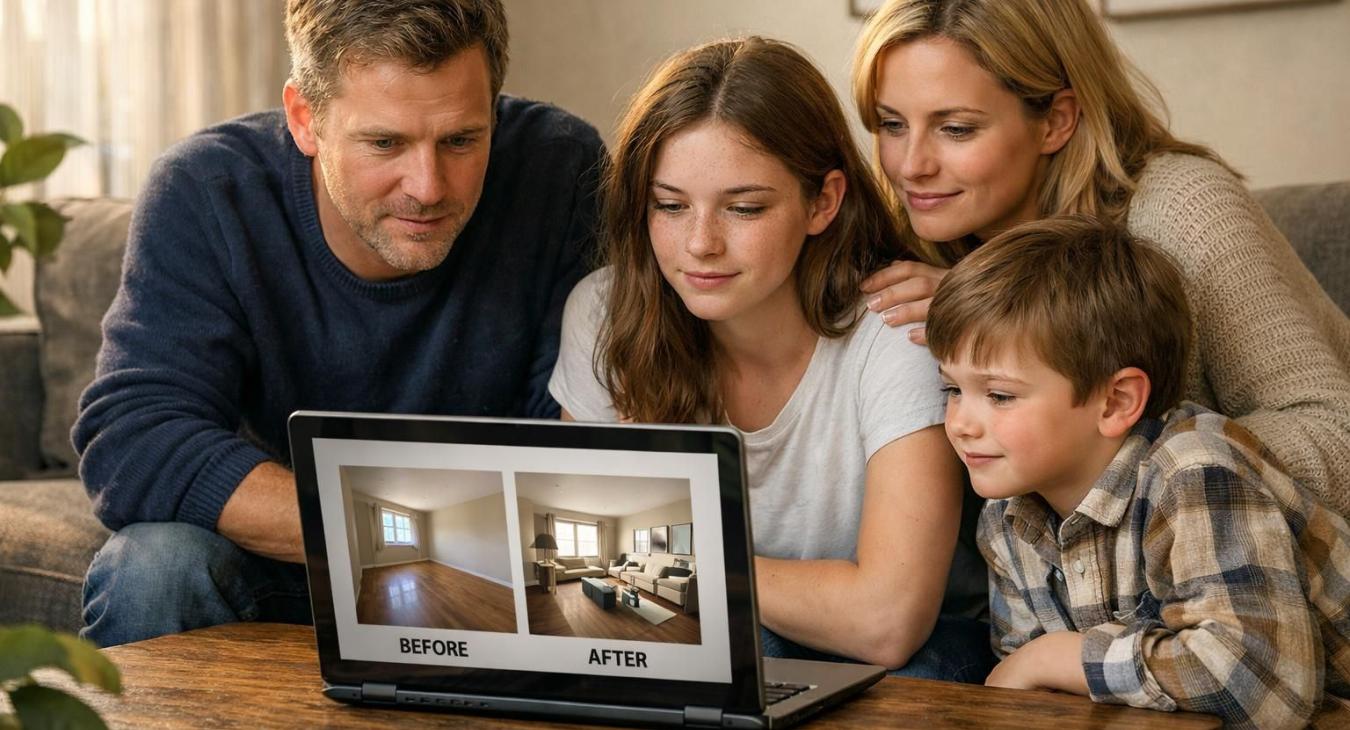
Explore the virtual staging vs traditional staging review to see which option maximizes your home sale's success and boosts your ROI. Read more!
Table of Contents
- Virtual Staging vs Traditional Staging: A Quick Overview
- Cost Comparison Between Virtual and Traditional Staging
- ROI: How Each Staging Method Impacts Property Value
- Pros and Cons of Virtual Staging
- Pros and Cons of Traditional Staging
- When to Choose Virtual Staging
- When to Choose Traditional Staging
- A Hybrid Approach: Combining Virtual and Traditional Staging
- Further Reading: Virtual Staging vs Traditional Staging
- Conclusion
- FAQs
Virtual Staging vs Traditional Staging: Cost and ROI

Selling a home is hard work, and your staging choices matter. Many real estate agents think traditional staging always delivers better results, but over half of buyers now expect homes to look “TV ready.” The truth is, virtual staging can help you grab online attention fast.
In this virtual staging vs traditional staging review, you will see how both options affect cost and return on investment (ROI). 1 You’ll also learn why the right strategy can turn more clicks into offers. 3
With years working alongside real estate professionals and tracking buyer expectations from sources like the National Association of Realtors®, I have helped hundreds of sellers choose smart property marketing strategies.
This guide gives practical answers for anyone who wants a clear edge in today’s busy housing market. Start here to make every listing stand out. 2
Key Takeaways
- Virtual staging costs $20–$50 per photo and delivers images in 24 to 48 hours. It saves money compared to traditional staging, which runs $1,500–$4,000 for the first month plus rental fees if the home doesn’t sell fast. (Sources: BoxBrownie, HomeGuide)
- Traditional staging helps homes sell up to 13% above unstaged listings. The National Association of Realtors® says 29% of agents see a price boost of 1–10%, with nearly half saying staged homes sell faster.
- Virtual staging attracts online buyers with high-quality photos but must be clearly labeled as digitally enhanced by law and MLS rules in states like Massachusetts. Poor virtual edits can hurt trust or lead to complaints (NAR disclosure guidelines).
- Use virtual staging for vacant properties or when you need quick listing photos on a budget; it’s ideal for showing multiple style options or updating rooms without moving furniture. Traditional staging is best for luxury homes and tricky layouts where emotional connection matters most at showings.
- A hybrid approach—physically stage key spaces such as living rooms while virtually styling secondary areas—can maximize appeal and ROI while controlling your marketing budget (NAR Profile of Home Staging 2025).
Virtual Staging vs Traditional Staging: A Quick Overview

Virtual staging uses digital furniture and professional photography to enhance online listing photos. Traditional home staging relies on real furnishings and physical setup to shape buyer perception at showings.
Definition of virtual staging
You use virtual staging to enhance property photos through digital editing or 3D rendering. This technology lets you add furniture, décor, and rugs directly into images of empty rooms.
Companies like BoxBrownie and Rooomy offer these services with a typical turnaround time of two to three days. You can stage properties for the MLS, Zillow listings, social media ads, or printed brochures without moving any physical items.
This method helps buyers visualize how each space functions in real estate marketing. Digital furniture allows you to show multiple styles quickly for homes with awkward layouts or vacant spaces.
Virtual staging does not change permanent features; it cannot fix worn floors or hide needed repairs. Some staged photos must be labeled as digitally enhanced depending on your market’s disclosure requirements; others look nearly identical to reality.
Real estate professionals often turn to virtual staging because it is fast and cost-effective compared to traditional physical staging services that require actual furniture rental and labor costs.
Massachusetts law prohibits misleading advertising but has no direct regulations regarding virtual home staging or artificial intelligence tools yet. Always clarify room purposes clearly while following local rules about disclosures in all listing photos.
Definition of traditional staging
Traditional staging means placing real furniture and decor inside a home for sale. Real estate agents hire professional stagers who select pieces that suit the property’s style and target buyer.
Staged homes may use rented sofas, beds, art, rugs, lamps, and more. With vacant staging, you fill empty rooms with these items to create an inviting look. With occupied staging, you improve upon what the homeowner already owns by adding or rearranging key furniture.
This process often takes days or even weeks because of scheduling deliveries and setting up each area. Physical staging helps buyers understand room size and flow better than just looking at photos online.
Contracts usually cover insurance in case of damage during moving or setup since heavy items can cause scuffs or dents on walls and floors. Traditional staging works best for luxury properties where buyer expectations are high and emotional connection matters most during in-person showings.
You must also address logistics like building access rules or stairs which slow down installation in some listings. Such factors influence traditional staging costs along with service charges from your chosen company.
While this approach increases expenses compared to virtual options, it gives a powerful first impression in real estate marketing—especially for unique layouts where digital edits might not answer layout questions as well as physical visits do.
Back to topCost Comparison Between Virtual and Traditional Staging

Virtual staging often uses digital furniture and can lower your marketing budget in real estate. Traditional staging involves physical setup, which increases the services charge for each staged home.
Typical costs of virtual staging
You can expect virtual staging costs to range from $20 to $50 per photo, depending on the provider and level of detail. Some services charge as little as $2 for basic digital furniture placement, while high-end providers may quote up to $150 per image if you need advanced edits or premium design styles. 1 Many real estate agents prefer to pay a flat fee around $500 for virtually staging an entire home, which covers every main space in your listing.
Several companies offer discounts or even free staged images for first-time users, making this approach attractive if you manage multiple listings. 1 Turnaround times are fast; many services deliver final photos within 24 to 48 hours.
You can update rooms like a finished basement or a home office without renting physical furniture or hiring movers. As someone who has used these platforms in the property marketing process, I find that virtual staging gives flexibility and cost-effective results compared to traditional methods involving rental fees and lengthy installation periods. 2
Typical costs of traditional staging
Professional staging costs for a home usually range from $1,500 to $4,000 for the first month, according to HomeGuide. Staged homes often face additional monthly rental fees if the property stays on the market past thirty days.
High-end properties see even higher physical staging expenses because furniture rental and logistics scale with price point.
Expenses include labor, furniture rental, delivery fees, insurance charges, and costs tied to moving homeowner belongings into storage. For example, real estate agent Julie Chrissis charged $525 to stage a two-bedroom condo in Watertown—a figure that reflects only basic service for a smaller space.
Larger or luxury listings can multiply these traditional staging costs quickly.
Each extension of your listing adds ongoing monthly payments due to continued furniture rental and maintenance needs. Costs also rise fast if you need staged rooms like a finished basement or home office setup included in the project scope.
These pricing factors push many marketing budgets beyond initial estimates before closing day arrives.
Factors influencing virtual staging costs
Virtual staging costs can vary based on several core factors. You need to understand these variables to optimize your marketing budget and maximize ROI.
- The number of rooms or photos staged affects the total price. More spaces or images will increase the overall cost.
- Higher photo quality improves results but may require professional photography, which raises initial expenses.
- Fast turnaround times, such as rush orders, often demand additional fees for expedited service. 2
- The complexity of design style, such as choosing modern or transitional looks, may influence pricing due to more advanced digital work.
- Multiple revisions requested during staging increase labor time and lead to higher charges per project.
- Virtual decluttering or neutralizing existing photos often adds extra costs, especially for homes with cluttered layouts.
- Bulk discounts, subscription plans, or staging consultations from companies can lower per-unit prices if you stage many properties at once.
- Low-cost providers sometimes deliver poor quality results like floating furniture and bad shadows; this can create compliance issues and impact buyer perception.
- The total square footage featured in online listing photos may also drive up costs as larger homes need more digital furniture placement.
- The style preferences of real estate agents and their clients can increase virtual staging costs if unique decor or high-end finishes are required.
Understanding these factors helps you make informed choices for property marketing using virtual tours and digital furniture solutions in today’s real estate market.
Factors influencing traditional staging costs
Traditional staging costs can vary widely based on several factors. You need to understand these variables to get accurate quotes for your property marketing plans.
- Staging package size impacts cost because more rooms need more furniture and accessories.
- Length of the rental period affects price; homes listed longer rack up higher monthly fees.
- Delivery access issues like stairs, elevators, or strict building rules can add time and costs to physical staging.
- Larger properties require extra labor for moving, installation, and later removal of furnishings, driving up logistics costs.
- Insurance coverage and potential damage fees often add to the expense since staged homes face risks like scuffs or wear during furniture moves.
- Storage for a seller’s personal items increases traditional staging costs if spaces must be cleared before setup.
- Complexity in design needs, such as high-end pieces or custom requests for luxury homes, raises both labor and material rates.
- Contracts should clearly list room count and accessory inclusion for real estate professionals looking to compare professional photography packages effectively with their marketing budget.
- Damage risk from frequent furniture moves should be addressed in every agreement between a real estate broker or investor and the staging company.
These factors play a vital role in shaping the final pricing structure of traditional staging in today’s real estate market.
Back to topROI: How Each Staging Method Impacts Property Value

Both digital staging and physical staging can boost home prices and shorten time on the market—keep reading to see which option improves your property marketing strategy.
ROI for virtual staging
Virtual staging offers a strong return on investment for real estate professionals. You can stage a property digitally for $20 to $50 per image, which is much less than physical staging costs. 2 Quick turnaround times allow you to update online listing photos in seconds or within 48 hours. This speed helps you respond fast to market changes and buyer feedback.
Listings with virtual furniture attract more attention on platforms like Zillow and Realtor.com. Over 66% of buyers state that high-quality photographs impact their interest in staged homes.
With digital enhancements, your listings can stand out even if the home is vacant or unfinished. As click-through rates rise, so do showing requests, leading to faster deals and lower carrying costs.
Real estate agents find virtual staging especially useful for marketing off-plan units or consistent branding in new developments. Investors often use it as a cost-effective staging option when budgets are tight but presentation remains critical for attracting top offers.
Hybrid approaches let you virtually furnish secondary rooms while focusing physical setups on key living spaces such as the home office or finished basement, making every dollar count within your marketing budget.
ROI for traditional staging
Traditional staging delivers proven returns in the real estate market. You can often see staged homes sell for 1% to 5% more than their unstaged competition, with some properties reaching up to a 13% price premium.
The National Association of Realtors (NAR) reports that 29% of agents observe a 1% to 10% increase in offers after using physical staging methods.
Reducing days on the market gives sellers another strong return. Nearly half—49%—of seller’s agents say traditional staging helps homes sell faster. For example, Chrissis invested $525 in professional furniture rental and decor for a Watertown condo.
That property sold above its asking price at $795,000 and received multiple offers within one month.
Staging creates clear emotional connections during walk-throughs or open houses, which is especially important for buyers deciding between similar listings. NAR’s data shows that 83% of buyer’s agents agree effective home presentation lets clients picture themselves living there.
Marketing efforts focused on main rooms pay off; according to the NAR's upcoming report, buyers prioritize the living room (37%), primary bedroom (34%), and kitchen (23%). Angela Carosella notes her mother’s unit received quick over-ask bids thanks to high-quality professional staging consultation and execution by real estate professionals who understand today’s buyer expectations.
Back to topPros and Cons of Virtual Staging

Virtual staging software lets you show a property with digital furniture, but make sure to read further to see how this tool can impact your real estate marketing strategy.
Advantages: speed, affordability, and flexibility
You gain a fast turnaround with virtual staging. Digital designers deliver images in 24 to 48 hours, letting you list properties almost immediately. Real estate professionals often pay only $20 to $50 per photo, which keeps marketing budgets under control compared to furniture rental and labor fees of traditional staging.
Easily update decor styles or room functions without moving physical items. Use digital furniture to transform spaces into home offices, bedrooms, or flex areas for different buyer segments.
Reach remote buyers quickly and avoid delivery delays or property wear and tear from frequent staging changes. This cost-effective tool helps you boost listing views and speed up showings, especially in busy real estate markets or tight timelines like estate sales.
Drawbacks: accuracy issues and disclosure requirements
Virtual staging often faces accuracy issues that can harm buyer perception and real estate marketing efforts. Some providers create unrealistic images like floating digital furniture or lighting that does not match the room’s natural ambiance.
Poor perspective can make a home office or finished basement look unnatural in online listing photos, leading to skepticism during open houses. These flaws can disappoint buyers who expect staged homes to reflect reality. 3
Disclosure requirements are strict for virtual staging and impact your property marketing strategy. Massachusetts law prohibits misleading advertising, so you must clearly label all virtually staged images as digital creations to avoid compliance problems.
The National Association of Realtors, most MLS systems, and many brokerages require clear disclosure if you use digital furniture or enhancements in listing photos. Failing to follow these rules can lead to complaints from buyers or penalties from professional organizations and regulators.
Physical staging allows buyers to experience rooms in person, but virtual staging cannot replace this effect during showings. Real estate professionals sometimes set up easels with printed examples of virtually staged spaces at properties so buyers have realistic expectations about style choices and layouts before making a decision on mortgage approvals or offers.
Over-editing or deceptive editing creates risk for investors if buyers feel misled after an in-person visit; transparency is vital for building trust throughout the sales process.
Back to topPros and Cons of Traditional Staging

Traditional staging can shape buyer perception and lift property value, but this method also demands more resources and time—explore how these trade-offs impact your real estate marketing strategy.
Advantages: emotional buyer connection and in-person impact
Physical staging creates a strong emotional connection. Real estate agents see buyers imagine daily life as soon as they enter a staged home. Eighty-three percent of buyer’s agents report that traditional staging helps people picture the property as their future home, according to the National Association of Realtors.
Staged homes often sell faster and command up to 13 percent more than unstaged listings.
In-person showings amplify the impact by clarifying room size, flow, and function. Luxury properties benefit when high-end finishes and amenities appear in real life instead of online listing photos with digital furniture.
Physical furniture rental highlights unique architectural features or lifestyle possibilities that virtual staging can miss. In competitive real estate markets, physical staging meets buyer expectations set by TV shows; almost half of professionals say clients want homes to look just like on-screen tours.
Drawbacks: higher costs and logistical challenges
Expect higher costs with traditional staging. You might pay $1,500 to $4,000 for the first month, plus ongoing rental fees if your listing takes longer to sell. If the home sits on the market, storage and continued furniture rental can push expenses even higher.
These extra costs eat into your marketing budget and impact your overall ROI.
Handling physical staging comes with logistical headaches. Scheduling installs can take weeks, which delays going live in the real estate market. Delivery trucks sometimes struggle with building access rules or narrow staircases.
Moving rented furniture in and out risks scuffed floors or damaged walls; insurance clauses often cover these situations but add complexity to contracts. Swapping styles means new furniture and more setup time—unlike virtual staging where changes are instant and cost-effective.
With traditional methods, poor execution drops buyer perception and may reduce offers on staged homes rather than increasing them.
Back to topWhen to Choose Virtual Staging
You should pick virtual staging if you need cost-effective property marketing or want to attract buyers fast in a competitive real estate market—explore more tips to maximize your listing’s appeal.
Best for vacant properties and fast timelines
Virtual staging gives vacant homes an instant upgrade for real estate marketing. You can transform empty rooms into attractive, staged homes in as little as 24 to 48 hours. 4 No need for furniture delivery or expensive rental fees.
Digital furniture lets you highlight bright, clean spaces without moving a single item. This process is fast and cost-effective compared to traditional physical staging.
Speed matters when listings must hit the market quickly or generate early buyer attention. Real estate agents often use virtual staging for remote, investor-owned, or estate properties needing quick entry into MLS databases.
Properties with low initial interest benefit from high-quality online listing photos enhanced with digital furnishings and professional photography edits. Fast turnaround means your property stays competitive during high-traffic periods.
Vacant homes often look hollow or uninviting in raw photos; virtual staging solves that problem at a fraction of traditional staging costs. Agents can showcase multiple styles without waiting days for setup and removal crews. 4 For tight budgets and urgent sales deadlines, this approach supports effective property marketing while saving time and money on logistics and labor associated with conventional furnishing rentals and consultations through the National Association of Realtors network.
Ideal for showcasing multiple styles
Showcase modern, traditional, or transitional looks for the same space using virtual staging. You can use digital furniture and décor to create multiple style options without extra physical labor or cost.
This makes it easy to appeal to different buyer segments by updating spaces for seasonal marketing or demographic targeting.
Demonstrate flexible room functions in your property marketing efforts. For example, present a spare bedroom as a home office, gym, or guest suite within minutes by switching styles digitally.
Developers and real estate agents often rely on this approach when marketing off-plan properties with consistent branding. Digital decluttering helps clarify room functions in homes with awkward layouts, giving buyers clear ideas about each space's potential uses.
Back to topWhen to Choose Traditional Staging
You should use traditional staging if you want to wow buyers at open houses and boost your property's presence in the local real estate market—read more to see how this method can shape buyer expectations.
Best for luxury homes and in-person showings
Physical staging sets the gold standard in luxury homes. High-end buyers expect an immersive experience during showings, where they can touch premium finishes and see real furnishings in place.
In Boston’s high-stakes real estate market, industry leaders like Julie Chrissis recommend traditional staging to highlight architectural features and showcase flow throughout the property.
Staged homes with actual furniture help clients envision their lifestyle in the space and often lead to faster sales.
Real estate agents benefit from using physical staging for listings that demand a strong emotional connection, especially in-person. Luxury properties need more than digital renderings because nuanced details stand out best with professional photography of physically arranged rooms.
Furniture rental services offer quality pieces that match buyer expectations, providing that instant “wow” factor during open houses or private tours.
Occupied homes also profit from lighter versions of this approach through decluttering and targeted accessory placement. If faced with tricky layouts, traditional staging brings clarity by showing optimal furniture arrangement instead of leaving it to imagination or virtual guesses.
This method remains essential for properties where visual impact shapes first impressions and ROI directly ties to heightened appeal on the market.
Effective for homes with challenging layouts
Homes with awkward or unconventional layouts often confuse buyers. You can use traditional staging to clarify space and function in these cases. Real furniture helps buyers judge the size of a room and see how it flows into other spaces.
In my experience, bringing in the right pieces transforms even tricky floor plans into appealing living areas.
Staging professionals know how to highlight flexible-use zones like nooks, alcoves, or bonus rooms. These experts suggest specific layouts that maximize appeal and help define each area’s purpose.
In properties where buyers struggle to visualize how rooms work, physical staging removes guesswork and boosts buyer confidence. 4
Many real estate agents notice buyer disappointment when viewing unstaged homes on tours compared to TV or online listing photos; 58% of industry professionals report this issue. Staged homes meet rising expectations set by modern media and internet marketing trends.
If you are selling an occupied home with mismatched furnishings or dated décor, professional enhancement can turn problem spots into standout features for your property marketing strategy.
Back to topA Hybrid Approach: Combining Virtual and Traditional Staging
Mixing digital furniture with physical staging lets you highlight key areas, giving listing photos an edge and boosting your real estate marketing—explore how this hybrid strategy can fit your business.
Virtually stage secondary rooms
Virtually stage secondary rooms to present a complete, cost-effective look and cut traditional staging costs. Digital furniture updates make spaces like the home office or finished basement appear inviting in online listing photos and marketing brochures.
This approach lets you offer various design styles across extra rooms without renting actual furniture or managing logistics. Investors use virtual staging for portfolio marketing of multiple units, giving buyers a clearer sense of possibilities.
Real estate agents who harness hybrid staging strategies can focus their physical efforts on critical areas such as main living spaces while elevating other zones digitally. Virtual decluttering services help neutralize crowded guest bedrooms before physically styling your primary areas.
You gain flexibility and significant savings in your marketing budget compared to full property physical staging, especially for hard-to-access rooms or vacant units often found in large portfolios. 5
Physically stage critical spaces
Focus your efforts on physical staging in the main living areas, kitchens, and primary bedrooms. The National Association of Realtors’ 2025 Profile states that these spaces drive buyer decisions, with 37% for living rooms, 23% for kitchens, and 34% for main bedrooms.
Your investment goes further here because buyers form emotional connections while walking through these rooms during open houses or showings. Staged homes that highlight key areas set the tone and clarify room dimensions better than digital furniture ever can.
Industry experts like Jennie Norris emphasize this approach; real estate agents often choose a hybrid strategy to manage both cost-effective staging and high impact. Physically staged focal spaces meet the expectations of nearly half of all buyers who want their future home to look like those they see on TV shows—about 48%.
Real furnishings help potential buyers picture their daily life in these rooms from family gatherings to quiet mornings by the kitchen island. Limit traditional staging to critical spaces so you stay within your marketing budget while maximizing ROI in property marketing.
My experience confirms that touching surfaces or seeing scale firsthand can tip uncertain buyers into making offers faster. Hybrid staging lets you virtually stage secondary rooms such as a home office or finished basement but reserves professional photography and furniture rental for those game-changing central zones.
This method balances speed, flexibility from virtual tools, and tactile appeal from physical setup where it matters most in today’s real estate market.
Back to topFurther Reading: Virtual Staging vs Traditional Staging
Explore detailed guides that compare virtual staging costs, traditional staging costs, and return on investment. 2 Examine how real estate professionals use digital furniture and professional photography to enhance online listing photos.
Learn from case studies featuring agents who share real-world strategies for cost-effective staging in different markets.
Review industry reports that break down new trends like AI-powered design tools, 3D tours, and augmented reality overlays. Find checklists on compliance for labeling virtually staged images as well as best practices for creating an emotional connection with buyers through property marketing.
Access National Association of Realtors data showing how hybrid staging strategy can impact buyer perception. These resources highlight the evolving expectations around staged homes in today’s real estate market.
Back to topConclusion
Virtual staging and traditional staging both play crucial roles in real estate marketing. Virtual staging offers a fast, cost-effective way to showcase vacant homes online using digital furniture and professional photography.
Traditional staging creates emotional connections during live showings but demands higher budgets and more lead time. Each strategy can help you meet buyer expectations while boosting your property’s value and appeal.
Matching your approach with the property type, market demands, and budget will drive the best return for your listings.
Back to topFAQs
1. What is the main difference between virtual staging and traditional staging in real estate marketing?
Virtual staging uses digital furniture to enhance online listing photos, while traditional or physical staging places real items like couches and tables into staged homes. Both methods aim to improve buyer perception but use different tools.
2. How do the costs of virtual staging compare with traditional staging costs?
Virtual staging costs less than physical staging because there are no furniture rental fees or moving expenses. Traditional staging costs rise due to labor, delivery, and ongoing rental charges.
3. Does virtual staging affect buyer expectations differently than physical home styling?
Yes; buyers may form an emotional connection more easily with a physically staged space during showings. Virtual images set expectations through professional photography but should match what buyers see in person for credibility.
4. Which approach gives better ROI in today’s real estate market?
Both can boost property marketing results when used well; however, cost-effective virtual options often deliver strong returns on investment for listings where budget is tight or spaces like a home office or finished basement need highlighting.
5. Can real estate agents combine both strategies for best results?
A hybrid strategy works well for many real estate professionals who want flexibility within their marketing budget; they might use digital enhancements online then offer a brief consultation about traditional touches before showings as recommended by the National Association of Realtors.
References
- ^ https://stagedbyai.com/blog/staging-images/comparative-analysis-ai-virtual-staging-vs-traditional-staging-cost-time-and-effectiveness
- ^ https://www.homelight.com/blog/virtual-staging-vs-real-staging/ (2025-11-13)
- ^ https://aihomedesign.com/blog/services/virtual-staging-vs-real-staging/
- ^ https://www.xrender.studio/collection/virtual-staging-vs-real-staging-the-ultimate-guide-for-real-estate-professionals (2025-06-27)
- ^ https://edensign.io/blog/virtual-vs-traditional-staging