

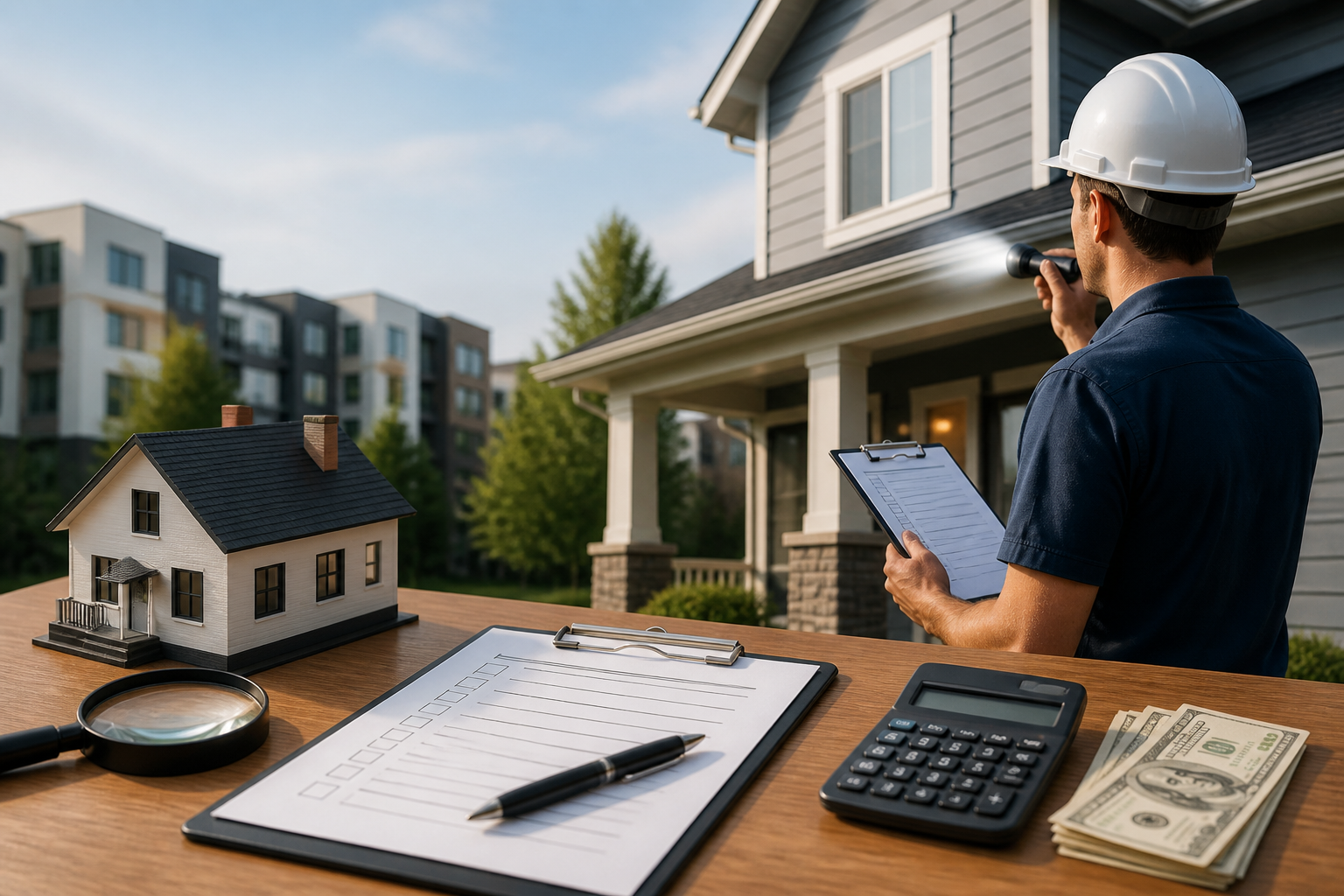
Home inspection for investors: Learn what to look for, hidden costs to uncover, and negotiation tactics to protect your ROI. Complete guide inside.
Table of Contents
- What's a Home Inspection for Investors?
- Benefits of Home Inspections for Investment Properties
- Types of Investor Inspections
- What Home Inspection Reports Include
- Do Real Estate Investors Need Home Inspections?
- How to Choose an Inspector for Investment Properties
- Home Inspection Costs and ROI
- Common Issues Found in Investment Property Inspections
- Using Inspection Reports to Make Investment Decisions
- Conclusion
- Frequently Asked Questions
A $350 home inspection that uncovers $40,000 in hidden foundation damage isn't an expense. It's the highest-ROI line item in your acquisition budget. Yet many real estate investors skip or rush inspections, especially in competitive markets where speed matters. And here's the thing — understanding how home inspection for investors differs from a standard residential inspection, what it costs, and how to translate findings into deal decisions separates the pros from the amateurs. This guide covers everything you need to know. Inspection types. Costs. Red flags. Negotiation tactics. We'll dig into all of it.

What's a Home Inspection for Investors?

Definition and Purpose
An investor's home inspection is simple: a detailed visual assessment of what's actually wrong with the property and what it'll cost to fix. You're looking at one thing — can this deal pencil out? A standard buyer inspection? That's about safety and moving in tomorrow. Your inspection is about income-producing viability — will the numbers work over your hold period, and what capital expenditures are you actually facing?
How It Differs from Standard Home Inspections
Here's the core difference: standard inspections flag problems you need to fix before occupancy. Investor inspections calculate total cost of ownership. A good investor's inspector doesn't just say "HVAC needs work." They tell you the unit's got 3 years left, repairs run $8K–$12K, and you need to factor that into your proforma. Multi-unit properties get even more complex — each unit, plus all the shared systems and common areas. That's where your real liability lives.
Why Investors Need Specialized Inspections
A failed HVAC system hits differently when it's a rental. You're not just uncomfortable — you're facing tenant turnover, legal exposure, and a cash flow leak. Your inspector needs to think like an investor, not a homeowner. They should understand cap rate impact, spot code violations that kill your rental license, and talk in dollars, not defect lists. And here's the reality: inspection data is one of your most reliable inputs when you're underwriting a deal. Run it through data-driven real estate analysis, and suddenly you've got a clear picture of what you're actually buying.
Back to topBenefits of Home Inspections for Investment Properties
Protecting Your Investment Capital
Capital preservation. That's the real win with a thorough inspection. Skip this step on distressed deals and you're looking at $20,000–$80,000 in surprise repairs that'll blindside you after closing. On a fix-and-flip, that's your entire margin gone. Buy-and-hold? Now you're cash-flow negative for the next three to five years. This is exactly why proper asset protection for real estate investors starts before you sign anything — not after.
Identifying Hidden Repair Costs and Negotiating Use
An inspection report isn't just a checklist. It's documented, third-party ammunition for renegotiation. You want a deteriorating roof? That's worth $5,000 in inspection credits or a $15,000 price reduction — and you've already paid the inspector, so you're ahead. But here's the thing: you need an inspector who actually provides written repair cost estimates, not some guy who just lists problems and walks away. The estimates matter because they're what actually move the needle in negotiations.
Making Data-Driven Investment Decisions
Your underwriting model is only as good as your capital expenditure data. And that data comes straight from the inspection report. You find out a property needs a roof in 3 years ($12,000–$18,000)? HVAC replacement in 5 years ($6,000–$10,000)? Aging but functional plumbing that'll probably need work down the line? These specifics feed directly into your 10-year cash-flow projections. Without them, your net operating income numbers are just guesses.
Back to topTypes of Investor Inspections
Your inspection budget matters. Not every deal gets the full treatment, and that's actually smart money management if you know which corners you can cut without eating a bad repair bill later.
| Inspection Type | Typical Cost | Time Required | Coverage | Best For |
|---|---|---|---|---|
| Full Scope (SFR) | $300–$500 | 2–4 hours | All systems, structure, safety | Primary acquisitions, buy-and-hold |
| Limited/Investor Review | $150–$250 | 45–90 min | Major systems + red flags only | Wholesalers, quick-close deals |
| Specialized (Roof/Foundation) | $200–$600 each | 1–2 hours | Single system in depth | Follow-up on flagged issues |
| Multi-Unit (2–4 units) | $500–$900 | 4–6 hours | All units + shared systems | Small multifamily acquisitions |
| Multi-Unit (5+ units) | $800–$2,500+ | Full day+ | All units, mechanical rooms, common areas | Commercial multifamily |
| Pest/Termite Inspection | $75–$150 | 45–60 min | Wood-destroying organisms | Add-on for older properties |
Running a real portfolio? Most inspectors will cut you 10–15% off standard rates if you're sending them consistent volume throughout the year. And they should.
Negotiate this directly with the inspectors you're already working with. It's free money if you ask.
Back to topWhat Home Inspection Reports Include

Major Systems Assessment
You need a complete investor inspection report that covers the big three: HVAC (heating and cooling capacity, age, condition), plumbing (supply lines, drain function, water heater age), and electrical (panel capacity, grounding, GFCI compliance). And here's what separates a solid report from a mediocre one—each system should come with an estimated remaining useful life and any immediate safety red flags called out explicitly.
Structural Integrity and Safety Issues
Foundation condition, framing, roof structure, water intrusion. These are non-negotiable. But don't overlook the life safety items—carbon monoxide, smoke detectors, egress windows, handrail heights—especially if you're running rentals. Landlord liability exposure hits hard when these are missing. Code violations matter too. Missing handrails, unpermitted additions, inadequate ventilation? They tank rental licensing approval and should be flagged in the report.
Remaining Useful Life and Repair Recommendations
The capital replacement forecast is the section that actually moves your deal economics. This is where a solid inspector earns their fee. You want specifics: "Roof has 5–7 years of remaining life; replacement estimated at $12,000–$16,000." That number lets you build a realistic CapEx reserve schedule and adjust your acquisition price to account for what's actually coming down the line.
Back to topDo Real Estate Investors Need Home Inspections?

You'll hear smart money on both sides of this one. The truth? It's situational.
The Case For (and Against) Inspections
Why inspections matter: You can't see behind walls. You can't really evaluate an electrical panel just by looking at it. And forget assessing roof conditions from ground level — it's not happening. Professional inspectors bring thermal cameras, moisture meters, gas detectors. They've walked 300+ properties. The $350 bill? It's noise compared to your deal size. The counterargument: In scorching markets with 3-day due diligence windows, full inspections kill deals. Experienced flippers who've crushed 100+ comps in their market lean on contractor relationships instead — they get a verbal assessment over the phone, which is basically a walkthrough without the formal report. And here's the thing: if you're buying a distressed property at 40% below ARV, you've already built in a repair cushion. Known unknowns are baked into the risk premium.
When to Skip or Defer Inspections
There are legitimate scenarios where you skip inspections entirely. Auction properties don't give you a contingency period anyway. Deep-discount distressed deals already have fat repair buffers underwritten in. Sometimes your GC does a thorough walkthrough and that's enough. But understand the tradeoff — requiring a 10-day inspection contingency costs you deals in competitive markets. Your competing offers are waiving it. You lose.
Back to topHow to Choose an Inspector for Investment Properties
Here's the reality: not every inspector who's great with owner-occupied homes will cut it for your investment deals. A solid residential inspector might completely miss rental licensing issues, multi-unit complexities, or the systems that actually matter for income properties.
| Qualification | What to Verify | Why It Matters for Investors |
|---|---|---|
| ASHI or InterNACHI Certification | License number, active status | Baseline professional standard |
| Investment property experience | Ask for % of portfolio that's non-owner-occupied | Understands rental-specific issues |
| Report quality | Request a sample report | Determines usability for underwriting |
| Cost estimate capability | Ask if reports include repair cost ranges | Critical for deal analysis |
| Turnaround time | Confirm 24–48 hour delivery | Meets competitive due diligence timelines |
| Availability for follow-up | Phone/email access post-report | Clarify findings before closing |
| Multi-unit experience | Ask how many 5+ unit properties inspected | Different scope from SFR |
Your local investor network is gold here. Ask around. Real estate agents who specialize in investor deals? They've already vetted the good ones and usually keep a short list of inspectors who understand your timelines and actually deliver reports you can use. And honestly, this is exactly the kind of operational task you should delegate to a virtual assistant for real estate investors — tracking inspector performance across your entire acquisition pipeline.
Back to topHome Inspection Costs and ROI

Typical Inspection Pricing by Property Type
| Property Type | National Average Cost | Low-Cost Markets | High-Cost Markets |
|---|---|---|---|
| Single-Family (<1,500 sq ft) | $300–$350 | $250–$300 | $400–$500 |
| Single-Family (1,500–3,000 sq ft) | $350–$450 | $300–$380 | $450–$600 |
| Duplex | $450–$600 | $380–$500 | $600–$800 |
| Triplex/Fourplex | $600–$900 | $500–$750 | $900–$1,200 |
| 5–10 Unit Multifamily | $900–$1,800 | $750–$1,400 | $1,800–$2,800 |
Here's the real math. A $400 inspection spots $8,000 in legitimate repairs? You negotiate that off the purchase price and you've just hit a 20x return on your inspection spend. And that's assuming the seller eats the full number — they won't. But even if you only recover half that repair cost in price reduction, you're still looking at a 10x ROI. Want to find a better deal in real estate investing? This one's obvious.
Back to topCommon Issues Found in Investment Property Inspections

| Issue | Frequency | Typical Repair Cost | Severity | Red Flag Indicators |
|---|---|---|---|---|
| Roof wear/damage | Very High | $8,000–$20,000 (replacement) | Medium–High | Multiple layers, sagging, active leaks |
| HVAC age/failure | High | $4,000–$12,000 | Medium | 15+ year systems, no maintenance records |
| Foundation issues | Medium | $5,000–$50,000+ | High | Horizontal cracks, bowing walls, settlement |
| Water damage/mold | Medium–High | $2,000–$30,000+ | High | Staining, musty odor, active moisture |
| Electrical violations | Medium | $1,500–$15,000 | High (safety) | Aluminum wiring, double-tapping, no GFCIs |
| Plumbing deterioration | Medium | $2,000–$20,000 | Medium–High | Galvanized pipe, low pressure, slow drains |
| Deferred maintenance | Very High | $500–$5,000 | Low–Medium | Caulking, grading, gutter condition |
Here's the thing: where you're investing matters. Southeast deals pull in termite damage and humidity-fueled mold. That's just the climate. Up North, you're dealing with freeze-thaw cycles that kill plumbing lines. And coastal markets? Corrosion eats through everything—plus hurricane damage is always lurking. The specific defects you'll see depend entirely on your market. So know what problems show up in your target area. That's how you spot specialty inspections worth the extra spend.
Back to topUsing Inspection Reports to Make Investment Decisions

Here's the thing: an inspection report sitting in a file folder is worthless. You've got to weave those findings directly into your investment analysis, or you're just guessing.
Adjusting Offers Based on Findings
Most investors do the same thing. They add up every repair cost from the inspection, then push the seller for a dollar-for-dollar price cut or a closing credit. But that's not strategic.
The smarter play? Only negotiate the big-ticket items that'll actually kill your deal — roof, foundation, electrical safety. Routine deferred maintenance? That's already baked into your acquisition price for a distressed property. When you nickel-and-dime the seller over every item on a 40-point deficiency list, you don't save money. You lose the deal entirely.
When to Walk Away
Some inspection findings aren't negotiable. Period. Active foundation movement, widespread mold in a multi-unit, unpermitted structural work that can't be legalized — these aren't problems you fix with a lower offer.
They're deal-killers. Exit entirely, even if the numbers looked beautiful on paper. Your real estate investor CRM needs to capture why each deal died. Over time, you'll spot patterns in your own due diligence.
And here's the legal angle: once you close, proper LLC structuring shields you from liability. Check out our breakdown of the best LLC services for real estate investors.
Building Inspection Data into Long-Term Analysis
Buy-and-hold investors need to translate inspection findings into actual CapEx reserves. The report says the water heater's got 2–3 years left? That goes into your reserve schedule. Roof has 6–8 years? Fund it accordingly.
This is what separates winners from everyone else. Accurate CapEx forecasting is how you actually hit your projected returns instead of wondering why the numbers fall apart three years in.
Back to topConclusion
Home inspection for investors is one of the highest-ROI due diligence tools available. You're getting documented risk data, negotiation ammunition, and long-term CapEx planning inputs for a few hundred dollars. That's a no-brainer on almost any deal.
Here's where investor inspections differ from standard residential ones: you're not just listing deficiencies. You need income-producing viability analysis, remaining useful life on major systems, and actual repair cost numbers—not vague descriptions of what's broken.
And picking the right inspector? It matters just as much as doing the inspection at all. You want someone experienced with investment properties, properly certified, who delivers fast turnaround times, and can actually quantify repair costs.
In hot markets, your inspection strategy needs flexibility. Full scope on a value-add play. Limited review on a portfolio acquisition. Specialist-only for the big-ticket items. Calibrate it to deal type, your timeline, and your actual risk tolerance.
But here's the truth: skipping inspection entirely is leaving money on the table. Experienced investors almost universally regret it.
Back to topFrequently Asked Questions
How much does a home inspection cost for an investment property?
You're looking at $300–$500 for a standard single-family. Small multifamily (2–4 units)? That's $450–$900. Larger multifamily jumps to $900–$2,500+. And then there's specialty work — roof, foundation, pest inspections each run $75–$600 depending on what needs digging into and where you are. New York, San Francisco, Boston? Expect to pay 20–40% above the national averages in those markets.
Can investors waive the home inspection contingency and still get an inspection?
Absolutely. This is how smart investors operate in competitive markets. You can waive the contingency — meaning you won't bail on the deal if the inspection uncovers problems — while still getting the inspection done for your own data. It's a calculated move. You stay competitive on the offer while arming yourself with the intel you need for accurate post-close planning. Risk management isn't binary.
What's the difference between an investor inspection and a standard home inspection?
The scope is completely different. An investor inspection is built around income-producing viability, not move-in condition. You're getting repair cost estimates baked into the report, remaining useful life assessments for major systems, rental licensing and code compliance flags, and multi-unit coverage protocols. Not every general inspector can deliver that. Find someone with documented non-owner-occupied experience.
How do inspection findings affect cap rate and cash flow projections?
They wreck unprepared underwriting. Say the inspection flags $30,000 in deferred capital needs — that's not a cosmetic issue. It's a real addition to your effective acquisition cost, separate from what you paid at closing. If that CapEx hits in years 1–3, your cash flow takes a hit and your effective cap rate compresses. A property modeling at 8% might actually deliver 5–6% once you factor in real maintenance costs. Model inspection findings as near-term CapEx reserves, not wishful thinking.
Should I use the same inspector for every property in my portfolio?
There's real value in consistency. Your inspector learns your reporting preferences, knows the local market inside and out, and may offer portfolio pricing that saves money on volume. But don't lock yourself in. Keep 2–3 qualified inspectors in your rolodex for scheduling conflicts and second opinions when things get complicated. Multi-unit or commercial deals? Bring in a specialist with that experience, even if you've got a solid residential relationship. Sometimes expertise beats familiarity.
Back to top