


Discover the best real estate investing articles and books curated for every experience level. Compress your learning curve with proven strategies from top
Products and Tools Mentioned in this Post
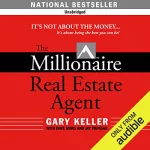
The Millionaire Real Estate Agent
About The Millionaire Real Estate Agent
The Millionaire Real Estate


Table of Contents
- Table of Contents
- Introduction to Real Estate Investing Literature: Why Reading Is Essential for Real Estate Success
- Essential Beginner Real Estate Books
- Advanced Investor Books and Strategies
- Books by Real Estate Investing Niche
- Beyond Books: Complementary Learning Resources
- How to Maximize Your Real Estate Reading
- Book Comparison Tables
Whether you're analyzing your first rental property or scaling a portfolio past 50 doors, there's a shortcut: read what the best investors have already figured out. The real estate investing articles and books in this guide represent decades of combined experience. They're distilled into actionable frameworks you can apply to real deals — starting today.
From foundational mindset shifts to advanced asset protection strategies, this reading list is organized by investor type, experience level, and niche. Build the exact education stack your portfolio needs right now. No fluff, just what actually moves the needle.

Table of Contents
- Why Reading Is Essential for Real Estate Success
- Essential Beginner Real Estate Books
- Advanced Investor Books and Strategies
- Books by Real Estate Investing Niche
- Beyond Books: Complementary Learning Resources
- How to Maximize Your Real Estate Reading
- Book Comparison Tables
- Book Reviews and Author Perspectives
- Conclusion
- Frequently Asked Questions
Introduction to Real Estate Investing Literature: Why Reading Is Essential for Real Estate Success

Here's what separates the winners from the folks who blow up their first deal: they read. Real estate is one of the few industries where you can master the fundamentals entirely through books before you risk a dollar. The National Endowment for Financial Education ran the numbers — investors who got serious about formal financial education (books, courses, the whole thing) reported dramatically better long-term outcomes than those who just learned by burning money on mistakes. In real estate, that difference isn't academic. It's the difference between a catastrophic first deal and positive cash flow from day one.
Books aren't just philosophy. They're frameworks that took their authors years — sometimes decades — to build. Brandon Turner didn't write The Book on Rental Property Investing overnight. He spent years buying and managing properties, figuring out what works and what doesn't, then distilled thousands of hours of hard-won lessons into something you can read in a weekend. That's efficiency. A $20 book that keeps you from making a $50,000 mistake? That's a 2,500x ROI right there.
How to Choose the Right Books for Your Investing Style
Not every real estate book belongs on your shelf. Before you build your reading list, get honest about three things:
- Where are you in your investing journey? Beginners need mindset work and step-by-step guides. Intermediate investors should dig into strategy-specific books for their niche. Advanced guys? Focus on tax strategies, asset protection, and scaling frameworks.
- What asset class actually excites you? Single-family rentals, commercial, fix-and-flip, multifamily — they all have dedicated literature with specialized insights you won't find in generic books.
- What's holding you back right now? Can't analyze a deal? Read financial modeling books first. Worried about legal exposure? Start with asset protection and legal structure titles instead.
The reading paths in this guide help you answer those questions and build a curriculum tailored to your actual goals. Think of it as a self-directed MBA in real estate. Less than $500 in books. Way more practical than anything a university offers right now.
And don't stop with reading. Explore the best real estate investing courses for 2026 to layer structured learning on top of what you absorb from books — many are taught by the same authors you'll be reading.
Back to topEssential Beginner Real Estate Books
Here's the catch: beginners need to nail two completely different things at once. You've got to build the investor mindset — the long-term wealth mentality — while also learning the grinding mechanics of sourcing deals, getting financing, and actually managing properties without losing your mind. The books below tackle both angles. You get the "why" and the "how" in the same place.
Foundation and Mindset Building
Rich Dad Poor Dad by Robert Kiyosaki is still the gold standard. More than 25 years old and it's still the book everyone references when they're getting into real estate. Kiyosaki's argument is simple: financial independence doesn't come from trading hours for a paycheck. It comes from building assets that generate income without you being there. Real estate fits that mold perfectly. Over 40 million copies sold worldwide for a reason.
Now, critics have valid points. Some of Kiyosaki's claims don't hold up under scrutiny, and the book doesn't give you tactical step-by-step instructions. And they're right on both counts. This isn't a how-to manual. It's a mindset reset, especially if you grew up in a traditional employment-focused household where real estate investment wasn't even on the radar. Read it first to establish the philosophical foundation. Then immediately move to more tactical titles.
Key takeaway: Assets put money in your pocket. Liabilities take it out. Your primary residence? In Kiyosaki's framework, it acts more like a liability than most homeowners want to admit. Real estate purchased correctly? That's an asset. Know the difference.
Practical Rental Property Guides
The Book on Rental Property Investing by Brandon Turner is what you read after you've shifted your mindset. Turner co-founded BiggerPockets and has built a serious rental portfolio himself. He covers property analysis, financing, tenant management, and scaling your portfolio across roughly 370 pages that actually stay engaging.
What makes this book stand out? Turner doesn't hide behind theory. He shares actual numbers, real deals, and his own failures. He shows you why certain strategies crash and burn and how to dodge the mistakes every beginner makes. The rental property analysis section is exceptional — he breaks down the 50% rule and cash-on-cash returns in a way you can apply immediately to your first deal.
Focused on fix-and-flip instead? You still need to understand calculations like the 70 percent rule for real estate investing. Several of the books here cross-reference these foundational formulas.
Legal and Financial Fundamentals
Every Landlord's Legal Guide by Marcia Stewart (Nolo) covers the part that almost every beginner glosses over. Most investors get obsessed with finding deals and completely overlook the legal minefield lurking beneath poor lease drafting, improper evictions, and fair housing violations. One lawsuit can wipe out years of profit.
Stewart walks through federal fair housing laws, state-specific landlord requirements, security deposit regs, lease construction, eviction procedures, and liability shielding. It updates regularly, which is rare for real estate books. Every landlord should own a current copy. Period.
Real Estate by the Numbers by J Scott and Dave Meyer solves a problem most beginner reading lists miss entirely: how to actually model deals and analyze them like a professional. Scott's written multiple flipping books. Meyer runs data and analytics at BiggerPockets. Together they tackle net operating income, cap rates, IRR, debt service coverage ratios, and depreciation in language that doesn't require a finance degree.
If math isn't your thing? This book rewires how you think about numbers. Most beginners lose money because they model deals wrong — they assume zero vacancy, ignore cap-ex, and pretend maintenance doesn't exist. Then they wonder why their "positive cash flow" property actually bleeds money every month. Understanding how to model correctly separates real investors from wishful thinkers.
Want to take it further? Pair these books with solid accounting software. The best real estate accounting software for 2026 helps you track the actual metrics these books teach you to calculate.
Back to topAdvanced Investor Books and Strategies
You've done a deal or two. You know the basics. Now the questions change entirely. How do you actually protect what you've built? What's eating into your returns on the tax side? And how do you scale without burning out? That's what the books in this section are really about.
Asset Protection and Tax Strategies
Here's what most investors get wrong: they wait until they're sued to think about asset protection. By then? It's too late. Next Level Real Estate Asset Protection by Garrett Sutton (from the Rich Dad Advisors series) cuts through the noise. Sutton's a corporate attorney who actually works with Kiyosaki, and he lays out exactly how to use LLCs, corporations, and land trusts to keep your properties safe from lawsuits and creditors.
Entity selection. Charging order protection. Series LLCs. Wyoming structures for out-of-state players. How to title properties the right way. If you're holding more than two or three rental properties, this isn't theoretical anymore—it's survival. One tenant injury lawsuit can wipe out years of equity if your structure's wrong.
Want tactical implementation details? Check the best LLC services for real estate investors in 2026 and our full asset protection guide for real estate investors. Both work perfectly alongside this book.
Scaling and Growth Strategies
The Millionaire Real Estate Investor by Gary Keller is the gold standard for portfolio construction. Keller interviewed 100+ millionaire investors—not one. He distilled what actually works across all of them: the mindset models, the financial models, the relationship models.
Most real estate books give you one person's story. Keller gives you patterns. Real patterns. The ones that show up again and again. His concepts like "think a million, buy a million, own a million" replace vague dreams with actual targets.
It's 370 pages packed with charts and financial models. Not a weekend read. But if you're serious about building a real portfolio—not just buying random deals—the ROI on this book is hard to beat. Pair it with a top CRM for real estate investors to actually execute the relationship systems Keller describes.


Specialized Investment Types
Investing in Retail Properties by Gary Weiss is your roadmap if commercial retail appeals to you. Most beginner books stop at single-family rentals. But retail? Different animal entirely. Longer lease terms. Triple-net structures. Different return profiles. Better passive income potential if you know what you're doing. Weiss walks through tenant underwriting, lease structures, and the due diligence specific to retail deals.
Build-to-Rent is the emerging category everyone's watching. Instead of buying existing properties, you're developing single-family rental communities from scratch. Institutional capital poured billions into this over the last decade. Now individual investors can access it through JV structures and smaller developments. These resources cover land deals, entitlements, construction management, and lease-up strategy—basically the frontier move for serious residential players.
Not ready to go all-in on development? Fractional approaches and crowdfunding still build your knowledge while keeping capital flexible. Check the Arrived Homes review on fractional investing and the best crowdfunding platforms for 2026—most books don't even mention these paths.
Back to topBooks by Real Estate Investing Niche
Most investors kill their reading ROI by staying too general. You'll get the highest return on your time after finishing the foundational books by going deep—really deep—on your specific strategy. Here's where the best books fit in.
Single-Family Rental Investing
Turner's rental property book is just the starting point. If you're running single-family rentals, dig into these:
- The Book on Managing Rental Properties by Brandon and Heather Turner — This one goes places Turner's original doesn't. You get granular detail on tenant screening, lease execution, maintenance systems, and eviction management.
- Long-Distance Real Estate Investing by David Greene — Buy in markets you don't live in? This is your playbook. Greene covers team building, remote due diligence, and property management oversight for out-of-state investors.
- Buy, Rehab, Rent, Refinance, Repeat (BRRRR) by David Greene — The definitive BRRRR manual. You'll learn how to recycle capital and scale without constantly dumping new equity into deals.
Running BRRRR deals? Check out the best BRRRR markets for real estate investment to see where lending and appreciation actually favor this strategy right now.
Commercial Property Investing
- The Complete Guide to Buying and Selling Apartment Buildings by Steve Berges — Multifamily is a different animal. This covers valuation, due diligence, financing, and value-add strategies for apartment buildings.
- Commercial Real Estate Investing for Dummies by Peter Conti and Peter Harris — Don't let the title fool you. This is a full introduction to office, retail, industrial, and multifamily commercial investing.
- Emerging Real Estate Markets by David Lindahl — Lindahl's focus? Finding markets early, before prices peak. This matters for commercial investors working longer timelines and wanting first-mover advantages.
Fix and Flip Strategies
- The Book on Flipping Houses by J Scott — Most flippers consider this the bible. Market analysis. Property acquisition. Renovation management. Deal examples with real numbers. It's all here.
- The Book on Estimating Rehab Costs by J Scott — Your companion volume. Detailed cost estimates for every major category. Build accurate budgets before you even make an offer.
- The Millionaire Flipper by Preston Ely — Different flavor entirely. Ely emphasizes systems and volume over individual project management—more entrepreneurial, faster-paced approach.
Agent-Focused Books
Real estate agents who invest live in two worlds. You need to understand client representation AND personal investment strategy simultaneously. These books speak to both:
- The Millionaire Real Estate Agent by Gary Keller — The investor book's partner volume. Keller shows you how to build a high-producing sales business that actually funds your investing.
- Shift by Gary Keller — How do top agents adjust when markets change? This addresses the volatility we've seen over the last few years.
- The HyperLocal HyperFast Real Estate Agent by Daniel Lesniak — Data-driven market domination in a specific geography. And if you're investing in that same area, you get competitive intelligence nobody else has.
Beyond Books: Complementary Learning Resources
Books alone won't cut it. They're essential, sure — but the real estate investors crushing it right now pair their reading with real-time learning from people actively doing deals. Podcasts fill that gap. They keep you current on market conditions, financing shifts, and strategies that emerged after your last book was published.
Top Real Estate Podcasts for Investors
Here's what podcasts deliver that books can't: live market intelligence from investors making moves today. You want sources you can actually trust? These consistently rank at the top:
BiggerPockets Real Estate Podcast — Over 800 episodes. That's the deepest library of investor interviews in the space, period. Every episode features real investors at every level — from first-time house flippers to seasoned syndication operators — breaking down their specific strategies, actual deals, and what went wrong. The BiggerPockets community connection? That opens doors for networking and off-market deal sourcing you won't find anywhere else.
The Real Estate Guys Radio Show — Robert Helms and Russell Gray dig into macroeconomic patterns, market cycles, and unconventional strategies like syndications, international investing, and using precious metals as portfolio hedges. This one's built for experienced investors who want the bigger economic picture, not just deal-by-deal analysis.
Real Estate Rookie Podcast — Also BiggerPockets. But this focuses specifically on your first or second deal. The language is accessible. The deal breakdowns don't assume you already know what PPSF or ARV means. If you're pairing it with a beginner book, this is the perfect audio companion.
7-Figure Flipping with Bill Allen — For fix-and-flip operators, this is operational gold. Allen and his guests talk contractor management, marketing systems, capital acquisition, and how to scale from a few flips annually to dozens. You'll hear the real challenges of running a high-volume flip business.
Why Podcasts Complement Book Learning
Books teach you concepts. Podcasts show you how those concepts actually play out in 2025. Read about cap rate compression in a three-year-old book? Now hear an active investor explain exactly how rising rates changed their acquisition criteria this quarter. The two reinforce each other. The book gave you the theory. The podcast shows you the application.
And there's another angle: time efficiency.
Most successful investors consume 2-4 hours of real estate content weekly during commutes, gym sessions, or downtime where reading isn't an option. Do the math. That's 100-200 hours annually of education that doesn't compete with your reading schedule. You're stacking learning without sacrificing anything else.
If you're also integrating technology into your education and operations, the complete guide to AI tools for real estate investors in 2026 covers emerging platforms that most podcasts and books still haven't caught up to.
Back to topHow to Maximize Your Real Estate Reading

Most investors read real estate books the same way they'd read a novel — passively. You're probably capturing 20% of the value that's actually sitting in those pages. The good news? A few deliberate practices will change that dramatically.
Creating a Reading Plan
Here's the thing: you wouldn't deploy capital without a strategy. Don't read without one either. Treat it like any other business investment — with a plan, timeline, and measurable outcomes.
- Start with foundational books before specialized topics. Reading about syndication before you understand basic cash flow analysis is like taking calculus before algebra. The order matters, and skipping it costs you later.
- Allocate dedicated reading time. Most serious investors who actually move deals read 30 minutes to an hour each morning before email hits their inbox. That's 180+ hours annually — enough to crush 15-20 substantial books. You want to know how they scale faster than you?
- Set a completion commitment before starting. Either you finish the book, or you admit after the first chapter it's not for you and move on. Partial reads create partial knowledge. And partial knowledge gets you nowhere.
- Track what you read. A simple spreadsheet or Goodreads account with titles, completion dates, and 1-3 key takeaways from each book becomes your personal reference library. You'll actually use it when making decisions.
Implementing Book Lessons Into Your Business
Knowledge doesn't generate ROI by itself. The single most impactful practice successful investors use is simple: identify one action item from every chapter, then schedule it on your calendar before moving forward.
Sounds extreme? The investors doing this consistently report jumping from "perpetual student" to active deal-maker within months. That's the difference between reading and building.
Connect what you're reading to your actual systems. You read about lead tracking in The Millionaire Real Estate Investor? The next step is evaluating your current lead management system today. The best real estate investor CRMs in 2026 help you operationalize exactly what those books describe.
Building a Real Estate Education Stack
The investors crushing it think about education differently — as layered resources working together, not in isolation. Think of it as a stack.
Here's what a solid 2025 stack looks like:
- Foundation layer: 3-5 core books (mindset, mechanics, financial analysis, legal fundamentals)
- Niche layer: 2-3 books specific to your asset class and strategy
- Current events layer: 1-2 weekly podcasts covering market conditions and investor interviews
- Community layer: Active participation in investor forums (BiggerPockets, local REIA groups) where you can ask questions about specific situations
- Structured course layer: 1-2 formal courses per year that provide accountability and peer interaction that solo reading doesn't
- Tools layer: Software and systems that help you implement what you're learning
This stack keeps your education deep through books and current through podcasts and community. But here's the kicker — knowledge only matters if it translates to action through tools and implementation.
Lead generation is where most investors really need to apply what they're reading. The gap between "I know about deal-finding" and "I'm actually finding deals" closes fast with resources like cold calling scripts and best practices for real estate investors and the 6 best places to buy real estate leads in 2025.
Back to topBook Comparison Tables
These tables cut through the noise. Find the right book for where you're at—whether you're bootstrapping on a tight timeline or ready to go deep. Pick based on your investor profile, format, and what you can actually afford to spend right now.
Real Estate Books Comparison Chart
| Book Title | Author | Best For | Key Focus | Difficulty Level | Approximate Length |
|---|---|---|---|---|---|
| Rich Dad Poor Dad | Robert Kiyosaki | Complete beginners | Mindset and financial philosophy | Beginner | ~336 pages |
| The Book on Rental Property Investing | Brandon Turner | New rental investors | Acquisition, financing, management | Beginner–Intermediate | ~370 pages |
| Every Landlord's Legal Guide | Marcia Stewart (Nolo) | All landlords | Legal compliance and protection | Beginner–Intermediate | ~450 pages |
| Real Estate by the Numbers | J Scott & Dave Meyer | Analytically-minded investors | Financial modeling and analysis | Intermediate | ~320 pages |
| The Millionaire Real Estate Investor | Gary Keller | Investors ready to scale | Portfolio construction and wealth models | Intermediate–Advanced | ~370 pages |
| Next Level Real Estate Asset Protection | Garrett Sutton | Investors with 3+ properties | LLCs, entities, legal protection | Intermediate | ~250 pages |
| The Book on Flipping Houses | J Scott | Fix-and-flip investors | Acquisition, renovation, disposition | Intermediate | ~300 pages |
| Long-Distance Real Estate Investing | David Greene | Out-of-market investors | Remote investing systems and teams | Intermediate | ~275 pages |
| Buy, Rehab, Rent, Refinance, Repeat | David Greene | Growth-focused investors | BRRRR strategy and capital recycling | Intermediate | ~360 pages |
| The Complete Guide to Buying Apartment Buildings | Steve Berges | Multifamily investors | Commercial acquisition and valuation | Advanced | ~350 pages |
Reading Path by Investor Type
Not all books hit the same for everyone. Your first year reading should match your actual goal—whether you're chasing rentals, flips, or scaling to multifamily.
| Investor Type | Year 1 Reading | Year 2 Reading | Advanced Reading | Estimated Annual Time |
|---|---|---|---|---|
| Complete Beginner | Rich Dad Poor Dad → Book on Rental Property Investing → Every Landlord's Legal Guide | Real Estate by the Numbers → Long-Distance Investing → BRRRR | Millionaire Real Estate Investor → Asset Protection | 3–5 hours/week |
| First-Time Landlord | Book on Rental Property Investing → Managing Rental Properties → Every Landlord's Legal Guide | Real Estate by the Numbers → Asset Protection | Millionaire Real Estate Investor → Apartment Buildings | 2–4 hours/week |
| Fix-and-Flip Investor | Book on Flipping Houses → Estimating Rehab Costs → Rich Dad Poor Dad | Real Estate by the Numbers → Asset Protection → BRRRR | Millionaire Real Estate Investor → Commercial RE | 3–5 hours/week |
| Active Real Estate Agent | Millionaire Real Estate Agent → Rich Dad Poor Dad → Book on Rental Property Investing | Long-Distance Investing → Real Estate by the Numbers → Asset Protection | Millionaire Real Estate Investor → Commercial RE | 2–3 hours/week |
| Experienced Investor (5+ properties) | Next Level Asset Protection → Tax Strategies for RE Investors → Millionaire RE Investor | Commercial RE Investing → Apartment Buildings → Emerging Markets | Syndication books → Build to Rent → Advanced tax strategy | 2–4 hours/week |
Book Features and Format Comparison
Format matters. Do you commute? Audiobook. Need to reference spreadsheets? Paperback or Kindle. Can't afford legal mistakes? Get the workbook.
| Book Title | Audiobook Available | Digital/Kindle | Workbook Included | Price Range (USD) |
|---|---|---|---|---|
| Rich Dad Poor Dad | Yes (Audible) | Yes | No (separate workbook available) | $8–$18 |
| Book on Rental Property Investing | Yes (Audible) | Yes | No | $15–$25 |
| Every Landlord's Legal Guide | No | Yes | Yes (forms included) | $35–$50 |
| Real Estate by the Numbers | Yes (Audible) | Yes | Partial | $18–$28 |
| The Millionaire Real Estate Investor | Yes (Audible) | Yes | No | $12–$20 |
| Next Level Real Estate Asset Protection | Yes (Audible) | Yes | No | $20–$30 |
| The Book on Flipping Houses | Yes (Audible) | Yes | Yes (rehab cost worksheets) | $15–$25 |
| Long-Distance Real Estate Investing | Yes (Audible) | Yes | No | $16–$26 |
| Buy, Rehab, Rent, Refinance, Repeat | Yes (Audible) | Yes | Partial (BRRRR worksheets) | $17–$27 |
| The Complete Guide to Buying Apartment Buildings | Yes (Audible) | Yes | Yes (valuation models) | $25–$40 |