


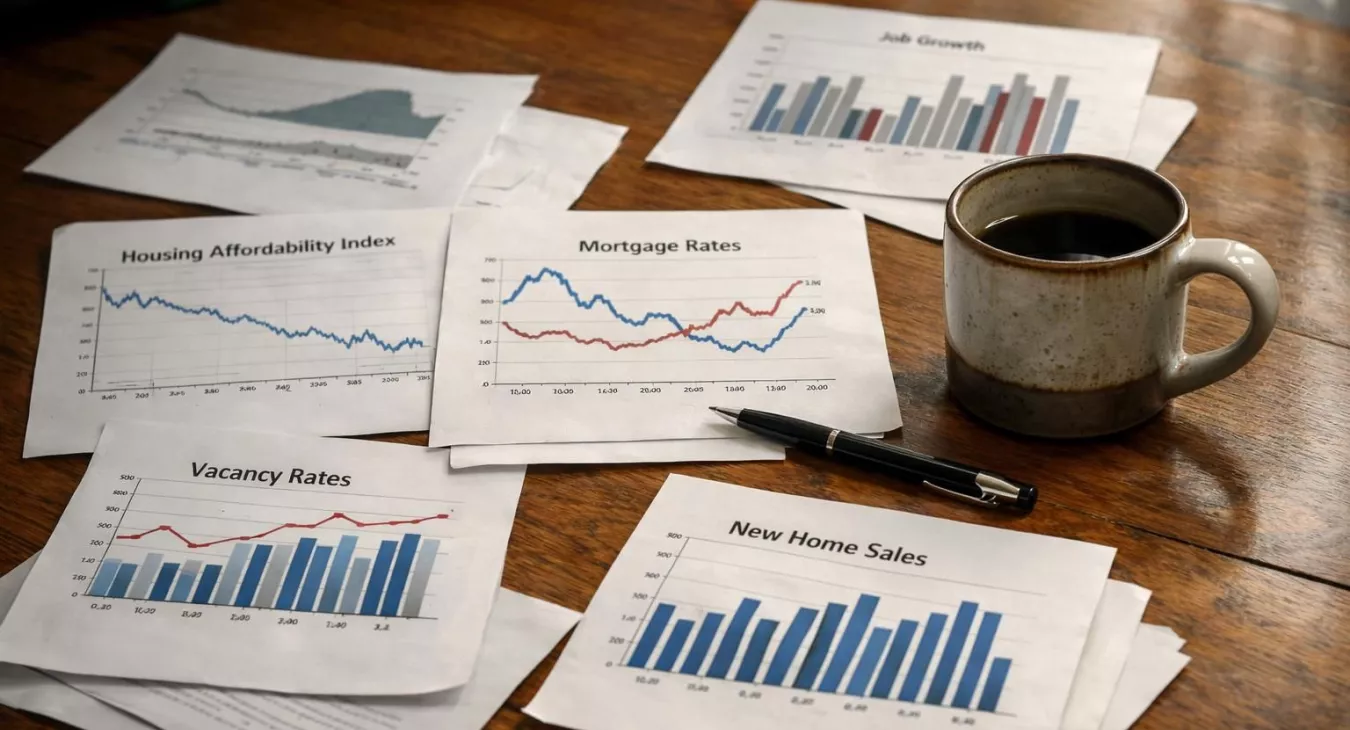
Learn how real estate market indicators like job growth and vacancy rates can guide your investment decisions for better outcomes. Read more now!
Table of Contents
- Understanding Real Estate Market Indicators
- Key Economic Indicators to Track
- Housing Market-Specific Data
- Commercial Real Estate Metrics
- Key Performance Indicators (KPIs) for Real Estate Investors ([Real Estate Investor KPIs](https://www. kdsdevelopment. net/articles/real-estate-investor-kpis))
- Common Mistakes When Analyzing Market Indicators
- Practical Steps to Track and Analyze Market Data
- Tips for Staying Updated on Market Trends ([KDS Development Articles](https://www. kdsdevelopment. net/articles/))
- Conclusion
- FAQs
Real Estate Market Indicators: What Data to Track
Understanding real estate market indicators can help you avoid costly mistakes. Many investors and agents miss key data points, such as the housing affordability index or changes in mortgage rates.
In February, existing home sales rose by 1.7 percent to an annual rate of 4.09 million units even after a sharp drop in January due to weather conditions. 1 Tracking information like job growth, vacancy rates, and new home sales gives you a clearer picture of today's market health.
.As a professional with years spent analyzing housing statistics for both independent appraisers and national agencies like Fannie Mae, I know what matters most for smart decision-making.
You need precise tools that let you spot trends in property values before the competition does. Keep reading if practical strategies are your goal.
.Key Takeaways
- Track key real estate indicators like mortgage rates, housing affordability index (117.6 in early 2026), and monthly inventory (“1.29 million homes for sale” in March 2026) to spot market changes. Use sources like Zillow, Redfin, Freddie Mac, and U.S. Census Bureau for reliable data.
- Watch interest rates closely; the 30-year fixed rate rose to 6.26% by March 2026, pushing up buyer costs and influencing demand nationwide.
- Monitor job growth and wage trends—real GDP grew just 2.1% in 2025—and review shifts in home sales volume (+1.7% from January to February 2026 for existing homes) to gauge true market health.
- Compare both national averages and local stats using tools such as Altos Research or MLS platforms; many markets vary by region or city due to demographic differences or regulatory changes like CA AB 801.
- Avoid common mistakes: do not rely only on past data or a single metric; instead track leading signals (building permits dropped -5.8%) along with lagging data (housing completions down -7.5%) for accurate forecasts (source).
Understanding Real Estate Market Indicators
Market indicators help you gauge the financial health of your region using tools like the Freddie Mac Primary Mortgage Market Survey and National Housing Market Indicators. Track these metrics to decide when to buy, sell, or hold assets for optimal investment outcomes.
What are market indicators?
Market indicators show the current health and direction of the housing market. These tools measure changes in property prices, sales volume, inventory levels, days on market, and mortgage rates.
Both quantitative data such as housing statistics or price indices and qualitative signals like consumer confidence or economic growth feature heavily in real estate analysis. Organizations like NAR, U.S. Census Bureau, Freddie Mac, and local real estate boards offer reliable data for these national housing market indicators.
You need to track how shifts in interest rates from the Federal Home Loan Bank system or sudden global shocks can affect everything from median price to affordable housing supply. For example, dashboards pulling historical trends over 5-10 years help you spot turning points in single-family home values or rental vacancy rates.
Understanding these performance indicators lets you act swiftly—adjusting your strategy when construction costs spike or access to credit tightens—giving you an edge as both a real estate professional and investor.
Why are they important for real estate analysis? ([Real Estate Market Analysis](https://www.kdsdevelopment.net/articles/real-estate-market-analysis))
Tracking real estate market indicators lets you forecast property prices and spot housing supply shifts. The National Federation of Independent Business Small Business Optimism Index signals changing demand for retail and office spaces as seen in declining sales expectations and hiring plans.
A rising housing affordability index, now at 117.6—the highest since March 2022—reveals the evolving risk profile tied to costs of homeownership across the United States. Shelter inflation shows signs of slowing, which gives investors a vital early signal on cost trends that may impact your portfolio’s future cash flow.
Monitoring indicators such as the Consumer Sentiment Index (March 2026: 55.5) enables you to gauge economic mood and its direct effect on investment activity and real estate transactions nationwide.
Weak capital spending plans, holding flat at an historically low 18 percent, suggest constrained commercial investments; this prompts quick strategic decisions regarding asset management or expansion.
Regulatory changes can disrupt affordable housing markets, but active indicator analysis empowers you to adjust swiftly to new rules like those related to conservatorship or duty-to-serve initiatives from entities including U.S. federal housing agencies and appraisal management companies.
Harnessing data from tools such as FHFA House Price Index® positions you ahead in assessing both short-term risks and long-term opportunities in every major American city segment—single-family detached homes or condominium conversions alike.
Back to topKey Economic Indicators to Track
You can spot shifts in the housing market by watching national housing market indicators and the U.S. News Housing Market Index. Use these tools to adjust your investment strategies when you see changes in trends or risk factors.
Interest rates and their impact
Mortgage rates shape real estate activity across the United States. As of March 2026, the 30-year fixed mortgage rate rose to 6.26 percent, up slightly from last week. Rising interest rates mean monthly payments go higher for buyers, squeezing affordability and impacting housing demand.
The increase in the 10-year U.S. Treasury yield to 4.26 percent points to stiffer financing conditions.
Pay close attention as global factors sway these numbers quickly; Brent crude recently climbed above $100 per barrel, fueling inflation and altering forecasts for future interest rates.
Higher core PCE price index readings—plus0 point four percent month over month and plus3 point one percent year over year in January—drive lenders to tighten terms on purchase loans or refinancing deals within the national housing market indicators set.
For investors and appraisers monitoring housing statistics, keep tracking personal saving rates and shifts in short-term borrowing costs, which just fell from nine point one percent to eight point two percent for small businesses this year.
Use tools like a hpi calculator or data platforms such as National Mortgage Database (NMDB®) and stay current with federal moves outlined under regulations like Dodd-Frank Act stress tests (DFAST), since even modest changes can reshape investment returns or builder sentiment overnight.
Employment and wage trends
Labor market shifts directly shape the housing market and investment decisions. In 2025, real GDP grew by 2.1 percent, down from 2.8 percent in 2024, slowing job growth and dampening employment prospects.
The NFIB Small Business Optimism Index saw hiring plans drop by four points to a net of twelve percent, marking the lowest rate since May 2025. However, job openings increased by two points to thirty-three percent; nearly half of businesses surveyed struggled to find qualified workers.
Wage growth outpaced home price increases during this period, lifting first-time homebuyers’ share of transactions from thirty-one to thirty-four percent between January and February 2026.
The upward trend in earnings provided more households with access to affordable housing options across American cities. The Housing Affordability Index climbed to one hundred seventeen point six in early 2026—the strongest reading since March 2022—reflecting improved buying power for many families as wage gains surpassed housing cost rises.
Still, a government shutdown late in the year reduced GDP figures by about one percentage point and impacted labor statistics further into Q4; sales for private domestic buyers rose only one point nine percent that quarter—a slower pace than earlier estimates suggested.
Track these metrics using sources like federal economic releases or enterprise-specific tools such as the Housing Permits Tracker or FHFA HPI®. Take action quickly when you notice shifts in local wage trends or unemployment rates; such changes often signal near-term moves in buyer demand and property values for both residential and commercial assets.
Back to topHousing Market-Specific Data
You should track housing statistics like supply and demand to understand pricing shifts. Use the Housing Affordability Index and national housing market indicators to spot opportunities for buyers and guide smart investment choices.
New home sales and inventory levels
Understanding new home sales and inventory levels gives you a clear lens into market health and future pricing power. Examine the following table for critical data points impacting your investment decisions in early 2026. 1
| Indicator | Recent Value | Year-over-Year (YoY) Change | Implications for Professionals & Investors | Actionable Takeaway |
|---|---|---|---|---|
| Existing Home Sales (Feb 2026) | 4.09 million units (annual rate) | Down 1.4% | Signals softening buyer demand. Exceeds consensus forecast, hinting at short-term resilience. | Monitor for rebound in buyer demand as rates shift or inventory grows. |
| Monthly Change in Existing Home Sales | Up 1.7% | - | Indicates a slight uptick in activity, possibly due to seasonal or economic shifts. | Track for confirmation of trend before making acquisition decisions. |
| Inventory of Homes for Sale (March 2026) | 1.29 million | Up 4.9% | Higher inventory suggests more options for buyers but can cap price growth. | Adjust pricing strategies to remain competitive as inventory rises. |
| Months' Supply | 3.8 months | Up from prior year | Closer to balanced market, reducing pressure on buyers and sellers. | Time market entries for best negotiation leverage in balanced supply conditions. |
| Single-Family Homes Active (March 2026) | 697,251 | - | Represents current market depth; critical for market share analysis. | Use platforms like MLS and Redfin for segment-specific tracking. |
| Newly Listed Single-Family Homes (March 2026) | 10,436 | - | Shows recent seller activity; impacts short-term competition. | Identify listing surges to spot neighborhood-level opportunities. |
| Housing Starts (Jan 2026) | 1.487 million | Up 9.5% | Leads to future inventory growth; supports longer-term planning. | Forecast upcoming supply to anticipate local price trends. |
| Single-Family Housing Starts (Jan 2026) | 935,000 | Down 2.8% | Suggests possible tightening in future supply for single-family homes. | Look for tighter competition, especially in hot zip codes. |
| Multifamily Housing Starts (Jan 2026) | 524,000 | - | Strong multifamily development often responds to rental demand and urbanization. | Study zoning changes or incentives that may create opportunities. |
| Building Permits Issued (Jan 2026) | 1.376 million | Down 5.8% | Lower permits point to slowing construction momentum. | Track local permitting activity via municipal dashboards for early signals. |
| Housing Completions (Jan 2026) | 1.527 million | Down 7.5% | Fewer completions can dampen near-term inventory growth. | Invest in supply-constrained areas where completions lag starts. |
Use data platforms such as Zillow, CoreLogic, and local MLS systems to access and analyze granular inventory and sales figures. Apply trend analysis tools to forecast shifts. Evaluate competition by tracking new listings weekly within target zip codes. These strategies empower you to anticipate supply shifts, refine acquisition timing, and optimize pricing in dynamic conditions. 1
Housing price trends and affordability
Rising home prices and changing affordability are critical benchmarks for your real estate investment strategy. The data below highlights the most relevant trends and their implications.
| Indicator | Current Data (Feb 2026) | Trend | Implications for Investors & Professionals | Actionable Takeaway |
|---|---|---|---|---|
| Median Existing Home Price | $398,000 | +0.3% year-over-year for 32 months | Shows persistent price growth, signaling continued strong demand. Price stability attracts both homebuyers and institutional investors. Sustained increases could impact entry-level buyers and rental markets. | Monitor local price gains using tools like Zillow and CoreLogic. Adjust acquisition strategies based on regional growth patterns. |
| Housing Affordability Index | 117.6 (highest since March 2022) | Rising, as wage growth now outpaces price growth | Improved affordability may expand the buyer pool. Wage gains could drive movement from rental to ownership. In some metro areas, affordability shifts signal new opportunities for value-add investments. | Target markets with strengthening affordability. Use the National Association of Realtors' HAI to track shifts monthly. |
| Shelter Costs (CPI) | +0.2% month-over-month; +3% year-over-year | Smallest monthly rent gain since January 2021. Slowest annual increase in 4+ years. | Price pressure on rents is easing. Investors in multifamily assets may face softer returns in saturated markets. Renters may find relief, reducing urgency to buy. | Reassess rent projections. Factor in local supply and demand using Yardi Matrix and CoStar data. |
| Multifamily Housing Completions | 500,000+ units annually | High volume, may outpace near-term demand in select markets | New supply can suppress rent growth. Growing concessions impact net operating income. Overbuilding risk is present in major metro areas. | Track construction pipelines on Real Capital Analytics. Focus on submarkets with balanced supply-demand fundamentals. |
| Rent Growth | Slowing nationally | Rent inflation moderating, especially in new supply zones | Lowers risk of rental cost spikes. Market equilibrium presents time to reassess lease-up strategies. National Federation of Independent Business survey and CPI support trend reversal. | Refine underwriting models. Incorporate slower rent growth in pro forma analyses to reflect current reality. |
Commercial Real Estate Metrics
Commercial real estate metrics help you assess the health of office, retail, and industrial properties. Use platforms like CoStar or Real Capital Analytics to track shifts in demand and identify profitable opportunities for your appraisal business.
Vacancy rates and rental growth
Vacancy rates and rental growth serve as leading signals for asset health and investor strategy. Reviewing the latest industry data, you may draw actionable insights for property acquisition, disposition, or repositioning.
| Metric | Current Facts & Trends | Direct Impact | Practical Takeaway |
|---|---|---|---|
| Office Vacancy Rates | Vacancy remains elevated. Office values have declined 35% since the April 2022 peak. Weak rental growth intensifies pressure. | Soft demand undermines asset values. Elevated vacancies hamper leasing momentum and increase capital risk. | Pursue value-add strategies or consider divestment in overbuilt submarkets. Use platforms like CoStar for granular vacancy data at the building and city level. |
| Retail Vacancy & Fundamentals | Retail vacancy is stable in favored segments. Rental growth remains positive due to limited new supply. Necessity retail outperforms discretionary sectors as cautious consumer sentiment shapes demand. | Strong fundamentals support stable cash flows in essential retail. Experiential and discretionary retail face leasing headwinds. | Focus acquisition or leasing efforts on necessity retail. Track local consumer trends using market analysis tools and census data. |
| Multifamily Vacancy & Rental Growth | Rental demand is robust. However, high annual completions may pressure rent growth in certain markets. | Over-supplied areas may see slower rent growth and increased lease concessions. Supply-demand balance is critical for underwriting. | Run submarket-level vacancy comparisons using Yardi Matrix. Adjust pro formas for increased competition in areas with high construction delivery. |
| Industrial/Data Center Vacancy | Industrial and data center sectors report construction backlogs of 12.1 and 11.2 months, respectively. Strong demand sustains low vacancy and rental growth. | Tight supply supports rent escalation and compresses cap rates. Backlogs suggest continued landlord advantage. | Prioritize expansion or acquisition in logistics and digital infrastructure. Use tools like CBRE’s market reports for sector-specific vacancy analytics. |
| Overall Construction Backlog | Construction backlog sits at 8.1 months as of February 2026, with notable regional differences. Non-AI contracts have a 7.6-month backlog, signaling uneven demand. | Backlog data helps gauge future supply and prospective vacancy increases; regional insight is crucial. | Leverage regional construction data to anticipate new supply. Adjust investment criteria based on future pipeline risks. |
Monitor these metrics regularly through platforms such as CoStar, Yardi Matrix, and CBRE MarketView. Prioritize local analysis, as vacancy and rental trends often differ greatly by region or asset type. Use robust real estate market analysis to support your investment thesis and risk management strategy.
Transaction volumes and cap rates
Transaction volumes in commercial real estate have not fully rebounded to pre-pandemic levels. In 2025, 15 percent fewer properties changed hands compared to 2019. This signals that higher prices are driving market recovery, rather than a surge in deals or building sales. Analysts from PREA forecast only a one percent appreciation in CRE values for 2026, reflecting investors’ cautious optimism.
Cap rates now play a larger role as interest rates and price corrections challenge deal flow and housing affordability. Office property values remain down by thirty-five percent from the April 2022 peak; overall CRE values sit sixteen percent below their highs. Most new originations since 2023 involve refinancings instead of purchases, representing more than sixty percent of total volume according to recent housing statistics. You should monitor both cap rates and transaction volumes closely using tools like Real Capital Analytics or CoStar to adjust your investment strategy fast when national averages shift.
Back to topKey Performance Indicators (KPIs) for Real Estate Investors ([Real Estate Investor KPIs](https://www. kdsdevelopment. net/articles/real-estate-investor-kpis))

You need to track key performance indicators (KPIs) to measure your success in the real estate market. Pay close attention to property prices, lease durations, vacancy rates, and rent price trends.
For example, apartment and logistics REITs offer long leases and predictable cash flows with less volatility than offices or retail properties. In early 2026, major REIT ETFs delivered a 3.3% yield while outperforming the S&P 500 by over 6%.
Transaction volumes reveal demand strength; strong volumes point to a healthy housing market.
Evaluate construction confidence through indices like ABC’s Construction Confidence Index; high confidence signals growth in data center and multifamily businesses. Watch for changes in seller concessions and pricing strategies as these affect housing affordability and investor returns.
Lenders now favor grocery-anchored retail assets given their defensive characteristics amid shifting economic cycles. Use national housing market indicators such as cap rates and rental growth data for better investment decisions.
Analyzing these KPIs will help you reduce risk and unlock value in both residential and commercial assets across the United States real estate landscape.
Back to topCommon Mistakes When Analyzing Market Indicators
Misreading real estate indicators often leads to costly decisions. Avoid these common pitfalls to ensure accurate market analysis and investment strategy.
- Confusing price-driven recoveries with volume-driven trends distorts your view of the housing market health. Track both sales volume and housing price trends for a full picture.
- Over-relying on past data without adjusting for recent shocks or regulatory updates can mislead your forecast. Recent laws like CA AB 801 or changes such as the MIRS transition index directly impact housing statistics.
- Ignoring local economic and demographic factors while using national-level figures causes errors in housing market analysis. Missouri data or United States national averages may not reflect conditions in your target zip code.
- Failing to watch mortgage rates, LIBOR transition effects, and refinancing patterns (over 60% of originations since 2023) means missing shifts in asset values and market liquidity.
- Not tracking new home inventory levels, construction job data, or architectural billings leaves gaps in understanding housing supply and demand cycles.
- Assuming robust consumer sentiment applies evenly across all commercial real estate sectors risks faulty predictions about vacancy rates, rental growth, or transaction volumes.
- Underestimating the effects of construction backlogs on vacancy rates leads to missed rent increase opportunities or overestimating affordable housing options.
- Neglecting how global events like Middle East conflicts or oil prices influence domestic credit risk transfer policies can skew national housing market indicators.
- Misjudging the impact of credit scores, fair lending data, conforming loan limits, and fraud prevention initiatives undermines appraisal quality for certified residential appraisers and general appraisers alike.
- Overlooking non-lender work opportunities such as divorce appraisals or eminent domain cases limits business diversification amid shifting marketing times.
Use tools like UAD-compliant platforms and Fair Lending Data services to monitor these factors weekly for optimal results in your real estate practice.
Back to topPractical Steps to Track and Analyze Market Data
Use industry tools like CoreLogic and Realtor.com to track housing statistics, then review price-to-income and rent-to-income ratios for clear insight into market health—explore advanced techniques in the next section.
Tools and platforms for data collection
Strong data collection powers all housing market analysis. You can quickly spot shifts in national housing market indicators and adapt strategies.
- Altos Research tracks weekly inventory for single-family homes. This helps you measure changes in housing supply and demand.
- FRED, from the Federal Reserve, delivers daily Treasury yields and interest rate updates. Mortgage rates often follow these trends, affecting both affordable housing options and purchasing power.
- National Association of Realtors (NAR) offers housing statistics on sales, price trends, and affordability index. Real estate appraisers depend on this data for accurate valuations.
- U.S. Census Bureau publishes new home sales and national housing market metrics every month. These statistics give a broad view of housing market health and support neighborhood stabilization initiative decisions.
- Industry dashboards like BlackRock Aladdin or Circana integrate global real estate data with retail sector analysis. Investors use these tools to monitor transaction volumes as well as risk exposure like natural disaster risk.
- Commercial databases from Altus Group, PREA, Hodes Weill, or ABC present detailed reports on vacancy rates, rent growth, cap rates, construction jobs trends, and loss mitigation scenarios.
- Local board platforms release hyper-local information such as transaction volumes or certified general appraiser activity. This detail supports divorce and estate appraisals along with appraisal license compliance tracking.
- Analytics software lets you pull live feeds into custom dashboards for enterprise housing goals monitoring. You assess price to income or rent to income KPIs at a glance using automated updates around key industry dates like March 16–20.
- Combining quantitative sources with qualitative insights gives you a comprehensive picture of the current real estate environment. Actionable intelligence lets you anticipate market bubble conditions or adjust strategies to serve duty to serve goals.
Accessing up-to-date insights empowers you to make informed investment choices across residential and commercial sectors.
How to interpret trends effectively
Interpreting trends in the housing market requires precise analysis and use of trusted data sources. Approach each indicator with context, using both long-term patterns and current events to guide your decisions.
- Compare current housing statistics to historical data, spanning five to ten years, for a true sense of market cycles and shifts.
- Monitor local trends rather than relying only on United States national averages, since demographic and economic changes often differ by region or city.
- Analyze the impact of regulatory changes or new government policies, which may directly affect affordable housing options or mortgage rates.
- Include consumer confidence and sentiment indices from sources like FHLB or national surveys as early signals for shifts in housing demand.
- Pay close attention to leading indicators such as building permits; these signal future supply increases before they are reflected in completions.
- Track lagging indicators like housing completions and occupancy rates, which confirm changes that have already occurred in the housing supply.
- Study how shocks—such as pandemics or conflicts—affect transaction volumes, rental pricing, and overall housing affordability index values within months rather than years.
- Observe lending practices by watching mortgage rates, refinancing activities through platforms like the Common Securitization Platform, and variations in mortgage servicing costs for liquidity forecasting.
- Synthesize multiple data points including median home prices, vacancy numbers, wage growth figures, cap rates, and KPIs for real estate investors to avoid misleading conclusions drawn from one metric alone.
- Use online tools like REIT performance dashboards or FHLB datasets for reliable tracking of national housing market indicators and refined local data insights.
Tips for Staying Updated on Market Trends ([KDS Development Articles](https://www. kdsdevelopment. net/articles/))
Staying current on national housing market indicators helps you spot opportunities and risks. Use reliable strategies to keep your real estate analysis sharp and timely.
- Set alerts from dashboards or analytics platforms such as Altus Group for immediate updates on housing statistics, property prices, and inventory levels.
- Track mortgage rates daily using trusted sources like the Federal Reserve Economic Data (FRED) to assess shifts in affordability and demand.
- Block March 16–27 for major industry conferences where experts discuss emerging trends in housing supply, affordable housing policy, and transaction volumes.
- Subscribe to KDS Development’s articles for expert commentary by Kevin Hecht and regular nationwide data releases relevant to the United States national average.
- Read monthly market health reports from leading firms like PREA that cover commercial real estate metrics, rental growth, vacancy rates, and cap rates.
- Follow updates on regulatory changes through advocacy organizations; these rules often affect housing market trends and access to affordable housing segments.
- Monitor consumer sentiment indices including the University of Michigan’s Consumer Sentiment Index for early signs of changes in housing demand.
- Adjust your analysis framework after major global economic or geopolitical events as these can change U.S. real estate conditions rapidly.
- Study local news feeds and municipal government sites for zoning proposals or new developments; such shifts impact neighborhood-level supply factors.
- Use specialized tools like CoStar or Zillow Research to compare historical data sets against current market dynamics across multiple regions efficiently.
Conclusion
Tracking the right real estate market indicators gives you a competitive edge. Use platforms like Zillow, Redfin, and the U.S. Census Bureau to monitor changes in housing supply, mortgage rates, affordability indexes, and price trends.
Strong data analysis allows you to spot both risks and opportunities before others do. Keep focused on clear metrics; this discipline helps protect your investments and strengthens your position as an informed professional in shifting markets.
Back to topFAQs
1. What are the most important real estate market indicators to track?
Key housing statistics include mortgage rates, housing supply, and the housing affordability index. These data points provide insight into overall housing market health.
2. How does the housing affordability index help in understanding market trends?
The housing affordability index measures whether a typical family can qualify for a mortgage on a median-priced home. Tracking this indicator helps analysts judge if affordable housing is increasing or declining across the United States.
3. Why do experts watch national averages when analyzing the real estate sector?
National averages of indicators like mortgage rates and housing demand offer perspective on broad shifts in the United States’ property landscape, setting context for local and regional variations in market analysis.
4. What role does tracking mortgage rates play in assessing current conditions?
Mortgage rates influence both buyer demand and overall access to affordable homes. Shifts in these rates often signal changes in broader economic forces affecting the entire national housing market.
5. How do changes in supply affect long-term trends within residential markets?
Fluctuations in available units directly impact prices and shape future growth patterns for communities seeking sustainable development; low supply often leads to rising costs, which can challenge efforts to maintain widespread access to affordable homes while influencing broader societal outcomes linked to stable neighborhoods.
References
- ^ https://www.researchgate.net/publication/390475372_Predicting_Housing_Prices_Using_Advanced_Analytics_A_Study_on_Key_Property_Features_and_Market_Dynamics