


Learn where to find notice of default lists and how to ethically source distressed real estate deals while navigating foreclosure laws responsibly.
Products and Tools Mentioned in this Post

Propstream
Detailed information on Propstream. Get How-To's, reviews, Comparisons, and much more.

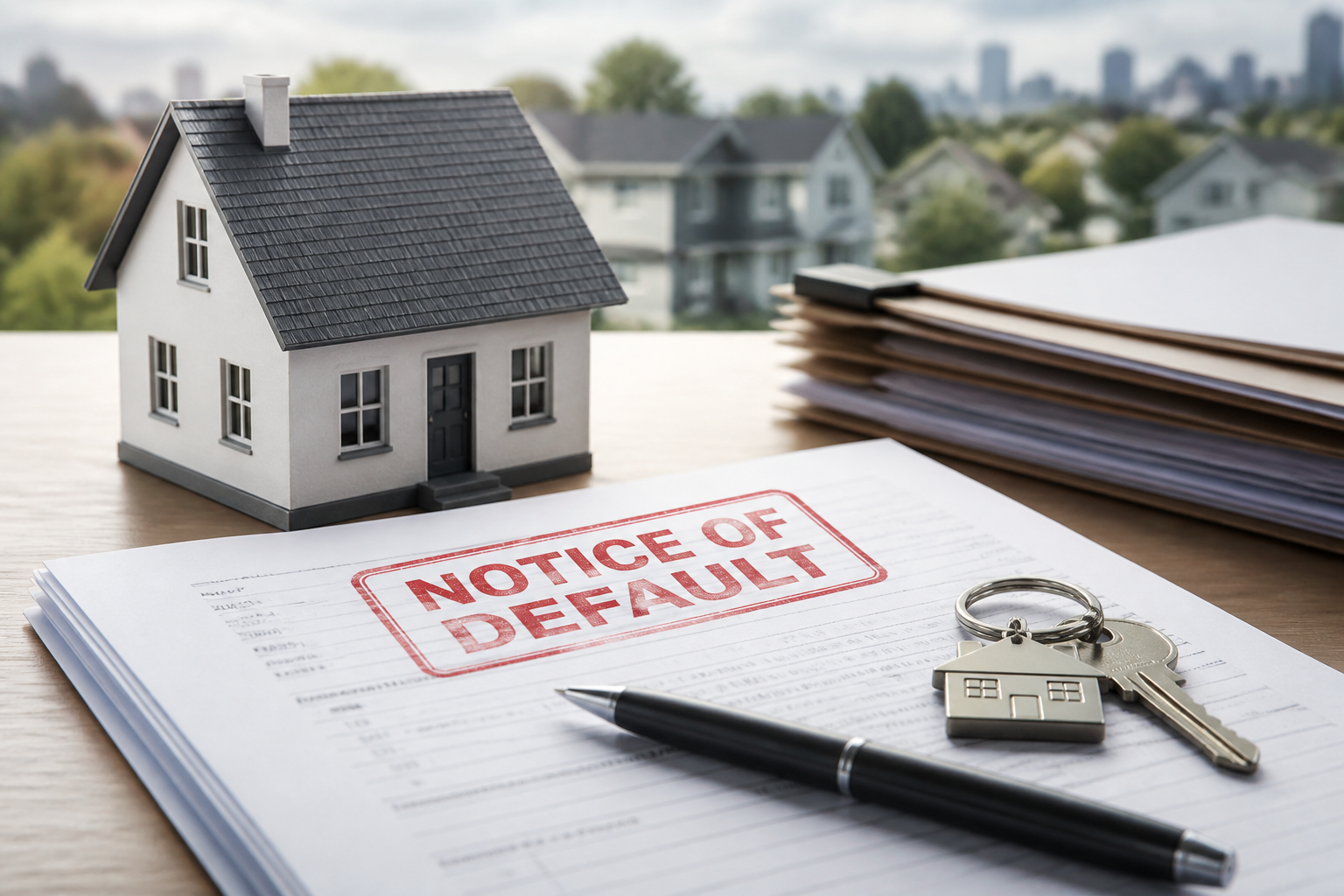
Notice of default lists are among the most targeted lead sources available to real estate investors — but they come with a legal and ethical weight that demands serious attention. A homeowner who's received a notice of default is in genuine financial distress. And here's the thing: an entire body of state law exists specifically because this population has historically been exploited.
Done right, with fair offers, full disclosure, and proper legal review, working NOD lists can surface deals unavailable through any other channel. The upside is real. But done carelessly? You're looking at civil liability, criminal penalties in some states, and significant reputational damage that'll follow your business for years.
This guide covers where to find notice of default lists, how the foreclosure process actually works, what data providers offer, and how to approach this lead source responsibly. Nothing here's legal advice — consult a licensed real estate attorney in your state before contacting any homeowner in foreclosure.

What's a Notice of Default?
Definition and Legal Meaning
A notice of default (NOD) is a formal legal document a lender or loan servicer files to notify a borrower that they've breached their mortgage agreement — typically by missing payments — and that the foreclosure process has begun. It's the official starting gun of pre-foreclosure. Under federal CFPB Regulation X (12 C.F.R. § 1024.41(f)), servicers generally can't file a first foreclosure notice until a borrower is more than 120 days delinquent. That's your window. Everything starts here.
Notice of Default vs. Foreclosure

Here's the thing: an NOD isn't foreclosure itself. It's the precursor — the warning shot before the lender takes title or forces a sale. Between the NOD filing and an actual auction, the homeowner still has leverage. They can reinstate the loan, negotiate a modification, or dump the property on the open market. That's the window where investors make their money.
What should a distressed homeowner consider at this stage? Loan reinstatement, forbearance, loan modification, listing with an agent on the open market, or calling a HUD-approved housing counselor. The more options they know about, the better the odds you get a deal.
Judicial vs. Non-Judicial States — A Critical Distinction
Where you find the paperwork depends entirely on your state's foreclosure process. Non-judicial or judicial — pick the wrong one and your sourcing workflow falls apart.
In non-judicial states like Washington, Texas, Georgia, California, and Michigan, the lender records a Notice of Default or Notice of Trustee's Sale directly with the county recorder. That's public record, searchable, accessible. In judicial states such as Florida, Indiana, and New York, the lender files a lis pendens with the clerk of court instead. The whole process moves through the court system. And here's what trips up most investors: what works in Florida doesn't work in Washington. Always verify your target state's process before you build your sourcing workflow.
Back to topThe Foreclosure Market in 2026
Want to know where your next deal is hiding? Start with NOD activity. U.S. foreclosure filings hit 227,548 properties in the first half of 2026 — that's a 21% jump year-over-year and 28% higher than H1 2024. And the pipeline keeps getting fatter. Foreclosure starts (new NODs and lis pendens filings) reached 164,566 in H1 2026, up 18% YoY. Understanding these numbers lets you calibrate your geographic strategy and focus your hunting where the distressed inventory actually lives.
Full-year 2025 closed with 367,460 foreclosure filings, which represented 0.26% of all U.S. housing units. But here's what matters more: FHA mortgage delinquency rates hit 11.9% in Q1 2026 — the highest since Q3 2021. That's your leading indicator. The pipeline won't dry up anytime soon. Distressed sales still only account for approximately 2% of all U.S. real estate transactions as of 2025, which is nowhere near the 18% peak we saw during the Great Recession, but the trend is moving up.
Three states are standing out right now. In Q1 2026, Indiana led at 1 in every 739 housing units, followed by South Carolina (1 in 743) and Florida (1 in 750). Florida's been the hottest state for two years running. In 2025, 0.44% of residential properties there — roughly 1 in every 230 housing units — entered foreclosure. If you're working the Florida distressed property game, NOD lists aren't optional. They're your competitive advantage.
Back to topHow to Find Notice of Default Lists

Public Records and Court Databases
NOD filings are public records. But here's the catch — "public" doesn't mean you can do whatever you want with them. Non-judicial states file notices with the county recorder, and most counties let you search online now. In judicial states, lis pendens show up in court dockets through the county clerk's portal or PACER for federal cases. But access isn't uniform. Some counties give you free online search. Others want you in person or demand a paid subscription. And here's the real gotcha: many counties slap license restrictions on bulk downloads that explicitly prohibit resale or marketing use. Before you download anything at scale, read that bulk-data license. Washington state's GR 31/31.1, for example, directly blocks automated list-building from court data. This matters.
Commercial Data Platforms
Most serious investors skip the county courthouse grind. Why? Commercial platforms aggregate and normalize NOD and lis pendens data across jurisdictions, then let you filter by geography, loan amount, equity estimate, property type, and filing date. You save weeks of manual research. PropStream and PropertyRadar are the workhorses here. Want a detailed head-to-head? Check out our PropStream vs. ListSource breakdown and our ListSource platform review.
ATTOM Data Solutions sits at the enterprise level. They feed foreclosure and NOD data to institutional investors and analytics firms. Their pricing is custom and enterprise-only — there's no public rate card confirmed as of 2026. You need to contact them directly for a quote.
Free vs. Paid Resources
Free county recorder searches work if you're running a tiny hyper-local campaign and have time to burn. The data's messy and inconsistently formatted. For most investors working multiple counties or states? Paid platforms are the only practical move. One thing to remember: equity figures are estimates across every platform. They're calculated from recorded loan amounts and assumed amortization schedules — not actual payoff balances. Don't treat them as gospel.
Back to topNOD List Providers: A Feature Comparison
This table pulls from publicly available data as of 2026. But here's the thing—vendors update pricing and features constantly. Always hit them up directly before you commit to anything, or you'll find out mid-month that your plan changed.
| Provider | Data Coverage | Update Frequency | Starting Price (2026) | Key Strengths | Best For |
|---|---|---|---|---|---|
| PropStream | Nationwide | Daily updates on key data | $99/month | Foreclosure + equity filters, skip trace add-on, comps | Wholesalers and flippers building targeted lists |
| PropertyRadar | Nationwide (deep in western states) | Daily/weekly by county | $119/month ($99/mo prepaid annually) | Map-based search, NOD + lis pendens filters, owner data | Agents and investors doing geographic targeting |
| ATTOM Data | Nationwide, institutional-grade | Daily feeds available | Custom/enterprise (UNRESOLVED — contact vendor) | Foreclosure data depth, API access, analytics integrations | Institutional buyers, data resellers, analytics teams |
| County Recorder (direct) | Single county | Varies by county | Free to low cost (varies) | Primary source data, no intermediary | Hyperlocal investors, verification of vendor data |
The Foreclosure Timeline: What It Means for Your Strategy
Where a property lands in the foreclosure timeline directly impacts how you pitch the owner and what moves are still on the table. Q2 2026 saw the national average clock in at 563 days to close a foreclosure — that's down seven straight quarters, but don't let that fool you. Most states still have a meaningful window between NOD and the actual sale.
But here's the thing: it varies wildly by state.


- Non-judicial states (TX, GA, MI, CA, WA): You're looking at roughly 37–120 days from NOD to sale. Texas moves faster than anywhere else — as little as 41 days from NOD to the courthouse steps.
- Judicial states (FL, NY, NJ, IN): The timeline stretches to 4 months to 3+ years. Court backlogs and how the owner responds make all the difference.
- California specifics: There's roughly a 90-day gap from missed payment to NOD filing, then a mandatory 20-day notice period before the trustee sale hits the books. And here's the new wrinkle: California AB 2424 (kicking in 2025) lets borrowers with an active MLS listing push the trustee sale back 45 days, with another 90 days possible if they've got a signed purchase agreement in hand.
Fast timelines in Texas and Georgia? That's when you need to move. Your outreach has to be immediate and your underwriting faster. In Florida or New York, you've got breathing room for deeper due diligence — but be ready for court delays and legal complexity. The real win is being honest with homeowners about what time they actually have left. It's not just the right call ethically; it protects you legally too. Check out our BRRRR strategy deep dive if you want to see how picking up distressed deals fits into the bigger investment picture.
Back to topUsing NOD Lists Effectively and Legally
Filtering for Lead Quality
Raw NOD lists? They're bloated and all over the map. You need to filter hard before you touch a phone or send a letter. Start with estimated equity position—higher equity means the owner has skin in the game and you've got negotiating room. Then layer in days since NOD filing. Early filing = runway to work with; late filing = desperation but fewer options. Property condition, owner-occupancy status, loan type—these matter too.
Want to see how NOD lists stack up against other distressed leads? Check out our deep dives on tax delinquent property lists and code violation lists.
Outreach and Compliance — The Non-Negotiable Layer
Here's where most NOD strategies blow up legally. You've got multiple laws firing at once, and they don't always play nice together:
- TCPA and calling/texting: The Telephone Consumer Protection Act clamps down on autodialed calls, prerecorded messages, and texts to cell phones—even if your pitch is a purchase offer, not a "solicitation." Two 2025 district court decisions (Coffey v. Fast Easy Offer, D. Ariz.; Aussieker v. Aghazadeh, E.D. Cal.) suggested that an offer to buy a house might not be a "telephone solicitation" under DNC rules. But here's the catch: those are district court rulings with zero appellate authority. They don't touch the blanket ban on autodialed calls or prerecorded messages to cells. And if you're bundling services—foreclosure consulting, leaseback, closing-cost help—alongside the purchase offer, those rulings don't help you at all. Don't tell yourself investors are automatically exempt from do-not-call rules. TCPA damages hit $500–$1,500 per call or text, and homeowners can sue directly.
- State mini-TCPAs: Florida (FTSA, Fla. Stat. § 501.059), Washington (CEMA, RCW 19.190), and Texas all have their own versions—stricter in spots than federal law. If you're working Florida or Washington NOD lists (and those are high-volume markets), get a state-specific attorney involved before you dial.
- SMS and A2P 10DLC: Text messages count as "calls" under TCPA. Yes, you can register for A2P 10DLC with carriers. But that's a compliance checklist, not a legal shield. It won't save you in court, and most carriers flatly prohibit texts to purchased lists anyway.
- Direct mail keeps you cleanest legally and lets homeowners respond on their own timeline. Lower friction all around.
Foreclosure Consultant and Equity Purchaser Laws
The minute you approach someone already in foreclosure, you're walking into state-specific regulatory territory. Foreclosure consultant, equity purchaser, and equity skimming statutes vary by state but they all demand the same things: specific contract language, statutory notices, rescission rights for the homeowner, sometimes criminal penalties. Washington RCW 61.34 will put you in felony territory. California, Florida, and most others have their own frameworks. Get a local real estate attorney to vet your contracts and disclosures before you mail a single letter. This isn't a gray area.
FCRA and Data Use Boundaries
Commercial vendors sell NOD lists as marketing products, not FCRA-regulated data. That's a double-edged sword. You get no FCRA accuracy guarantees or consumer dispute rights—but you also can't use the data for anything FCRA-covered. Tenant screening, owner-financing qualification, lease-option vetting, employment checks. All off-limits. Using marketing data for those decisions violates 15 U.S.C. § 1681b.
Ethical Framing
Foreclosure is brutal. Financial pressure, emotional wreckage, the works. Most state laws acknowledge this by mandating disclosures, cooling-off periods, and rescission rights. Why? Because this population has been historically exploited by predators who turned distress into profit. And that's the real insight here.
The investor who shows up with a fair offer, transparently explains that the homeowner can reinstate, modify, list on the open market, or call HUD-approved counseling? That investor is the ethical player *and* the one least exposed to lawsuits. Speed and information gaps aren't tools to sharpen. They're liability waiting to detonate.
NOD lists are one piece of a larger distressed-sourcing puzzle. For the full picture, see our guide to 12 wholesale real estate lead sources and our breakdown of abandoned property lists. Ready to turn those leads into closings? Our real estate marketing funnel guide walks through follow-up sequencing.
Back to topConclusion
Notice of default lists work. They're a real, data-driven pipeline into pre-foreclosure deals—and the market's actually growing right now. 164,566 new foreclosure starts hit the market in just the first half of 2026. The opportunity is there if you know where to look.
Here's the thing, though: the legal framework around sourcing, contacting, and closing deals with distressed sellers is complex. It's state-specific too. And it matters—a lot. One mistake on compliance can torpedo your entire operation.
The investors who actually build sustainable, repeatable businesses in this space? They don't cheap out on the legal side. They spend as much time understanding compliance and ethical practice as they do hunting for deals. Source your lists carefully. Filter your data intelligently. When you reach out, do it compliantly. And when you make an offer, disclose fairly. That's it.
Back to top
Frequently Asked Questions
what's the difference between a notice of default and a lis pendens?
Both kick off foreclosure proceedings. The document type just depends on where you're working. Non-judicial foreclosure states like Texas, California, and Washington? Lenders record a Notice of Default with the county recorder. Judicial foreclosure states like Florida, Indiana, and New York? That's a lis pendens — literally a "pending lawsuit" notice — filed with the clerk of court. The end result's the same: the homeowner's officially in the foreclosure pipeline. Your sourcing strategy has to match your target state's process.
How current is the data on NOD list platforms?
It varies wildly by vendor and county. PropStream and PropertyRadar — the leading platforms — push daily or weekly updates for most counties. But don't assume coverage is universal. Rural counties with manual filing systems often lag months behind. Before you scale anything, verify the stated update frequency for your specific target counties against actual primary county records. And here's the kicker: data freshness matters even more in non-judicial states like Texas, where the NOD-to-sale window can be as short as 41 days. You miss that window, you miss the deal.
Can I text homeowners on an NOD list?
Don't. Not without counsel. Text messages fall under TCPA restrictions on autodialed and prerecorded calls to cell phones — that's a blanket rule regardless of whether you're selling something. Florida, Washington, and Texas layer on state-specific requirements that tighten things further. And the carriers? A2P 10DLC policies flatly prohibit messaging to purchased lists. The penalty structure is brutal: $500 to $1,500 per message, with a private right of action. Before you touch a phone to dial or fire up a text automation tool, talk to a TCPA attorney. This is where one bad decision costs real money.
What discounts are typically available on pre-foreclosure properties?
Distressed properties move at a discount. How much? It depends on timing, condition, and how well you negotiate. Here's what the data shows: properties sold in distress typically go 20–40% below comparable non-distressed market value. Courthouse auction buys can hit 30–50% below ARV, while bank REOs — cleaner title, less desperation — usually price 15–25% below market. NOD stage deals land somewhere in the middle. Your actual discount hinges on owner equity and how much time's left on the clock.
Do I need an attorney before working NOD lists?
Yes. Full stop. Before you even pick up the phone, get legal counsel. States like Washington, California, and Florida have foreclosure consultant and equity purchaser statutes that mandate specific contract language, required disclosures, and rescission rights. Break these rules and you're looking at civil penalties — sometimes criminal ones. Even in lighter-touch states, you're juggling TCPA exposure, Fair Housing landmines, and transaction-level disclosure requirements all at once. Treat attorney review as a cost of admission, not an optional add-on.
Back to top