

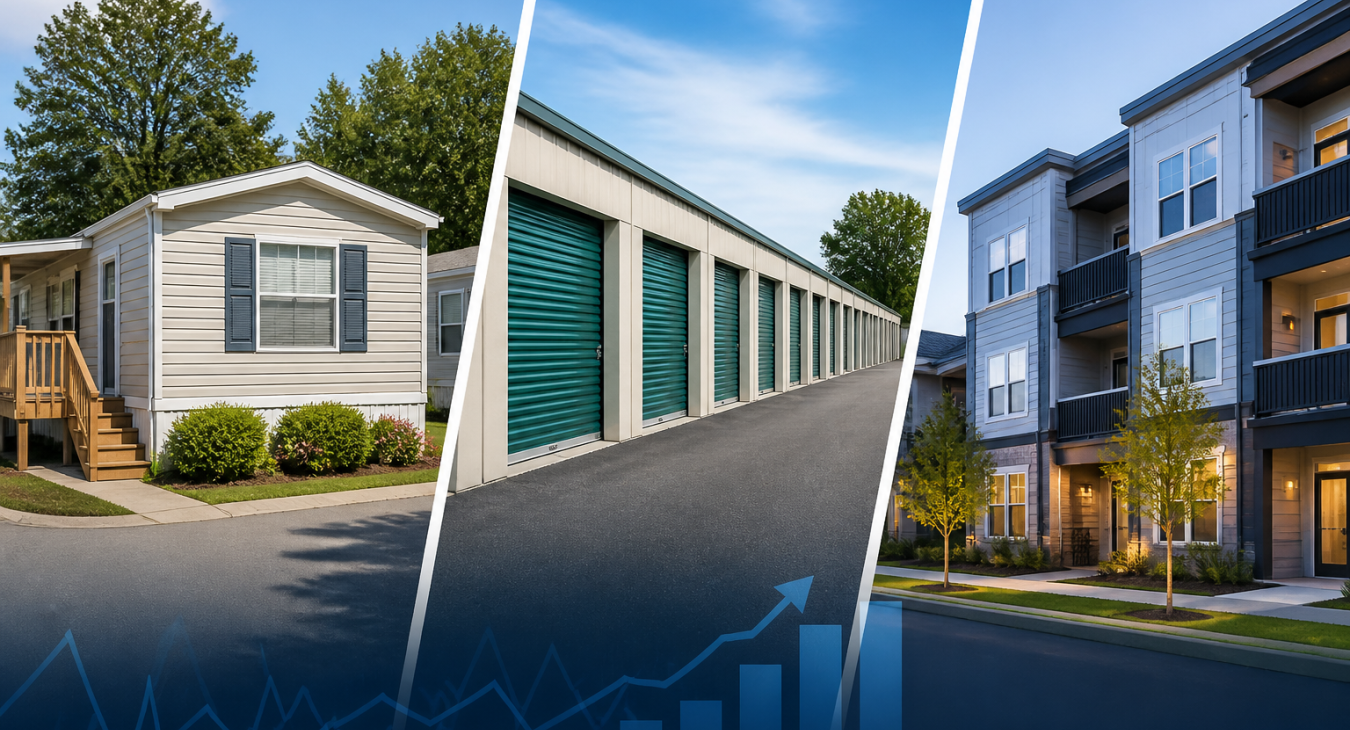
Discover why unsexy real estate investments like mobile homes outperform luxury properties. Learn which overlooked assets deliver superior yields and lower
Products and Tools Mentioned in this Post
Table of Contents
- Why Mobile Home Parks Are Unsexy But Profitable
- Understanding the Manufactured Housing Asset Class
- Financial Performance: The Data Behind the Unsexy Asset
- Investment Structures for Mobile Home Assets
- Operational Advantages: Lower CapEx and Maintenance
- Market Tailwinds and Demographic Drivers
- Tax Benefits and Depreciation Strategies
- Risk Factors and Honest Considerations
- How to Get Started with Mobile Home Investing
- Conclusion: The Unsexy Edge Is a Durable Competitive Advantage
- Frequently Asked Questions
Dumb money chases glamour, smart money chases yield. That's Wall Street's way of saying it. While everyone else fights tooth and nail over luxury condos, trendy short-term rentals, and Class A office towers, something quieter's been happening in the background. Unsexy real estate — mobile homes, self-storage, car washes, manufactured housing communities — these assets keep grinding out superior risk-adjusted returns. Year after year. And most investors never even look at them. Think about it: what's your gut reaction when you hear "mobile home park"? Does it make you uncomfortable? Good. That discomfort is where the real money lives.

Why Mobile Home Parks Are Unsexy But Profitable
The Psychology of 'Unsexy' Investments
We're drawn to prestige. In real estate, that means chasing downtown mixed-use developments, beach condos, and shiny Class A apartment complexes — the kind of assets that get Instagram traction and earn you nods at dinner parties. Mobile home parks? They don't make the cut. You won't see them in glossy real estate magazines. The stigma's rooted in outdated narratives that ignore what the actual data shows.
And that's exactly where the opportunity lives. When perception crashes hard against reality, pricing gets sloppy. Mobile home parks have historically offered cap rates running 200 to 400 basis points above comparable multifamily assets in the same markets. That divergence doesn't happen by accident.
Why Perception Doesn't Match Reality
The dilapidated trailer park image? That's yesterday's problem. Modern manufactured housing communities serve working-class families, retirees on fixed incomes, and increasingly, millennials who got priced out of traditional homeownership. Sam Zell — one of the 20th century's most celebrated real estate investors — built serious wealth through mobile home park investments. Blackstone and Brookfield? Both have meaningfully allocated capital to the sector. When the world's largest investment managers quietly accumulate an "unsexy" asset class, you should listen.
Recession-Resistant Cash Flow Benefits
Manufactured housing communities are built different. Economic downturns hit. Conventional housing gets unaffordable. Demand for cheaper options explodes. During the 2008–2009 financial crisis and the COVID-19 disruptions of 2020, rent collections in mobile home parks held up remarkably well — proving their resilience when it matters most. For a deeper look at why certain real estate assets survive economic stress, see our guide on recession-proof real estate strategies that survive.
Back to topUnderstanding the Manufactured Housing Asset Class

Mobile Homes vs. Manufactured Homes vs. Modular Homes
Get your terminology straight before you start investing. Too many investors lump these categories together, and that confusion will bite you hard during underwriting and when you're talking to lenders.
| Characteristic | Mobile Homes (Pre-1976) | Manufactured Homes (Post-1976) | Modular Homes | Panelized Homes |
|---|---|---|---|---|
| Definition | Factory-built before HUD code | Factory-built to federal HUD standards | Factory-built in sections, site-assembled | Panels built off-site, assembled on-site |
| Cost Range | $10,000–$40,000 (used) | $60,000–$160,000 new | $100,000–$250,000+ | $120,000–$280,000+ |
| Financing Options | Limited; personal property loans | FHA Title I & II, Fannie Mae MH Advantage | Conventional mortgage eligible | Conventional mortgage eligible |
| Appreciation Potential | Low to negative | Moderate (land value drives gains) | Similar to site-built | Similar to site-built |
| Typical Investors | Park operators, flippers | Park operators, syndicators | Developers, REITs | Developers |
Here's what actually matters: when you're buying into a mobile home park, you're buying the land and infrastructure. Not the homes themselves. Your tenants own their units and pay you lot rent each month. That changes everything about your maintenance burden—in the best way possible.
Modern Manufactured Housing Standards
The HUD Code took effect in 1976. It set real requirements—structural integrity, energy efficiency, fire safety, plumbing. And the rules stick. Modern manufactured homes are engineered to handle 150 mph winds in hurricane zones. Energy efficiency? They're right there with site-built homes. But does anyone remember that? No. Most people still picture some beat-up 1960s trailer. That's not what you're actually investing in today.
Back to topFinancial Performance: The Data Behind the Unsexy Asset

The numbers don't lie. When you strip away the stigma, mobile home parks deliver returns that speak louder than any marketing pitch. Here's exactly how they stack up against the asset classes you're probably already considering.
| Metric | Mobile Home Parks | Multifamily Rentals | Single-Family Homes | Office/Retail | REITs (Avg.) |
|---|---|---|---|---|---|
| Average Cap Rate | 5%–8% | 4%–6% | 3%–5% | 5%–7% (volatile) | 4%–6% |
| Cash Flow Stability | Very High | High | Moderate | Low–Moderate | High |
| CapEx Requirements | Very Low | High | Moderate–High | Very High | Varies |
| Tenant Turnover | Very Low (avg. 7–10 yrs) | High (avg. 1–2 yrs) | Moderate | Moderate | N/A |
| Recession Resistance | Very High | High | Moderate | Low | Moderate |
| Management Complexity | Low–Moderate | High | Low–Moderate | Very High | Outsourced |
Key Financial Metrics for Mobile Home Parks
| Metric | Industry Average | Typical Range | What It Means for Investors |
|---|---|---|---|
| Cap Rate | 6.2% | 4.5%–9% | Income yield relative to purchase price |
| Cash-on-Cash Return | 8%–12% | 6%–18% | Annual cash flow vs. equity invested |
| Price per Lot | $40,000–$80,000 | $15,000–$150,000+ | Entry cost benchmark across markets |
| Occupancy Rate | 91%–95% | 85%–99% | Demand strength in a given market |
Affordability Needs and Supply Constraints
You can't build them anymore. Not easily, anyway. Zoning restrictions kill new park development in most places, and the existing supply keeps shrinking as developers redevelop land for higher uses.
Meanwhile, the National Low Income Housing Coalition pegged the shortage at over 7 million affordable rental units in the U.S. That's not a typo—seven million. You're looking at structural demand that won't disappear anytime soon. And existing park owners benefit directly from this supply crunch.
That's your tailwind right there.
Back to topInvestment Structures for Mobile Home Assets

| Criteria | Direct Park Ownership | Syndication | Institutional Funds | Public REITs | Crowdfunding |
|---|---|---|---|---|---|
| Capital Required | $500K–$5M+ | $50K–$250K | $1M+ (accredited) | Any amount | $1K–$50K |
| Involvement Level | Active | Passive | Passive | Passive | Passive |
| Returns Timeline | Ongoing + exit | 5–7 year hold | 5–10 year hold | Quarterly dividends | 1–5 years |
| Liquidity | Very Low | Low | Low | High | Low–Moderate |
| Key Risks | Operational, financing | Sponsor quality | Fee drag, lockups | Market volatility | Platform risk |
Want exposure to mobile home parks without running operations yourself? Syndications and funds are your answer. The sponsor's track record matters most—spend time vetting their deal history, how they handle downturns, and what their fee structure actually costs you. Exit strategy is just as critical. And if you're comparing fractional ownership across different real estate categories, check out our Arrived Homes review on fractional real estate investing for platform comparisons.
Self-directed IRAs work too. This structure lets you deploy capital tax-efficiently into mobile home park syndications. Our SDIRA real estate strategies guide breaks down exactly how to set these investments up the right way.
Back to topOperational Advantages: Lower CapEx and Maintenance

Cost Structure Benefits
A roof leaks in your conventional apartment complex? You're writing the check. The HVAC dies? Same story. But in a mobile home park, your residents own their units—so those repair bills hit their ledger, not yours. You maintain the infrastructure instead: roads, water and sewer utilities, common areas, the park office. That's it.
This structural difference matters enormously for your cash flow projections. Apartment operators budget 10%–15% of revenue for CapEx in multifamily. Mobile home park operators? 3%–6% for well-maintained communities. Want to know where the money goes instead? Straight to your cap rate.
Tenant Retention Factors
Here's the real anchor: moving a manufactured home costs $3,000 to $10,000 just for transport, plus reconnection fees on top. That economic friction doesn't exist with apartment renters, and it shows in the numbers. Your mobile home park residents stay put for 7 to 10 years on average. Compare that to 12 to 18 months in conventional apartments.
And that stability? It compounds your returns. Lower vacancy risk. Dramatically reduced turnover costs—no constant cleaning cycles, marketing blitzes, or lease concessions bleeding your NOI. You get predictable, sticky income.
Scalability Potential
Once you've nailed operations on your first park, you've got a repeatable playbook for the next one. Property management software handles community-wide operations. Utility billing systems run automatically. Rent collection happens without you touching it. Lean teams can manage hundreds of lots across multiple states because the systems do the heavy lifting.
And now? AI tools for real estate investors are starting to handle portfolio analytics and predictive maintenance scheduling. That means even better margins as you scale.
Back to topMarket Tailwinds and Demographic Drivers

The Affordable Housing Crisis as a Structural Tailwind
We're short 4 to 7 million housing units in the U.S. — depending on which methodology you trust. And manufactured housing? It's the country's largest source of unsubsidized affordable housing. That matters. Lot rents run $400 to $700 monthly in most secondary markets, which is why the economics work so well.
Here's what makes this compelling: national median home prices blew past $400,000 in 2024. For cost-conscious households, that gap between a $400K site-built home and a $150K–$200K manufactured home is impossible to ignore. The value proposition isn't theoretical anymore. It's survival for a massive segment of the market.
Demographics Driving Demand
Two huge demographic waves are colliding head-on in manufactured housing. Aging Baby Boomers want lower-cost retirement living — and they're tired of maintaining single-family homes. Meanwhile, younger Millennials and Gen Z buyers are priced out of site-built homes entirely.
HUD data shows the average manufactured home buyer has household income about 60% below the national median. That's your demand pool — broad, stable, and growing. It's not a niche market. It's mainstream economics at work.
Cost-of-living migration from expensive coasts to affordable Sun Belt and Midwest metros has turbocharged demand in the best mobile home park investment markets. People are literally choosing manufactured housing parks over staying put. That's a structural shift, not a cyclical blip.
Regulatory Environment
Zoning opposition to new park development actually helps you as an existing owner. Supply constraints mean stronger fundamentals. But here's where it gets complicated.
Some jurisdictions now cap lot rent increases or require extended notice before park closures. You need to know your target market's regulatory stance before you buy. Don't assume all states play the same game.
Florida, Texas, and the Carolinas? Generally operator-friendly. California and parts of the Northeast? Higher regulatory risk, period. Map this out during underwriting. It'll determine your upside and your exit options.
Back to topTax Benefits and Depreciation Strategies
Here's what makes mobile home parks genuinely attractive from a tax perspective: you're looking at depreciation schedules that beat traditional residential real estate. The park's physical assets — roads, utilities, landscaping — depreciate over 15 years using MACRS. That's 12.5 years faster than the 27.5-year residential schedule. It matters.
Cost segregation studies take this further. They accelerate your depreciation timeline and generate paper losses that'll offset your passive income in year one. And bonus depreciation provisions (depending on current tax law) let you front-load even more benefits upfront. You're essentially deferring tax liability while your actual cash flow stays strong.
Want to know how to structure this properly? Our guide on real estate tax strategies to keep more of your profits walks through the full playbook — including 1031 exchanges for park operators who're ready to scale.
Back to topRisk Factors and Honest Considerations
Financing Challenges
Historically, mobile home park financing hasn't been easy to come by. Banks don't love this asset class—especially when you're looking at smaller parks under 50 lots. But things have changed. Fannie Mae and Freddie Mac now have dedicated manufactured housing community loan programs. CMBS lenders, credit unions, and regional banks are stepping in too. If you need more creative capital structures, check out our article on creative financing strategies for real estate. It covers seller financing, assumable mortgages, and other structures that show up constantly in mobile home park deals.
Regulatory and Zoning Risks
Here's where the politics kick in. California, Oregon, and Connecticut have passed new rent control ordinances, closure notification requirements, and resident opportunity-to-purchase (ROP) laws. These constrain your operational flexibility in meaningful ways. Before you deploy capital in these markets, you've got to do serious legislative research. And hire local real estate counsel with actual manufactured housing experience. Don't skip this step.
Common First-Timer Mistakes
- Underestimating infrastructure deferred maintenance: Water and sewer systems in older parks hide major remediation costs. Don't find out about them during underwriting.
- Overlooking utility billing structure: Master-metered parks and individually metered lots have completely different expense profiles. Switching from master to submeter billing is a classic value-add move—but execution risk is real.
- Misreading occupancy: Physical occupancy (homes sitting there) and economic occupancy (tenants actually paying rent) can split wide open in distressed parks.
- Ignoring market-level vacancy trends: A park running 92% occupancy in a declining regional economy is a totally different animal than the same occupancy in a hot Sunbelt market. Context matters.
How to Get Started with Mobile Home Investing

Due Diligence Essentials
You can't skip this step. A solid mobile home park acquisition analysis demands a lot-by-lot rent roll review, utility infrastructure assessment (how old are those water and sewer systems, and who actually owns them?), zoning confirmation, and an environmental Phase I assessment. Older parks especially—they're sitting on underground storage tank or soil contamination issues sometimes. And don't forget competitive market analysis of nearby affordable housing options. You need to understand what cap rate and NOI analysis actually tell you here since mobile home parks are income-valued assets first. The 70 percent rule for real estate investing provides a useful mental model, but it's just a starting point for this sector.
Financing and Capital Requirements
Small parks (20–50 lots) run $500,000 to $2 million in secondary markets. You're looking at $2 million to $8 million for mid-size parks (50–150 lots) in stronger markets. High-demand markets? Expect $10 million-plus for institutional-grade parks. Want exposure without managing the day-to-day? Syndications typically ask for $50,000 to $100,000 minimums from accredited investors. But if your capital's tight, there are other angles—real estate investing with no money strategies covers creative entry approaches that work in this space.
Finding the Right Syndication Partner
Pick the wrong sponsor and you're stuck. This is the single most important decision passive investors make. Here's what actually matters:
- Track record: How many parks have they acquired, repositioned, and exited? What were actual returns vs. what they promised?
- Operational infrastructure: Do they self-manage or use third-party management? How do they actually handle tenant relations?
- Fee structure: Acquisition fees, asset management fees, and promote structures vary wildly. Misaligned incentives? Major red flag.
- Communication standards: What's their reporting frequency? Will you actually get transparent financial updates?
- Market focus: Sponsors who deep-dive one or two geographies crush generalists in this niche.
And here's something people overlook: protecting your capital structure matters just as much as finding the right deal. Asset protection for real estate investors covers entity structuring and liability containment strategies you need whether you're going direct or passive.
Back to topConclusion: The Unsexy Edge Is a Durable Competitive Advantage
The best investments look boring. But they perform brilliantly. Mobile home parks fit that mold perfectly—and so do self-storage facilities and manufactured housing communities. You're looking at structural demand tailwinds, dead-simple operations, recession-proof cash flow, and yields that crush conventional alternatives. The stigma? That's not a liability. It's your moat.
If you're an experienced developer thinking about expanding into a new asset class, manufactured housing needs to be on your radar. The numbers work. Institutions are already moving in. What's holding most investors back isn't data or track records—it's the label itself.
Back to top
Frequently Asked Questions
Are mobile home parks a good investment in 2025?
Yes — if you actually understand the asset class. We're looking at persistent affordable housing shortages, constrained new supply, and strong demographic tailwinds. That's the kind of structural support every real estate investor wants. You get cap rates that beat multifamily by a meaningful margin, and well-located parks are sitting at near-historic occupancy levels right now.
What financing is available for mobile home park acquisitions?
You've got several routes. Fannie Mae and Freddie Mac both run dedicated manufactured housing programs. Then there's CMBS, portfolio lenders (your regional banks and credit unions), seller financing, and bridge loans if you're planning a value-add play. But here's the catch: parks under 50 lots or those with infrastructure problems? The lender pool tightens fast. You'll likely need to get creative.
What's the difference between owning the homes vs. the land in a mobile home park?
Most serious operators — and we mean the institutional money — prefer the resident-owned model. Residents own their homes, you own the land and collect lot rent. This cuts your CapEx exposure dramatically. And it works in your favor on another front: tenants take better care of property they own. The operator-owned rental-home model flips that script. Higher maintenance costs, sure. But you can stabilize occupancy faster when you're turning around a struggling park.
How does a mobile home park syndication work?
The sponsor — that's your general partner — finds the deal, buys it, and runs it using debt plus equity from passive investors (limited partners). Those LPs get preferred returns, usually 6% to 8% annually. Then when you sell, typically after a 5 to 7 year hold, they split the remaining profits with the sponsor. And the sponsor? They make their fees and grab a piece of any upside above those return thresholds.
What are the biggest risks in mobile home park investing?
Hidden infrastructure problems will wreck your returns faster than anything else. We're talking aging water and sewer systems that you didn't catch during due diligence. Regulatory risk matters too, especially in tenant-protection states where the rules keep tightening. Smaller or distressed assets get harder to finance. And in syndications, you're taking on sponsor-quality risk — sometimes a lot of it. Geographic concentration is real too. Don't bunch all your capital into economically declining markets. Smart market selection eliminates most of that.
Back to top