

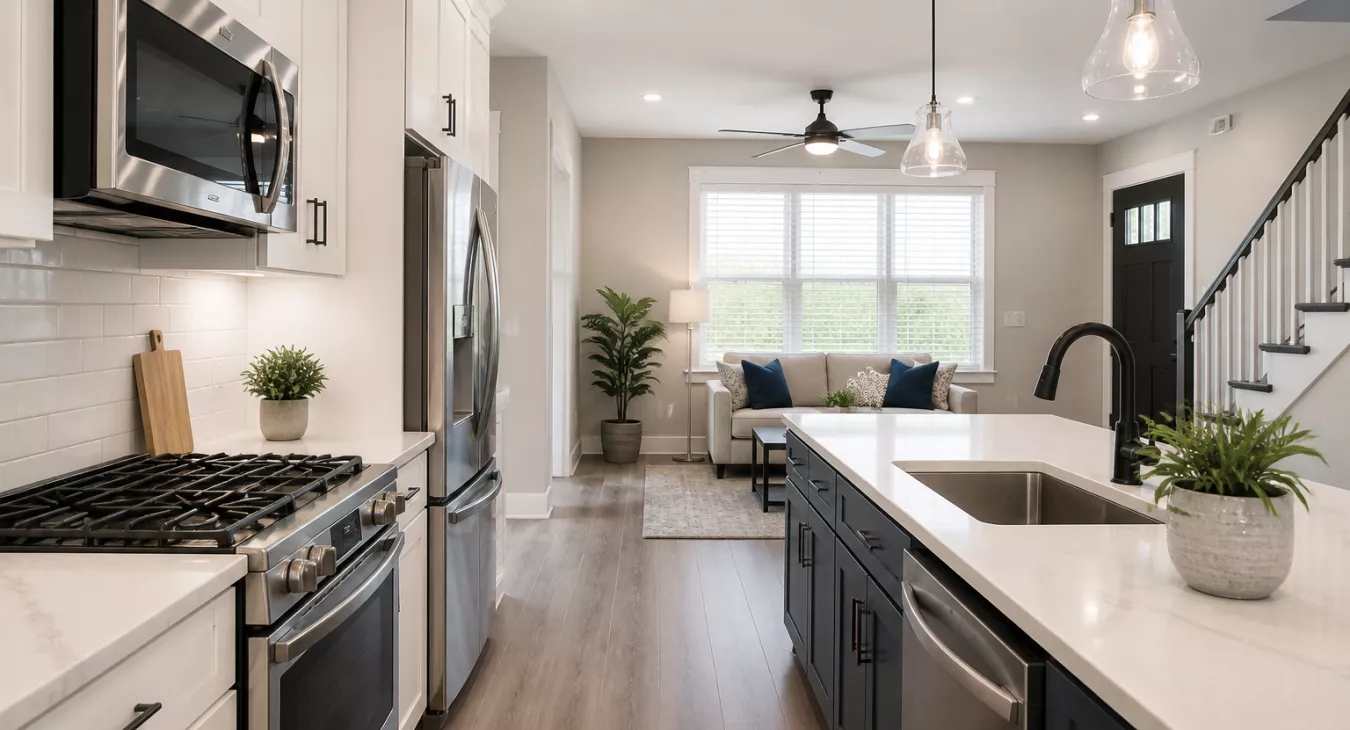
Discover the best appliances rental property value needs. Boost rents, reduce vacancies & improve tenant retention with expert guidance on smart appliance
Products and Tools Mentioned in this Post
TurboTenant
TurboTenant offers free landlord software for rental property management. Screen tenants, collect rent online, create leases, and manage maintenance efficiently.
Table of Contents
- Why Appliances Matter for Rental Property Value
- Essential Appliances Every Rental Property Needs
- Optional Appliances That Add Value
- Appliance ROI Analysis by Type
- Selecting Appliances on a Budget
- Brand Durability and Reliability Comparison
- Durability and Maintenance Considerations
- Energy Efficiency and Operating Costs
- Tax Benefits and Depreciation
- Appliance Selection Guide by Property Type
- Common Mistakes to Avoid
- Conclusion
- Frequently Asked Questions
Your appliance choices hit your bottom line harder than most landlords realize. Get them right, and you're looking at higher rents, fewer vacancy days, tenants who actually renew their leases, and real tax deductions. Get them wrong? Constant service calls, units sitting empty while you replace failed units, and tenants ghosting at renewal time. This guide shows you which appliances are worth the spend, how to calculate true cost-of-ownership (not just purchase price), and the exact mistakes that tank your returns — so you can stop leaving money on the table.
New to long-term rental? Start with our Long-Term Rental Investing Guide.

Why Appliances Matter for Rental Property Value

Modern appliances aren't optional anymore. They're table stakes. Over 80% of renters demand in-unit laundry and updated kitchen appliances — that's according to the National Apartment Association — and this expectation hits your bottom line hard. It determines lease speed, rental rate, and tenant retention. Ignore it at your own cost.
How Appliances Impact Tenant Satisfaction and Retention
One vacancy can tank your year. Turnover costs — lost rent, cleaning, marketing, repairs — typically run $2,000–$5,000 per unit depending on your market. That's money bleeding out. Quality appliances solve this by removing friction at renewal time. Nobody moves because the fridge works. But they absolutely will move because it doesn't.
A broken or outdated appliance shows up in every negative review and non-renewal conversation. It's the small stuff that kills long-term tenants. Before turning over your next unit, pull the Rent-Ready Checklist: Prepare Your Property Between Tenants and make appliances part of your standard protocol.
ROI on Appliance Investments for Landlords
The math here is clean. A $1,200 washer/dryer combo lets you charge $75–$100 more monthly. Payback in 12–16 months. Everything after that is margin.
And this compounds. Run the full analysis — see How to Analyze a Rental Property: The 5 Numbers That Matter for a framework that handles these scenarios correctly.
Appliances as a Competitive Rental Market Advantage
In tight urban and suburban markets, appliance packages separate winners from the pack. Furnished, appliance-inclusive rentals command 10–20% higher rents than comparable bare units. That's a direct competitive edge when you need to fill fast.
But there's more. ENERGY STAR appliances cut operating costs by $150–$300 annually per unit when utilities are included in rent. No rent bump needed — you're just improving cash flow with smarter equipment. That's the kind of optimization experienced investors look for.
Back to topEssential Appliances Every Rental Property Needs

You can't skip on certain appliances if you want to stay competitive. Tenants expect them. Properties without them? They'll sit vacant longer or rent for less. It's that simple.
Refrigerators: Features and Selection Tips
Get yourself a standard 18–21 cubic foot top-freezer refrigerator. This is the workhorse of rental properties for a reason. You're looking at $600–$900, parts are everywhere, and any technician can fix it in their sleep. Sounds boring? That's the point.
French-door models look sharp. They also cost more to repair and fail more often. And they've got way more components that can break down on you. Stick with simplicity in rentals — your maintenance calls (and your sanity) will thank you. Frigidaire, Whirlpool, and GE dominate the rental market because landlords know what they're getting. Parts availability is rock-solid. Repair networks are established. No surprises.
Ranges and Cooktops: Gas vs. Electric Considerations
Electric ranges ($500–$800) are your default play for multi-unit properties. Installation's cheaper, liability's lower, and you don't have to deal with gas line headaches. But here's the tension: gas ranges appeal to tenants who actually cook. In single-family markets, you might justify $50–$100 higher rent with a gas cooktop. The trade-off? Ventilation requirements and ongoing maintenance.
Smooth-top electric ranges look contemporary. Tenants will crack them. Coil-top electrics are built to take punishment in high-turnover situations — that's why you see them in so many rentals. And induction cooktops? Skip them entirely. Tenants don't understand how they work. You'll get calls.
Microwaves and Over-the-Range Options
Over-the-range (OTR) microwaves ($200–$450 installed) do two jobs at once: microwave plus hood. You save counter space. Your kitchen looks finished and intentional. Tenants notice this. It's a cost-effective upgrade that consistently gets positive feedback.
Countertop microwaves work fine for furnished short-term rentals. But in long-term units? They feel temporary. Commit to the built-in version if you're serious about that property.
Washers and Dryers: In-Unit vs. Shared Solutions

In-unit laundry is the single highest-ROI appliance upgrade you can make. Every demographic wants it. Markets where in-unit laundry isn't standard? You're commanding $75–$150 more per month. That's $900–$1,800 annually on a single unit.
Space too tight? Washer-dryer combo units ($1,000–$1,800) solve the problem. They're not ideal, but they beat forcing tenants to the laundromat. Multi-unit buildings have a different play: shared laundry rooms with coin-ops or app-pay machines generate side income while keeping your per-unit costs down. It's passive revenue if you set it up right.
Back to topOptional Appliances That Add Value

Want to command higher rents in a crowded market? Premium appliances are one of the fastest ways to separate your unit from competitors. But only if you pick the right ones for your tenant base.
Dishwashers as a Premium Feature
At $400–$700 installed, dishwashers are optional in plenty of markets. Yet in upper-tier rentals and most single-family homes? They're practically standard now. Younger renters—millennials and Gen Z especially—rank dishwashers near the top of their must-haves. In markets where your tenant demographic skews under 40, a dishwasher can literally be the difference between filling your unit or watching it sit vacant.
The math works too. A $500 dishwasher that lets you charge an extra $50/month pays for itself in 10 months flat.
Smart Appliances and Modern Technology
Smart refrigerators. Connected washers. App-controlled ranges. They sound amazing on paper. But they introduce real headaches for landlords—connectivity problems, app updates, and the reality that not all tenants know how to use them. Support calls pile up fast.
That said, there's a genuine play here if you're managing remotely. Smart appliances can talk to your property management software, track usage, and flag maintenance issues before they become expensive problems. But for standard long-term rentals? The premium cost rarely pencils out. Smart features make way more sense in short-term rentals where tech-savvy guests actively choose that experience. Want to explore that angle? Read Airbnb Arbitrage: Short-Term Rentals Without Owning Property.
Back to topAppliance ROI Analysis by Type
You need to know more than just the sticker price. When you're buying appliances for multiple units, the real numbers that matter are payback period, monthly rent premium, and how long the unit actually lasts under tenant abuse. The table below shows exactly how these variables stack up.
| Appliance | Avg. Purchase Cost | Monthly Rent Premium | Payback Period | Expected Lifespan (Rental Use) | Annual Maintenance Cost |
|---|---|---|---|---|---|
| Refrigerator (top-freezer) | $700 | $25–$40 | 18–28 months | 10–12 years | $50–$100 |
| Electric Range | $600 | $20–$35 | 17–30 months | 12–15 years | $40–$80 |
| OTR Microwave | $350 | $10–$20 | 18–35 months | 7–9 years | $20–$40 |
| Dishwasher | $500 | $40–$60 | 8–12 months | 9–11 years | $60–$100 |
| Washer/Dryer Set | $1,200 | $75–$150 | 8–16 months | 8–10 years | $80–$150 |
| Washer-Dryer Combo | $1,400 | $60–$120 | 12–23 months | 7–9 years | $100–$175 |
Selecting Appliances on a Budget
Most landlords work with limited capital. And that's actually where the real edge comes from — not by buying the cheapest stuff, but by thinking about total cost of ownership. This separates investors who actually know what they're doing from the rest.
New vs. Used Appliances for Rentals
Used appliances look cheap until they don't. Say you grab a used refrigerator for $200. It dies in 18 months. Now you're dropping $150 on a service call — and you've still got a dead fridge. That $200 "savings" just evaporated, and you'd have been better off buying new entry-level with a manufacturer warranty from day one.
High-turnover units? Go new. The predictable costs and warranty coverage matter more than you think.
Used appliances make sense in exactly two scenarios: furnished short-term rentals where they get lighter use and you can actually monitor them, or if you've got maintenance staff who can evaluate and service units themselves.
Cost-Effective Brand Options
Frigidaire, Whirlpool, and GE are your sweet spot for rental properties. You get reliability, reasonable pricing, and parts availability everywhere. Premium brands like Bosch or KitchenAid? Higher upfront cost, complicated repairs, and it doesn't pencil out in rental settings.
Budget brands will save you $100–$200 upfront. But shorter lifespan and fewer service technicians nearby kill that advantage fast.
Want to actually see how these ongoing costs hit your returns? Rental Property Cash Flow: Calculate Real Returns gives you the framework to model this properly.
Where to Purchase Rental-Grade Appliances
Big-box retailers like Home Depot, Lowe's, and Best Buy run package deals constantly. Buy multiple units at once and you're looking at 10–20% off. If you've got multiple properties, set up a wholesale account with a regional appliance distributor — contractor pricing changes the math.
Running a bigger operation? Some property management companies have bulk purchasing agreements you can tap into.
One thing most investors miss: verify that warranties actually transfer to rental properties and that the manufacturer won't use "commercial or rental use" as an excuse to deny claims later.
Back to topBrand Durability and Reliability Comparison
Here's the real breakdown. You're looking at a range of reliability scores that'll directly impact your vacancy rates and maintenance budget. The data below shows which brands hold up in rental environments—and which ones'll drain your cash reserves with repair calls.
| Brand | Reliability Score (1–10) | Standard Warranty | Avg. Repair Cost | Parts Availability | Best For |
|---|---|---|---|---|---|
| Whirlpool | 8.5 | 1 year parts/labor | $150–$250 | Excellent | Multi-unit landlords |
| GE / GE Appliances | 8.2 | 1 year parts/labor | $150–$275 | Excellent | Long-term rentals |
| Frigidaire | 7.9 | 1 year parts/labor | $125–$225 | Excellent | Budget-conscious landlords |
| LG | 7.5 | 1–5 years (varies) | $175–$350 | Good | Premium single-family homes |
| Samsung | 6.8 | 1 year parts/labor | $200–$400 | Moderate | Short-term/furnished rentals |
| Bosch | 8.0 | 1 year parts/labor | $200–$450 | Moderate | High-end urban rentals |
Whirlpool's your safest bet if you're managing multiple units. An 8.5 reliability score means fewer tenant complaints and repair calls eating into your cap rate. Parts are everywhere, repair costs stay predictable at $150–$250, and you won't chase down obscure components.
GE's a close second for long-term holds. It's competitive with Whirlpool on durability but slightly lower at 8.2. You're looking at the same warranty coverage and excellent parts availability across most markets.
Budget play? Frigidaire delivers solid performance without the premium price tag. At 7.9 reliability, it's not Whirlpool, but the repair costs actually run cheaper ($125–$225). Perfect for value-add properties where you're squeezing every basis point on the proforma.
And then there's LG.
Higher-end finishes, variable warranties that sometimes stretch to five years—but repairs cost more ($175–$350). This works for that one premium single-family rental where you're targeting quality tenants who'll cover the CapEx. Don't throw this into a C-class fourplex.
Samsung's the wildcard. Lowest reliability at 6.8, moderate parts availability, and repair costs that can hit $400. Unless you're furnishing short-term rentals where tenants expect turnkey everything, there's better money elsewhere.
Bosch rounds out the high-end play. German engineering commands respect—and repair bills ($200–$450). You're betting on fewer breakdowns in premium markets, but parts availability drops to "moderate." Think urban Class A rentals, not your typical multifamily.
Back to topDurability and Maintenance Considerations
Rental appliances get hammered. A family of four will run that dishwasher twice a day. Student housing? You're looking at 10+ washer cycles per week. Pick appliances built to last, not just built to look good — your maintenance budget depends on it.
Materials and Build Quality for High-Traffic Use
Stainless steel looks sharp. It also shows every fingerprint, dent, and scratch. Black or bisque finishes hide wear better, even though the appliance itself is structurally fine. For washers, stainless steel tubs will outlast plastic ones by years. And skip the fancy electronic touchpad controls — tenants will mess them up. Stick with dial controls. They're bulletproof and idiot-proof.
When to Repair vs. Replace

Use the 50% rule. If the repair costs more than half the replacement price, replace it. That $300 fix on a 10-year-old fridge? Bad math if it'll fail again in 2 years. Log appliance age and repair history in your property management software so you're deciding this stuff before the tenant calls with a dead unit, not after.
Back to topEnergy Efficiency and Operating Costs

Here's the reality: energy efficiency becomes your direct profit center when you're covering utilities. But even if tenants foot the bill, don't sleep on this. Younger renters—especially in urban markets—actively seek out eco-conscious properties. Your environmental positioning isn't just feel-good marketing anymore. It moves units and justifies higher rents.
| Appliance | Standard Model Annual Cost | ENERGY STAR Annual Cost | Annual Savings | Premium for ENERGY STAR | Savings Payback Period |
|---|---|---|---|---|---|
| Refrigerator | $55 | $30 | $25 | $80–$150 | 3–6 years |
| Dishwasher | $50 | $30 | $20 | $50–$100 | 2.5–5 years |
| Washer | $75 | $35 | $40 | $100–$200 | 2.5–5 years |
| Dryer | $85 | $60 | $25 | $75–$150 | 3–6 years |
The washer is your best ROI play here—$40 annual savings with a 2.5–5 year payback. And here's the kicker: ENERGY STAR appliances often qualify for federal tax credits under the Inflation Reduction Act. That upfront premium gets even cheaper once you run the numbers with your CPA. Want the full breakdown on which deductions actually stick? Check out Rental Property Tax Deductions: The Complete List.
Back to topTax Benefits and Depreciation
Here's where most landlords leave money on the table: appliances are depreciable business assets. And if you understand the tax treatment, you can accelerate deductions and materially reduce your taxable income.
Appliance Depreciation Schedules
The IRS classifies appliances in residential rental properties as 5-year property under MACRS (Modified Accelerated Cost Recovery System). Your cost gets recovered over 5 years using the 200% declining balance method. That front-loads your biggest deductions into the early years—exactly when your investment dollars are highest.
But here's the kicker: bonus depreciation rules let you deduct a substantial portion or even the full cost in year one. Check current IRS guidance for your tax year's applicable percentage. Some years you can write off the entire appliance purchase immediately.
Capital Improvements vs. Repairs
Swap out an old fridge for a new one? That's a repair—full deduction in the current year. Adding a dishwasher to a unit that never had one? Capital improvement. That gets depreciated over the asset's class life instead.
Documentation matters. You need clean records to defend these distinctions if the IRS ever questions you. For a solid bookkeeping framework, see Rental Property Bookkeeping: Setup and Best Practices.
Back to topAppliance Selection Guide by Property Type
| Property Type | Essential Appliances | Recommended Upgrades | Skip or Defer | Key Consideration |
|---|---|---|---|---|
| Studio / 1BR Apartment | Fridge, Range, OTR Microwave | Combo Washer-Dryer, Dishwasher | Full washer/dryer set | Space is tight here. Combo units crush the value equation. |
| 2–3BR Apartment | Fridge, Range, Microwave, Dishwasher | In-unit Washer/Dryer | Smart appliances | Tenants will pay more for laundry in the unit. It's your biggest rent driver. |
| Single-Family Home | Full kitchen suite, Washer/Dryer | Garage Freezer, Smart Thermostat | Commercial-grade items | Tenants expect the full package here. Don't cheap out on condition. |
| Short-Term / Airbnb | Full kitchen suite, Washer/Dryer | Smart appliances, Keurig/Espresso | High-complexity appliances | Your reviews depend on guest experience. Reliability isn't negotiable in this model. |
| Student Housing | Fridge, Range, Microwave | Shared laundry room | Expensive finishes | Build durability into your budget. You'll be fixing more things than you think. |
| Multi-Unit Building | Fridge, Range, Microwave per unit | Coin laundry common area | In-unit laundry (unless premium market) | Stick with the same model across every unit. It saves you time and money on maintenance. |
Common Mistakes to Avoid
Even seasoned landlords leave money on the table with appliance decisions that compound over time. The good news? Most of these mistakes are totally preventable.
- Over-investing in luxury appliances: You don't need a $3,000 French-door refrigerator in a $1,200/month unit. It won't justify higher rent, and it'll just create repair headaches. Match your appliances to your rent tier and who's actually living there.
- Choosing ice and water dispensers: This is the mistake we see most often. Ice makers and through-door water dispensers fail constantly in rental units. Tenants rarely use them anyway, and they're maintenance nightmares with filter replacements. Skip them entirely.
- Ignoring tenant feedback: Your tenants are telling you what doesn't work. Listen. Multiple complaints about the same appliance? That's your signal to act. Free market research. Platforms like RentRedi vs TurboTenant: Best Landlord App 2026 let you track maintenance requests across your portfolio and spot these patterns instantly.
- Neglecting appliance insurance coverage: Your standard landlord policy doesn't cover appliance failures. It just doesn't. If you're stocking full appliance packages, look into a home warranty or appliance protection plan. Check what you're actually covered for by reviewing Rental Property Insurance Guide: What Coverage You Need.
- Failing to standardize: Running six different refrigerator models across ten units? That's chaos. You're managing six different parts inventories, six service manuals, and technicians who don't know half your equipment. Standardize on one or two models per appliance type. Your operations will run smoother and cheaper.
Conclusion
Here's the thing: the best appliances for rental property value aren't the priciest or the flashiest. They're the ones that hit that sweet spot between tenant appeal, durability, energy efficiency, and total cost of ownership in your specific market. For most landlords, that means standardizing around Whirlpool, GE, or Frigidaire for the essential categories. Add in-unit laundry when space and economics make sense. And avoid those complexity traps that spike maintenance costs without bumping rents.
Treat every appliance purchase like a financial investment. What's the payback period? What's your depreciation and tax benefit? Track performance over time — it matters. Scaling a portfolio? You'll get a real competitive edge by standardizing selections, negotiating bulk pricing, and plugging appliance tracking into your property management software. Just starting out? The Rental Property Investing for Beginners: Complete 2026 Guide walks you through how appliance decisions fit into your overall strategy.
Back to topFrequently Asked Questions
What's the single best appliance upgrade for rental ROI?
In-unit washer and dryer. That's it. This is consistently the highest-ROI appliance investment for rental properties, and it's not even close. In markets where in-unit laundry isn't standard, you're looking at $75–$150/month in additional rent — which means the appliance typically pays for itself in 8–16 months. Better yet? That premium sticks around for the full 8–10 year lifespan of the equipment.
Should I buy new or used appliances for my rental property?
New appliances with manufacturer warranties give you predictable total cost of ownership. Used? That $150–$300 savings vanishes the moment a repair call costs $400. There are exceptions. Short-term furnished rentals with hands-on management sometimes work with used units. And if you've got a qualified technician evaluating actual condition and remaining lifespan before you buy — that's different. For most landlords, though, new is the right call.
Are appliances tax deductible for rental properties?
Yes. Appliances in rental properties are depreciable business assets under 5-year MACRS property classification. Depending on your purchase year and bonus depreciation rules, you might deduct a significant chunk in year one. Replacing an existing appliance? That's typically a current-year repair deduction. But don't guess on this — talk to your tax professional about your specific situation.
Which appliance brands are most reliable for rental properties?
Whirlpool, GE, and Frigidaire dominate for rental use. Why? Reliability scores, parts availability everywhere, technicians know them inside and out, and warranty terms that actually work in your favor. You get the best balance of upfront cost, repairability, and real lifespan in high-use environments. Bosch and other premium brands have solid reliability ratings, but repair costs run higher and service networks are thinner in many markets.
Do appliances affect property valuation?
They do — indirectly, but powerfully. Appliances drive rental income, and income-based valuation methods (cap rate, GRM) tie higher rents directly to higher property values. Add $100/month in rent from an appliance upgrade and capitalize it at 6%? That's roughly $20,000 in added property value. In income-focused markets, this makes appliance investment one of your most efficient plays.
Back to top