

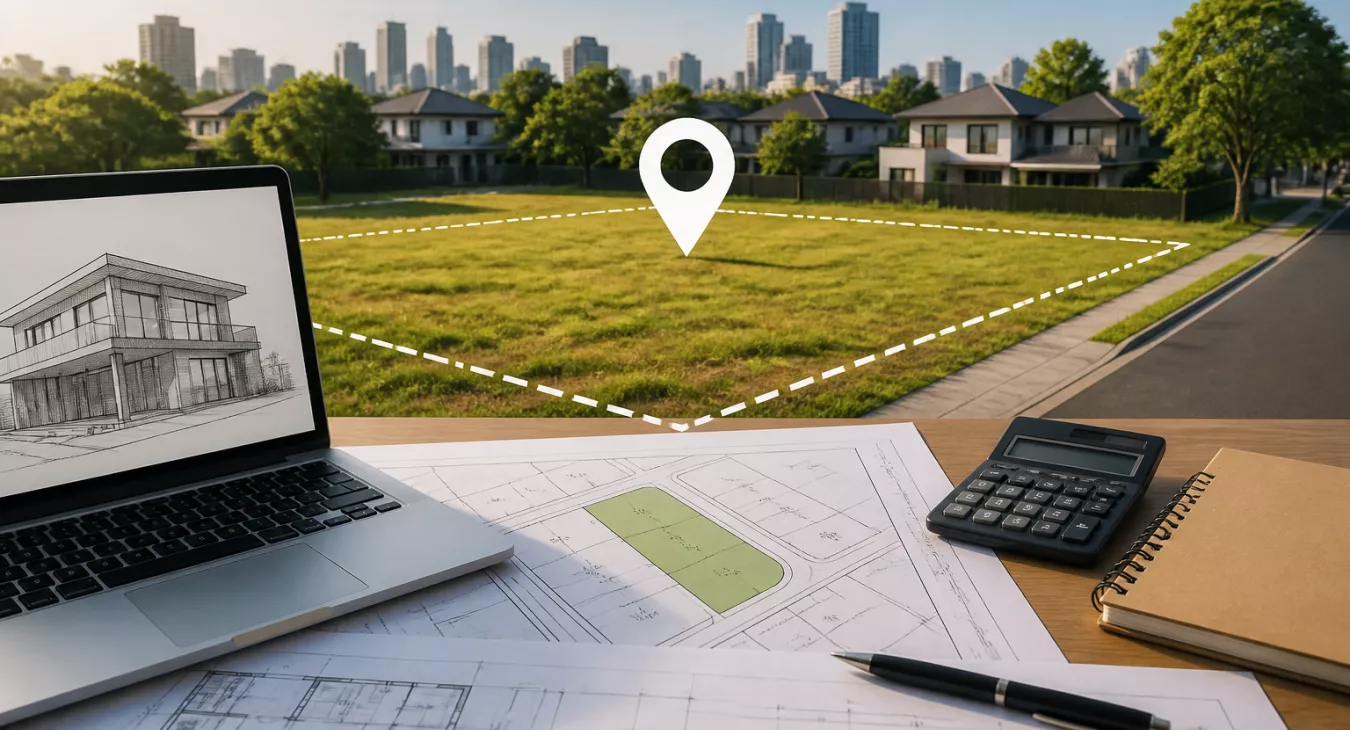
Learn building lot analysis essentials to evaluate development potential, avoid costly mistakes, and maximize ROI on land investments today.
Products and Tools Mentioned in this Post
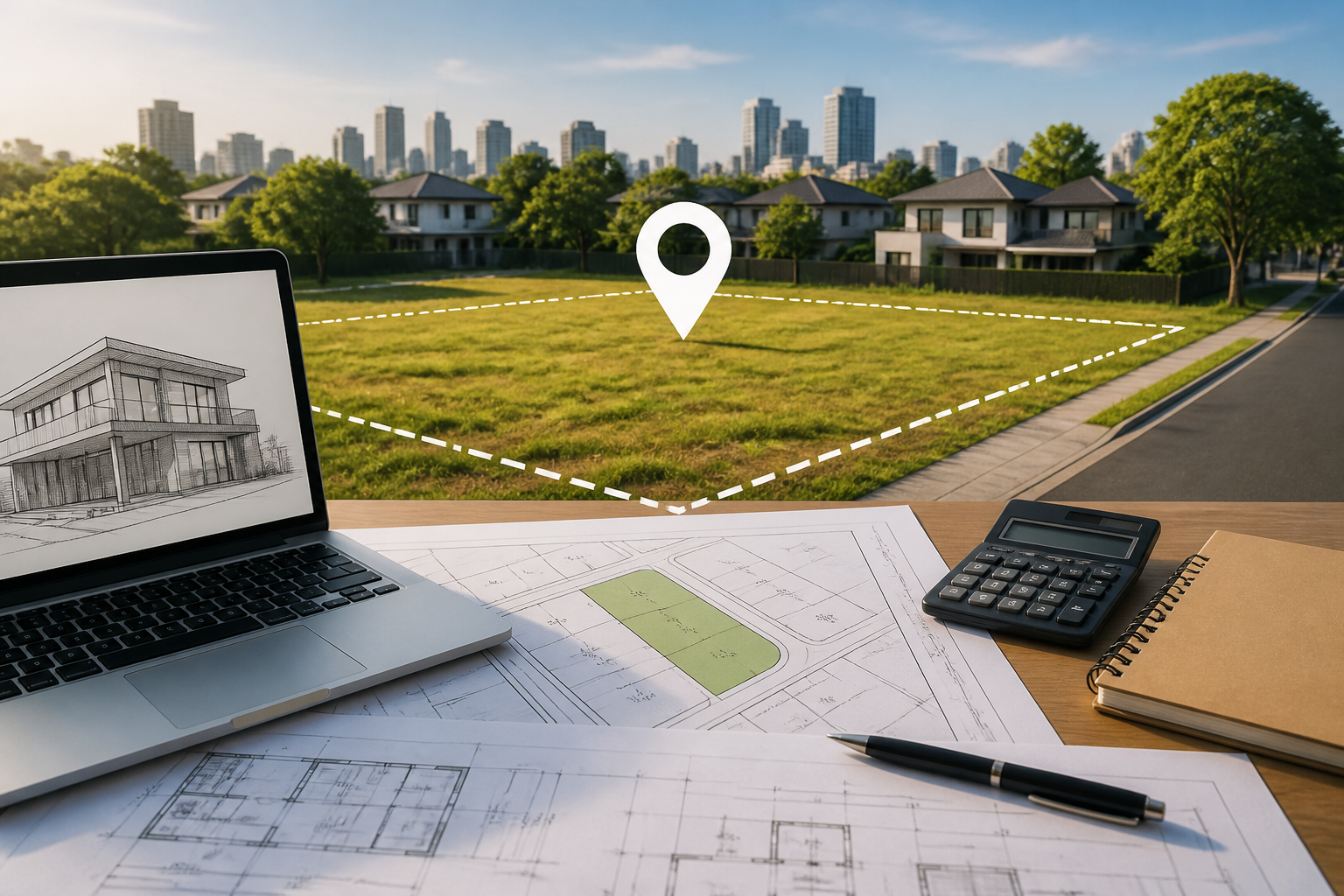
Table of Contents
- what's Building Lot Analysis in Land Investing?
- Key Metrics to Analyze When Evaluating Building Lots
- Location Analysis for Building Lot Investment
- Financial Analysis Framework for Building Lots
- Building Lot Analysis by Property Type
- Due Diligence Checklist for Building Lot Analysis
- Common Mistakes in Building Lot Analysis
- Tools and Resources for Building Lot Analysis
- Building Lot Analysis by Investment Strategy
- Conclusion: A Systematic Approach Protects and Grows Capital
- Frequently Asked Questions
There's a national shortage of roughly 1.2 million housing units as of February 2026. Building lots? They're some of the best opportunities out there right now. But here's the problem: buy the wrong one and you're stuck. Environmental issues, zoning problems, overpriced deals — they'll kill your returns faster than you can refinance. Building lot analysis is what separates investors who actually make money from those who lose it on bad land plays.

what's Building Lot Analysis in Land Investing?
Building lot analysis is how serious investors figure out if a vacant parcel can actually be developed — and whether the numbers work. It's not about raw acreage appreciation or recreational use. The question that matters: Can something be built here, at a cost that justifies the price? That's the only one worth asking.
General land investors track price-per-acre and holding costs. But building lot analysis goes deeper. Zoning conformance. Utility availability. Soil conditions. Engineering constraints. Market absorption rates. Every single variable hits your cap rate. Miss the analysis? You're not investing — you're gambling.
New to land deals entirely? Start with our guide to land investing terminology, deals, and strategy. It'll save you time. And if you're weighing land against residential rentals, our comparison of land vs. residential real estate investing returns and risk lays out the framework you need.
Back to topKey Metrics to Analyze When Evaluating Building Lots

Building lot analysis isn't a single checklist item. You're juggling multiple moving pieces at once, and each metric either kills the deal or keeps it alive.
Zoning and Land Use Regulations
Here's what trips up most investors: zoning codes are entirely local, and that designation you saw online? It doesn't travel. An "R-1" zoning label means a 6,000-square-foot minimum lot in one municipality and one full acre in the next county over. Don't assume anything.
Verify these items for every single lot you evaluate. Permitted uses. Minimum lot size. Maximum lot coverage. Setback requirements. Height limits. And check whether any variances or special-use permits already exist. Our detailed guide on how zoning affects your land investing strategy breaks down each of these in full.
Lot Size, Dimensions, and Topography
Acreage alone? Meaningless. A narrow flag lot, an awkwardly angled parcel, or steep grade might technically pass zoning but wreck your development timeline and budget. Topography directly impacts grading costs, drainage design, and whether you can even use a standard foundation. And sloped sites cost money to flatten. Get a topographic survey on any lot you're seriously considering.
Utilities and Infrastructure Access
This is where raw land gets expensive fast. Connecting a vacant parcel to utilities often becomes your single largest soft cost in development. As of 2026, utility hookup costs for a standard small parcel — septic or sewer, power, water, and road access — typically run $20,000–$60,000, with complex or remote sites exceeding $100,000 per acre. But here's the thing: these costs swing wildly based on how close you sit to existing infrastructure, what the local utility provider charges, and actual site conditions. Never assume any utility distance is "cheap."
Rural or semi-rural lots deserve extra scrutiny on water. Our resource on finding available water and checking aquifer access covers well permitting—which changes significantly from state to state, sometimes even county to county.
Soil Conditions and Environmental Factors
Soil quality determines whether a septic system works, how much foundation work you'll need, and whether contamination risk exists at all. Some jurisdictions use perc testing—a failed test eliminates the lot from residential play entirely. But Virginia and Delaware? They use soil-profile classification instead. Know your jurisdiction's rules before you budget anything.
Wetlands add another layer. Sackett v. EPA (2023) narrowed federal wetlands jurisdiction significantly. Yet many states—California, Washington, Minnesota, Wisconsin, Virginia, New Jersey, New York—regulate wetlands on their own anyway. You might lose federal jurisdiction and gain nothing because state rules are stricter. Always check state-level environmental regs, not just the federal ones.
Back to topLocation Analysis for Building Lot Investment
A buildable lot in the wrong location? Still a bad investment. Don't let anyone tell you otherwise. Location analysis for building lots demands more than vague talk about "good neighborhoods" — you need hard data that proves demand and growth are actually happening.
Here's what matters: population growth trends and age demographics in your target zip code. How far is it to employment centers, and what's the realistic commute time? School district boundaries and performance ratings carry serious weight because they directly move residential resale values. And watch for infrastructure investment signals — new roads, utility expansions, public amenities — because those tell you the municipality believes in the area's future.
Emerging markets get overlooked by most investors. That's where your edge is. Our data-driven analysis of the best markets for land investing in 2026 cuts through the noise and identifies regions where demand fundamentals are strengthening before everyone else figures it out.
County assessor records. Most investors sleep on this resource entirely. They're public, they're free, and they contain ownership history, assessed values, and parcel-level zoning details you won't find anywhere else. Our tutorial on downloading county assessor data for land investing walks you through the exact process.
Back to topFinancial Analysis Framework for Building Lots

Here's the real question with any building lot: can you make enough spread between your all-in cost and the final value to justify the risk and the time you're sinking into it?
Land Acquisition Costs
Location drives lot pricing. Way up. As of June 2026, you're looking at roughly $75,000 per acre in rural areas, $181,000 per acre in the suburbs, and $500,000 per acre if you're in an urban market. But here's what matters for your analysis: the median lot on Zillow is only 0.57 acres as of June 2026. Most deals you'll see are fractional parcels. That's why per-acre pricing is your real apples-to-apples metric—not the headline price.
Development and Construction Cost Estimation
Site prep runs about $35,000 nationally in 2026, or roughly $3 per square foot. But that's just an average. You could clear a simple lot for $2,000. A complex grading and drainage project? You're hitting $150,000 easy.
And then construction kicks in. Standard builder-grade work sits at $150–$250 per square foot right now. Want something nicer? Custom finishes in hot markets blow past $400 per square foot. The NAHB data shows an average 2,647-square-foot home landing at $428,215 total, or $162 per square foot—this is 2024 survey work, but it's the best baseline we have for 2026 planning before you adjust for local conditions.
Don't ignore cost inflation either. Materials and labor have jumped 4–7% annually since 2023. If your project stretches out, you need to bake that escalation into your model.
Commercial is its own animal. RSMeans 2026 puts commercial at $200–$574 per square foot depending on what you're building and what finish level you're targeting.

ROI Calculation
Your ROI framework is straightforward:
- Total Project Cost = Land acquisition + site prep + utility hookups + construction + soft costs (permits, design, financing, carrying costs)
- Gross Profit = Sale price (or appraised value for holds) − Total Project Cost
- ROI = Gross Profit ÷ Total Project Cost × 100
Holding time is everything in land. Each month you hold adds financing costs, taxes, and dead capital. Run your numbers for 12, 24, and 36-month exits. Then—and this is critical—stress test against a 10–15% cost overrun before you write the check. Most deals blow budget. Plan for it.
Back to topBuilding Lot Analysis by Property Type
Here's the truth: not all building lots are created equal. What you can build on a lot — and how you build it — determines your upside potential and how messy the execution gets.
| Property Type | Primary Analysis Focus | Key Complexity Factors | Typical Exit Strategies |
|---|---|---|---|
| Residential Infill Lot | Comparable home sales, neighborhood absorption | Setbacks, existing infrastructure, neighborhood design standards | Build and sell, sell to builder |
| Residential Subdivision | Per-lot infrastructure costs, absorption rate | Platting process, road/utility installation, phasing | Sell entitled lots, build-out and sell |
| Commercial Development Lot | Traffic counts, zoning use table, lease comps | Environmental review, parking requirements, ADA compliance | Ground lease, build and hold, sell to developer |
| Mixed-Use Property | Dual-use zoning, retail/residential demand balance | More complex entitlement, higher construction cost | Build and hold for income, condo conversion |
| Subdivision/Parcel Split | Minimum lot sizes, access requirements | Local subdivision ordinances, survey and platting costs | Sell individual lots, land flip |
Running the numbers on a residential infill lot looks totally different than modeling a subdivision play. You're tracking comps and neighborhood absorption instead of per-lot infrastructure costs and phasing timelines.
If you're chasing residential income rather than spec development, check out our guides on small multifamily rental investing and multifamily rental strategies. Both show how buildable lots become the foundation for long-term cash flow portfolios.
And if commercial development interests you? Our commercial real estate investing guide digs into lot potential, the metrics that matter, and realistic exit paths.
Back to topDue Diligence Checklist for Building Lot Analysis

This is where deals live or die. You'll run through the checklist below on every serious lot deal — and if you skip any of it, you're gambling with other people's money.
| Due Diligence Item | What It Reveals | Typical Cost (2026) | Typical Timeline |
|---|---|---|---|
| Title Search & Insurance | Liens, easements, ownership disputes, encumbrances | Varies by market; confirm with local title company | 1–3 weeks |
| Vacant Land Appraisal | Current market value, comp support for pricing | $1,000–$2,200 for urban/suburban lots (2026) | 1–3 weeks |
| Survey (Boundary) | Exact dimensions, encroachments, easement locations | Varies by lot size and complexity; obtain local quotes | 2–4 weeks |
| Zoning Verification | Permitted uses, setbacks, density limits | Often free (public records) to low-cost | 1–5 days |
| Soil / Perc Testing | Septic feasibility, foundation suitability | Varies by jurisdiction; confirm with local engineer | 1–4 weeks |
| Phase I Environmental Assessment | Historical use, known contamination risk | Typically $1,500–$6,000; confirm with local firms | 2–4 weeks |
| Utility Availability Confirmation | Connection feasibility, hookup costs | Often free from utility provider; engineering may add cost | 1–2 weeks |
| Building Permit Research | Permitting timeline, fee structure, any moratoriums | $150–$3,000 for new construction permits (2026) | 1–5 days (research); weeks to months to receive |
| Flood Zone Determination | FEMA flood map status, development restrictions | Low cost; FEMA maps are public | 1–3 days |
One more thing: Phase I environmental costs and survey fees swing wildly depending on your region and what the lot looks like. Always pull actual quotes from local firms before you pencil out your numbers.
Back to topCommon Mistakes in Building Lot Analysis
Even seasoned investors trip up here. The difference between knowing these pitfalls and ignoring them? It's often a six-figure swing on your returns.
- Assuming zoning is transferable or flexible. Here's the reality: zoning variances are discretionary, time-consuming, and never guaranteed. Don't build your analysis around what you hope to get approved. Build it around what the lot is zoned for today.
- Underestimating site prep and utility costs. You budget for construction—smart move. But getting a raw lot to buildable condition? That'll run you $20,000–$100,000+ before a single wall goes up, and most investors miss it entirely.
- Using outdated comps. Construction costs are climbing 4–7% annually since 2023. Comps from 18 months ago? They're already stale. You're underestimating both current values and costs.
- Ignoring absorption rate. A neighborhood supports 20 homes per year. You build 30. Now you've created price pressure and extended holding periods that'll destroy your projected returns faster than you can refinance.
- Skipping environmental review on "clean-looking" lots. That lot looks fine. But historical industrial or agricultural use doesn't always show on the surface. Phase I assessments exist for a reason—use them.
- Misreading water rights in western states. In the 17 prior-appropriation states, water rights don't automatically follow the land. This isn't a minor detail. It's a deal-killer that requires verification before you sign anything.
Tools and Resources for Building Lot Analysis
You've got real leverage today. Access to quality lot analysis tools has never been better — and knowing which ones actually move the needle is what separates sharp investors from the rest.
- County GIS portals: Free parcel maps with zoning overlays, flood zones, and ownership data live here. Most counties publish this stuff online. Start every single lot evaluation with a GIS pull.
- County assessor databases: Historical sales, assessed values, parcel details — it's all there if you know how to dig. Our tutorial on downloading county assessor data walks any investor through the process.
- FEMA Flood Map Service Center: Look up your NFIP flood zone designations for free. Here's the thing: raw vacant land isn't insurable under NFIP anyway. Flood zone status tells you what you can build, not whether you can insure the dirt itself.
- Zillow, LandWatch, and Lands of America: These give you active comps and days-on-market fast. Don't stop there — layer in sold data from your local MLS for real teeth.
- CoStar and LoopNet: Commercial lot comps and absorption rates. Non-negotiable if you're doing commercial land.
- RSMeans cost data: Construction cost benchmarks updated every year. Developers, lenders, and appraisers all use this. It's the standard.
- Professional team: Software can't replace boots on the ground. You need a land use attorney, civil engineer, and environmental consultant for anything with real money on the line. Our guide to building your real estate investing team tells you exactly who to hire and when.
And if you're serious about land valuation methodology? Check our deep dive on how to value land for investment — it breaks down comparable analysis and income approaches with real numbers.
Back to topBuilding Lot Analysis by Investment Strategy
Your strategy determines everything. Which metrics you prioritize in your analysis should flow directly from how you plan to exit.
- Buy-and-hold appreciation: Population trends, infrastructure investment, employment diversification — these are your north stars. But here's what kills hold deals: carrying costs. Model your property taxes and financing costs across a multi-year hold. Don't guess.
- Short-term development and flip: Speed to permit. Contractor availability. Current comps on recent sales. You're running tight margins, so every cost overrun and every month of delay actually matters. One unexpected delay can tank your deal economics.
- Subdivision and parceling: Per-lot infrastructure cost is what makes or breaks you. As of 2026, you're looking at $25,000 to $140,000 per lot — that's roads, utilities, permits, and soft costs combined. The real question: what's your market absorption rate? Is this a 18-month exit or a 5-year grind?
- Long-term rental income: Depreciation changes your tax picture significantly. Residential rental improvements depreciate over 27.5 years, while commercial real property uses a 39-year schedule. And bonus depreciation just got interesting. The restored 100% bonus depreciation for qualified property acquired after January 19, 2025 under the One Big Beautiful Bill Act might dramatically improve your cost recovery timeline. Get a tax advisor involved early.
- Alternative uses: Don't dismiss lots that don't fit the development box. Solar land leases exist. Our 2026 breakdown of solar farm land lease rates and income potential shows real numbers for larger or rural parcels that'd otherwise sit idle.
New to lot flipping specifically? Our guide on how to flip vacant land for profit gives you the playbook.
Back to topConclusion: A Systematic Approach Protects and Grows Capital
Building lot analysis isn't just one box to check. It's a layered process—physical site evaluation, regulatory research, financial modeling, and market intelligence all working together. With over 300,000 vacant lots listed for sale nationally as of June 2026, and a housing shortage that won't quit, the opportunity is absolutely there. The risk? You'll find plenty of lots that look cheap on paper but turn into money pits the moment you dig into development costs and zoning constraints.
The frameworks in this guide are your baseline. But here's what actually separates winners from amateurs: they adapt to their local market. Zoning codes, utility costs, soil conditions, water rights—none of that follows national averages. Local realities dominate. And the investors building consistent returns from building lots? They're the ones who do the hard work before signing anything.
Want to zoom out and understand how individual lot deals fit into your overall strategy? Check out our Real Estate Investing 101 beginner's guide for portfolio-building fundamentals that make these decisions sharper.
Back to topFrequently Asked Questions
What's the most important factor in building lot analysis?
Zoning determines what you can legally build. That's why it matters most. But here's the thing — zoning alone doesn't tell you whether a deal works. You've got to evaluate it alongside utility availability and development costs. A lot with perfect zoning might come with $150,000 in utility hookup costs that kills your margins. Meanwhile, a lot requiring a variance in a proven market could outperform it. All three factors feed into each other, so you need to analyze them together, not in isolation.
How do I estimate whether a building lot deal is financially viable?
Work backward from the end value. What are comparable finished properties selling for in that market? Start there. Then subtract everything that comes out of your proceeds: construction costs (currently $150–$250 per square foot for standard residential in 2026), site prep, utility hookups, soft costs, financing, and your required profit margin. What's left? That's your maximum land price. The asking price is higher than that number? The deal doesn't pencil at current conditions.
How long does building lot due diligence typically take?
Four to eight weeks for a straightforward residential infill lot. That covers title, survey, zoning verification, soil testing, environmental review, and utility confirmation — the full checklist. Complex sites are different. Environmental questions, subdivision requirements, or entitlement uncertainty? You're looking at several months. Don't close on significant land without completing this process in full.
Can I analyze building lots in different states the same way?
The framework works everywhere. The inputs? Completely different. Zoning codes, water rights, well permitting rules, soil testing methodologies, environmental regulations, and tax treatment vary by state and often by county. What works in Texas might be illegal in Arizona. And the reverse is true too. You need local professionals — a land use attorney and civil engineer who know the specific jurisdiction — especially if you're operating outside your home market.
What's the biggest financial mistake investors make on building lots?
Underestimating total development costs kills deals. Most investors fixate on construction cost per square foot and ignore everything else. Then they get hit with utility infrastructure, site preparation, and permit delays that blow up the timeline. Getting a raw lot to buildable state costs real money — $20,000–$60,000 or more in infrastructure costs before you pour a single foundation, plus site prep averaging around $35,000 in 2026. Model every cost category explicitly, then add a 15% contingency buffer on top.
Back to top