

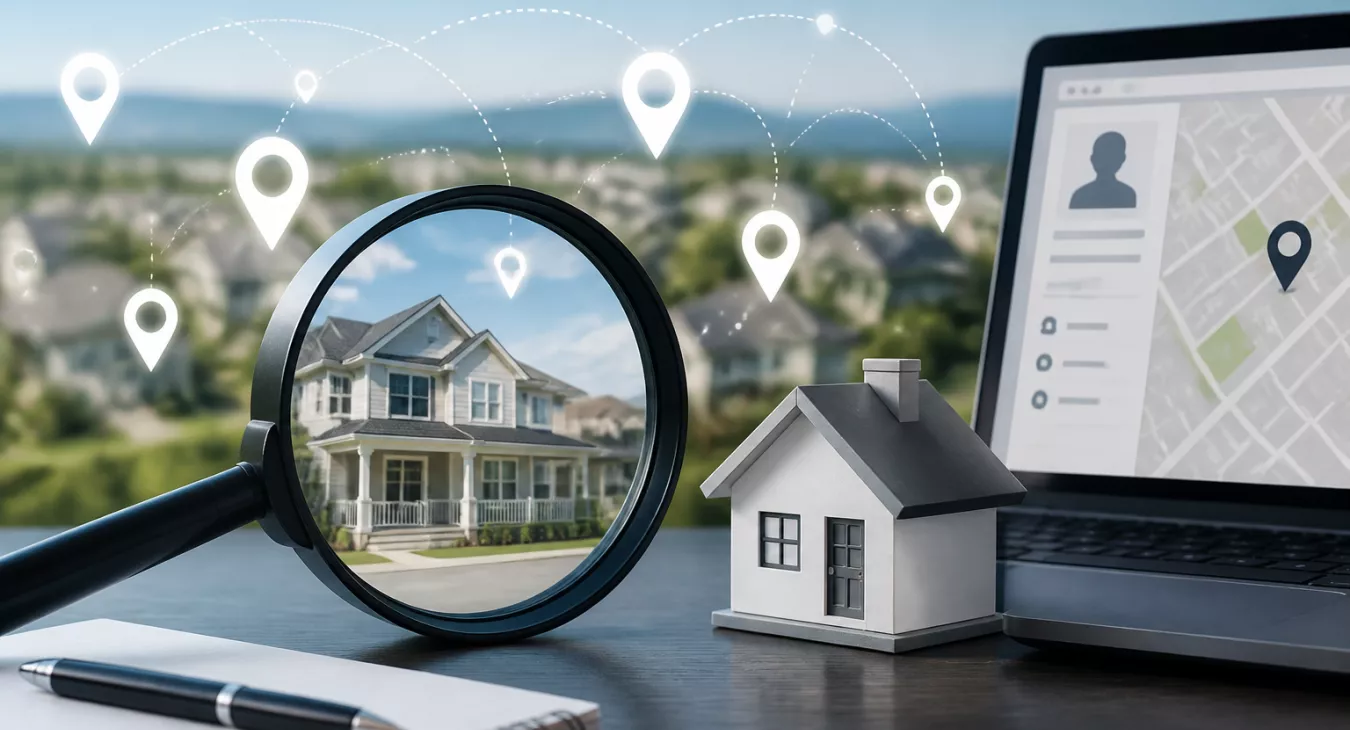
Learn how skip tracers work to find hidden property owners, absentee landlords & off-market deals. Essential guide for real estate investors.
Products and Tools Mentioned in this Post


Propstream
Detailed information on Propstream. Get How-To's, reviews, Comparisons, and much more.
Table of Contents
- what's Skip Tracing?
- How Skip Tracing Works: A Step-by-Step Process
- Skip Tracing Techniques and Methods
- Industries and Use Cases for Skip Tracing
- Legal and Ethical Considerations
- Skip Tracing Techniques Comparison
- Common Challenges in Skip Tracing
- Best Practices for Real Estate Investors
- Tools and Technology for Skip Tracing
- DIY Skip Tracing vs. Professional Services
- Conclusion
- Frequently Asked Questions
You've got a vacant property. The owner's ghosting. Mail bounces back month after month. Or maybe you've found a seller ready to move but they haven't listed yet — and you need to reach them before anyone else does. These situations are exactly why skip tracing exists, and honestly? Understanding how skip tracers work isn't optional anymore for serious investors. It's what separates the pros who consistently fill their pipeline from those who keep mailing into the void. This guide walks you through everything — the origin of the term, the actual tools and techniques, the legal boundaries you can't cross, and what actually works in the field. You'll know when to DIY and when to hire a pro. Nothing in this article is legal advice; consult a licensed attorney in your state before acting on any legal or compliance question raised here.
New to finding deals? Start with our Guide to Finding Motivated Sellers.

what's Skip Tracing?
Definition and Etymology
Back in the debt-collection world, they came up with this term. A "skip" is someone who literally skipped town — vanished without forwarding info, usually because they owed money. "Tracing" means following the breadcrumbs to find them. Put it together and you've got the systematic process of locating a person whose current whereabouts are unknown using available data, public records, and investigative techniques.
But here's the thing: in real estate, the person you're tracing probably isn't a deadbeat. They might be an absentee owner living three states away. Maybe they're an heir who didn't even know they inherited a property. Could be an estate rep who moved and the records never caught up. Different reasons, same problem — you know the property address and the name on the deed, but you can't actually reach them.
The Skip vs. The Trace
Think of it as two separate problems. The "skip" is that gap between what's in front of you (property records, returned mail) and what you actually need (a working phone number or current address). The "trace" is the work that closes it. Skip tracers don't guess. They start with verified anchor points — deed records, tax assessor data, known associates — and work methodically outward from there.
Core Purpose for Real Estate Investors
You need skip tracing because it converts lists into leads. A spreadsheet of property addresses becomes a list of people you can actually call. Working motivated seller lists, pre-foreclosure leads, probate deals, or absentee-owner portfolios? Skip tracing is what connects you to them. And it's not just about cold-calling either — use it during due diligence to verify who actually controls a property before you bid, or after closing when a transaction blows up and you need to find assets.
Back to topHow Skip Tracing Works: A Step-by-Step Process

Phase 1: Information Gathering
You start with what's already in your hand. The assessor's parcel number. The recorded deed. The name on file. That's your anchor—your entry point into the whole trace. From there, you're building a preliminary profile: ballpark age, addresses spanning years, any business entities tied to the owner. And here's the thing: your starting data quality determines everything else. A misspelled name? Stale assessor records? Partial information? All of that creates friction right out of the gate, slowing down or even derailing the entire process.
Phase 2: Data Mining and Database Searches
Once you've got that initial profile locked in, you move into the heavy lifting. Skip tracers query massive structured databases to pull current contact info. Large data aggregators have compiled files from utility connections, credit applications, voter registration, property transfers—literally hundreds of data sources. Your input (name plus last known address) gets matched against their records and returns phone numbers, email addresses, updated mailing addresses. For investors, this almost always means a batch skip trace. You upload a list of property records and get back a file of matched contact data. The cost? Per record, usually.
Phase 3: Analysis and Verification
Database output isn't verified contact data. Not even close.
Match rates swing wildly depending on provider quality. Budget-tier providers charging $0.02–$0.05 per record? You're looking at 50%–65% accuracy as of March 2026. But pay $0.10 or more and premium providers deliver 75%–85%+ accuracy as of July 2026. On a cold absentee-owner list, plan for a realistic hit rate of 60%–70% as of 2026. That's why verification isn't optional—it's mandatory. You need to confirm that phone number actually belongs to your target before you spend a dime on outreach.
Phase 4: Contact Attempts and Confirmation
How you contact matters just as much as the data itself. Smart tracers and experienced investors layer their outreach: direct mail, phone calls, and (where the law allows) text messages—all sequenced strategically. During this phase, you're working toward right-party confirmation. That means actually speaking with or reaching the property owner. Don't assume anything until you've got that confirmation. Everything before it is unverified. And if you're chasing a complex or high-value target? Add on-ground verification—a drive-by, neighborhood inquiry—to nail it down.
Back to topSkip Tracing Techniques and Methods

Public Records and Government Databases
County assessor records, deed indexes, probate filings, and court records—these are your bread and butter for skip tracing. They're technically public, but that's where the simplicity ends. Probate records? They vary wildly by state. Some states dump everything online; others make you show up in person. And bulk data access gets shut down in certain jurisdictions. Washington's General Rules 31 and 31.1, plus Indiana's Administrative Rule 9, both restrict how you can grab and use court records in bulk—which kills automated list-building in those states.
Here's the thing: just because it's a public record doesn't mean you can use it however you want. Many counties attach licensing terms that explicitly prohibit marketing use. Before you run a campaign off county data, read the actual license agreement. It matters.
Pre-foreclosure leads depend on your state's foreclosure laws. Non-judicial states like Washington? The lender files a Notice of Default or Notice of Trustee's Sale with the county recorder. Judicial states like Florida and Indiana go through the court clerk with a lis pendens. The access path is completely different. What works in one state won't translate to another. Check out our trustee sales lists guide for the state-by-state breakdown.
Social Media and Digital Footprints
LinkedIn profiles, Facebook pages, business directories—they're loaded with current addresses and employment info that hasn't hit the commercial data aggregators yet. A seller who moved two years ago might still have their LinkedIn profile listing their current city and job. Use social media as a verification layer, not your primary source. Self-reported data gets stale fast, and people don't always update it. Professional skip tracers know the difference between confirmation and gospel truth.
Network Targeting and Known Associates
When the direct approach fails, you work sideways. You reach out to family, neighbors, employers, known associates—someone who can pass along your message to the owner. But here's where you need to tread carefully. The FDCPA controls how debt collectors contact third parties, and while you're not a debt collector, the line gets blurry fast if you're extracting information through deception or aggressive tactics. The legal exposure and reputational hit aren't worth it. Keep it simple: ask the third party to have the owner contact you. Don't fish for details under false pretenses.
Financial and Employment Records
Credit headers—the name, address, and SSN pulled from a credit file—have been a skip tracing staple for years. But the legal landscape around them is murky. Don't assume they're available or that every vendor pulling them is operating in a clear legal lane. When you vet skip trace vendors, ask them in writing what data sources they're using and whether they're touching any DMV records. The Driver's Privacy Protection Act (18 U.S.C. §§ 2721–2725) bans using state motor vehicle data for marketing or solicitation. Violation penalty? Start at $2,500 per infraction. This isn't theoretical.
Surveillance and On-Ground Verification
High-ticket deals and messy situations call for real-world boots on the ground. Drive the property. Check occupancy. Talk to neighbors. Confirm the mail's actually being delivered. Licensed private investigators can go deeper with formal surveillance, but state licensing laws and privacy statutes constrain what they can do. Most investors operate lighter: a drive-by, a conversation at the door, eyes on the asset.
Advanced Digital Forensics and AI
AI-powered skip tracing isn't locked behind institutional walls anymore. Individual investors can access it now. Machine learning connects dots you can't see manually—a phone number from a business filing linked to an email address on a deed, surfacing contact info a basic name search would miss. And it works. But there's a catch. Garbage data in still equals garbage results out. The underlying data sources control your ceiling accuracy. For a deeper dive into how AI is changing investor tools, read our AI Tools for Real Estate Investors guide.
Back to topIndustries and Use Cases for Skip Tracing

| Industry | Primary Use Case | Key Legal Framework | Frequency of Use |
|---|---|---|---|
| Real Estate Investing | Locating absentee or motivated sellers | FCRA (non-FCRA marketing data only), TCPA, state mini-TCPAs | High — ongoing list campaigns |
| Debt Collection | Locating debtors to recover balances | FDCPA, FCRA (permissible purpose required) | Very high — core operational function |
| Legal Services / Process Serving | Locating defendants or witnesses for service | State civil procedure rules, FCRA | High — every uncontested service attempt |
| Bail Recovery | Locating individuals who have skipped bail | State bail recovery licensing laws | Moderate — triggered by specific failures to appear |
| Insurance / Fraud Investigation | Locating claimants or verifying identities | FCRA (permissible purpose), state insurance codes | Moderate — claims-driven |
| Missing Persons | Reuniting families or locating vulnerable individuals | State privacy laws, DPPA | Lower volume, high stakes |
Real estate investors play by different rules. You're in a specific legal box that debt collectors don't share. Unlike them, you don't have FCRA permissible purpose—meaning you can't just pull a full consumer report on a property owner because you're thinking about making an offer. Here's what matters: the vendors serving your market deliberately build their products as non-FCRA marketing data. That's intentional. It means the data comes with zero FCRA accuracy guarantees and can't touch any FCRA-covered decision (tenant screening, owner-financing qualification, employment checks). Want to screen a tenant using a non-FCRA skip trace tool? That's illegal. Full stop. And the compliance line is unforgiving—don't cross it.
Back to topLegal and Ethical Considerations

The FCRA Framework
Here's the reality: 15 U.S.C. § 1681b (as of May 2026) requires a permissible purpose to access a consumer report. Making a cash offer doesn't qualify. That means legitimate skip tracing in real estate runs on non-FCRA data products, which means you're trading accuracy guarantees for legal compliance. It's the trade-off you accept to stay clean. But here's what happens if you don't: civil penalties of up to $1,000 per violation as of January 2026, plus actual damages and attorney's fees stacked on top.
TCPA and Calling Rules
Once you've got that phone number, you enter a completely different legal minefield. The Telephone Consumer Protection Act (47 U.S.C. § 227) doesn't allow autodialed calls or prerecorded messages to cell phones without prior express consent. It doesn't matter if it's a solicitation or not. And it doesn't matter how you're using the number.
TCPA statutory damages run $500 to $1,500 per violation as of July 2026. Plus there's a private right of action, which means homeowners can sue you directly. SMS? That's a "call" under the TCPA. Texting doesn't sidestep the statute.
The FCC's "one-to-one consent" rule is dead. The Eleventh Circuit vacated it in January 2025, and the FCC formally repealed it later that year. But don't celebrate yet — the TCPA itself is absolutely still in force. Two 2025 district court decisions changed some thinking. Coffey v. Fast Easy Offer (D. Ariz.) and Aussieker v. Aghazadeh (E.D. Cal.) both held that a house purchase offer may not be a "telephone solicitation" under don't Call rules. Problem is, they're district court rulings — not appellate precedent, not binding outside their circuits, and they completely sidestep the autodialer and prerecorded-voice restrictions in 47 U.S.C. § 227(b). They also ignore stricter state laws and don't apply to you if you're pitching a service alongside your purchase offer.
The National do Not Call Registry now holds over 258 million numbers as of the FY 2025 report. Call one of them as a telemarketer and you face up to $50,120 per call as of September 2026. If you're acting as a telemarketer, you've got to check the registry no more than 31 days before placing calls, per 2025 FTC guidance. Registry access isn't free: it's $82 per area code or up to $22,626 for full nationwide access in FY 2026.
State mini-TCPAs make things tougher. Florida's FTSA (Fla. Stat. § 501.059) and Washington's CEMA (RCW 19.190) go beyond federal baseline. Texas has its own registration requirements. So does California. Whether your calling program fits any exemption? That's a licensed attorney question, not something a blog post can answer. Federal calling hours are 8 a.m. to 9 p.m. in the recipient's time zone as of 2026, but your state might carve out a narrower window.
Ethical Dimensions Specific to Real Estate
Skip tracing intersects with people in crisis. An heir managing a parent's estate. A homeowner staring down foreclosure. A landlord drowning in management from three states away. The FCRA and TCPA exist because this demographic gets exploited. Every piece here assumes you're making fair, transparent offers. If your strategy depends on the owner not understanding their options, it doesn't belong in your playbook.
Pre-foreclosure situations demand extra caution. Before you contact an owner already in foreclosure, talk to a local attorney first. Washington classifies equity skimming as a felony under RCW 61.34, and many states impose mandatory disclosures, rescission rights, and specific contract language. Probate? You're dealing with grieving families and personal reps who have fiduciary duties to the estate. Your offer has to respect that. Seniors get extra protection too — most states have elder financial abuse statutes with steeper penalties for unconscionable real estate deals. These aren't red tape. They're the ethical floor.
Back to topSkip Tracing Techniques Comparison
Here's what actually works — and what doesn't — when you're trying to track down a seller or borrower.
| Technique | Typical Accuracy | Time Required | Cost Level | Key Legal Considerations |
|---|---|---|---|---|
| Batch database skip trace (budget tier) | 50%–65% (as of March 2026) | Hours (automated) | $0.02–$0.05/record | FCRA non-permissible for screening; TCPA governs outreach |
| Batch database skip trace (premium tier) | 75%–85%+ (as of March 2026) | Hours (automated) | $0.10–$0.25/record | Same as above; higher data quality, same legal framework |
| Public records manual search | Varies by jurisdiction | Days to weeks | Low (time cost high) | Bulk-use license terms apply; access varies by state |
| Social media analysis | Corroboration only — not standalone | Hours per record | Low (labor-intensive) | No automated scraping without ToS review; self-reported data |
| Network / associate contact | Moderate — requires follow-up | Days | Labor cost only | Don't misrepresent purpose; FDCPA rules apply to collectors |
| Professional skip tracer (human) | High on complex cases | Days to weeks | $16.42/hr median (as of 2026) | Licensed investigators have additional access; licensing varies by state |
Common Challenges in Skip Tracing

Data Quality and Freshness
Here's the brutal truth: data gets stale fast. That phone number your skip trace returns? It reflects the last time the aggregator saw it tied to your target — not today. Free and DIY tools hit only 50%–65% accuracy versus 85%–95% for paid enterprise tools as of December 2025. You're looking at dead numbers, wasted dials, and blown marketing spend. Paying more per record often costs less overall when you factor in labor hours burned on bad intel. Run the math on your current campaign — you might be surprised.
Intentional Evasion and Privacy Tools
Some owners aren't hiding by accident. Facing lawsuit or foreclosure? They're actively minimizing their digital trail. VoIP numbers, P.O. boxes, LLC shells, privacy registration services — all of it makes standard database matching fail hard. And when the property sits in an LLC, the skip trace gets messier. You're not matching a name anymore. You're digging into state business filings to ID who actually runs the entity. It's extra work.
Growing State Privacy Regulations
Privacy laws keep tightening, and they're aimed squarely at data brokers. The vendors selling you skip trace results? They're absorbing regulatory compliance costs — and passing them on. Here's where it gets real for you: if you resell lists or peddle leads built from skip tracing, you might cross into data broker territory yourself depending on state law. Some states will require registration. If you're considering a list-brokering side business alongside flips, talk to an attorney before selling anything to anyone.
Verification Accuracy Issues
A "matched" record doesn't mean money in the bank. Phone numbers change hands. That contact tied to your target two years back? Could belong to someone else now. You call the wrong person — especially on a cell — and you've created a TCPA liability even if you didn't mean to. Not to mention you've wasted dials and annoyed people who have nothing to do with your deal. Build verification into your SOP before you scale.
Back to topBest Practices for Real Estate Investors
Start with Clean Input Data
Garbage in, garbage out. Your skip trace results are only as good as what you feed the system. Before uploading anything, standardize those owner names—strip out "LLC," "Trust," "Estate of," and trace the actual controlling person separately. Then verify every property address against the assessor record. And here's the kicker: remove any record where you've already got solid contact info. You're literally paying to skip trace people you already know. Want to build a better underlying list? Check out our breakdown of top skip trace services for real estate investors.
Layer Your Outreach
Direct mail is your legal foundation. No consent required, no DNC headaches with standard marketing mail, and you get actual physical mail sitting on someone's table. But don't stop there. Direct mail campaigns work best when you layer in phone follow-up on verified numbers. The sequence matters—mail first, call second, treat every contact like a conversation instead of a sales pitch.
Document Everything
Compliance isn't about following rules in some abstract way. It's about proving you followed them when things get messy. Keep detailed records: which vendor you used, the exact date the data was pulled, which numbers you manually verified before picking up the phone, how and when you ran your DNC scrub, and documentation of any consent for automated outreach. If a complaint lands or a lawsuit shows up, these records are what separate you from a headache and a settlement. Build a simple workflow document before you launch your first big campaign.
Know When to Escalate
Most skip tracing is straightforward—upload a list, get matches back, start calling verified numbers. But some deals demand professional help. Complex trust structures, LLCs that span states, out-of-state owners with no recent data, estates stuck in probate, or owners you know are in financial or legal trouble—these situations need a licensed investigator. They've got access to databases and tools you simply can't get on a consumer platform. Professional skip tracers earn a median $16.42 per hour as of 2026, with most running $15.08–$19.44 depending on experience. For a high-value target where a bad contact attempt could tank your deal, that's money well spent.
Back to topTools and Technology for Skip Tracing

The skip tracing tool market has actually matured. You'll run into three main categories: all-in-one real estate data platforms with skip tracing built in, dedicated skip tracing batch services (upload a list, get results back), and consumer people-search tools. That last category? Skip it entirely. They're not built for tenant or buyer screening decisions.
Take PropStream. It's one of the most popular all-in-one platforms out there, and it'll run you $0.12 per skip-traced record, or $0.10 if you add List Automator, as of 2026. The platform subscription starts at $99/month as of July 2026. But here's the thing — pricing and features shift constantly across this whole category. Always lock in current rates with vendors before you budget. Need to weave skip tracing into your broader digital strategy? Check out our guide to Google Ads for Real Estate Investors.
Carrier-level A2P 10DLC registration is a compliance requirement for texting at scale. That's real. But it's not a law, and it doesn't give you legal permission to text purchased lists. Here's where investors slip up: carrier policies explicitly block messaging to purchased lists, whether you're 10DLC registered or not. Getting that 10DLC credential and assuming you're now good to text your skip-traced contacts? That's a dangerous misconception. It's exposed plenty of investors to real liability.
Back to topDIY Skip Tracing vs. Professional Services
Got 50–500 records to work? DIY batch skip tracing through a solid platform is your move. Here's why: $0.07–$0.25 per record on a mid-tier service means a 200-record list costs you $14–$50 total. Manual professional skip tracing? You're looking at way more per record, even at rock-bottom hourly rates. The math is brutal in comparison. DIY wins when your data's clean, your targets are straightforward (individual owners, recent deed transfers), and you've already got a verification and outreach system running.
But professional skip tracers exist for a reason. They're worth it on the messy stuff—entities with complicated ownership structures, out-of-state heirs with zero public records, or people who've deliberately scrubbed their digital footprint. And here's the thing: a bad contact attempt on a pre-foreclosure or probate deal isn't just a blown lead. It's legal exposure. You can't afford that. When the stakes climb, professional expertise stops being overhead and becomes insurance.
Think bigger. If you're scaling up, combine skip tracing with real market analysis.
Understanding real estate comps alongside your contact intel means you walk into every conversation knowing exact ARV and PPSF. That's how you make transparent, defensible offers every time.
Back to topConclusion
Skip tracing connects raw property data to actual conversations with motivated sellers. It's the connective tissue that turns lists into deals. The process itself? It's learnable. Gather anchor data, run database searches, verify matches, execute layered outreach. But here's where most investors stumble: compliance is genuinely complex and varies by state. FCRA, TCPA, state mini-TCPAs, DPPA, the DNC Registry, foreclosure statutes, privacy laws — they all matter. No single guide can resolve your specific compliance situation because every state plays by different rules.
What this guide does: it ensures you understand the framework. You'll know what questions to ask your vendors. You'll build workflows that don't expose you to liability while you're actually building deals.
The best skip tracers aren't just running searches. They're treating it as one piece of a larger machine: clean lists, verified data, layered outreach, documented compliance, and a real offer when contact happens. That's where the money is. For the full playbook, check out our complete 2026 guide to skip tracing for real estate.
This article is for educational purposes only and doesn't constitute legal advice. Laws governing skip tracing, telephone contact, data use, and real estate transactions vary by state and change frequently. Consult a licensed attorney in your state before implementing any strategy discussed here.
Back to topFrequently Asked Questions
How accurate is skip tracing for finding property owner contact information?
Here's the reality: accuracy depends almost entirely on what you're willing to spend. As of March 2026, you're looking at a clear tier system. Budget providers charge $0.02–$0.05 per record and hit about 50%–65% accuracy. Premium vendors run $0.10+ per record and land 75%–85%+ hits. Free tools? Don't bother expecting much. On a cold absentee-owner list, plan conservatively — assume 60%–70% usable accuracy, which means roughly one-third of what you get back will need extra legwork or won't pan out. Always verify before you dial.
Is skip tracing legal for real estate investors?
Short answer: it depends. Finding contact info from public records and commercial databases is generally fine. But how you collect it and what you do with it? That's where the landmines are buried. The FCRA says consumer reports are off-limits for real estate marketing. The TCPA kills autodialed and prerecorded calls to cell phones. Motor vehicle records fall under the DPPA. Then you've got state mini-TCPAs, privacy statutes, and foreclosure rules layered on top. Your state matters. Your method matters. Your exact use case matters. "Legal" isn't a one-size-fits-all answer — consult a licensed attorney before you scale.
What's the difference between FCRA skip tracing data and non-FCRA marketing data?
FCRA-regulated consumer reports come with strict gates. You can only access them for permissible purposes — employment checks, credit decisions, tenant screening, that kind of thing. And they carry legal accuracy and dispute obligations. Non-FCRA marketing data is what most skip trace vendors actually sell. It's looser on the access side but carries zero FCRA accuracy guarantees. Here's the critical line: if you use non-FCRA data to screen a tenant or qualify someone for owner financing, you've crossed into unlawful territory. The distinction matters the instant you shift from marketing to screening.
Can I text property owners I've skip-traced?
SMS messages get treated as "calls" under the TCPA
Back to top