


Learn how to hire top real estate CRM talent, evaluate platforms, and implement best practices to boost lead conversion and competitive advantage in 2026.
Products and Tools Mentioned in this Post
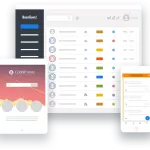


Follow Up Boss
Follow Up Boss is a real estate CRM that helps agents manage leads, automate follow-up, and increase conversions. Streamline your sales process today.

Real Geeks
Real Geeks offers real estate agents an all-in-one platform with lead generation, IDX websites, and CRM tools. Grow your business with proven technology.

Sierra Interactive
Sierra Interactive provides real estate agents with cutting-edge IDX websites, CRM, and lead generation tools. Discover how this platform can transform your business.
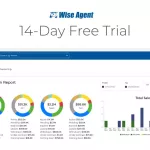

Wise Agent
Wise Agent is a comprehensive real estate CRM offering contact management, transaction tracking, email marketing, and automation tools for agents and brokers.
Table of Contents
- Why CRM Expertise Matters More Than Ever in Real Estate
- CRM Roles in Real Estate: What They Actually Do
- Understanding Real Estate CRM Platform Costs
- Essential Skills for Real Estate CRM Positions
- For Employers: Real Estate CRM Recruitment Strategy
- The AI Factor in 2026 CRM Hiring
- For Job Seekers: How to Stand Out in Real Estate CRM Hiring
- Conclusion: Making the Right CRM Hiring Decision
- Frequently Asked Questions
Your CRM is only as good as the person running it—especially if you're managing hundreds of agents. Real estate CRM hiring matters. Finding the right professional, evaluating platforms, selecting your stack—this is a make-or-break decision for 2026. The numbers tell the story. The global real estate CRM software market sits at roughly $5.31 billion in 2026, with a 12.2% CAGR through 2035. But here's the kicker: only 46% of agents actually use a CRM, and just 30% use one consistently. That's a massive gap. If you're in that 30%, you've got a serious edge over the competition. This guide walks you through everything—CRM role definitions, platform pricing, hiring strategy, and career paths. You'll know exactly what to look for and why it matters.

Why CRM Expertise Matters More Than Ever in Real Estate
Look at the data. Digital leads without automated follow-up? They convert at just 0.5%–1.2% according to 2025 benchmarks. That's brutal. But here's what changes everything: a skilled CRM professional managing your pipeline can push conversion rates significantly higher. And you're competing against over 2,130,616 licensed real estate agents in the U.S. as of 2026. Software and data aren't enough anymore. You need someone who actually knows how to work the system.
Before you hire a CRM operator, do your homework. Check out the Best CRM for Real Estate Investors 2026 and compare it against the Best Real Estate Investor CRMs in 2026. Pick the right platform first.
Back to topCRM Roles in Real Estate: What They Actually Do
Your CRM team isn't filing paperwork all day. These professionals architect your entire customer lifecycle — from that first cold call through closing and into referral follow-up. The role you need depends entirely on your team size and sophistication. Here's what you're actually looking at:
CRM Coordinator
Entry-level position. You'll handle data entry, list hygiene, basic automation setup, and reporting. It's perfect if you're a smaller team that needs someone keeping the system clean and running smoothly without errors creeping in. Most coordinators bring 1–2 years of CRM experience to the table.
CRM Executive
Mid-level role. This is where strategy meets execution — customer journey mapping, campaign management, lead scoring, performance metrics. You need someone who's fluent in Salesforce, HubSpot, Zoho, or real estate-specific platforms. Typically requires 3–5 years in the space. Want to know if your current setup is optimized? A CRM Executive spots those gaps immediately.
CRM & Collection Executive
Common in Bangladesh and India, this hybrid role blends CRM duties with accounts receivable and collections work. It's especially relevant for developers running installment-based property sales where follow-up directly impacts cash flow.
Senior Executive – eCRM
Digital-first role. Email campaigns, SMS automation, retargeting — these are your bread and butter. You're stacking marketing automation tools on top of your core CRM. Expect to see 5+ years of experience required, with proven results in the martech space.
| Role | Experience Required | Key Responsibilities | Employment Type |
|---|---|---|---|
| CRM Coordinator | 1–2 years | Data hygiene, basic automation, reporting | Full-time / Contract |
| CRM Executive | 3–5 years | Lead scoring, campaign management, KPI tracking | Full-time / Permanent |
| CRM & Collection Executive | 2–4 years | Customer follow-up, collections, pipeline management | Full-time |
| Senior Executive – eCRM | 5+ years | Digital campaigns, automation strategy, analytics | Full-time / Senior |
Understanding Real Estate CRM Platform Costs
You need to know what you're paying for before you hire someone to manage your CRM. Platform costs? They vary all over the map depending on what tier you're in.
- Free tiers: HubSpot CRM lets you manage contacts and deal pipelines for free — up to 2 users. Zoho CRM is also free for up to 3 users, and if you want paid features, you're looking at $14/user/month when billed annually.
- Solo agent / individual plans: In 2026, expect $15–$69/user/month. That's Wise Agent at ~$49/mo, or Follow Up Boss pushing $69/user/mo — good middle ground for most solo players.
- Mid-to-premium platforms: You're at ~$300/month now. Sierra Interactive runs ~$299.95/mo, and Real Geeks sits right around $299/mo. Still manageable for a growing operation.
- Enterprise / brokerage-level: This is where it gets expensive — $499–$1,000+/month. BoldTrail is ~$499/mo; CINC hits $899/mo; BoomTown tops out around $1,000/mo.
- Setup fees: Mid-to-enterprise platforms charge $500–$5,000 one-time just to get you up and running.
And here's the thing — staffing costs don't exist in a vacuum. A CRM director overseeing a $1,000/month enterprise platform is a completely different animal than hiring a coordinator to babysit someone's HubSpot free account. Your total investment depends on both people and platform.
Back to topEssential Skills for Real Estate CRM Positions

Most CRM professionals coming into real estate don't have the industry background. But that's not a dealbreaker—if you know what to look for. Here's what actually matters when you're hiring:


Technical Competencies
- Hands-on experience with at least one major CRM platform—Salesforce, HubSpot, Zoho, or real estate-native solutions like Follow Up Boss or Sierra Interactive
- Data management skills: list segmentation, deduplication, lead scoring configuration. This is the unglamorous stuff that actually saves your team from blowing through bad data.
- Marketing automation: drip campaigns, trigger-based sequences, SMS workflows. Can they set up a cadence that doesn't spam prospects out of your pipeline?
- Reporting and analytics: pipeline reporting, conversion tracking, ROI measurement. You need someone who can pull numbers that actually inform decisions, not just vanity metrics.
Soft Skills
- Attention to detail. A corrupted lead list isn't just sloppy—it costs you deals and credibility.
- Communication skills. Your CRM person will spend half their time translating between agents and technology teams. If they can't bridge that gap, nothing works.
- Problem-solving ability. CRM issues don't come with an instruction manual, and you can't always escalate to support at 4 PM on a Friday when the system's down.
Industry-Specific Knowledge
- Real understanding of the real estate sales cycle—lead to showing to offer to close to referral. They don't need to have worked 100 deals, but they should get how the funnel moves.
- Familiarity with actual lead sources: portals, paid lead vendors, cold calling, referrals. What's the difference between a portal lead and a warm referral? They should know.
- Comfort with complementary tools like real estate dialers and accounting software. Your CRM doesn't exist in a vacuum.
For Employers: Real Estate CRM Recruitment Strategy

Wrong CRM hire = money gone. Here's how to actually do this right:
- Pick your platform first. You can't hire blind. Check our Best Real Estate Investor CRMs in 2026 guide and commit before you post anything.
- Get specific in your job posting. "HubSpot experience required" beats "CRM experience preferred" every single time. Candidates know what you actually need.
- Post on multiple boards at once. LinkedIn pulls one type of candidate. Indeed pulls another. Real Estate Jobs brings in folks who live and breathe the industry. Cast your net on at least two.
- Skip the interview theater—test instead. Give your finalists a 30-minute practical: import a sample lead list, build a basic drip sequence, pull a conversion report. You'll see who actually knows the software.
- Green flags to hunt for: hard numbers like "improved lead response time by 40%," legit certifications (Salesforce Certified Administrator, HubSpot CRM Certification), and someone who gets real estate workflows.
- Red flags that kill deals: vague CRM stories, zero measurable outcomes to show, can't articulate how segmentation works. Pass.
- Hold them tight once you hire. A CRM pro who understands your business is expensive to replace. Build learning paths. Show them the money. Make them want to stay.
And don't sleep on complementary hires either. You'll want someone sharp at cold calling and outreach plus a copywriter who can crush real estate ads. That's how you keep the pipeline full.
Back to topThe AI Factor in 2026 CRM Hiring
You need to hire someone who actually knows AI tools. By the end of 2026, 89% of top agents are projected to use AI-enhanced CRMs. That's not optional anymore. Your candidate needs hands-on experience with predictive lead scoring, AI-generated follow-up suggestions, and automated sentiment analysis—not just basic drip campaigns from 2015. During interviews, dig into specifics: What AI features have they actually deployed? How did they measure the ROI? Don't settle for someone who's just heard about it.
Back to topFor Job Seekers: How to Stand Out in Real Estate CRM Hiring
Hiring managers in real estate CRM roles care about a few things—and they're predictable. Let me walk you through what actually matters.
- Get certified. HubSpot's free CRM certification, Salesforce's Administrator credential, and Zoho's certification program aren't just resume padding. They prove you know the platform.
- Numbers win. "Managed CRM for 15-agent team"? That tells me nothing. But "reduced lead response time from 48 hours to 4 hours, increasing pipeline conversion by X%"? Now we're talking.
- You need to understand the whole operation. Don't just know CRM. Show how it connects to marketing, website lead capture, and deal tracking. That's what separates good operators from great ones.
- Stay on top of product releases. Read the product update blogs for whatever platform you're targeting. Drop a recent feature release in your interview. It shows you're paying attention.
Conclusion: Making the Right CRM Hiring Decision
Real estate CRM hiring isn't a line item—it's a strategic investment. The global market hits $5.31 billion in 2026, and it's growing fast. But here's the problem: adoption lags way behind potential. 46% of agents own a CRM, yet only 30% actually use it consistently. That gap? That's where real talent lives. The professionals who can bridge the gap between owning a CRM and actually using it are genuinely valuable to your operation.
If you're hiring, here's what works: define your platform first, test candidates on real workflows, and then invest hard in keeping them. If you're job hunting in this space, get certified, quantify what you've actually delivered, and don't sleep on new AI features—they're shipping fast. A strong match between your CRM pro and your real estate operation creates one of the clearest paths to sustainable pipeline growth you'll find.
Back to topFrequently Asked Questions
What does a real estate CRM executive actually do day-to-day?
Lead intake and routing. Data hygiene. Building automated follow-up sequences that actually convert. A CRM executive tracks the KPIs that matter—lead-to-appointment conversion rates, pipeline velocity, cost per qualified lead. They're also monitoring dashboards, generating weekly pipeline reports for leadership, and making sure the data stays clean. At the senior level? You're managing integrations between your CRM and everything else: dialers, website platforms, marketing automation. It's the connective tissue that keeps the whole operation humming.
How much does a real estate CRM platform cost in 2026?
It depends on your scale. HubSpot and Zoho both have free tiers—HubSpot caps at 2 users, Zoho at 3. Solo agents and small teams are looking at $15–$300/month in 2026. But here's where it gets real: enterprise brokerage platforms run $499–$1,000+/month, and don't forget $500–$5,000 in one-time setup fees. Budget accordingly.
What certifications should I get for a real estate CRM career?
Start with HubSpot's free CRM certification. It's the lowest barrier to entry, and employers recognize it. For enterprise roles, though? Salesforce's Certified Administrator credential is the gold standard—especially if you're aiming for Fortune 500 brokerages or large institutional shops. Zoho offers certifications too. Here's what hiring managers actually care about: real estate domain knowledge. You need to understand the transaction cycle, know the difference between buyer and seller leads, and grasp compliance requirements like fair housing and MLS rules. That matters as much as any badge on your resume.
Is remote work common for real estate CRM roles?
Yes, but with caveats. North American markets have embraced remote and hybrid work for CRM Coordinators and Senior eCRM positions, especially at tech-forward brokerages. And then there's geography: Bangladesh, UAE, and India tend to favor on-site arrangements. Why? Hybrid CRM and collections roles often require in-person team coordination and client-facing work that's harder to do remotely. Check the location carefully before you apply.
What's the biggest mistake employers make when hiring a CRM professional?
They hire before they've defined the platform. A Salesforce admin won't cut it if you're running Follow Up Boss or Sierra Interactive. These systems have completely different workflows, automation logic, and reporting capabilities. So here's what you do: be specific about the platform in your job description. Include a practical skills test. Don't settle for candidates who just say "I have CRM experience." That's worthless if they've never touched the actual tool you're using.
Back to top