

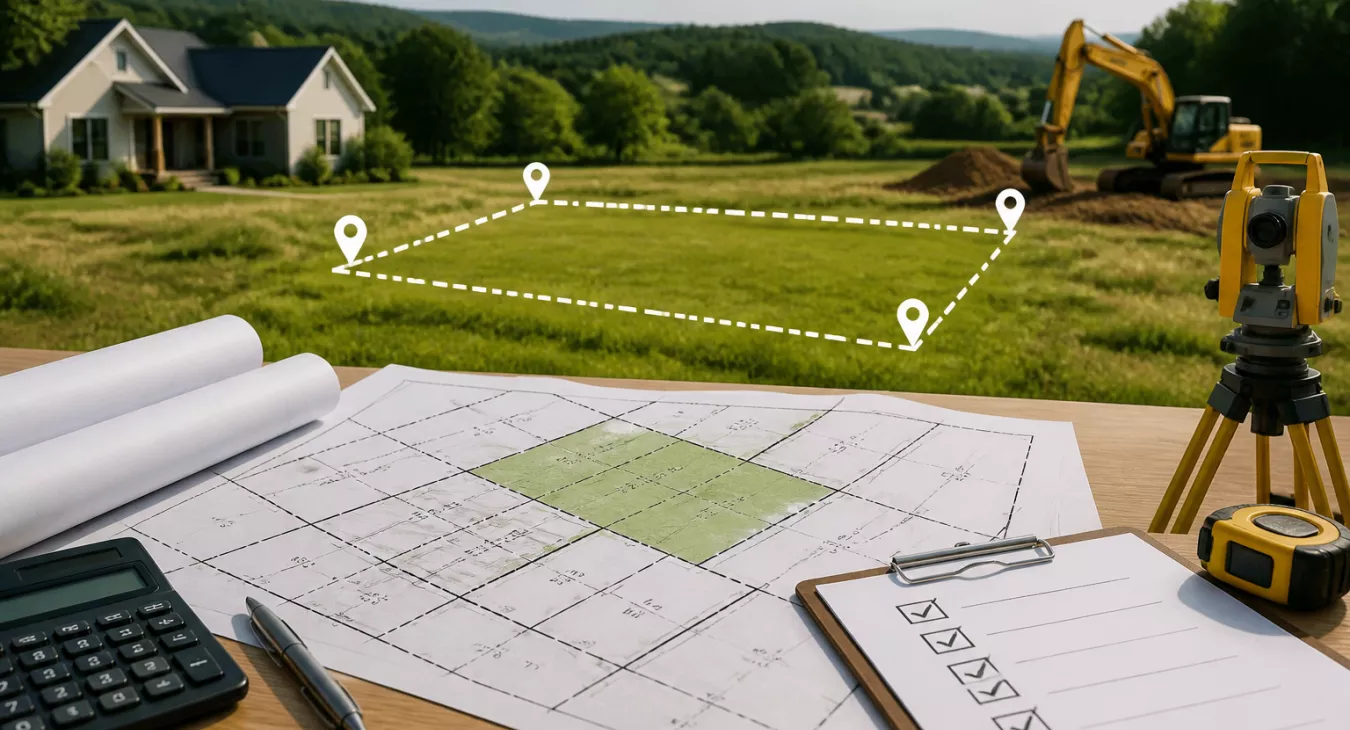
Learn how to tell if property is buildable by checking zoning, soil conditions, and feasibility. Avoid costly mistakes with this complete guide.
Products and Tools Mentioned in this Post
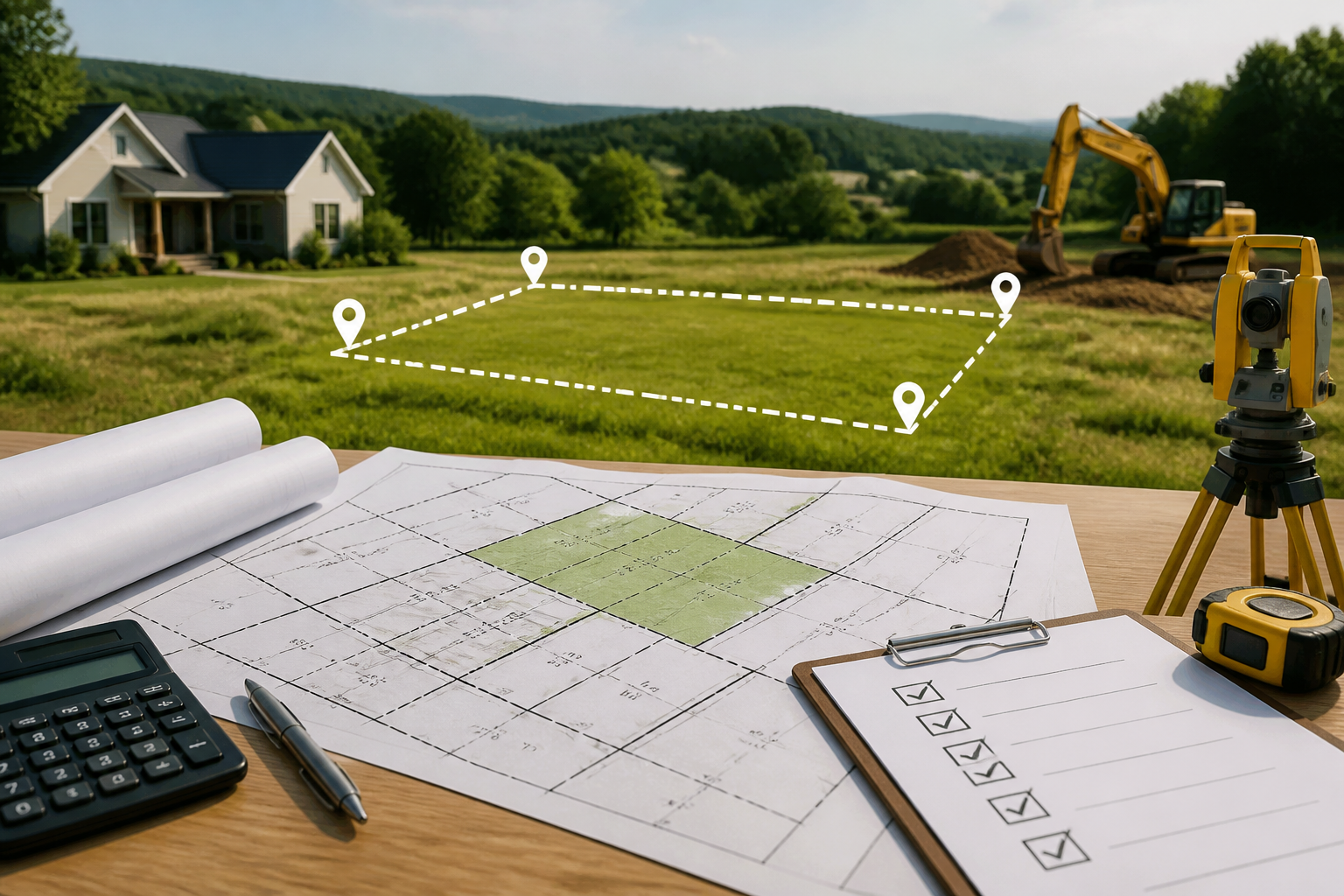
Table of Contents
- What Does Buildable Land Mean?
- Check Zoning Regulations First
- Evaluate Setbacks and Easements
- Assess Soil Quality and Drainage
- Verify Access and Infrastructure
- Environmental and Topographical Factors
- Obtain Permits and Approvals
- Conduct Due Diligence Before Purchase
- Common Reasons Land Becomes Unbuildable
- Buildability Checklist
- Conclusion
- Frequently Asked Questions
Buy land without vetting buildability first, and you'll blow serious capital. That's the reality. Parcels come dressed up as "buildable," "ready to develop," or "prime opportunity"—but zoning barriers, failed soil tests, flood zones, and missing infrastructure kill deals every single time. You need a systematic approach to confirm how to tell if property is buildable before you write any checks. We'll walk you through the legal, engineering, and regulatory checks in the right sequence so you can evaluate any parcel with real confidence.

What Does Buildable Land Mean?

Legal Definition
Here's the thing: a parcel is legally buildable only when it checks every box. Zoning approval. Adequate lot dimensions. Environmental compliance. Utility access. Physical conditions that'll support a foundation and wastewater system. You need all of them, not just some.
A lot zoned for residential use that sits entirely within a wetland? That's the perfect example of the trap. It's legally zoned. But it's practically unbuildable. And that distinction will kill your deal if you're not paying attention.
Key Requirements for Buildability
Buildability isn't one thing — it's where at least five different systems overlap.
- Regulatory: Zoning, land-use permits, subdivision approvals
- Physical: Soil bearing capacity, drainage, slope, flood designation
- Environmental: Wetlands, contamination, protected species habitat
- Infrastructure: Road access, utilities, water, and sewer availability
- Legal: Title, deed restrictions, easements, covenants
Most investors make the same mistake: they see a tax record and a parcel number, then assume the land's buildable. It's not that simple. Tax parcels get created from splits that violate zoning minimums. Historical surveys predate modern floodplain mapping. A parcel number just means somebody filed paperwork. It doesn't mean you have the right to build.
Back to topCheck Zoning Regulations First

How to Find Your Property's Zoning
Start with your local municipal or county planning department — most have zoning maps or GIS portals online now. Punch in the parcel address or tax ID and you'll get the official zoning designation pulled up instantly. Want a complete walkthrough? How to Find Out What Zoning a Property Has: Investor's Guide breaks down each research step.
Residential vs. Commercial Zoning — and the Critical Caveat
Here's the thing: zoning codes are entirely local. There's no national standard. "R-1" in one town might mean a 6,000 sq ft minimum lot, but in the county next door it's one acre. Don't guess. Pull the actual text of the local code and read the dimensional standards table for that specific district. The same goes for "A-1," "C-2," and every other label you'll see.
Minimum Lot Requirements
Every zoning district spells out three things: minimum lot area, minimum lot width, and minimum street frontage. A parcel that doesn't meet all three? That's a nonconforming lot, and it'll limit what you can build even if the use itself is technically permitted. To put this in perspective, 2025 Census Survey of Construction data (published July 2026) shows the median lot size for a new single-family detached home in the U.S. was 8,543 sq ft (about 0.196 acres). And 64% of new single-family detached homes landed on lots under 9,000 sq ft. For custom homes built on owner land? The median was 1 acre (2025 data). These benchmarks are helpful context, but your local code is what actually matters.
What Zoning Changes Mean for Your Plans
Current zoning doesn't work for your deal? You've got two paths forward: a variance (a site-specific exception when the code creates undue hardship) or a rezoning (actually changing the zoning map). Both are local, both take time, and approval is never guaranteed. Budget for legal fees and planning consultants — and most importantly, treat any rezoning or variance as a risk, not an assumed win when you're underwriting.
Back to topEvaluate Setbacks and Easements

Understanding Setback Requirements
Setbacks are the minimum distances your structure must sit back from property lines, roads, water bodies, and other features. Front, side, and rear setbacks? They're all different depending on your zoning district and local jurisdiction. That generic setback distance you found online could be completely wrong for your actual parcel. Pull the dimensional table directly from your local code, then physically map those setbacks onto a current survey. This gives you the real buildable envelope — the only area where construction legally happens.
Common Types of Easements
Easements hand over the right to use a portion of your property to third parties for specific purposes. Here's what actually matters for your deal:
- Utility easements: Power lines, gas lines, communication infrastructure get reserved space — you can't build structures over them
- Drainage easements: They protect water flow paths and typically prohibit grading or impervious cover
- Access easements: Let neighbors or the public cross your parcel
- Conservation easements: Permanently lock down development in exchange for tax deductions
How Easements Impact Buildability
Here's the harsh reality: an easement doesn't give ownership to someone else, but it kills your buildability just as dead as a zoning restriction. A 50-foot utility easement cutting through the middle of a narrow lot? Add in your front and rear setbacks. You might have zero buildable envelope left. This is why you overlay easements and setbacks simultaneously on every site plan before you commit any capital.
Finding Easement Information
County recorders and registers of deeds hold all easement recordings in the chain of title. Two tools do the real work: a current title search and an ALTA/NSPS survey that actually plots easements on the ground. Don't fall for the seller's disclosure — get the documents yourself.
Back to topAssess Soil Quality and Drainage

Why Soil Testing Matters
Your foundation design and septic viability both hinge on soil. Expansive clay, poorly consolidated fill, high water tables, organic-rich soils — these aren't small issues. They tank your construction budget, and in the worst cases, they kill the deal entirely because standard building methods won't work. Before you order paid testing, hit up the USDA Web Soil Survey. It's free and covers every parcel in the contiguous U.S. Use it as your first-pass screen.
Percolation Tests Explained
No public sewer? You're looking at a private septic system, which means you need a perc test. Here's what it does: it measures drainage speed through the soil. Standard septic systems need soil that drains at 1–60 minutes per inch; anything outside that range fails (2026). And the failure rate is real — 15–25% of sites don't meet standard perc criteria (2026 estimate).
But here's the catch: every state runs this differently. Virginia and Delaware don't even use perc testing — they classify soil profiles instead. Call your county health department and find out what applies to your jurisdiction. You also need to know the validity window. Most states recognize perc results for 2–5 years, depending on where you are (2026).
Hand-dig perc testing runs $750–$1,850 — most investors hit $1,000–$1,300 (2026). Excavator-assisted testing on difficult sites? That's $500–$3,000+ (2026). If you fail, be ready for sticker shock. An engineered alternative — mound system, drip irrigation, aerobic treatment — costs $15,000–$35,000+ (2026). That changes the whole deal economics.
Drainage and Grading Requirements
Local codes control stormwater runoff handling. Steep slopes, low-lying terrain, proximity to water bodies — these all trigger extra engineering studies and compliance work. A civil engineer evaluates whether the site can actually meet these requirements without blowing your budget.
Back to topVerify Access and Infrastructure

Road Access Requirements
Here's the non-negotiable: your parcel needs legally established access to a public road. That means either direct frontage on a dedicated public street or a recorded easement or private road agreement. Landlocked parcels — zero legal access — won't get permitted for construction anywhere. Run it through your title search and verify that any private road agreement is recorded, maintained, and actually sufficient for fire trucks and emergency vehicles to reach the property.
Utility Availability and Connections
You need to call each utility provider directly. Electric, natural gas, telecommunications — don't guess. Ask whether service reaches the parcel boundary and what they'll charge to connect. Connection costs vary wildly based on distance to existing infrastructure and each provider's tariff. Don't assume the first 100 or 200 feet are free — that's completely dependent on whether your specific provider offers that under their current tariff or not.
Water and Sewer Systems
Can you connect to public water and sewer? Start there. If the answer's no, you're looking at both a well and a septic system. Each one demands separate permits and feasibility assessments. Water rights are a separate issue in western states: All 17 prior-appropriation states (Colorado, Arizona, New Mexico, Washington, Oregon, and Idaho included) don't automatically transfer water rights with the land. Domestic well permitting hits exempt-well rules and closed basin designations that can kill new well applications entirely. Texas runs its own groundwater playbook. Before you assume a well works, get a water rights attorney involved if you're operating anywhere west of the Mississippi.
Emergency Access Considerations
Fire departments will demand minimum road widths, specific turning radii, and overhead clearances for emergency vehicles. Gated communities and private roads must meet these standards to get a building permit. Talk to your local fire marshal early — like, before you're deep into feasibility.
Back to topEnvironmental and Topographical Factors

Flood Zone Designation
Start by pulling up the parcel on FEMA's Flood Map Service Center — plug in the address or coordinates and see where you stand. If it's in a Special Flood Hazard Area (SFHA — that's Zone A or AE), you're looking at a floodplain development permit requirement before you can break ground or grade, per FEMA regulations. Zone A and AE have specific rules: your lowest floor needs to sit at or above the Base Flood Elevation (BFE). Zone V is tougher. That's coastal high-hazard territory, and you'll need open foundations — pilings or columns only, no solid walls below the BFE.
Here's the workaround: if the land got filled in after the current FIRM map came out, you can file a Letter of Map Revision Based on Fill (LOMR-F) to get it out of the SFHA. As of 2026, FEMA charges around $525 for a single-lot LOMR-F, and you're looking at 60–90 days for processing. But there's a catch. Federal law mandates flood insurance on any property with a federally backed mortgage in high-risk Zone A or V. And one more thing: raw vacant land won't qualify for NFIP coverage — flood insurance only applies to structures, not bare dirt.
Wetlands and Protected Areas
Wetlands don't play by acreage rules. Under Section 404 of the Clean Water Act, there's no minimum size threshold — even card-table-sized depressions can trigger federal jurisdiction. The legal definition of "federally regulated waters" is still in flux after Sackett v. EPA (2023). The EPA and Army Corps were working on a conforming rule that hadn't been finalized as of late 2025.
But here's what actually matters for your deal: most states regulate wetlands independently. California, Washington, Minnesota, Wisconsin, Virginia, New Jersey, and New York all have their own standards. Changes to federal rules don't necessarily help you on those parcels.
The Army Corps issued a new 2026 reissuance (effective March 15, 2026), and it affects your bottom line. Nationwide Permit 29 for Residential Developments lets you impact up to ½ acre of Waters of the U.S. without pulling an individual permit. Don't get comfortable though. NWP 29 now requires a Pre-Construction Notification (PCN) for everything — the PCN requirement is universal across the 2026 reissuance. Before you buy, hire a qualified biologist to delineate any wetlands on the parcel if hydrology looks questionable.
Slope and Environmental Restrictions
Steep slope overlays are everywhere. Many jurisdictions cap grading, impervious surface, or building on slopes above 15–30% (local ordinances vary wildly, so you've got to check your specific jurisdiction). Beyond slope percentage, look for habitat corridors, tree preservation rules, and state or local environmental review triggers that could pile on studies and mitigation work.
Back to topObtain Permits and Approvals
You need to understand your full permit stack before you buy. Skip this step, and you're looking at six-figure surprises down the road. Beyond the standard building permit, you might need subdivision approval, lot-line adjustments, grading and drainage permits, stormwater permits, well and septic permits — and depending on where you're investing, an environmental impact review too.
Environmental permitting is where deals slow down. If wetlands are involved and you need Army Corps coordination, you're looking at six months to several years on complex sites. That's not theoretical. And it absolutely belongs in your underwriting timeline before you close.
Back to topConduct Due Diligence Before Purchase
Assemble the Right Professional Team
You can't rely on a single consultant to cover all the buildability angles. Here's who you actually need and what they cost:
| Professional | What They Assess | Cost Benchmark |
|---|---|---|
| Land-Use / Real Estate Attorney | Zoning compliance, deed restrictions, title issues, easements, water rights | Varies; hourly or flat fee — get quotes locally |
| Licensed Surveyor | Boundary, easements, topography (ALTA/NSPS survey) | Varies by parcel complexity and jurisdiction |
| Civil Engineer | Drainage, grading, infrastructure, road access feasibility | Varies by scope |
| Geotechnical Engineer | Soil bearing capacity, foundation suitability, groundwater depth | Varies by scope |
| Environmental Consultant | Phase I ESA (contamination review), wetland delineation | Phase I ESA: $2,200–$4,000 for standard properties (as of June 2026); $1,800–$2,500 for properties under 1 acre (2025–2026); can exceed $7,500 for complex industrial sites (2025) |
| County Health Department | Septic/well feasibility, perc test review | Government fee; varies by jurisdiction |
Phase I ESAs follow ASTM Standard E1527-21 (current), which satisfies the "All Appropriate Inquiries" requirement under CERCLA. Skip this and you're gambling. If there's any industrial history, agricultural chemicals, or underground storage tank legacy on that parcel, you're running a Phase I—period.
Title Search and Property Records
Deed restrictions kill deals. A full title search catches them—along with covenants, historic easements, liens, and encumbrances that zoning maps won't show you. These restrictions run with the land. They can kill a use that zoning would otherwise allow. And they often impose setbacks stricter than what local code requires.
For commercial deals, pull data through Reonomy: Commercial Property Intelligence. You'll see ownership history, liens, and transaction comps before you even call a title company.
Post-Offer Due Diligence Timeline
Build a contingency period with enough runway to complete these phases in sequence. Cut corners here and you'll miss something critical.
| Phase | Typical Timing | Key Tasks |
|---|---|---|
| Desk Review | Days 1–5 | Zoning code pull, FEMA map check, GIS/aerial review, title commitment order |
| Field Assessment | Days 5–15 | Site walk with builder/engineer, preliminary wetland screen, survey order |
| Technical Studies | Days 10–30 | Perc test, soil borings, Phase I ESA, utility availability letters |
| Regulatory Confirmation | Days 20–45 | Pre-application meeting with planning/building dept., Army Corps preliminary jurisdictional determination if wetlands present |
| Decision Point | Day 45–60 | Review all findings, negotiate price reduction or walk away if fatal flaws found |
Common Reasons Land Becomes Unbuildable
Here's the thing: knowing the difference between unbuildable and just expensive is how you actually make money on land deals. You'll price risk correctly when you understand what truly kills a property.
- Zoning violations: The parcel is too small to meet current minimum lot area requirements and can't receive a variance
- Deed restrictions and CC&Rs: Recorded covenants prohibit the intended use, density, or structure type
- Landlocked status: No legal road access, and no realistic path to establishing one
- Entire parcel in wetlands or SFHA: Regulatory constraints eliminate the buildable envelope entirely
- Soil failure with no viable alternative: Site fails perc testing and is too constrained for an engineered system
- Environmental contamination: Phase I reveals a Recognized Environmental Condition (REC) requiring Phase II investigation and potentially remediation before any building permit will issue
- Utility and infrastructure gaps: Extension costs that make the project economically infeasible
But here's what separates savvy investors from the rest: understanding the gap between legally unbuildable and practically unbuildable. A flood zone parcel? You can build it with engineered fill and elevated construction. Expensive, yes. Dead in the water, no. Landlocked? Maybe today. But that adjacent owner's easement could change everything tomorrow.
Don't write these off as deal-killers. Price them in instead.
Back to topBuildability Checklist
This is your research blueprint for any parcel. Before you close, every single item gets confirmed—not assumed, not "probably fine." That's how you avoid costly surprises down the road.
| Category | Item to Verify | Where to Check |
|---|---|---|
| Zoning | Permitted use for intended development | Municipal/county planning portal |
| Zoning | Minimum lot area, width, and frontage met | Local zoning code dimensional table |
| Setbacks | Buildable envelope after all setbacks applied | Local code + current survey |
| Easements | No easements eliminate buildable envelope | Title search + ALTA survey |
| Deed Restrictions | No covenants prohibiting intended use | Title search / chain of title review |
| Flood Zone | FEMA zone designation and BFE if in SFHA | FEMA Flood Map Service Center |
| Wetlands | Presence/absence of jurisdictional wetlands | Wetland delineation + Army Corps consultation |
| Soil | Adequate bearing capacity for intended foundation | Geotechnical report |
| Septic/Sewer | Perc test passed or public sewer available | County health dept. / utility provider |
| Water | Public water available or well feasible (check water rights in western states) | Utility provider / state water authority |
| Road Access | Legal access to public road confirmed | Title search + recorded easement documents |
| Utilities | Electric, gas, telecom available and connection cost estimated | Individual utility providers |
| Environment | Phase I ESA completed, no unresolved RECs | Licensed environmental consultant (ASTM E1527-21) |
| Permits | Full permit stack identified and timeline estimated | Pre-application meeting with building dept. |
Conclusion
Here's what separates the winners from the rest: you need to work through regulatory, physical, environmental, and legal layers — not just check zoning and call it done. The investors and agents who win systematically dig into this stuff, bring in the right professionals early, and price their risk honestly. They're the ones who dodge six-figure mistakes and spot real opportunity where everyone else sees a mess.
So what's your move? Start with zoning and FEMA maps — both free, both fast. Commission a title search and survey before you even think about financing. Order soil and environmental studies before your contingency window closes. And never, ever close without written confirmation of legal access and utility availability.
The hard truth: due diligence costs a few thousand. Owning unbuildable land costs everything.
Back to topFrequently Asked Questions
How do I quickly check if a parcel is in a flood zone?
Head to FEMA's Flood Map Service Center at msc.fema.gov. Enter the address. Within seconds, you'll see whether you're dealing with a Special Flood Hazard Area (Zone A, AE, or V) or something lower-risk. Found yourself in Zone A or AE? Don't move forward without getting the Base Flood Elevation from your local floodplain administrator—that number impacts your construction costs and insurance premiums significantly.
What happens if land fails a percolation test?
A failed perc test isn't a death sentence. Your county health department may approve an engineered alternative—think mound system, drip-field, or aerobic treatment unit. Here's the catch: these run $15,000–$35,000+ as of 2026, versus maybe $3,000–$8,000 for conventional. You need to bake that cost delta into your offer price right now. And yes, in jurisdictions with poor soils and no public sewer, a failed perc test can absolutely kill the deal.
Can I build on land that has wetlands?
Maybe. The Army Corps lets residential developments permanently impact up to ½ acre of Waters of the U.S. without an individual permit under their 2026 Nationwide Permit 29 (effective March 15, 2026). But you'll still need Pre-Construction Notification for anything you touch. Add state regulations on top of that—many states have their own wetland rules that are stricter. Commission a formal wetland delineation before you buy, and budget for mitigation. That could mean purchasing wetland mitigation bank credits, which isn't cheap.
what's a Phase I Environmental Site Assessment and when do I need one?
It's a records review plus boots-on-the-ground site reconnaissance following ASTM Standard E1527-21. The goal is spotting Recognized Environmental Conditions—any sign or evidence of past hazardous substance releases. And here's why you care: it protects you under CERCLA's "innocent landowner" defense, plus your lender will demand it anyway. Order one on anything with prior industrial, commercial, agricultural chemical, or gas station history. Budget $2,200–$4,000 as of June 2026 for a standard property; small parcels under 1 acre typically cost $1,800–$2,500 (2025–2026).
Can deed restrictions override zoning to make land unbuildable?
Yes—absolutely. Deed restrictions and Covenants, Conditions & Restrictions (CC&Rs) run with the land forever. Your neighbors or the HOA can enforce them, not the city. A single restriction can ban construction outright, lock the land into agriculture-only use, or require minimum structure sizes that make your project pencil out to zero. Zoning is just the public baseline. Deed restrictions are the private ceiling—and they're tighter. Don't just glance at the zoning map. Pull the full chain of title and read every word.
Back to top