


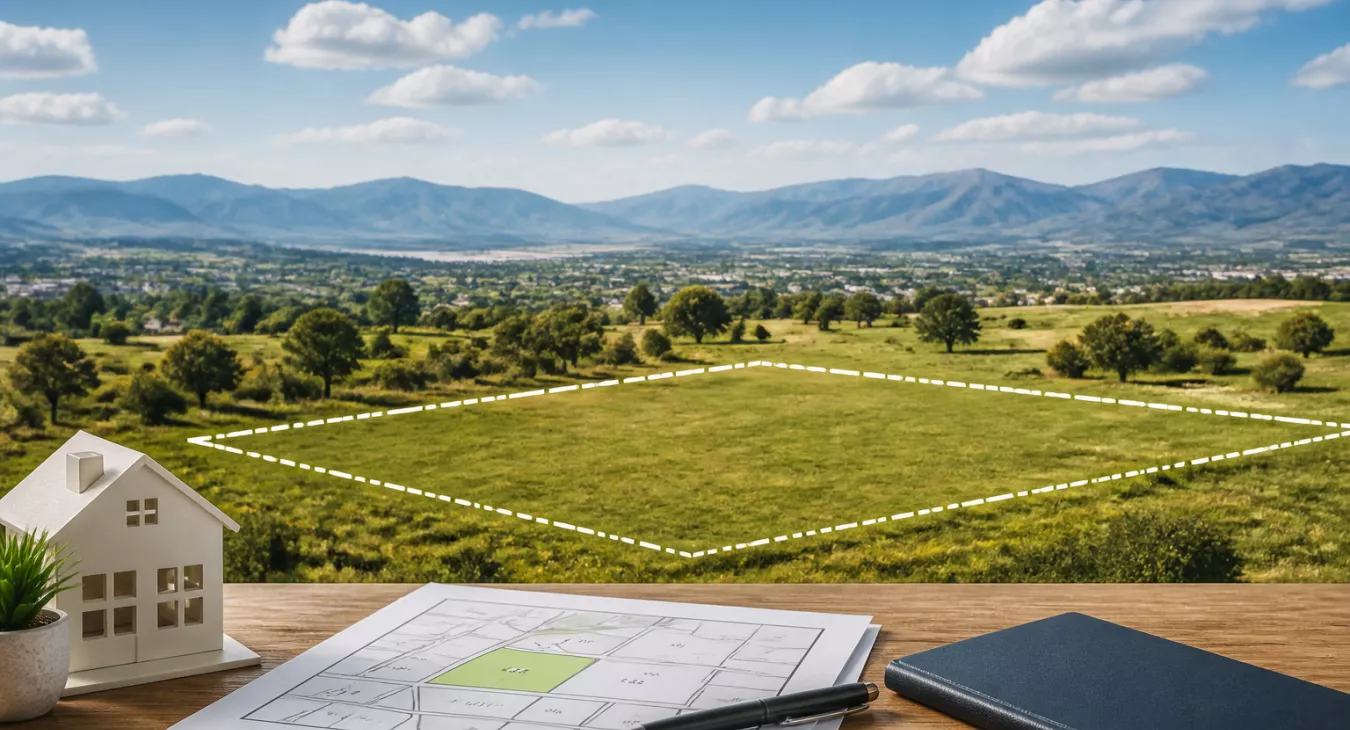
Learn how to wholesale land with this complete investor guide. Discover capital-efficient strategies for finding deals, running due diligence, and closing
Table of Contents
- what's Land Wholesaling?
- How Does a Land Wholesale Deal Work?
- Finding Motivated Landowners and Properties
- Due Diligence and Property Verification
- Contracts and Legal Documents
- Finding and Qualifying Cash Buyers
- Closing and Getting Paid
- Legal Considerations and Risk Management
- Getting Started: Action Steps for Beginners
- Land Wholesaling vs. Other Strategies
- Common Mistakes to Avoid
- Conclusion
- Frequently Asked Questions
Land wholesaling is one of the most capital-efficient entry points in real estate investing — and one of the least understood. Most investors chase houses. But a growing number are quietly stacking assignment fees on vacant and rural land, where competition's thinner and deal flow is steadier. You're probably wondering how to wholesale land. This guide covers the whole playbook: finding deals, running due diligence, structuring contracts that work, locating actual buyers, and closing. We'll give you the real legal landscape too, not the hype — plus realistic expectations about what you'll actually make on fees.

what's Land Wholesaling?
Definition and Basic Concept
Here's the core mechanic: you lock a property under contract at below-market value. Then you assign your contractual rights to a third-party buyer for a fee before closing. Sound familiar? That's because land wholesaling follows the same structural logic as traditional wholesale real estate. You never actually take title. Your profit is the spread between what you contracted the land for and what your buyer pays — that's your assignment fee.
How Land Wholesaling Differs from House Wholesaling
The fundamentals are the same, but everything else shifts. Land sellers aren't usually desperate. They're sitting on a non-performing asset they inherited, forgot about, or never got around to developing. That changes how fast deals move and what outreach actually works. And your buyer pool? Completely different animal.
Builders, developers, and investors are your end-buyers — not owner-occupants flipping through MLS listings.
| Aspect | Land Wholesaling | House Wholesaling |
|---|---|---|
| Seller urgency | Low to moderate (often absentee holders) | High (distressed homeowners, foreclosure) |
| Capital required | Minimal — low earnest money deposits | Moderate — larger EMDs, possible double-close funding |
| Competition | Lower — fragmented market | Higher — many active wholesalers in most metros |
| Due diligence complexity | High — zoning, access, utilities, environmental | Moderate — condition, comps, title |
| Typical buyer | Builders, developers, investors | Rehabbers, landlords, owner-occupants |
| Deal timeline | 30–90 days | 14–45 days |
Why Land Wholesaling Attracts Beginners
Low earnest money. That's the magnet. 2026 data from Landmodo shows national undeveloped rural land averaging $1,500–$2,500 per acre — which means you're controlling a parcel with a few hundred bucks in EMD on deals most people never touch. No tenants to manage. No structural inspections dragging out timelines. No rehab nightmares. It's cleaner, even if it's not simpler.
Back to topHow Does a Land Wholesale Deal Work?

Step-by-Step Process Overview
- Identify a motivated landowner — someone desperate enough to sell below market value.
- Negotiate a purchase agreement that explicitly allows assignment of your contractual rights.
- Conduct due diligence on title, zoning, access, utilities, and environmental concerns.
- Market to your buyer's list and lock in a qualified cash buyer before your contract window closes.
- Assign the contract (or execute a double close) and pocket your fee at settlement.
The Assignment Contract Method
Here's the beauty of a straight assignment. You're not buying the land—you're selling your right to purchase it to the end buyer. Your assignment agreement spells out exactly what fee you're collecting. The original seller and your buyer then close directly with each other. Most land wholesalers run this structure because it requires almost zero capital besides your earnest money deposit.
Double Closing Structure
Not every deal works with a transparent assignment. Some sellers get squeamish about it. That's where a double close comes in. You actually purchase the land (A-to-B transaction), then flip it to your buyer (B-to-C transaction)—sometimes the same day. But you'll need short-term transactional funding to make it happen. Want to understand how deal funders work and what your capital options really are? Check out this breakdown on how deal funders operate.
Timeline and Key Deadlines

Most wholesale contracts close in 30 days. Land deals? They typically stretch to 45–90 days. You need that extra time for title work, environmental reviews, and the other due diligence land requires. And don't skip the inspection and due diligence contingency windows in your contract. They're your safety net—protecting your earnest money if title defects or environmental red flags pop up.
Back to topFinding Motivated Landowners and Properties

Market Research and Location Selection
Pick one or two counties. That's it, at least to start. You need to know builder demand in those markets, understand zoning patterns cold, and have a feel for price ranges. Trying to wholesale land nationally before you've closed a single deal? That's expensive. Really expensive.
Before you contact a single seller, pull county GIS maps, parcel data, and recent comparable sales. Get into the weeds with comps. Our AI tools guide for real estate investors shows how AI can accelerate parcel research and skip-tracing significantly—game-changer in 2026.
Direct Outreach Strategies
Direct mail to absentee landowners is still the workhorse of land wholesaling. Pull lists from county assessor databases: out-of-state owners, longtime holders with low tax-assessed values, properties with delinquent tax histories. You want the people who are bleeding money on something they don't even use.
Response rates are low. Don't expect a mailer to do the heavy lifting alone—you need multi-touch, sustained campaigns instead. And if you want to find deals through actual boots-on-the-ground work, the Driving for Dollars guide shows you how to spot overlooked properties through direct observation.
Identifying Motivated Sellers
A motivated landowner is sitting on an asset generating zero income while paying property taxes every single year. That's the profile you're looking for.
Target out-of-state heirs stuck with rural parcels they didn't ask for. Look for absentee holders who've owned for 10+ years. Scan for delinquent tax notices. Find land that's been listed for ages with no price cuts. These are your buyers.
But here's where you need to be careful: inherited land, especially heirs' property situations, require transparency and ethics. Don't pull the predatory move of buying a minority heir's interest to force a partition sale—that's exactly what the Uniform Partition of Heirs Property Act was designed to stop. Make sure every party understands the deal. Deal clean.
Back to topDue Diligence and Property Verification
What to Verify Before Contracting
Land due diligence hits different than house inspections. No buildings doesn't equal no problems—it usually means the problems are hiding better. Get your due diligence checklist done before you drop earnest money if you can. If not, negotiate a contingency window that actually gives you breathing room after signing.
| Item to Verify | Why It Matters | How to Check |
|---|---|---|
| Clear title / liens | Encumbrances can kill a deal or expose you to liability | Preliminary title report from a title company |
| Zoning and land use | Determines what the buyer can actually build or do | County planning or zoning office (codes vary by jurisdiction) |
| Legal access / road frontage | Landlocked parcels are extremely difficult to sell | Survey, plat maps, county GIS |
| Utility availability | Drives development cost and buyer demand | Utility company service maps; note that well-drilling rights vary by state |
| Wetlands and environmental | Can prevent development entirely | USFWS NWI maps, state-level review (see note below) |
| Easements and rights-of-way | Restrict use and affect buildable area | Title search, survey |
| Flood zone status | Affects buyer financing and development feasibility | FEMA Flood Map Service Center |
Environmental and Zoning Considerations
Here's where it gets messy. Wetlands jurisdiction is still up in the air at the federal level after Sackett v. EPA (2023), and states like California, Washington, Minnesota, Wisconsin, Virginia, New Jersey, and New York have their own rules that operate independently of federal regs. You've got to dig into state-level wetland protections alongside the federal maps. Our wetlands identification guide walks you through spotting environmental red flags before you commit your money.
And don't assume zoning letter codes mean the same thing everywhere. "R-1" might require a 6,000 sq ft minimum lot in one county but a full acre in the next. Pull the actual code text and verify it.
Back to topContracts and Legal Documents

Assignable Purchase Agreements
Here's the deal: your contract must explicitly permit assignment. Many standard residential purchase agreements actually prohibit it right out of the box — which kills your wholesale play before it starts. You need language that clearly grants you the right to assign your interest to another buyer. Build in a due diligence contingency period, nail down a closing deadline, and get that assignment clause in the body of the contract or attached as an addendum. Don't skip this step.
State-Specific Legal Requirements
The regulatory landscape is shifting fast. As of 2025, six new wholesaling laws hit five states: Connecticut, Maryland, North Dakota, Oklahoma, and Tennessee. Some examples that'll affect your business:
- Connecticut (effective July 1, 2026): You'll need to register with the state. That's a nonrefundable $285 application fee, good for two years. Sellers get a 3-business-day cancellation window after signing, and your contract must close within 90 days.
- Pennsylvania (effective January 4, 2025): Act 52 requires wholesaler registration and you've got to disclose your profit.
- Oklahoma (effective November 1, 2025): Under SB 1075, if you're marketing properties you don't own, you now need a real estate license.
- Illinois: The Real Estate License Act of 2019 says unlicensed wholesalers can only do one assignment per year.
Don't assume your state is still license-free. Rules are changing constantly, and one missed compliance detail can tank your deal. Hire a local real estate attorney before your first wholesale and check compliance every single year.
Back to topFinding and Qualifying Cash Buyers

The Builder-First Strategy
Home builders and developers are your bread and butter. They buy land constantly — it's literally their job. Want to find them? Hit your county permit records (they're public) and identify which builders are actively pulling permits in your target market right now. Then call them. Introduce yourself as a land sourcer and ask what lot specs they're hunting for. Here's the kicker: one solid builder relationship can close multiple deals per year. That's recurring revenue without cold-calling.
Building Your Buyer's List Systematically
But builders aren't your only play. Your list should also include real estate investors holding for long-term appreciation, recreational land buyers, agricultural operators, and other wholesalers grinding it out in your region. Where do you find them? REIA meetings, real estate auctions, land-specific conferences. Basically anywhere serious money congregates.
And here's what separates pros from amateurs: a CRM tracking buyer criteria, price ranges, and deal timelines. The data gets better with every transaction you log. For broader strategic context on working within investor networks, our real estate syndication guide covers how sophisticated capital networks operate.
Vetting Qualified Buyers
Always demand proof of funds before you hand over deal details. A buyer who can't show cash reserves or a credible financing commitment? They'll burn your contract deadline and waste your energy. Land loans are brutal compared to residential mortgages. As of 2026, raw land requires 35–50% down and most lenders demand a minimum 700 credit score. Cash buyers skip all that friction. That's exactly why building a genuine cash buyer's list is worth the effort.
Back to topClosing and Getting Paid
Assignment Fee Structure
Your assignment fee is simple: the spread between what you locked in under contract and what your end buyer pays. That gap is your payday. According to a survey of 1,000+ professional wholesalers (updated June 2026), the nationwide average sits at $13,000 per deal. Most wholesalers land somewhere in the $5,000–$25,000 range, but geography matters a lot here.
North Carolina and Georgia? You're looking at $22,000 averages. Arizona's closer to $5,000. And if you're in St. Louis, the city average hits $25,000. Land deals throw a different variable into the mix — parcel value and buyer demand shift what you can actually command.
Here's the thing: don't get greedy with your fee. If you're demanding a cut that leaves your buyer with zero margin, you've priced yourself out. Period.
Closing Process Overview
The title company or real estate attorney handles all the paperwork, confirms you've got clean title, and moves the money around. Your assignment fee gets paid straight out of the buyer's funds at closing. You walk away with a check or wire transfer at settlement.
But don't just skim that closing disclosure. Verify it. Make sure your fee is there, the seller gets what they're supposed to get, and all the closing costs line up before you put your name anywhere.
Back to topLegal Considerations and Risk Management
State licensing is just the baseline. You need meticulous documentation—and I mean everything. Every email with a seller. Every signed disclosure. Contracts. Proof of your equitable interest. Don't cut corners here. Misrepresenting your role, your intentions, or the property itself to either party? That's how wholesalers end up in legal hell. Proper disclosure isn't just CYA; it's how professionals operate. And here's where it gets tricky: foreclosure processes can overlap with distressed land deals in ways that tank your title clarity if you're not careful. That's why our foreclosure investor guide breaks down state-by-state procedural differences—because one state's foreclosure timeline can be 6 months while another runs 18, and it matters for your exit strategy.
Back to topGetting Started: Action Steps for Beginners
Setting Up Your Business Structure
Form an LLC before you sign your first contract. This move does three critical things: it shields your personal assets from business liability, signals legitimacy to sellers and title companies, and makes tax season way simpler. But here's the thing — assignment income gets taxed differently depending on your state. Talk to a CPA about entity structure before you close anything.
Tools and Systems You'll Need
- CRM software for tracking buyers, sellers, and deal stages
- County GIS and parcel data access for property research
- Skip-tracing tools for locating absentee owners
- Direct mail platform for seller outreach campaigns
- Title company relationship familiar with land transactions
- Real estate attorney for contract review and compliance
First Deal Strategy
Pick one county and lock in. Use public records and land listing aggregators to research comps until you can do it in your sleep. Then run direct mail for 60–90 days straight. When sellers call? Listen. Most investors talk too much here. Why are they selling, and what's driving their timeline? That's where your leverage lives.
Don't rush into a contract. You need at least a preliminary read on what qualified buyers are actually paying in that market before you commit capital. Pulling and interpreting comps isn't optional — it's foundational to everything you do. Our real estate comps guide walks through exactly how to do this.
Back to topLand Wholesaling vs. Other Strategies

| Strategy | Capital Required | Time to Profit | Risk Level | Scalability |
|---|---|---|---|---|
| Land Wholesaling | Minimal (earnest money) | 30–90 days | Low–Moderate | High with systems |
| Buy and Hold Land | High (purchase price) | Years | Moderate | Moderate |
| Land Flipping (buy/improve/sell) | High | 6–18 months | Moderate–High | Moderate |
| House Wholesaling | Low–Moderate | 14–45 days | Moderate | High with systems |
Want to start part-time or go all-in? Land wholesaling works both ways. You can run it as a side hustle pulling in supplemental income, or scale it into a full-time grind with dedicated marketing spend, a VA handling the paperwork, and a systematized buyer pipeline that moves deals consistently.
And here's the real edge over improvement-based strategies: there's zero construction risk on your end. You're never holding the bag for what happens to the property between contract and closing. That's the buyer's problem, not yours.
Back to topCommon Mistakes to Avoid
- Skipping due diligence to move faster. You'll lose your earnest money and torch your reputation the moment you close on a landlocked parcel or a property with unresolved title defects. There are no shortcuts here.
- Using non-assignable contracts. Your purchase agreement needs to explicitly allow assignment. Without it? You've got no deal to wholesale. Read every single contract before you sign.
- Building your buyer's list after you find a deal. This is backwards. Your buyer network should exist before you even call your first seller. Know who will buy before you put something under contract—not after.
- Ignoring state licensing and disclosure law. Six new wholesaling laws hit five different states in 2025 alone. Compliance isn't optional anymore. Check your state's requirements before your first deal, then monitor for updates constantly.
- Overpricing the assignment fee. And here's where most wholesalers leave money on the table. If your fee doesn't leave the buyer with a real profit margin, the deal collapses. Understand what your end buyer needs to hit their numbers, then price your contract accordingly.
- Assuming zoning is what it looks like. Don't interpret zoning codes on your own. Verify the actual local ordinance every time. What a seller tells you about what's allowed on the land? Could be decades out of date.
Conclusion
Wholesale land isn't about grinding harder than everyone else. It rewards patience, systematic due diligence, and consistent relationship-building. The numbers back this up: land prices nationally jumped 77% since early 2019. And because the land market is so fragmented, motivated sellers are everywhere—in your backyard, in rural counties three states over, wherever you decide to focus.
Your real edge? Three things. First, know your market cold. Second, build and maintain a solid buyer's list. Third, execute contracts correctly—the regulatory landscape keeps shifting, so you need to stay sharp.
Start small. Pick one market. Close your first deal with care. Build your systems from there. That's how you win in this business.
Back to topFrequently Asked Questions
Do you need money to wholesale land?
Your earnest money makes the purchase agreement binding. We're talking a few hundred to a few thousand dollars, depending on deal size and what the seller expects. Here's the key: you don't need to fund the full purchase price. But your earnest money is at risk if you can't perform, which is exactly why due diligence contingencies matter so much. Beyond that initial deposit, factor in marketing costs, skip-tracing tools, and potentially legal fees for contract review.
Can you wholesale land without a real estate license?
It depends on your state—and it's changing fast. As of 2026, Oklahoma requires a license if you're marketing properties you don't own. Illinois limits unlicensed wholesalers to one deal per year. Connecticut requires registration (effective July 1, 2026). Pennsylvania requires registration and profit disclosure under Act 52 (effective January 4, 2025). Don't assume your state is license-free. Talk to a local real estate attorney before you close your first deal.
How long does a land wholesale deal take?
Most wholesale contracts target a 30-day close. But land? It's different. You're looking at 45–90 days when you factor in extended due diligence, title review, and actually finding a qualified buyer. Build your timelines with that reality in mind. And negotiate closing extensions into your contract whenever possible.
What happens if you can't find a buyer before your contract expires?
A due diligence contingency gives you an out. You can exit and recover your earnest money within that window. Without it, you lose the deposit. This is why your buyer's list needs to be built *before* you go under contract—not after. At scale, having backup buyer relationships isn't optional. If you're close to a deal but running short on time, ask the seller for a closing extension.
Is land wholesaling legal?
It's legal in most U.S. states as long as you operate transparently and follow local rules. Full disclosure is the foundation here—tell both the seller and buyer that you're a wholesaler and you're assigning the contract. Misrepresent your identity, the property, or the deal structure, and you're exposing yourself to civil liability and potentially criminal charges. Since wholesaling laws are being rewritten across the country right now, legal compliance isn't a one-time box to check. It's a core operational requirement.
Back to top