

Discover landlocked property solutions and investment strategies. Learn how to unlock access, navigate legal tools, and profit from discounted properties.
Products and Tools Mentioned in this Post

Propstream
Detailed information on Propstream. Get How-To's, reviews, Comparisons, and much more.

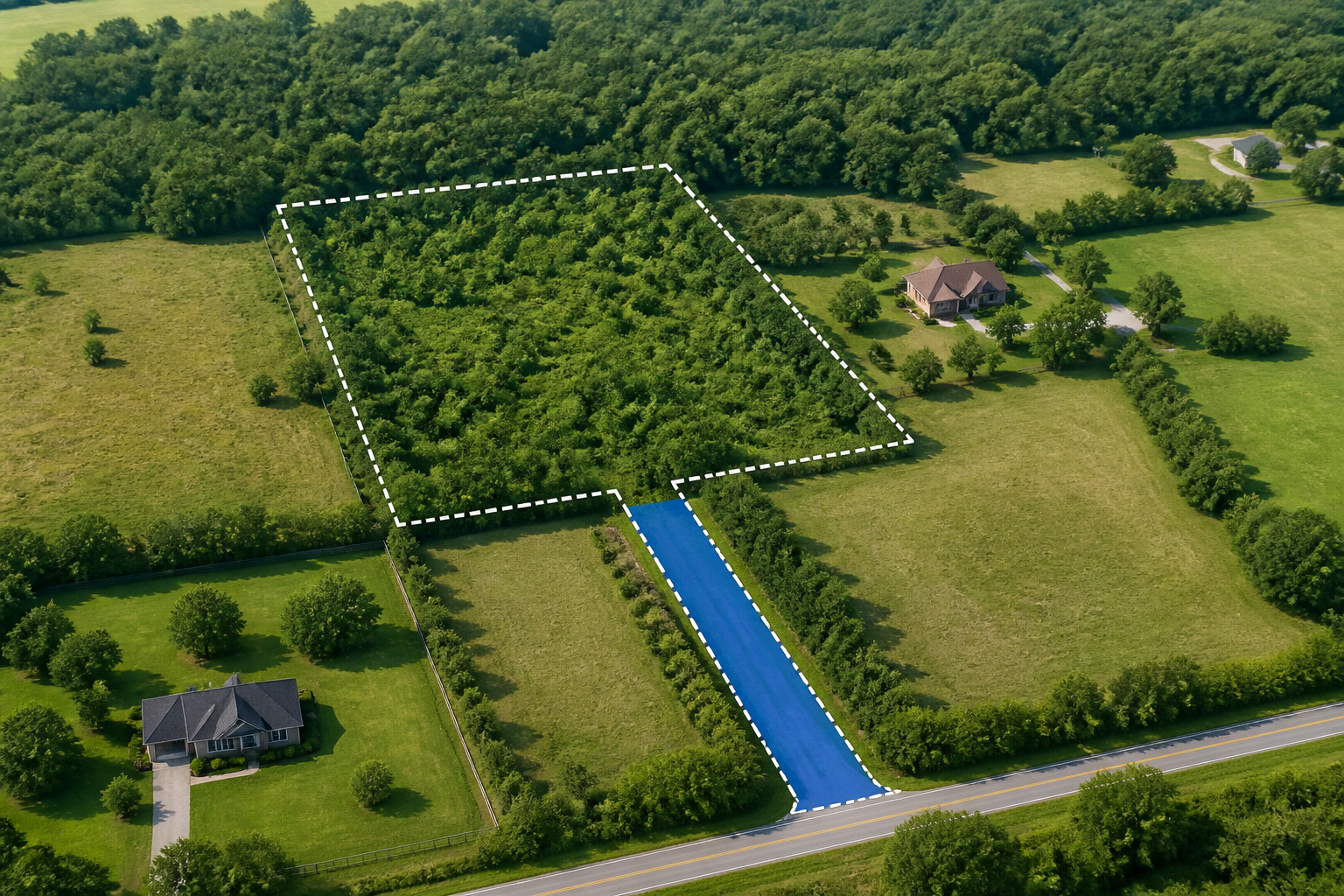
A parcel surrounded on all sides by privately owned land, with no road touching its boundary, sounds like a dead-end investment. Yet landlocked properties trade at dramatic discounts, attract little competition, and — once access is secured — can perform exceptionally well. The key phrase is once access is secured. Getting there requires understanding the legal tools available, the realistic costs involved, and the due diligence that separates a profitable contrarian bet from an expensive mistake. Here's what you need to know: what landlocked property actually means in law, the challenges it creates, the solutions that exist, and the step-by-step process for either buying landlocked land wisely or unlocking access on a parcel you already own.

What's a Landlocked Property?

Definition and Legal Meaning
A landlocked property has zero legal access to any public road. It's boxed in entirely by someone else's land, so you can't legally get in or out without crossing their property. Here's what kills deals: the difference between physical access and legal access. That dirt track cutting across your neighbor's field? It might work in practice, but if there's no recorded easement, deed language, or court order backing it up, it doesn't count legally. And if it doesn't count, it can disappear overnight—or tank your sale the moment a lender pulls the title report.
Want the full picture on how this plays out when you're actually trying to buy or sell? Check out our Landlocked Property Access Rights: Legal Guide for Investors.
How Landlocked Properties Occur
These situations don't happen by accident. They come from specific events:
- Subdivision errors: A larger parcel gets carved up and sold off without anyone reserving an easement for the interior lots.
- Inheritance and estate splits: Heirs divide land informally, and one piece ends up surrounded by the others.
- Partial sales: An owner sells the front portion with road frontage but forgets to reserve a right of way to the back parcel they're keeping.
- Road abandonment: A public road that once served the property gets vacated or abandoned by the municipality.
- Boundary changes and annexation: Jurisdictional shifts or property boundary adjustments mean formerly accessible land suddenly isn't.
Rural and agricultural properties are especially vulnerable to this. A handshake deal with a neighbor, a farm track used for generations—these work fine until the property changes hands. Then the new owner discovers there's nothing on record protecting their access.
Landlocked vs. Corner-Locked Properties
Corner-locked parcels touch a public road or another property at a single corner point—sometimes just a few inches. Sounds workable? It isn't. A vehicle can't legally use a corner crossing under most property law interpretations, and lenders won't touch it. Title insurers won't either. You're essentially looking at a problem as bad as full landlocking. True landlocked parcels have zero boundary contact with any public road or navigable waterway that provides legal entry.
Back to topChallenges of Owning Landlocked Property

Impact on Property Value
No legal access? The market tanks your deal. That's the reality. Buyers won't touch landlocked parcels without demanding a serious haircut on price. Landquire and Discount Land Investing show landlocked deals moving at 50%–80% below comparable accessible land (2025–2026 data). Even the more conservative real estate lawyers peg it at 24%–45% below market value when there's already some informal access or partial legal remedy in place (as of 2026).
But here's where you make money. If you can crack the access problem for less than the discount you negotiated, you're arbitraging a legal problem into equity. The math works if you do your homework on access-acquisition costs upfront.
Financing and Title Insurance Issues
Forget conventional loans. Lenders won't touch it without proof of legal access, and title insurers won't insure it either (2025–2026 standard). That leaves you with cash buyers only — and they know they're taking on risk. Your buyer pool just collapsed.
When you eventually exit, this becomes your biggest problem. Unless you resolve the access issue first, you're selling to the same constrained buyer pool that bought from you. Don't build your exit strategy around hope—build it around solving the access problem before listing.
Utility Installation Complications
A recorded easement for road access? That's just the foundation. You'll need separate easements for electric, gas, water, sewer, telecommunications, and fiber—one agreement per utility line crossing neighboring property. Utility companies demand recorded easements before they'll install anything. No easements, no development, period. And here's the kicker: water availability, septic permissibility, and public sewer options all vary wildly by state and jurisdiction. Verify each requirement with your local authority before you bid.
Legal Disputes and Neighbor Relations
Landlocked situations turn neighbors into gatekeepers. If the owner controlling your only access is hostile, everything gets harder and more expensive—from walking their land during due diligence to negotiating a formal easement. Litigation happens. You might win in court, but a court-ordered easement with a resentful neighbor running alongside your road creates friction that shows up in tenant complaints and long-term holding costs. Build neighbor dynamics into your risk model, not just the legal roadmap.
Back to topLegal Solutions: Easements Explained

What's an Easement?
An easement is a legally recorded right to use someone else's land for a specific purpose. Here's the key distinction: it doesn't transfer ownership. The underlying landowner keeps the title, but you get a right that sticks with the land through every future transaction—binding both the dominant parcel (the one that benefits) and the servient parcel (the one that's burdened). For landlocked properties, you're looking at an easement appurtenant for ingress and egress—basically, a legal right of way across the neighbor's parcel to reach public road access.
Want the full picture? This resource walks through how landlocked property law intersects with your investment strategy, including how different easement types move the needle on long-term value.
Easement by Necessity
The easement by necessity is your most powerful legal weapon here. When a property has zero access to a public road, courts can force an easement across a neighbor's parcel under common law. But here's where it gets complicated: you'll need to prove the landlocked parcel and the surrounding parcel were once under the same ownership, and that the necessity existed when they split apart (as of 2026). If those two parcels never shared an ownership chain? You might be stuck.
This is brutal for rural deals that've changed hands a dozen times over generations. Some states fixed this problem legislatively. Florida? Big move there. Under Florida Statute §704.01, an easement by necessity applies to any truly landlocked parcel, period—regardless of ownership history, and it covers utilities too, not just road access (as of 2026). If you're operating in a strict common-law state and can't establish that common ownership chain, you need a backup plan.
Prescriptive Easements
Prescriptive easements work like adverse possession for access rights. Use a path across someone else's land openly, continuously, and without permission for a statutory period? A court can formalize that use as a legal easement. The phrase that matters: without permission. That's why some landowners post "Permission Granted" signs—permissive use doesn't count, so it kills the prescriptive clock.
And here's the tricky part: the continuous-use period isn't the same everywhere. According to Rocket Mortgage, Bay Legal, Pass Texas Real Estate, and Stark & Stark, here's what the state-by-state breakdown looks like (as of 2025–2026):
- California: 5 years
- Oregon: 10 years
- Texas: 10 years
- New Jersey: 20 years
- Pennsylvania: 21 years
Talk to a licensed real estate attorney about your specific state. Periods change. Some states tack on extra requirements—like paying property taxes during the prescriptive period. Don't assume.
Express Easements and Formal Agreements
An express easement is the deal you actually want. It's a negotiated, documented right of way between you (or the buyer) and the neighbor. Cleanest path forward. Fastest. Most straightforward—if the neighbor plays ball. You draft it, execute it, notarize it, and record it in county records. It sticks to both parcels forever.
Your agreement needs specifics: exact location and width of that access corridor (usually shown on a survey plat), what's allowed (vehicles, pedestrians, utilities, emergency vehicles), who maintains what, any payment involved, and use restrictions like hours or weight limits. A solid express easement kills the landlocked problem. Lenders will fund it. Insurance companies will cover it.
Back to topPractical Steps to Gain Access

Survey Your Property and Document Access
Start here: get a professional boundary survey before you negotiate or file anything in court. A licensed surveyor pins down your exact parcel boundaries, confirms you've got zero legal access, maps which neighboring parcels offer the shortest practical route to a public road, and delivers a plat you'll need for any easement agreement or lawsuit. Per Angi and CalcPro, you're looking at $400–$900 for parcels under one acre as of 2026, with a national average of roughly $2,300 across all survey types. Large rural or commercial tracts? Plan for up to $25,000.
GPS-based total stations and drone surveys have changed the game for rural and irregular parcels. They're faster, more precise, and way cheaper than walking boundary lines the old way—especially on large tracts. That certified plat your surveyor delivers? It's your foundation for everything that comes next legally.
Negotiate with Neighboring Property Owners
Most of the time, a negotiated express easement beats litigation on speed, cost, and aggravation. Track down every neighbor whose land sits between your parcel and the nearest public road. Dig through the county recorder's office to understand their ownership history, then approach them with a written proposal that's clear and professional.
Here's what actually moves the needle in negotiations:
- Offer real compensation—lump sum, annual payments, or hybrid. Let the easement's value to you guide what you put on the table.
- Nail down a specific corridor that doesn't wreck their ability to use their land.
- Be explicit about maintenance. You'll keep the road surface good, handle drainage. Take the burden off them.
- Bring that survey plat to the first meeting. People commit when they can actually see what they're agreeing to.
- Get your attorney involved from day one—even just to draft a term sheet. Skip this and you'll regret it.
Legal Process and Court Orders
When a neighbor digs in or you've got common ownership history on your side, file for a court-ordered easement by necessity. Your attorney files suit in state court, presents evidence that you're landlocked and (depending on your state's rules) show prior common ownership, then asks the judge to impose an easement. And don't sleep on a quiet title action either—that's your tool to establish or confirm property rights when ownership or access gets murky.
Here's what legal proceedings actually cost you (2025–2026 data from AmeriSave and Jones Property Law):
- Quiet title action — uncontested: $1,500–$5,000
- Quiet title action — contested: $5,000–$15,000+
- Court filing fees: $200–$500 depending on county and jurisdiction (per Title Barrier, 2026)
- Attorney hourly rates: $200–$500 per hour
- Timeline: 3–6 months uncontested; 6–12+ months contested
Budget conservatively—and I mean really conservatively. Contested cases blow up fast. Discovery, expert witnesses, appeals. Suddenly you're $50K+ in the hole and still not done.
Cost Considerations and Budgeting
Unlocking access to a landlocked parcel is a layered cost problem. You need to model this before you even make an offer. Here's what the actual numbers look like:
| Expense Item | Low End | High End | Notes / Factors Affecting Cost |
|---|---|---|---|
| Boundary land survey | $400 | $25,000 | Under 1 acre: $400–$900; large rural/commercial parcels up to $25,000; national average ~$2,300 (Angi / CalcPro, 2026) |
| Easement agreement legal drafting | $100 | $15,000+ | Simple agreements: $100–$5,000; complex/detailed easements: $15,000+ (ContractsCounsel, 2024) |
| Real estate attorney (hourly) | $200/hr | $500/hr | Applies to negotiation support, court filings, and review (AmeriSave / LawFold, 2025–2026) |
| Quiet title action — uncontested | $1,500 | $5,000 | 3–6 month timeline; includes filing fees (AmeriSave / Jones Property Law, 2025–2026) |
| Quiet title action — contested | $5,000 | $15,000+ | 6–12+ month timeline; expert witnesses and appeals can add significantly more |
| Court filing fees | $200 | $500 | Varies by county and jurisdiction (Title Barrier, 2026) |
| Private road construction | $3,000 | $23,000 | $1.25–$15 per sq. ft. depending on surface (gravel, asphalt, concrete); average total (Angi, 2026) |
| Building/road permit | ~$1,650 | $1,650+ | National average for standard residential permit; grading/drainage permits add several hundred dollars (BuyVacantLand, 2026) |
You could spend anywhere from a few grand to well over $50,000 turning a landlocked parcel into an accessible one. Cooperative neighbor and a short road? That's the low end. Contested litigation, long access road, utilities? That's the high end. Model the worst case before you commit capital.
Back to topBefore Buying Landlocked Property: Complete Due Diligence Guide
Due Diligence Steps
You can torch your capital fast in this business — and buying a landlocked parcel without doing the homework upfront is one of the fastest ways to do it. Here's the bare minimum you need to verify before you close on any landlocked or access-challenged property:
| Due Diligence Item | Why It Matters | Who to Contact |
|---|---|---|
| Commission a boundary survey | Confirms exact parcel boundaries and legal access status | Licensed land surveyor |
| Order a title search | Reveals existing easements, encumbrances, deed restrictions, and prior ownership chain | Title company or real estate attorney |
| Review all recorded deeds back to original severance | Establishes whether common ownership history supports easement by necessity | County recorder's office; title attorney |
| Identify all neighboring parcel owners | Determines who controls the logical access routes and their willingness to negotiate | County assessor's office; public GIS maps |
| Verify any claimed informal or historic access | Physical use without legal documentation has no standing; assess prescriptive easement potential | Real estate attorney; local residents / historical records |
| Confirm utility availability and easement requirements | Ingress easement alone doesn't provide utilities; separate agreements required | Local utility companies; municipal planning department |
| Research applicable state easement law | Easement by necessity requirements, prescriptive periods, and statutory remedies vary by state | Local real estate attorney |
| Assess zoning and permitted uses | Even with access, zoning may restrict your intended development (zoning codes vary by jurisdiction) | County or municipal planning/zoning office |
| Evaluate financing feasibility | Most lenders and title insurers decline landlocked parcels; know your financing path before closing | Land lenders, private lenders, or plan for cash |
| Model full access-acquisition costs | The purchase discount must exceed the cost of gaining access to make the deal work | Real estate attorney; surveyor; contractor quotes |
Questions to Ask Sellers
Before you commit, get the seller to answer these questions in writing. Don't accept vague responses or verbal assurances:
- Is there a recorded easement, right of way, or access agreement in the property file? If so, provide all documents.
- How has the property historically been accessed? Is there any written evidence of prior agreements?
- Have there been any disputes with neighboring property owners over access?
- Has any attorney, title company, or lender previously reviewed the access issue? What were the findings?
- Are there any existing utility easements, and which utilities currently serve or have served the parcel?
- Has any court action involving the property or its access ever been filed?
And here's why this matters: dishonest or incomplete answers can become a misrepresentation claim after you close. Everything in writing. Then verify it independently through public records, regardless of what the seller tells you.
Red Flags and Risk Assessment
Watch for these scenarios. They should make you think twice:
- No recorded easement and hostile neighbors: If the only logical access route crosses land owned by someone who won't negotiate, you're looking at litigation — which is costly and uncertain.
- No common ownership history: In states requiring common ownership for easement by necessity, this missing history eliminates your strongest legal remedy.
- Long prescriptive period required: New Jersey and Pennsylvania require 20–21 years of continuous use. If your use history isn't well-documented, prescriptive easement claims become nothing but speculation.
- Multiple neighboring parcels between the property and a public road: Each parcel is a separate negotiation or lawsuit.
- Environmental constraints: Wetlands, floodplains, or steep topography along your only access corridor can make road construction impractical or prohibited. Get boots on the ground and talk to regulators before assuming a physical route actually works.
Insurance and Financing Implications
Title insurers generally refuse to insure landlocked parcels, and most lenders won't touch them (2025–2026). Some specialty carriers offer access risk endorsements or title insurance products covering the risk of informal access arrangements being challenged. These are niche products — availability, terms, and pricing vary wildly by insurer and jurisdiction. If a seller or broker claims title insurance is available, get the specific policy language and endorsement details in writing before you believe it.
Planning to finance an adjacent property and use it as leverage in an access negotiation? Your mortgage lender on that property has its own interests. They may restrict what easements you can grant across their collateral. Talk to your lender and a real estate attorney before any transaction involving encumbered land.
Back to topAlternative Solutions and Opportunities

Land Subdivision and Boundary Adjustments
Sometimes an easement across your neighbor's land isn't the answer. A lot line adjustment or boundary agreement between you and adjacent landowners can create a legal connection to the public road without needing a full easement. Or go another route: buy a narrow strip of land — a "flag lot stem" — from the neighbor to connect your landlocked parcel to the road.
Subdivision works when the parcel itself is large enough that one portion sells with road frontage (and pays for access improvements), while you keep or sell the other portion separately with the new access benefit. But here's where it gets real: you've got to verify local zoning, minimum lot sizes, and subdivision ordinances with the planning department. Every jurisdiction writes these rules differently. For context on how different real estate investing strategies stack up on complexity and returns, that's a useful read.
Public Land Access Solutions
Out west, here's the tension: your landlocked parcel sits surrounded by federal public land, and you're wondering about access rights. "Corner crossing" — stepping diagonally across public land at a section corner where four sections meet — sounds logical in theory. In reality? Litigation. It's not universally legal, and you don't want to find that out the hard way.
If your parcel borders Bureau of Land Management (BLM) or US Forest Service land, get a real estate attorney with federal land experience involved before you assume any access route is solid. The cost of that consultation beats being wrong.
Federal and state agencies do have formal right-of-way easement processes for reaching private inholdings. They take time. Environmental reviews. The full deal. Contact the relevant land office early in your due diligence — understand what's on the table and how long it takes.
Using Technology and Surveys
Technology has fundamentally changed how you evaluate landlocked and rural properties:
- GIS and parcel mapping tools: County GIS portals and third-party platforms like those in our ATTOM property data platform review and our BatchLeads vs. PropStream comparison let you map parcel boundaries, neighboring owners, and road networks from your desk. You can screen out landlocked deals before dropping money on a site visit or survey.
- Drone surveys: Aerial photography and photogrammetry give you detailed topographic data for assessing whether a road is even buildable, spotting physical access routes, and documenting conditions now. This becomes your evidence if things go legal later.
- GPS-based boundary surveys: RTK (Real-Time Kinematic) GPS equipment lets surveyors nail boundary points to centimeter-level precision. Essential when you're placing an easement corridor in a contested situation.
- Satellite imagery and historical aerial photography: Google Earth Pro has imagery going back decades. That matters: you can show whether a path has been continuously used, which strengthens or kills a prescriptive easement claim.
Strategic Property Development and Use Cases
Landlocked parcels don't have to sit idle while you sort out legal access. And at a discounted price? The returns can work. Consider these angles:
- Timber rights: In forested areas, timber sometimes comes out by helicopter or under temporary permits on adjacent land. It's doable but requires careful legal structuring and isn't always an option.
- Hunting and recreational leases: Hunters and hikers access on foot — they'll pay for seasonal leases. Income starts flowing while you're resolving access. Rates vary wildly by region, terrain, and game quality. Pull local comparables before you model this income.
- Agricultural uses on accessible portions: Some landlocked parcels sit next to land you also own, making on-site use viable even without a public-road easement.
- Hold and resolve strategy: Buy cheap, secure the easement, bring utilities in, then sell near market value or develop it yourself. You need patient capital and realistic timelines. But the math crushes it when the acquisition discount beats access costs by a wide margin.
New to alternative land investing? Our article on real estate investing without buying property covers options that might complement or replace direct landlocked-parcel plays depending on your risk tolerance and capital.
Back to topTypes of Easements: A Comparison
You're dealing with a landlocked property. Now what? The easement type you choose will make or break your deal economics. Here's how the four main options stack up for access problems—and which details actually matter when you're running the numbers:
| Easement Type | How It's Established | Common Duration | Cost Range (Verified Figures) | Legal Complexity |
|---|---|---|---|---|
| Express Easement | Voluntary written agreement between parcel owners; recorded in county land records | Permanent (runs with land) unless time-limited by agreement | Legal drafting: $500–$2,000; negotiation adds time and cost | Low to moderate. Straightforward if both parties cooperate. |