

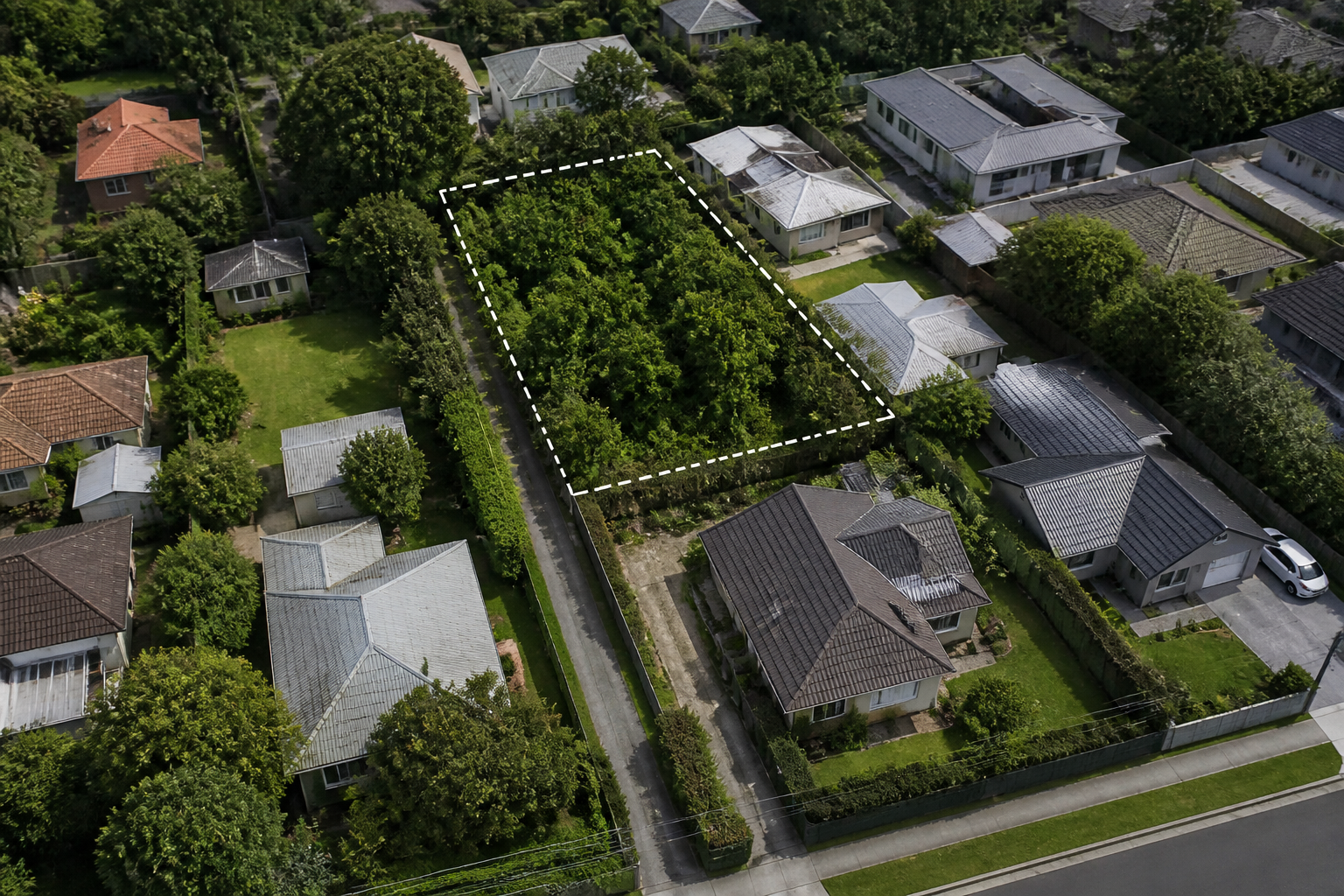
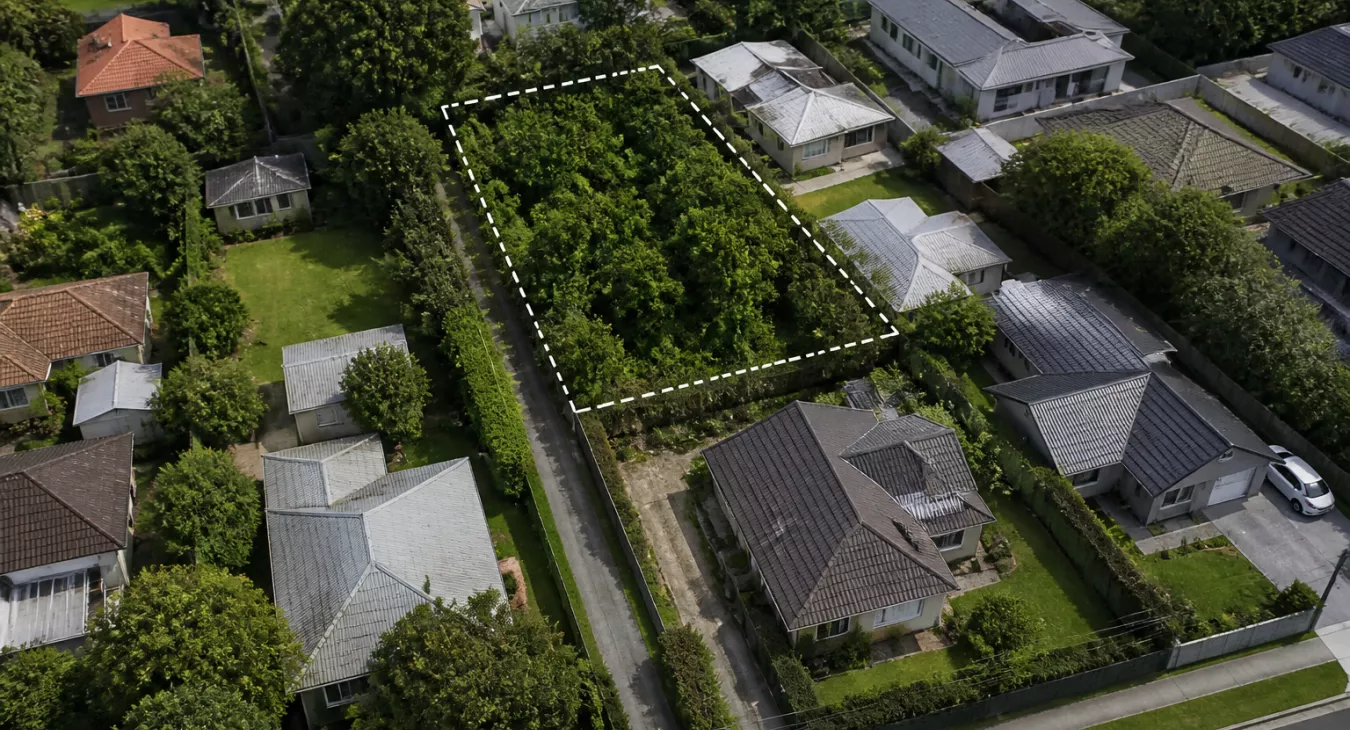
Learn what landlocked property is, its investment risks & opportunities, and how to evaluate if this real estate niche strategy fits your portfolio.
Table of Contents
- What's a Landlocked Property?
- Financial Implications of Landlocked Properties
- Legal Solutions for Gaining Access
- Due Diligence Before Purchasing Landlocked Property
- Pros and Cons of Landlocked Property Investment
- Steps to Successfully Buy Landlocked Property
- Regional Considerations: Texas and Beyond
- Selling Landlocked Property: Strategies and Considerations
- Common Pitfalls and How to Avoid Them
- Conclusion: Is Landlocked Property Right for Your Investment Strategy?
- Frequently Asked Questions
Landlocked property sits at one of real estate's most intriguing intersections. A parcel nobody can legally reach often trades at a dramatic discount — sometimes 30-50% below market value. But here's the catch: that same access problem that makes it cheap can make it nearly impossible to finance, develop, or resell. For investors willing to do serious homework, landlocked parcels represent a genuine niche opportunity with real upside. Skip the legal and logistical groundwork? You'll end up with an expensive dead end. This guide breaks down exactly what landlocked property means, how access is legally obtained, what the actual numbers look like, and how to decide whether this niche fits your investing strategy.

What's a Landlocked Property?
A landlocked property is land with zero legal access to a public road. You're boxed in by privately owned parcels on all sides, and there's no easement, deed, or legal right-of-way that lets you cross your neighbor's land to reach yours. It's a totally different animal from limited access — think a narrow driveway or seasonal road — which at least gives you some recorded legal entry and exit.
How Landlocking Occurs
It's rare in modern subdivisions. But in older or rural areas? Remarkably common. Here's where it comes from:
- Parcel splits without reserved easements: An owner divides a large tract and sells the interior piece without writing down any right of access across the remaining land.
- Inheritance and estate divisions: Heirs split up a family farm or rural property in ways that leave one piece landlocked — sometimes because they trusted a handshake agreement instead of paperwork.
- Historic survey errors: Old metes-and-bounds descriptions from decades past simply didn't account for access corridors, especially in rural counties where nobody was keeping tight platting standards.
- Road abandonment: A county or municipality vacates a public road that once served a parcel, and boom — properties that depended on it are now landlocked.
- Lot-line adjustments and replatting: Municipal replatting can wipe out an access corridor that used to exist.
Prevalence and Geographic Context
You'll find landlocked parcels in every state. But they cluster in rural areas, mountainous regions, heavily forested land, and older agricultural counties that divided property before modern platting rules kicked in. Texas is a prime example — Spanish land grants, Republic-era headrights, and ranch subdivisions created a patchwork of these parcels across the Hill Country, East Texas timberlands, and the Edwards Plateau. And don't sleep on urban fringe areas either. When development sprawls and new subdivisions gobble up surrounding land, they often leave behind landlocked remnants from the old property lines.
Back to topFinancial Implications of Landlocked Properties

Price is where the landlocked opportunity starts. Most buyers won't touch it. Most lenders won't finance it. So market demand evaporates. According to 2025 data, landlocked parcels can trade at 50–80% below comparable accessible lots. The discount is real. But the tradeoffs? Also real.
Valuation and Discount Dynamics
Let's put actual numbers to this discount. The 2025 USDA National Agricultural Statistics Service reports U.S. average cropland valued at $5,830 per acre and pasture land averaging $1,920 per acre nationally. But here's where it gets interesting: state-level variation is insane. 2025 USDA data shows New Mexico cropland averaging $725 per acre while Rhode Island reaches $22,500 per acre. Now imagine a landlocked parcel in a market where comparable accessible land sells for $3,000 per acre. That same parcel might trade for $600–$1,500 per acre depending on location and how hard access actually is to secure. That gap between what accessible land gets and what your landlocked parcel costs? That's your edge. But only if you can nail down access without blowing through the spread.
Financing Challenges
This is where deals crater. As of 2026, most traditional banks won't lend against landlocked parcels that lack legal road access. It's not about getting a higher rate or posting a bigger down payment. It's an outright no. Lenders see no reliable collateral when a property can't legally be reached, occupied, or developed. You're looking at seller financing, self-directed IRAs, or private capital. And here's the catch: your eventual buyer faces the same wall unless you've already locked in access before you flip it. That limits your exit strategies significantly.
Hidden Costs to Model In
The steep purchase discount can disappear fast if you don't budget for what comes next:
- Survey costs: A boundary survey of a standard residential parcel runs $500–$1,200 nationally, with an average around $546. For larger rural parcels, expect $3,000–$12,000 for a 40-acre tract depending on terrain and prior survey history.
- Appraisal: A professional land appraisal to establish pre-purchase value typically runs $300–$700.
- Legal fees: Drafting a basic easement agreement costs $2,000–$5,000 and can exceed $15,000 for complex negotiations. More straightforward situations might run $100 to $5,000.
- Recording fees: Once you've signed that easement, recording it with the county recorder costs approximately $10–$50. Small but necessary.
- Utility extension: Getting utilities to a previously inaccessible parcel isn't cheap. Distance, terrain, and utility district rules make this impossible to estimate nationally — always get site-specific quotes before committing capital.
- Holding costs: Property taxes keep stacking up while you're sorting out access. Talk to a tax pro about the implications. Our guide on real estate tax vs. property tax for investors covers what you need to know.
Legal Solutions for Gaining Access

You can't flip a landlocked property without recorded, legally enforceable access. Period. No easement means no lender, no buyer, no deal. Here's the thing: there are five primary mechanisms available to you, and each one has its own cost structure, timeline, and success rate.
The Five Easement Types Explained
Express Easements are your cleanest path forward. The neighboring landowner voluntarily grants you a written right of access in exchange for cash or other consideration. It gets recorded in the chain of title and runs with the land permanently. But here's where most investors stumble — they wait too long to negotiate. Approach neighbors early, frame it around mutual benefit, and come prepared with fair market value numbers for that corridor. If the neighbor has zero incentive to play ball, you're stuck.
Easement by Necessity is a common-law doctrine that exists in most states. A court can impose an access easement if your parcel was severed from a larger tract and left high and dry with no road access. You'll generally need to prove two things: the landlocking happened through a common ownership event, and access is genuinely necessary — not just convenient. This beats prescriptive easements in reliability, but it still requires litigation if the neighbor won't cooperate.
Implied Easements are trickier. They exist when prior use of an access corridor was apparent, continuous, and reasonably necessary at the time of severance — even without a written easement. Courts dig into historical use patterns, old surveys, and what the original parties intended. These are highly fact-specific. Jurisdiction matters enormously here.
Prescriptive Easements work like adverse possession: open, notorious, hostile, and continuous use of a crossing for your state's statutory period can ripen into a legal easement. And here's the problem — the required period is all over the map. It ranges from 5 to 20 years across U.S. states. California requires 5 years under Cal. Code Civ. Proc. § 321. New York requires 10 years. Massachusetts requires 20 years. This is local law. Verify your specific state before banking on this strategy. And honestly? Prescriptive easements are a nightmare if the neighbor actively objects to the use. You're looking at years of litigation with an uncertain outcome.
Statutory/Administrative Easements exist in some states through an administrative pathway — you petition the county or court for a formal access right. Texas, for example, has statutory provisions allowing a landlocked owner to petition for a county road. The specifics — requirements, fees, timelines — vary by state and county. You've got to dig into your local code.
| Easement Type | Method of Establishment | Legal Fees (2025) | Typical Timeline | Key Requirement | Best Use Case |
|---|---|---|---|---|---|
| Express Easement | Voluntary written agreement with neighbor | $100–$5,000 (simple); up to $15,000+ (complex) | Weeks to months | Willing neighboring landowner | Cooperative neighbors; fastest resolution |
| Easement by Necessity | Court order based on common ownership severance | Litigation costs vary; attorney consultation required | Months to years | Proof of common ownership at time of landlocking | Clear historical severance from larger tract |
| Implied Easement | Court recognition of historical use patterns | Litigation costs vary; highly fact-specific | Months to years | Prior apparent and continuous use at time of severance | Parcels with documented historical crossing evidence |
| Prescriptive Easement | Open, hostile, continuous use for statutory period | Litigation costs vary | 5–20 years of qualifying use required (state-specific) | Uninterrupted, hostile, open use for statutory period | When historical use can be documented; slow and uncertain |
| Statutory/Administrative | Petition to county or court under state statute | Filing fees plus attorney costs; varies by state | Months to years depending on jurisdiction | State statute must authorize this remedy; local verification required | States with strong landlocked access statutes |
Due Diligence Before Purchasing Landlocked Property

Landlocked parcels demand way more legwork than standard land deals. Skip these steps, and you're stuck holding dirt that nobody can legally access. Treat every checkpoint below as non-negotiable.
Title Search and Survey
Start with a full title search — but don't stop at your parcel. You need the history of every surrounding property to understand exactly how this landlocking happened in the first place. Look for old easements (recorded or not), expired rights, road dedications buried in old plats, and any prior ownership quirks that might help you.
Then pair that with a current boundary survey. Small parcels run $500–$1,200. Larger rural tracts? You're looking at $12,000 or more. The survey often catches easement corridors that the title search completely misses.

ALTA Surveys and Title Insurance
Request an ALTA/NSPS Land Title Survey for any deal worth your time. The American Land Title Association and National Society of Professional Surveyors set the bar here, and it's worth the cost.
Then ask your title insurer about ALTA Endorsement 17 and 17.1 — these specifically cover access and entry rights. Here's the thing: standard title insurance doesn't touch losses from lack of legal access. Don't assume you're covered. Read the exceptions. What does the policy actually protect you for?
Legal Consultation
Hire a real estate attorney in that state before you make an offer. Full stop. This isn't optional for landlocked deals.
Your attorney needs to evaluate each easement option's viability, dig into any prior litigation tied to the property, and build contract contingencies that protect you. New to land investing? Our piece on building a real estate investing team breaks down why a land attorney belongs in your first hires.
Red Flags During Inspection
- No recorded easement of any kind in the chain of title
- Neighboring landowners who are hostile or unresponsive to any conversation about access
- A history of prior litigation over the parcel's access
- Jurisdictions where easement by necessity isn't recognized or is very difficult to establish
- No historical use evidence that might support a prescriptive or implied easement claim
- Utility infrastructure that would require crossing multiple separate ownerships to reach the parcel
Pros and Cons of Landlocked Property Investment

Landlocked property isn't inherently bad or good. Ask any experienced land investor and they'll tell you it's purely a risk-adjusted opportunity that demands honest assessment. Here's what actually matters:
| Category | Advantages | Disadvantages | Mitigation Strategies |
|---|---|---|---|
| Price | 50–80% below comparable accessible lots (2025) | That discount often evaporates once you factor in access and legal costs | Model every access expense before you make an offer. Then apply the 70% rule framework to see if the upside actually works |
| Financing | Seller financing is actually achievable here — limited buyer pool means sellers get creative | Most banks won't touch it (2026) | Negotiate seller carry. Or use private capital and self-directed IRAs |
| Legal Access | Most states offer multiple legal pathways to establish access | But litigation? It's slow, expensive, and you never know how it ends | Lock in an express easement before closing. Make it a legal contingency in your contract |
| Privacy / Use | You get extreme seclusion. Hunting buyers, conservation groups, retreat investors love this | You can't develop, build, or insure structures without actual road access | Match the use case to your real access level. Conservation easements and leases help here |
| Resale | Secured access? Now you've got a real buyer pool | Try selling without legal access and financing options. It's nearly impossible | Resolve access before you list. Document every easement in writing |
| Insurance | Lower property tax base in most counties | Insurers will restrict coverage or deny it outright if there's no road | Talk to specialty land insurers. Verify insurability before you buy |
Steps to Successfully Buy Landlocked Property

Once due diligence confirms it's actually a deal, here's the sequence that separates pros from amateurs. Follow this framework and you'll close. Skip steps, and you'll get stuck.
- Preliminary research: Start with county parcel maps, GIS data, and historical plat records. Who owns every adjacent parcel? Look at aerial and topographic maps for any evidence of historical roads, trails, or utility corridors. This groundwork takes hours but saves you thousands later.
- Hire a local real estate attorney: Don't contact sellers or neighbors yet. Get a real estate attorney first—ideally one who's handled easement work. They'll tell you what access solutions are actually viable under your state's law and draft the contract language you need to protect yourself.
- Commission a survey: A boundary survey runs $500–$1,200 for small parcels. Rural tracts may need an ALTA survey instead. You're paying for clarity on where your actual boundaries sit and which easement corridor makes the most sense.
- Open conversations with neighbors: Before closing, talk to the neighbors who control your access. Be direct about what you need and gauge their openness to an easement. Some will negotiate. Some won't. Factor litigation risk and costs into your underwriting if they're hostile.
- Make an offer with contingencies: Include language that lets you walk away if you can't secure legal access within a defined window. This is non-negotiable. Don't close without this protection.
- Order a title search and title insurance: What does the policy actually cover on access? What doesn't it cover? Request applicable ALTA endorsements before you commit.
- Draft and sign the easement agreement: Your attorney prepares the easement—before or at the same time as closing. Simple agreements run $100 to $5,000. Complex situations cost more. It's worth every penny.
- Record the easement immediately: After you and the neighbor sign, take it to the county recorder. Recording fees are $10–$50. This is what legally locks in your access for you and all future buyers.
- Post-closing: Document the easement corridor with photos. Keep it maintained and passable. Make sure every title policy you order down the road references the recorded easement. And if you're planning development? Contact zoning and utility authorities immediately.
Looking to expand your creative land strategy toolkit? Check out our beginner's guide to real estate investing perspectives and our BRRRR property sourcing guide. Both offer complementary frameworks for finding overlooked deals.
Back to topRegional Considerations: Texas and Beyond
Here's the reality: landlocking laws are all over the map, state to state. You need to verify what actually applies where you're investing. That said, some regional frameworks matter more than others.
Texas-Specific Considerations
Texas courts have historically backed easements by necessity — blame it on the state's ranch subdivision history. But here's where it gets messy. The regulatory landscape layers multiple authorities on top of each other. Municipal Utility Districts (MUDs) and Public Utility Districts (PUDs) control water, sewer, and utility access across much of suburban and exurban Texas. Your landlocked parcel's utility access rules could be completely different depending on whether it sits inside or outside a MUD boundary. Then you've got Extraterritorial Jurisdiction (ETJ) zones — those areas surrounding incorporated cities where municipalities enforce subdivision rules but don't actually provide services. A parcel in one of these ETJ areas may hit platting requirements that kill development until you establish and plat proper access. Want to avoid expensive surprises? Talk to a Texas real estate attorney and your county engineer's office before you write a check. Get clarity on the regulatory layer — MUD, ETJ, incorporated, unincorporated — that governs your deal.
State Law Variation — Key Points
Most states recognize easement by necessity. But not all. A handful have significantly limited or outright complicated its availability. Prescriptive easement timelines vary wildly too — 5 to 20 years depending on state statute. Some jurisdictions have specific statutory landlocked access remedies. Others lean entirely on common law. And that's just easements. Water rights, well-drilling, utility extensions across neighboring property — these all fall under state and county law, not national rules. There's no one-size-fits-all playbook here. Verify the current rules in your specific jurisdiction before you move forward. If you're looking at commercial-scale landlocked deals, the due diligence layer gets thicker. Check out our 2026 commercial real estate investing guide for how that analysis shifts at scale.
Back to topSelling Landlocked Property: Strategies and Considerations
Own a landlocked parcel? Your exit strategy hinges on one thing: do you have legal access documented? If you've got a recorded easement, congratulations — you can market to anyone willing to buy, price it against comps with adjustments for your specific limitations, and offer conventional financing. Without that easement? You're looking at a much tighter buyer pool.
Niche Buyer Categories
- Neighboring landowners: Call them first. A landlocked parcel often trades at a significant premium to an adjacent owner who can fold it into their existing land base.
- Hunting and recreational lease operators: These buyers actually prefer the privacy that comes with access constraints. They'll typically rely on informal access agreements — but you need to document every arrangement in writing, even if the buyer wants to play it loose.
- Renewable energy developers: Solar and wind projects sometimes target interior parcels if the surrounding acreage is in the same hands or if access can be built into the project easement itself. It's niche work, but it happens.
- Conservation buyers: Land trusts and conservation organizations buy landlocked parcels for habitat protection or carbon sequestration — especially when neighboring properties are already under conservation easement. And here's the kicker: a conservation easement can be your monetization play if you want to keep the land while generating cash. Talk to a qualified conservation attorney and tax advisor first. The tax implications matter.
Marketing Considerations
Don't hide the access problem. Ever. Hiding or downplaying easement limitations exposes you to legal liability and kills buyer trust the moment they find out — and they will find out. Hand over recorded easements, surveys, and title reports immediately. Get a professional appraisal done. Most land appraisals run $300–$700 and give you a defensible number for negotiations. Beyond that? Direct mail to neighboring landowners has consistently worked for rural land deals — especially when you're working a niche property.
Back to topCommon Pitfalls and How to Avoid Them
Landlocked properties trip up investors in predictable ways. Miss just one of these and you're looking at a deal that goes sideways fast.
- Closing without secured access: That purchase discount disappears the second you realize you can't actually use or develop the land. Make access a hard contract contingency—not something you're hoping works out after closing.
- Underestimating legal costs: Easement litigation bleeds money. On a smaller parcel, court costs alone can exceed what you paid for the property. Always model the worst-case scenario before you sign.
- Assuming verbal access arrangements are sufficient: A handshake with your neighbor means nothing legally. It won't bind the next owner, won't fly with a lender, and definitely won't satisfy a title insurer. Everything has to be in writing, signed, and recorded on the deed.
- Skipping the ALTA survey: That basic boundary survey won't catch everything. For investment land, the ALTA survey with endorsements costs more—but it's money well spent.
- Ignoring utility feasibility: You've got road access locked down. Great. But running water, sewer, power, or fiber to a remote parcel? That could cost six figures or prove technically impossible depending on terrain, distance, and what the local utility district will allow. Verify this works before you close.
- Overleveraging on seller financing: Banks won't touch landlocked land, so you end up with seller-financed terms. Don't run the numbers on best-case timing. Model what happens if access negotiations drag on for six months, a year, or longer—those carrying costs compound fast. Check out our breakdown of alternative real estate investing strategies if landlocked deals feel too risky for your current capital position.
- Missing title insurance exclusions: Standard title policies often carve out coverage for access problems. Read those exceptions line by line and ask your title officer about access-specific endorsements that might protect you.
Conclusion: Is Landlocked Property Right for Your Investment Strategy?
Landlocked property investing works. But only if you're willing to get your hands dirty with legal complexity and you've got the patience to see it through. The 50–80% purchase discount documented in 2025 is legitimately achievable. What most investors don't talk about? The financing wall, the legal bills that stack up, and finding a buyer at exit. The winners in this space all do the same things: deep due diligence, a qualified local attorney engaged before you even make an offer, easement negotiations locked down before closing, and patient capital that isn't screaming for a quick flip.
That's your checklist right there. Does it fit your situation? Then landlocked parcels can deliver solid risk-adjusted returns in a niche where 99% of other buyers won't show up. But if you need bank financing, a fast resale, or a clean, straightforward deal—keep looking. Know which investor you are before you submit an offer. It's the most important move you'll make. New to real estate investing altogether? Check out our best real estate investing courses for 2026 and our guide on how to start a real estate investing business. Get those fundamentals solid before you jump into specialized plays like this one.
Back to topFrequently Asked Questions
Can a landlocked property owner always get an easement by necessity?
No. Here's the thing — easement by necessity exists in most states, but there's a catch. You've got to prove the landlocking happened because of a common ownership split. That means the property and the neighboring land used to belong to the same owner before getting separated. Can't document that history? You're probably out of luck. And because courts interpret these rules differently depending on where you are, you need a local real estate attorney to tell you whether this actually works for your parcel. Don't assume it does.