

If you've spent any time in real estate investing or direct mail marketing, you've almost certainly heard of ListSource. It's one of the most widely
Products and Tools Mentioned in this Post
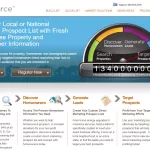
If you've spent any time in real estate investing or direct mail marketing, you've almost certainly heard of ListSource. It's one of the most widely used platforms for building targeted property owner lists — the kind of lists that fuel direct mail campaigns, skip tracing workflows, and wholesale deal pipelines. But with a growing number of competitors entering the space, is ListSource still worth your time and money in 2024? This in-depth ListSource review breaks down everything you need to know: how it works, what it costs, where it shines, and where it falls short — so you can make an informed decision before spending a dime.
What Is ListSource?
ListSource (listsource.com) is a data platform owned by CoreLogic, one of the largest property data aggregators in the United States. It allows real estate investors, agents, and marketing professionals to build highly targeted mailing lists based on detailed property and homeowner criteria. Whether you're hunting for absentee owners, high-equity properties, pre-foreclosures, or vacant homes, ListSource gives you the filtering tools to narrow down your target universe and export a list ready for direct mail or further outreach.
Founded as a standalone product and later absorbed into the CoreLogic ecosystem, ListSource has long been considered a gold standard for raw list data — particularly among direct mail marketers in the wholesale real estate space. The platform draws on CoreLogic's massive property database, which covers hundreds of millions of parcels across all 50 U.S. states.
You can explore more about the platform and how investors use it at the ListSource resource page on KDS Development.
Who Uses ListSource?
ListSource is primarily used by:
• Wholesale real estate investors who need targeted lists of motivated sellers for direct mail campaigns
• Fix-and-flip investors searching for distressed or high-equity properties in specific markets
• Real estate agents building geographic farm lists or targeting FSBO and expired listings
• Direct mail companies sourcing data on behalf of their clients
• Property managers and landlords identifying potential acquisition targets
If you're running a direct mail campaign aimed at code violation leads or other niche motivated seller categories, ListSource can be a powerful data source to layer into your workflow.
Key Features of ListSource
1. Advanced Property Filtering
The core of ListSource's value proposition is its filtering engine. When you build a list, you can filter by an enormous range of criteria, including:
• Property type (single-family, multi-family, condo, commercial, vacant land)
• Owner occupancy status (absentee owner, owner-occupied)
• Equity percentage (high equity, free and clear, underwater)
• Loan type and origination date
• Years of ownership (long-term owners are often more motivated)
• Estimated property value range
• Square footage and bedroom/bathroom counts
• Pre-foreclosure and foreclosure status
• Tax delinquency
• Owner age (useful for targeting seniors who may be downsizing)
• Mail carrier route, ZIP code, city, county, or state
This level of granularity is where ListSource earns its reputation. Most competitors offer a subset of these filters; ListSource offers the full stack, backed by CoreLogic's comprehensive data.
2. Real-Time Record Count Updates
As you apply filters, ListSource shows you a live count of matching records. This is more useful than it sounds — it lets you immediately see if your criteria are too narrow (returning 50 records) or too broad (returning 50,000 records), and adjust on the fly before you commit to a purchase.
3. Multiple List Output Options
Once your list is built, you can download it in several formats, including CSV, which makes it compatible with virtually every CRM, direct mail platform, or skip tracing service. Fields available in the output include owner name, mailing address, property address, phone number (when available), estimated value, loan balance, and more.
4. Nationwide Coverage
ListSource covers all 50 U.S. states with data sourced from county assessor records, deed transfers, mortgage filings, and other public record sources — all aggregated and normalized by CoreLogic. Coverage density varies by market, with major metro areas having the most complete data, but rural coverage is also solid compared to many competitors.
5. Suppression Lists
ListSource allows you to upload suppression files — essentially lists of contacts you want excluded from your output. This is valuable if you're running ongoing campaigns and don't want to repeatedly mail the same people who haven't responded.
6. Saved Searches
You can save your search criteria for future use, which is a time-saver if you run the same type of campaign regularly. Pull a new list of absentee owners in a specific county every quarter without rebuilding your filters from scratch each time.
7. Integration-Friendly Data
While ListSource doesn't offer deep native integrations with CRMs, the CSV export format makes it easy to plug into tools like Follow Up Boss, dialing platforms like Mojo Dialer, or investor-focused platforms like REIPro.
ListSource Pricing
ListSource uses a pay-per-record pricing model, which means you pay for the data you pull rather than a flat monthly subscription. This can work in your favor if you run occasional campaigns, but costs can add up quickly for high-volume users.
As of the most recent publicly available information:
Record Volume
Approximate Cost Per Record
1 – 1,000 records
~$0.15 – $0.20 per record
1,001 – 5,000 records
~$0.12 – $0.15 per record
5,001 – 25,000 records
~$0.08 – $0.12 per record
25,000+ records
~$0.05 – $0.08 per record
Note: Pricing can vary based on the specific data fields you include, any add-ons (such as phone numbers), and promotional pricing. Always check the current pricing on listsource.com before purchasing, as rates may have changed.
There is also typically a minimum order requirement, often around $50–$75, which means ListSource isn't cost-effective for testing with very small lists. Additionally, if you want phone numbers appended to your records, expect to pay a premium — phone data costs more than mailing address data alone.
There is no free trial in the traditional sense, though the platform allows you to build and preview a list before you pay, which gives you a sense of record count and data availability without spending money upfront.
Pros of ListSource
• Exceptional data depth: The filter options are among the most comprehensive in the industry, powered by CoreLogic's robust property database.
• Reliable data accuracy: As a CoreLogic product, ListSource benefits from one of the most trusted names in property data. Data accuracy is generally strong, especially for property characteristics and ownership records.
• Pay-as-you-go model: No monthly subscription means you only pay when you need data — a benefit for investors who run campaigns seasonally or intermittently.
• Nationwide coverage: Works in all 50 states, making it viable for investors active in multiple markets.
• Suppression list functionality: Helps keep campaigns efficient by excluding previously contacted prospects.
• Trusted by professionals: ListSource has a long track record and is used by serious investors and direct mail companies, which speaks to its credibility.
• No long-term commitment: You're not locked into a contract, which reduces financial risk.
Cons of ListSource
• Outdated interface: The user experience feels dated compared to newer platforms. The UI isn't particularly intuitive, and first-time users often need a learning curve to navigate effectively.
• Phone data is extra: Phone numbers aren't included by default and must be purchased separately, which increases cost per record significantly.
• No built-in skip tracing: Unlike some all-in-one investor platforms, ListSource is purely a list-building tool. You'll need to run your records through a skip tracing service separately.
• No CRM or campaign management: There's no built-in way to track mailers, follow up, or manage deal flow. ListSource is a data source, not a full workflow solution.
• Pricing can get expensive at scale: For large ongoing campaigns, the per-record cost adds up. Platforms with subscription-based unlimited data access can be more cost-effective at high volumes.
• Customer support limitations: Some users report difficulty getting responsive support for billing or data issues.
• Not ideal for very small campaigns: Minimum order thresholds make it less economical for testing with just a few hundred records.
ListSource vs. Competitors
ListSource doesn't exist in a vacuum. Several platforms compete directly for the same audience of real estate investors and direct mail marketers. Here's how it stacks up:
Feature
ListSource
REIPro
BatchLeads
Pricing Model
Pay-per-record
Monthly subscription
Monthly subscription
Monthly subscription
Built-in Skip Tracing
No
Yes
Yes
Yes
CRM / Deal Tracking
No
Basic
Yes
Yes
Filter Depth
Excellent
Very Good
Good
Good
Data Source Quality
CoreLogic (Premium)
Multiple Sources
Multiple Sources
Multiple Sources
Nationwide Coverage
Yes
Yes
Yes
Yes
Best For
List building only
All-in-one investing
Investors needing CRM
High-volume texters
For a deeper head-to-head analysis, check out our PropStream vs. ListSource comparison, which walks through the key differences in detail and helps you decide which platform makes more sense for your investing strategy.
The short version: if you want raw list-building power with maximum filter control and don't mind assembling your own tech stack for skip tracing, CRM, and mail management, ListSource is hard to beat. If you want a more integrated all-in-one solution, PropStream or REIPro may be more practical for your workflow. You can read our full REIPro review for more on that platform.
How to Use ListSource Effectively
Step 1: Define Your Target Seller Profile
Before you log in, know exactly who you're trying to reach. Are you targeting absentee owners with 40%+ equity who've owned for more than 10 years? Seniors in a specific ZIP code with free-and-clear properties? The more clearly you define your ideal motivated seller, the better your filters — and your campaign results.
Step 2: Start Narrow, Then Expand
A common mistake is pulling too large a list without the budget to mail it consistently. Start with tighter criteria to build a highly targeted list of 500–1,500 records, mail it multiple times, and track your response rates. Consistent follow-up on a smaller list almost always outperforms a one-and-done blast to a massive list.
Step 3: Layer Your Data Stacks
Export your ListSource CSV, then run it through a skip tracing service to append phone numbers if you want to add cold calling or text messaging to your outreach. Platforms like BatchSkipTracing or PropStream's skip trace tool work well for this. Load the enriched list into your CRM or dialer — like Mojo Dialer — for systematic follow-up.
Step 4: Track Results by List Segment
When you set up your mailer, use unique tracking phone numbers or landing pages for each list segment so you can attribute responses accurately. This lets you refine your criteria over time based on actual deal data — not guesses.
Step 5: Refresh Your Lists Regularly
Property data changes. Owners sell, properties transfer, foreclosures resolve. Re-pull your lists every 90–180 days to keep your campaign fresh and avoid wasting postage on outdated records.
ListSource for Real Estate Agents
While ListSource is predominantly marketed to investors, real estate agents can also benefit from the platform. Geographic farming — the practice of consistently marketing to a specific neighborhood or ZIP code — is a well-established agent strategy, and ListSource makes it easy to build targeted farm lists.
Agents can filter for homeowners in a specific mail carrier route, apply equity filters to find likely sellers, and sort by years of ownership to prioritize longer-term residents who statistically turn over at higher rates. Combine a ListSource list with a consistent postcard mailing schedule and you have the foundation of a legitimate farming strategy.
If you're building out a broader agent business development strategy, the principles in The Millionaire Real Estate Agent align well with list-based prospecting as a core lead generation channel.
ListSource for Wholesale Real Estate
For wholesalers specifically, ListSource is one of the most powerful tools in the arsenal — but it's a piece of the puzzle, not the whole picture. Understanding how wholetailing works in real estate can help you think about which types of lists are most valuable depending on your exit strategy.
Wholesalers typically get the most mileage from ListSource by pulling:
• Absentee owner + high equity combinations — these owners have financial flexibility and aren't emotionally attached to the property as a primary residence
• Tax delinquent properties — owners behind on taxes are often financially motivated to sell
• Pre-foreclosure lists — time pressure creates motivation
• Long-term owners (10+ years) — significant equity build-up and potentially tired landlords
• Free-and-clear properties — owners with no mortgage have maximum flexibility on price and terms
Many experienced wholesalers stack multiple distress indicators — for example, absentee owner + tax delinquent + 20+ years ownership — to build ultra-targeted lists with higher response rates, even if the total record count is smaller.
Is ListSource Legitimate and Safe?
Yes. ListSource is a legitimate, established product from CoreLogic — one of the most reputable names in real estate data. The platform has been in operation for well over a decade and is widely used by professionals across the industry. Data is sourced from public records, which means ownership and property data are legally obtainable.
One important caveat: phone number data must be used in compliance with the Telephone Consumer Protection Act (TCPA) and Do Not Call (DNC) regulations. If you're appending phone numbers and using them for outreach — whether via cold call, text, or ringless voicemail — make sure you're working with a compliance-aware dialing platform and suppressing against the national DNC registry.
Alternatives to ListSource
If ListSource doesn't feel like the right fit for your needs or budget, here are the most credible alternatives worth evaluating:
• PropStream – Monthly subscription with built-in skip tracing, comp analysis, and list stacking. Often more cost-effective for high-volume users. See our PropStream vs. ListSource comparison.
• REIPro – A comprehensive investor platform with list building, CRM, and direct mail tools baked in. Great for newer investors who want one platform. Read the full REIPro review.
• BatchLeads – Known for high-quality skip tracing and strong SMS marketing tools. Popular among high-volume text blasters.
• Melissa Data – Another data provider with strong property and consumer records, popular with marketing agencies.
• DataTree (also by First American) – A competing CoreLogic-tier data platform with deep property records and ownership chains.
• Privy – More focused on deal analysis and MLS data, but useful for agents and hybrid investor-agents.
Who Is ListSource Best For?
After reviewing the full feature set, pricing model, and competitive landscape, here's an honest breakdown of who ListSource is and isn't right for:
ListSource Is Best For:
• Experienced investors who already have their tech stack in place (skip tracing, CRM, dialer, mail house) and just need a reliable, deep data source
• Direct mail professionals who need high-volume, accurately filtered lists for client campaigns
• Occasional campaigners who don't want to pay a monthly subscription when they only pull data a few times per year
• Investors targeting niche criteria where the depth of CoreLogic's data is necessary to get meaningful list sizes
• Real estate agents doing geographic farming who want homeowner-level targeting
ListSource May Not Be the Best Choice For:
• New investors who need an all-in-one platform with training, CRM, and workflow support built in
• High-volume daily users for whom a subscription model would be more economical
• Investors who rely heavily on phone and text outreach and need integrated skip tracing
• Those who want a modern, intuitive UI — the interface is functional but not sleek
Final Verdict: ListSource Review
ListSource remains one of the most powerful and reliable list-building tools in the real estate industry — but it's not a complete solution for most investors on its own. Think of it as a premium data source that requires you to bring your own infrastructure around it.
The filter depth is genuinely excellent. The CoreLogic data backing gives it an edge in accuracy and coverage over many alternatives. The pay-per-record model is honest and transparent — you get what you pay for, without being locked into a subscription. And for professionals who already know how to build a direct mail campaign or multi-touch outreach sequence, ListSource gives you the raw material to execute at a high level.
Where it falls short is in the "wrapper" experience — the UI, the integrations, the skip tracing, and the workflow management. Modern all-in-one platforms have closed the gap significantly on data quality while adding features that ListSource simply doesn't have. If you're new to investor marketing or want a streamlined single-platform experience, you'll likely be better served by exploring PropStream, REIPro, or BatchLeads first.
But if you know exactly what you're doing and you want the deepest, most granular list-building engine available? ListSource is still one of the best tools in the game. Visit the ListSource resource page for more details on getting started, or head directly to listsource.com to build your first list.
Bottom line rating: 4.1 out of 5 — Excellent data depth and reliability, held back slightly by an outdated interface and the need to integrate multiple third-party tools to build a complete workflow.