

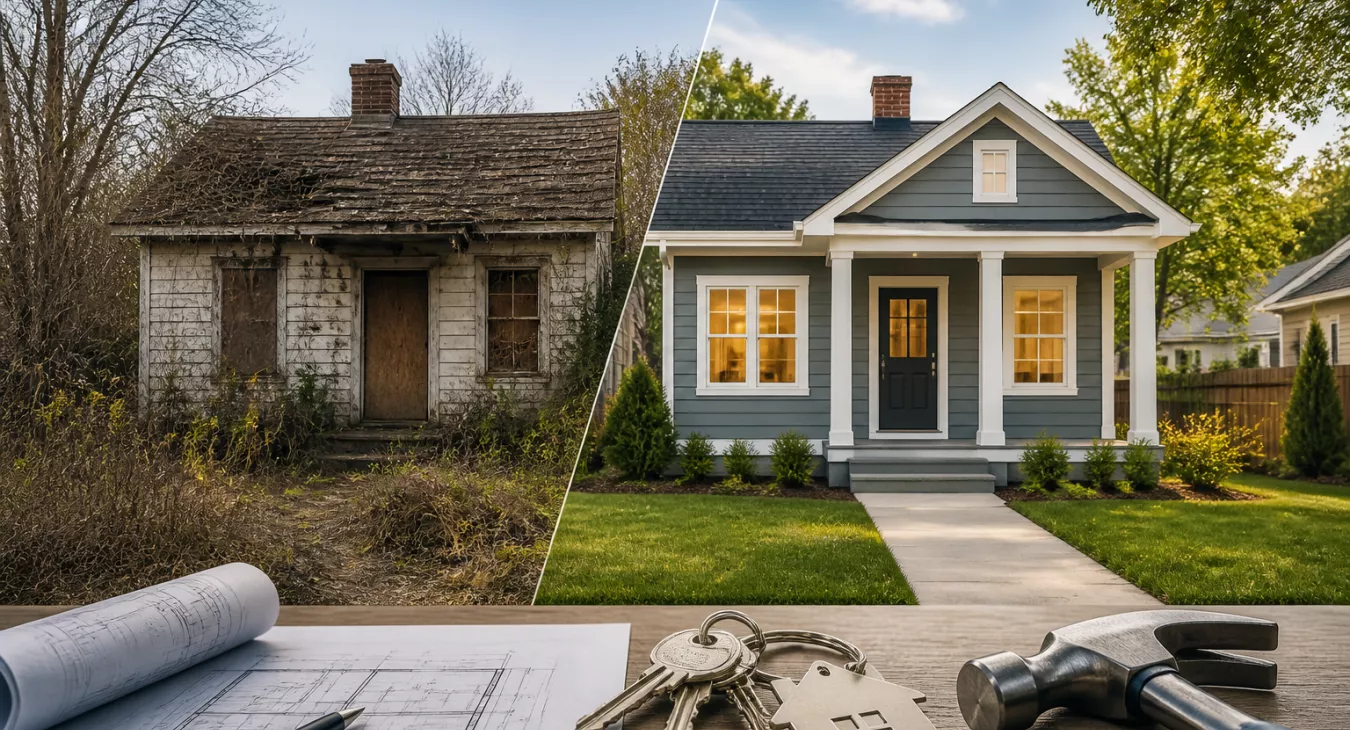
Learn a vacant property investing strategy to find and flip abandoned homes at major discounts, add value, and profit while revitalizing neighborhoods.
Products and Tools Mentioned in this Post

Propstream
Detailed information on Propstream. Get How-To's, reviews, Comparisons, and much more.


Table of Contents
- what's a Vacant Property and Why Invest in One?
- How to Find Vacant Properties
- Identifying and Contacting Vacant Property Owners
- Analyzing Profit Potential
- Investment Strategies Comparison
- The Buying Process for Vacant Properties
- Financing Options Comparison
- Risks Associated with Vacant Property Investing
- Mitigation Strategies and Risk Management
- Commercial Vacant Properties: Special Considerations
- Is Vacant Property Investing Right for You?
- Conclusion
- Frequently Asked Questions
Most people see a boarded-up eyesore. You see a negotiating table with zero competing buyers. That's the vacant property investor's edge. A solid vacant property investing strategy lets you grab real estate at a steep discount, rehab it to add real value, and exit near market value—all while actually helping neighborhoods claw back from blight. 10.5% of U.S. housing units are sitting vacant as of Q2 2026. The opportunity set is way bigger than most investors think. This guide covers the whole play: finding abandoned properties, tracking down the owners, running the numbers, navigating the purchase, managing your risks, and picking an exit that matches your capital stack and timeline.
New to house flipping? Start with our House Flipping Guide.

what's a Vacant Property and Why Invest in One?
A vacant property is a unit with no current occupant. No tenant paying rent. No owner living there. And in many cases, nobody's maintaining it at all. That's fundamentally different from a temporarily unoccupied property — say, a seasonal home the owner checks in on regularly, or a newly listed house between residents. True vacant and abandoned properties tell their own story: overgrown landscaping, boarded windows, deferred maintenance, accumulating mail, disconnected utilities.
Why do investors hunt these deals? Motivated sellers. An owner who's stopped maintaining a property — whether they're facing financial hardship, dealing with an inherited estate, relocated, or just gave up — usually wants out clean, not top dollar. That's where your below-market acquisition happens. With a national homeowner vacancy rate of 1.2% and a rental vacancy rate of 7.3% as of Q2 2026, you're looking at millions of units ready to be repositioned into productive housing stock. And profitably.
The numbers tell you something. ATTOM Data shows the typical gross profit margin on a flipped home hit 25.4% in Q1 2026, with an average gross profit of $66,000 per transaction. But that's before rehab, financing, holding, and selling costs eat into your bottom line. Here's the thing: vacant properties acquired below market because of their condition and seller desperation can blow past that average — if you actually do the underwriting.
Back to topHow to Find Vacant Properties

Want to beat other investors to deals? You need a multi-channel approach. The top performers don't rely on any single method — they layer several techniques simultaneously and let the data tell them what's working.
Driving for Dollars
This is boots-on-the-ground investing. You physically walk or drive neighborhoods you're targeting, looking for the obvious red flags: overgrown lawns, peeling paint, boarded windows, piled-up mail or newspapers, missing address numbers, utility shut-off notices. Get these addresses documented in a dedicated app—DealMachine and BatchLeads both offer driving-for-dollars features (though pricing fluctuates, so check directly with each vendor for current rates). And here's the key: consistency. Drive the same routes weekly so you catch properties the moment they slip into vacancy status.
Public Records and Online Databases
County assessor and tax collector records? These are gold. Most counties publish them online now. What you're hunting for: mailing addresses that don't match the property address (classic absentee owner signal), multiple years of unpaid taxes, code-violation history. Tools like PropStream and ListSource pull these records across entire jurisdictions and save you the legwork—for a detailed comparison, check our PropStream vs. ListSource breakdown. One important caveat: bulk data licenses from counties often prohibit resale or commercial marketing use. Read the terms carefully before you invest time building or reselling lists.
Networking with Industry Professionals
Real estate agents. Title company reps. Probate attorneys. Code-enforcement officers. Local wholesalers. These people find vacant properties before they ever hit the market. Build genuine relationships in these circles and you've got a consistent off-market pipeline feeding you deals. For a deeper dive into sourcing distressed deals through estate situations, see our guide on probate real estate investing.
Direct Mail Campaigns
Still one of the highest-quality lead sources for vacant properties. A handwritten-style postcard or letter works best—clearly state you're a cash buyer, explain the process briefly, and make it dead simple to contact you. Track your response rates by batch. This matters because you'll refine your messaging and hit a much higher close rate over time.
Vacant Property Registration Databases
More municipalities are requiring owners to register vacant properties and pay annual fees for the privilege. Here's the win: these registration databases are public records. You're looking at a pre-curated list of confirmed vacant properties with owner contact information already on file.
Back to topIdentifying and Contacting Vacant Property Owners
Finding the property is half the battle. The real work? Tracking down whoever actually has the authority to sell it. Local absentee owners usually show up in county assessor records with a mailing address on file. Out-of-state sellers are a different animal entirely.
Skip Tracing and Advanced Search Methods
Skip tracing matches a property owner's name to current contact info — phone number, email, whatever — using non-FCRA marketing databases. Here's what you need to know: these skip-trace products aren't FCRA consumer reports. That distinction matters because it means zero FCRA accuracy guarantees and zero dispute protections. Treat anything you get back as a lead to verify, not gospel. And this is non-negotiable: never use a non-FCRA marketing skip-trace product for screening decisions of any kind — tenant screening, seller financing eligibility, lease-option vetting, employment checks. You'll violate the Fair Credit Reporting Act (15 U.S.C. 1681b) if you do. This isn't legal advice. Talk to a licensed attorney in your state before you build or buy any contact list.
Once you start calling or texting owners from a skip-traced list, you're in TCPA territory — and it's messy. Two district-court rulings in 2025 (Coffey v. Fast Easy Offer, D. Ariz.; Aussieker v. Aghazadeh, E.D. Cal.) said purchase offers don't count as "telephone solicitation" under certain TCPA rules. But catch this: they're district-court decisions only. No appellate court has backed the reasoning. They completely sidestep 47 U.S.C. 227(b), which independently blocks autodialed calls and prerecorded or artificial-voice messages to cell phones — solicitation or not. State laws still apply too. Florida's FTSA (Fla. Stat. 501.059) and Washington's CEMA (RCW 19.190) are stricter, and they win. Don't assume you're exempt from do-not-call rules. TCPA violations run $500 per call or text, up to $1,500 for willful ones, and the injured party can sue directly. Get a telecommunications attorney before you dial or text anyone.
Vacant properties from recent deaths sometimes tie into inherited property deals. When that's the case, the estate's personal representative holds the keys — and they owe fiduciary duties to heirs. Most need court sign-off before they can accept an offer. Come at it with transparency and patience. Put a fair number on the table that the rep can defend to the court and beneficiaries without embarrassment. See inherited property situations for more context.
Back to topAnalyzing Profit Potential
Calculating After Repair Value (ARV)
What's your property actually worth once the work's done? That's your ARV — the estimated market value after all renovations are complete. You'll want to pull recent comparable sales within a half-mile radius, looking at similar square footage, bed/bath count, and lot size. Ideally those comps closed in the last 90 days. Grab them from the MLS (your licensed agent or your own license works), county assessor records, or a data platform. And here's the hard truth: your ARV is only as solid as your comps. Overestimating it? That's the single most common mistake new flippers make, and it'll kill your deal economics fast.
The 70% Rule
The 70% Rule is the industry standard for a reason. Your maximum purchase price shouldn't exceed 70% of ARV minus your estimated rehab costs. Let's say you've got a $300,000 ARV property with $50,000 in repairs. You're looking at a max offer of $160,000. That buffer you just built in? It's got to cover financing costs, holding costs, selling costs, and actually leave you with profit. Current data shows the average renovation cost per flip sits around $48,000. But vacant properties with serious deferred maintenance blow past that number all the time.
Hold vs. Flip Scenarios
Buy-and-hold rental? Then you need a completely different analysis. Evaluate it against your rental income projections and the IRS MACRS depreciation schedule for residential rentals — that's 27.5 years of straight-line depreciation as of Tax Year 2025. Want to see both exit strategies side by side? Our BRRRR vs. Flip analysis breaks down the numbers for each approach.
Back to topInvestment Strategies Comparison
| Strategy | Capital Required | Typical Timeline | Target Profit | Risk Level | Best Property Type |
|---|---|---|---|---|---|
| Fix & Flip | Moderate–High (down payment + rehab reserves) | ~165 days avg (Q1 2026) | ~25.4% gross margin | Medium–High | Distressed SFR with strong ARV comps |
| Buy & Hold (BRRRR) | Moderate (initial + reserves) | Long-term (years) | Rental income + appreciation + tax benefits | Medium | Structurally sound with rental demand |
| Wholesale | Low (earnest money + marketing) | Days to weeks | Assignment fee (typically $5K–$20K) | Low–Medium | Deep-discount distressed properties |
| Land Banking | Low–Moderate | Years | Appreciation / development sale | Low (illiquid) | Vacant lots in growth corridors |
Assignment fees and wholesale profits? They're all over the map depending on market conditions and how tight your deal sourcing really is. The numbers above give you a ballpark—nothing more. And here's the thing: wholesaling rules differ state to state, so you'll want to loop in a real estate attorney before you start assigning contracts in your jurisdiction.
Back to topThe Buying Process for Vacant Properties

Pre-Purchase Inspection and Assessment
Skip the inspection at your own peril. Vacant properties deteriorate fast—we're talking roof leaks that go unnoticed for months, frozen and burst pipes, HVAC systems that won't start, pest infestations, and mold spreading everywhere because there's no climate control. And that's just what you can see. For older properties or anything with environmental red flags, order a Phase I Environmental Site Assessment. Phase II testing (soil and groundwater sampling) might follow depending on Phase I results. Here's the reality: remediation can run into six figures. You need these costs baked into your offer before you sign anything.


Title and Legal Considerations
Vacant properties love to hide title problems. Unpaid property taxes, mechanic's liens from contractors who never got paid, HOA liens, judgment liens—sometimes you've even got competing claims from heirs or former owners lurking in the records. Pull a full title search early. Budget for title insurance too. It's not optional.
Foreclosure history matters more than most investors realize. In judicial states like Florida and Indiana, the court clerk records a lis pendens. Non-judicial states like Washington? They file a Notice of Default or Trustee's Sale with the county recorder instead. The mechanics are completely different, and so's your due diligence playbook.
Buying from an owner already in active foreclosure? Stop. Call a local real estate attorney before you move forward. Many states—Washington included under RCW 61.34, which treats equity skimming as a felony—have foreclosure consultant and equity purchaser statutes. These laws mandate specific contract language, statutory notices, and rescission rights. Violate them and you're looking at criminal liability on top of civil penalties.
Financing Vacant Properties
Conventional lenders won't touch these deals. They need a marketable value, and you can't establish that on a property that's not habitable. Most vacant acquisitions happen in cash or hard money. The numbers back this up: roughly 62% of flipped homes in 2025 went down as all-cash purchases. That gap between what banks will fund and what distressed deals require? It's real.
Back to topFinancing Options Comparison
| Financing Type | Interest Rate (2026) | Approval Timeline | Property Condition Requirement | LTV / Notes |
|---|---|---|---|---|
| Conventional / Bank Loan | Near 6.49% 30-yr fixed (for qualifying properties) | 30–60 days | Must be habitable; vacant/distressed usually ineligible | Up to 80% LTV; strict appraisal required |
| Hard Money | 9.5%–13% + 1–4 points upfront | 5–10 business days | Distressed properties accepted; lender inspects | 65%–75% of as-is or ARV; terms 12–18 months |
| Private Lending | Negotiated (typically 7%–12%) | Varies (days to weeks) | Flexible; set by individual lender | Relationship-dependent; no standard LTV |
| Cash | None (opportunity cost of capital) | Immediate | No lender restrictions | Maximum negotiating use; no use benefit |
Want to dig deeper into fix-and-flip structures? Check out our complete guide on fix-and-flip financing pros and cons. And if you're running BRRRR acquisitions on hold properties, you'll want to read our breakdown of how to find the best BRRRR property deals. It covers sourcing and analysis frameworks in detail.
Back to topRisks Associated with Vacant Property Investing

You can make serious money on vacant properties. But that's only if you actually understand what can go wrong. Most investors who get burned? They downplayed the risks and paid the price.
- Hidden structural and environmental damage: Long-vacant buildings love surprises — roof failures, foundation cracks, knob-and-tube wiring, lead paint, asbestos, mold. You name it, it's probably there. Spend $10,000 on a solid inspection and you'll dodge the $100,000 repairs that blindside unprepared flippers.
- Code violations and remediation requirements: The building department doesn't forget. Active violations on file mean you can't get a CO until they're fixed. And here's the kicker — some have to be disclosed at sale, which kills your buyer pool.
- Title complications: Tax liens, judgment liens, heir disputes. These aren't hypothetical. They delay closings and they kill deals outright. Don't mess around without title insurance.
- Financing difficulty: Your hard money lender gets nervous. Mid-renovation, they pull back. Then what? You'd better have cash reserves sitting in the bank. A financing contingency plan isn't optional.
- Liability during renovation: The property's yours — meaning the liability is too. Trespassers, vandals, contractors getting hurt on site. Vacant properties are lawsuit magnets.
- Holding costs: Every single day costs money. Interest on your hard money loan, property taxes, insurance, utilities. On a typical 165-day flip timeline, these numbers compound fast and destroy your profit margin if you're not careful.
- Market risk: Renovation takes time. Markets shift. Your ARV estimate from deal analysis day might not survive a softening market between purchase and sale.
Mitigation Strategies and Risk Management

Insurance for Vacant Properties
Here's the thing: your standard homeowner policy won't touch a vacant property after 30 to 60 days sit empty. You'll need a vacant property insurance policy or a builder's risk / renovation policy that actually covers you while you're mid-rehab. Fire, vandalism, liability, collapse — make sure your policy spells out what's protected. Premiums swing wildly depending on the property's condition, your location, and how much coverage you're buying. Always pull quotes from multiple carriers before you close.
Security During Renovation
Copper piping. HVAC units. Appliances. Vacant properties are basically open-door invitations to thieves, vandals, and squatters who know the owner's not around. Board those windows. Change every lock the day you close. Install a visible security camera system and don't skip it. Add temporary fencing around the perimeter if you're doing exterior work.
Some investors also hire a property management company to swing by monthly for welfare checks during renovation.
Building Your Professional Team
Don't even think about closing on a vacant property without a solid contractor who knows distressed deals inside and out. You need someone who's walked into a hundred bank-owned properties and knows what surprises are hiding behind those walls. Check out our deep dives on finding contractors for flips and how to find reliable contractors for house flips for the vetting framework.
But that contractor alone isn't enough. Round out your team with a local real estate attorney who's handled distressed closings, a title company that understands the complexity, and a CPA who actually knows real estate taxation.
Contingencies and Reserves
Hidden damage isn't a possibility in vacant properties — it's the baseline. Budget 15–20% contingency on top of your contractor's estimate. This isn't pessimism. It's math.
And here's what kills deals: running out of cash. Before you sign, make sure you've got liquid reserves to carry 3–6 months of holding costs if the renovation drags or your buyer backs out. The properties that make money are the ones where you can afford to be patient.
Back to topCommercial Vacant Properties: Special Considerations
Commercial vacant properties — office buildings, retail strip centers, warehouses — they follow the same general investment logic. But the complexity jumps dramatically. You're dealing with lenders who care more about your relationship and track record than an algorithm ever will. They'll want larger down payments and they'll scrutinize your personal financial statements hard. Zoning and permitted-use restrictions? These can kill a deal before you even get started if your intended use doesn't conform to what's already on the books.
And here's what separates the pros from the amateurs: tenant acquisition takes months, not weeks. Lease negotiations are a different animal entirely — commercial tenants negotiate aggressively, and their attorneys will find every gap in your paperwork. Phase I and Phase II environmental assessments aren't optional here. They're standard practice, and skipping them is how investors get buried in remediation costs they never saw coming.
If you're looking at the land component of commercial or mixed-use plays, our guide on land investing and flipping vacant land breaks down the specific underwriting and exit mechanics you need to know.
Back to topIs Vacant Property Investing Right for You?
You need to be honest with yourself about three things before you buy your first vacant property: capital, time, and risk tolerance.
- Capital: Hard money financing helps, but it's not a magic bullet. You're still writing checks for down payments, points, inspections, insurance, and—this is critical—a renovation contingency reserve. Most investors who fail in this space run out of money mid-project. Don't be one of them.
- Time: This isn't passive. You're sourcing deals, negotiating terms, managing contractors, and pushing properties to sale or stabilized rental. It's active project management. According to data from Q1 2026, the average flip takes 165 days from purchase to resale—and that's on turnkeys. Vacant properties with real deferred maintenance? Expect longer holds.
- Risk tolerance: Vacant deals are messier. A turnkey is pretty predictable. But what happens if you find a $30,000 structural issue during inspection? If that number keeps you awake at night, build bigger reserves first or stick with less complicated assets.
Maybe flipping isn't your move. If you'd rather chase long-term rental income and hold for 10+ years, check out our rental property investing beginners guide and long-term rental investing overview. Both break down how to buy, rehab, and hold properties as income machines.
Back to topConclusion
A disciplined vacant property strategy requires four things: methodical sourcing, honest underwriting, thorough due diligence, and the right team. That's it. The opportunity? It's massive. You're looking at 6,544,000 vacant housing units as of Q2 2025 and a national median existing-home price sitting at $440,600 as of June 2026. Motivated sellers and solid value-add plays exist everywhere if you know where to look.
But here's what separates winners from everyone else: they don't chase speed or race to the lowest offer. Instead, they analyze their numbers without emotion, build real contingencies into every deal, and respect the legal and ethical minefield around distressed owners. Then they execute renovations on budget and on time.
Start with one deal. Build your sourcing systems, your contractor relationships, your underwriting checklists around that single project. Once it closes and you've learned what actually works in your market, scale from there. That's how you build real wealth in this space.
Back to topFrequently Asked Questions
How do I find the owner of an abandoned property?
County assessor and tax records are your first stop. They'll show you the owner's mailing address right there. But if you're dealing with an absentee or out-of-state owner, that's where skip-tracing services come in handy — they'll match that name to a current phone number or email using non-FCRA marketing data. Here's the catch: non-FCRA skip-trace data has zero accuracy guarantees, and you can't use it for screening decisions. Always verify the contact info before you burn hours on outreach.
What's the 70% Rule and does it apply to vacant properties?
The 70% Rule is straightforward — cap your purchase price at 70% of the property's ARV minus repair costs. Vacant properties? That's where you need to get aggressive. Most experienced investors drop that to 60% to 65% of ARV because hidden structural or environmental issues love vacant buildings, and standard inspections miss them all the time.
Can I get a conventional mortgage on a vacant property?
Not a chance if it's severely distressed or uninhabitable. Conventional lenders need properties in livable condition before they'll touch them. For vacant acquisitions, you're looking at three options: cash, hard money loans (running 9.5%–13% in 2026 with 12–18 month terms), or private lending. Once you've rehabbed and stabilized it, conventional refinancing becomes available.
What insurance do I need for a vacant property I'm renovating?
Standard homeowner policies drop you after 30 to 60 days of vacancy. You need either a vacant property policy or a builder's risk/renovation policy for active work. Make sure coverage includes fire, vandalism, theft of building materials, liability for on-site injuries, and collapse coverage if your location warrants it. Get quotes from specialty insurers before closing — premiums swing wildly depending on condition, location, and what you're actually covering.
What legal risks should I be aware of when buying from a distressed owner?
Active foreclosure is where your legal exposure gets real. Several states — Washington's a perfect example, classifying equity skimming as a felony under RCW 61.34 — have foreclosure consultant and equity purchaser statutes on the books. They demand specific contract language, statutory notices, and rescission rights. Break these rules and you're facing civil and criminal liability. Get a licensed real estate attorney in your state to review any contract involving a foreclosure, financial distress, or probate situation before you reach out or submit an offer. This isn't legal advice.
Back to top