


Compare top CRM tools for commercial real estate investors. Find the best deal tracking software to streamline your acquisition pipeline in 2026.
Products and Tools Mentioned in this Post
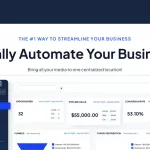

Contactually
Contactually is a real-estate-ready CRM with list building, skip tracing, calling, texting, automated follow-up, project management and websites under one login.
Table of Contents
- Why Commercial Real Estate Investors Need a Specialized CRM
- Essential Features for Commercial Real Estate Investor CRMs
- CRM Requirements by Commercial Real Estate Investor Segment
- Top Commercial Real Estate CRM Platforms Compared
- How AI Is Transforming Commercial Real Estate CRM Systems
- CRM vs. Deal Management Platforms: Understanding the Difference
- CRM Implementation Best Practices for CRE Investors
- ROI and Success Metrics for Commercial Real Estate CRMs
- Conclusion: Choosing the Right CRM for Your Investment Strategy
Commercial real estate investing is accelerating fast. U.S. CRE transaction volume hit $233.6 billion in the first half of 2026, up 14.7% year-over-year. That's a massive pipeline. And every single deal flowing through it involves brokers, lenders, equity partners, and attorneys—all of whom need active management if you want to close. The firms that consistently win aren't working longer hours. They're working smarter, with better systems. Want to know what separates the operators closing deals from those stuck in spreadsheet hell? It's a purpose-built CRM for commercial real estate investors. This is your operational backbone. It's what lets you move from tracking opportunities across a hundred shared tabs to running a disciplined, repeatable acquisition process that actually scales. This guide walks you through what matters, which platforms are leading the market in 2026, and how to find the right fit for your firm's specific investment strategy.

Why Commercial Real Estate Investors Need a Specialized CRM

How Investor CRMs Differ from Agent CRMs
Residential agent CRMs? They're built around one thing: lead generation. Capture the inquiry, move it through a short sales cycle, close the deal. Done. Commercial real estate investors play a completely different game. Your pipeline isn't a funnel of inbound leads hitting your website — it's a carefully curated collection of acquisition targets, broker relationships, and off-market deals that might not pencil out for 12 to 36 months. And the relationships that actually move the needle aren't consumers scrolling MLS listings. They're brokers controlling deal flow, lenders determining use of funds, and operating partners who'll execute the business plan. Try forcing that workflow into residential agent software and you'll see the problem fast.
An investor CRM tracks deal stages that don't even exist in residential systems. LOI submissions. Due diligence checklists. Financing contingency deadlines. Syndication communications with your LPs. Post-close asset management handoffs. Your contact database isn't organized by buyer/seller status — it's organized by relationship type (broker, lender, LP, JV partner) and which deal they're connected to.
Key Pain Points Without the Right System
Three things happen when you don't have a dedicated CRM. All at once.
First, your deal tracking lives in spreadsheets. Multiple versions floating around. Team members working the same opportunity but looking at different data. Version-control chaos that costs you money and kills momentum. Second, broker relationships go cold. A broker sent you a solid deal six months ago, but nobody followed up because follow-ups aren't systematized. Now they're sending deals to your competitor instead. Third, when someone leaves your team, institutional memory walks out the door with them. Contact history. Deal context. Relationship notes. Gone.
As of 2025, 72% of real estate professionals had adopted CRM software, according to a NAR Technology Survey. If you're still on spreadsheets, you're operating at a structural disadvantage against firms that aren't. Real estate companies that switched to dedicated CRM systems reported a 29% increase in sales compared to manual processes. That's not a marginal improvement.
The Business Case for CRM Adoption
The numbers tell the story. The global commercial real estate CRM market valued $1.91 billion in 2025 and is projected to hit $4.22 billion by 2034 at a 9.2% CAGR. In the U.S., CRE CRM spending hit $2.5 billion in 2025 and should reach $7 billion by 2033. This isn't some niche software category anymore. It's infrastructure. It's table stakes. And if you want to scale, you need it. Check out our guide to Best Real Estate Software for Investors 2026 to see what else belongs in your tech stack.
Back to topEssential Features for Commercial Real Estate Investor CRMs

Deal Pipeline and Workflow Management
Here's the thing: a visual, multi-stage deal pipeline is non-negotiable for any acquisition team that's serious about scaling. But here's where most investors get it wrong. You can't just drop a residential CRM into your operation and expect it to work. Your pipeline needs custom stages that actually match how you work: Prospecting → Initial Outreach → OM Received → Underwriting → LOI Submitted → Under Contract → Due Diligence → Closing → Closed/Dead.
Each stage should handle automated task assignment, deadline tracking, and notifications. Without these, deals slip through the cracks because someone forgot to follow up or a deadline got buried in email.
And here's something residential platforms miss entirely: you need to attach multiple contacts to a single deal. The listing broker, the seller's attorney, your debt broker, your equity partner — they're all connected to the same transaction. Most generic CRMs treat contacts as isolated leads. That's backwards for CRE investing.
Relationship Management Across Stakeholder Types
Your CRM shouldn't just store names and phone numbers. Think of it as a relationship intelligence engine instead. Each broker in your network deserves a full profile: their specialization (office, industrial, multifamily), typical deal size, markets they cover, every single interaction your team's had with them, and which deals they've sourced for you.
Evaluating a new market entry? Your CRM should tell you instantly which brokers there already know your firm—and exactly when you last touched them. No guessing. No surprises.
Lender relationships work the same way. Track which lenders are active in which asset classes, their current rate environment, and when you last connected. When you need to move fast on financing, this data wins deals.
Activity Tracking and Automated Follow-Ups
Deals don't close on sporadic check-ins. They close on consistent, relevant communication. That's why your CRM needs to automate follow-up sequences for dormant broker relationships, send deal updates to LP investors, and trigger task reminders for due diligence milestones.
If your team's doing cold outreach to brokers or property owners, call and email activity should log automatically against the contact record. No manual data entry. No excuses.
Reporting, Analytics, and Portfolio Performance
You need answers to specific questions. How many deals are in underwriting right now? What's your average time from LOI to closing? Which broker sent the most deals this year? Where does your pipeline sit across target markets?
General CRMs make you customize heavily to get these reports. CRE-specific platforms come with them built in. It's worth paying for. For deeper deal analysis, check out our guide to Best Commercial Real Estate Calculators.
Integration and Customization Options
A CRM that doesn't talk to your other tools creates data silos. That kills productivity. Look for API access and native integrations with your accounting software, deal management platforms, e-signature tools, and data providers.
Real estate bookkeeping platforms and property databases should sync bidirectionally with your CRM. Deal financials and contact data need to stay current across your entire tech stack. And don't overlook this: CoStar data subscriptions run around $15,000 per year as of 2025. Make sure your CRM integrates with the data tools you're already paying for—it's a legitimate budget conversation.
Back to topCRM Requirements by Commercial Real Estate Investor Segment

Here's the thing — every CRE investor segment uses a CRM differently. The table below breaks down investor types and what they actually need to track. Bookmark this before you sit through any platform demos.
| Investor Type | Primary CRM Use Case | Key Relationships to Track | Critical Features | Typical Team Size | Recommended Platform Type |
|---|---|---|---|---|---|
| Multifamily Acquisitions | Deal sourcing and pipeline management | Brokers, sellers, lenders, equity partners | Multi-stage pipeline, broker activity logs, LOI tracking | 2–15 | CRE-specific or all-in-one with custom pipeline |
| Value-Add / Opportunistic | Deal qualification and due diligence workflow | Brokers, contractors, lenders, JV partners | Task automation, document links, multi-contact deals | 3–20 | CRE-specific or enterprise with customization |
| Syndication / GP Teams | LP investor relations and deal communications | LP investors, brokers, legal counsel | Investor portal integration, email campaigns, segmentation | 2–10 | All-in-one CRM with email marketing capability |
| Investment Sales / Brokerage | Listing management and buyer matching | Buyers, sellers, co-brokers, tenants | Listing database, contact matching, activity reports | 5–50+ | CRE-specific (broker-focused) |
| Owner-Operators | Leasing activity and tenant relationship management | Tenants, leasing brokers, vendors, lenders | Lease tracking, renewal reminders, tenant communication logs | 2–30 | Property management integration or hybrid CRM |
| National / Enterprise Firms | Enterprise pipeline visibility and team coordination | All stakeholder types across markets | Scalability, role-based access, advanced reporting, SSO | 20–200+ | Enterprise CRM (Salesforce) with CRE customization |
Top Commercial Real Estate CRM Platforms Compared

The CRM landscape breaks into three distinct buckets. You've got enterprise platforms with virtually unlimited customization. Then there's CRE-specific software actually built for what you do. And finally, lightweight sales CRMs you can hack to fit an investor workflow. Each one trades off differently on cost, complexity, and what you get out of the box. Here's what matters: most CRE brokerage and investment teams spend between $2,000–$8,000 monthly on software (2026 numbers), and that's before a single deal closes. Your CRM is just one piece of that stack. Don't evaluate it in a vacuum.
| Platform | Best For | Pricing Model | Deal Pipeline | Relationship Tracking | AI Capabilities | Learning Curve | Implementation Timeline |
|---|---|---|---|---|---|---|---|
| Salesforce Sales Cloud | Enterprise investment firms needing maximum customization | $25–$550/user/mo (billed annually) | Highly customizable | Deep, with custom objects | Einstein AI (advanced) | Steep | 3–6+ months |
| HubSpot CRM | Syndication/GP teams needing marketing + CRM | Free tier; paid from $7/seat/mo | Good, customizable | Strong contact management | AI email, content tools | Moderate | 2–6 weeks |
| AscendixRE | Commercial brokers and investment teams on Salesforce | $79–$99/user/mo + optional AI add-on ($39/mo/org) | CRE-native deal tracking | Property + contact linked | AI Suite add-on available | Moderate | 4–8 weeks |
| ClientLook | Boutique CRE brokers and investment firms | $129/mo or $1,086/yr | Deal and listing management | Broker-focused contact DB | Limited | Low–Moderate | 1–3 weeks |
| Buildout Rethink | Mid-market to enterprise CRE brokerages | $129–$429/user/mo | Strong CRE deal workflow | Property and contact linked | Moderate | Moderate | 4–8 weeks |
| RealNex | CRE brokers needing integrated marketing tools | $99–$174/user/mo + onboarding fees | Built-in CRE pipeline | Property + contact integrated | Limited | Moderate | 2–4 weeks |
| Contactually (by KDS) | All-in-one investor CRM needing calls, texts, email, funnels, and pipelines | See contactually.net for current pricing; usage billed separately | Custom pipelines and workflows | Strong multi-channel tracking | AI workflow automation | Moderate | 2–4 weeks |
| Pipedrive | Small investor teams wanting simple pipeline visualization | Check pipedrive.com for current pricing | Excellent visual pipeline | Basic contact management | AI sales assistant | Low | 1–2 weeks |
Enterprise Solutions: Salesforce and HubSpot
Salesforce Sales Cloud wins the customization prize. But that's a double-edged sword, and you need to know it going in. If you're running a large commercial real estate investment firm with a dedicated IT person or Salesforce admin, you can build something incredibly sophisticated for deal and relationship management. If you're a lean 3-person acquisition team without that admin? It becomes dead weight in terms of cost and implementation time. Pricing runs from $25 per user per month (Starter) up to $550 per user per month (Max), billed annually as of September 2026. The good news: CRE specialists like AscendixRE can fast-track the build. They run $79–$99 per user per month with an optional AI Suite at $39 monthly per org and cut your implementation time in half.
HubSpot CRM actually shines if you're a syndication shop or GP fund. Why? You get acquisition pipeline management plus investor communications in one tool. Start free; then $7 per seat per month (2026 rates). The marketing automation — email sequences, landing pages, campaign tracking — matters when you're constantly nurturing an LP list. But here's the catch: HubSpot doesn't speak CRE natively. You'll spend time building custom fields and workflows to replicate a true investor pipeline. It's doable. Just not out of the box.
CRE-Specific Platforms: ClientLook, Buildout Rethink, RealNex
This is where you get real value. Purpose-built CRE software understands something crucial: a commercial deal isn't just a linear contact-to-close path. It's properties, contacts, companies, and transactions all connected. ClientLook costs $129 monthly or $1,086 annually and works well for smaller shops—clean interface, broker-smart contact and deal management built in. Want to scale up? Buildout Rethink runs $129–$429 per user monthly and handles larger brokerages with deeper listing and pipeline muscle. RealNex at $99–$174 per user per month plus onboarding bundles CRM, marketing tools, and financial analysis—solid for active brokers and investment advisors.
All-in-One Investor Platform: Contactually
Contactually is different from the older Contactually product Compass bought. This one KDS built specifically for real estate investors. It's a complete consolidation tool. You get list building, skip tracing, project management, texting, calling, email, funnels, websites, pipelines, automated workflows, and social posting all in one place—and that matters when you're otherwise paying for four or five separate systems. Usage (calls, minutes, texts) stacks on top of the plan cost. No free tier here. One limitation: Contactually doesn't ship with deep, pre-built CRE deal templates or property snapshots. If you absolutely need native CRE data structures, ClientLook or AscendixRE go further on that front. Want current pricing? Head to contactually.net.
Lightweight Sales CRMs: Pipedrive
Pipedrive deserves a mention if you're running a small investor team. The drag-and-drop pipeline visualization is genuinely solid. For 1-3 people focused on a tight acquisition flow, that simplicity becomes your biggest strength. And that's also where it bottoms out. It's built for sales, not commercial real estate. Don't expect native property linking, broker intelligence, or CRE-specific reporting without heavy custom work. Check pipedrive.com for pricing.
Back to topHow AI Is Transforming Commercial Real Estate CRM Systems

AI capabilities in CRE CRM platforms aren't experimental anymore—they're running live in 2026. Here's what's actually happening: the commercial application segment controls 33.4% of the total real estate CRM market (as of 2025), and it's growing faster than every other segment at 11.2% CAGR through 2034. AI feature adoption is the primary driver. Want the full picture on what AI tools are available to you right now? Check out our AI Tools for Real Estate Investors: Complete Guide 2026.
Automated Lead Qualification and Relationship Scoring
Your AI-powered CRM now scores broker relationships based on recency, frequency, and deal quality. It surfaces the exact contacts most likely to generate actionable deal flow in your target markets. Don't waste time manually combing through a 2,000-contact database—the system tells you which 50 relationships need attention this week and why. For acquisition teams tracking hundreds of broker relationships across multiple markets? This alone changes how you spend your hours.
Automated Outreach and Communication Workflows
Modern CRM platforms execute multi-touch outreach sequences across email, text, and phone without you lifting a finger at every step. Broker networks and LP investors stay in the loop. Acquisition teams doing systematic broker outreach can let AI handle initial contact, follow-up cadences, and meeting scheduling. But here's the thing—if you're using automated texting or calling for cold outreach, TCPA obligations apply. SMS is legally treated as a call under federal law, and A2P 10DLC registration is mandatory with carriers (though it's not a compliance guarantee). Talk to an attorney before you deploy any automated cold outreach campaign.
Predictive Analytics and Deal Intelligence
Enterprise-tier platforms now run predictive models that watch deal stage progression and flag at-risk deals before they disappear from your pipeline. A deal stuck in "Due Diligence" longer than your firm's historical average? AI catches that automatically. You don't need a manager manually auditing every active deal to spot the problem. Machine learning gets smarter over time too—it learns from your specific closed-deal characteristics and improves qualification accuracy as it goes.
Natural Language Processing for Activity Logging
NLP-powered CRMs transcribe and summarize broker calls. They extract deal parameters, follow-up commitments, contact details—and log everything automatically against the right deal and contact record. This solves one of the biggest CRM adoption killers: manual data entry friction after every call.
Back to topCRM vs. Deal Management Platforms: Understanding the Difference
Here's what trips up most real estate investors when they're evaluating CRE technology: they lump CRM software and deal management platforms into the same bucket. They're not. They solve completely different problems, and the smart money uses both.
A CRM is your relationship hub. It tracks contacts, logs communication history, shows you your pipeline status, and answers the questions that matter daily: Who are we actually talking to? Where do our conversations stand? Which relationships are gathering dust? Then there's the deal management platform. It's pure deal analytics and workflow. Financial modeling, document management, due diligence checklists, closing workflows—the stuff that determines if a deal actually works. Does this pencil at our target return? What's still outstanding in due diligence? Have we satisfied all closing conditions?
Running a small 2-3 person acquisition shop? You might get away with just a CRM. Spreadsheets and a solid real estate investing calculator can handle the deal side. But once you scale, you need both systems talking to each other. Data should flow both directions—relationship records to transaction records and back. When you're kicking the tires on a CRM, dig into the API capabilities. Ask what it already integrates with. Does it play nice with the deal management tools your team's already running? Check out the best commercial real estate platforms for investors to see how these pieces fit in the broader ecosystem.
Back to topCRM Implementation Best Practices for CRE Investors
Map Your Workflows Before You Evaluate Software
Here's the mistake we see constantly: teams pick a platform first, then try to shoehorn their process into it. Don't do that. Before you sit through a single demo, document exactly how deals flow through your pipeline. Where do they come from? Who's handling them at each stage, and what happens next? What data needs to get captured when? Which boxes have to be checked before a deal moves forward? This workflow map is your real evaluation tool — if software can't support your actual process without heavy customization, that's not a minor concern. That's a deal-breaker.
Internal Alignment and Change Management
Most CRM failures have nothing to do with the software itself. They fail because your team won't actually use it. And here's the thing: CRM value isn't linear. It compounds. Better data in means better insights out — but only if everyone's logging deals and activity consistently. You need senior partners on board, not just the junior analysts. If your managing partner is still running broker relationships through a personal spreadsheet? Your CRM will never capture your firm's actual relationship capital, no matter how slick the interface is.
Data Migration and System Setup
Moving contacts from Excel or an old CRM sounds simple enough. It's not.
Yes, exporting contact lists is straightforward. But migrating historical deal context, relationship notes, and activity history? That's where things get messy. Most CRE-focused platforms offer onboarding support — some include it, others charge explicit onboarding fees like RealNex does. Budget time for serious data cleaning before migration starts, not during it. This matters more than you think.
Pricing Models: Unlimited vs. Usage-Based
Watch how platforms charge for usage, especially communication features. Some bill per seat with everything included. Others — Contactually is a good example — layer usage charges on top: calls, texts, minutes all add up separately. For teams running high-volume outreach, per-use billing can turn into an unpredictable monthly bill. Think about your expected volume and how your team will grow. Then pick a pricing model accordingly. And if you're doing a lot of field work, our roundup of mobile apps for real estate investors is worth reviewing — there are tools that complement your CRM nicely.
Avoid Over-Customization
Salesforce and platforms like it can be configured to do almost anything. And that's exactly the trap. Every custom field you add, every automated workflow you build, every integration you wire up — someone has to maintain it. A CRM that's 80% set up and actually gets used beats one that's 100% customized and so complex your team avoids it. Start lean. Build adoption habits first. Add complexity later, once the team proves they're actually using the thing consistently.
Back to topROI and Success Metrics for Commercial Real Estate CRMs

Deal cycles in CRE are long. Really long. So measuring CRM ROI takes patience — but here's the thing: you don't have to wait for closed deals to know if your system's actually working. Several leading indicators will tip you off early.
Relationship Retention and Broker Activity Metrics
Start by tracking broker activity. How many relationships in your target markets have logged activity in the last 90 days compared to the 90 days before you went live with the CRM? Active brokers—ones sending deals, taking calls, responding to outreach—that's your signal. The CRM's improving your relationship capital. But don't just count relationships. Measure deals sourced per active broker relationship annually. That tells you whether your network is actually producing, not just how big it looks on paper.
Deal Velocity and Pipeline Health
Look at how long deals sit at each pipeline stage. Compare pre-CRM to post-CRM implementation.
If time-to-LOI and time-to-close are dropping, your automated workflows and deadline tracking are working. Deals aren't dying in limbo anymore. For real-time acquisition momentum, pull your pipeline health metrics—active deals by stage, deals advancing versus stalling over the last 30 days. That's the data management needs to see.
Administrative Time Savings
Ask your acquisition team this: how many hours per week are you spending on spreadsheets, manual call notes, and deal status reports? Get that number before implementation, then measure it again post-launch. The hours you recover? They go to broker relationship building and deal sourcing—the work that actually prints money. Even modest administrative overhead reductions compound across your team over twelve months. The capacity gains are real.
Evaluating the Full CRM Investment
Here's the economic reality: Q1 2026 saw $117.3 billion in CRE investment volume, up 19% year-over-year. And yet the CRM math is simple. If your system helps you source one additional off-market deal per year—or saves just one deal that would've died from a missed follow-up—the platform cost evaporates. Calculate your cost-per-acquisition annually: total CRM spend divided by deals closed. Track that metric against your deal volume trend. It should drive every renewal and upgrade decision you make. For a deeper dive into your investor toolkit, check out our breakdown of the best CRM for real estate investors in 2026.
Back to topConclusion: Choosing the Right CRM for Your Investment Strategy
Here's the truth: there's no single "best" CRM for commercial real estate investors. What matters is finding a system that actually fits how your firm sources deals, manages relationships, and scales your team. Running a 50-person operation across five markets? Salesforce with a CRE customization layer like AscendixRE makes sense — assuming you've got the IT bandwidth to implement it. But if you're a smaller shop or brokerage-focused team, you probably don't need that complexity. Purpose-built platforms like ClientLook, Buildout Rethink, or RealNex give you CRE-native workflows without the six-month implementation nightmare.
Syndication teams with active LP investor communications? HubSpot's your move.
Back to top