


Compare top real estate CRM with dialer platforms. Find the perfect tool to boost prospecting, streamline workflows, and close more deals faster.
Products and Tools Mentioned in this Post




Follow Up Boss
Follow Up Boss is a real estate CRM that helps agents manage leads, automate follow-up, and increase conversions. Streamline your sales process today.

Sierra Interactive
Sierra Interactive provides real estate agents with cutting-edge IDX websites, CRM, and lead generation tools. Discover how this platform can transform your business.


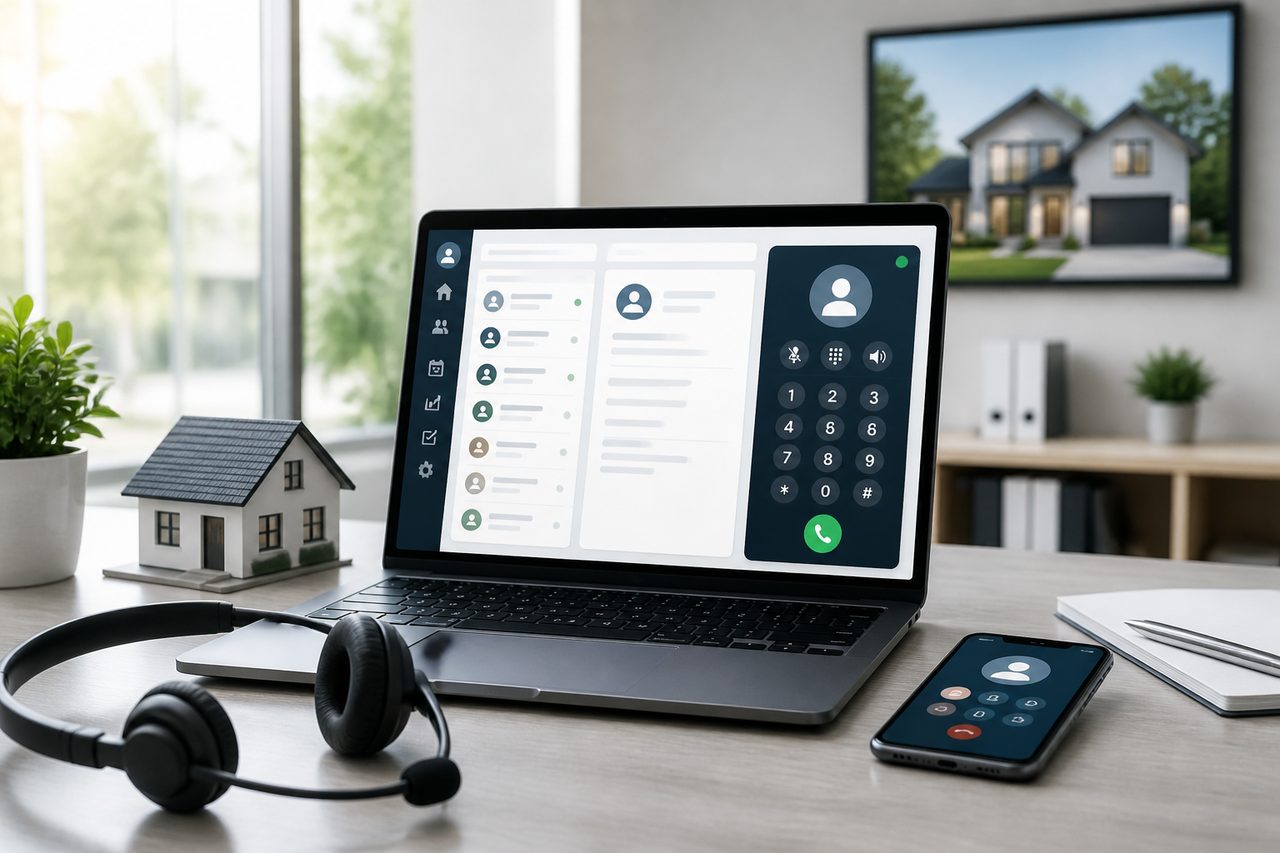
Contactually
Contactually is a real-estate-ready CRM with list building, skip tracing, calling, texting, automated follow-up, project management and websites under one login.
Table of Contents
- What's a Real Estate CRM with Dialer?
- Types of Real Estate Dialers
- Key Features to Look for in a Real Estate CRM with Dialer
- Top Real Estate CRM with Dialer Solutions (2026)
- Real Estate CRM with Dialer by Agent Type
- Compliance, Legal, and Call Recording Standards
- How to Choose the Best Real Estate CRM with Dialer
- Pricing and ROI for Real Estate CRM with Dialer
- Real Estate Dialer Best Practices and Tips
Every deal starts with a conversation. In real estate, the agent who reaches a motivated seller or buyer first usually wins. A real estate CRM with dialer collapses prospecting, follow-up, and relationship management into one workflow. No more tab-switching. No more manual logging. No more missed callbacks that silently tank your commission checks. With existing-home sales running at 3.98 million annualized units as of August 2026 and inventory staying tight, you're fighting for every single lead. Here's what you need to know: this comparison walks through the top platforms, breaks down how each dialer type actually works, untangles the compliance mess, and shows you exactly which tool fits your workflow. Whether you're grinding solo, wholesaling deals, or managing a brokerage call center, there's something here for you.
New to finding deals? Start with our Guide to Finding Motivated Sellers.

What's a Real Estate CRM with Dialer?
Definition and Core Functionality
A real estate CRM with dialer is two tools rolled into one. You get a customer relationship management system that tracks leads, deal stages, and communication history. You also get a calling engine that automates, accelerates, or assists outbound phone prospecting. Here's the problem it solves: In a standalone setup, agents export a lead list, open a dialer, dial, log notes in the CRM, then set a callback reminder. That's four separate steps burning through 20–30 seconds per call. An integrated platform collapses it all into one screen. Click to dial, auto-log the call, drop a voicemail, move to the next lead—no keyboard work between contacts.
How CRM and Dialer Integration Works
The tech side matters here. Integration happens one of two ways: native build (the dialer engine is coded straight into the CRM's codebase) or API bridge (a third-party dialer like Mojo or PhoneBurner syncs bidirectionally with a CRM like Follow Up Boss). Native integrations are more reliable. Call recordings, dispositions, and tags write directly to the contact record with zero lag. API bridges? They can introduce sync delays or require manual field mapping. When you're evaluating a platform, ask one specific question: Do call recordings attach to the contact record in real time or in batch?
Why Real Estate Agents Need Combined Solutions
Cold calling is still one of the highest-ROI prospecting channels in real estate. And the numbers prove it. According to 2026 data, the average dial-to-appointment conversion rate is 1.7%, but top performers are hitting 5%. That gap? Volume and speed-to-lead. Agents using power or predictive dialers reach way more contacts per hour than manual dialers, and that compounds over weeks into a serious pipeline edge. A CRM with dialer also forces discipline. Every call gets logged. Every follow-up gets scheduled. No lead slips through the cracks because someone forgot to call back.
Back to topTypes of Real Estate Dialers

Your dialer choice can make or break your numbers. Pick the wrong dialing mode and you're leaving thousands on the table—or worse, tanking your team's efficiency. Not all dialers work the same way, and here's what actually matters:
| Dialer Type | How It Works | Best For | Agent Skill Required | Relative Cost |
|---|---|---|---|---|
| Manual / Click-to-Dial | Agent clicks a number; system dials it | Warm leads, high-value follow-up | Low | Low |
| Power Dialer | Dials one number at a time, moves to next on hang-up | Solo agents, moderate-volume prospecting | Low–Medium | Medium |
| Preview Dialer | Shows lead record before dialing; agent confirms | Complex or high-value leads needing context | Medium | Medium |
| Predictive Dialer | Dials multiple numbers simultaneously; connects live answer to agent | Call centers, high-volume teams | Medium–High | High |
| AI-Powered Dialer | Combines predictive logic with answering machine detection, sentiment analysis, and script prompts | Enterprises, data-driven teams | Medium | High |
Manual and Click-to-Dial
The stripped-down version. You control when each call goes out, but the system handles logging and kills the mis-dial problem. Use this for warm leads or recently converted contacts where you need context and the volume isn't crushing you.
Power Dialers
This is the backbone for solo agents and small teams grinding cold calls. One number dials, then the next lead auto-queues the moment you hang up or hit voicemail. Voicemail drop is the game-changer here—it drops a pre-recorded message instantly instead of you wasting 30–60 seconds leaving one manually. Check out our full breakdown of the best real estate dialers for cold calling in 2026 if you want the technical deep dive.
Predictive Dialers
Call centers love these. The dialer fires off multiple numbers at once and routes the first live answer to whoever's available. Talk time goes up, dead air goes down. But here's the catch: you're playing with fire on compliance. Abandoned calls—when nobody's there to pick up—can land you straight into TCPA violation territory. Only run predictive if you've got rock-solid compliance controls and you're staffed right.
AI-Powered Dialers
Welcome to 2026. The real differentiator now is AI answering machine detection—the system nails a voicemail in under two seconds and drops your pre-recorded message without wasting an agent's time. Platforms are stacking on sentiment analysis (flags when someone's annoyed or interested), live script coaching, and dynamic prompts. For newer agents especially, these features raise the floor on performance and actually make the role teachable.
Back to topKey Features to Look for in a Real Estate CRM with Dialer
Dialing Capabilities and Call Quality
VoIP quality comes down to three metrics: latency, jitter, and packet loss. You want platforms routing calls through Tier-1 carrier networks with published uptime SLAs of 99.9% or better. Multi-line dialing—running 2 or 3 lines simultaneously—is a real productivity multiplier if you're grinding high volume. Mojo's 3-line setup runs $149/month plus $10/month per agent license. And here's where it gets interesting: SIM-based dialers (physical SIM cards in hardware or cloud-hosted SIM farms) sometimes deliver better answer rates because your number registers as mobile, not VoIP. The trade-off? They're pricier to scale.
Local Presence and Caller ID Rotation
When your outbound call shows an area code matching the prospect's location, answer rates jump dramatically compared to toll-free or out-of-state numbers. But there's a problem: make hundreds of calls from one number and carriers flag it as "scam likely." That's where caller ID rotation saves you. Cycling through a pool of numbers keeps the carriers happy and keeps prospects picking up. Both features should be table stakes in any prospecting dialer worth your money.
Voicemail Detection and Follow-Up Automation
AI-powered voicemail drop reclaims 30–60 seconds per unanswered call. You're running 200 dials a day? That's 1–2 hours back in your pocket. The real win happens after the voicemail drops. Your CRM should automatically schedule a callback at the optimal time, fire off an SMS follow-up (with proper consent docs), and stage the lead correctly—all without you touching it.
Compliance and TCPA Regulations
This isn't optional. The TCPA limits calling to 8 a.m.–9 p.m. in the prospect's local time zone, and violations run $500–$1,500 each. Then California throws in a $2,500 minimum per incident via their mini-TCPA. Your dialer needs to enforce calling windows automatically, scrub the National DNC Registry every 31 days (the safe harbor window under 16 CFR §310.4(b)(3)(iv)), and process opt-outs within the 10-business-day deadline that kicked in April 11, 2025. Before you dial the first number, talk to a telemarketing attorney. Software handles mechanics—it doesn't handle legal strategy.
Real-Time Reporting and Analytics
You need to see calls per hour, connection rate, talk time, and appointments booked by agent. Live dashboards let managers coach agents in the moment instead of reviewing yesterday's dead leads. That's the difference between catching problems and watching deals walk.
Back to topTop Real Estate CRM with Dialer Solutions (2026)
Here's a head-to-head breakdown of the platforms that actually move the needle. Heads up: vendor pricing shifts constantly. Always hit them up directly for current numbers before you sign anything. And if we couldn't verify dialer pricing from solid sources? We say so—no guessing.
| Platform | Dialer Type | Built-In CRM | Verified Price Range | Best For | Free Trial | TCPA Tools |
|---|---|---|---|---|---|---|
| Follow Up Boss | Power (native, add-on or bundled) | Yes | $69/user/mo (Grow); $499/mo (Pro, dialer included) | Agents & teams, ISA-driven workflows | 14-day | Yes |
| Mojo Dialer | Power / Triple-line | Basic (best paired with external CRM) | $99–$149/mo + $10/mo agent license | Cold prospectors, wholesalers | Yes | Yes |
| REDX PRO | Triple-line power | Yes (built-in) | $349/mo (5 lead types + dialer + CRM) | Listing agents, expireds/FSBOs | No (discount intro offers) | Yes |
| PhoneBurner | Power dialer (single line) | Basic; integrates with major CRMs | $140/mo (Standard); $183/mo (Premium) | Teams wanting flat-rate no-per-minute billing | Free trial available | Yes |
| CINC | 3-line dialer (add-on) | Yes (full platform) | $75/mo dialer add-on; base platform custom-quoted | Buyer-agent teams with inbound lead flow | Demo only | Yes |
| Sierra Interactive | Add-on dialer | Yes (full platform) | $299.95/mo base; $100/mo dialer add-on on Starter | Teams needing IDX website + CRM + dialer | Demo only | Yes |
| kvCORE (BoldTrail) | Built-in power dialer | Yes (full platform) | ~$499–$1,500+/mo (custom quotes; third-party estimates) | Brokerages, large teams | Demo only | Yes |
| Contactually | Built-in calling + SMS | Yes (all-in-one) | See contactually.net for current pricing; usage billed separately | Investors, agents wanting one platform for calls, texts, email, funnels & workflows | Check site | Tools included; consult attorney |
Note on LionDesk: LionDesk shut down in September 2025. Former users were migrated to Lone Wolf Relationships, priced at approximately $25–$30/month. If you were a LionDesk user, evaluate Lone Wolf Relationships or one of the alternatives above before assuming feature parity.
Follow Up Boss
This is the most team-friendly native-dialer CRM you'll find. Want the dialer on the Grow plan? It's a $39/user/month add-on ($33 annually). Jump to Pro at $499/month for up to 10 users, and it's built in. What makes it shine: ISA workflows. Your inside sales agents call from a queue, log dispositions with one click, hand off hot leads to field agents automatically. Done. The API ecosystem is the deepest in its class. But here's the catch—it's not built for investors needing skip tracing, list stacking, or deal-stage tracking beyond traditional commission sales. For a granular comparison, check our BoomTown vs CINC lead gen breakdown.
Mojo Dialer
The workhorse for listing agents hitting expireds, FSBOs, and circle prospecting. The triple-line option at $149/month is basically the productivity ceiling for solo prospectors. Built-in CRM? It's there, but it's bare-bones. Most pros pair it with an external CRM via integration. Want specifics? See our Mojo Dialer review for 2026 and our full Mojo vs Vulcan7 side-by-side for the details that matter.
Contactually (by KDS)
Disclosure: KDS, the publisher of this site, teamed up to create Contactually. This isn't the old Contactually that Compass bought. It's a real-estate-ready all-in-one CRM built to consolidate calling, SMS, email, pipeline management, funnels, websites, workflows, and social posting into one system. Calling minutes and text messages get billed separately from the base plan (check contactually.net for current rates). No free tier. The real win here is for investors and agents drowning in five or six SaaS tools—you consolidate to one. The gap? Investor-specific features like list stacking that dedicated platforms such as REsimpli or FreedomSoft offer natively. Industry-specific call scripts or snapshot templates aren't published yet.


Real Estate CRM with Dialer by Agent Type

Pick the wrong tool and you're bleeding money and time. Your business model dictates everything:
Solo Agents and Independent Realtors
You're probably running 50–150 calls a day. A single-line power dialer handles that without breaking a sweat. What matters? Ease of use, a mobile app that doesn't suck, and CRM automation smart enough to run follow-up sequences while you're sleeping. You don't need an ISA yet. Follow Up Boss Grow plan or Mojo paired with a lightweight CRM are your starting points. Budget: $100–$200/month, tops.
Real Estate Wholesalers
This is a grind. You're pulling skip-traced lists and dialing 200–400 numbers a day hunting for motivated sellers. And you need multi-line dialers to make it work at that volume. But here's what separates the good platforms from the rest: deal-stage tracking (lead to contract to close), list deduplication, and direct mail integration baked in. REsimpli and FreedomSoft get wholesaler workflows in a way commission-based CRMs never will. Want deeper context on finding deals? Check our guide on real estate investing with no money.
Real Estate Investors
You're not chasing volume. Buy-and-hold, BRRRR, subject-to—these strategies demand accuracy over speed. You need CRM features that track deal analysis, rehab projections, and financing options. A calling capability matters. A predictive dialer that runs at warp speed? Not really. What you actually need: solid pipeline stages and document management that doesn't fall apart. See our real estate investing strategies comparison for broader context, plus our deep dive on subject-to real estate.
Call Centers and Large Teams
Now you're running 10+ simultaneous dialers. Predictive or AI-powered dialers become non-negotiable. You'll need real-time supervisor dashboards, call whisper and barge capabilities, and automatic lead routing by geography or agent specialty. kvCORE and enterprise tiers of Sierra Interactive are built for this. Compliance tooling—abandoned call rate monitoring and DNC scrubbing—isn't optional anymore.
Brokerages
Agent-level accountability. That's the game. Which agent is dialing, how many calls, what's the outcome? Brokerage-tier platforms give you the multi-user oversight and lead routing logic you need. kvCORE's BoldTrail works. Follow Up Boss Platform plan at $1,000/month for up to 30 users works too.
Back to topCompliance, Legal, and Call Recording Standards

This section matters more than anything else in the guide. One class-action TCPA suit—just one—can wipe out an entire year's revenue. Get compliance wrong and you're betting your business.
TCPA Core Requirements
- Calling hours: 8 a.m.–9 p.m. local time of the recipient under 47 C.F.R. §64.1200.
- Penalties: $500–$1,500 per violation—per call or per text.
- Opt-out: Honor revocation requests within 10 business days across all channels (rule effective April 11, 2025).
- EBR exemption: An established business relationship protects you from DNC restrictions for up to 18 months from the last transaction or inquiry.
National DNC Registry Access and Scrubbing
Every 31 days, scrub your calling lists against the National DNC Registry. This is how you qualify for safe harbor under 16 CFR §310.4(b)(3)(iv). Here's what it costs: $85 per area code per year as of October 1, 2026 (FY 2027)—that's up from $82 in FY 2026. The first five area codes? Free. But if you're covering the whole country, you're looking at $23,425 annually for FY 2027. And here's the thing: most enterprise dialer platforms bundle DNC scrubbing into their compliance suite. Don't assume yours does. Confirm it.
State-Specific Laws
Federal TCPA? It's your floor, not your ceiling. California's mini-TCPA statute slaps you with a $2,500-per-incident penalty floor. And that's just one state. As of 2026, 11 states have mini-TCPA statutes; Florida, Maryland, New Jersey, and Oklahoma cap SMS outreach at 3 messages per recipient per 24-hour period. Texting leads? That's where most investors slip up. SMS is treated as a "call" under federal TCPA—the FCC doesn't distinguish between voice and text. And A2P 10DLC registration? That's a carrier requirement, not legal coverage. Talk to a real estate attorney before you scale SMS outreach.
Call Recording Laws
States fall into two buckets: one-party consent and two-party consent. Most states? One-party only (you or the lead needs to know). But California, Florida, Illinois, and others demand all-party consent—everyone on the call must agree to be recorded. Make sure your dialer can be configured to play a disclosure beep or announcement before recording starts in all-party states. And here's what investors get wrong: verify the law for every state where you call. Not just where your office sits. Where your leads are.
Back to topHow to Choose the Best Real Estate CRM with Dialer
Assess Your Lead Sources
Cold outbound lists hit different than inbound leads from Zillow, Realtor.com, or your IDX website. Inbound leads demand speed—you're looking at sub-5-minute callback triggers through automation. Cold prospecting to expireds, FSBOs, and absentee owners? That's where multi-line power dialers earn their keep. Most investors need both modes, so make sure whatever platform you pick can handle each without friction.
Determine Your Calling Volume and Workflow
Under 50 calls a day? A click-to-dial or single-line power dialer does the job. But push past 100 calls per agent daily, and a multi-line dialer pays for itself in days. Above 500 calls across your whole team, you'll want a predictive dialer with supervisor controls—it's operationally non-negotiable at that scale. Need leads to feed the beast? Check our guide to the best real estate lead generation platforms in 2026.
Evaluate Integration Needs
Don't pick a CRM until you map your tech stack. Already deep in Follow Up Boss? A native dialer or tight integration with Mojo beats ripping everything out and starting over. Starting from scratch, though? An all-in-one platform cuts out integration headaches entirely. And if you want your CRM to handle website, funnels, and lead capture all in one place, see our breakdown of real estate CRMs with website builders.
Compare Pricing Models
Three pricing structures dominate the space: per-user/month flat (PhoneBurner, Follow Up Boss), per-minute (typical for add-on dialers billed through your CRM), and hybrid (base platform fee plus usage charges for calling). Watch for sneaky line items. Local presence number pools run $10–$25/month extra. DNC scrubbing, call recording storage, and SMS sequence charges stack up fast. Get a fully-loaded estimate before you sign anything.
Consider Compliance Requirements
Does it enforce time-zone calling restrictions automatically? Scrub against the DNC Registry, and how often? Log opt-outs and honor them across all channels? Can you pull a compliance audit report whenever you need it? These aren't nice-to-haves—they're table stakes. Ask vendors directly, and don't settle for vague answers.
Back to topPricing and ROI for Real Estate CRM with Dialer
Here's the math that matters. Median existing-home sale price sits at $429,100 as of August 2026. At 2.5% commission, that's roughly $10,700 in gross commission income per deal. Now layer in the dialer. The average dial-to-appointment rate is 1.7%—meaning if you're making 100 additional contacts per week (about 5,200 per year), you're looking at roughly 88 new appointments annually just from volume. Even if you're conservative and close 10% of those, you're sitting on 8–9 additional deals. That destroys the cost of any dialer platform you're considering. Does this work everywhere? No. Market conditions, your skill, and lead quality all matter. But directionally? The ROI for a solid dialer is rock solid.
Solo agents: A $150/month dialer pays for itself with one extra closing every two to three months. That's not theory—that's achievable if you're actually using the tool.
Team leaders: Your ROI math gets bigger and more complex. You're saving manager time, cutting lead waste, and potentially replacing or supplementing an ISA position. The payoff is real, but calculate it carefully.
And here's what catches people: DNC Registry access for FY 2027 runs $85 per area code per year. You get your first five area codes free, but after that it adds up. Make sure your dialer includes this in their fees, or budget it separately for compliance.
Real Estate Dialer Best Practices and Tips

Optimal Calling Times
You've got a legal window here: 8 a.m. to 9 p.m. in your prospect's time zone. But not all hours are created equal. The data's pretty clear—mid-morning (9–11 a.m.) and late afternoon (4–6 p.m.) consistently crush it for residential prospects. Skip Mondays before 10 a.m. People aren't thinking about real estate on a Monday morning. Fridays after 3 p.m.? Same problem. But here's what actually matters: your own CRM data. Track your connection rate by hour for your specific lead type. That beats any generic benchmark every single time. Build that habit now and you'll find your real sweet spot in 30 days.
Back to top